
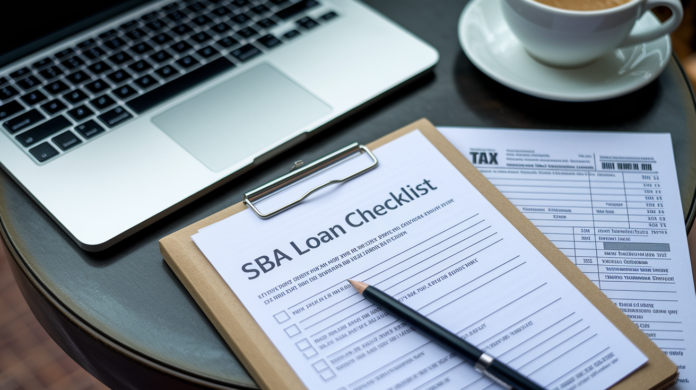

Think the SBA lends to businesses that just need money? Not true.
Lenders fund businesses that can prove they’ll repay.
This post walks through ten concrete fixes you can do before you apply, including improving personal and business credit, raising your DSCR (operating cash flow divided by annual debt service), cleaning up financials, sizing the request right, and picking a lender who understands your industry.
Do these things and you’ll cut denial risk, speed up approval, and avoid a 90-day reapply wait.
Core Actions That Immediately Improve SBA 7(a) Loan Approval Odds

Lenders fund businesses that can repay the loan. Not businesses that simply need money. The SBA 7(a) approval process relies on clear numeric benchmarks and document checklists to measure repayment capacity, and any gap in credit, cash flow, documentation, or collateral can trigger a denial. Most rejection reasons are fixable before you apply.
Most denials happen because of weak personal or business credit, incomplete financials, low debt service coverage, excessive customer concentration, inconsistent documents, or a loan request that’s too large for the underlying revenue. Lenders also reject businesses that are too young, operate in high risk industries, or carry unresolved tax liens. You can fix nearly all of these if you know the targets lenders expect.
Here are the ten core actions that immediately improve your SBA 7(a) approval odds:
-
Check and improve personal credit to at least 660 FICO (690+ is better), dispute errors, reduce utilization below 30%, and keep older accounts open.
-
Build and monitor business credit to reach an SBSS of 165 to 170 or higher by opening business tradelines, using a business credit card, and updating commercial credit bureau records.
-
Calculate your debt service coverage ratio (DSCR) using the formula Operating Cash Flow ÷ Annual Debt Service and confirm it’s at least 1.10 (ideally 1.15 or higher).
-
Size your loan request at 25 to 50% of your average annual revenue. Never request more than 50% unless you have exceptionally strong cash flow.
-
Maintain 3 to 6 months of cash reserves in your business bank account and apply during your strongest revenue period, not during a slow season.
-
Prepare a complete documentation package including two years of business tax returns, three years of personal returns for all owners with 20% or more ownership, year to date P&L, balance sheet, bank statements, accounts receivable and payable aging, and personal financial statements.
-
Diversify your customer base so that no single customer represents more than 20 to 30% of total revenue.
-
Clean up bookkeeping before applying. Reconcile bank accounts, correct errors, produce accurate P&L and balance sheet reports, and use double entry accounting software.
-
Disclose any credit problems, tax liens, bankruptcies, or legal issues early with explanations and corrective plans rather than waiting for lenders to discover them.
-
Choose the right lender by confirming they serve your industry, loan size, and state, and by asking whether they participate in the SBA Preferred Lender Program to shorten approval timelines.
These ten actions address the most common denial reasons head on. Strong credit proves you manage debt responsibly. Accurate financials and a healthy DSCR demonstrate repayment capacity. Complete documentation shows you run a real, organized business. Customer diversification reduces revenue risk. And the right lender means your file lands with an underwriter who understands your industry and has the authority to approve in house. If you apply before fixing credit, cash flow, and documentation gaps, you’ll likely face a denial or a smaller preapproval than you need. Reapplying typically requires a 90 day wait after addressing the deficits.
Strengthening Personal & Business Credit for SBA 7(a) Approval

Your personal credit score is one of the first underwriting criteria lenders check. Most SBA 7(a) lenders require a minimum FICO score around 660, though scores of 690 or higher significantly improve approval odds. Personal credit ranges from 300 to 850, with 300 to 629 rated as bad, 630 to 689 as fair, 690 to 719 as good, and 720 to 850 as excellent. If your personal score is below 660, fix it before applying rather than receiving a denial and waiting 90 days to reapply.
Business credit is scored separately using the Small Business Scoring Service (SBSS), which ranges from 0 to 300. A “good” SBSS score typically starts around 165, and many SBA lenders require scores of 170 or higher to qualify for approval. If you don’t yet have a business credit profile, you’ll need to establish one by obtaining an EIN, registering for a DUNS number (or equivalent business identifier), opening a business checking account, and using a business credit card for regular expenses. Then update your records with Dun & Bradstreet, Experian Business, and Equifax Business to ensure tradelines appear on your commercial credit reports.
Once you’ve confirmed your scores, take these six credit improvement actions before submitting your SBA 7(a) application:
- Pull and review your personal and business credit reports from all major bureaus, dispute any errors or inaccuracies, and follow up to confirm corrections are made.
- Reduce credit card balances to maintain utilization below 30% (lower is better). High utilization signals cash flow stress even if payments are current.
- Increase credit limits on existing accounts to lower utilization ratios without adding new debt, and keep older accounts open to preserve credit history length.
- Avoid applying for multiple new credit accounts in a short window, as hard inquiries and new account openings can temporarily lower scores.
- Add positive tradelines by using secured credit cards or starter business cards, make small charges, and pay balances in full each month to build payment history.
- Automate bill payments to avoid late payments, which can remain on credit reports for up to seven years and significantly damage scores.
Lenders view credit scores as a proxy for how you manage debt and financial obligations. Consistent, on time payment history combined with low utilization demonstrates reliability that directly increases approval odds.
Cash Flow Strength & DSCR Requirements for Higher SBA 7(a) Approval

Debt service coverage ratio (DSCR) measures whether your business generates enough operating cash flow to cover all debt payments, including the new SBA loan. SBA policy requires lenders to calculate and document DSCR for all 7(a) loans up to $350,000, with a minimum threshold of 1.10. A DSCR of 1.10 means you generate $1.10 in operating cash flow for every $1.00 in annual debt service, leaving a small buffer. Most competitive applicants target a DSCR of 1.15 or higher to demonstrate a healthy margin and improve approval odds.
The formula for DSCR is straightforward: DSCR = Operating Cash Flow ÷ Annual Debt Service. To calculate operating cash flow, start with net income from your most recent full fiscal year, then add back interest expense, income taxes, depreciation, and amortization (this produces an EBITDA based proxy for cash flow). Annual debt service equals the total principal and interest payments you’ll make over the next 12 months, including the proposed SBA loan. A DSCR of 1.00 means you break even. You generate exactly enough to cover debt. A DSCR below 1.00 signals insufficient cash flow and almost always triggers a denial.
| DSCR Value | Meaning | Approval Likelihood |
|---|---|---|
| Below 1.00 | Insufficient cash flow to cover debt | Very Low |
| 1.00 to 1.09 | Break even or minimal buffer | Low to Moderate |
| 1.10 to 1.14 | Meets SBA minimum for loans ≤$350k | Moderate |
| 1.15+ | Healthy buffer; competitive for approval | High |
If your calculated DSCR falls below the target, you have five practical ways to raise it before applying:
- Pay down high interest or short term debt to reduce total annual debt service, which directly increases the DSCR ratio.
- Increase revenue through short term promotions, upsells, inventory adjustments, or pricing changes to raise operating cash flow in the most recent fiscal period.
- Delay nonessential capital expenditures or large purchases until after the loan funds, so recent financials show stronger cash retention.
- Request a smaller loan amount or extend the loan term to lower the annual debt service denominator and improve the DSCR calculation.
- Refinance existing debt into longer term SBA financing to reduce annual payment obligations and free up cash flow for the new loan.
Lenders care about DSCR because it predicts your ability to repay without defaulting. If your business generates $120,000 in operating cash flow and your total annual debt service (including the new loan) equals $100,000, your DSCR is 1.20. Well above the minimum and competitive for approval. If the same business requests a larger loan that pushes annual debt service to $110,000, DSCR drops to 1.09, which falls below most lender comfort zones and increases denial risk.
SBA 7(a) Documentation & Financial Statement Preparation

Incomplete or inconsistent documentation is the single largest cause of SBA 7(a) loan delays and denials. Lenders require a complete financial picture of both the business and its owners, and missing even one document can pause underwriting for weeks or trigger an outright rejection. The faster you assemble a clean, organized package, the faster lenders can evaluate and approve your file.
Most SBA 7(a) lenders require the following documents upfront:
- Two years of filed business tax returns (if your business has been operating for at least two years).
- Three years of personal tax returns for every owner holding 20% or more of the business.
- Business formation documents, including Articles of Incorporation or LLC registration, EIN confirmation, and any DBA filings.
- Year to date profit and loss statement (P&L) and balance sheet, ideally prepared by an accountant or using double entry accounting software.
- Accounts receivable aging report and accounts payable schedule to show the timing and quality of incoming and outgoing cash.
- Three to twelve months of business bank statements, showing daily balances and transaction history.
- Personal financial statements for all major owners, listing assets, liabilities, income, and monthly expenses (lenders often provide their own PFS forms).
- A concise business plan explaining the use of funds, repayment plan, realistic 12 month projections, market opportunity, management team, and available collateral.
If your bookkeeping is messy or outdated, fix it before applying. Reconcile all bank accounts, correct any errors in your general ledger, and produce accurate P&L and balance sheet reports using accounting software like QuickBooks or Xero. If your business has grown in complexity, consider moving from single entry to double entry bookkeeping so lenders can audit your financials and confirm accuracy. Discrepancies between tax returns, bank statements, and financial statements undermine credibility and often trigger immediate denials.
Lenders compare documents to verify consistency. If your tax return shows $500,000 in revenue but your P&L shows $650,000, they’ll assume one is wrong and request explanations or reject the file. If your balance sheet lists $100,000 in accounts receivable but your aging report shows only $60,000, the file gets flagged for review. Clean, reconciled financials signal that you run a real business and understand your numbers, which directly increases approval odds.
Optimizing the Business Plan to Increase SBA 7(a) Loan Approval Chances

Lenders don’t want a 100 page generic business plan filled with boilerplate text and industry research copied from the internet. They want a concise, focused document that explains what the money will be used for, how the business will repay the loan, and why the management team has the skills and experience to execute the plan. A strong business plan increases approval odds by demonstrating strategic thinking, realistic projections, and a clear understanding of the market and competitive landscape.
Your SBA 7(a) business plan should be short, specific, and tied directly to the loan request. Most lenders prefer plans between 10 and 25 pages that cover the essentials without unnecessary filler. Focus on the five most important elements:
- Use of funds with a detailed line item breakdown. Exactly how much will go toward inventory, equipment, working capital, renovations, payroll, marketing, or debt refinancing.
- Repayment plan showing where the cash will come from. Existing revenue, new contracts, seasonal increases, or cost savings from efficiency improvements.
- Realistic financial projections (12 to 24 months) backed by clear assumptions. Document revenue growth rates, gross margin targets, customer acquisition costs, and expense forecasts, and be ready to defend each assumption during underwriting.
- Management team resumes and relevant industry experience. Highlight prior roles, achievements, certifications, and advisors who fill skill gaps.
- Market overview and customer traction. Show you understand your target customer, competitive positioning, and evidence of demand (existing contracts, sales pipeline, testimonials, or case studies).
Lenders want to see traction and proof that the business model works. If you’re buying equipment to expand production, show existing customer orders that justify the capacity increase. If you’re refinancing debt, explain how the new loan structure lowers monthly payments and frees up cash flow for growth. If you’re hiring additional staff, tie the hire to a specific revenue opportunity or operational bottleneck.
Avoid long, generic sections on industry history or macroeconomic trends. Lenders already know your industry. They want to know why your specific business will succeed and how the loan accelerates that success. Keep the plan updated. If your projections change, revise the business plan to match. Inconsistent numbers between the plan and your financial statements raise red flags and slow underwriting.
SBA 7(a) Collateral, Guarantees & Loan Sizing Requirements
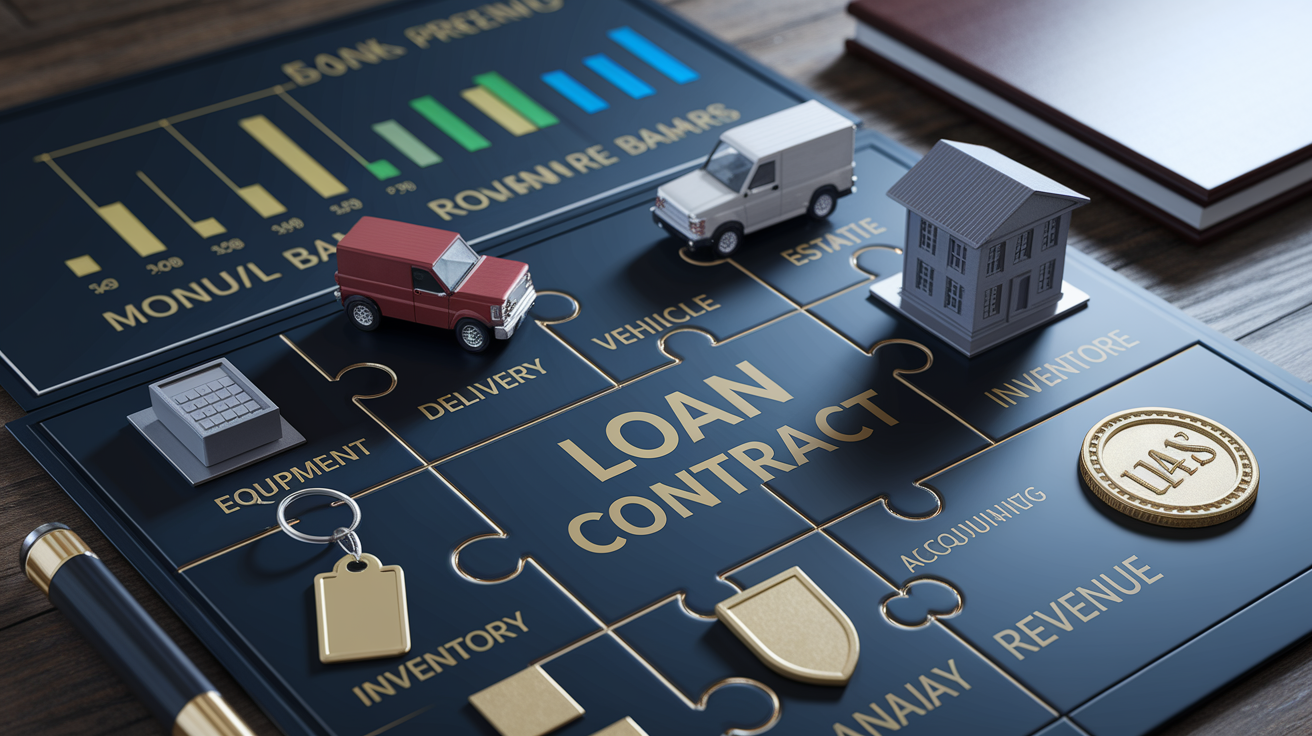
SBA 7(a) lenders will secure as much collateral as possible, though the amount and type vary based on loan size and lender policy. Many lenders offer unsecured SBA 7(a) loans up to $50,000, meaning no collateral is required if your credit and cash flow are strong. Loans between $50,001 and $500,000 typically require a blanket lien on business assets, and larger loans may require additional personal collateral such as real estate, vehicles, or titled equipment.
Personal guarantees are required from any owner holding 20% or more of the business. A personal guarantee means that if the business defaults, lenders can pursue the owner’s personal assets to recover the debt. Lenders also ask for personal financial statements that list all assets, liabilities, income, and monthly expenses, and they may request additional collateral from owners who have significant equity in property, vehicles, or other titled assets.
When structuring your loan request, follow these four collateral and sizing guidelines to improve approval odds:
- Size your loan request at 25 to 50% of your average annual revenue. Requesting more than 50% of revenue increases lender risk and often triggers denials or requests for additional collateral.
- Provide titles, appraisals, or serial numbers for any collateral you plan to offer. Business equipment, vehicles, real estate, inventory, or accounts receivable can all strengthen your application if properly documented.
- Be prepared to offer personal collateral if business assets are insufficient. Lenders prefer to secure loans with business assets first, but may accept personal real estate or vehicles if business collateral is limited.
- Consider a financially strong co-signer if your personal credit or assets are weak. A co-signer with excellent credit and significant equity can materially improve approval odds.
Lenders use collateral to reduce their loss exposure, but collateral alone won’t overcome weak cash flow or poor credit. A business with strong DSCR and clean financials may receive an unsecured approval up to $50,000, while a business with inconsistent revenue and low credit may be required to pledge real estate even for a $25,000 loan. Focus first on credit, cash flow, and documentation, then address collateral and guarantees based on lender requirements.
Choosing the Right SBA Lender to Improve Approval Success

Not all SBA 7(a) lenders operate the same way. Choosing the wrong lender can add weeks to your timeline or result in a denial even when your financials are strong. Lenders vary by industry appetite, state focus, loan size preferences, collateral policies, and underwriting speed. The right lender match increases approval odds and shortens the time from application to funding.
Ask lenders whether they participate in the SBA Preferred Lender Program (PLP). PLP lenders have delegated authority to approve loans in house without waiting for SBA finalization, which typically shortens timelines to 30 to 45 days. Non PLP lenders must submit files to the SBA for final review, which extends the process to 6 to 10 weeks. If speed matters, prioritize PLP lenders.
When comparing lenders, evaluate these five factors:
- Interest rates (fixed vs variable) and term lengths. Rates and terms vary by lender, loan size, and borrower profile; compare total payback amounts, not just APR.
- Collateral policy and lien structure. Confirm whether the lender offers unsecured options up to $50,000 and what collateral they require above that threshold.
- Credit inquiry type (soft vs hard pull). Some lenders perform a soft credit pull during prequalification, which preserves your credit score for the formal application.
- Typical loan sizes and industry focus. Microlenders and CDFIs often serve smaller loans ($50,000 to a couple hundred thousand) and may be more flexible for startups or high risk industries.
- Application turnaround and responsiveness. Ask for typical timelines from application to decision, and confirm the lender has a dedicated Commercial Relationship Manager or point of contact.
Start by consulting your hometown bank for feedback, even if they don’t approve your file. Then target SBA approved lenders who specialize in your industry and state. If your loan request is smaller or your business is younger, consider CDFIs or microlenders who often have more flexible underwriting criteria. Verify each lender’s SBA approved status before applying. Working with a non approved lender wastes time and requires you to restart the process.
Addressing Common SBA 7(a) Loan Rejection Reasons (and Fixes)

Most SBA 7(a) loan denials fall into a small set of fixable categories: poor personal or business credit, insufficient debt service coverage, incomplete or inconsistent financials, young business age (less than two years), high risk industry or NAICS code, excessive customer concentration, and unresolved tax liens or legal issues. If you know the most common rejection reasons, you can address them before applying and avoid a denial that forces a 90 day wait before reapplying.
Lenders reject files when credit scores fall below minimum thresholds, typically 660 personal FICO or 165 to 170 SBSS. Fix this by disputing errors, reducing credit utilization below 30%, adding positive tradelines, and maintaining on time payment history for at least six months before reapplying.
Low DSCR is another common denial trigger. If your calculated DSCR is below 1.10, lenders assume you can’t afford the new debt. Fix this by paying down existing debt, increasing revenue through short term initiatives, extending the loan term to lower annual payments, or reducing the loan request to a smaller amount that produces a higher DSCR.
Here are six additional denial reasons with specific fixes:
- Incomplete or inconsistent financial statements. Reconcile bank accounts, correct errors, produce clean P&L and balance sheet reports, and ensure all documents match across tax returns, bank statements, and projections.
- Young business (less than two years in operation). Wait until your business reaches two years if possible, or provide exceptionally strong cash flow, large cash reserves, and personal financial strength to overcome the age deficit.
- High risk industry or NAICS code. Confirm you’ve selected the most accurate 6 digit NAICS code, document mitigations such as long term contracts or diversified customer base, and be prepared to explain deviations from industry norms.
- Excessive customer concentration (one customer represents more than 20 to 30% of revenue). Diversify your customer base by signing new contracts or increasing sales to existing smaller customers before applying.
- Unresolved tax liens, judgments, or delinquent taxes. Get current on all federal and state tax filings, or establish a documented payment plan with the IRS or state tax authority.
- Cash income not reported on tax returns. Do not omit cash income; lenders cannot count undocumented cash on loan applications, and discrepancies between bank deposits and tax returns trigger immediate denials.
If you receive a denial, request a written explanation from the lender outlining the specific deficits. Address each issue systematically, then wait at least 90 days before reapplying. Many applicants improve credit scores by 20 to 40 points, raise DSCR by paying down debt, and clean up financials within 90 to 120 days, turning a prior denial into an approval.
Industry, NAICS Code & Tax Compliance Factors That Influence SBA 7(a) Approval

Lenders compare your business performance to industry averages using your 6 digit NAICS code, and selecting the wrong code or operating in a high risk industry can reduce approval odds even when your credit and cash flow are strong. NAICS codes categorize businesses by industry and sub industry, and lenders use these codes to benchmark your revenue, gross margin, expense ratios, and growth rates against similar businesses. If your metrics deviate significantly from industry norms, lenders will ask for explanations.
High risk industries face stricter underwriting and may require higher credit scores, larger down payments, or additional collateral. Examples include restaurants, construction, retail, personal services, and any industry with high failure rates or seasonal volatility. If you operate in a high risk industry, document mitigations such as long term contracts, diversified revenue streams, or strong historical profitability to offset lender concerns.
Tax compliance is equally important. Lenders require that all federal and state tax filings are current, and unresolved tax liens or judgments almost always trigger denials unless you can show a documented payment plan with the IRS or state tax authority. If you owe back taxes, get on a payment plan before applying, and provide proof of the plan to lenders as part of your application.
Follow these four steps to address industry, NAICS, and tax factors before applying:
- Verify your 6 digit NAICS code is accurate. Use the most specific code that matches your primary revenue source, and be prepared to explain any deviations from industry benchmarks.
- Document industry specific factors that affect your financials. Seasonality, long sales cycles, high gross margins, or customer concentration should all be explained in your business plan.
- Confirm all federal and state tax filings are current. Request tax transcripts from the IRS if needed, and resolve any outstanding liens or judgments before applying.
- Prepare explanations for any unusual industry metrics. If your gross margin is lower or higher than industry averages, explain why (e.g., new product mix, geographic pricing differences, or efficiency improvements).
Lenders want to fund businesses that fit predictable patterns, and deviations from industry norms raise questions. The more clearly you explain your business model and financial structure, the easier it is for underwriters to approve your file.
Pre Application Timing Strategies to Maximize SBA 7(a) Approval Odds

Timing your SBA 7(a) application strategically can materially increase approval odds by ensuring lenders see your business during its strongest financial period. Apply when revenue is high, bank balances are strong, and accounts receivable are current. Not during a slow season, after a large expense, or when cash flow is temporarily tight. Lenders base underwriting decisions on recent financial performance, and a poorly timed application can trigger a denial even when your business is fundamentally healthy.
The best time to apply is after you’ve accumulated 3 to 6 months of cash reserves in your business bank account, paid down high interest debt, and closed a strong revenue month or quarter. If your business is seasonal, apply during or immediately after your peak season when bank statements show the highest daily balances and revenue is above average. Avoid applying during tax season if your accountant is behind on financials, or immediately after a slow month that would lower your calculated DSCR.
Here are three pre application timing actions that increase approval odds:
- Build liquidity reserves to 3 to 6 months of operating expenses before applying. Lenders view cash reserves as a buffer against revenue volatility and a sign of financial discipline.
- Pay down outstanding debt to reduce your debt service burden. Lower monthly debt payments improve your DSCR and signal to lenders that you manage credit responsibly.
- Wait until your financials reflect a full recovery from any recent disruption. If you experienced a revenue dip, slow month, or large one time expense, wait until the next strong period to apply so lenders see stable, positive trends.
If you apply too early, before credit is repaired or cash flow is stabilized, you’ll likely receive a denial and be forced to wait 90 days before reapplying. Use that 90 day window to fix deficits rather than rushing into an application that’s likely to fail.
Using Professional Packaging & Advisory Support to Improve SBA 7(a) Approval Chances
Professional loan packagers and consultants help business owners organize documents, prepare financials, correct bookkeeping errors, and build lender ready narratives that align with underwriting criteria. Hiring a packager makes sense when your financials are complex, your bookkeeping is messy, or you’ve already received a denial and need to understand what went wrong. Packagers can’t fix poor credit or weak cash flow, but they can prevent errors, omissions, and presentation issues that trigger unnecessary delays or denials.
Packagers typically charge a flat fee or a percentage of the loan amount, and they handle document collection, financial statement preparation, business plan writing, DSCR calculation, and lender outreach. They know what lenders expect, which documents are required, and how to present financials in the cleanest, most understandable format. If you’re applying for a large loan, managing multiple income sources, or navigating a complex ownership structure, professional packaging can increase approval odds by ensuring your file is complete, accurate, and compelling from the first submission.
The value of a packager is highest when you lack time, accounting expertise, or prior SBA experience. If you’ve never applied for an SBA loan, don’t know how to calculate DSCR, or aren’t confident in your bookkeeping, a packager can save weeks of back and forth with lenders and reduce the risk of rejection due to incomplete or inconsistent documents. If your financials are straightforward and you have clean bookkeeping, you may not need packaging support. Just follow the documentation checklist, organize your files, and submit a complete application on your own.
Final Words
In the action, you’ve got a clear playbook: shore up personal and business credit, boost DSCR and cash reserves, prepare tidy financials and a focused business plan, size collateral sensibly, pick a lender that fits, and fix common denial triggers.
These steps show what lenders actually look for and how to improve approval chances for sba 7a loan. Start small – check your FICO, pull recent bank statements, and write a one-page use-of-funds. Do that, and your application will be stronger and more fundable.
FAQ
Q: How hard is it to get an SBA 7A loan?
A: Getting an SBA 7(a) loan is achievable but selective. Lenders typically want personal FICO ≥660 (ideal 690+), SBSS ~165–170, DSCR ≥1.10, 2+ years in business, clean docs, and 3–6 months reserves.
Q: What is the 20% rule for SBA?
A: The 20% rule for SBA generally means lenders expect about a 20% borrower equity injection or keeping the loan at or below 80% of value, especially for higher‑risk deals or newer businesses.
Q: What are the common reasons 7A loans are denied?
A: Common reasons 7(a) loans are denied include weak personal or business credit, low DSCR, incomplete or messy documentation, young business age, high‑risk NAICS, customer concentration, delinquent taxes, or inconsistent financials.
Q: What disqualifies you from an SBA loan?
A: You can be disqualified from an SBA loan by being in an ineligible industry, having unresolved federal tax liens, recent bankruptcy, false statements on the application, majority foreign ownership, or missing credit/time‑in‑business minimums.