


Think factoring will tank your credit? Think again.
It doesn’t hit personal or business credit because you’re selling invoices, not taking a loan.
What it does is flip slow pay into cash coming in within 24 to 48 hours, so payroll gets met and suppliers get paid on time.
But there’s a tradeoff: fees, reserve holds, and recourse (you may have to repay if a customer doesn’t pay).
This post lays out exactly how credit stays safe, how cash flow changes, and the costs and risks to watch.
Immediate Impact of Invoice Factoring on Contractor Credit and Cash Flow

Invoice factoring won’t touch your credit score. Personal or business, it stays clean. That’s because factoring isn’t a loan. You’re selling an asset, not taking on debt. Nothing shows up on credit reports. No hard inquiries. No new debt ratios.
Approval doesn’t depend on your credit history either. It depends on who’s paying you. The general contractor or owner. Their credit matters, not yours. So if your credit’s thin or you’ve had past issues, you can still qualify.
Cash flow changes the day you factor. Most companies fund within 24 to 48 hours after approval. Those slow 30, 60, or 90 day receivables? They become same-week operating capital. You get 70 to 95 percent of the invoice value up front, deposited while the project’s still running, way before the customer actually pays.
That speed can make or break you. It’s the difference between making Friday payroll or missing it. Paying suppliers on time so you don’t lose trade credit. Buying materials for the next phase instead of waiting on last month’s invoice.
What factoring does and doesn’t do:
• No new liability gets added to your balance sheet.
• No credit score impact on personal or business reports.
• Immediate liquidity turns invoices into cash in one or two business days.
• Customer-dependent approval based on the GC or owner’s payment history, not your profile.
How Invoice Factoring Works for Contractors
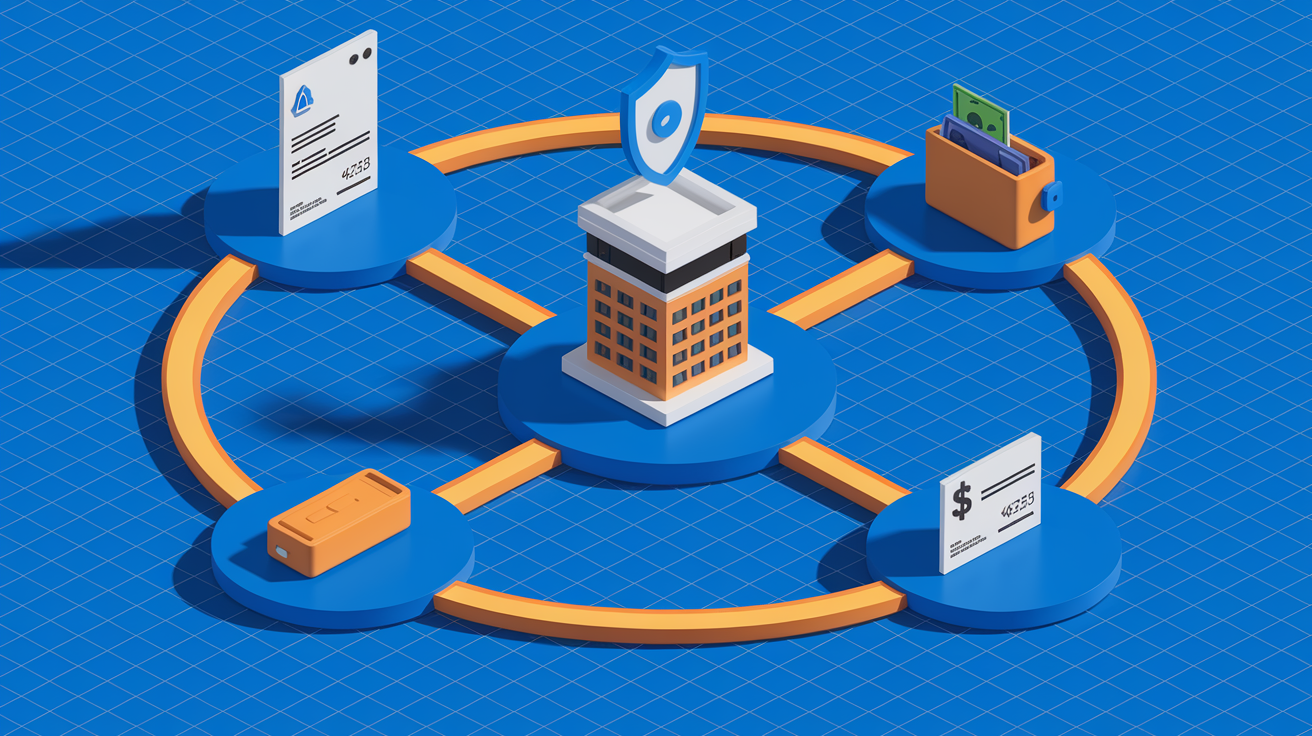
The process is straightforward. Five steps, repeat as needed:
- Submit the approved invoice. You upload the pay application, lien waivers, timesheets, whatever compliance documents are required.
- Factor reviews the paying party. They check the GC or owner’s credit and set a funding limit.
- Advance arrives. You receive 70 to 95 percent of the invoice value by wire or ACH, usually within 24 to 48 hours.
- Customer pays the factor. The GC or owner gets a notice of assignment and sends payment directly to the factoring company when it’s due.
- Reserve is released. The factor deducts their fee and sends you the remaining balance, typically 10 to 20 percent of the original invoice.
First-time funding takes a few business days. The factor files a UCC lien on the receivables and completes initial underwriting. After that, repeat transactions move faster. If you prep a standardized factoring packet (contract, approved pay app, insurance certificate, lien releases), you can cut funding time from days to hours.
You don’t wait 30, 60, or 90 days anymore. The factor handles collection. You use the advance to cover immediate costs while the invoice sits on their books.
Why Factoring Rarely Affects Contractor Credit Scores

Factoring isn’t debt. It doesn’t create a loan balance. Doesn’t accrue interest. Isn’t reported to business or personal credit bureaus as borrowing.
You’re selling an asset (the invoice), not taking on a liability. Credit reporting agencies don’t track factoring transactions like they track term loans, lines of credit, or merchant cash advances. The factoring company files a UCC lien to secure its interest in the receivables, but that’s a public notice of collateral. Not a debt instrument. Some sophisticated lenders review UCC filings when you apply for new credit, but the filing itself doesn’t lower your score.
Indirect credit effects can happen if you personally guarantee a recourse factoring agreement and the customer doesn’t pay. In that case, you’re liable to repurchase the invoice or repay the advance. If you default on that repayment, the factor may pursue collections, and those actions can affect personal credit. Also, if factoring creates cash flow strain (high fees squeeze margins and you can’t meet other obligations), missed payments on separate debts can damage credit even though factoring wasn’t the direct cause.
Cash Flow Benefits Specific to Contractors

Contractors work in an industry where payment lags are baked in. General contractors and owners routinely take 30 to 90 days to process pay applications. Especially when retainage, compliance reviews, or lien release documentation is involved. Meanwhile, subcontractors face weekly payroll, supplier invoices due in 15 to 30 days, and equipment rental charges that don’t pause while invoices age.
Factoring converts those slow receivables into immediate working capital. A plumbing subcontractor who completes rough-in work on the 15th of the month and submits a pay application can receive 85 percent of that invoice by the 18th. Rather than waiting until mid-November for the GC’s standard 45 day pay cycle. That advance covers the next crew’s wages, buys pipe and fixtures for the upcoming phase, eliminates the need to tap expensive short-term credit or delay supplier payments.
Cash flow improvements you’ll see:
• Payroll on schedule. Predictable weekly funding ensures labor costs are met without borrowing or raiding reserves.
• Supplier terms preserved. Paying material and equipment vendors on time maintains trade credit and early payment discounts.
• Capacity to bid larger jobs. Reliable cash flow lets you take on multiple projects at once without waiting for prior invoices to close.
Financial Statement and Balance Sheet Effects

Factoring changes how assets appear on the balance sheet but doesn’t create new liabilities. When you factor an invoice, accounts receivable decreases and cash increases by the advance amount. The reserve portion stays off the books until the factor releases it. The factoring fee reduces the total cash you ultimately receive.
Because factoring is a sale of receivables, not a loan, it doesn’t add a liability line. Your debt-to-equity ratio and leverage metrics stay unchanged. This can help when you’re approaching borrowing limits with a bank or when covenants restrict additional debt. Factoring provides liquidity without triggering debt covenants or requiring you to seek lender waivers.
| Financial Element | Effect of Factoring |
|---|---|
| Accounts Receivable | Decreases by invoice amount sold |
| Cash | Increases by advance (70–95% of invoice) |
| Liabilities | No change (factoring is not debt) |
Confirm accounting treatment with your accountant. While factoring is generally recorded as a receivable sale, specific accounting standards and the recourse nature of the agreement can influence classification in certain cases.
Costs, Fees, and Risks to Consider

Factoring fees typically range from 1 to 5 percent of the invoice value for the first 30 days, with incremental charges of 0.25 to 1 percent for each additional period if the customer pays late. You factor a $100,000 invoice at 3 percent and receive payment in 30 days? You’ll pay $3,000 in fees, netting $97,000 instead of waiting 60 days for the full amount.
Cost and risk elements to watch:
• Advance rate. The percentage paid upfront, usually 70 to 95 percent. Lower rates mean more cash tied up in reserve.
• Reserve holdback. Typically 10 to 20 percent of the invoice, released after customer payment minus fees.
• Recourse terms. If the customer doesn’t pay, you may be required to buy back the invoice or repay the advance.
• Wire and setup fees. One-time or per-transaction charges for ACH transfers and initial underwriting.
• Contract minimums. Some factors require a minimum monthly volume or charge penalties for low usage.
The biggest operational risk is customer notification. The factor sends a notice of assignment instructing the GC or owner to pay the factor directly. Some general contractors prohibit subcontractor factoring in their contracts, and proceeding without disclosure can trigger default clauses or termination. Review contract language before factoring and, when necessary, negotiate permission or choose a different funding method.
Failing to account for factoring costs in bid pricing can wipe out profit margins. A subcontractor who bids a job at 10 percent margin and later factors every invoice at 3 percent effectively cuts net margin to 7 percent.
Factoring vs. Traditional Contractor Loans

Loans create debt, appear on the balance sheet as liabilities, and affect credit utilization and borrowing capacity. Factoring doesn’t. You take a $200,000 term loan? You report $200,000 in new liabilities and face monthly principal and interest payments regardless of project cash flow. You factor $200,000 in receivables? You receive immediate cash but don’t add debt.
Speed and approval criteria differ sharply. Bank loans require credit checks, tax returns, financial statements, and often collateral beyond receivables. Approval can take weeks, and contractors with limited credit history or recent losses may not qualify. Factoring approval hinges on the GC or owner’s creditworthiness and can close in one to two business days with minimal documentation.
| Feature | Factoring vs Loan Summary |
|---|---|
| Credit impact | Factoring: none; Loan: reported debt, affects score |
| Approval basis | Factoring: customer credit; Loan: contractor credit |
| Speed | Factoring: 24–48 hours; Loan: 1–4 weeks |
| Cost | Factoring: 1–5% per month; Loan: APR 5–12% typical |
Loans often cost less over the long term but require fixed repayment schedules. Factoring costs more short-term but scales with activity. You factor invoices only during peak growth or cash crunches? You pay fees only when using the service. A term loan accrues interest continuously.
Real-World Examples of Factoring for Contractors

A mechanical subcontractor working on a multi-phase commercial project faced a gap between completing rough-in work and receiving payment 60 days later. The company needed $120,000 to cover payroll and purchase sheet metal for the next phase. The factor advanced $102,000 within 48 hours, allowing the contractor to keep crews on site and maintain the project schedule. When the GC paid 55 days later, the factor released the reserve minus a 2.5 percent fee, and the contractor netted $117,000. That’s $3,000 less than the invoice total but six weeks earlier than waiting for standard payment terms.
An electrical contractor managing three simultaneous projects used factoring to smooth inconsistent cash flow. One project paid on 30 day terms, another on 60, and the third held 10 percent retainage until final completion. By factoring the first two projects’ invoices, the contractor maintained predictable weekly liquidity, paid suppliers on time to preserve early payment discounts, and avoided short-term borrowing at higher rates.
What both examples show:
- Factoring solved timing mismatches between project costs and customer payments, not long-term capital needs.
- Advance funding arrived within one to two business days, faster than any loan or line of credit approval cycle, and kept operations moving without delay.
Final Words
You sell unpaid invoices and get cash in 24-48 hours, so payroll and materials don’t stall.
This post ran through the immediate impact, how factoring works, why it usually doesn’t show as debt on credit reports, balance-sheet effects, costs and risks, loan comparisons, and real contractor examples.
Bottom line, how invoice factoring affects contractor credit and cash flow is practical, it usually boosts cash without harming credit, but fees and customer payment issues can change the math. Used right, it keeps crews paid and projects moving.
FAQ
Q: How does factoring affect cash flow?
A: Factoring affects cash flow by turning unpaid invoices into cash quickly, often within 24-48 hours, so you can cover payroll, materials, or other short-term needs instead of waiting 30-90 days.
Q: Does invoice factoring affect credit score?
A: Invoice factoring affects credit score rarely, because it’s selling receivables rather than a loan and usually doesn’t appear on business credit reports, though persistent customer nonpayment can raise risk assessments.
Q: What are the disadvantages of invoice factoring?
A: The disadvantages of invoice factoring include higher fees than loans, possible customer-notification requirements, loss of some control over collections, and reduced final payment until the customer pays.
Q: How do you record factoring in accounting?
A: You record factoring in accounting by removing the sold invoice from accounts receivable, recording the cash advance as cash, and recognizing the factoring fee as an expense or reduction to receivables.