


Think factoring is your only way to turn invoices into cash?
It isn’t, and for contractors it can cost more and strain client relationships.
With 30-120 day payment waits and 5-10% retainage, payroll and materials run out fast.
This post walks through real alternatives, business lines of credit, equipment financing, construction draws, SBA loans, retainage financing and quick advances, that better match construction cash cycles, keep clients out of the loop, and often lower your all-in cost.
We’ll map which option fits your timeline and need.
Quick Ranking of the Best Alternatives for Contractor Cash Flow

Factoring isn’t your only move when you need to turn invoices into cash. Contractors dealing with 30 to 120+ day payment delays and 5–10% retainage holds have better options that skip the high factoring fees (usually 1.5–5% per invoice) and keep your client relationships intact.
Lines of credit run 6–25% APR, approve in 3 days to 4 weeks, and let you draw what you need without looping in your clients. Equipment financing spreads machinery costs at 4–30% APR and keeps your working capital free for payroll and materials. Construction loans fund 60–90% of contract value through AIA draws at 5–12% interest, syncing repayment to your project timeline. SBA loans deliver 6–13% APR over long terms for big, low-cost capital, though closing takes 4–12 weeks. Merchant cash advances fund in 24–72 hours but you’re looking at effective rates of 40–350% APR. Purchase order financing covers 50–100% of supplier costs at 1–6% fees. Retainage financing advances 70–90% of withheld funds at 0.5–3% monthly.
What’s right depends on what you’re solving and how fast you need it solved.
Best fit for common contractor situations:
- Immediate cash for payroll or materials (need within 48 hours): Merchant cash advance or online business line of credit if you’ve already got one set up
- Bridging 30–90 day invoice cycles without involving clients: Business line of credit or short-term construction loan
- Covering withheld retainage until project closeout: Retainage financing or a line of credit sized to your typical retention percentage
- Purchasing long-term equipment or vehicles: Equipment financing or SBA CDC/504 loans
- Funding mobilization or large project startup costs: Construction/project loan structured around draws
- Lowest long-term cost for expansion or facility purchase: SBA 7(a) or CDC/504 loans
Cash-Flow Realities Driving the Need for Factoring Alternatives

Construction contractors operate in a delayed-payment economy. Some subcontractors wait as many as 74 days for reimbursement while suppliers and payroll hit on 30-day cycles or less. That timing mismatch forces 87% of contractors to pay labor out of pocket before clients send payment. Add the fact that 57% of subcontractors saw profits shrink in 2022 due to rising material and labor costs, and the cash-flow pressure is real. It’s constant.
Retainage makes it worse. Most contracts withhold 5–10% of each invoice until project completion, locking up capital for months. Factoring promises immediate access to 70–90% of unpaid invoices, but the 1.5–5% fee plus the factor’s direct collection from your client can create friction and limit your flexibility on future jobs with that same client.
Contractors need financing that covers retainage, aligns with draw schedules, funds mobilization, and doesn’t insert a third party into client relationships. That’s why alternatives to factoring exist. Products that match construction cash cycles, preserve client trust, and often cost less over the life of the project. What you choose depends on what gap you’re filling, how long you’ll carry the balance, and whether you can wait days or need cash today.
Business Lines of Credit as a Factoring Alternative
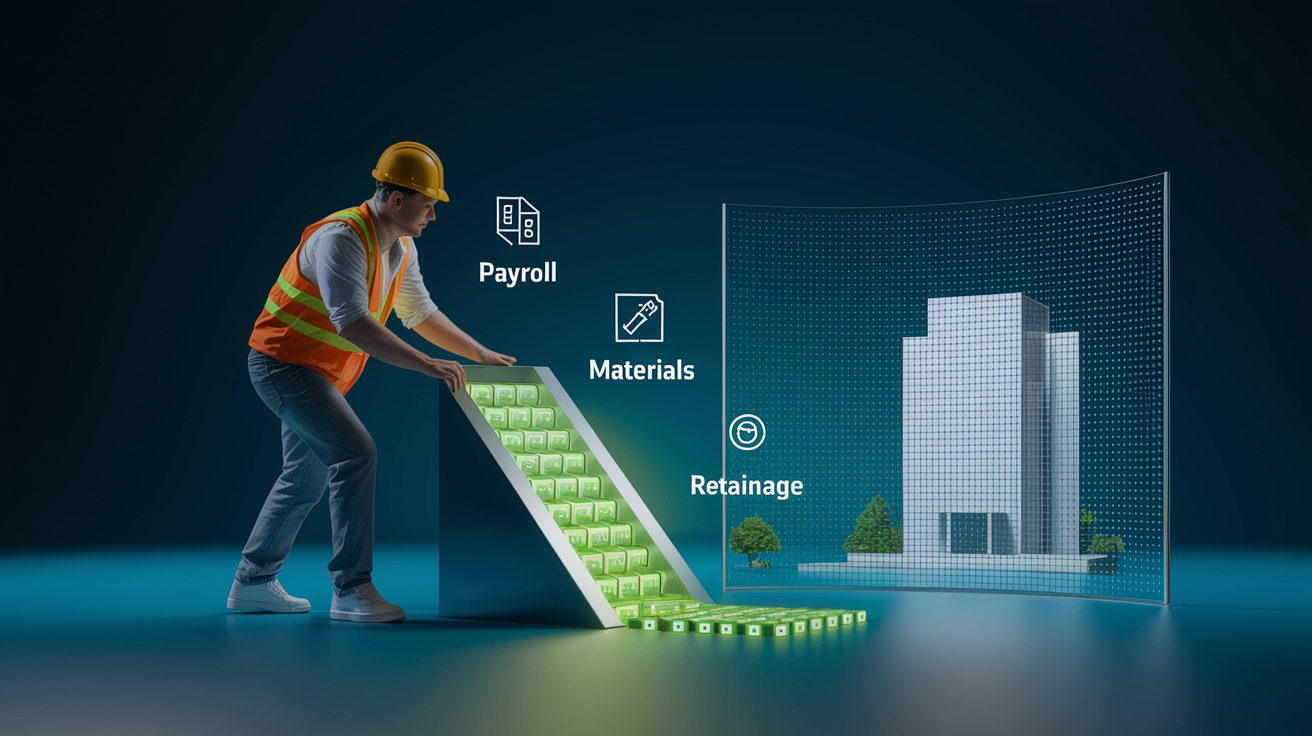
A business line of credit works like a reserve fund you tap when revenue lags invoices. You’re approved for a maximum amount, commonly $10,000 to $500,000, and you draw only what you need. Interest runs 6–25% APR on the drawn balance, with monthly interest calculated as APR divided by 12. Many lenders charge a small unused fee, typically 0.25–1% annually, on the portion you don’t touch.
Approval takes 3 days to 4 weeks depending on whether you’re working with an online lender or a bank. Eligibility centers on time in business (usually 12–24 months minimum), annual revenue over $100,000, and a personal credit score of 650 or higher for the best rates. Once the line is established, you can draw and repay on your own schedule. No involving clients. No waiting for invoice approval from a factor.
Lines of credit are ideal for covering short-term gaps. Bridging payroll before a draw clears. Fronting materials for a new phase. Covering the 5–10% retainage withheld on active projects. Unlike factoring, the repayment is between you and the lender, and your client never knows you borrowed.
Pros and cons of lines of credit vs factoring:
- Pro: Lower cost. A $15,000 draw at 12% APR for 30 days costs about $150 in interest versus $300 or more in factoring fees on the same invoice.
- Pro: Client relationships untouched. No third-party collections or notification.
- Pro: Flexible repayment. Pay down when client pays you, draw again when the next gap hits.
- Con: Requires decent credit and operating history. Startups and contractors with thin files may not qualify.
- Con: Approval can take weeks the first time. Not instant like some factoring deals.
| Option | Cost Range | Speed |
|---|---|---|
| Business Line of Credit | 6–25% APR | 3 days–4 weeks (first approval) |
| Invoice Factoring | 1.5–5% per invoice | 24–48 hours per invoice sold |
Equipment Financing and Leaseback Instead of Factoring

Equipment financing lets you buy trucks, excavators, lifts, or tools and spread payments over 1 to 7 years. The equipment itself serves as collateral, similar to a car loan. Rates run 4–30% APR depending on your credit, the term length, and whether the equipment is new or used. Lenders will finance $5,000 to $5,000,000. Approval can happen in as little as 1 day or take up to 4 weeks for larger packages.
When you finance equipment instead of paying cash up front, you preserve working capital for payroll, materials, and subcontractor deposits. That means you’re not forced to factor invoices just to cover a one-time machinery purchase. Monthly payments are fixed and predictable. At the end of the term, you own the asset outright.
When equipment financing solves cash flow better than factoring:
- You need long-term machinery and don’t want to drain cash reserves that should cover short-term project gaps.
- The equipment generates revenue or reduces rental costs faster than the monthly payment.
- Your credit and time in business qualify you for rates under 15% APR, making it cheaper than repeated factoring fees.
- You want to build business credit and asset value without touching client receivables.
Construction and Project Loans as Structured Factoring Alternatives

Construction loans and short-term project loans are built to fund specific jobs from mobilization through completion. They typically run 6 to 18 months, charge 5–12% interest, and advance 60–90% of the contract value in scheduled draws. Draws align with AIA pay applications or other progress milestones, so funding hits when you need to pay subcontractors, suppliers, and labor for the next phase.
Approval takes 2 to 8 weeks. Faster if you’ve worked with the lender before. Underwriting reviews the contract, your experience on similar projects, financial statements, and proof of bonding or insurance. Once approved, the loan disburses in stages tied to completed work, keeping cash flow steady without waiting on the owner or general contractor to process invoices.
Construction loans can also cover mobilization costs and retainage. Some lenders structure the loan so the final draw releases when lien waivers are submitted and retainage is paid. That eliminates the need to factor invoices or carry withheld funds on your balance sheet for months.
| Feature | Construction Loan | Factoring |
|---|---|---|
| Repayment timing | Tied to project draws or end of term | When client pays the invoice |
| Cost structure | 5–12% annualized interest | 1.5–5% per invoice sold |
| Client involvement | None—lender funds based on contract | Factor collects directly from client |
| Best for | Large projects with AIA draws, retainage, and mobilization needs | Quick access to cash on individual invoices |
SBA Loans as Low-Cost Long-Term Alternatives
SBA 7(a) loans go up to $5,000,000 and can be used for working capital, equipment, real estate, or refinancing existing debt. SBA CDC/504 loans fund up to $5,500,000 for fixed assets like facilities and heavy equipment. Interest rates run approximately 6–13% APR, linked to market rates plus an SBA spread. Terms stretch up to 25 years for real estate, 7–10 years for equipment, and up to 10 years for working capital in some cases.
The tradeoff is time. Approval and funding take 4 to 12 weeks or longer for complex deals. Lenders require strong personal credit (typically 2 years or more in business), collateral for larger amounts, and demonstrated cash flow. That makes SBA loans a poor fit for immediate payroll gaps but an excellent fit for large, low-cost capital needs that don’t require speed.
When SBA loans beat factoring:
- You’re buying a facility, large equipment package, or funding a major expansion and can wait for approval.
- You want the lowest possible long-term cost and can provide financial statements, tax returns, and collateral.
- Your credit and operating history are strong enough to qualify for government-backed rates.
- The capital need is too large for a line of credit and you’d rather avoid repeated factoring fees over months or years.
Example scenario:
A general contractor needs $250,000 to purchase specialized equipment and cover mobilization for a 12-month project. An SBA 7(a) loan at 8% APR over 7 years results in monthly payments around $3,800. Factoring $250,000 in invoices at 3% per invoice would cost $7,500 in fees, and that’s just for one round of advances. Over 12 months, the SBA loan costs roughly $45,600 total. Repeated factoring could exceed $90,000 depending on how many invoices are sold.
Merchant Cash Advances and Revenue-Based Funding as Speed Alternatives

Merchant cash advances fund $5,000 to $500,000 in 24 to 72 hours with minimal paperwork. Instead of interest rates, MCAs use factor rates, typically 1.1 to 1.5. That means you repay $1.10 to $1.50 for every dollar advanced. Translates to effective APRs ranging from 40% to 350% depending on how fast you repay. Repayment happens through daily or weekly debits tied to a percentage of sales or bank deposits.
Revenue-based loans work similarly. You receive upfront capital and repay a fixed percentage of monthly revenue until you’ve paid back 1.5x to 3x the original advance. Funding arrives in a few days, and credit score matters less than revenue history. The flexibility is real. If revenue dips, repayment slows automatically. But the cost is high and liquidity shrinks while the advance is outstanding.
MCAs and revenue-based funding are useful when you need cash immediately and don’t qualify for traditional credit. But they’re risky for contractors whose revenue arrives in lumpy project payments rather than steady daily card transactions. A daily debit can squeeze cash flow hard when you’re waiting on a 60-day invoice.
Risk considerations for MCAs and revenue-based funding:
- Very high cost. Effective APRs often exceed 100%, sometimes topping 300% on short-term advances.
- Daily debits. Automatic withdrawals can collide with payroll, supplier payments, and uneven project cash flow.
- Stacking danger. Taking multiple MCAs to cover prior advances creates a debt spiral that’s hard to escape.
- Not aligned to construction cycles. Repayment ignores whether your client has paid you. It pulls from revenue regardless.
- Limited contract flexibility. Some MCA contracts include confession-of-judgment clauses and blanket UCC liens on all business assets.
- Poor long-term fit. Best reserved for true emergencies, not ongoing working capital management.
Purchase Order and Retainage Financing for Project-Specific Gaps

Purchase order financing pays your supplier directly when you have a confirmed PO but lack the cash to fulfill it. The lender advances 50–100% of the PO value, you deliver the work or materials, and you repay the lender when your client pays you. Fees typically run 1–6% of the order value. Funding happens in 3 to 14 days. It’s a narrow tool, best for material-heavy jobs where the supplier quote and client PO are both locked in.
Retainage financing solves a different, construction-specific problem. When 5–10% of every invoice is withheld until project completion, that locked capital can reach tens of thousands of dollars on larger jobs. Retainage lenders advance 70–90% of the withheld amount and charge 0.5–3% per month on the outstanding balance. You receive cash immediately. The lender gets repaid when retainage is released. You avoid factoring the full invoice just to cover the retained portion.
Both products are faster and more targeted than general factoring. PO financing doesn’t touch your receivables at all. It’s supplier-focused. Retainage financing only addresses the withheld balance, leaving the rest of the invoice under your control.
When PO and retainage financing replace factoring:
- You won a large project but need to pay the supplier before billing the client. PO financing covers that gap without factoring future invoices.
- Your backlog includes $50,000 in withheld retainage and you need that cash now to bid on new work. Retainage financing unlocks it at a monthly fee lower than repeated factoring.
- You want to preserve client relationships by keeping collections in-house. Neither product involves the client in repayment.
- The cost of factoring the full invoice exceeds the targeted fee on just the PO or retained portion.
- You’re managing multiple projects with staggered retainage releases and need predictable access to withheld funds.
| Financing Type | Best Use Case | Cost Range |
|---|---|---|
| Purchase Order Financing | Paying suppliers to fulfill confirmed client orders | 1–6% per order |
| Retainage Financing | Accessing withheld contract funds before project closeout | 0.5–3% per month on advanced amount |
| Invoice Factoring | Quick cash on unpaid invoices with factor collecting from client | 1.5–5% per invoice |
Trade Credit, Supplier Terms, and Contract-Based Solutions

Trade credit is the simplest form of construction financing and often the cheapest. Your supplier delivers materials or rents equipment and gives you 30, 60, or 90 days to pay, usually at 0% cost if you pay within the agreed window. Late payments trigger fees and damage the relationship, so the key is matching supplier terms to your client payment schedule.
Building strong supplier relationships unlocks better terms. Suppliers who trust your payment history may extend longer windows, larger order limits, or early-payment discounts. That reduces the need for outside financing entirely. Some suppliers also offer their own financing programs or partner with lenders to provide extended payment plans at rates lower than factoring.
How trade credit and supplier terms reduce factoring dependence:
- No interest or fees if paid on time. 30-day terms at 0% beat a 2% factoring fee every time.
- Preserves cash for payroll and other non-supplier costs. You’re not tying up working capital in materials up front.
- Builds credit and negotiating leverage. Consistent on-time payment history qualifies you for better terms and larger orders.
- Can be combined with client payment schedules. If your client pays in 45 days, negotiate 60-day supplier terms to create a buffer.
Who Should Choose Which Factoring Alternative

Different contractor profiles need different products. A subcontractor with steady monthly invoices and 650+ credit should prioritize a business line of credit for the lowest repeatable cost. A general contractor managing $1,000,000+ projects with AIA draws should structure a construction loan that funds mobilization and scheduled progress payments without touching client relationships.
Small contractors who need equipment but lack cash reserves fit equipment financing or SBA CDC/504 loans, especially if the machinery will be used for years. Contractors facing immediate payroll shortfalls with weak credit may have no choice but an MCA. But they should treat it as a one-time fix and transition to a line of credit as soon as revenue stabilizes and credit improves.
Retainage financing is the obvious choice when withheld contract funds are the main problem. If you’re carrying $30,000 in retainage across three active jobs and the releases won’t happen for 60 to 90 days, advancing 80% at 2% monthly costs $480 per month. Factoring the full invoices at 3% could cost thousands depending on invoice size.
Contractor profiles matched to best alternatives:
- Subcontractor, steady invoices, good credit, 30–60 day waits: Business line of credit (6–25% APR, flexible draws)
- GC managing large projects with AIA draws and retainage: Construction/project loan (5–12% interest, structured around milestones)
- Contractor buying long-term equipment or facility: SBA 7(a) or CDC/504 (6–13% APR, long terms, lowest cost)
- Contractor with confirmed PO but no cash to pay supplier: PO financing (1–6% per order, fast supplier payment)
- Contractor with $20k–$50k retainage withheld across jobs: Retainage financing (0.5–3% monthly, 70–90% advance)
- Contractor needing cash in 48 hours, limited credit options: MCA or revenue-based loan (40–350% APR, daily/weekly repayment, high cost, emergency use only)
How Contractors Can Decide the Right Alternative for Their Situation
Start by identifying the gap. Is the problem a one-time equipment purchase, ongoing 30–90 day invoice delays, withheld retainage, or an immediate payroll shortfall? The product that solves a retainage gap won’t solve a mobilization problem. A construction loan built for draws won’t help if you need $10,000 tomorrow.
Next, calculate the true cost. For a 30-day need, compare a factoring fee (say 2.5% of a $20,000 invoice, or $500) against a line of credit at 12% APR, which costs $20,000 × (12% ÷ 12) = $200 in interest. Over 90 days, the line of credit costs $600 versus $500 in factoring fees. But the line preserves client relationships and remains available for the next gap. Multiply that across a year of invoices and the line of credit saves thousands.
Then map the numbers to your situation. Add up total retainage withheld across active projects (typically 5–10% of backlog) and size a line of credit or retainage facility to cover peak exposure. Check your credit score, time in business, and revenue to determine which products you’ll qualify for. If you don’t meet bank standards, online lenders or retainage specialists may approve with looser criteria but higher rates.
Key factors to evaluate before choosing:
- Speed required: Same-day (MCA, established LOC), 3–14 days (retainage, PO, some equipment loans), weeks (construction loans, new LOC), months (SBA)
- Cost tolerance: Calculate monthly interest or fees and compare factoring cost per invoice to alternative APRs
- Credit and operating history: 650+ score and 12+ months qualify for most. Below that, expect higher rates or fewer options.
- Client and supplier relationships: Will third-party collections damage future work? Choose products that keep payments direct.
- Retainage exposure: Sum withheld balances and match financing to that specific gap rather than factoring full invoices.
| Step | What to Evaluate | Why It Matters |
|---|---|---|
| 1. Identify the gap | Is it retainage, payroll, equipment, mobilization, or supplier payment? | Different gaps require different products. One solution won’t fit all. |
| 2. Calculate true cost | Compare factoring fee % to monthly APR on alternatives over typical hold period | A 2% factoring fee can cost more than 12% APR if the invoice clears in 30 days |
| 3. Check qualifications | Credit score, time in business, revenue, collateral, contract terms | Knowing what you qualify for narrows options and prevents wasted applications |
Final Words
We ran through practical fixes: lines of credit for short gaps, equipment loans for gear, construction draws, SBA for low-cost big needs, MCAs for speed, and PO/retainage or supplier terms for project gaps.
Match speed, cost, collateral, and repayment to your pay cycles. Calculate monthly cost and total payback, then pick what won’t squeeze payroll.
Run the numbers – one of these alternatives to invoice factoring for contractors will likely fit better and keep your projects moving.
FAQ
Q: What are the alternatives to factoring?
A: The alternatives to factoring include business lines of credit, equipment financing or leaseback, construction/project loans, SBA loans, merchant cash advances (revenue-based), purchase order financing, and retainage financing—choose by speed, cost, and collateral.
Q: Who is the richest contractor in the USA?
A: The richest contractor in the USA varies by source and year; top spots typically go to founders or chairs of large construction and development firms. Check the latest Forbes or industry rankings for current names.
Q: Is invoice factoring worth it and what are its disadvantages?
A: Invoice factoring is worth it when you need fast cash despite higher cost; disadvantages include fees (commonly 1.5–5%), lower margins, client-facing collections, and potential strain on customer relationships.