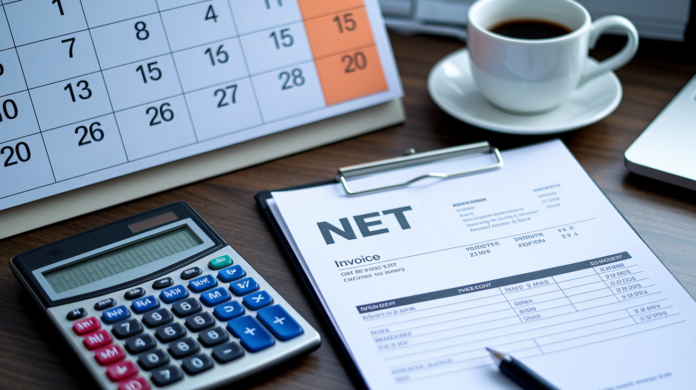

Net 30 invoices are the business norm, and often a quiet loan that steals your cash without you noticing.
This post shows how to write Net 30 payment terms that make customers pay on time: set a clear invoice date and exact due date, itemize every charge, spell out late fees, and offer an early-pay discount when it helps your cash flow.
Do it right and you’ll cut confusion, speed collections, and keep money coming when payroll or suppliers need it.
Understanding Net 30 Invoices and What They Solve
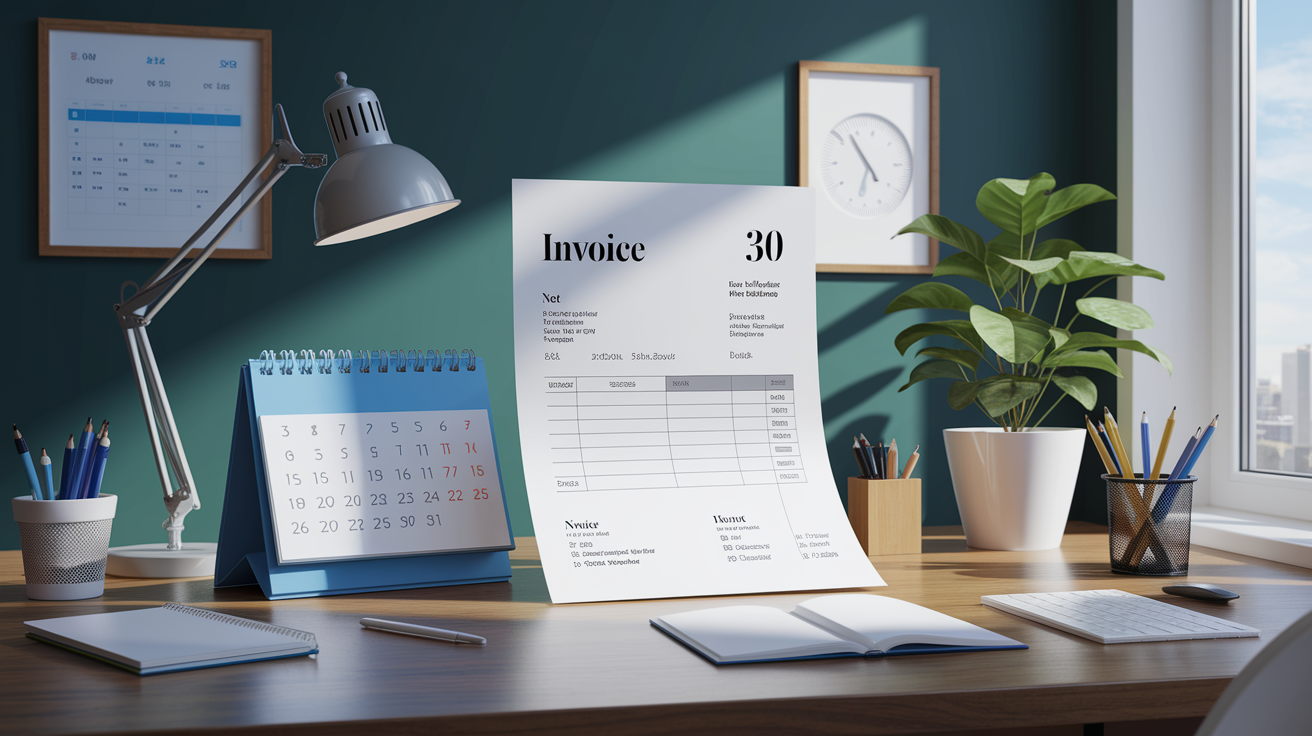
A net 30 invoice gives your customer 30 calendar days from the invoice date to pay the full amount. Weekends and holidays count.
It’s the standard B2B payment term because it works for both sides. Buyers get time to push invoices through approval chains and accounts payable. Vendors don’t wait forever for cash. You write “Net 30” on an invoice dated October 1, and payment’s due October 31.
The start date matters. “Net 30” usually counts from the invoice date. “Due in 30 days” can sometimes start from delivery or receipt, so spell it out: “Payment due within 30 days from invoice date.” Avoids confusion later.
Net 30 invoices solve a simple problem. They lock down when cash is supposed to arrive. Without a clear due date, “pay when you can” turns into “pay when you remember,” and collections become a mess. A net 30 invoice gives you:
- A documented due date you can reference in follow-ups
- Alignment with how B2B approval cycles actually work
- A clear trigger for late fees and reminders
- Predictability for your receivables forecast
In practice, a net 30 invoice is a receivables contract with a built-in calendar. You deliver the work or goods, issue the invoice with a 30 day window, and both sides know exactly when payment is expected and when it’s overdue.
Causes Behind the Need for Net 30 Invoice Terms

Net 30 exists because most business buyers can’t cut checks the day an invoice shows up. Accounts payable batches payments weekly or monthly, managers need time to review line items, and approval chains involve multiple signatures.
Trade credit is the real driver. When you offer net 30, you’re extending short-term financing to your customer. They take possession today and pay later. That credit window lets them match outgoing payments to their own revenue cycle, which is why B2B buyers expect it and why refusing it can cost you deals.
Industries landed on 30 days because it’s long enough to clear most approval processes but short enough to keep cash moving. Shorter windows squeeze buyers who can’t move faster. Longer windows squeeze vendors who can’t afford to wait.
The core reasons net 30 became necessary:
- Internal approval workflows at customer organizations that take 10 to 20 days
- Accounts payable schedules that batch payments on fixed cycles
- Buyers’ need to match invoice payments to their own receivables timing
Creating an Accurate Net 30 Invoice (Core Solution)
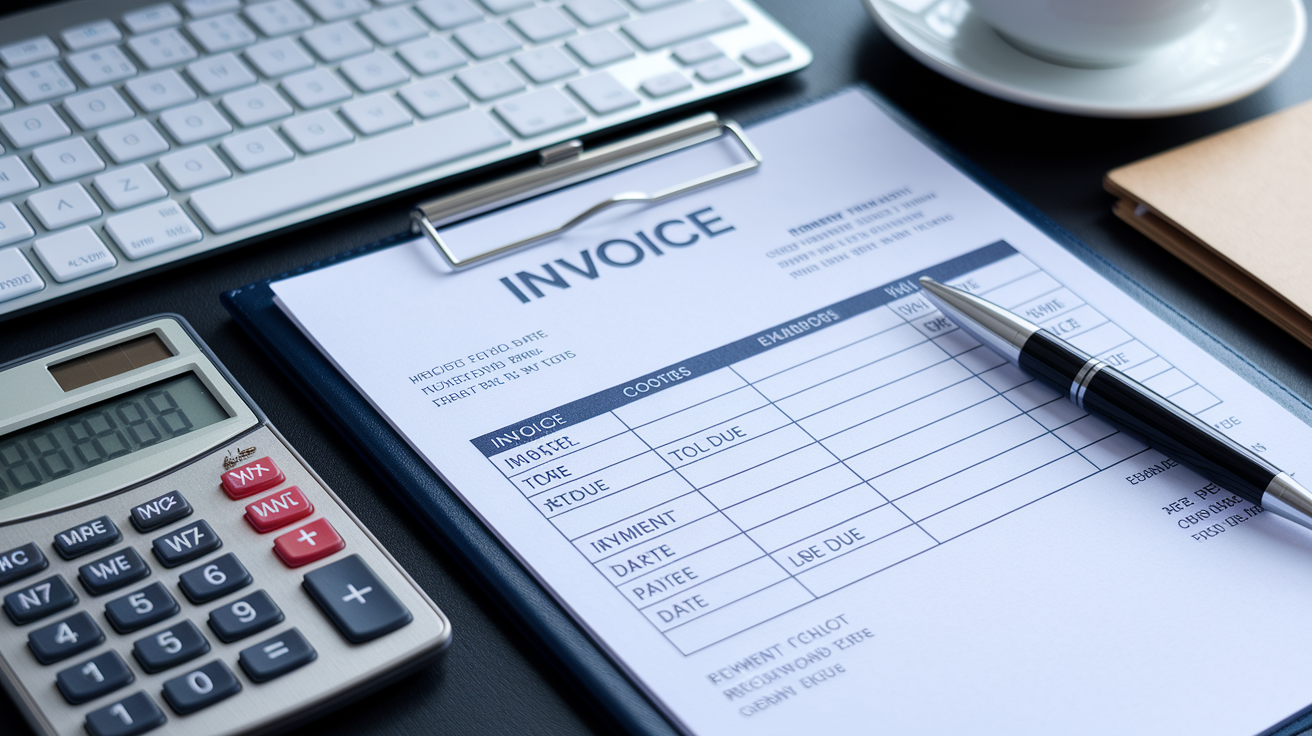
A net 30 invoice isn’t complete until it tells the customer exactly what’s owed, when it’s owed, and what happens if they miss the deadline.
Start with the invoice date. That’s day zero of your 30 day clock. Write it at the top, near the invoice number. Then calculate the due date by adding 30 calendar days and write that too, so the customer doesn’t have to count.
Next, itemize every cost. List each deliverable, quantity, unit price, and line total. Add subtotals, taxes, and any shipping or service charges. The final number at the bottom is what you expect to receive by the due date.
Now add the terms section. This is where “Net 30” lives, but don’t stop there. Spell out repayment expectations, early payment discount details if you’re offering one, and your late fee or interest policy. Clear wording prevents disputes later.
Every net 30 invoice needs these five fields:
- Invoice date (the day the 30 day period starts)
- Itemized costs with quantities, unit prices, and line totals
- Total amount due after taxes and fees
- Payment terms stating “Net 30” and the exact due date
- Late fee or interest policy if payment is overdue
Sample terms line for your invoice: “Terms: Net 30. Payment due within 30 days from invoice date. Failure to pay by the due date will result in a late fee of 1.5% monthly interest on the outstanding balance.”
Using Net 30 Invoice Templates and Examples
Templates save time and cut invoicing errors. A good net 30 template auto fills the due date when you enter the invoice date, includes a terms section with your standard wording, and leaves space for early discount and late fee details.
Most invoicing software and accounting platforms offer free downloadable templates. Pick one that matches your business model. Service providers need time tracking fields, product sellers need inventory line items, and project based businesses need milestone or phase breakdowns.
Here’s a quick example: invoice dated October 1 for $5,000, net 30 terms. Due date is October 31. If the customer pays on time, you receive $5,000. If you offered a 2% early discount for payment within ten days and they took it, they’d pay $4,900 on or before October 11. If they miss October 31, your late fee clock starts.
| Template Type | Primary Use | Ideal For |
|---|---|---|
| Basic | Single line item or flat fee | Retainers, consulting, simple service work |
| Industry Specific | Multiple units, SKUs, or materials | Wholesale, manufacturing, distribution |
| Itemized Project | Phases, milestones, or detailed breakdowns | Design, development, construction, marketing agencies |
Handling Cash Flow Challenges from Net 30 Billing
Offering net 30 means you finance your customers for up to 30 days. You’ve already paid for labor, materials, or overhead, and now you’re waiting for the cash to come back in. If you’ve got a handful of net 30 invoices outstanding at once, that’s a month of operating expenses sitting in accounts receivable instead of your bank account.
The strain shows up fast when payroll hits or suppliers demand payment before your customers pay you. If revenue is lumpy or seasonal, a pile of 30 day invoices can create a gap that forces you to tap credit lines, delay your own payments, or scramble for short-term funding.
Monitoring aging reports helps you see the problem before it becomes a crisis. An aging report groups your receivables into buckets: current, 1 to 30 days past due, 31 to 60 days, and so on. If invoices start stacking up in the overdue columns, your cash flow forecast just got worse and you need to tighten collections.
Four ways to manage the cash flow impact of net 30:
- Track days sales outstanding (DSO) monthly and aim to keep it under 35 to 40 days
- Build a cash reserve equal to at least one full payroll cycle plus key supplier obligations
- Use aging reports to spot late payers early and prioritize follow-up
- Offer early payment discounts to pull cash in faster when you need it
Adding Early Payment Discounts to Net 30 Invoices
An early payment discount trades a small revenue cut for faster cash. The most common structure is “2/10 Net 30.” The customer gets a 2% discount if they pay within ten days, but they still have the full 30 days to pay without penalty if they skip the discount.
Here’s the math on a $5,000 invoice: 2% of $5,000 is $100. Subtract that and the discounted payment is $4,900. If the customer pays by day ten, you collect $4,900 and close the invoice. If they wait until day 30, you collect the full $5,000.
The tradeoff is simple. You give up $100 to get paid 20 days earlier. If that $4,900 covers a supplier payment or payroll obligation you’d otherwise have to float, the discount pays for itself. If you don’t need the cash early, skip the discount and wait for the full amount.
Three reasons to offer early payment discounts:
- Speeds collections and reduces the number of invoices aging past 30 days
- Strengthens relationships with customers who value the savings
- Lowers bad debt risk by closing invoices while the work is still fresh in the customer’s mind
You can adjust the terms to fit your cash needs. A 1% discount might work for tighter margins. A “5/5 Net 30” structure offers 5% off if paid in five days, which can work for high volume, low margin transactions.
Managing Late Payments on Net 30 Invoices

Late payments are part of net 30 billing. Not every customer pays on time, and without a clear follow-up system, overdue invoices pile up and cash flow suffers.
Start with a reminder email a few days before the due date. Keep it friendly: “Invoice 1001 for $5,000 is due October 31. Let me know if you need a copy or have questions.” Most late payments aren’t intentional. They’re the result of missed emails, approval delays, or accounting mix-ups.
If the due date passes without payment, escalate in stages. Send a polite overdue notice within three to five days. Reference the original due date, restate the amount, and attach the invoice again. If another week goes by, send a firmer follow-up that mentions your late fee policy. After 15 to 20 days overdue, it’s time for a phone call or a final notice that warns of collections or legal action.
Four steps to keep late payments from dragging out:
- Send the first reminder three days before the due date
- Issue an overdue notice within five days after the due date passes
- Apply late fees as stated on your invoice (example: 1.5% monthly interest)
- Escalate to phone or formal collections after 15 to 20 days overdue
Sample late fee calculation: Invoice for $5,000 due October 31, unpaid as of November 30. That’s 30 days overdue. At 1.5% monthly interest, the fee is $5,000 × 0.015 = $75. The new balance owed is $5,075. State the interest rate clearly on your invoice and apply it consistently so customers know the cost of paying late.
Comparing Net 30 to Other Invoice Terms

Net 30 is a compromise. Shorter terms speed up cash but can push customers away. Longer terms win bigger clients but stretch your working capital.
Net 15 cuts the payment window in half. It works well for smaller invoices, repeat customers with proven payment histories, or service businesses that need faster cash cycling. The downside is that 15 days doesn’t give enterprise accounts payable enough time to process invoices through their standard workflows, so you may lose deals if competitors offer 30.
Net 60 and Net 90 cater to large organizations and government contracts where approval chains are longer and payment batches run monthly or quarterly. If you’re selling to Fortune 500 buyers or bidding on public sector work, you may need to match those terms to stay competitive. The cost is that you’re financing customers for two or three months, which requires deeper cash reserves or external funding.
Due on Receipt means payment is expected immediately. Use it for new customers you haven’t vetted, high risk transactions, or retail and e-commerce scenarios where the buyer receives goods at the time of sale. It eliminates accounts receivable risk, but it also eliminates the credit flexibility that B2B buyers expect.
| Term | Payment Timing | Best Use Case |
|---|---|---|
| Net 15 | 15 days from invoice date | Small invoices, repeat customers, service businesses needing faster cash |
| Net 30 | 30 days from invoice date | Standard B2B term, balances cash flow and customer expectations |
| Net 60 | 60 days from invoice date | Large enterprise buyers, government contracts, trusted long-term clients |
| Due on Receipt | Immediate | New customers, high risk transactions, retail, e-commerce |
Financing Options to Support Net 30 Invoices
When you’ve got a stack of net 30 invoices outstanding and bills to pay before your customers pay you, invoice financing and factoring unlock the cash tied up in receivables.
Invoice financing lets you borrow against unpaid invoices. You still own the invoices, you still collect payment from your customers, and you repay the lender once the invoices are paid. It’s a short-term bridge loan secured by your accounts receivable. Typical cost runs 1% to 5% of the invoice value, depending on your customer’s creditworthiness and how long the invoices have been outstanding.
Factoring is a sale, not a loan. You sell the invoices to a factoring company at a discount, often 80% to 90% of face value upfront, and the factor takes over collections. When your customer pays, the factor keeps a fee (usually 2% to 5% of the invoice) and sends you the remaining balance. Factoring is faster and requires less paperwork than invoice financing, but it costs more and your customers deal directly with the factor, which can affect relationships.
Three scenarios where AR based financing makes sense:
- You have multiple net 30 invoices from creditworthy customers but payroll or supplier obligations due before those invoices pay
- Seasonal revenue creates gaps where outstanding receivables spike but cash inflows lag
- You’re scaling and need working capital to take on larger orders without waiting 30 to 60 days for prior invoices to clear
Invoice financing and factoring aren’t long-term solutions. They’re tools to smooth lumpy cash flow when net 30 terms create temporary mismatches between when you spend and when you collect.
Preventing Net 30 Issues Before They Happen

Most net 30 problems start before the invoice goes out. Vetting customers, setting clear policies, and automating invoicing catch issues early and reduce late payments.
Run a credit check before you offer net 30 to a new customer. Business credit bureaus can tell you if the buyer has a history of slow payment or defaults. For smaller deals, ask for trade references and call them. If the customer can’t provide references or the credit report shows red flags, start with due on receipt terms or require a deposit.
Set default payment terms in writing. Add a credit application to your onboarding process that spells out your standard terms, late fee policy, and dispute resolution process. Once a customer signs, you’ve got documentation to back up collections if an invoice goes unpaid.
Automate as much as possible. Invoicing software calculates due dates, sends reminders before invoices are due, and triggers follow-up emails when payments are late. Automation cuts the manual work and ensures no invoice slips through the cracks because someone forgot to send a reminder.
Five policies that prevent net 30 headaches:
- Require a signed credit application with payment terms before extending net 30 to any new customer
- Run credit checks on customers placing orders above a threshold amount (e.g., $2,500 or $5,000)
- Monitor cash flow weekly and flag any week where accounts receivable exceeds 40% of monthly revenue
- Use invoicing software to auto send payment reminders at day minus-3, day zero (due date), and day plus-5
- Reserve the right to revise terms to net 15 or due on receipt if a customer pays late twice in six months
When to Seek Additional Help Managing Net 30 Invoices
If invoices stay unpaid 30 to 60 days past the due date despite reminders and phone calls, it’s time to bring in outside help.
A collections agency takes over follow-up and uses formal demand letters, phone campaigns, and legal threats to recover payment. Agencies typically charge 25% to 40% of the amount collected, so you give up a chunk of the invoice, but you stop spending your own time chasing dead receivables. Use collections when the invoice is large enough to justify the fee and you’ve exhausted internal follow-up.
Legal action makes sense for high value invoices with clear documentation. If you’ve got a signed contract, a detailed invoice, proof of delivery, and written payment terms, small claims court or a business attorney can force payment. The cost and time investment only pencil out when the invoice is worth several thousand dollars or more and you have confidence the customer can actually pay a judgment.
Credit insurance protects you from customer defaults. You pay a premium (usually 0.5% to 2% of insured receivables), and if a customer goes bankrupt or doesn’t pay within the policy terms, the insurer covers most of the loss. It’s worth exploring if you have a concentrated customer base where one or two large clients represent most of your receivables.
Three signs you need professional or legal help:
- An invoice over $10,000 is 60+ days overdue and the customer stopped responding to calls and emails
- A repeat customer has multiple overdue invoices totaling more than 20% of your monthly revenue
- You suspect fraud or bad faith (customer received goods/services, disputes the invoice without cause, or is diverting payments to other creditors)
Final Words
You learned how Net 30 shifts when cash comes in, why buyers ask for 30-day terms, and how to build a correct invoice.
We covered cash-flow challenges, early-payment discounts, late-fee steps, templates, and AR financing so you can handle gaps without surprises.
Keep the checklist handy. Include required invoice fields, clear Net 30 wording, aging reports, and follow-up cadence.
A clean net 30 invoice, smart discounts, or invoice financing give you options, and with those tools you can keep cash moving and stress down.
FAQ
Q: How to make a net 30 invoice?
A: To make a Net 30 invoice, list invoice date, itemized charges, tax, total, clear wording like “Terms: Net 30,” and a due date 30 days from invoice date; note discounts and late fees.
Q: What do payment terms 2% 10 net 30 mean?
A: The payment terms “2% 10 Net 30” mean the buyer can take a 2% discount if they pay within 10 days; otherwise the full invoice is due 30 days from the invoice date.
Q: What does $6000 net 30 mean?
A: A “$6,000 Net 30” means the invoice total is $6,000 and payment is due within 30 days from the invoice date; no discount applies unless stated.
Q: What are the downsides of net 30 for sellers?
A: The downsides of Net 30 for sellers are delayed cash up to 30 days, higher risk of late or unpaid invoices, more administrative follow-up, and possible need to use financing to cover shortfalls.