


Think a merchant cash advance is just a fast loan? That’s a costly mistake.
Quickly: merchant cash advances are set up as a purchase of future receivables, but many agreements behave like debt.
This post walks you through exactly how to record and report MCA repayments for accounting and tax, what to book as a liability, what to expense as the factor fee, and how to show it on your cash flow and tax return.
By the end you’ll know which entries to make, which amounts are deductible, and the common traps that trigger audits or misstated books.
Classification of Merchant Cash Advance Repayments Under GAAP

An MCA isn’t a loan. It’s set up as a purchase of future receivables. The provider buys a chunk of your future sales at a discount, and you repay through a fixed total using a percentage of daily or weekly revenue. The whole repayment is bundled, but it splits into two parts: the original advance (what they purchased) and the factor fee (their profit).
GAAP wants you to look at what the transaction actually is, not what it’s called. If your MCA agreement includes recourse (meaning you’re on the hook to repay even if sales tank) or if repayment is structured with fixed periodic amounts that don’t flex with revenue, it works like debt. You record it as a liability on the balance sheet. The provider’s claim becomes a payable, and you reduce that payable as payments go through.
If the MCA truly operates as a sale of receivables with no recourse and the provider has full control over what they purchased, you might derecognize the receivables and recognize any difference as a gain or loss right away. But that’s rare. Most agreements include some guarantee or fixed repayment requirement, which means liability treatment is the way to go.
Factor fees are separate from the cash you got. They’re the cost of getting immediate money. Under GAAP, these fees should be amortized over the MCA’s life as financing or interest expense if you’re treating it as debt. If the fee is tiny, many small businesses just expense it right away. For tax purposes, factor fees may be deductible as ordinary business expenses, but only the fee portion. Never the principal repayment.
Here’s how to classify it:
Record the initial advance as a liability, not revenue, if the agreement includes recourse or a fixed repayment obligation. Separate the total repayment into principal (what you received) and fee (the provider’s markup). Classify the liability as short term if repayment wraps up within 12 months. Split into current and long term portions if it goes beyond that. Amortize the factor fee to interest or financing expense over the repayment period if the amount matters. Expense fees immediately only if they’re immaterial and you’re using cash basis or simplified accrual accounting.
Accounting Treatment and Required Journal Entries

When MCA funding arrives, the cash shows up in your account but you haven’t earned it as revenue. The correct entry records your obligation to repay.
Receipt of funds, example: $40,000 advance
You get $40,000 in your bank. You’ll repay $52,000 over the next six months. The difference, $12,000, is the factor fee.
Journal entry at funding:
Debit: Cash $40,000
Credit: MCA Payable $40,000
This entry bumps up your assets (cash) and creates a liability (MCA Payable). The $12,000 fee isn’t recorded yet because you haven’t incurred it over time.
Recording repayments, example: $2,000 weekly payment
Every week, the processor or your bank pulls $2,000. That payment cuts down your liability.
Journal entry for each repayment:
Debit: MCA Payable $2,000
Credit: Cash $2,000
If your processor withholds a percentage of daily card sales, you might see the withdrawal in your net deposits rather than as a separate bank deduction. Record the gross sales as revenue and the withholding as a reduction of the liability. Don’t net the revenue down. Keep sales reporting clean.
Recording the factor fee, example: $12,000 total fee over 26 weeks
If the fee is material and you use accrual accounting, amortize it over the repayment period. Divide $12,000 by 26 weeks = $461.54 per week.
Weekly entry to recognize financing cost:
Debit: MCA Financing Costs (expense) $461.54
Credit: Accrued MCA Fees (liability) $461.54
When the final repayment clears and the liability hits zero, the accrued fees account should also zero out. If your MCA is short term and the fee is small, many practitioners expense the entire $12,000 when the agreement is signed. Practical, but not strict GAAP. The common mistake is treating the $52,000 repayment as an expense. Only the $12,000 fee is an expense. The $40,000 principal is a balance sheet reduction, not a tax deductible cost.
Tax Treatment of MCA Repayments and Factor Fees

The IRS doesn’t have a specific ruling for MCAs. They’re structured as receivable purchases rather than loans, so the tax treatment follows general business expense rules. You don’t report the $40,000 advance as taxable income when you receive it. It’s not revenue, it’s a liability. The sales you generate to repay the MCA are taxed as normal business revenue when earned.
Factor fees are different. The $12,000 you paid to access $40,000 in cash is a cost of obtaining financing. It’s similar to interest, but it’s not called interest in the contract. Most tax professionals treat factor fees as deductible business expenses under “interest” or “other business expenses” on Schedule C or the applicable corporate return. The IRS allows deductions for ordinary and necessary expenses, and the cost of obtaining working capital fits that definition.
Here’s what the IRS will focus on:
Principal is not deductible. Repaying the $40,000 you received doesn’t create a tax deduction. It’s a return of the amount you owed.
Factor fees may be deductible. The $12,000 markup is a financing cost and is generally deductible in the year incurred if your business uses cash basis accounting, or amortized over the MCA term if you use accrual accounting.
Characterization matters. If the IRS recharacterizes your MCA as a loan (due to recourse or fixed repayment terms), the fee may be treated as interest and subject to interest deduction limits under Section 163(j) if your business has high gross receipts.
No Form 1099 INT or 1099 MISC. MCA providers don’t issue these forms because the transaction isn’t a loan and the fee isn’t reported as interest income to the provider in the traditional sense.
Form 1099 K reconciliation. If your payment processor issues a 1099 K that includes gross sales used to repay the MCA, don’t double report. The 1099 K reflects your total card revenue. The repayments aren’t additional income.
State conformity varies. Most states follow federal treatment, but some have specific rules on financing costs or debt like instruments. Check your state’s tax code or consult a local CPA.
To support your deductions, keep a clear paper trail. Keep the signed MCA agreement, the funding deposit confirmation, all processor or bank statements showing repayments, and any repayment schedule provided by the MCA company. If audited, you’ll need to show that the $12,000 was a fee for financing, not a personal expense, and that you allocated principal versus fee correctly. If the fee was large and you expensed it all at once, be ready to explain why immediate expensing was reasonable for your business size and accounting method.
Financial Statement Presentation Requirements
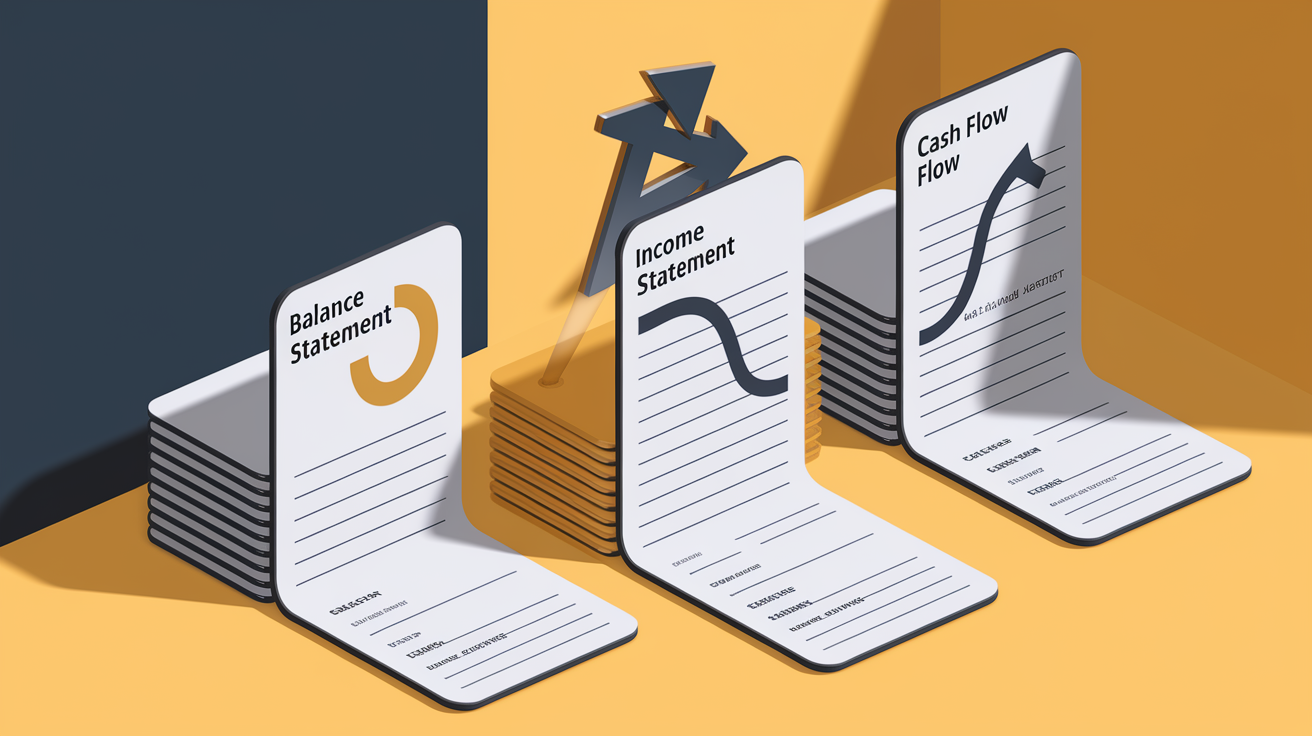
MCAs create both balance sheet and income statement effects. On the balance sheet, the MCA appears as a liability under “MCA Payable” or “Short Term Financing Obligations.” When you receive the $40,000, your cash increases by $40,000 and your liabilities increase by $40,000. As you make repayments, both cash and the liability decrease. If any portion of the repayment extends beyond 12 months, split the liability into current (due within one year) and long term portions.
On the income statement, the factor fee flows through as an operating expense. If you’re amortizing the $12,000 fee over six months, you’ll record $2,000 per month in “MCA Financing Costs” or “Interest Expense.” If you expensed the entire fee up front, it hits the income statement right away as a one time cost. Either way, only the fee reduces net income. The principal repayments don’t appear on the income statement because they’re balance sheet transactions.
Cash flow statements show the MCA funding as a cash inflow and the repayments as cash outflows. If you classify the MCA as a financing activity (recommended when it’s debt like), the inflow appears in the financing section and repayments reduce cash from financing activities. The factor fee, recorded as an expense, reduces operating cash flow. If the processor withholds MCA repayments directly from daily sales, net the withholding from operating cash or disclose the gross versus net treatment in footnotes.
| Item | Statement Placement | Notes |
|---|---|---|
| MCA Payable | Balance Sheet – Current Liabilities | Full outstanding balance; split current/long term if term > 12 months |
| Factor Fee | Income Statement – Operating Expenses | Label as “MCA Financing Costs” or “Interest Expense”; amortize if material |
| Cash Received | Cash Flow Statement – Financing Activities (inflow) | Record as cash inflow when MCA funds are deposited |
| Repayments | Cash Flow Statement – Financing Activities (outflow) | Principal repayments reduce financing cash; fees reduce operating cash |
Practical Examples of MCA Accounting and Tax Reporting

Example 1: $50,000 advance, factor rate 1.20, six month repayment
You receive $50,000 and will repay $60,000 ($50,000 × 1.20) over six months in equal weekly payments of roughly $2,308. The factor fee is $10,000.
At funding (Day 1):
Debit: Cash $50,000
Credit: MCA Payable $50,000
Week 1 repayment ($2,308):
Debit: MCA Payable $2,308
Credit: Cash $2,308
Monthly fee recognition (accrual method, $10,000 ÷ 6 months = $1,667/month):
Debit: MCA Financing Costs $1,667
Credit: Accrued MCA Fees $1,667
By month six, you’ve recorded $10,000 in financing costs, repaid the full $60,000, and zeroed out the payable. On your tax return, you deduct $10,000 as a business expense (Schedule C line 16a “Interest” or line 27a “Other expenses”). The $50,000 principal is not deducted.
Example 2: $30,000 advance, $9,000 fee, processor withholds 10% of daily sales
You receive $30,000 net (after an upfront $2,000 origination fee). Total repayment is $39,000 ($30,000 + $9,000 factor fee). Your processor withholds 10% of daily credit card sales until $39,000 is collected.
At funding:
Debit: Cash $30,000
Debit: MCA Origination Fee (expense) $2,000
Credit: MCA Payable $32,000
Each day, you deposit gross sales as revenue. The 10% withholding reduces your net deposit but doesn’t reduce reported revenue. At month end, calculate total withholdings (say $6,500 in month one) and record:
Debit: MCA Payable $6,500
Credit: Cash $6,500
Amortize the $9,000 fee monthly or expense it right away if immaterial. On your tax return, deduct the $2,000 origination fee and the $9,000 factor fee. The $30,000 principal is not deductible.
Simplified scenario: $20,000 advance, $4,000 fee, expensed immediately
Small business, cash basis taxpayer. You receive $20,000 and will repay $24,000 over four months.
At funding:
Debit: Cash $20,000
Credit: MCA Payable $20,000
Debit: MCA Financing Costs $4,000
Credit: Cash or Accrued Expense $4,000
Each repayment reduces the payable. At tax time, deduct the $4,000 fee on Schedule C. Simple, clean, and acceptable for small amounts.
When to Seek Professional Guidance

MCA structures vary widely. Fixed repayments, percentage withholdings, recourse terms, and fee arrangements all affect how you record and report the transaction. If your MCA is large relative to your revenue, involves multiple advances, or includes complex terms like personal guarantees or subordination agreements, bring in a CPA. Misclassifying the advance as revenue or the repayment as a fully deductible expense will mess up your financials and may trigger IRS scrutiny.
You should also talk to a tax professional if you’re considering debt restructuring, if your business is facing an audit, or if your MCA provider can’t or won’t supply a clear breakdown of principal versus fees. Auditors and the IRS expect documentation and consistent treatment. Guessing or using shortcut methods for material transactions can lead to adjustments, penalties, or lost deductions.
Specific situations that require professional help:
You have multiple overlapping MCAs and need to track separate payables and fee schedules. Your MCA agreement includes contingent repayment terms or revenue based adjustments that complicate the accounting. You’re switching from cash basis to accrual accounting and need to restate prior MCA transactions. You’re preparing for a business sale, merger, or equity raise and investors or buyers need audited or reviewed financials.
Final Words
Classify MCA repayments as either purchased receivables or factor fees and record them accordingly under GAAP. That decision tells you whether to book a liability, reduce receivables, or expense the fee.
Use the journal entry examples, presentation tips, and tax rules to post funding, repayments, and deductible fees correctly.
If it feels messy, get a CPA. This guide should make the tax and accounting treatment of merchant cash advance repayments easier to follow. With clear records you’ll keep financials accurate and stay ready to grow.
FAQ
Q: What is the accounting treatment of merchant cash advances and how do I record them?
A: The accounting treatment of merchant cash advances treats most MCAs as a sale of future receivables. Record cash received, reduce the purchased receivable as repayments occur, expense factor fees, and only book a liability if terms look like debt.
Q: Is a merchant cash advance a loan?
A: A merchant cash advance is not a loan in most cases; it’s a sale of future card or receivable income. GAAP can reclassify it as debt if the contract imposes fixed payments or lender control, so structure matters.
Q: Do cash advances get taxed?
A: Cash advances aren’t taxable income when treated as a receivable sale; factor fees may be deductible as business expenses depending on structure. Keep documentation and check with your tax advisor for your specific filing.