


Question: Should seasonal cash swings force you to cut staff or skip inventory right before your busy months?
Short-term working capital loans for seasonal businesses bridge the gap between slow months and peak sales, giving you cash to cover rent, payroll, and inventory without draining savings.
They move fast, let you repay when revenue spikes, and come in forms that match how you get paid, like daily card splits, invoice financing, revolving lines, or asset-backed options.
Read on to learn costs, repayment styles, and how to pick the right option for your cash cycle.
Understanding Short‑Term Capital Solutions for Seasonal Revenue Cycles

Short term working capital loans for seasonal businesses bridge the gap between your peak selling periods and the slow months when revenue drops but your bills don’t. Landscaping crews still owe rent in December. Snow removal contractors need equipment repaired in July. Pool cleaning services cover insurance and payroll year round, even though most revenue lands in a four month window. Tax prep firms earn almost nothing after April but still face rent, software subscriptions, and skeleton staff wages all summer. These loans let you pay those bills and stock inventory before your busy season kicks in, without burning savings or maxing out credit cards.
Typical loan amounts reach up to $500,000. Many lenders offer same day decisions with funding in 24 hours. That speed matters when you need to order holiday inventory in September, hire seasonal staff in March, or repair a plow truck the week before the first snow. Approval often moves faster than a traditional bank term loan because lenders look at your revenue pattern and bank deposits, not just a two year P&L average. If your statements show predictable seasonal spikes, underwriters can model repayment around those peaks.
Repayment structures flex to match your cash cycle. Some loans collect daily splits from credit card sales during your busy months, then pause or shrink when sales dip. Others charge interest only on the amount you draw. You pull $40,000 in October, repay it in December, and borrow again in March without reapplying. That revolving access keeps you from paying interest on money sitting idle. The key fit question: can the repayment come out of revenue during your high season without squeezing payroll or supplies?
Loan Types That Support Seasonal Working Capital Needs

Different seasonal cash flow loans align to different revenue and asset profiles. If your busy months generate steady daily card sales, one product works. If you bill on net 30 invoices, another fits better. If you carry inventory that turns twice a year, a third option may cost less.
Revolving lines of credit let you draw funds when needed, repay from revenue, then draw again without reapplying. Interest accrues only on the outstanding balance. Works well for businesses that need cash in waves. Landscapers buying mulch in April, paying it down in June, then borrowing again in September for fall cleanups.
Asset based lending (ABL) means the lender advances against your receivables or inventory. As invoices get paid or inventory sells, you repay the line. Seasonal retailers with heavy Q4 inventory or contractors with large outstanding invoices often use ABL because the collateral unlocks higher limits and lower rates.
Invoice financing lets you sell unpaid invoices to a factor at a discount and get cash immediately. Useful when you finish a big project in May but the client pays net 60, and you need cash now to cover June payroll. Repayment happens when the invoice gets collected, not on a fixed calendar.
Merchant cash advances (MCA) work like this: the lender advances cash and collects repayment by taking a fixed percentage of your daily credit card sales. If sales are high, you repay faster. If sales slow, deductions shrink. Holiday retailers and seasonal restaurants use MCAs because repayment automatically adjusts to sales volume.
SBA CapLines offer government backed working capital with longer repayment terms and competitive rates, but underwriting takes longer and requires more documentation. Best for established seasonal businesses that can wait a few weeks and want the lowest total cost.
E-commerce funding comes from digital lenders who advance against inventory or marketplace sales data. Seasonal e-commerce sellers (think Halloween costumes or holiday gift baskets) use this to stock inventory six weeks before peak season, then repay from November and December order volume.
Choose the product that matches your cash in pattern. Daily card sales? MCA or merchant friendly line. Big invoices that pay slow? Invoice financing or ABL. Predictable cycles and time to apply? SBA CapLine. Need speed and flexibility? Unsecured revolving line. Mismatched repayment timing will squeeze you harder than the interest rate.
Eligibility and Qualification for Short‑Term Seasonal Financing

Lenders reviewing seasonal businesses look for proof that your slow months are predictable, not a sign of decline. They want to see the same revenue curve every year. Low in winter, high in summer, or whatever your pattern is. That way they can model repayment during your peaks. Most will ask for 12 to 24 months of bank statements to confirm the seasonal rhythm. If last year’s January was slow and this January matches it, that’s evidence of a stable cycle. If revenue is erratic or trending down, underwriting gets harder.
Credit score matters, but it’s not the only lever. Traditional banks often require a 680+ personal score and two years of tax returns showing profit. Alternative lenders accept scores in the 600s and will approve based on bank deposits and time in business, especially if you’ve been operating through multiple seasonal cycles. Some lenders don’t require collateral for working capital lines under $250,000, which helps service businesses and startups that don’t own real estate or heavy equipment. If you do pledge collateral (receivables, inventory, or property), you’ll typically unlock a higher limit and a lower rate.
| Requirement | Why It Matters |
|---|---|
| 12–24 months of bank statements | Lenders verify your seasonal revenue pattern is consistent and predictable, not a one time spike or a decline. |
| Credit score (typically 600–680+) | Higher scores unlock lower rates and unsecured options. Alternative lenders work with mid 600s if cash flow is strong. |
| Tax returns and financial statements | Confirms profitability over multiple cycles. SBA and bank lenders require these. Some online lenders skip them if bank data is clear. |
| Proof of seasonal consistency | Repeat patterns (same slow months, same peak months) prove you can repay on schedule during high revenue periods. |
| Collateral (if applicable) | Receivables, inventory, or real estate can secure larger limits and lower interest. Unsecured lines exist but cost more. |
Costs, Rates, and Repayment Terms for Seasonal Working Capital

Interest rates on short term seasonal loans typically range from 3% to 15%, depending on your credit profile, time in business, and whether the loan is secured. A landscaper with a 720 credit score, three years of steady revenue, and receivables to pledge might see 5% APR on a line of credit. A newer seasonal retailer with a 640 score and no collateral might pay 12%. SBA CapLines tend to sit on the lower end (closer to prime plus a few points) but the application takes longer and requires tax returns, a business plan, and collateral in many cases.
Beyond the stated rate, expect fees. Origination fees often run 0.5% to 2% of the loan amount, so a $100,000 draw could cost $500 to $2,000 upfront. Some lenders charge an annual fee (around $250), though many waive it the first year. Lines of credit may also carry a maintenance fee or an inactivity fee if you don’t draw for several months. Merchant cash advances don’t quote an APR. Instead, they use a factor rate (say, 1.15 to 1.35), meaning you repay $1.15 to $1.35 for every dollar advanced. That can translate to an effective APR well above 15%, especially if repayment happens fast during a busy season.
Repayment flexibility is the trade off for speed and access. Here’s what to expect:
Fixed term loans give you a lump sum and you repay in equal installments over 6 to 12 months, regardless of revenue. Works if you know exactly when cash will hit, but risky if your season is delayed or shorter than expected.
Revolving lines with interest only draws charge interest monthly on what you borrow, then you repay principal when revenue comes in. Gives you control over timing, but requires discipline to avoid rolling the balance indefinitely.
Daily or weekly deductions (MCA structure) mean the lender takes a percentage of daily credit card sales or makes automatic weekly ACH pulls. Repayment speeds up when sales are strong and slows when they’re not, but the total cost is often higher.
Seasonal payment schedules let you make interest only payments during slow months, then larger principal payments during peak months. This structure fits seasonal rhythms but may extend the term and increase total interest paid.
Always ask for the total payback amount and the effective APR, not just the advertised rate. A 10% APR over 12 months costs less than a 1.2 factor rate repaid in 90 days, even though the second one might sound cheaper at first.
Preparing and Submitting an Efficient Seasonal Loan Application

Most lenders want to see that you understand your numbers and have a plan for repayment that maps to your actual revenue calendar. Gather 12 to 24 months of business bank statements, your last two years of tax returns, a current profit and loss statement, and a balance sheet if you have one. If you’re applying for an SBA CapLine or a bank product, add a one page seasonal cash flow forecast showing when revenue peaks, when you need to draw funds, and when you’ll repay. That forecast doesn’t have to be fancy. A simple month by month table with estimated revenue, fixed costs, and planned loan draws is enough.
Start by reviewing your credit score and cash flow. Pull your personal and business credit reports. If your score is below 650, focus on lenders that prioritize bank deposits over credit. Calculate your average monthly revenue during peak and off season so you can answer “how much do you need and when will you repay it?” clearly.
Compare lenders and products. Match your revenue pattern to the repayment structure. If you take credit cards daily, an MCA or merchant friendly line may work. If you bill on invoices, look at invoice financing or ABL. If you want the lowest cost and can wait, apply for an SBA CapLine.
Prepare documentation in advance. Scan tax returns, bank statements, P&Ls, and any invoices or contracts that show seasonal revenue. Having these ready speeds approval from days to hours.
Submit the application online or in person. Many online lenders offer applications that take 10 minutes and return a decision the same day. Traditional banks and SBA lenders require longer forms and in person meetings, but the rates are usually lower.
Respond quickly to underwriting questions. If the lender asks for clarification on a deposit or a gap in revenue, reply within hours. Delays in communication are the main reason approvals stretch from one day to one week.
Use a loan calculator to model repayment. Before you accept an offer, plug the loan amount, rate, and term into a calculator. Make sure the monthly or daily payment fits inside your projected peak season cash flow, with room for surprises.
Apply at least 60 days before you need the money if you’re going the SBA or bank route, and at least two weeks before if you’re using an online lender. Waiting until the week before peak season starts puts you in a weak negotiating position and forces you to accept the first offer, even if the terms squeeze your margins.
Cash‑Flow Planning and Budgeting Strategies for Seasonal Businesses

Seasonal business cash flow forecasting starts with mapping last year’s revenue and expenses month by month, then adjusting for known changes. New contracts, lost customers, price increases, or planned hires. If you run a snow removal service, pull November through March revenue for the past two winters. If you’re a tax prep firm, chart January through April. The goal is to see exactly when cash peaks, when it dips, and how much you need to cover the gap. Once you know you’ll be $30,000 short in February and March, you can size the loan and plan the draw schedule.
Lenders want to see the same seasonal rhythm every year because it proves your business model is stable, not struggling. If your statements show consistent slow months and consistent peaks, underwriting is straightforward. If revenue is choppy or the slow season is getting longer, be ready to explain why. Maybe you added a new service line, or a competitor closed and you’re picking up their clients. The clearer your story, the faster the approval.
Build a 12 month rolling forecast. Update it every month. Compare actual revenue and expenses to your plan. When your forecast says you’ll hit $80,000 in May and you actually hit $75,000, adjust June and July down slightly. This running model tells you when to draw from your line of credit and when to repay.
Separate fixed costs from variable costs. Rent, insurance, and loan payments don’t change with revenue. Inventory, temp labor, and marketing do. Knowing your fixed monthly burn lets you calculate the minimum you need to borrow to stay open during slow months.
Plan inventory purchases and hiring around lead times. If you need holiday inventory on the shelf by mid November, you’ll place orders in August or September and pay deposits or full invoices 30 to 60 days before revenue starts. Your loan draw should match that timeline, not the sale date.
Align repayment to your actual peak, not the calendar quarter. If your busy season runs May through August, structure repayment to pull from June, July, and August deposits. Don’t agree to fixed monthly payments starting in April when you haven’t made any money yet.
Keep a cash cushion for weather, supply chain delays, or slow starts. Seasonal businesses face unpredictable variables. Late spring, early snow, shipping delays, tariffs on imported goods. Borrow 10% to 15% more than your model says you need, and keep it as a reserve. If the season goes as planned, repay the extra early. If it doesn’t, you won’t run out of cash mid season.
When you show a lender a month by month forecast that maps loan draws to inventory buys and repayment to peak revenue, you’re proving you understand your business cycle. That clarity improves approval odds and often unlocks better terms, because the lender sees you’re managing risk, not guessing.
Industries That Commonly Use Short‑Term Seasonal Working Capital

Short term working capital fits any business where revenue concentrates in a few months but costs remain year round. Retail stores ramp inventory and hiring for the holiday season, then coast on slow sales January through October. Landscaping companies earn most revenue April through October, then cover insurance, truck payments, and skeleton crews all winter. HVAC contractors see service calls spike in summer and winter, with slow shoulder seasons in spring and fall. These predictable cycles make seasonal financing a fit, because lenders can model repayment around known peaks.
Tourism operators (hotels, guides, seasonal attractions) need cash to prepare properties and hire staff before the summer or winter rush. Tax professionals cover rent and software subscriptions all year but earn almost everything in a 90 day window. E-commerce sellers in seasonal niches (Halloween costumes, holiday decor, back to school supplies) stock inventory months before sales start, then repay from November or August order volume. Agricultural businesses buy seed, fertilizer, and fuel in spring, then repay after harvest. The common thread is the gap between when you spend and when you collect.
Landscaping and lawn care businesses inventory mulch, sod, plants, and equipment in early spring, hire seasonal crews, and repay from April through October revenue.
Snow removal and deicing services repair plows, buy salt and equipment in fall, staff up before first snow, and repay from winter contracts and per storm billing.
Pool cleaning and maintenance companies stock chemicals and schedule crews before summer. Revenue peaks May through September, with little to no income October through April.
Holiday driven retail (costumes, gifts, decor) orders inventory 60 to 90 days before peak, repays from October, November, December sales. January is dead.
Tax preparation and accounting services cover year round overhead (software, rent, minimum staff), earn most revenue January through April, and borrow to bridge May through December.
Tourism and seasonal hospitality operators renovate properties, hire staff, stock supplies before peak travel season, then repay from summer or winter guest revenue.
If your business has a clear on season and off season, and you can show that pattern repeating year after year, short term seasonal working capital is built for you. The loan bridges the slow months and funds the buildup before your busy period starts.
Alternatives to Traditional Short‑Term Loans for Seasonal Firms
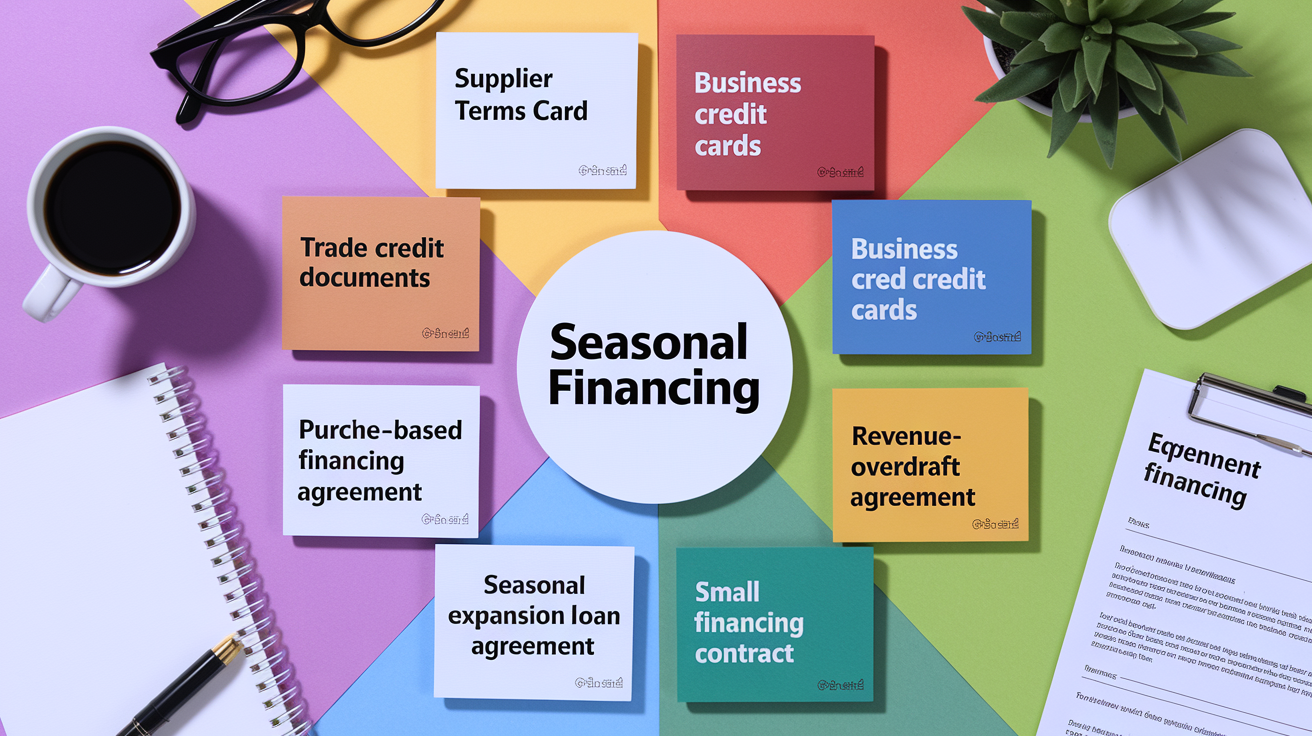
Not every seasonal cash need requires a formal loan. Supplier financing lets you take delivery of inventory now and pay net 30, net 60, or even net 90, which can cover the gap between stocking shelves and making sales without borrowing from a lender. If your suppliers offer those terms, use them. It’s free short term capital. Business credit cards work for smaller recurring expenses like software, ads, or minor supplies. If you pay the balance every month, there’s no interest. If you carry a balance during your slow season and pay it off during peak months, the effective cost is often lower than a short term loan, especially if the card offers rewards or a 0% intro APR.
Supplier financing or trade credit means you negotiate extended payment terms with vendors. If you can take inventory in September and pay in December after holiday sales, you’ve effectively borrowed at zero interest.
Business credit cards work for marketing, SaaS subscriptions, or small equipment. Pay off the balance during peak revenue months. Watch for high APRs if you carry a balance long term.
Purchase order (PO) financing works when a lender advances cash to pay your supplier once you have a confirmed order from a customer. Common in wholesale, seasonal manufacturing, and large contract work. The lender gets repaid when your customer pays the invoice.
Revenue based financing means you repay a percentage of daily or monthly revenue until the advance plus a fee is paid back. Faster sales mean faster repayment. Slower sales stretch the term. Works for e-commerce and service businesses with consistent transaction volume.
Seasonal overdraft protection comes from some banks that offer an overdraft line tied to your business checking account. You can dip below zero up to a limit, and the bank charges interest only on the negative balance. Useful for covering a payroll shortfall or a surprise expense without a formal loan application.
Term loans for expansion make sense if your seasonal gap is driven by growth (like opening a second location or adding a new service line). A 2 to 5 year term loan may cost less than repeated short term borrowing. You’ll pay year round, but the rate is usually lower.
Equipment financing spreads the cost of a plow truck, a commercial mower, or kitchen equipment over the asset’s life. Monthly payments are fixed, and the equipment itself is collateral, so rates are often lower than unsecured working capital.
Alternatives outperform traditional loans when the cost is lower, the timing is better, or the approval is faster. Supplier terms cost nothing. PO financing only triggers when you have a confirmed sale. Revenue based repayment flexes with your actual sales. The downside is that each option has narrower use cases. You can’t pay payroll with a supplier credit line, and you can’t buy inventory with equipment financing. Combine tools. Use supplier terms for inventory, a business credit card for marketing, and a short term line of credit for payroll and rent. That mix keeps total borrowing costs down and gives you flexibility when one revenue stream lags.
Final Words
You’re ordering inventory, hiring seasonal staff, and need cash before sales kick in. This post explained short-term solutions that bridge those gaps—lines of credit, invoice financing, MCAs, and SBA CapLines.
We covered speed (same-day decisions, 24-hour funding), repayment that fits your sales cycle, expected costs, and required docs. You get the tradeoffs so you can pick a fit-first option.
If you need a quick fix that won’t choke your business, consider short term working capital loans for seasonal businesses and match repayments to peak months. You’ll get through the slow season and be ready for the next peak.
FAQ
Q: What are short-term working capital loans for seasonal businesses?
A: Short-term working capital loans for seasonal businesses are temporary funds that bridge cash gaps between busy and slow months, covering payroll, inventory, or marketing and repaid on shorter schedules tied to revenue cycles.
Q: Why do seasonal businesses rely on short-term working capital?
A: Seasonal businesses rely on short-term working capital because these loans bridge slow seasons, let you buy pre-season inventory, and cover payroll or fixed expenses when sales are low.
Q: How much can I borrow and how fast does it fund?
A: You can borrow up to about $500,000; many lenders give same-day decisions and can fund within 24 hours, depending on documentation and lender underwriting.
Q: How can repayment be structured to match seasonal revenue?
A: Repayment can match seasonal revenue through interest-only periods, seasonal payment schedules, lines charging interest only on used amounts, or revenue-tied MCAs that deduct daily card sales.
Q: What loan types support seasonal working capital needs?
A: Loan types include revolving lines of credit, asset-based loans secured by receivables or inventory, invoice financing, merchant cash advances, SBA CapLines, and e-commerce seasonal funding.
Q: What do lenders look for to qualify seasonal businesses?
A: Lenders look for credit profile, revenue history, predictable seasonal patterns, bank statements or tax returns, and financials; alternative lenders may accept bank statements only and move faster.
Q: What are typical costs and fees for short-term seasonal loans?
A: Typical short-term costs include interest rates between 3% and 15% depending on credit and lender, plus origination and other fees; total payback depends on term and repayment schedule.
Q: What documents do I need and how do I apply efficiently?
A: You’ll need recent bank statements, tax returns, profit-and-loss statements, and possibly invoices; prepare these, compare lenders, submit quickly, and answer underwriting questions to speed approval.
Q: Which industries commonly use these loans and for what uses?
A: Landscaping, snow removal, pool service, tourism, holiday retail, tax preparation, restaurants, and e-commerce use short-term funds for inventory, staffing, equipment, marketing, and slow-month cash.
Q: What alternatives exist to traditional short-term loans for seasonal firms?
A: Alternatives include supplier financing, purchase order financing, business credit cards, revenue-based financing, seasonal overdraft protection, term loans, and equipment financing, each with different cost and risk tradeoffs.
Q: How do I choose the right loan for my seasonal profile?
A: Choose a loan by matching repayment timing and frequency to your sales cycle, weighing speed versus cost, and asking what the money is for and when you need it.