

Think all short-term working capital loans cost the same? They don’t.
Rates swing wildly, roughly 9% at the low end to 60% or more at the high end, and origination, draw, and servicing fees can blow up the real price you pay.
This guide compares bank, credit union, and online lender pricing, shows how repayment schedules and fees change effective APR, and gives practical rules to pick the option that fits your cash coming in and going out.
Overview of Current Short‑Term Working Capital Loan Pricing

Short‑term working capital loan rates are all over the map, typically running anywhere from 9% to 60% APR or higher depending on who’s lending. Banks and credit unions live at the lower end. You’re looking at 9% to 18% APR from a bank, 12% to 25% from a credit union, provided your credit’s solid and you’ve been around for at least two years. Online lenders sit at the top of the range, charging 25% to 60% or more, especially if your profile’s shaky or you need money fast. What you actually pay comes down to your credit, revenue, how long you’ve been operating, and the exact term you pick.
Origination fees are the most common upfront hit. Most lenders take between 1% and 6% of the loan as a one‑time fee right off your proceeds. So a 3% origination fee on $50,000 means $1,500 disappears before you see a dime, netting you $48,500. Banks and credit unions tend to charge 1% to 3%. Online lenders often grab 2% to 6%. Toss in any processing or underwriting fees (anywhere from zero to $1,500 flat, or 0.25% to 2% of the loan) and the real cost starts climbing past whatever APR they advertise.
Daily or weekly repayment schedules, which are standard with online lenders, can choke your cash flow even when the APR looks reasonable. Paying faster cuts the compounding window but jacks up the effective annualized cost if fees are steep. You need to understand both rate and fee structure before you sign anything.
Common fee types include:
- Origination fee – percentage of the loan, usually 1% to 6%, deducted at funding
- Processing or underwriting fee – flat $100 to $1,500 or 0.25% to 2% of loan
- Late‑payment fee – 3% to 10% of what you owe or $25 to $100 flat per miss
- ACH or NSF fee – $25 to $50 every time a payment bounces
- Prepayment penalty – 0% to 5% of the balance if you pay off early
Take a $50,000 short‑term loan at 15% APR with a 3% origination fee and a 12‑month term. Interest for the year is $7,500. The origination fee is $1,500. Total cost is $9,000, so you’re really paying closer to 18.6% effective APR once you account for the smaller net proceeds of $48,500.
Key Factors That Influence Rates and Fees

Lenders focus on a handful of core variables when they price your loan. Your business credit score is the biggest single driver. Borrowers above 700 typically qualify for the lowest APRs, often 9% to 15% from banks and credit unions. Drop into the 650 to 699 range and rates jump to 12% to 30%. Below 650? You’re staring at 20% to 60% or more, and banks will likely decline you outright, pushing you toward online lenders or alternative finance.
Annual revenue matters almost as much. Lenders want consistent cash flow. A business pulling $250,000 or more annually gets better pricing and easier approval. Under $100,000, especially under $50,000, you’ll face higher rates and tighter loan caps. Time in business also counts. Two years or more opens bank and credit union doors. Less than two years limits you to online lenders and higher‑cost products.
Loan amount and term length create their own pricing dynamics. Smaller loans (under $25,000) often carry higher APRs because fixed underwriting costs don’t scale down. Shorter terms pack interest into fewer months, which can raise the effective rate once you factor in origination fees. Collateral can shave 2 to 5 percentage points off your rate, but not all short‑term working capital loans require it.
Main underwriting factors:
- Personal and business credit score – strongest predictor of rate and approval
- Annual revenue – higher revenue lowers risk and cost
- Time in business – two years minimum for most banks
- Industry risk level – restaurants and retail usually see higher rates than professional services
- Collateral and personal guarantee – secured loans cost less
- Loan term and amount – smaller and shorter can mean higher effective APR
Comparing Banks, Credit Unions, and Online Lenders
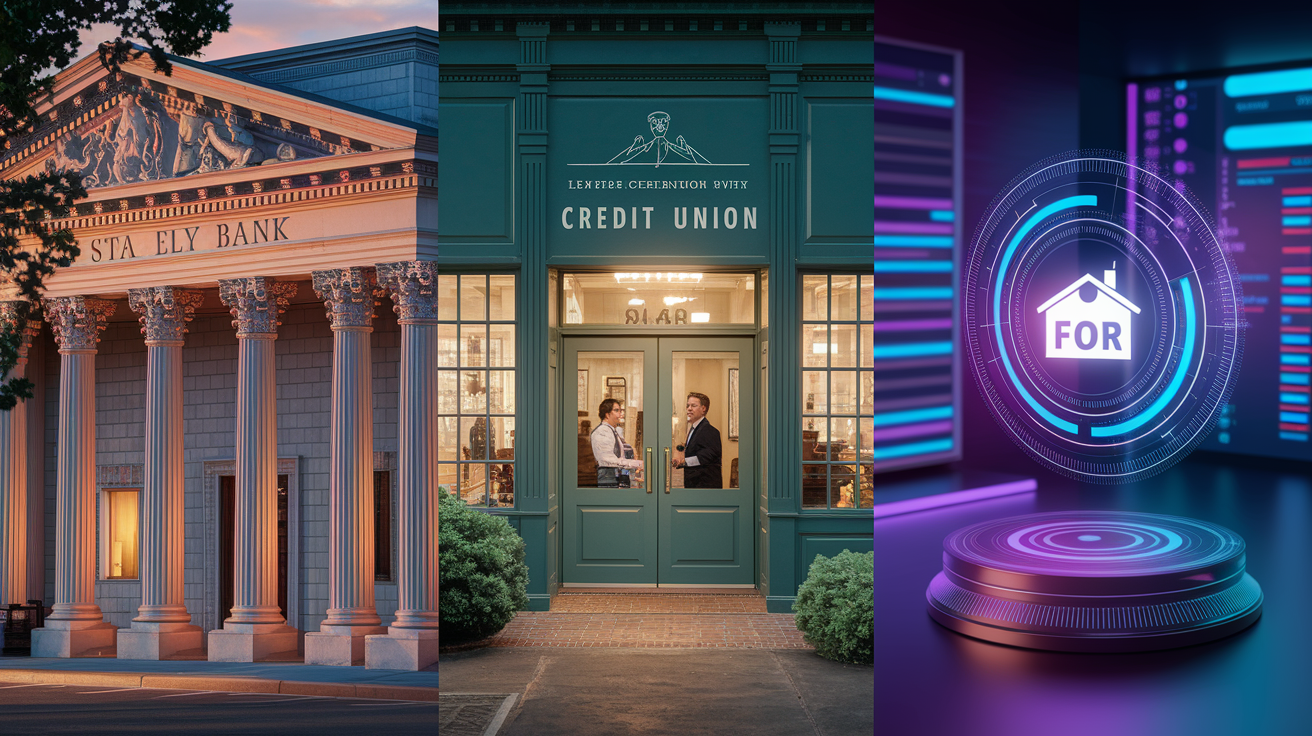
Banks deliver the lowest APRs but demand the strongest credit and longest approval timelines. If you’ve got a score above 700, two years in business, and can wait one to four weeks, a bank might offer 9% to 15% APR with origination fees around 1% to 2%. Credit unions land in the middle, charging 12% to 20% APR with slightly more flexible credit standards and faster turnaround than banks. Approval usually takes one to two weeks.
Online lenders swap speed for cost. You can get approved and funded in 24 to 72 hours, sometimes same day, but you’ll pay 25% to 60% APR and origination fees of 3% to 6%. They accept lower credit scores and shorter business histories, making them the fallback when banks won’t bite. The tradeoff’s clear: faster money, higher price, and often daily or weekly repayment instead of monthly.
| Lender Type | Typical APR | Fees | Funding Speed | Requirements |
|---|---|---|---|---|
| Bank | 9%–18% | 1%–3% origination | 1–4 weeks | Credit 700+, 2+ years, strong revenue |
| Credit Union | 12%–25% | 1%–4% origination | 1–2 weeks | Credit 650+, membership, 1+ years |
| Online Lender | 25%–60%+ | 2%–6% origination | 1–3 days | Credit 600+, 6+ months, steady revenue |
Cost Breakdown Examples for Common Loan Sizes

Real cost depends on how APR and fees interact with loan size. Smaller loans feel the fee burden more because fixed costs don’t shrink. Larger loans spread those same fees over more dollars, lowering the effective rate. Two examples show how the math actually works.
Example 1: $25,000 loan at 18% APR with 3% origination fee, 12‑month term
Interest for the year: $4,500
Origination fee: $750
Total cost: $5,250
Net proceeds: $24,250
Effective annualized cost: roughly 21.65%
The stated APR is 18%, but the effective cost jumps to nearly 22% once the origination fee comes out of your proceeds. That’s the gap most borrowers miss when they’re comparing offers.
Example 2: $75,000 loan at 12% APR with 2% origination fee, 12‑month term
Interest: $9,000
Origination fee: $1,500
Total cost: $10,500
Net proceeds: $73,500
Effective annualized cost: about 14.29%
The larger loan spreads the fee better, so the effective rate stays closer to the nominal APR. Origination fees hit harder on small loans.
Understanding Additional Fees Beyond Interest
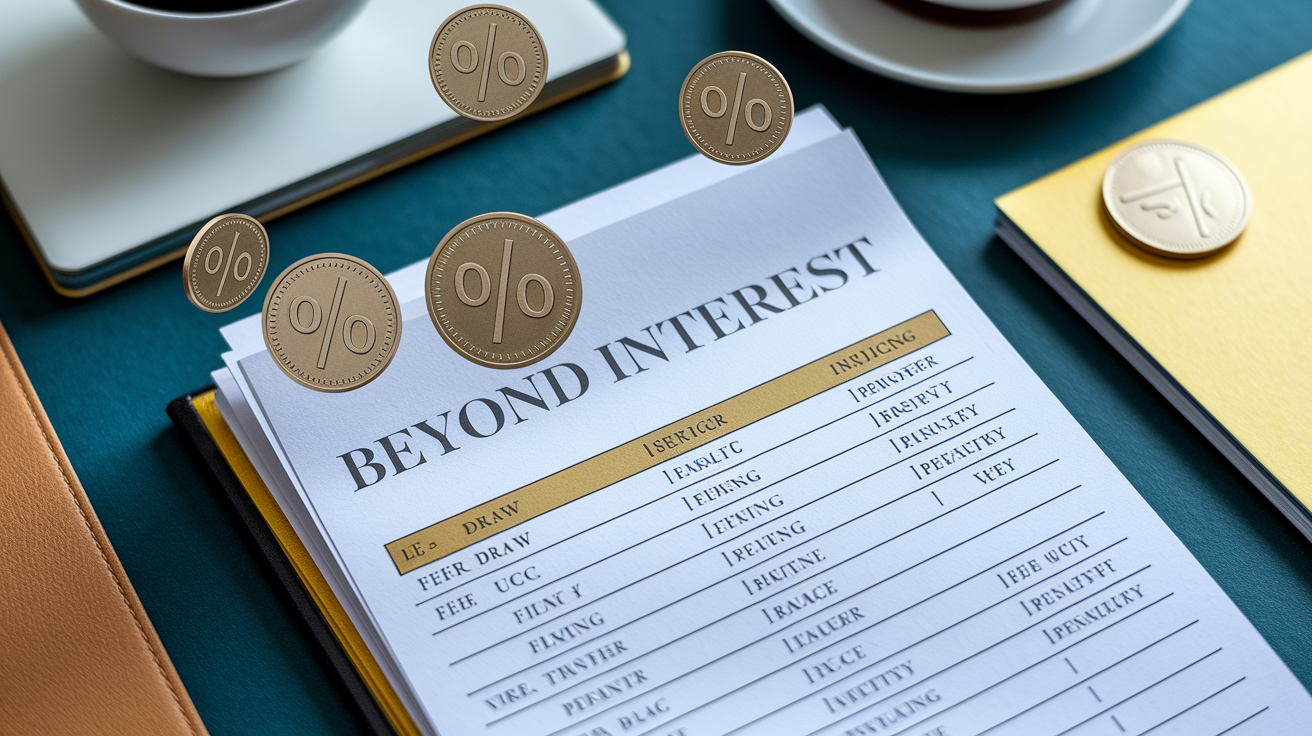
Origination fees get the most attention, but they’re not the only cost. Draw fees show up on lines of credit. Some lenders charge 0.5% to 2% every time you pull funds. Servicing or maintenance fees can run $50 to $150 per year, though many lenders bake these into the rate instead of charging separately. Prepayment penalties are less common on short‑term loans but still appear in 20% to 30% of contracts, typically 1% to 5% of the remaining balance if you pay off early.
Late‑payment and NSF fees add up quickly. Miss a payment and you’ll see 3% to 10% of the overdue amount tacked on, or a flat $25 to $100. Bounce a weekly ACH payment and you’re hit with another $25 to $50. Over a 12‑month term with daily or weekly repayments, a couple of missed or bounced payments can easily add $500 or more in fees. UCC filing fees ($50 to $150) appear on secured loans and are usually one‑time, but they still reduce net proceeds.
Other fee categories to watch:
- Draw fee – charged each time you tap a line of credit, 0.5% to 2%
- Servicing or maintenance fee – $50 to $150 annually or monthly
- UCC filing or security fee – $50 to $150 one‑time on secured loans
- Wire transfer fee – $15 to $35 if you want funds wired instead of ACH
- Early‑payoff penalty – 0% to 5% of outstanding balance, not always disclosed upfront
How Loan Terms and Repayment Schedules Affect Total Cost
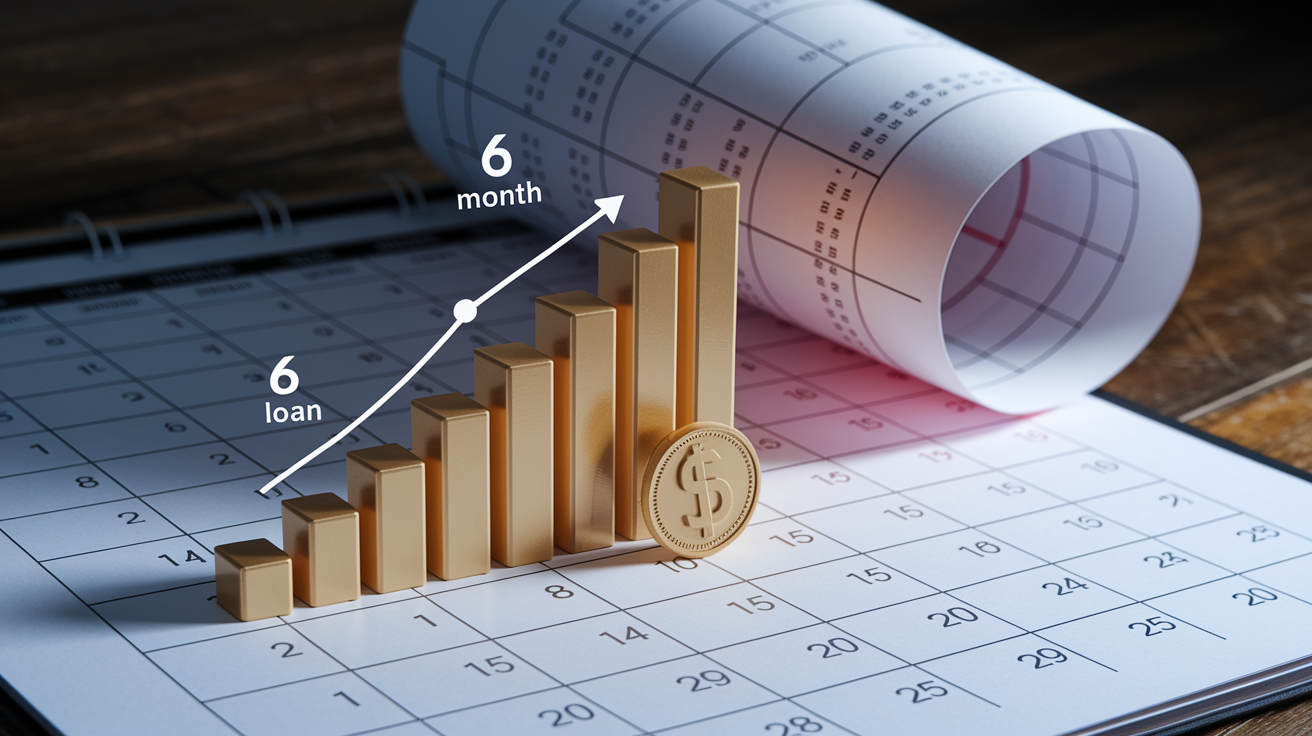
Shorter terms compress the same amount of interest into fewer months, which can raise the effective APR once fees are included. A 6‑month loan at 18% APR costs $4,500 in interest on $50,000. Add a 3% origination fee ($1,500) and you’re paying $6,000 total on $48,500 net proceeds over six months. Annualized, that’s roughly 24.7% effective APR, well above the nominal 18%.
Daily and weekly repayment schedules don’t change the nominal rate, but they tighten cash flow and raise the risk of missed payments. If revenue’s lumpy (invoices paid monthly, but repayments pulled daily) you can get squeezed even when the total loan cost is manageable. Some lenders assess interest daily on the outstanding balance, which means your effective cost climbs if you carry the full balance longer. Ask whether interest is simple or compounding and how often it’s calculated.
Monthly repayment schedules are easier to plan around and usually signal a bank or credit union loan. Daily or weekly schedules are standard with online lenders and merchant cash advances. The faster the repayment cadence, the more important it is to map it against your actual cash inflows. If the payment schedule doesn’t match your revenue cycle, you’ll rack up NSF fees and late charges that push the true cost higher.
Rate Trends and Market Conditions Affecting Pricing

Short‑term working capital loan rates move with Federal Reserve policy. When the Fed raises its benchmark rate, banks and credit unions raise prime, and small‑business loan APRs follow within a quarter or two. Online lenders react faster, often adjusting pricing within weeks. Between early 2022 and mid‑2024, the Fed pushed rates up by over 5 percentage points, and working capital loan APRs climbed 3 to 7 points across most lender types.
Lender risk models also shift with economic conditions. During periods of rising defaults or sector‑specific stress (think retail or hospitality downturns) lenders tighten credit boxes and raise rates for those industries. When small‑business default rates drop and banks compete for volume, rates can dip 1 to 3 points below long‑term averages. Current pricing as of mid‑2024 reflects a high‑rate environment, with Fed policy still restrictive and most lenders holding APRs near multi‑year highs.
Final Words
We laid out current APR ranges, typical fee types, and clear cost examples so you can size the hit to your cash flow fast. You saw how banks, credit unions, and online lenders differ and where origination and servicing fees fit.
We explained the underwriting factors and how repayment schedules change the effective cost, with sample math to make it concrete.
Use those numbers to compare offers side-by-side. Keep short term working capital loan rates and fees in view, and you’ll pick a fit that keeps the business moving.
FAQ
Q: What is the interest rate of a working capital loan?
A: The interest rate of a working capital loan varies by lender: banks typically 9%–18% APR (annual cost), credit unions 12%–25% APR, and online lenders 25%–60%+ APR, depending on credit.
Q: What are the fees associated with short-term loans?
A: The fees associated with short-term loans include origination fees (upfront 1%–6% of the loan), draw fees, servicing fees, prepayment penalties, and late or NSF fees.
Q: How much do you pay a month for a $100,000 loan?
A: The monthly payment for a $100,000 loan depends on APR and term. For example, at 12% APR (annual cost) over 36 months it’s about $3,322/month; at 30% APR over 12 months it’s about $9,766/month.
Q: How hard is it to get a $1,000,000 business loan?
A: Getting a $1,000,000 business loan is typically difficult. Lenders usually require strong personal and business credit, substantial annual revenue and cash flow, collateral or guarantees, and several years in business; banks are strictest.