

Think the APR on the lender’s site is the price you’ll pay?
It usually isn’t.
What you’ll actually pay includes interest on what you draw, plus origination or setup charges, annual and maintenance fees, per-draw or transaction fees, and penalties if payments miss or the account sits unused.
This post breaks down each charge, shows how they change your real total cost, and gives a simple way to add them up so you don’t get surprised.
Overview of All Costs Associated With a Business Line of Credit
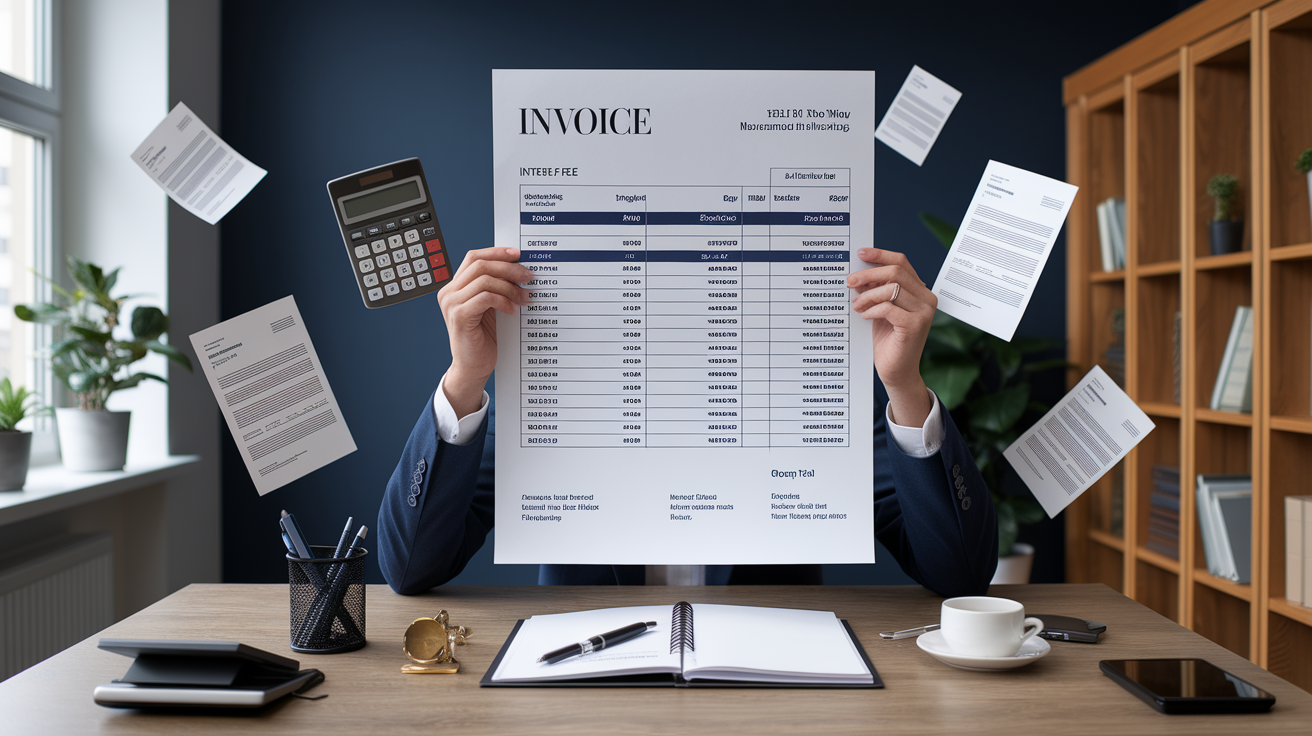
When you’re comparing business lines of credit, that 8% APR on the website isn’t telling you much. What you’ll actually pay includes interest, sure, but also origination fees, annual or maintenance charges, fees every time you pull money out, penalties if things go sideways, and sometimes a few costs buried in the fine print that don’t show up until you’re already signed. Some of these apply no matter where you go. Others are completely lender specific and can double your effective rate if you’re not paying attention.
Interest is usually the biggest piece. Typical APRs for business lines run anywhere from 7% to 25%, depending on your credit, revenue, how long you’ve been in business, and who’s lending to you. Banks sit on the lower end. Alternative lenders camp out on the higher end. But interest alone won’t tell you what this actually costs. If a lender hits you with a 2% origination fee on a $100,000 line, that’s $2,000 gone before you’ve drawn a dollar or paid a penny in interest.
Beyond origination, you’ve got annual fees that can range from $50 to $300, or get structured as a percentage of your total limit. Draw fees pop up each time you take money out, sometimes 1% to 2% per withdrawal. Maintenance fees might be monthly or quarterly, sometimes rolled into the annual fee, sometimes billed separately. Then there are penalties: late payment charges, NSF fees if a scheduled payment bounces, inactivity fees if you don’t use the line regularly. Some lenders waive certain fees under specific conditions, like high utilization or keeping a deposit account with them. But those waivers aren’t automatic.
Here’s a quick breakdown of the seven core cost categories you’ll run into:
- Interest charges: APR applied to your drawn balance, not the full credit limit. Variable rates tied to prime are common.
- Origination or setup fees: Typically 1% to 5% of the credit limit, charged once at opening or deducted from your first draw.
- Annual fees: Flat yearly charge or percentage of the line, anywhere from $50 to $750 depending on limit size and lender.
- Maintenance or account fees: Monthly or quarterly servicing charges, often $10 to $50 per month or $100 to $250 per year.
- Draw or transaction fees: Charged each time you withdraw funds, usually 1% to 2% per draw, plus any wire or ACH fees.
- Penalty fees: Late fees ($15 to $50 per occurrence), NSF fees (often $25 to $35), and early closure fees if you shut the line before the term ends.
- Inactivity or unused commitment fees: Less common, but some lenders charge if you don’t draw regularly or if your average balance stays too low.
Understanding which fees are standard and which are lender add-ons is the first step to figuring out your real total cost.
How Interest Rates Work on a Business Line of Credit

Interest on a business line of credit gets charged only on the amount you’ve actually drawn, not the full credit limit. If you’re approved for $100,000 but only pull $20,000, you pay interest on $20,000. That’s the main attraction compared to a term loan, where you pay interest on the entire lump sum from day one, whether you need it all or not.
Most business LOC interest rates are variable, meaning they move with a benchmark like the prime rate. You’ll see pricing structured as “Prime plus 3%” or “Prime plus 6%.” If prime is 8.5% and your margin is 3%, your APR is 11.5%. When the Federal Reserve changes rates, your interest rate adjusts. Sometimes monthly, sometimes quarterly, depending on the lender’s terms. A few lenders offer fixed rate lines, but those are less common and typically come with higher baseline rates to offset the lender’s rate risk.
Some lenders set a floor rate, meaning even if prime drops, your rate won’t fall below a certain percentage. Others add minimum interest requirements, where you’ll owe at least a small amount of interest each month even if you don’t draw. That’s unusual, but it exists, especially in structured lines with annual commitment fees tied to unused balances. Always confirm whether interest accrues daily or monthly, and whether your payment covers interest first or splits between interest and principal from the start.
Five factors directly influence the interest rate you’ll be offered:
- Personal and business credit scores: Higher scores unlock lower margins. A 750 FICO might get you prime plus 2%. A 650 might land at prime plus 7%.
- Time in business: Lenders view newer businesses as riskier. Two years of operating history is a common threshold for better pricing.
- Annual revenue and cash flow stability: Strong, consistent revenue signals you can handle variable repayment schedules and cover interest even during slow months.
- Collateral and security: Secured lines backed by real estate, equipment, or receivables typically carry lower rates than unsecured lines.
- Lender type and competitive positioning: Traditional banks offer the lowest rates but strictest approval. Online lenders and fintech platforms price higher in exchange for speed and looser underwriting.
Origination, Annual, and Maintenance Fees Explained

Origination fees are the lender’s charge for setting up your line. They typically run 1% to 5% of the approved credit limit and are either deducted from your available credit or added to your balance when you first draw. On a $100,000 line with a 2% origination fee, you’ll pay $2,000. Sometimes up front, sometimes rolled into the first payment cycle. A few lenders advertise “no origination fee,” but those same lenders often offset the cost with higher interest rates or steeper draw fees. You’re still paying. It’s just priced differently.
Annual fees are exactly what they sound like: a yearly charge to keep the line open, whether you use it or not. These range from $50 for small unsecured lines to $300 or more for larger commercial facilities. Some lenders calculate annual fees as a percentage of your credit limit. Chase charges 0.25% of the total line, with a minimum of $200 and a maximum of $750. If your average utilization stays above 40% for the year, they waive the fee entirely. Wells Fargo charges $95 annually for lines $10,000 to $25,000, and $175 for lines above $25,000. But the first year is free.
Maintenance fees cover the lender’s ongoing account servicing: statements, access to online portals, customer support, periodic credit reviews. These can be billed monthly or quarterly, often $10 to $50 per month, or consolidated into an annual charge of $100 to $250. Some lenders fold maintenance into the annual fee. Others bill them separately. The key is to add up all recurring fees (origination, annual, maintenance) before you compare headline interest rates, because a 9% APR line with $500 in annual fees can cost more in year one than an 11% APR line with zero fees.
Draw Fees, Transaction Fees, and Usage Based Charges

Every time you pull money from the line, some lenders charge a draw fee. Typically 1% to 2% of the withdrawal amount. If you draw $10,000 and the fee is 2%, that’s $200 tacked on immediately. Draw twice more in the same month, and you’ve paid $600 in fees before interest even starts accruing. These fees are less common at traditional banks and more common with online lenders and alternative platforms, where they’re used to offset faster underwriting and looser credit standards.
Some lenders bundle draw fees into transaction fees that also cover ACH transfers, wire payments, or same day funding requests. BlueVine doesn’t charge an origination fee but adds a $15 fee for same day wire transfers. Wells Fargo’s cash advance and wire fees can run 3% to 4% of the transfer amount, with a $10 minimum. If you’re planning to move money frequently or need same day access, these transaction costs stack up fast.
The practical impact: if you’re drawing small amounts often (say, $5,000 every two weeks to cover payroll), you could end up paying more in draw and transaction fees over six months than you’d pay in interest on a single larger draw. The math shifts in favor of fewer, larger withdrawals when draw fees are percentage based. If your line charges flat fees per transaction instead of percentages, frequent small draws become more viable. Either way, ask the lender for a full schedule of usage based charges and run a rough estimate based on how often you actually plan to tap the line.
Penalty, Inactivity, and Hidden Fees You Should Know About
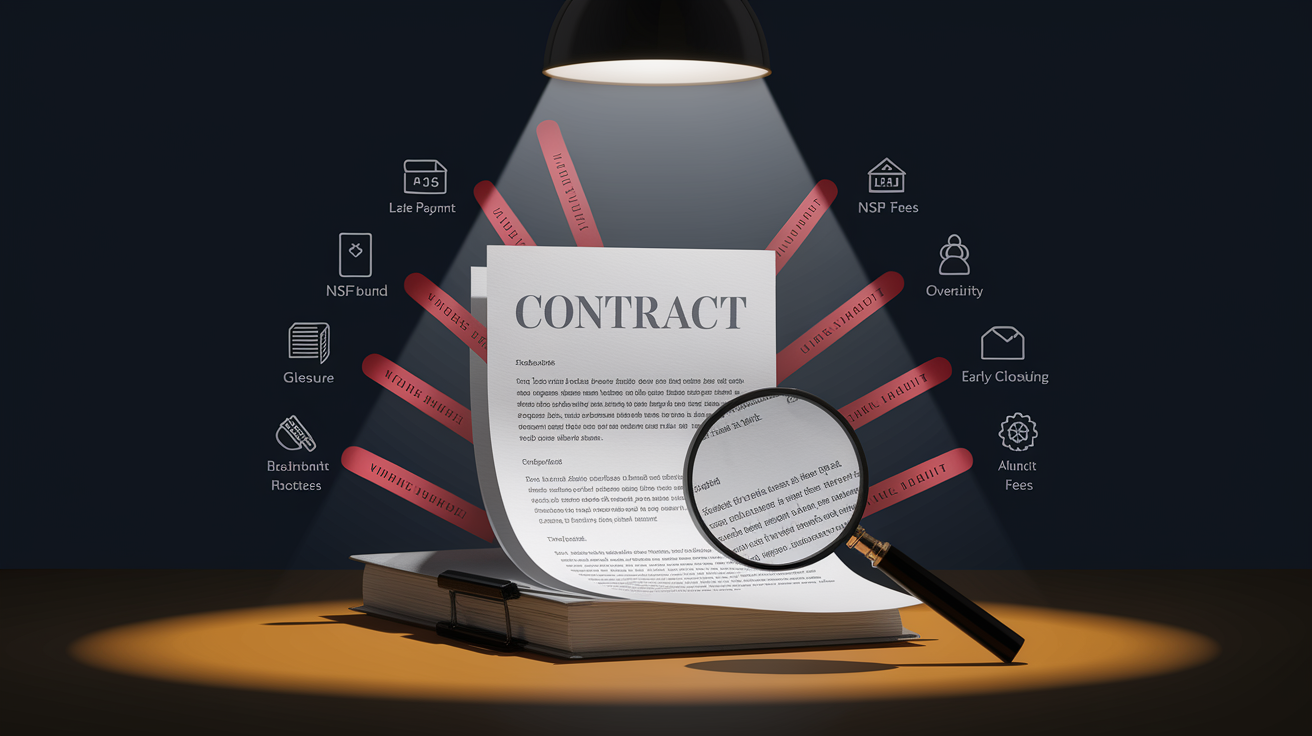
Late fees are standard if you miss a scheduled payment. Most lenders charge $15 to $50 per missed payment, though some calculate late fees as a percentage of the overdue amount. BlueVine charges 5% of the missed payment or a minimum of $35, whichever is higher. Fundbox structures its late fee as the equivalent of one average weekly payment. If your payments are automated and funded from your business checking, late fees are rare. But if cash flow gets tight and a payment bounces, you’ll also trigger an NSF (non sufficient funds) fee, commonly $25 to $35, on top of the late charge.
Inactivity fees show up when you don’t use the line for an extended period. Sometimes six months, sometimes a year. The rationale: the lender is reserving capital and maintaining your account, so if you’re not drawing, they want compensation. Not every lender charges inactivity fees, but when they do, it’s often $25 to $100 annually or a small percentage of the unused limit. Some business owners open a line “just in case” and never draw. Inactivity fees turn that safety net into a recurring cost.
A few other charges that don’t always appear in the headline offer:
- Early closure or cancellation fees: Some lenders charge if you close the line before a minimum term, usually 12 to 24 months. These can be flat fees or calculated as a percentage of the remaining commitment.
- Overlimit fees: If your total balance exceeds your approved limit due to fees or interest compounding, you may be charged an overlimit penalty.
- Collateral review or audit fees: For secured lines, lenders may charge annually to appraise or audit the pledged assets (real estate, equipment, or inventory).
- Documentation or processing fees: Charged for requests like payment history reports, detailed statements, or early payoff calculations.
The lesson: request the full fee schedule in writing before you sign. If the lender can’t produce one, or says “fees depend on usage,” push for a worst case example with real numbers.
Real Cost Examples From Different Types of Lenders
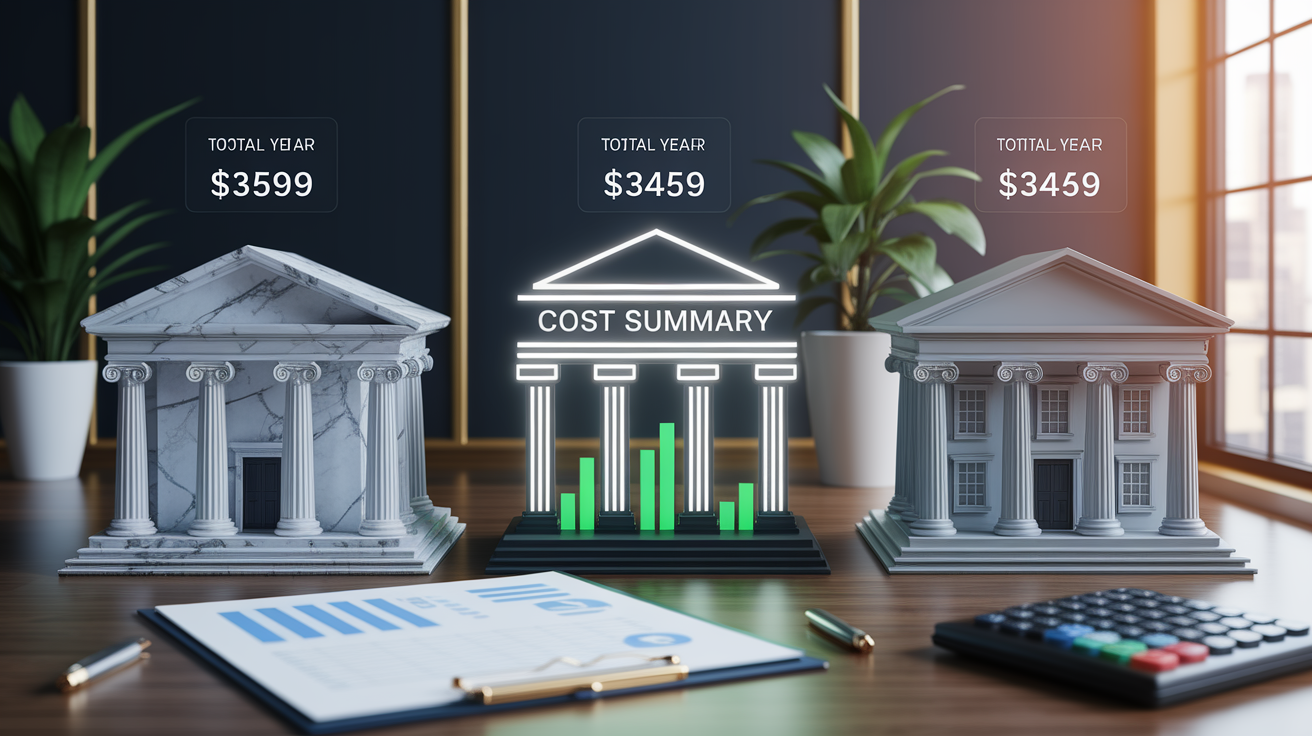
A traditional bank line (like Chase or Bank of America) typically offers the lowest interest rates but layers in annual and maintenance fees that add up over time. A business with strong credit, two years of history, and $250,000 in annual revenue might qualify for a $100,000 unsecured line at prime plus 3% (roughly 11.5% if prime is 8.5%). The bank charges a 1% origination fee ($1,000) and a $200 annual fee. Assume the business draws $50,000 for six months, then repays it. Interest over six months at 11.5% on $50,000 is roughly $2,875. Add the $1,000 origination fee and $200 annual fee, and the total first year cost is around $4,075 for that $50,000 draw.
An online lender or fintech platform (like Fundbox or BlueVine) approves faster and accepts shorter operating histories, but charges higher effective rates and sometimes structures fees differently. BlueVine offers lines from $6,000 to $250,000 with interest starting at 7.8% for top tier borrowers, but that’s simple interest, and many approved businesses land closer to 12% to 18% APR equivalent once you factor in the repayment schedule. BlueVine doesn’t charge an origination fee, but if you request same day funding, the $15 wire fee applies. Assume a 12 month term, $50,000 drawn, 14% simple interest, and weekly payments. Total interest and fees over the year: roughly $7,000. The tradeoff is approval in days, not weeks, and lighter documentation requirements.
An SBA backed line, like those offered under the SBA CAPLines program or SBA 7(a) structure, caps certain fees and often delivers lower interest rates for qualifying borrowers. SBA 7(a) loans prohibit lenders from charging origination fees directly to the borrower (the SBA guarantees a portion of the loan, and the lender’s compensation is built into that structure). However, the SBA itself charges an upfront guaranty fee (typically 0% to 3.75% of the guaranteed portion, depending on loan size and term) and annual service fees that can run $100 to several hundred dollars. Interest rates on SBA lines usually sit below 10% APR for well qualified businesses. A $100,000 SBA line at 8% APR with a 2% guaranty fee ($2,000) and $150 annual service fee, drawn for $50,000 over 12 months, might total around $4,150 in first year costs. Competitive with traditional banks, but with a longer approval process and more documentation.
| Lender Type | Typical APR | Common Fees | Example Total Cost (Year 1, $50k Draw) |
|---|---|---|---|
| Traditional Bank | 8%–12% | 1%–3% origination, $100–$300 annual, maintenance fees | ~$4,075 |
| Online Lender / Fintech | 12%–25% | 0%–2% origination, draw/transaction fees, higher APR | ~$7,000 |
| SBA CAPLines / 7(a) | 7%–10% | 0%–3.75% guaranty fee, annual service fees, no lender origination | ~$4,150 |
Factors That Influence the Total Cost of a Business Line of Credit

The price you pay for a business line of credit isn’t random. Lenders build their offers around risk models that weigh your ability to repay and the likelihood you’ll default. The stronger your business fundamentals, the lower your cost. The weaker your profile, the more the lender charges to offset the risk. Or they decline you outright.
Personal and business credit scores are the most visible pricing levers. A personal FICO above 700 and a business credit score (Dun & Bradstreet PAYDEX or Experian Intelliscore) in the “good” or “excellent” range unlock the lowest margins over prime. Drop into the mid 600s, and you’ll see rates jump 3% to 5% higher, plus stricter terms and more required collateral. Below 600, most traditional lenders won’t approve you, and alternative lenders will price the line at 18% to 25% APR.
Six major factors determine what you’ll actually pay:
- Credit scores (personal and business): Higher scores mean lower interest margins, fewer required fees, and better waiver terms. A 750 personal score can save you $2,000 to $5,000 in year one costs compared to a 650 score on the same $100,000 line.
- Time in business and operating history: Lenders want to see at least 12 to 24 months of consistent operations. Newer businesses pay higher rates or get turned down. Three or more years of history opens access to larger limits and lower pricing.
- Annual revenue and cash flow stability: Strong, predictable revenue signals you can cover variable draw schedules and handle interest even in slow months. Many lenders set revenue minimums ($100,000 to $250,000 annually), and businesses above those thresholds get better terms.
- Collateral and line structure (secured vs. unsecured): Secured lines backed by real estate, receivables, or equipment carry lower rates because the lender can seize assets if you default. Unsecured lines rely entirely on your credit and cash flow, so lenders price in higher risk with higher APRs and fees.
- Debt to income ratio and existing obligations: If you’re already carrying heavy debt relative to your income, lenders view you as stretched. Lower debt to income ratios improve your pricing and increase the likelihood of approval.
- Lender type and competitive market conditions: Banks compete on price but demand stricter documentation. Online lenders compete on speed and looser underwriting but charge more. When the Federal Reserve raises rates, every lender’s baseline pricing moves up. When credit markets tighten, margins widen across the board.
Comparing Offers and Calculating Your True Total Cost

When you’re looking at multiple line of credit offers, don’t stop at the APR. The advertised rate tells you what you’ll pay in interest, but it doesn’t include origination fees, annual fees, maintenance charges, draw fees, or penalties. The true total cost is what you’ll actually spend over the life of the line if you use it the way you plan to use it.
Start by listing every fee in the offer. Origination fee as a percentage or flat dollar amount. Annual or maintenance fees. Draw fees per withdrawal. Transaction fees for wires or ACH. Penalty fees for late payments or inactivity. Then map those fees against your expected usage. If you plan to draw $50,000 once and repay it over 12 months, calculate interest on that balance plus the one time origination fee and the annual fee. If you plan to draw $10,000 five times over the year, multiply the draw fee by five and add that to your interest and recurring fees.
The math changes depending on how fast you repay. Interest on a line of credit accrues daily on the outstanding balance, so the faster you pay down what you’ve drawn, the less total interest you’ll owe. A $50,000 draw repaid in six months will cost roughly half the interest of the same draw repaid over 12 months, assuming the same APR. But if the lender charges a flat annual fee or percentage based maintenance fee regardless of how long the balance is outstanding, fast repayment doesn’t reduce those costs. They’re fixed.
Here’s a simple four step process to calculate your true total cost:
- Add up all one time fees: Origination or setup fees, usually 1% to 5% of your credit limit or the amount you plan to draw first.
- Add recurring fees for the period you’ll use the line: Annual fees, maintenance fees, and any unused commitment fees if you’re not drawing the full limit.
- Calculate interest on your expected drawn balance: Use the APR and the number of months you plan to carry a balance. If the rate is variable, use the current rate plus a small buffer to account for potential increases.
- Add usage based fees: Draw fees for each withdrawal, transaction fees for wires or same day funding, and any penalty fees you might realistically trigger (like one late fee if cash flow gets tight).
Total those four numbers, and you’ve got your true cost. Compare that total across every offer you’re considering, not just the headline APR. A 9% line with $1,500 in fees can easily cost more than an 11% line with $200 in fees, depending on how much you draw and how long you carry the balance.
Final Words
You now know the fees that add up: interest, origination, annual, draw, maintenance, penalty, and hidden charges. You also saw how rates move, which costs are lender-specific, and which apply even if you don’t use the line.
Use this to run real numbers and compare business line of credit costs side-by-side. Plug in your draw schedule, expected balances, and likely fees to estimate the total cost of a business line of credit. You’ve got options—and a clearer path to the right choice.
FAQ
Q: What is the monthly payment on a $50,000 line of credit?
A: The monthly payment on a $50,000 line of credit depends on amount drawn, APR, and repayment terms. Example: interest-only at 10% APR ≈ $417/month; 5-year amortization ≈ $1,062/month, plus fees.
Q: Can an LLC get a business line of credit?
A: An LLC can get a business line of credit. Lenders typically want time in business, steady revenue, business bank statements, an EIN, and often an owner personal guarantee or owner credit check.
Q: What is the monthly payment on a $50,000 business loan?
A: The monthly payment on a $50,000 business loan depends on APR and term. For example, a 5-year loan at 10% APR ≈ $1,062/month; shorter terms raise monthly cost, lower rates reduce it.
Q: How much would a $100,000 business loan cost?
A: A $100,000 business loan’s cost depends on APR, term, and fees. For example, a 5-year loan at 10% APR costs about $2,125/month and about $27,500 in total interest, plus fees.