


Think a line of credit is easy to get? Think again.
Lenders focus on three filters: creditworthiness (your personal and business credit), financial strength (revenue, cash flow, existing debt), and operating history (time in business and deposit patterns).
Those filters set hard minimums and softer preferences that shift by lender, loan size, and whether you offer collateral or a personal guarantee.
This post breaks down the exact score thresholds, cash-flow tests, and documents lenders want so you can apply with confidence.
Core Eligibility Standards for Qualifying for a Business Line of Credit

Lenders look at every application through three main filters: creditworthiness, financial strength, and operating history. Each one has hard floors and soft preferences that shift depending on who’s lending, how much you’re asking for, and whether you’re putting up collateral.
Creditworthiness is your personal and business credit scores, payment track record, and how much credit you’re already using. Financial strength is your revenue, cash flow patterns, existing debt, and whether your monthly cash can handle repayment without strangling operations. Operating history is how long you’ve been in business, how steady your deposits look, and whether your financials show stability or seasonal swings that need context.
Here’s what lenders assess:
- Credit scores and credit history – Personal FICO, business credit reports, how much of your available credit you’re using, and any past delinquencies or bankruptcies.
- Revenue and cash flow stability – Annual and monthly revenue, deposit consistency, debt coverage, and liquidity in your business bank account.
- Time in business and documentation depth – Months or years operating, quality of financial records, and how much tax and bank history you can provide.
Sounds simple, but the actual numbers change dramatically. A fintech lender might approve you at 6 months in business with a 600 personal credit score. A regional bank might want 2 years, a 700 score, and audited financials. The sections below break down specific thresholds by lender type, credit amount, and collateral scenario so you know where you stand before you apply.
Understanding Credit Score Expectations for Business Line of Credit Approval

Credit score is usually the first filter. Lenders pull your personal credit and, if your business has a credit file, your business credit. If either score falls below the lender’s floor, the application stops unless you can offer heavy collateral or a strong co-signer.
Most lenders treat personal credit as the anchor, especially for newer businesses or sole proprietors. Business credit matters more once your company has trade lines, vendor accounts, or prior business loans reporting to Dun & Bradstreet, Experian Business, or Equifax Business. When both scores are strong, you unlock better rates and higher limits. When personal credit is weak but business credit is solid, some lenders will still approve you, but expect tighter terms or a personal guarantee to cover the risk.
Personal Credit Score Thresholds
Banks typically want a personal FICO of 680 to 700 or higher for unsecured lines. They prefer 700+ to offer their best pricing. Credit unions are a bit more flexible if you’re a member in good standing. Many will consider scores in the 640 to 680 range, especially if you’ve banked with them for years and keep steady deposits. Online lenders and marketplace platforms usually accept scores from 600 to 650, and some alternative fintech products will work with scores as low as 550, though the cost jumps and the line may come with daily or weekly repayment instead of monthly terms.
| Lender Type | Typical Personal Credit Minimum |
|---|---|
| Banks (secured and unsecured lines) | 680–700+ |
| Credit Unions | 640–680+ |
| Online Lenders / Marketplaces | 600–650+ |
| Alternative Fintech / MCA-style products | 550+ (higher cost, faster repayment) |
Lenders don’t just check the score. They review your credit report for recent delinquencies, charge-offs, collections, bankruptcies, and how much of your available credit you’re currently using. High utilization on personal cards signals cash pressure, even if your score is above the cutoff. Clean payment history over the past 12 to 24 months matters more than an old settled collection from five years ago.
Business Credit Score Importance
Business credit scores use different scales depending on the bureau. Dun & Bradstreet PAYDEX runs 0 to 100, with 80+ considered excellent. Experian Intelliscore ranges from 1 to 100, and most lenders look for scores above 50 to 75 for favorable terms. Equifax uses a 101 to 992 scale. The exact number matters less than the trend and the depth of your file. A thin business credit report with only two trade lines won’t carry much weight. A report showing 10+ vendors or lenders, all paid on time, can offset a weaker personal score and help you qualify for an unsecured line or skip the personal guarantee requirement.
Lenders pull business credit to verify your EIN, check for liens or judgments, and see how you’ve paid other creditors. If your business credit is nonexistent, expect the underwriter to lean entirely on your personal credit and require a personal guarantee. Building business credit before you apply, paying net-30 vendors on time and asking them to report, and keeping business credit card balances low, improves approval odds and can lower your rate by several percentage points.
Revenue, Cash Flow, and Financial Strength Requirements for a Business Line of Credit

Revenue and cash flow determine how much credit a lender is willing to extend and whether your business can handle the repayment. Lenders don’t just want to see big annual numbers. They want predictable monthly deposits, manageable existing debt, and enough margin between what comes in and what goes out to cover interest and principal without choking operations.
Many online lenders set minimum annual revenue at $50,000 to $100,000. Banks and credit unions commonly require $100,000 to $250,000 in documented annual revenue, especially for lines above $50,000. These aren’t random cutoffs. Lenders calculate your average monthly revenue, subtract operating expenses and existing debt payments, and figure out how much capacity you have left. If the line you’re requesting would push your debt service above what your cash flow can cover, the application gets declined or the limit gets cut.
When underwriters review your financials, they’re analyzing:
- Gross revenue and revenue trends – Is revenue growing, flat, or declining year over year? Seasonal businesses need to explain the pattern and show off-season reserves.
- Operating expenses and gross margin – High fixed costs or thin margins leave less room for debt repayment. Lenders prefer businesses with gross margins above 30% to 40%.
- Existing debt obligations – Current loan payments, credit card minimums, lease obligations, and outstanding advances all reduce available cash flow.
- Bank account liquidity – Average daily balance and lowest balance over the past 90 days show whether you operate with a buffer or run your account near zero.
- Accounts receivable quality and aging – If you’re applying for a receivables backed line, lenders want to see A/R under 60 days and no single customer representing more than 20% to 30% of your book.
Debt Service Coverage Ratio Explained
Debt Service Coverage Ratio, or DSCR, is one of the most important metrics lenders calculate. DSCR measures your net operating income divided by your total debt payments. A DSCR of 1.0 means your income exactly covers your debt. A DSCR of 1.25 means you earn $1.25 for every $1.00 of debt service, leaving a 25% cushion.
Most lenders require a DSCR of at least 1.15 to 1.25 for approval. Banks and credit unions offering larger lines or lower rates often want to see 1.5 or higher. If your DSCR is below 1.0, you’re operating at a deficit and won’t qualify for additional credit until you reduce debt or increase income. Improving DSCR before applying means paying down existing balances, cutting discretionary expenses, or waiting for a strong revenue quarter to hit your bank account so the trailing 12 month average climbs.
How Lenders Calculate Usable Cash Flow
Lenders start with your net income from tax returns or your profit and loss statement, then add back non-cash expenses like depreciation, amortization, and sometimes owner salary if you’re a sole proprietor or small LLC. This adjusted figure is your EBITDA, or earnings before interest, taxes, depreciation, and amortization. EBITDA approximates the cash your business generates before debt and tax obligations.
From EBITDA, underwriters subtract existing debt payments and the estimated payment on the new line. If the remaining cash flow is positive and represents at least 15% to 25% more than total debt service, you’re likely to be approved. If it’s tight or negative, the lender either denies the application or offers a smaller line. Providing a detailed, reconciled profit and loss statement and explaining any one-time expenses or revenue spikes helps underwriters calculate usable cash flow accurately instead of making conservative assumptions that hurt your approval odds.
Documentation Checklist Required to Apply for a Business Line of Credit

Lenders can’t approve what they can’t verify. Every application requires documents that prove your identity, confirm your business exists, demonstrate revenue and profitability, and show how cash moves through your accounts. Incomplete or inconsistent paperwork is one of the top reasons applications get delayed or denied, even when the borrower otherwise qualifies.
Expect to provide digital copies, either uploaded through an application portal or emailed to a loan officer. Scanned PDFs are standard. Photos of documents are usually acceptable for initial review but may need to be replaced with clean scans before final approval. The faster you can gather and submit everything on the checklist, the faster underwriting moves.
Here’s the typical documentation checklist for most business line of credit applications:
- Business tax returns – 2 to 3 years for banks and credit unions, 1 to 2 years for many online lenders. Include all schedules, especially Schedule C for sole proprietors or the full 1120 or 1065 for corporations and partnerships.
- Personal tax returns for owners and guarantors – 1 to 3 years, depending on lender. Required whenever a personal guarantee is part of the deal.
- Business bank statements – 3 to 12 months. Online lenders often accept 3 months, banks prefer 6 to 12 months to see full cash flow cycles and detect seasonality.
- Profit and loss statement and balance sheet – Most recent month-end and year-to-date. Many lenders want 12 months of monthly P&L detail. Statements should reconcile to your bank deposits.
- Accounts receivable aging report – Required if you’re applying for an A/R backed line. Shows outstanding invoices by age and customer.
- Business formation documents – Articles of Incorporation, Articles of Organization, or DBA certificate. Proves the business is legally registered.
- Employer Identification Number confirmation – IRS EIN letter or SS-4 form.
- Business licenses and permits – State and local licenses relevant to your industry.
- Personal identification for all owners – Driver’s license, state ID, or passport for anyone with 20% or more ownership or anyone signing as a guarantor.
- Collateral documentation – Equipment invoices, titles, real estate appraisals, or UCC search results if you’re offering collateral or the lender requires security.
| Lender Type | Tax Returns Required | Bank Statements Required | Additional Documentation |
|---|---|---|---|
| Online Lenders | 1–2 years (sometimes waived for very small lines) | 3–6 months | P&L, balance sheet, EIN, ID |
| Banks | 2–3 years business and personal | 6–12 months | Full financials, business plan, collateral docs, personal financial statement |
| Credit Unions | 2–3 years | 6–12 months | Membership verification, financials, collateral if secured |
Banks and credit unions often request a personal financial statement listing your assets, liabilities, and net worth. Some ask for a business plan or a simple use-of-funds memo explaining what the line will cover and how you’ll repay it. Pro forma financial forecasts are sometimes required for lines over $100,000, especially if you’re positioning the credit as growth capital rather than working capital backup. The more complete and consistent your documentation package, the faster underwriting moves and the better your chances of approval at the terms you want.
Collateral, Personal Guarantees, and Security Requirements for Credit Lines

Whether a line of credit is secured or unsecured changes the risk calculation for the lender and the cost calculation for you. Unsecured lines rely entirely on creditworthiness, cash flow, and personal guarantees. Secured lines are backed by business assets, which reduces the lender’s risk and typically lowers your interest rate or increases your credit limit.
Unsecured business lines are most common up to $25,000 to $50,000. Above that threshold, many lenders require collateral unless your credit profile is exceptionally strong and your revenue is well above minimums. If you’re asking for $100,000 or more, expect the lender to want security, either in the form of accounts receivable, equipment, inventory, or real estate.
When collateral is required, lenders assign a loan to value ratio, or advance rate, based on liquidation risk. Accounts receivable might be financed at 50% to 80% of face value, depending on customer concentration and aging. Equipment is typically financed at 50% of appraised liquidation value, not retail replacement cost. Inventory advance rates are usually lower, 30% to 50%, because inventory can become obsolete or require discounting to sell. Real estate offers the highest advance rates, but using property as collateral means filing a lien and completing an appraisal, which adds time and cost to the approval process.
Common types of collateral lenders accept for secured business lines include:
- Accounts receivable – Invoices owed by creditworthy customers, typically under 60 days old.
- Equipment – Machinery, vehicles, computers, or tools with resale value. Lenders may require serial numbers, titles, and appraisals.
- Inventory – Raw materials or finished goods. Lenders prefer non-perishable, non-specialized inventory that can be liquidated.
- Commercial real estate – Buildings or land owned by the business. Requires appraisal, title search, and lien filing.
- Cash savings or certificates of deposit – Sometimes accepted as collateral for secured lines at very low rates.
Unsecured Line of Credit Eligibility
Qualifying for an unsecured line means you’re relying entirely on credit strength and cash flow. Lenders offering unsecured lines look for personal credit scores above 680, business revenue above $100,000 annually, and at least 12 to 24 months of operating history. Time in business matters more for unsecured products because the lender has no asset to recover if you default.
Unsecured lines come with higher interest rates than secured lines, often 10% to 30% APR depending on your credit profile and the lender’s risk model. Limits are smaller, frequently capped at $50,000 unless your business has multiple years of strong financials and excellent credit. If you need more than $50,000 and want to avoid collateral, expect to shop multiple lenders or consider a hybrid product that offers an unsecured tier up to a certain limit, then requires collateral for amounts above that threshold.
Personal Guarantee Requirements
A personal guarantee makes you, the business owner, personally liable for repaying the line if the business can’t. Personal guarantees are standard for most small business credit products, especially for LLCs, sole proprietorships, and newer corporations that haven’t built independent creditworthiness.
Signing a personal guarantee means the lender can pursue your personal assets, report to your personal credit, and take legal action against you individually if the business defaults. It’s a serious commitment, but it’s also the norm. Even secured lines often require a personal guarantee as an additional layer of protection. The only way to avoid a personal guarantee is to have a long operating history, strong business credit, significant collateral, or to accept much higher rates from lenders willing to take unsecured business risk without a personal backstop.
How Requirements Change Across Lender Types (Banks, Credit Unions, Online Lenders, Fintech)
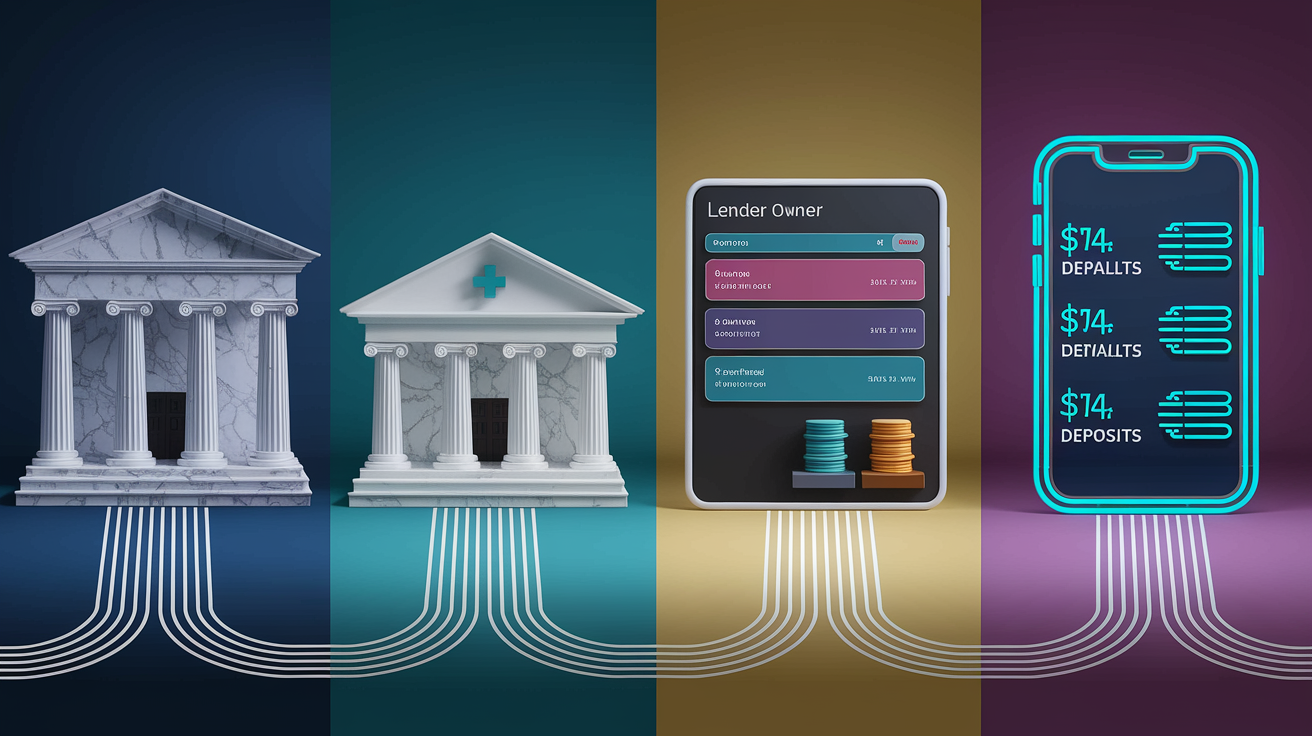
Not all lenders use the same underwriting model. Banks, credit unions, online lenders, and fintech platforms each have different risk appetites, documentation expectations, approval timelines, and pricing structures. Understanding these differences helps you target the right lender type for your situation instead of wasting applications on lenders that won’t approve your profile.
Banks are the strictest. They want established businesses with clean financials, strong credit scores, and collateral for larger lines. Approval takes weeks, sometimes months, especially if you’re requesting over $100,000. In exchange, you get the lowest interest rates, often 6% to 15% APR for secured lines, and flexible repayment terms. Banks also tend to offer the highest credit limits, sometimes into the millions for well qualified borrowers with deep banking relationships and significant collateral.
Credit unions operate similarly to banks but with a bit more flexibility for members. If you’ve banked with a credit union for years, maintain deposits, and have a good relationship with a loan officer, they may approve you with a 640 credit score or accept less documentation than a commercial bank would require. Rates are competitive, often on par with or slightly better than banks. The tradeoff is that credit unions are smaller, less automated, and may have lower maximum credit limits than national banks.
| Lender Type | Typical Credit Score Minimum | Typical Time in Business | Typical Revenue Minimum |
|---|---|---|---|
| Banks | 680–700+ | 2–3 years | $100,000–$250,000 annually |
| Credit Unions | 640–680+ | 1–2 years | $50,000–$150,000 annually |
| Online Lenders | 600–650+ | 6–12 months | $50,000–$100,000 annually |
| Fintech / Alternative Lenders | 550–600+ (some lower) | 3–6 months (some accept newer) | $50,000+ (varies widely) |
Online lenders and marketplace platforms prioritize speed and automation. Many offer decisions within 24 to 48 hours and funding as fast as the next business day. They accept lower credit scores, shorter operating histories, and less documentation than banks. The cost is higher interest, often 12% to 30% APR, and sometimes shorter draw periods or more frequent repayment schedules. Online lenders are a good fit when you need funding quickly, don’t meet traditional bank standards, or want to avoid the paperwork and relationship requirements of a credit union.
Fintech lenders push speed and flexibility even further. Some offer instant pre-approvals by connecting to your business bank account and analyzing deposit patterns in real time. Others use alternative data like payment processor history, online reviews, or e-commerce sales to underwrite businesses that lack formal financials. Fintech products often come with daily or weekly repayment tied to revenue, and the cost can be significantly higher than traditional loans. Factor rates instead of APR are common in this category, especially for merchant cash advances or revenue based financing products marketed as lines of credit.
How Credit Limits Affect Required Qualifications

The amount of credit you request directly impacts how strict the lender’s requirements become. A $10,000 unsecured line has minimal barriers. A $250,000 secured line requires deep financial documentation, strong collateral, and often multiple years of audited or reviewed financials.
Small lines under $25,000 are the easiest to qualify for. Lenders accept credit scores as low as 600, sometimes 550 for alternative products. Time in business can be as short as 6 months. Documentation is light, often just 3 months of bank statements, proof of EIN, and basic identification. Approval happens in days, sometimes hours. These lines are usually unsecured or backed by a personal guarantee. Rates are higher, 15% to 30% APR or more, because the lender is taking unsecured risk on newer businesses.
Mid sized lines from $25,000 to $100,000 sit in the middle. Lenders want credit scores in the 640 to 700 range, at least 6 to 12 months in business, and annual revenue above $100,000. Documentation expands to 6 to 12 months of bank statements, 1 to 3 years of tax returns, current profit and loss statements, and sometimes a balance sheet. Collateral may be required depending on creditworthiness. If you’re at the lower end of the credit score range or your revenue is inconsistent, expect the lender to ask for accounts receivable or equipment to secure the line. Approval takes one to three weeks.
Large lines above $100,000 require the strongest qualifications. Personal credit scores need to be 680 to 700 or higher. Business credit must be established and clean. Time in business is usually 2 to 3 years minimum. Annual revenue should be at least $250,000, and lenders will scrutinize cash flow, profit margins, and debt service coverage closely. Documentation includes 2 to 3 years of business and personal tax returns, detailed financial statements, accounts receivable aging, and full collateral appraisals if the line is secured. Approval can take several weeks, and underwriters may request additional information or clarification during the process.
How Lenders Calculate Your Maximum Credit Limit
Lenders don’t just pick a number. They calculate your limit based on a formula that considers your average monthly deposits, existing debt, and collateral value if applicable. A common method is to take your trailing 12 month revenue, divide by 12 to get average monthly revenue, then multiply by a factor, often 10% to 25%, depending on your credit profile and cash flow stability. A business with $500,000 in annual revenue might qualify for a $50,000 to $125,000 line under this model, assuming strong credit and manageable debt.
For secured lines, the limit is often tied to collateral value. If you have $200,000 in eligible accounts receivable and the lender advances at a 75% rate, your maximum line is $150,000. If your receivables fluctuate month to month, the lender may set a ceiling based on the lowest trailing balance or apply a seasonal adjustment. Equipment and real estate work the same way. The lender appraises the asset, applies an advance rate, and caps your line at that amount.
Some lenders offer tiered limits. They’ll approve you for a small unsecured amount, then increase the limit after 6 to 12 months of on-time repayment and continued revenue growth. Starting small and expanding over time is a common path for businesses that don’t yet meet the qualifications for a larger line.
Improving Your Chances of Being Approved for a Business Line of Credit

Approval isn’t random. Lenders follow underwriting models, and every model has inputs you can influence before you apply. Improving your credit scores, stabilizing revenue, reducing debt, and organizing your financials ahead of time all increase approval odds and help you qualify for better terms.
Start with your personal credit. If your FICO is below 640, spend three to six months addressing it before applying. Pay down credit card balances to below 30% utilization on each card. Dispute any errors on your credit report. Make all payments on time, even small bills, because payment history is the largest component of your score. If you have recent late payments or collections, wait until they age past 12 months or negotiate pay for delete settlements where possible. Getting your score from 600 to 650, or 650 to 700, can shift you from denied to approved or from a 25% APR to a 15% APR.
Build and monitor your business credit. Open trade accounts with vendors that report to Dun & Bradstreet, Experian Business, or Equifax Business. Pay invoices early or on time to build positive payment history. Keep your business credit card utilization low, ideally under 30%. Apply for a business credit card or small vendor line if you don’t have any reporting trade lines yet. Even six months of clean business credit reporting can make a difference in underwriting, especially if your personal credit is borderline.
Here are eight actions you can take to improve approval odds before you apply:
- Raise your personal FICO score to at least 640, preferably 700+. Pay down credit card balances, correct errors, and avoid new hard inquiries in the 60 days before applying.
- Achieve consistent monthly revenue above the lender’s stated minimum. If online lenders want $50,000 annually, aim for $5,000+ per month in documented deposits for at least six months.
- Reduce your existing debt to income ratio. Pay off or pay down current loans, lines, and credit cards to free up cash flow and improve your debt service coverage ratio.
- Prepare 2 to 3 years of business tax returns and year to date profit and loss and balance sheet statements. Reconcile your bookkeeping to your bank statements so numbers match across documents.
- Separate business and personal finances completely. Open a dedicated business bank account, run all revenue and expenses through it, and maintain at least six months of transaction history before applying.
- Offer collateral or be ready to provide a personal guarantee. Collateral lowers rates and increases limits. If you’re unwilling to guarantee, expect higher costs or smaller lines.
- Avoid stacking multiple loans or advances in the months before applying. Lenders see loan stacking as a red flag. If you have short-term advances or merchant cash advances, pay them off or wait until the balance is low before applying for a line.
- Prequalify with multiple lender types, online, credit union, and bank, to compare terms and see where your profile fits without triggering multiple hard inquiries. Many lenders offer soft pull pre-qualification.
Reducing Existing Debt Before Applying
Debt to income ratio and debt service coverage are two of the most important metrics lenders calculate. If your existing monthly debt payments consume 60% or more of your cash flow, adding a new line of credit won’t improve underwriting results. It will trigger a denial or a dramatically reduced limit.
Before applying, list all current debt obligations: term loans, credit card minimums, equipment financing, merchant advances, lease payments, and any personal guarantees on business debt. Add up the monthly payments. Compare that total to your average monthly net income or EBITDA. If the ratio is above 50%, focus on paying down or refinancing existing debt before applying for new credit. Paying off a high interest merchant advance or consolidating credit card balances into a term loan can free up hundreds of dollars per month in cash flow, which directly improves your DSCR and makes you more attractive to lenders.
Some businesses apply for working capital financing first to consolidate and pay down existing debt, then apply for a line of credit six months later once their financials are cleaner. That two step approach works well for businesses with good revenue but messy debt stacks that make them look riskier on paper than they are operationally.
Optimizing Financial Records for Underwriting
Underwriters trust clean, consistent, professional financial records. If your P&L doesn’t reconcile to your bank statements, or your tax return shows a loss while your bank account shows strong deposits, the underwriter will ask questions and may reduce your approval odds or require additional documentation that delays the process.
Before applying, reconcile your bookkeeping. Make sure your accounting software matches your bank deposits and your tax return. If you use cash accounting and your books don’t capture the full revenue picture, provide an explanation and supporting bank statements. If your business has seasonal swings, prepare a short memo explaining the pattern and showing reserves or off-season planning. If you had a one-time expense, bad debt write-off, or equipment purchase that distorted net income, note it in your application so the underwriter can adjust for it.
Many lenders prefer to see a trailing 12 month profit and loss statement broken out by month. This format shows revenue trends, operating expenses, and net income over time, which helps underwriters understand your cash flow cycle better than a single year-end P&L. If you’re not already generating monthly financials, start now. It takes a few hours to set up in most accounting software, and it makes a significant difference in how professional your application looks.
When your financial records are organized and easy to read, underwriting moves faster, approval odds improve, and you’re more likely to get the limit and terms you requested. Lenders reward businesses that make their job easier. If comparing your profile to another applicant with similar revenue and credit but messier records, you’ll win. For more guidance on how to position your business for approval, see our full guide on business lines of credit.
Key Considerations to Keep in Mind Before Applying

Even when you meet the minimums, application outcomes vary. Lenders have discretion. Underwriters weigh factors beyond the checklist. Small details like how you present your use of funds, whether your financials are reconciled, and how quickly you respond to document requests all influence the final decision.
Revenue consistency matters more than a single strong month. If your deposits swing wildly, lenders see risk. Explain seasonality upfront with historical patterns and cash reserves. If you operate in a high risk industry like restaurants, construction, or retail, expect extra scrutiny and potentially higher rates or smaller limits than businesses in lower risk sectors like professional services or healthcare.
Here are five final considerations before you submit an application:
- Lenders value accuracy over optimism. Don’t inflate revenue projections or understate expenses. Underwriters verify everything, and inconsistencies hurt your credibility.
- Incomplete applications delay decisions. Submit every requested document upfront, even if optional. Missing paperwork turns a 3 day approval into a 3 week back and forth.
- Hard inquiries happen at final approval, not pre-qualification. Use soft pull pre-qualification tools to compare lenders before you commit to a formal application that dings your credit.
- Multiple applications in a short window hurt your credit and signal desperation. Apply to one or two lenders at a time, wait for decisions, then move to the next tier if needed.
- Common denial reasons include inconsistent revenue, poor credit below 600, excessive existing debt, incomplete documentation, and recent loan stacking. Address these issues before applying instead of hoping the lender overlooks them.
If you’re denied, ask the lender for the specific reason. Many will provide a decline letter or verbal explanation. Use that feedback to improve your profile, then reapply in 90 to 180 days after addressing the gaps. Denials aren’t permanent, but applying again without fixing the underlying issue wastes time and adds hard inquiries to your credit report.
Final Words
You’re lining up credit scores, revenue numbers, and documentation, the exact checks lenders use to decide.
This article walked through credit expectations, cash-flow and revenue standards, required documents, collateral and guarantees, plus how banks, credit unions, and online lenders differ. We also covered how credit limits change what’s required and practical steps to improve approval odds.
Understanding business line of credit requirements makes the process less guesswork: get your documents in order, show steady cash coming in and out, and apply to lenders that fit your profile. Small prep now usually leads to faster approval and better terms.
FAQ
Q: Is it hard to get approved for a business line of credit?
A: Getting approved for a business line of credit is usually possible if you have steady revenue, a solid personal or business credit score, and some time in business; banks are stricter than online lenders.
Q: How hard is it to get a $1,000,000 business loan?
A: Getting a $1,000,000 business loan is much harder. Lenders expect strong personal and business credit, multiple years of high revenue, collateral, and detailed financials.
Q: How do I qualify for a business line of credit?
A: You qualify for a business line of credit by showing good personal or business credit, steady revenue and cash coming in and out, necessary documents (tax returns, bank statements), and usually some time in business.
Q: Can an LLC open a line of credit?
A: An LLC can open a line of credit, but lenders often require an EIN, formation documents, business bank statements, and a personal guarantee or owner credit check for newer or thin-credit LLCs.