


What if you could cut your merchant cash advance cost without turning down the money?
Negotiation starts before you pick up the phone.
Bring six to twelve months of bank statements, a one‑page profit and loss summary, and a written quote from a competitor.
Ask a little more than you need, use the competing offer as leverage, and push to switch daily pulls to weekly.
Do those three things and you can lower factor rates, shrink daily withdrawals, and free up cash for payroll and inventory — here’s how.
Immediate High‑Impact Strategies for Negotiating MCA Terms

Negotiation starts before you pick up the phone. When you’re pushing for a better factor rate, lower holdback percentage, or a longer repayment window, the lender’s looking at two things: what you’ve prepared and what alternatives you’re holding. Walk in with twelve months of bank statements showing stable deposits, a quick profit and loss summary, and a second written offer from another funder, and you’ve already shifted the conversation from “can we?” to “how much lower?”
Three moves change pricing fast. Anchor your opening ask a little past what you actually need (if you want twelve months, request fifteen). Use a competitor’s written quote to prove you’ve got options. And propose a specific alternative structure: “we’ll accept a shorter term if you drop the factor rate by three points or cut the daily holdback from 18% to 14%.” Daily payments squeeze cash flow harder than weekly, so just asking to switch to weekly remittance can free up thousands per month without even touching the factor rate.
Lenders price risk. Show consistent revenue trends, minimal overdrafts, and documentation that proves you understand your numbers, and you’re demonstrating lower risk. Lower perceived risk opens room for better terms.
Seven high‑impact negotiation actions:
- Collect six to twelve months of bank statements, POS sales records, profit & loss, and a simple cash flow forecast before any call.
- Obtain at least one competing written MCA offer to use as leverage during discussions.
- Request a factor rate reduction by two to four points and cite the competitor’s rate or your strong sales history.
- Propose lowering the holdback percentage by two to four points to preserve operating cash.
- Ask to switch from daily ACH withdrawals to weekly payments.
- Anchor your opening term length request higher than your target to create room for compromise.
- Document every agreed change in writing before signing. Verbal promises don’t hold.
Pros & Cons of Negotiating Merchant Cash Advance Terms

Negotiating MCA terms can cut daily withdrawals by 20–40%, extend repayment timelines, and remove predatory renewal clauses. Early outreach to the funder (before you miss a payment) signals cooperation and often results in flexible adjustments like reconciliation clauses or payment frequency shifts. Strong documentation and competing offers turn a take it or leave it pitch into an actual two way discussion.
But not every lender will negotiate. Especially stacked paper brokers who resold your contract. Some impose tight deadlines or pressure tactics, and opening negotiation can trigger closer scrutiny of your cash flow. If you overshare financial struggles without a clear plan, you may weaken your position rather than strengthen it.
Pros of negotiating MCA terms:
- Lower daily or weekly payment amounts, improving operating cash flow.
- Reduced factor rates that cut the total repayment amount by thousands.
- Extended term lengths that spread payments over more months.
- Removal or reduction of origination fees, administrative charges, and prepayment penalties.
- Opportunity to eliminate automatic renewal clauses and reserve account requirements.
- Stronger contract clarity, including written reconciliation options if sales drop.
Cons of negotiating MCA terms:
- Some funders refuse to adjust terms, especially when contracts are resold to third parties.
- Negotiation can invite increased scrutiny of your financials and sales patterns.
- Lenders may impose tight response deadlines, creating pressure to accept marginal improvements.
- Oversharing cash flow struggles without leverage can result in worse terms or aggressive collection.
- Reopening contract discussions may delay funding or trigger early review clauses.
- Self negotiation without legal or financial guidance may miss hidden fees or enforceable liability admissions.
Understanding Factor Rates in MCA Agreements

A factor rate is a flat multiplier applied to the advance amount. Not an annual percentage rate. If you receive $50,000 at a factor rate of 1.40, you repay $70,000 total, regardless of how long repayment takes. The 0.40 represents a 40% markup on the principal, paid through daily or weekly withdrawals until the full $70,000 is collected. Lenders use factor rates because they appear smaller than APR figures. 1.40 sounds modest until you realize it may translate to an effective APR above 50% when repayment is compressed into twelve months.
Factor rates are determined by the lender’s assessment of your revenue stability, time in business, credit profile, and industry risk. A restaurant with seasonal swings may see a 1.45 factor, while a medical practice with steady insurance reimbursements might secure 1.25. The rate is fixed at funding, so understanding how it’s calculated and what inputs drive it helps you negotiate before signing.
Components that influence factor rate pricing:
- Consistency of monthly deposits over the past six to twelve months shown in bank statements.
- Length of time in business. Longer operating history often qualifies for lower rates.
- Personal and business credit scores, though some lenders claim “no credit check” and price purely on cash flow.
- Industry risk profile, with higher volatility sectors (retail, hospitality) facing higher factors than professional services.
Understanding Holdback Percentages and Daily Withdrawals

The holdback percentage is the portion of your daily credit card sales or gross deposits that the lender withdraws automatically via ACH or processor split funding. A 15% holdback on $10,000 in daily card sales means $1,500 leaves your account each day until the advance is repaid. High holdbacks (18% to 25%) drain cash flow quickly, leaving less for payroll, rent, and inventory restocks. Daily payment frequency amplifies the squeeze because money exits every business day, while weekly withdrawals give you several days to build a buffer.
Some contracts include reconciliation clauses that adjust payments temporarily if your sales drop below a threshold. If revenue falls and the contract allows it, you can request a holdback reduction for thirty to sixty days to stabilize operations. Understanding holdback mechanics before you negotiate lets you target realistic percentage drops. Even a two point reduction can free up thousands per month.
| Term | Definition |
|---|---|
| Holdback % | Percentage of daily credit card or ACH sales withheld by the lender until the advance is repaid. |
| Daily ACH | Automated Clearing House withdrawal that pulls funds from your bank account each business day. |
| Reconciliation clause | Contract provision allowing temporary payment adjustment if monthly sales fall below a defined level. |
| Weekly payment option | Alternative remittance schedule that collects once per week instead of daily, reducing cash flow pressure. |
Understanding Origination Fees, Penalties & Contract Clauses in MCAs

Origination fees are upfront charges (flat dollar amounts or percentages) deducted from the funded amount before you receive the cash. A $50,000 advance with a 3% origination fee nets you $48,500, but you repay based on the full $50,000 principal. Administrative fees, underwriting fees, and documentation fees can stack on top, sometimes adding two to five points to the effective cost. These fees are negotiable, especially when you hold competing offers that disclose lower or zero origination charges.
Beyond fees, MCA contracts often embed automatic renewal clauses that trigger a new advance when you near payoff, personal guarantees that expose your personal bank accounts and assets, and cross default provisions that allow one lender to call your debt if you default with another. Strict default definitions (missing two consecutive payments or letting your account balance fall below a reserve threshold) can accelerate the entire balance and freeze your operating account. Reading and challenging these clauses before signing protects your business and personal finances.
Common fee and contract components in MCA agreements:
- Origination fee (flat or percentage) deducted at funding.
- Administrative or underwriting fees added to the total repayment.
- Automatic renewal or re funding clauses that extend the cycle without your explicit consent.
- Personal guarantee language that makes you individually liable for the debt.
- Reserve account requirements holding a percentage of each payment in escrow.
- Cross default clauses triggering acceleration if you default on other obligations.
- Cure periods or grace windows that define how many days you have to fix a missed payment before default is declared.
How to Negotiate Merchant Cash Advance Terms (Step by Step)

Prepare Your Financial Documentation and Baseline Numbers
Start by assembling six to twelve months of business bank statements, point of sale or credit card processor reports, profit and loss statements, and a simple cash flow forecast showing monthly revenue and fixed expenses. These documents prove revenue stability and show the lender you understand your numbers. Calculate your maximum affordable daily or weekly payment by subtracting rent, payroll, and essential costs from average monthly deposits, then divide by thirty or four to find a realistic cap.
Key preparation actions:
- Print or export six to twelve months of bank statements showing consistent deposit patterns.
- Gather POS or processor reports that itemize daily credit card sales and seasonal trends.
- Prepare a one page profit and loss summary covering the most recent twelve months.
- Build a simple cash flow forecast listing monthly revenue, fixed costs, and the maximum payment you can sustain.
Obtain Competing Offers to Establish Leverage
Apply to at least two other MCA providers or alternative lenders (business term loans, lines of credit, or revenue based financing platforms) and request written term sheets. A competing offer with a lower factor rate or reduced holdback gives you a concrete benchmark to reference during negotiation. Even if the alternative isn’t perfect, mentioning it signals you have options and aren’t desperate, which shifts the conversation tone.
Leverage building steps:
- Submit applications to two or three competing MCA funders or alternative lenders within the same week.
- Request written term sheets or proposals that list factor rate, holdback percentage, term length, and fees.
- Use the best competing offer as your BATNA, your walk away alternative if the primary lender won’t improve terms.
- Mention the competing rate early in the call: “We have an offer at a 1.32 factor and 12% holdback. Can you match or improve on that?”
Open With an Anchoring Request Slightly Past Your Target
When you initiate the negotiation, state your desired terms first and aim slightly beyond your actual need. If you need a twelve month repayment window, open by requesting fifteen months. If the current factor rate is 1.42 and you’d accept 1.38, ask for 1.35. Anchoring sets the reference point and gives you room to “compromise” back to your real goal while making the lender feel they won concessions.
Anchoring tactics:
- Request a term length two to three months longer than your minimum acceptable timeline to create negotiation space.
- Ask for a factor rate reduction that’s one or two points below your target so you can settle at your real number.
- Propose a holdback percentage four points lower than the offer, then accept a two point reduction as a middle ground.
- Frame your anchor with a reason: “Based on our seasonal cash flow and twelve month sales history, we’re targeting a fifteen month plan to keep payroll stable.”
Negotiate Specific Terms One at a Time With Trade Off Offers
Focus on one or two must have improvements (factor rate reduction, lower holdback, or weekly payments) and propose trade offs for less critical terms. For example, “We’ll accept a thirteen month term instead of fifteen if you drop the factor rate from 1.42 to 1.37” or “We can move forward with the current rate if you reduce the daily holdback from 18% to 14% and switch us to weekly payments.” Trade offs demonstrate flexibility and increase the chance the lender reciprocates.
Trade off negotiation examples:
- “We’re willing to shorten the repayment term by two months if you cut the factor rate by three points.”
- “If you lower the holdback percentage to 12%, we’ll agree to maintain a $5,000 reserve account for the first sixty days.”
- “We’ll accept the 1.40 factor if you remove the automatic renewal clause and add a thirty day cure period for missed payments.”
- “Can you waive the origination fee in exchange for our commitment to a slightly higher daily holdback during the first three months?”
Document Every Agreed Change in Writing Before Signing
Verbal assurances mean nothing when payments start. Insist on a written amendment, updated contract, or signed term sheet that lists the final factor rate, holdback percentage, payment frequency, term length, all fees, and any reconciliation or cure provisions. Review the document line by line for automatic renewals, personal guarantees, cross default clauses, and prepayment penalties. If the lender resists putting changes in writing, that’s a red flag. Walk away and use your backup offer.
Documentation checklist:
- Confirm the exact factor rate, total repayment amount, and how it was calculated in the contract text.
- Verify the holdback percentage, payment frequency (daily or weekly), and collection method (ACH or processor split).
- Check that all negotiated fee reductions (origination, admin, or underwriting) are reflected in the final numbers.
- Ensure any reconciliation clause, cure period, or grace window is explicitly written into the agreement and includes trigger thresholds and duration.
Comparison of MCA Negotiation Variables and Outcomes
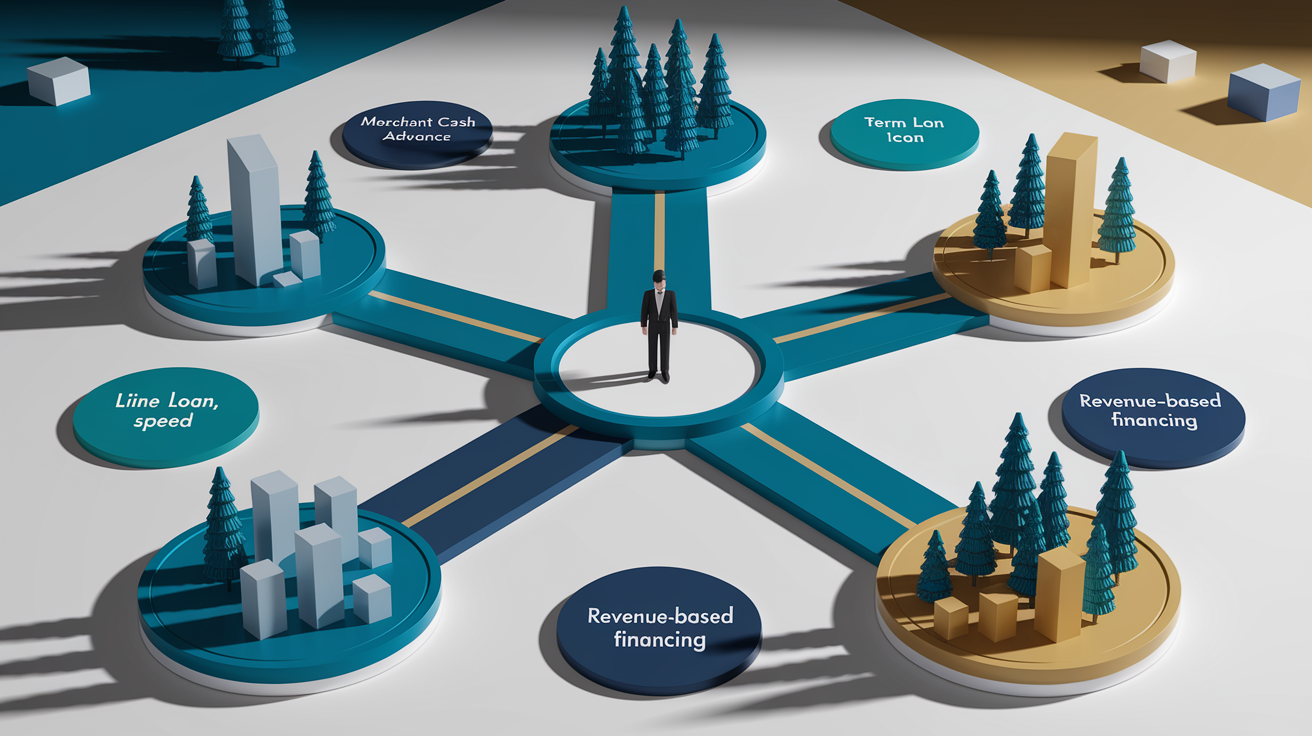
Adjusting MCA terms in house (lowering the factor rate, reducing the holdback, or extending the term) keeps you with the same funder and avoids a new application process. Refinancing or switching to an alternative product like a term loan or line of credit may deliver lower overall cost but requires underwriting time, stronger credit, and collateral or covenants. Comparing both paths side by side clarifies when negotiation is enough and when refinancing makes financial sense.
| Option | Typical Cost | Negotiation Impact |
|---|---|---|
| Negotiated MCA (reduced factor & holdback) | Factor 1.30–1.40; effective APR 35–60% | Moderate savings; faster implementation; same funder relationship |
| Business term loan | APR 8–25%; fixed monthly payments | Much lower total cost; longer approval (2–6 weeks); requires credit/collateral |
| Line of credit | APR 10–30%; interest only when unused | Flexible draw; lower cost than MCA; stricter qualification and covenants |
| Revenue based financing | Fixed fee 6–12%; repayment as % of monthly revenue | Aligned with revenue fluctuations; moderate cost; fewer personal guarantees |
| Equipment financing | APR 5–20%; secured by asset | Lowest rate when equipment serves as collateral; limited to equipment purchases |
Use this comparison to define your BATNA. If a term loan at 18% APR is available in four weeks and you can wait, that becomes your walk away point during MCA negotiation. If you need cash in three days and no bank will approve you, your negotiation leverage shrinks. But even a two point factor rate drop or four point holdback reduction still saves money.
How to Benefit From Negotiating Merchant Cash Advance Terms

Successful negotiation isn’t just about cutting the factor rate. It’s about matching repayment structure to your actual cash flow so daily operations don’t stall. A 15% holdback instead of 20% frees up $500 per day on $10,000 in sales, which compounds to $15,000 per month you keep in the business for payroll, inventory, or marketing. Extending the term from nine months to twelve spreads the same total cost across more payments, lowering each withdrawal and reducing overdraft risk during slow weeks.
Eliminating predatory clauses (automatic renewals, cross default triggers, and short cure periods) protects you from surprise re funding or accelerated balances when one payment bounces. Adding a reconciliation provision in writing gives you a fallback if sales dip seasonally, letting you request temporary payment adjustments without defaulting. Every negotiated improvement stacks: lower rate plus lower holdback plus weekly payments can cut monthly outflows by 30–50% compared to the original offer.
Six practical benefits from securing stronger MCA terms:
- Reduced daily or weekly withdrawals preserve operating cash for rent, payroll, and restocking.
- Lower factor rates decrease the total repayment amount by thousands to tens of thousands of dollars.
- Extended term lengths spread payments across more months, reducing per payment strain.
- Weekly payment schedules instead of daily remittance provide multi day cash buffers and smoother planning.
- Written reconciliation clauses offer formal relief during seasonal revenue drops without triggering default.
- Removal of automatic renewals and cross default provisions prevents surprise re funding and protects other credit lines.
Measure outcomes by comparing the original offer’s total repayment and daily withdrawal to the negotiated contract. If the original factor was 1.45 on $50,000 (total repayment $72,500) and you negotiated down to 1.38 ($69,000), you saved $3,500. If the holdback dropped from 18% to 14% on $8,000 daily sales, you freed $320 per day, $9,600 per month. Track these numbers in a simple spreadsheet and use them as proof points when negotiating renewals or future advances. Long term financial planning post MCA means avoiding stacking multiple advances, refinancing into lower cost products as credit improves, and building a cash reserve so you don’t need emergency funding at predatory rates next time.
Final Words
You ran through fast moves: lower factor rates, cut holdbacks, switch daily to weekly payments, and extend terms when you can. Competing offers and clean bank/POS docs are the leverage.
We also explained factor rates, holdbacks, fees, a step-by-step negotiation playbook, and alternatives to compare. The aim is fewer daily withdrawals and clearer total cost.
Use the checklist, pick two priorities, and rehearse a short script before you call. This guide on how to negotiate merchant cash advance terms gives practical steps to protect cash coming in and going out. You’re in a stronger spot.
FAQ
Q: What are the terms for merchant cash advances?
A: The terms for merchant cash advances are usually a funded amount repaid with a factor rate (a flat multiplier), a daily or weekly holdback percentage, a fixed total payback, origination fees, and sometimes personal guarantees.
Q: What happens if I can’t pay back a merchant cash advance and what is the default rate for merchant cash advances?
A: If you can’t pay back a merchant cash advance, lenders can raise holdbacks, accelerate collections, pull deposited funds via ACH, sue, or enforce guarantees; there is no single industry default rate, and it varies by lender and sector.
Q: What are the legal considerations for merchant cash advances?
A: Legal considerations for merchant cash advances include that many MCAs are structured as sales of future receivables (not loans), contract terms control rights, state law varies, watch personal guarantees and automatic renewals, and consult counsel if unsure.