


What if the money you’ve already earned could cover payroll today instead of waiting 30, 60, or 90 days?
Invoice discounting turns unpaid invoices into immediate cash by advancing most of the invoice value (money up front) while you keep collecting from customers.
Lenders often advance up to 95% and charge about 1% to 3% per invoice (fees are what the lender takes).
This post walks you through how discounting works, how fast funds arrive, the real costs, and when it’s the right fit for your cash cycle.
Understanding the Purpose of Invoice Discounting and the Immediate Cashflow Problem It Solves
Invoice discounting is short-term borrowing secured against unpaid customer invoices. It converts outstanding receivables into immediate working capital. Lenders typically advance up to 95% of invoice value, charging fees between 1% and 3% of the invoice total. The funding arrives fast, repayment happens when your customers pay, and you keep full control of collections and customer relationships.
The core cashflow problem? It’s the delay between delivering goods or services and actually getting paid. When you issue an invoice with 30, 60, or 90 day terms, your costs keep hitting on their normal schedules. Payroll, rent, suppliers, materials. Revenue sits locked in unpaid invoices while bills pile up. That gap between outgoing cash and incoming cash is what invoice discounting fixes.
It’s not a loan in the traditional sense, but it works like one. You’re borrowing against money you’ve already earned. The lender hands you most of the invoice value up front. You use that cash to keep operations moving. When your customer pays, you settle the advance plus the agreed fee.
Invoice discounting commonly solves these specific cashflow problems:
- Covering payroll when revenue is tied up in unpaid invoices
- Purchasing inventory or raw materials ahead of delivery deadlines
- Bridging seasonal slowdowns or uneven sales cycles
- Funding temporary staff or contractor costs during busy periods
- Taking advantage of supplier discounts or time-sensitive growth opportunities
Why Cashflow Gaps Occur and Lead Businesses to Use Invoice Discounting

Cashflow gaps start with payment terms. Many industries operate on 60, 90, or even 120 day invoices. Your customer takes delivery today, but payment doesn’t arrive for months. During that window, you’re still paying for labor, materials, and overhead. The longer the payment cycle, the wider the gap.
Customer payment behavior makes it worse. Even when terms say 30 days, late payments are common. Some customers pay on time. Others stretch it to 45 or 60 days without warning. A few go silent and require multiple follow-ups. That unpredictability makes it hard to plan spending or commit to new work.
Seasonal businesses and project-based operations face the biggest strain. Revenue might concentrate in a few months, but costs stay steady year-round. Or a large project might take 90 days to complete and another 60 to collect payment. That’s five months where cash is tied up while expenses keep running.
Internal credit control can only do so much. If the customer isn’t paying yet, no amount of follow-up changes when the money hits your account. Invoice discounting removes the dependency on customer timing by advancing the cash before the invoice is due.
Core Invoice Discounting Solutions and How the Process Works

Invoice discounting works by turning unpaid invoices into immediate funding. The lender advances most of the invoice value and settles the remainder once your customer pays. The process is structured around verification, advance, customer payment routing, and final settlement.
Invoice Submission and Verification
You issue an invoice to your customer under normal terms. Once the invoice is raised, you submit it to the lender for verification. The lender checks that the invoice is legitimate, the customer is creditworthy enough to support the advance, and the terms match what was agreed in your facility. Verification usually happens within hours. If the invoice clears, the lender approves the advance and prepares funding.
Advance Rate and Funding Timeline
The lender advances between 80% and 95% of the invoice value. It depends on your facility terms and the customer’s payment history. Funds typically arrive within 24 to 48 hours of invoice submission. The advance hits your business account, and you can use it immediately. Payroll, suppliers, materials, whatever the cash is needed for. The remaining 5% to 20% of the invoice value stays with the lender as a reserve until your customer pays.
Customer Payment Routing
Your customer pays according to the original invoice terms, usually without knowing a lender is involved. Payments either go directly into your business account or route through a trust account controlled by the lender. Trust accounts are common in confidential invoice discounting because they protect the lender’s security while keeping the arrangement invisible to your customers. You remain responsible for collections, follow-ups, and credit control throughout the process.
Final Settlement and Fees
Once your customer pays, the lender releases the reserve. They deduct the agreed fee, typically 1% to 3% of the invoice total. If the payment routed through a trust account, the lender deducts the advance, the fee, and any interest before forwarding the remainder to you. If the payment went directly to your account, you repay the lender from that incoming cash. The cycle closes, and the facility is available again for the next batch of invoices.
Critical operational requirements for invoice discounting setup include:
- A facility agreement that defines advance rate, fees, and eligible invoice criteria
- Integration with your accounting software or invoicing system to streamline submissions
- Clear payment routing instructions so customer payments reach the correct account
- Internal credit control processes to chase overdue invoices and minimize arrears
Comparing Invoice Discounting Solutions with Invoice Factoring

Invoice discounting and invoice factoring both use unpaid invoices to generate cash. But the structure, cost, and control differ in ways that matter operationally.
Fees & Advance Amounts
Invoice discounting typically costs between 0.75% and 2.5% of invoice value as a discounting fee, with interest charged on the drawn amount. Invoice factoring adds a service fee of 1.5% to 5% on top of the funding cost, covering ledger management and collections. Total factoring costs run higher because you’re paying for outsourced credit control, not just funding. Advance rates overlap. Discounting often advances 80 to 95%, factoring usually 75 to 85%, depending on customer eligibility and provider terms.
Credit Vetting
Discounting requires minimal customer credit checks because you retain collections responsibility and the lender’s risk is lower. Factoring providers conduct detailed credit and sales ledger checks on your customers before approving invoices. If a customer doesn’t meet the factor’s criteria, that invoice, and sometimes the entire relationship, may be excluded from funding.
Collections Responsibility
With discounting, you keep control of accounts receivable and chase payments yourself. The lender advances funds but doesn’t contact your customers or manage your sales ledger. With factoring, the provider takes over credit control, sends payment reminders, and manages the collections process. Your customers deal directly with the factor, not you.
Confidentiality
Invoice discounting is usually confidential. Customers continue paying you or into a trust account without being notified that a lender is involved. Invoice factoring is notification-based. The factor tells your customers to remit payment to them, so the arrangement is visible and explicit.
Risk & Recourse
Discounting facilities are typically recourse, meaning you must repay the lender even if your customer defaults. Factoring often offers non-recourse options where the factor absorbs the loss if a customer doesn’t pay, though that protection raises costs and comes with stricter eligibility rules. Read the contract carefully. Some factoring agreements still include recourse clauses in the fine print.
| Method | Who Collects | Confidentiality | Typical Fees | Advance Rate |
|---|---|---|---|---|
| Invoice Discounting | You retain collections | Confidential | 0.75–2.5% + interest | 80–95% |
| Invoice Factoring | Factor manages collections | Non-confidential | 1.5–5% service fee + funding cost | 75–85% |
Costs, Fees, and Rate Structures in Invoice Discounting

Invoice discounting costs break into two main components: the discounting fee and interest on drawn amounts. The discounting fee is a percentage of each invoice total, typically between 1% and 3%. That fee covers the lender’s administrative costs, risk assessment, and profit margin. Interest applies to the advance amount for the period it’s outstanding, usually structured as a monthly or annual rate, applied daily to the drawn balance.
Facility fees may also apply, especially if you’re using a whole-turnover discounting facility. Some lenders charge a flat monthly fee for maintaining the facility. Others tie fees to invoice volume or total funding drawn. Lenders price facilities based on debtor reliability, customer concentration, and your own credit history. If your customer base is concentrated in a few large clients, or if payment histories show frequent delays, expect higher fees and tighter advance rates.
Invoice discounting cost elements include:
- Discounting fee (1 to 3% of invoice value), charged per invoice or per batch
- Interest on the advance (quoted as APR or monthly rate), accruing daily until repaid
- Facility fee (monthly or annual), covering account maintenance and administration
- Trust account setup or payment routing fees, if the lender requires a controlled payment structure
- Early termination or breach penalties, if confidentiality clauses are violated or the facility is closed before the minimum term
Eligibility Criteria and Risk Controls in Invoice Discounting Facilities

Lenders assess eligibility by reviewing your debtor profile, sales ledger quality, and financial history. They want to see that your customers pay reliably, that your invoices are clear and enforceable, and that your business has robust credit control processes. Strong payment histories and low arrears improve approval odds and reduce fees. Weak debtor profiles or concentrated customer bases trigger higher costs or rejection.
Due diligence includes KYC and AML checks on your business and its directors, plus debtor credit assessments to confirm that customers are solvent and likely to pay. Lenders may request recent financial statements, aging reports, and bank statements to verify trading activity. If you’re using selective discounting, they’ll evaluate each submitted invoice individually. Whole-turnover facilities require ongoing ledger monitoring and periodic audits.
Trust accounts and payment routing controls protect the lender’s security. If customers pay into a trust account, the lender deducts the advance, fees, and interest before releasing the remainder to you. Non-recourse options are uncommon in discounting. Most facilities require you to repay the advance even if the customer defaults, so strong internal credit control is essential to minimize arrears and maintain lender confidence.
Typical eligibility criteria for invoice discounting approval:
- Minimum trading history (often 6 to 12 months) with verifiable sales records
- Creditworthy customer base with low concentration risk
- Clear, enforceable invoices with standard payment terms
- Functional credit control processes and low days sales outstanding (DSO)
Implementing Invoice Discounting: Steps to Set Up and Optimize the Facility
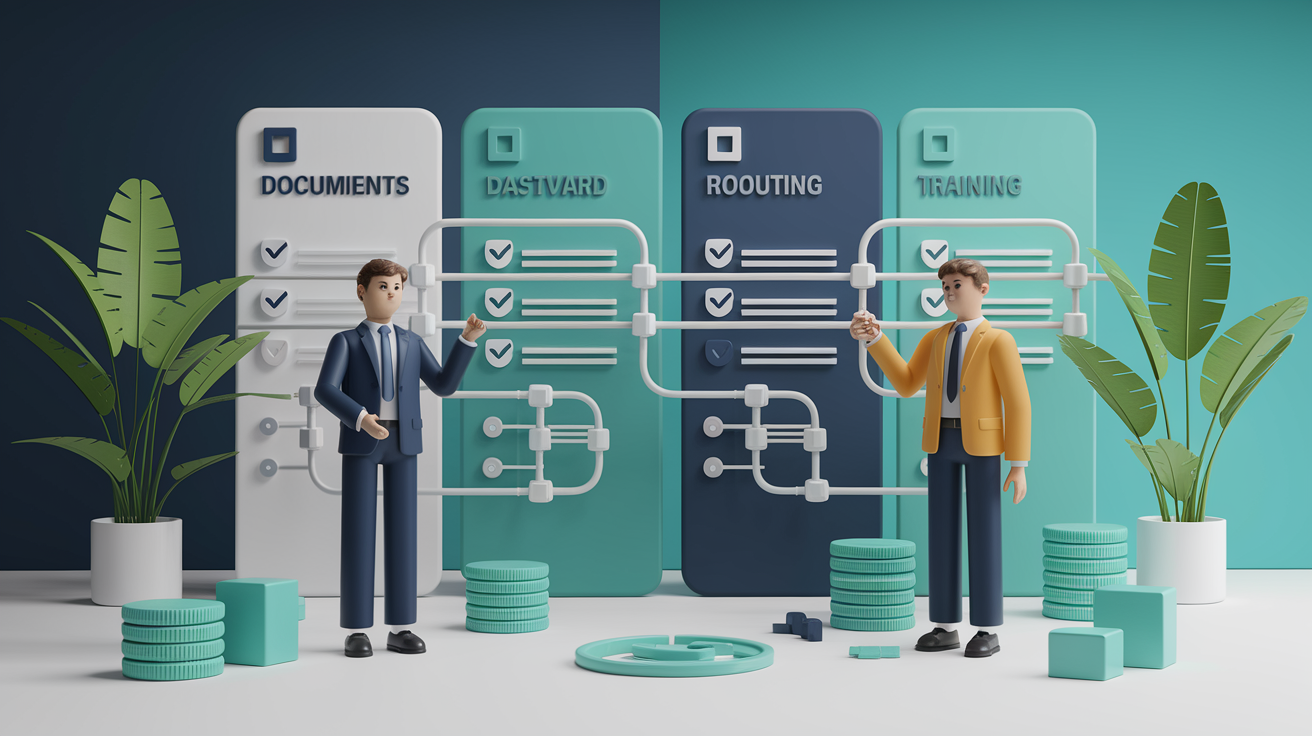
Implementing invoice discounting starts with choosing the facility type and preparing the documentation lenders need to assess your business and customer base.
Selecting Facility Type
Decide between whole-turnover and selective invoice discounting. Whole-turnover facilities discount your entire accounts receivable ledger, giving the lender visibility into all invoices and spreading risk across your customer base. Selective discounting lets you choose specific invoices to discount, preserving flexibility but often resulting in higher fees or limited availability for smaller businesses. Lenders prefer whole-turnover structures because diversified risk is easier to price and monitor.
Preparing Documentation
Lenders require recent financial statements, sales ledger aging reports, bank statements covering the last three to six months, and customer payment histories. You’ll also need copies of standard invoices, proof of goods or services delivered, and contracts or purchase orders that validate the receivables. KYC and AML checks mean providing identification, business registration documents, and director details. Have your accountant review the documents before submission to catch errors or missing information.
Negotiating Fees and Advance Rates
Compare multiple providers before committing. Request detailed fee schedules, advance rate ranges, and examples of total cost over a typical invoice lifecycle. Ask for anonymous references from current clients in your industry. Negotiate the advance rate. If your customers pay reliably, you can push for 90 to 95% instead of 80%. Clarify confidentiality terms, trust account requirements, and any operational controls the lender will impose. Involve your accountant in the negotiation to ensure you understand the full cost and can model cashflow impact accurately.
Integration and Operational Setup
Set up payment routing and integrate your invoicing software with the lender’s platform. Many providers offer API integrations and support 350+ accounting and invoicing systems, making setup fast and automated. If using a trust account, update customer invoices with the new payment instructions, but keep wording neutral to preserve confidentiality. Train your credit control team on the submission process, reporting requirements, and how to escalate overdue invoices. Monitor the facility closely in the first 90 days to confirm funding timelines, fee calculations, and settlement accuracy.
Invoice discounting setup workflow in five steps:
- Choose facility scope (whole-turnover vs selective) and obtain quotes from at least three providers
- Prepare and submit financial statements, sales ledger reports, and KYC documentation
- Negotiate advance rate, fee structure, confidentiality terms, and operational controls
- Set up trust account or payment routing and integrate invoicing software with lender platform
- Train internal teams on submission, reporting, and credit control expectations, then monitor performance for 90 days
Preventing Recurring Cashflow Gaps After Adopting Invoice Discounting

Invoice discounting improves cashflow immediately, but long-term stability requires monitoring overdue invoices, tightening credit control, and tracking receivables KPIs. If customers consistently pay late, even discounted invoices won’t prevent future gaps. The lender will advance less or charge more as arrears rise.
Use aging analysis to flag invoices that are 30, 60, or 90 days overdue. Automate credit control with reminders, follow-up schedules, and escalation protocols so overdue accounts get attention before they become write-offs. Track days sales outstanding (DSO) monthly. If DSO creeps up, cash conversion slows and the facility becomes less efficient. Cashflow forecasting tools help you plan for seasonal dips, large invoice batches, and payment timing mismatches before they strain operations.
Preventive strategies to stabilize cashflow and reduce dependency on invoice discounting:
- Monitor aging reports weekly and escalate overdue invoices before they exceed 60 days
- Automate credit control with reminders, follow-up workflows, and customer payment portals
- Track DSO, advance utilization, and fee costs monthly to measure facility efficiency
- Negotiate shorter payment terms with new customers and incentivize early payment with discounts where margins allow
When to Seek Further Support and Explore Alternative Funding Options
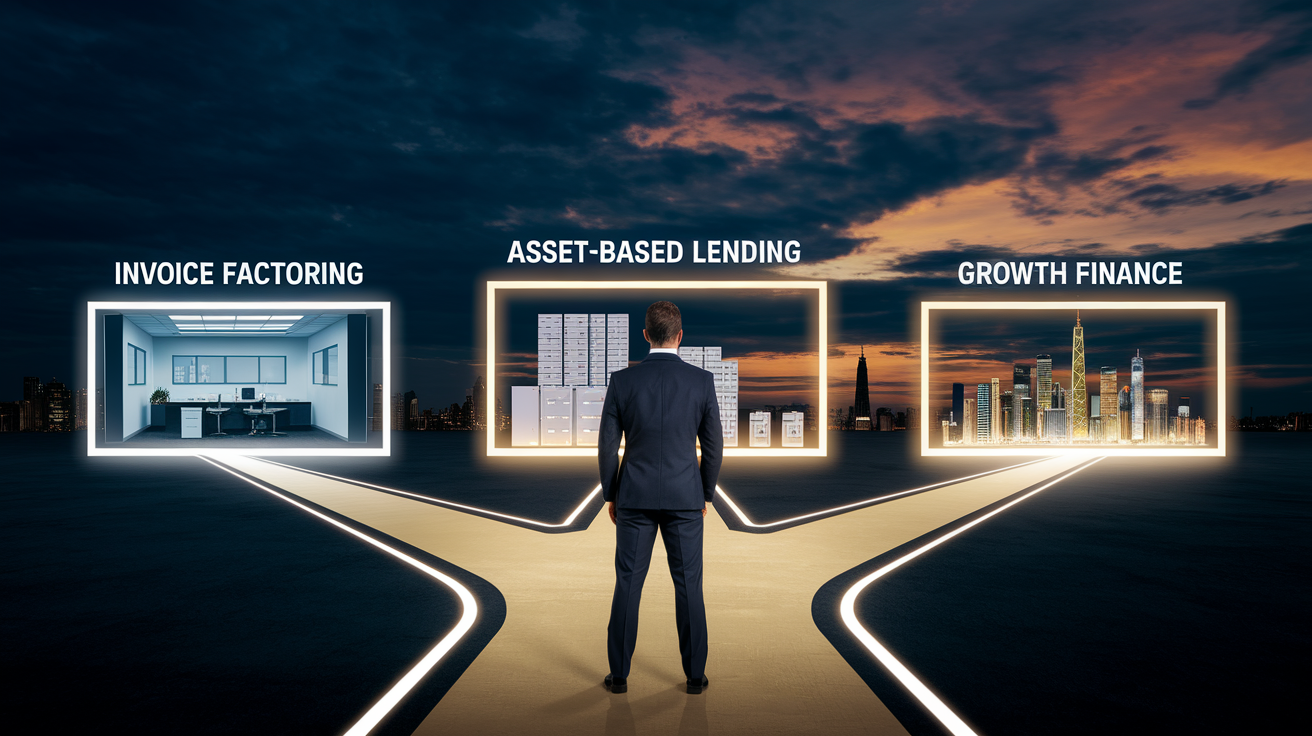
Invoice discounting works when customers pay predictably and your credit control processes are strong. If customers frequently default, payment cycles stretch unpredictably, or your internal collections capacity is overwhelmed, discounting may not be enough. At that point, invoice factoring makes more sense because the provider takes over collections and absorbs some of the payment risk, though costs rise significantly.
Asset-based lending and growth finance options may fit better if you need larger funding lines, longer repayment terms, or capital that isn’t tied to individual invoices. Refinancing the facility is also an option as your business grows. Lenders will restructure advance rates, reduce fees, or increase limits based on improved debtor performance and higher invoice volumes.
Situations where expert help is necessary:
- Customers are paying inconsistently or defaulting, and internal credit control can’t recover the debts
- Cashflow gaps persist despite using invoice discounting, indicating deeper operational or pricing issues
- You need larger or longer-term funding that goes beyond receivables-based facilities
Final Words
Invoices are unpaid, payroll is due, and you need cash now. This post defined invoice discounting and showed the exact cashflow gaps it solves.
We walked through why gaps happen, the step-by-step mechanics, the fees and eligibility checks, and how discounting compares with factoring so you can weigh control versus outsourcing.
You also got setup steps, integration tips, and ways to prevent long-term dependence, like forecasting, KPIs, aging analysis, and automation.
Used right, invoice discounting can be a practical bridge that keeps payroll paid and inventory moving while you steady the business.
FAQ
Q: What is invoice discounting?
A: Invoice discounting is short-term borrowing using unpaid customer invoices as security, where a lender advances around 80–95% and charges roughly 1–3% fees to bridge cash coming in and going out.
Q: Is invoice discounting a good idea?
A: Invoice discounting is a good idea when you need quick cash, have reliable customers and strong credit control; it keeps collections private but adds fees and needs disciplined receivables management.
Q: What are 30-60-90 payment terms?
A: 30-60-90 payment terms are invoice schedules requiring payment in 30, 60, or 90 days, which lengthen your cash conversion cycle and can create funding needs or raise days sales outstanding (DSO).
Q: What is the difference between debt factoring and invoice discounting?
A: The difference is factoring sells invoices and often hands collections to the factor (sometimes non-recourse), while discounting is a loan that keeps credit control, can be confidential, and leaves collections with the business.