


What if the quick cash you take today drains your restaurant’s weekly deposits for months?
A merchant cash advance calculator for restaurants shows the real damage: the total you repay, the daily or weekly pull, and how long you’ll be paying.
Plug in your advance, factor rate, holdback percentage, and average card sales, and you get the full picture: dollar fee, daily hit, estimated payback, and an APR equivalent for comparison.
This post shows step-by-step how to run the numbers, test slow and busy sales, and spot whether the daily pull will fit payroll and bills.
Understanding What a Restaurant MCA Calculator Solves

A merchant cash advance calculator for restaurants shows exactly what you’ll pay back, how much leaves your account each day or week, and how long you’ll be paying. Plug in your advance amount, the factor rate you’ve been quoted, your holdback percentage, and your daily card sales. Then the tool delivers the full picture.
Most MCA agreements exchange a lump sum today (the advance) for a fixed total repayment collected through a percentage of your card sales. Factor rates typically range from 1.15 to 1.49, which means a $40,000 advance with a 1.225 factor requires you to repay $49,000. That’s a $9,000 fee. If your provider collects 15% of daily card sales as the holdback, your actual repayment timing shifts with your sales volume.
The calculator reveals total repayment amount (advance × factor rate), dollar fee (total repayment minus the advance), daily or weekly deduction (holdback percentage × card sales), estimated payback period in days, weeks, or months, and APR equivalent estimate for comparison to other financing.
One restaurant processing $2,000 in card sales daily with a 15% holdback pays $300 per day. At that rate, paying back $49,000 takes about 163 days. Another restaurant doing $10,000 per day pays $1,500 daily and finishes in roughly 33 days. The advance and the fee stay the same. Only the calendar changes.
MCAs carry effective APR equivalents between 40% and 300%, depending on how fast you pay. Calculation is essential because the factor rate alone hides the true annualized cost. You need to see the daily hit to cash flow, the total dollar markup, and the payback window before you commit. Without those numbers, you’re signing blind.
Why Restaurant MCA Repayment Costs Vary So Widely
The total you owe is fixed the day you sign. No surprises there. But the speed at which you repay it depends entirely on how much you process through your card terminal. A restaurant doing steady daily sales pays faster. One with uneven weeks or seasonal drops takes longer.
Factor rates and holdback percentages are negotiated up front, but sales volume isn’t. That’s why two identical advances can finish months apart. A $40,000 advance with a 1.225 factor and 15% holdback repays in 163 days when card sales average $2,000 per day. Bump daily sales to $5,000, and the same deal wraps in 65 days. Drop sales to $1,500, and repayment stretches past 200 days.
Sales fluctuations cause the first layer of uncertainty. Weekdays, weekends, holidays, and weather all shift daily volume. Seasonal swings hit ski-town restaurants, beach cafés, and event-driven caterers with months of slow card processing. Customer payment mix matters too. If more guests pay cash or use gift cards, holdback collections shrink and repayment extends. Early payoff terms rarely exist. Most MCAs don’t reduce your total owed if you pay early, so finishing fast doesn’t save money unless a settlement discount exists.
Seasonal operators face the biggest volatility. A patio restaurant doing $8,000 per day in summer and $2,000 in winter will pay back the same $49,000, but the winter months drag repayment out and tighten daily cash flow. The calculator can model best-case and worst-case timing, but real sales patterns decide the outcome.
Using a Restaurant MCA Calculator to Estimate Total Repayment

The first output any MCA calculator shows is total repayment. That’s the full amount you must pay back before the advance is settled. The formula is simple: multiply the advance amount by the factor rate.
If you receive $50,000 and the factor rate is 1.30, total repayment is $65,000. The fee is $15,000. That $15,000 is the cost of the advance, what you’re paying for immediate access to cash. Factor rates for restaurants typically fall between 1.15 and 1.49, so the fee ranges from 15% to 49% of the advance amount.
| Advance Amount | Factor Rate | Total Repayment | Fee |
|---|---|---|---|
| $30,000 | 1.20 | $36,000 | $6,000 |
| $50,000 | 1.30 | $65,000 | $15,000 |
| $75,000 | 1.40 | $105,000 | $30,000 |
Some providers add origination or underwriting fees on top of the factor rate. If your agreement includes a $2,000 processing fee, add that to the total repayment figure. Net proceeds are the advance amount minus any upfront fees deducted at funding. If you’re quoted a $50,000 advance but $1,500 is held back for fees, you receive $48,500 and still owe the full $65,000 repayment. Always confirm whether fees come out of the advance or are added to the total owed.
Estimating Daily or Weekly Payments With an MCA Calculator

Your daily or weekly payment is calculated by multiplying your card sales by the holdback percentage. If your restaurant processes $2,000 in credit and debit card transactions today and the holdback is 15%, $300 leaves your account as an MCA payment.
Weekly repayment follows the same logic. If you process $14,000 in card sales over seven days and the holdback is 15%, the weekly deduction is $2,100. Some agreements use daily ACH pulls. Others use weekly batches. A few sync directly with your card processor and take a percentage of each transaction in real time.
Average card sales volume is the first factor affecting daily or weekly deductions. Higher sales mean higher payments and faster payback. Payment frequency matters. Daily ACH hits cash flow harder than weekly. Real-time processor splits spread the impact across transactions. Holdback percentage makes a difference. 10% is gentler than 20%. Negotiate this based on your typical daily cash needs. Customer payment mix changes things. Cash transactions don’t trigger holdback, and shifts toward cash slow repayment. Sales consistency divides restaurants into predictable and volatile groups. Steady daily volume helps you plan. Big weekend spikes create variable weekly totals.
Weekend-heavy restaurants often see daily payments jump Friday through Sunday, then drop Monday through Thursday. That unevenness can complicate cash planning. If you run payroll every other Friday and your MCA pulls $1,000 on Saturdays, map the collision points before you fund.
Here’s a sample: your café does $3,500 in card sales on an average weekday. Holdback is 12%. Daily deduction: $3,500 × 0.12 = $420. Over five weekdays, that’s $2,100. Weekend sales jump to $5,000 per day. Weekend deduction: $5,000 × 0.12 = $600 per day, or $1,200 Saturday and Sunday. Weekly total: $2,100 + $1,200 = $3,300 pulled from card deposits before you see the cash.
Calculating Payback Duration Using Restaurant MCA Inputs

Payback duration is total repayment divided by your daily or weekly payment. If you owe $49,000 and pay $300 per day, repayment takes 163 days. Change the daily payment to $750, and you’re done in 65 days. The math is straightforward, but sales volatility makes the estimate a moving target.
Seasonal restaurants need to model best-case and worst-case scenarios. A shore-town seafood place doing $6,000 per day in summer and $1,800 in winter will see repayment stretch across both seasons unless the advance is timed to close before the slow months hit.
| Scenario | Daily Card Sales | Holdback % | Daily Payment | Days to Repay $49,000 |
|---|---|---|---|---|
| Slow period | $1,500 | 15% | $225 | 218 days (~7.3 months) |
| Normal period | $3,000 | 15% | $450 | 109 days (~3.6 months) |
| Busy period | $6,000 | 15% | $900 | 54 days (~1.8 months) |
Calculators that allow sales volatility sliders let you test a 25% drop or a 50% surge. Run the numbers for your worst three-month stretch and your best. That range tells you whether the advance fits your cash cycle or creates a cash squeeze when you can least afford it. Repayment length directly determines your effective APR. Shorter payback means higher annualized cost, longer payback means you carry the debt for more months.
Converting Factor Rates Into APR Estimates

Factor rates don’t look like interest rates, and that’s the point. A 1.30 factor sounds smaller than a 60% APR, even when they describe similar costs over a short period. Converting the factor into an annualized percentage lets you compare MCAs to lines of credit, equipment loans, and credit cards.
The formula: take your total fee, divide by the advance amount, multiply by 365 to annualize it, then divide by the payback period in days. For a $50,000 advance with a $15,000 fee repaid over 180 days, the math is (15,000 ÷ 50,000) × (365 ÷ 180) = 0.30 × 2.03 ≈ 61% APR equivalent.
Short payback periods spike the APR. The same 22.5% markup annualized over 3 months hits 90%, over 6 months it’s 45%, over 12 months it’s 22.5%. Sales volatility changes the denominator. If repayment stretches from 90 days to 180 days due to slow sales, your effective APR drops but you carry debt longer. APR approximations ignore daily compounding. True APR would account for exact payment timing. Calculator estimates are close but not precise. Early payoff doesn’t lower cost. Paying faster raises your annualized rate because you pay the same fee in fewer days, and most contracts don’t discount for early settlement.
A real example: $40,000 advance with a 1.225 factor creates a $9,000 fee. That’s a 22.5% markup. If you repay in 90 days, the APR equivalent is roughly (0.225) × (365 ÷ 90) ≈ 91%. Repay in 180 days and it drops to about 46%. Repay in 365 days and it lands near 22.5%. The MCA provider collects the same $9,000 either way. Time is the only variable that changes the annualized rate.
Running Restaurant-Specific MCA Scenarios in the Calculator
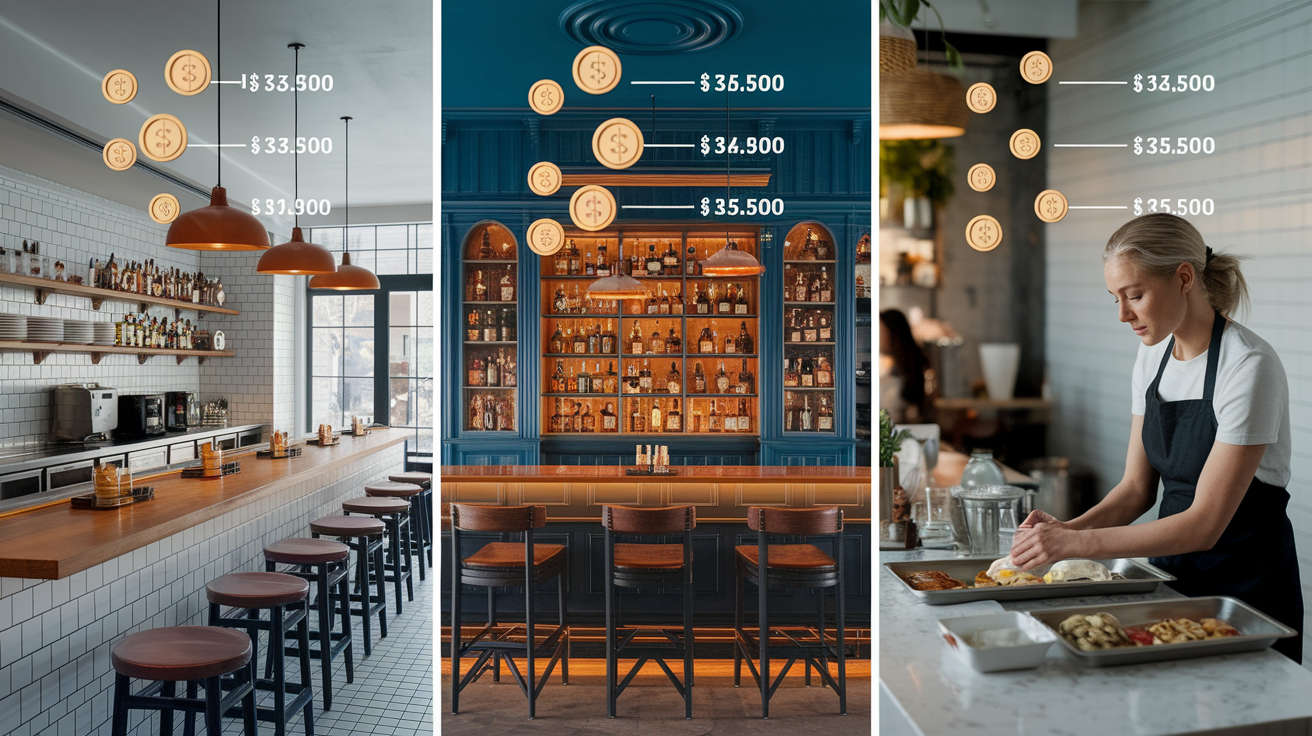
Pre-built scenarios help you see how advances perform across different restaurant types. Monthly card sales, average ticket size, and sales consistency all affect repayment speed and total cost. Running a few profiles shows whether an MCA fits your operation or creates a cash-flow mismatch.
Fast-Casual Example
A fast-casual restaurant processes $60,000 per month in card sales, roughly $2,000 per day. The owner takes a $50,000 advance at a 1.30 factor rate, creating a $65,000 total repayment. Holdback is set at 15%, so daily deductions run $300. Payback period: 217 days, about 7.2 months. Effective APR estimate: approximately 50%. Sales are steady Monday through Sunday, so the $300 daily pull is predictable. The advance covers a kitchen equipment replacement that would have taken three months to save for. Speed justifies the cost, but only because downtime would have cost more.
Neighborhood Bar Example
A neighborhood bar averages $30,000 per month in card sales, with big Friday and Saturday nights and quiet weekday afternoons. The owner requests a $25,000 advance at a 1.25 factor, total repayment $31,250. Holdback: 12%. Weekend card sales hit $2,500 per day. Weekdays drop to $600. Average daily card sales: roughly $1,000. Daily deduction averages $120, but weekends pull $300 and weekdays pull $72. Estimated payback: 260 days, close to 8.5 months. Effective APR: around 36%. The uneven cash flow makes budgeting harder. The owner uses the advance to cover a temporary liquor-license renewal and a small patio build-out. Timing the advance to close before winter is critical.
Café Case Study
A café processing $40,000 per month takes a $30,000 advance at a 1.35 factor. Total repayment: $40,500. Holdback: 18%, creating daily deductions around $240 when daily card sales average $1,333. Payback period: 169 days, roughly 5.6 months. Effective APR estimate: about 75%. The café used the advance to fund a catering contract that paid $50,000 net after food costs within 60 days. The fast close and immediate contract revenue made the high APR workable. Without the contract, the same advance would have been too expensive for general working capital.
| Restaurant Type | Advance / Repayment | Daily Deduction | Payback Period |
|---|---|---|---|
| Fast-Casual | $50,000 / $65,000 | $300 | 217 days (~7.2 months) |
| Neighborhood Bar | $25,000 / $31,250 | ~$120 avg | 260 days (~8.5 months) |
| Café | $30,000 / $40,500 | $240 | 169 days (~5.6 months) |
Comparing MCA Calculator Results Against Other Restaurant Financing Options
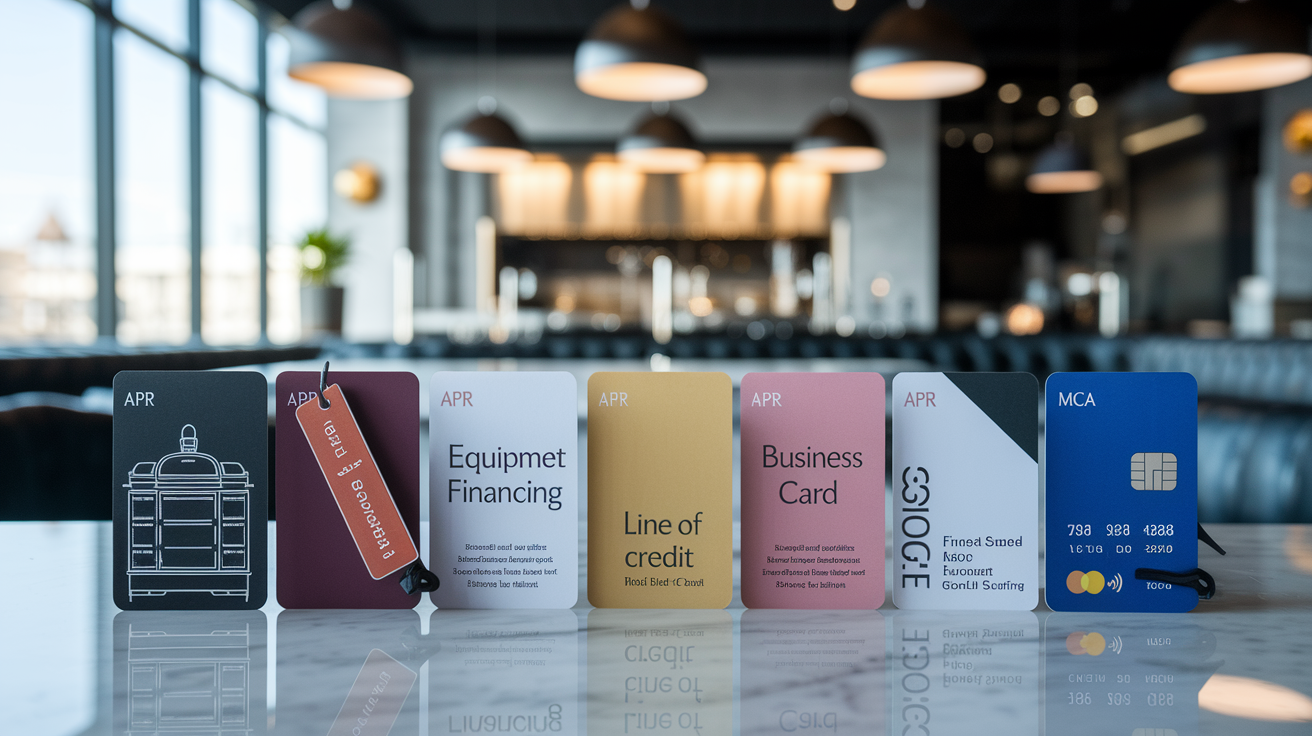
Once the calculator shows your MCA’s effective APR and daily deduction, compare those numbers to what other funding products would cost for the same amount and use. MCAs fund fast, often within 24 to 48 hours. But speed comes at a price. Cheaper alternatives exist if you can wait a few weeks or meet stricter approval criteria.
SBA 7(a) loans typically carry APRs around 12%, but closing takes 30 to 60 days and requires strong credit, collateral, and detailed financials. Equipment financing falls between 6% and 20% APR, and some lenders fund within 24 hours if the equipment serves as collateral. A business line of credit runs 15% to 30% APR, draws only when you need cash, and lets you repay early without penalty in most cases. Invoice factoring for B2B catering invoices costs 18% to 36% effective APR and funds in 24 to 48 hours, but only works if you have outstanding receivables.
SBA loans offer the lowest rates, longest approval time, and highest documentation requirements. Equipment financing is collateral based, gets you fast approvals, and delivers lower rates than unsecured options. Business lines of credit give you flexible draws, repay and reuse terms, and moderate APR. Working capital financing structures term loans with fixed payments and clear APRs, slower than MCAs but cheaper. Invoice factoring lets you sell outstanding receivables for immediate cash and works for catering or corporate accounts. Business credit cards run 20% to 30% APR, give instant access, and work well for short-term gaps under $25,000.
| Financing Type | Typical APR Range | Funding Speed | Best Use |
|---|---|---|---|
| SBA 7(a) Loan | ~12% | 30–60 days | Long-term expansion, real estate, major equipment |
| Equipment Financing | 6%–20% | 24 hours–1 week | Kitchen equipment, POS systems, HVAC |
| Line of Credit | 15%–30% | 1–2 weeks | Seasonal gaps, inventory buys, short-term cash needs |
| Merchant Cash Advance | 40%–300% equivalent | 24–48 hours | Emergency equipment replacement, immediate contract funding |
If your calculator shows an MCA with a 60% APR equivalent and a line of credit offers 25%, the line of credit saves thousands unless you need funding today and can’t wait two weeks. Run both options through a calculator, compare daily payments and total costs, then choose the one that fits your timeline and cash flow.
How Restaurant Owners Can Prevent MCA Repayment Problems

High holdback percentages and uneven sales create cash-flow strain. The best way to avoid repayment problems is to model the worst-case scenario before you sign, then build a cash cushion to cover it.
Calculate your net daily cash after the holdback. If you process $3,000 per day in card sales, a 20% holdback pulls $600. Add up your daily fixed costs (rent, utilities, base payroll, food supplier minimums) and see what’s left. If the holdback leaves you short on a slow Tuesday, you’ll be scrambling every week.
Negotiate a lower holdback percentage. 10% instead of 20% cuts daily deductions in half and gives you breathing room during slow periods. Time the advance to close before your busy season. Fund in spring if summer is your peak, so repayment finishes when cash flow is strongest. Avoid stacking multiple MCAs. Carrying two or three advances at once compounds daily deductions and can drain your account faster than sales replenish it. Maintain your card-processing mix. Switching a large portion of sales to cash to dodge holdback typically violates your agreement and can trigger default. Set aside a two-week cash reserve before funding. Use it to cover the first round of deductions while you adjust to the new daily cash flow.
Slow periods are the danger zone. If your daily sales drop by 40% but your rent, payroll, and food costs stay flat, the holdback eats a bigger share of what’s left. Model that drop in the calculator. If the numbers don’t work, don’t take the advance. Early payoff rarely reduces the total owed, so paying faster doesn’t save money. It just frees up cash flow sooner.
When to Seek Professional Guidance Beyond an MCA Calculator

A calculator shows the math, but it can’t flag contract clauses that shift risk onto you. Personal guarantees, immediate-due-on-closure terms, and requirements to maintain processing volume all sit in the fine print. When the calculator reveals an effective APR over 100%, or when your daily deduction leaves less than $500 in net operating cash, pause and get a second opinion.
Legal review is worth the cost before signing. MCAs don’t report positive payment history to business credit bureaus, so on-time repayment doesn’t build your credit profile. If the business closes, most agreements make the remaining balance due immediately, and personal guarantees let the provider pursue your personal assets. An attorney can spot those clauses and negotiate changes or advise you to walk.
The calculator shows your daily deduction will consume more than 25% of net daily cash flow after operating costs. That’s the first situation calling for expert escalation. You’re being offered a second MCA while the first is still active, and combined daily deductions exceed 30% of card sales. That’s the second. The provider won’t explain the factor rate in APR equivalent terms or provide a written repayment schedule. Third red flag. Your contract includes a confession of judgment, which allows the provider to obtain a court judgment without a trial if you default. Fourth.
If the calculator reveals a 150% APR equivalent and alternatives like a business line of credit or working capital financing would cost 30% to 40%, the MCA isn’t a funding solution. It’s an expensive patch that may create a bigger problem three months out. Consult a business advisor or accountant to review your full cash-flow picture and compare real costs across all available options.
Final Words
in the action we showed how the calculator pulls advance size, factor rate, holdback %, and daily sales to reveal total payback, daily or weekly deductions, and the likely payback period.
You learned how to convert factor rates to APR-like figures, run slow/busy scenarios, and compare MCAs to loans or lines of credit so you can see true cost and cashflow impact.
If you want a quick reality check, plug your numbers into a merchant cash advance calculator for restaurants and see whether the repayment fits your schedule. You’ve got options.
FAQ
Q: What does a restaurant MCA calculator solve?
A: The restaurant MCA calculator shows total repayment, daily or weekly deductions, estimated payback time, and fees based on advance size, factor rate, holdback percent, and your average card sales.
Q: What inputs do I need to run a restaurant MCA calculator?
A: You need to enter the advance size, factor rate (a flat multiplier), holdback percentage, and average daily or weekly card sales; optional seasonality or extra fees improve accuracy.
Q: How does the calculator compute total repayment and fees?
A: The calculator computes total repayment as advance × factor rate, and the fee as total repayment minus advance. For example, $50,000 × 1.30 = $65,000 total repayment, a $15,000 fee.
Q: How do I estimate daily or weekly payments with the calculator?
A: The calculator estimates daily or weekly payments by multiplying card sales by the holdback percent. For example, 15% holdback on $2,000 daily sales equals a $300 daily deduction.
Q: How does holdback percent and sales volume affect payback duration?
A: A fixed holdback percent means payback timing depends on sales volume; lower sales stretch repayment. Example: $40,000 advance with 15% holdback repays about 163 days at $2,000/day, 33 days at $10,000/day.
Q: How do I convert a factor rate into an APR estimate?
A: To convert a factor rate to APR use [(Total ÷ Advance) − 1] × (365 ÷ payback days). Example: a 22.5% markup annualized over 90 days is roughly a 90% APR.
Q: Why are MCAs generally high-cost and why use the calculator?
A: MCAs cost more because short terms, daily collections, and factor-rate pricing front-load fees. The calculator reveals true total payback so you avoid surprises and pick a better fit.
Q: How do MCA costs compare to other restaurant financing options?
A: MCA funding is faster, often 24–48 hours, but APR-equivalents are usually higher than SBA loans (~12% APR), equipment loans (6–20%), or lines of credit (15–30%).
Q: How can I prevent MCA repayment problems?
A: Prevent problems by stress-testing sales scenarios, keeping cash reserves, matching holdback to sales cycles, negotiating reasonable terms, and avoiding advances that create negative daily cash flow.
Q: When should I seek professional help beyond the calculator?
A: Seek help when the calculator shows very high APRs, when personal guarantees or immediate-balance clauses appear, or when closure risk exists; get legal and financial advice and explore lines of credit or working-capital options.