

Which is smarter for your business: a slow, cheaper SBA loan or a fast, flexible business line of credit?
SBA loans give a big lump sum for long projects with lower rates and steady monthly payments, while lines of credit act like a reserve tank you tap for payroll, inventory, or surprise costs and you only pay interest on what you use.
Read on to learn when each fits your cash coming in and going out, how repayment and timing affect true cost, and when using both makes sense.
Quick Comparison: When to Choose an SBA Loan vs a Business Line of Credit

An SBA loan gives you a lump sum upfront with lower interest and a longer payback window. It’s built for capital purchases and expansion projects. A business line of credit works like a reserve account you can tap whenever you need it, repay, and tap again. That’s designed for short-term working capital and cash flow gaps.
SBA loans take weeks to months to underwrite. You’ll need detailed documentation and often collateral, but the cost is lower and the term stretches longer. Lines of credit approve faster, fund in days, and flex with your revenue cycle. You’ll pay higher interest and the limit is usually smaller.
Quick scenario guide:
Choose an SBA loan if you’re buying commercial real estate, acquiring another business, or financing major equipment with a multi-year useful life.
Choose a business line of credit if you need to bridge payroll gaps, manage seasonal inventory swings, or cover unexpected expenses without waiting months for approval.
Choose an SBA loan if you want a predictable fixed payment and you’re okay with a longer approval process.
Choose a business line of credit if your cash needs are variable and you want to pay interest only on what you actually draw.
Use both if you’re funding a long-term asset purchase with SBA financing and maintaining a credit line as an operating liquidity buffer.
Skip SBA if you need funds immediately and can’t wait 30 to 90 days for underwriting and funding.
The core distinction is purpose and timeline. SBA loans match long-term needs with lower cost capital that takes time to secure. Lines of credit match near-term cash flow needs with higher cost flexibility that funds fast.
Key Differences Side-by-Side
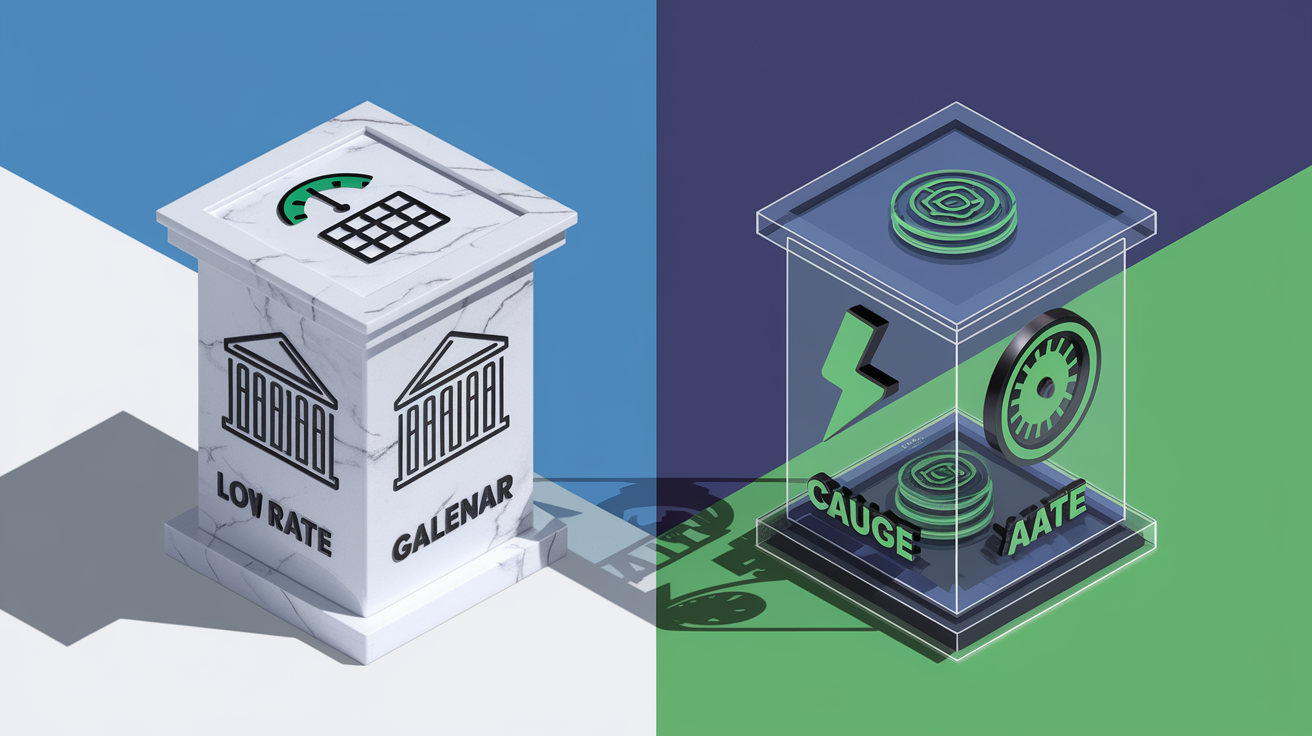
The table below lays out the structural differences between SBA loans and business lines of credit across the dimensions that matter most to small business operators.
| Feature | SBA Loan | Business Line of Credit |
|---|---|---|
| Loan Amount / Limit | Up to $5,000,000 (SBA 7a and 504) | Typically $10,000–$500,000, varies by lender |
| Interest Rate | Lower, often fixed or capped | Higher, variable rate tied to prime |
| Repayment Term | Long (up to 10–25 years for real estate) | Revolving; often 3–5 year draw period then amortization |
| Funding Speed | 30–90 days typical | Days to 2 weeks |
| Collateral | Usually required | Secured or unsecured depending on limit and credit |
| Best Use | Large capital investments, expansion, acquisition | Working capital, seasonal needs, emergency liquidity |
| Application Complexity | High documentation, SBA-specific forms | Lighter documentation, faster underwriting |
SBA loans are built for businesses that can absorb a longer funding timeline in exchange for larger amounts, lower interest, and extended repayment. The government guarantee reduces lender risk, which usually lowers the rate compared to conventional term loans.
Lines of credit prioritize speed and flexibility. You draw only what you need, pay interest on the outstanding balance, and can repay and reborrow within the draw period. That revolving feature suits variable cash flow patterns but comes with higher rates and smaller maximums. If your revenue is lumpy or seasonal, a line of credit covers the gaps without forcing you to take a full lump sum and pay interest on idle funds.
Loan Amounts and Usage Flexibility

SBA 7(a) and 504 loans can finance up to $5 million. That covers everything from commercial real estate purchases to major equipment and business acquisitions. That ceiling is statutory and lets businesses fund large, one-time capital needs with a single loan package.
Business lines of credit usually cap much lower, often between $10,000 and $500,000. Depends on lender policy, your credit profile, and annual revenue. The trade is size for reusability. With a line of credit, you can draw $30,000 today to cover a temporary inventory shortage, repay it over the next 60 days, and redraw $20,000 the following quarter for a marketing push. You don’t need to reapply or go through underwriting each time you tap the line.
Common uses by product:
SBA loans: Real estate purchase or construction, major equipment acquisition, business acquisition or franchise purchase, long-term working capital, debt refinancing.
Business lines of credit: Payroll bridging during slow months, inventory purchases ahead of seasonal peaks, emergency repairs, short-term supplier payments, marketing and ad spend with quick payback windows.
Interest Rates and Total Cost

SBA loans generally offer the lowest rates available to small businesses because the government guarantee reduces lender risk. Rates are often structured as prime plus a margin or follow SBA rate schedules. Many SBA loans carry fixed rates or caps that prevent rate volatility over the term.
Business lines of credit are typically priced at prime plus a spread that reflects credit quality, collateral, and the lender’s risk appetite. Because the credit is revolving and often unsecured, lenders charge higher margins. You’ll also pay interest only on the funds you draw, so total cost depends on how much you use and for how long. If you draw $50,000 from a $200,000 line and repay it in 90 days, your interest cost will be far lower than if you had borrowed the full $200,000 as a term loan.
| Product | Rate Type | Typical Range | Cost Factors |
|---|---|---|---|
| SBA Loan | Fixed or variable with cap | Prime + 2% to Prime + 4.75% | Credit score, collateral, loan size, lender fees |
| Business Line of Credit | Variable | Prime + 1% to Prime + 6% (or higher) | Credit profile, draw frequency, secured vs. unsecured |
Repayment Terms and Structure

SBA loans amortize over years or even decades depending on the asset being financed. Real estate loans can carry 25-year terms. Equipment loans might run 10 years. Working capital loans typically stretch 7 to 10 years. Monthly payments are predictable, which simplifies budgeting and preserves cash flow for operations.
Lines of credit work on a draw and repay cycle. During the draw period, which often runs 3 to 5 years, you make interest-only payments or pay down principal at will. Once the draw period ends, the outstanding balance converts to an installment loan with a repayment schedule, commonly 3 to 5 years. That structure lets you carry smaller balances without committing to large fixed payments, but it also means your payment can fluctuate month to month based on what you owe.
Key repayment considerations:
SBA loans lock in a fixed schedule, which helps long-term planning but reduces flexibility if cash flow tightens.
Lines of credit allow prepayment without penalty, so you can pay down balances quickly when revenue spikes and minimize interest.
SBA loans may carry prepayment penalties on certain structures, especially if the loan is paid off early in the term.
Lines of credit can be renewed or extended if the lender approves, giving you ongoing access without a new application.
Approval Requirements and Eligibility
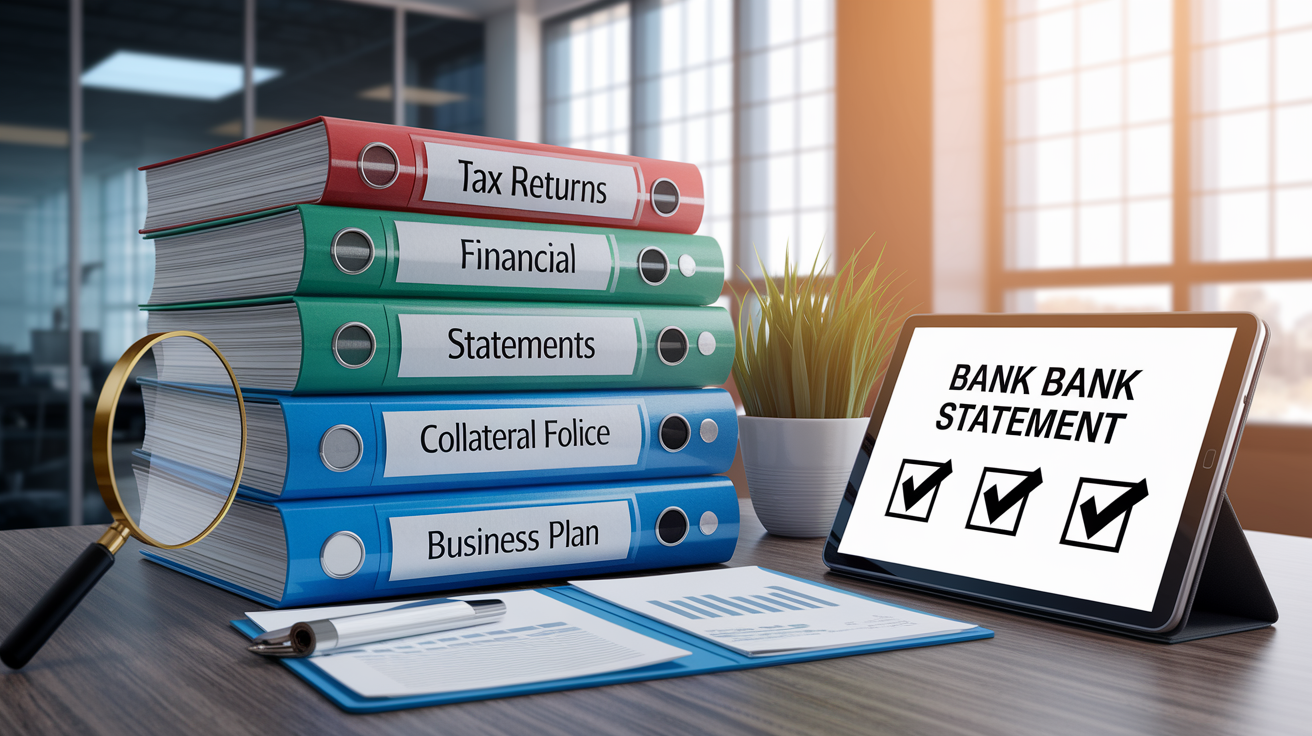
SBA loans require a full financial package: business tax returns for the past 2 to 3 years, personal tax returns for all owners with 20% or more equity, a detailed business plan (especially for startups or acquisitions), profit and loss statements, balance sheets, a list of pledged collateral, and personal financial statements. Lenders also run credit checks on all guarantors and expect personal credit scores usually above 650, though some lenders may approve lower scores at higher rates.
Lines of credit streamline the documentation. Most lenders ask for recent business bank statements, a current profit and loss statement, a balance sheet, and authorization to pull business and personal credit. If your business has been operating for at least a year with consistent revenue, strong cash flow, and a solid credit profile, you can often secure approval in days.
SBA lending is more forgiving of thinner credit histories or businesses that lack deep collateral, but the underwriting is thorough and the timeline is long. Lines of credit favor established businesses with strong recent performance and good credit, trading speed for a narrower approval window.
Key eligibility factors across both products:
Credit score (personal and business). SBA usually requires 650+, lines of credit prefer 680+ for best terms.
Time in business. SBA may accept startups with strong business plans; most lines require at least 1–2 years of operating history.
Annual revenue. SBA thresholds vary by loan size; lines of credit often require consistent monthly revenue to demonstrate repayment capacity.
Collateral availability. SBA loans almost always require collateral; unsecured lines exist but carry higher rates and lower limits.
Personal guarantees. Both products commonly require owner guarantees, especially when collateral is limited.
Debt service coverage. Lenders calculate whether your cash flow can cover existing debt plus the new loan or line payments.
Speed of Funding and Application Complexity

If you need capital this week, a business line of credit is the only realistic option. Lenders can approve and fund lines in as little as a few days for established borrowers with clean financials and strong credit. The application is shorter, the underwriting is faster, and the documentation is lighter.
SBA loans require patience. After you submit your application to an SBA-approved lender, the lender underwrites the deal, packages the file, and submits it to the SBA for guarantee approval. The SBA reviews the application, requests additional documentation if needed, and issues the guarantee. Funding usually occurs 30 to 90 days after initial application. Complex deals involving real estate or business acquisitions can take even longer. If your timeline is tight, SBA financing won’t work unless you start the process months in advance.
Application and funding timeline factors:
Lines of credit fund fastest when you have an existing banking relationship, recent financials on file, and a straightforward credit profile.
SBA loans take longer when collateral appraisals are required, multiple owners need to provide documents, or the business plan requires revisions.
Some lenders offer SBA Express loans up to $500,000 with faster processing, but the guarantee percentage is lower and rates may be higher.
Lines of credit can be preapproved and held on standby, so you have immediate access when cash flow needs arise.
Collateral, Guarantees, and Risk Considerations

SBA loans almost always require collateral, especially for loans above $50,000. Lenders will take a lien on business assets, real estate, equipment, or other pledged property. If the borrower defaults, the SBA guarantee covers a portion of the loss (usually 75% to 85%), but the lender will still pursue collection against the collateral and the personal guarantees signed by the owners.
Lines of credit can be unsecured for smaller limits, but most lenders require a personal guarantee even when no specific collateral is pledged. Larger lines usually require a security interest in accounts receivable, inventory, or equipment. The risk is that if your business hits a cash crunch and you’ve drawn heavily on the line, the lender can demand immediate repayment or convert the balance to a term loan with higher payments.
Collateral and guarantee considerations:
SBA loans may require personal real estate as additional collateral if business assets are insufficient.
Unsecured lines of credit carry higher interest rates and lower limits to offset lender risk.
Personal guarantees expose your personal credit and assets to collection if the business defaults.
Secured lines give lenders the right to seize pledged assets, which can disrupt operations if the line is called.
SBA loans offer more flexible collateral policies than conventional bank loans, sometimes accepting lower loan to value ratios or looser appraisal standards.
Overview of SBA 7(a) and 504 Programs
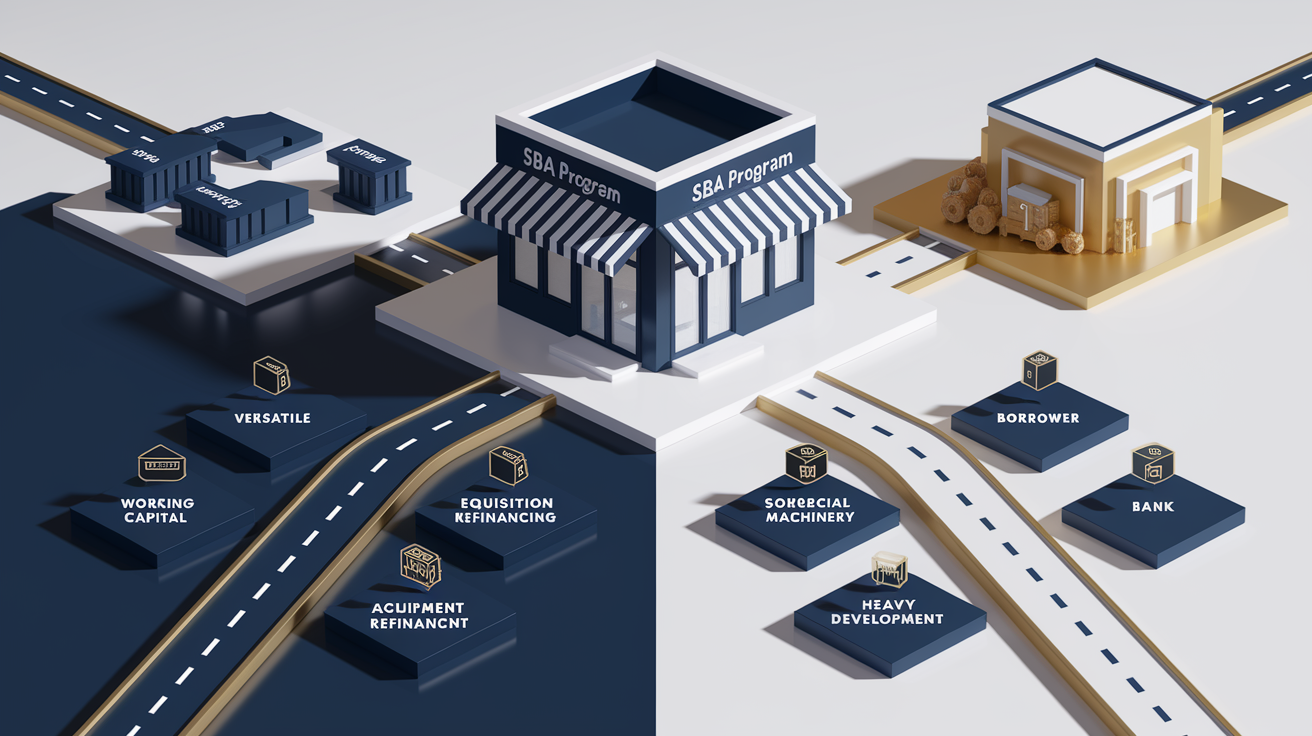
The Small Business Administration backs two main loan programs designed to help small businesses access capital when conventional financing is unavailable or too expensive. Both programs lower lender risk through government guarantees, which typically results in lower rates and longer terms than non-guaranteed loans.
SBA 7(a) is the most common and versatile program, covering general working capital, equipment purchases, real estate acquisition, business acquisitions, and refinancing. SBA 504 is a specialized program for long-term fixed asset financing, structured as a partnership between a lender, a Certified Development Company, and the borrower.
SBA 7(a): Uses, Limits, Pros
SBA 7(a) loans can finance up to $5 million for nearly any legitimate business purpose. That includes working capital, inventory, furniture and fixtures, machinery, real estate purchase or construction, and business acquisition. The SBA guarantees up to 85% of loans under $150,000 and up to 75% of loans above that threshold, which encourages lenders to approve borrowers who might not qualify for conventional financing.
The versatility of 7(a) makes it the default choice for most small business capital needs. If you’re expanding a retail location, buying out a partner, or consolidating high interest debt, a 7(a) loan can cover it. The downside is the documentation burden and the timeline, but the trade is access to larger amounts at lower rates with longer terms.
SBA 7(a) advantages:
Maximum loan size of $5 million covers most small business capital needs.
Longer repayment terms reduce monthly payments and preserve cash flow.
Lower interest rates compared to conventional term loans and lines of credit.
Flexible use of proceeds, including working capital and debt refinancing.
SBA 504: Uses, Structure, Pros
SBA 504 loans are designed exclusively for purchasing or constructing commercial real estate and acquiring major fixed assets like heavy equipment or machinery. The loan is structured in three parts: the borrower puts down at least 10%, a conventional lender finances up to 50%, and a Certified Development Company (CDC) finances up to 40% with an SBA-backed debenture. The CDC portion usually carries a below-market fixed rate, and the combined financing package can reach up to $5 million or more depending on the project.
The 504 program works well for businesses buying a building, renovating a facility, or purchasing expensive production equipment with a long useful life. The lower down payment and favorable rate structure make large capital projects more accessible, but the program requires more coordination between multiple parties and usually takes longer to close than a 7(a) loan.
SBA 504 advantages:
Lower down payment (10% vs. 20–30% for conventional real estate loans).
Long-term fixed rate on the CDC portion reduces interest rate risk.
Large financing capacity for major fixed asset purchases.
Preserves working capital by reducing upfront cash requirements.
Pros and Cons of SBA Loans vs Business Lines of Credit

The right choice depends on what you’re financing, how fast you need funds, and how much flexibility you need in repayment.
SBA Loan Pros:
Lower interest rates than most conventional loans and lines of credit.
Longer repayment terms reduce monthly cash flow pressure.
Larger loan amounts (up to $5 million) cover major investments.
Government guarantee makes approval easier for businesses with limited collateral or thin credit.
Predictable fixed payments simplify budgeting and financial planning.
SBA Loan Cons:
Slow approval and funding process, often 30 to 90 days or longer.
Heavy documentation requirements including business plans, tax returns, and financial statements.
Collateral and personal guarantees are almost always required.
Prepayment penalties may apply if the loan is paid off early.
Less flexibility once funds are disbursed; you can’t reborrow without a new application.
Business Line of Credit Pros:
Fast approval and funding, often within days to two weeks.
Revolving access lets you draw, repay, and redraw without reapplying.
Interest accrues only on the amount you draw, not the full limit.
Lighter documentation and simpler underwriting than term loans.
No prepayment penalties; you can pay down balances at any time.
Business Line of Credit Cons:
Higher interest rates than SBA loans, often variable and tied to prime.
Smaller credit limits, usually capping well below $1 million.
Requires strong credit and consistent cash flow for approval.
Variable payments can complicate budgeting if you carry fluctuating balances.
Draw period ends after a set term, forcing repayment or renewal.
Who Should Choose an SBA Loan vs a Business Line of Credit
The decision comes down to what the money is for and how fast you need it. If you’re making a long-term investment in an asset that will generate returns over years, an SBA loan matches the purpose. If you’re managing short-term cash flow cycles or seasonal swings, a line of credit matches the rhythm of your revenue.
Ideal for SBA Loans:
Purchasing commercial real estate or land for expansion.
Acquiring another business or buying into a franchise.
Financing major equipment with a useful life of five years or more.
Refinancing high interest debt to lower monthly payments and improve cash flow.
Ideal for Business Lines of Credit:
Bridging payroll gaps during slow revenue months.
Purchasing inventory ahead of seasonal peaks without tying up operating cash.
Covering unexpected repairs, supplier payments, or emergency expenses.
Funding short-term marketing or sales campaigns with quick payback windows.
How to Decide for Your Business
Start with the purpose of the funds. If you’re buying an asset that will last years and generate predictable returns, the lower cost and longer term of an SBA loan will save you money over time. If you need working capital to smooth out cash flow bumps, the speed and flexibility of a line of credit will prevent operational disruptions without forcing you to borrow more than you need.
Decision checklist:
What’s the money for, and how long will the investment take to pay back?
How fast do you need the funds? Can you wait 30 to 90 days, or do you need access this week?
Can your monthly cash flow support a fixed loan payment, or do you need variable payments that flex with revenue?
Do you have the documentation and credit profile to qualify for an SBA loan, or is your credit thinner and your timeline tighter?
Are you comfortable pledging collateral and signing a personal guarantee for lower rates and longer terms?
Will you use the full amount at once, or do you need to draw incrementally as expenses arise?
Final Words
Need money fast or planning a big purchase? This post cuts to which fits: a lower-cost SBA loan or a fast business line of credit. We compared amounts, rates, repayment, approval needs, speed, and risk.
SBA loans offer lower rates, bigger sums, and longer terms but take more time and paperwork. Lines of credit fund quickly, revolve, and cover short cash gaps, though rates can vary.
Use the checklist to match timing and repayment to your cash flow. If you’re weighing SBA loans for small business vs business line of credit, choose the fit that keeps cash coming.
FAQ
Q: Which is better, a small business loan or a line of credit?
A: The better choice between a small business loan and a line of credit depends on your need: pick a loan for big, long-term purchases and lower rates; pick a line of credit for short cash gaps and fast access.
Q: What is the 20% rule for SBA?
A: The 20% rule for SBA typically refers to requiring at least a 20% equity injection in certain SBA-backed projects, meaning borrowers put in 20% of costs; exact rules depend on loan type and lender.
Q: How hard is it to get a $1,000,000 business loan?
A: Getting a $1,000,000 business loan is fairly challenging; lenders usually want strong revenue, several years in business, clear financials, good credit, and often collateral or personal guarantees.
Q: Can an SBA loan be a line of credit?
A: An SBA loan can be a line of credit: some 7(a) programs, including SBA Express, can be structured as revolving lines, but availability and terms depend on the lender and SBA rules.