


Would you take a 50% tax break to back a tiny, risky startup?
That’s the core of SEIS (Seed Enterprise Investment Scheme): invest up to £100,000 and get 50% off your income tax bill, plus capital gains exemption, reinvestment relief, and loss relief to limit downside.
But the rules are tight.
This article walks you through what SEIS actually does, who qualifies as an investor and as a company, the application steps, and the key risks and limits so you can decide whether SEIS fits your money and timeline.
Core Principles and Benefits of SEIS

SEIS is a UK government tax incentive program built to push capital into very early stage startups. The scheme targets companies in their first two years of trading, sitting at the riskiest edge of the funding ladder. The government reduces investor downside through tax relief, and in return, startups get access to equity capital they’d struggle to raise otherwise.
The headline benefit is 50% income tax relief on qualifying investments. If you invest £100,000 into a qualifying SEIS company, you can claim £50,000 back against your income tax bill for that tax year. That’s a direct, immediate reduction. Not a credit or deferral.
Beyond income tax relief, SEIS offers three additional layers of tax advantage:
Capital gains exemption. Gains on SEIS shares held for at least three years are exempt from capital gains tax.
Reinvestment relief. Up to 50% of a chargeable gain can be exempt from CGT if reinvested into qualifying SEIS shares.
Loss relief. Losses on SEIS shares can be offset against income or capital gains, reducing the net downside if the company fails.
Individual investors can invest up to £100,000 per tax year across multiple SEIS companies. Each qualifying company can raise a total maximum of £150,000 under the scheme. The caps are strict, and the relief only applies if both the company and the investor meet all eligibility rules for at least three years.
Investor Eligibility Requirements

SEIS relief is only available to UK taxpayers who meet specific connection and control rules. You need taxable income or capital gains in the year you claim relief, and you can’t be “connected” to the company in ways that eliminate genuine investment risk.
Connection rules are where most investor eligibility gets tested. You can be a paid director and still qualify, but you can’t be an employee of the company. If you or close family members hold more than 30% of the company’s shares or voting rights, HMRC will likely treat you as connected and deny relief. Investments must be arm’s length, for genuine commercial purposes, and without pre-arranged exits or guarantees that protect your capital.
Key investor requirements include:
UK tax resident with sufficient income tax or capital gains tax liability to claim relief against. Not an employee of the company at the time of investment (directors are allowed). No control or connection exceeding HMRC thresholds, typically 30% shareholding or voting control. Maximum £100,000 SEIS investment per tax year across all companies. No arrangements in place that reduce investment risk, guarantee returns, or create reciprocal tax relief structures.
Startup Eligibility Requirements

A company must meet narrow thresholds on size, age, assets, and trade to qualify for SEIS. The scheme targets UK based companies at the seed stage, before they’ve scaled into EIS territory or raised institutional capital.
Company age matters. The business must have started its qualifying trade no more than two years before the SEIS share issue. Gross assets can’t exceed £200,000 immediately before the share issue, and the company can have no more than 25 full-time equivalent employees. These caps were increased slightly in April 2023, when the gross asset limit rose from an earlier £200,000 threshold to £350,000 in some interpretations, but the April 2023 change to £350,000 appears in one source while another states £200,000 remains the cap. Confirm current HMRC guidance before applying.
The company must carry out a qualifying trade or be preparing to do so. Certain sectors are excluded outright, including banking, insurance, financial services, property development, legal and accountancy services, coal, steel, and energy generation. If the business has already received EIS or Venture Capital Trust investment, it’s disqualified from SEIS.
Qualifying conditions include:
Established in the UK and trading (or preparing to trade) a qualifying activity. Gross assets below the applicable threshold at the time of share issue. Fewer than 25 full-time employees. No prior EIS or VCT investment received.
The SEIS Application and Approval Process

The SEIS process starts before you issue shares. Most companies apply for Advance Assurance from HMRC to confirm their likely qualification. Advance Assurance isn’t mandatory, but investors usually expect it. The letter signals to investors that HMRC has reviewed your structure and believes you’ll meet the scheme rules, though it’s not a binding guarantee and doesn’t confirm investor-side eligibility.
Allow one to two months for Advance Assurance approval. Once you have it, you can market the investment and close the funding round.
After shares are issued and paid for in cash, the company submits a compliance statement to HMRC, historically called the SEIS1 form. HMRC reviews the statement, and if everything checks out, they send back a letter of authorization with a unique reference number, sometimes referred to as the SEIS2.
Using that reference number, the company then issues compliance certificates to each investor, known as SEIS3 certificates. Investors use the SEIS3 to claim income tax relief on their Self Assessment tax return. The certificates must be accurate and timely, because investors can’t claim relief without them.
The company must continue to meet all SEIS conditions for at least three years after the investment. If the trade becomes non-qualifying, the investor becomes connected, or the shares are redeemed early, HMRC can withdraw the relief and claw back the tax.
The procedural steps in order:
- Check company and investor eligibility against SEIS thresholds and trade requirements
- Apply for Advance Assurance from HMRC and wait for confirmation
- Market the investment opportunity to qualifying individual investors
- Issue new ordinary shares and receive cash payment in full
- Submit the compliance statement (SEIS1) to HMRC after share issue
- Receive the HMRC authorization letter (SEIS2) with reference number
- Issue SEIS3 compliance certificates to each investor using the reference number
Risks and Key Considerations

SEIS is built for high risk, early stage companies. Most seed startups fail. SEIS doesn’t change that. The tax relief reduces your effective loss, but it doesn’t eliminate downside. If you invest £100,000, claim £50,000 income tax relief, and the company goes to zero, you’re still down £50,000 in cash before loss relief. Loss relief can reduce that further if you have taxable income or gains to offset, but the capital is at genuine risk from day one.
Compliance risk sits on both sides. If the company fails to meet qualifying conditions during the three year retention period, investors lose the relief and may face a tax clawback. If an investor becomes connected, takes on employment, or triggers a disqualifying event, the same clawback applies. Both parties need to track compliance continuously for three years.
Liquidity is limited. There’s no active market for SEIS shares, and selling before three years costs you the relief. Early stage equity is illiquid by nature, and SEIS adds a statutory holding period on top of that.
Primary considerations include:
High probability of total loss on any single investment. No guarantee of exit, liquidity, or return even if the company survives. Tax relief is withdrawn if qualifying conditions fail within three years. Investor connection rules can be triggered by changes in employment, share ownership, or related-party transactions.
SEIS vs. EIS: A Practical Comparison

SEIS and EIS both offer UK tax relief for equity investment in early stage companies, but they target different stages and offer different incentives. SEIS sits at the seed end, with smaller companies, tighter caps, and higher immediate tax relief. EIS supports slightly later stage businesses that have moved past the first two years and need larger capital rounds.
The income tax relief rate is the clearest difference. SEIS offers 50% relief on up to £100,000 invested per tax year, while EIS offers 30% relief on up to £1,000,000 per year (or £2,000,000 for knowledge-intensive companies). Company size limits also differ sharply. SEIS caps gross assets at £200,000 (or £350,000 under updated guidance) and 25 employees, while EIS allows up to £15 million in gross assets and 250 employees.
| Scheme | Stage | Tax Relief % | Investment Limit |
|---|---|---|---|
| SEIS | Very early-stage (≤2 years trading) | 50% | £100,000/year |
| EIS | Early-stage (broader range) | 30% | £1,000,000/year |
Both schemes require a three year holding period and offer capital gains exemptions. EIS also allows CGT deferral relief, which SEIS does not. SEIS offers the 50% reinvestment relief, which can exempt up to half of a gain reinvested into SEIS shares.
Use SEIS when the company is tiny, new, and under the asset cap. Use EIS when the company has grown past SEIS thresholds or needs a larger round.
Real World SEIS Examples

A UK taxpayer invests £80,000 into a qualifying SEIS company in April. The investor’s income tax liability for that year is £60,000. The SEIS income tax relief at 50% is £40,000, which is claimed against the £60,000 liability, reducing the tax bill to £20,000. The net cash outlay after relief is £40,000. If the investor holds the shares for three years and sells at a gain, no capital gains tax is due. If the company fails and the shares become worthless, the investor can claim loss relief on the remaining £40,000 net loss, offsetting it against income or gains depending on marginal rate and available liability.
A second investor has a £100,000 chargeable gain from selling a property. The investor reinvests £60,000 of that gain into SEIS shares within the allowable window. Under SEIS reinvestment relief, up to 50% of the reinvested amount can be exempt from CGT. In this case, 50% of £60,000 is £30,000, so £30,000 of the original £100,000 gain may be treated as exempt, reducing the taxable gain to £70,000.
The investor also claims the 50% income tax relief on the £60,000 SEIS investment, receiving £30,000 back against income tax, for a total effective tax benefit of £30,000 income tax relief plus CGT savings on the £30,000 exemption.
Step by Step Participation Guide
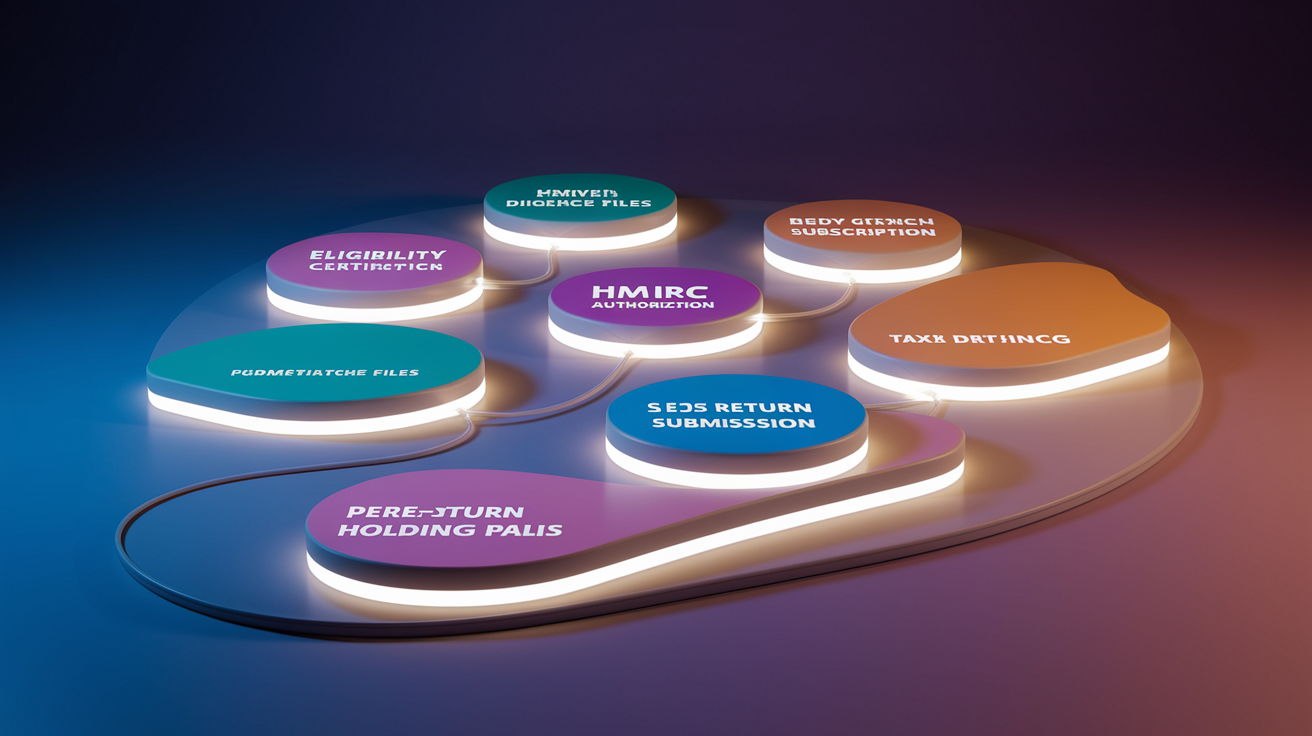
Participating in SEIS as an investor starts with confirming your own eligibility. Check that you’re a UK taxpayer with sufficient income tax or capital gains liability to use the relief, and confirm you won’t be connected to the company through employment, control, or family relationships. If you’re considering a director role, that’s allowed. But paid employment other than as a director will disqualify you.
Next, conduct due diligence on the company. Review the business plan, financials, use of funds, and management team. Verify that the company has Advance Assurance or is in the process of applying. Ask for evidence that the company meets the gross asset cap, employee limit, trade requirements, and hasn’t received EIS or VCT funding. Confirm the share terms meet SEIS rules: new ordinary shares, no preferential rights, non-redeemable, paid in cash.
Once you’ve committed to invest, subscribe for the shares and pay in full. After the company receives the funds and completes the compliance statement filing, you’ll receive the SEIS3 compliance certificate with the HMRC reference number. Use that certificate to claim the 50% income tax relief on your Self Assessment tax return for the year of investment or carry it back to the prior year if allowable.
Hold the shares for at least three years to retain the relief, and track any changes in your relationship to the company or changes in the company’s qualifying status during that period.
The participation sequence in order:
- Confirm you meet investor eligibility requirements and have tax liability to claim against
- Identify a qualifying SEIS company and review their Advance Assurance status
- Conduct full due diligence on business model, financials, trade activity, and use of funds
- Verify share terms meet SEIS requirements and no disqualifying arrangements exist
- Subscribe for shares and pay the subscription amount in full by cash
- Receive the SEIS3 compliance certificate from the company after HMRC authorization
- Claim 50% income tax relief on your Self Assessment return using the SEIS3 certificate and reference number
Final Words
We walked straight into the essentials: SEIS offers 50% income tax relief, capital gains perks, and clear investment limits for very early-stage UK startups. You also got investor and company eligibility, the application steps, and real examples that show the numbers.
We flagged the risks, high loss potential and strict compliance, and compared SEIS to EIS so you know the tradeoffs.
If SEIS looks like a fit, follow the step-by-step guide and get professional checks. seed enterprise investment can cut tax and help early funding. It’s a practical tool when it matches your plans.
FAQ
Q: What is a seed enterprise investment scheme?
A: The seed enterprise investment scheme (SEIS) is a UK tax incentive for very early-stage startups that gives investors 50% income tax relief, capital gains advantages, and lower investment limits to encourage seed company investment.
Q: How risky are EIS investments?
A: EIS investments are high risk because they back early-stage companies; you can lose all capital. Tax reliefs (like income tax relief and loss relief) soften the blow, but success depends on company performance and compliance.
Q: What is the 3 year rule for EIS?
A: The 3 year rule for EIS requires holding shares for at least three years from issue to keep income tax relief; leaving earlier, or the company changing trade or control, can revoke those tax benefits.