

Ready for a controversial take: the cheapest rate often costs you more in cash-flow headaches.
If you need working capital, the choice between a short-term line of credit and a term loan decides how you budget, how fast you can respond, and when you actually pay.
Ask yourself: is this a one-time push for inventory or payroll, or a repeating gap between invoices?
Pick a term loan for a known, single expense with fixed monthly payments.
Pick a line of credit when needs vary — you borrow what you use and pay only while it’s out.
Key Outcome‑Driven Differences for Working Capital Decisions

When you need operating cash, the choice between a short-term line of credit and a term loan shapes three things: how predictably you can budget, how easily you adapt when cash needs shift, and when you actually pay for the money. A term loan gives you a known lump sum with a fixed monthly payment and a hard end date. That predictability lets you line up repayment with a busy season or a specific revenue event, finishing a large contract or moving seasonal inventory. A line of credit charges interest only on what you draw and only while it’s out there. If your need shrinks mid-month or disappears for a few weeks, your cost drops right away. That flexibility matters most when cash flow is lumpy, receivables lag unpredictably, or you face recurring shortfalls that don’t fit a neat 12-month schedule.
Cost timing works differently too. With a term loan, you pay interest on the full borrowed amount for the entire term. Even if you only needed half the cash for half the time. A line of credit lets you draw $10,000 one week, repay it the next, and pay interest only on those seven days. That structure can save real money when needs come and go. But lines often carry variable rates, so your payment bounces around with your balance and with rate changes. If you max out the line and hold it there for months, your total cost can exceed a fixed-rate term loan covering the same period. The key is matching the tool to your actual draw pattern, not just the advertised APR.
Seasonal businesses and operations with cyclical revenue gaps often favor lines because repayment ebbs and flows with income. You can pay down the balance during high-revenue weeks and draw again when sales dip. Term loans lock in a fixed payment regardless of whether it’s your busiest month or your slowest. That rigidity can squeeze cash flow if revenue timing shifts. On the other hand, if you’re funding a one-time project with a clear start and finish, a term loan’s discipline prevents the temptation to keep the line maxed out forever.
| Decision Factor | Short-Term Term Loan | Short-Term Line of Credit |
|---|---|---|
| Payment Predictability | Fixed monthly payment, same amount every month regardless of revenue | Variable payment tied to outstanding balance, can drop to minimum if you repay principal early |
| Flexibility to Adjust Borrowing | One lump sum at closing, no option to increase or reduce mid-term without refinancing | Draw, repay, and redraw up to limit without reapplying |
| Cost Timing | Interest charged on full amount for entire term | Interest charged only on amount drawn and time outstanding |
| Stability Under Seasonal Patterns | Payment stays constant, can strain cash during slow months | Payment adjusts with usage, easier to match repayment to high-revenue periods |
| Responsiveness to Emergencies | Requires new application and underwriting for additional funds | Instant access up to remaining limit, draw in minutes to hours |
| Ideal Working Capital Fit | One-time, predictable need with defined payoff timeline (6 to 18 months) | Recurring, variable, or unpredictable operating gaps throughout the year |
Choose a term loan when the funding need is a single event, the amount is known, and you want the discipline of a fixed payoff schedule. Choose a line of credit when your working capital needs recur, vary in size or timing, and you want to pay only for what you actually use when you use it.
Structuring Working Capital: How Term Loans Differ from Lines of Credit
A short-term term loan for working capital is a lump sum you get upfront and repay in fixed monthly installments over a set period, typically six to eighteen months. The lender sends the full amount at closing. From day one, you owe interest on the entire principal, and your monthly payment stays the same until the loan is paid off. If you need more capital after that term ends, you apply for a new loan and go through underwriting again. The structure is simple. One funding event, one repayment schedule, one payoff date.
A business line of credit is a revolving facility with a maximum limit you can draw against repeatedly without reapplying. Once approved, you borrow what you need, when you need it, up to your credit limit. You pay interest only on the outstanding balance. As you repay principal, that capacity becomes available again. Many lenders require you to pay the balance down to zero at least once per year to maintain the line, but between those zero-paydown periods, you can cycle funds in and out as operating needs change. The line typically stays open for about a year before the lender reviews and renews terms.
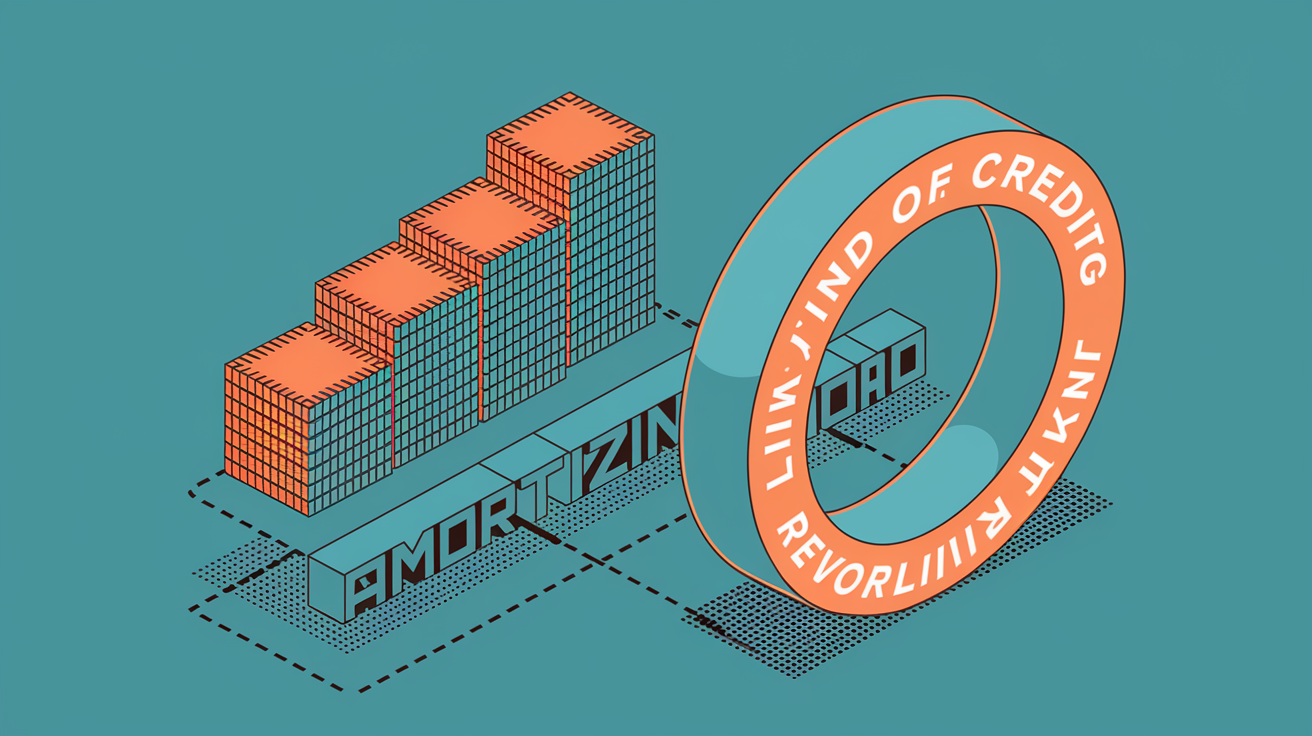
Revolving vs. Amortizing Structures
The core mechanical difference is amortization versus revolving access. A term loan amortizes. Each payment includes principal and interest, steadily reducing what you owe until the balance hits zero at maturity. A line of credit revolves. Your required payment covers accrued interest plus a minimum principal amount, but you’re free to draw again immediately. That revolving structure means your “loan balance” can rise and fall throughout the year, and your monthly payment rises and falls with it. If you draw heavily one month and repay the next, your interest cost reflects only the days the money was outstanding. With a term loan, even if you park the funds in your checking account untouched for two months, you still pay interest on the full principal for those two months.
Cost and Interest Comparison for Working Capital Financing

Term loans for working capital often carry fixed interest rates. Your rate is locked at closing, and your monthly payment doesn’t change unless you refinance. That predictability makes budgeting straightforward, but term loans frequently come with higher rates than lines of credit, especially when the lender sees the borrower as higher risk. Rates for short-term working capital loans typically range from about 10% to 45% APR, depending on credit strength, time in business, revenue, and whether the loan is secured or unsecured. The higher end of that range reflects lenders pricing in the risk of unsecured lending to newer or lower-revenue businesses.
Lines of credit commonly use variable interest rates. Your rate may be tied to a benchmark like the prime rate, and it adjusts as that benchmark moves. In addition to interest, lines often include several fee categories: start-up or origination fees at account opening, processing fees when you make a draw, ongoing maintenance or annual fees while the line is open, and late fees if you miss a payment. Some lenders also charge inactivity fees if you don’t use the line within a certain period. Those fees can add meaningful cost, especially on smaller credit limits. Variable rates also carry rate adjustment risk. If you miss a payment or your credit score drops, the lender may hike your rate mid-term, sometimes significantly. That rate increase can turn a manageable monthly payment into a squeeze.
Here’s how the structures compare:
Term loan: fixed APR locks your cost at closing, shielding you from rate hikes but often starting at a higher baseline to compensate the lender for lack of flexibility.
Term loan: interest on full amount means you pay interest on the entire lump sum for the entire term, even if you only needed part of it or only needed it temporarily.
Term loan: fewer recurring fees since it’s a one-time payment. Origination fees are typically rolled into the loan or paid upfront, with no monthly maintenance charges.
Line of credit: interest only on drawn balance keeps your cost low when you’re not using the full limit. If you draw $10,000 of a $50,000 limit, you pay interest on $10,000.
Line of credit: variable rate risk exposes you to rising interest costs if benchmarks move up or if your payment history or creditworthiness changes during the draw period.
Line of credit: multiple fee layers can include origination, draw fees, maintenance fees, and late fees, each adding to your total cost and requiring careful reading of the fee schedule.
To evaluate total cost, calculate the all-in dollar amount you’ll repay, not just the advertised APR. For a term loan, multiply your monthly payment by the number of months and subtract the principal to find total interest. For a line of credit, estimate how much you’ll draw, how long you’ll carry that balance, and add up interest plus all applicable fees. If you’ll draw the full limit and hold it for the full year, compare that scenario to a term loan covering the same amount and period. Often, the term loan’s fixed rate will cost less than a maxed-out line with variable rates and fees stacked on top.
Qualification Requirements for Working Capital Term Loans vs Lines of Credit
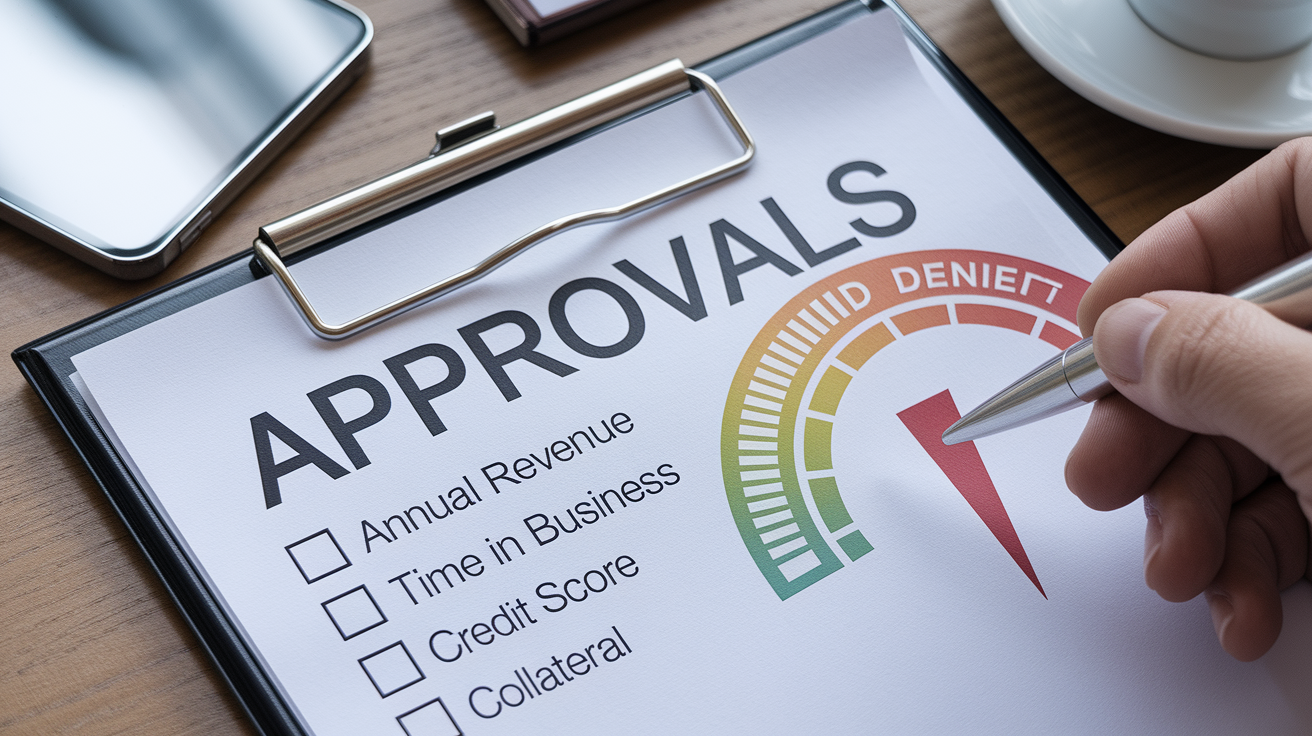
Lenders underwriting working capital financing typically look for minimum thresholds: annual revenue around $25,000, time in business of at least six months, and a credit check that shows you can manage debt. Both term loans and lines of credit require similar baseline qualifications, but the exact requirements tighten or loosen depending on whether the product is secured or unsecured, how much you’re borrowing, and which type of lender you approach. Online lenders and alternative finance companies often accept lower credit scores and shorter operating histories than traditional banks. Bank lines of credit, in particular, tend to require stronger credit, longer time in business, and more detailed financial documentation because the revolving nature of a line creates ongoing credit exposure the bank monitors over time.
Unsecured term loans and unsecured lines both demand stronger credit profiles and more consistent revenue history. Without collateral, the lender’s only recourse on default is your business cash flow and any personal guarantee you sign. That makes unsecured products harder to obtain and typically more expensive. Secured financing, by contrast, lets you pledge assets like real estate, investment accounts, business equipment, or even inventory and receivables. The lender places a lien on those assets. If you default, the lender can seize and sell them to recover the outstanding balance. Secured products generally offer larger limits and lower interest rates, but they come with the risk of losing the collateral.
Documentation requirements overlap heavily. Most lenders ask for recent business tax returns (often two years), several months of business bank statements (three to six months is common), and a current profit and loss statement. Some also request a business plan or a brief explanation of how you’ll use the funds. If you’re applying for a secured line or loan, expect the lender to appraise and verify the collateral value before finalizing terms. Personal guarantees are standard for both products, especially when the business is young or revenue is below $100,000 annually. That guarantee ties your personal credit to the loan, so missed payments can damage your personal credit score and expose personal assets to collection if the business defaults. Knowing your exact credit score, having clean financials ready, and understanding what collateral you can or can’t pledge will speed up the application process and improve your approval odds.
Pros and Cons of Using a Short-Term Line of Credit for Working Capital

A line of credit shines when your cash needs are recurring, unpredictable in size, or variable in timing. You get approved once, then draw funds as needed without reapplying. That saves time and paperwork compared to taking out a new term loan every few months. You also pay interest only on the amount you actually use and only for the days it’s outstanding. If you draw $20,000 in January and repay it by March, you pay three months of interest on $20,000, not a full year. That cost efficiency makes lines ideal for covering short-term gaps like payroll during a slow season, inventory purchases when a supplier offers a discount, or tax payments that hit once a quarter.
Lines also help build your business credit history. Timely payments to a revolving credit facility show lenders you can manage ongoing credit responsibly, which can improve your score and open access to larger facilities or better terms down the road. The flexibility to repay early without penalty means you can match your payment schedule to your cash flow cycle. When revenue comes in strong, you can pay down the balance fast and reduce interest costs.
Pay interest only on used funds. If you draw $10,000 of a $50,000 limit, interest accrues only on the $10,000, keeping costs low when you don’t need the full line.
Revolving access without reapplying. Once approved, you can draw, repay, and redraw within your limit as many times as needed during the draw period.
Matches variable cash flow patterns. Ideal for businesses with seasonal dips, lumpy receivables, or unpredictable operating expenses that recur throughout the year.
Builds business credit with on-time payments. Demonstrates responsible credit management to future lenders and can improve your creditworthiness over time.
But there are real drawbacks.
Variable rates and unpredictable payments. Your monthly payment fluctuates with your outstanding balance and interest rate changes, making budgeting harder.
Risk of overspending. Easy access to funds can tempt you to draw more than you truly need, leading to higher interest costs and potential cash flow strain when repayment comes due.
Often requires collateral. Many lines, especially those with larger limits or longer terms, require you to pledge business or personal assets, putting those assets at risk if you default.
Callable by lender. Some lenders reserve the right to demand full repayment at any time, even if you’re current on payments, which can create sudden liquidity pressure.
The cons center on discipline and risk. If you max out a $50,000 line and carry that balance for months, your total interest cost can exceed what a fixed-rate term loan would have charged for the same amount over the same period. Variable rates also mean your cost can spike if the prime rate rises or if you miss a payment and trigger a penalty rate increase. And because lines often require collateral, defaulting can cost you business assets, not just the borrowed cash.
Pros and Cons of Using a Short-Term Term Loan for Working Capital
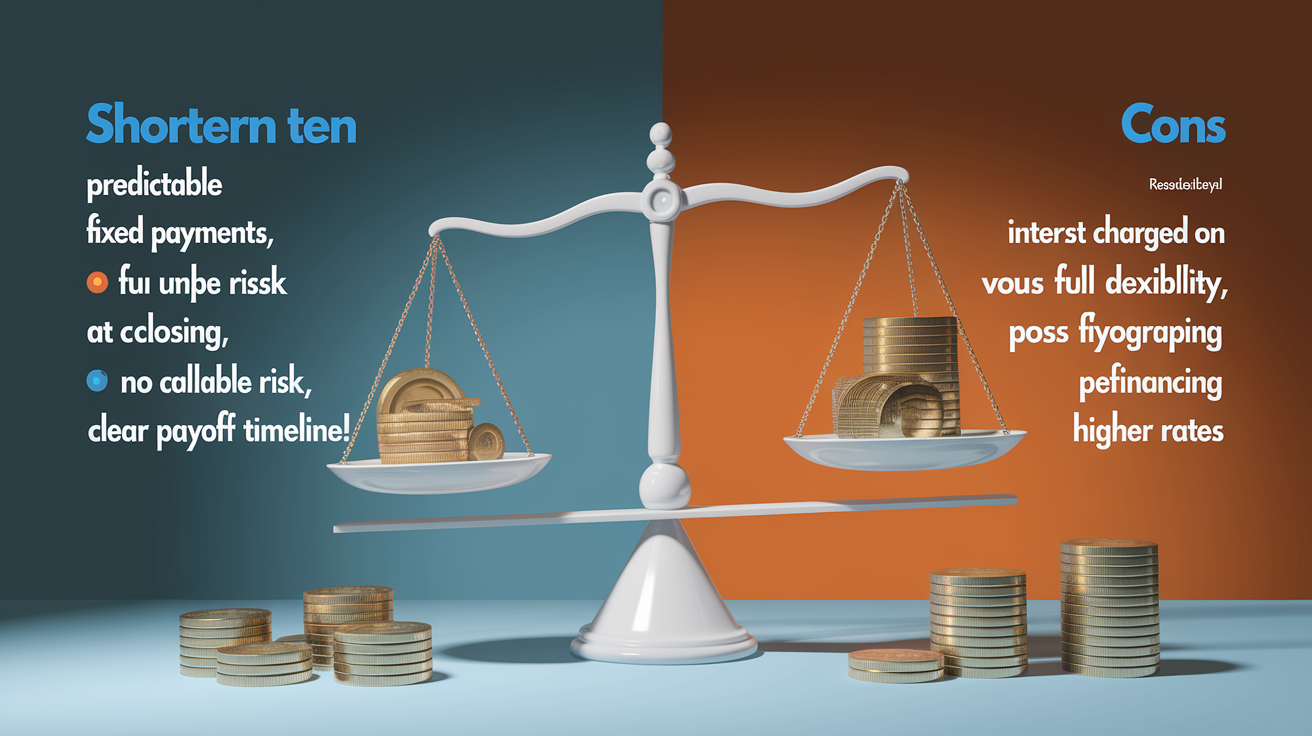
A short-term term loan offers predictability and simplicity. You receive the full lump sum upfront, your monthly payment is fixed, and you know exactly when the loan will be paid off. That structure makes it easier to align repayment with a known revenue event, like a busy season or the completion of a large contract. Fixed payments also help with budgeting. You won’t see your payment double because you drew more money or because interest rates shifted. The loan funds hit your account immediately, giving you the full capital you need for inventory, payroll, equipment repairs, or any other one-time working capital need.
Term loans also remove the risk that the lender will call the debt. Once funded, the loan is yours to repay on the agreed schedule. As long as you make payments, the lender can’t demand early repayment. That stability can matter when you’re betting on future revenue to cover the loan and don’t want to worry about the rug getting pulled mid-term.
Predictable fixed monthly payments. Same payment every month, making cash flow planning and budgeting straightforward.
Full lump sum at closing. Entire amount sent upfront, so you can deploy the capital immediately for time-sensitive needs.
No callable risk. Once the loan is funded, the lender can’t demand repayment early as long as you stay current on payments.
Clear payoff timeline. Defined end date prevents the temptation to keep borrowing forever and gives you a target to work toward.
But there are trade-offs.
Interest charged on full amount for full term. Even if you only need half the funds or only need them for part of the term, you pay interest on the entire principal from day one.
Less flexible for variable needs. One-time payment means you can’t adjust the amount mid-term. If your needs grow, you’ll have to apply for a new loan.
May require refinancing for recurring needs. If working capital gaps recur every quarter, you’ll go through application and underwriting multiple times, costing time and potentially incurring multiple origination fees.
Potentially higher interest rates. Lenders often price short-term unsecured loans at the higher end of the rate spectrum to offset perceived risk, especially for borrowers with shorter operating histories or lower credit scores.
The main downside is that you pay for the full loan amount for the full term, whether you use all the capital or not. If you borrow $50,000 and only spend $30,000, you still pay interest on $50,000. And because the loan doesn’t revolve, you’ll need to apply again if more capital needs pop up six months later. That lack of flexibility can make term loans less efficient than lines of credit when your working capital needs are ongoing or unpredictable.
Choosing the Right Working Capital Option Based on Cash-Flow Patterns

Your cash flow pattern is the single best guide for choosing between a line of credit and a term loan. If you can map out a one-time need with a defined start and end, a term loan usually makes sense. You know you need $40,000 on March 1 to buy inventory, and you’ll sell through it by August, generating revenue to repay the loan in fixed monthly installments through December. That predictability matches the structure of a term loan perfectly, and the fixed payments let you budget repayment around your busiest months.
If your cash needs recur unpredictably, vary in size, or span multiple events throughout the year, a line of credit fits better. You might need $15,000 in February for payroll, another $10,000 in April for a tax bill, and $20,000 in June for a marketing push. A term loan would require three separate applications, three underwriting cycles, and three sets of fees. A line of credit lets you draw once in February, repay in March when receivables come in, then draw again in April without reapplying. That revolving access saves time and can save money if you repay quickly and keep your balance low most of the time.
Seasonal businesses often favor lines because revenue and expenses swing month to month. A restaurant might see revenue drop 40% from January through March, requiring working capital to cover rent and payroll, then bounce back in April when tourist season starts. A line lets the operator draw during the slow months and repay during the busy months, paying interest only on the drawn balance and only during the draw period. A term loan with a fixed payment doesn’t adjust to revenue swings, so the operator might struggle to make the same $4,000 payment in February that was easy to cover in June.
Is the need one-time or recurring? One-time points toward term loan. Recurring points toward line of credit.
Do you know the exact amount and timeline? If yes, term loan. If it varies or you’re unsure, line of credit.
Can you repay in fixed monthly amounts regardless of revenue fluctuations? If yes, term loan. If you need flexibility to pay more when cash is strong and less when it’s tight, line of credit.
How fast do you need future capital if the need repeats? If you can wait days for a new application, term loan is fine. If you need instant access, line of credit is better.
Real-World Examples Comparing Term Loans vs Lines of Credit

Numbers make the comparison concrete. Take a contractor who needs $50,000 to cover payroll and materials for a six-month project with a guaranteed payout at completion. A short-term term loan at 20% APR over 12 months generates roughly $5,600 in interest, with a monthly payment around $4,633. The contractor makes the same payment every month, knowing the loan will be fully repaid by month 12, and the project revenue arriving at month six makes the payments manageable. The predictability and full upfront funding match the project structure.
Now consider a retailer with seasonal revenue swings. The business has a $50,000 line of credit at 15% APR. In January, revenue drops and the retailer draws $30,000 to cover rent, payroll, and restocking. By March, spring sales pick up and the retailer repays the $30,000. Interest for three months on $30,000 at 15% APR is roughly $1,125. The retailer paid for exactly the capital needed, for exactly the time it was needed, and saved more than $4,000 compared to taking a 12-month term loan for $50,000 that would have charged interest on the full amount all year.
| Scenario | Term Loan Cost | Line of Credit Cost | Better Fit |
|---|---|---|---|
| One-time $50,000 project over 6 months, repay over 12 months at 20% APR | ≈ $5,600 interest; fixed $4,633/mo payment | If drawn for full 12 months at 18% APR: ≈ $9,000 interest | Term loan (lower total cost, predictable payment) |
| Seasonal $30,000 gap for 3 months, repaid as revenue returns | $50,000 loan at 12% over 12 months: ≈ $3,250 interest on unused full amount | $30,000 draw for 3 months at 15% APR: ≈ $1,125 interest | Line of credit (pay only for amount and time used) |
| Emergency $20,000 needed today, repaid in 60 days | New application takes 1 to 3 days; interest charged for minimum 6 to 12 month term | Instant draw if line already approved; interest for 60 days only | Line of credit (speed and cost efficiency for short hold) |
The lesson is to calculate total dollars paid, not just compare APRs. A term loan at 12% APR sounds cheaper than a line at 15%, but if you only need the money for three months and the loan forces you to pay interest for twelve, the line’s total cost can be half. On the other hand, if you’ll hold a maxed-out line balance for a full year, the term loan’s fixed rate often wins. Run the numbers for your actual draw amount and actual timeline before deciding.
Secured vs Unsecured Options Within Lines of Credit and Term Loans
Both lines of credit and term loans come in secured and unsecured versions, and the difference reshapes your risk, your cost, and how much you can borrow. Secured financing requires you to pledge collateral, assets the lender can seize and sell if you default. That collateral reduces the lender’s risk, so secured products typically offer larger credit limits, lower interest rates, and longer repayment terms. Unsecured financing requires no collateral, but lenders compensate for that higher risk by demanding stronger credit scores, higher revenue, and more operating history. Unsecured products also carry higher interest rates and shorter terms because the lender has no asset backstop.
Common collateral for secured working capital financing includes commercial real estate, investment accounts, business equipment, inventory, and accounts receivable. Some lenders will also accept personal assets like your home equity, personal brokerage accounts, or whole-life insurance policies with cash value. The lender appraises the collateral, determines a loan-to-value ratio (often 70% to 85% of appraised value), and sets your credit limit or loan amount accordingly. If you default, the lender forecloses on or liquidates the pledged asset to recover what you owe. That risk is real. Pledging your building to secure a $100,000 line of credit means you could lose the building if revenue collapses and you can’t make payments.
Unsecured options appeal to business owners who don’t want to risk assets or who don’t have qualifying collateral. Approval hinges on cash flow, credit history, and revenue trends. Lenders look at bank statements and profit and loss reports to verify you generate enough monthly cash to cover the loan payment plus a margin of safety. Because unsecured lenders rely entirely on your business income and personal guarantee, they’re more selective. If your credit score is below 650, your revenue is under $50,000 annually, or you’ve been in business less than a year, unsecured approval becomes difficult. Secured financing, by contrast, can open doors even with weaker credit, because the collateral provides a safety net for the lender.
Commercial real estate. Office, warehouse, or retail property owned by the business provides high collateral value and often qualifies for the largest credit limits.
Business equipment. Machinery, vehicles, or specialized tools with resale value. Lenders typically lend 60% to 80% of appraised value.
Investment accounts. Brokerage accounts, CDs, or money market funds held by the business. Liquid collateral that lenders favor because it’s easy to liquidate.
Inventory and receivables. Current stock and outstanding invoices. Riskier collateral because value fluctuates and receivables may not be collected, so lenders often advance only 50% to 70%.
Personal assets. Home equity, personal investment accounts, or insurance cash value. Acceptable to some lenders but ties personal finances directly to business debt and increases personal risk.
Weigh the tradeoff. Secured financing can double your credit limit and cut your interest rate by several percentage points, but it puts assets on the line. Unsecured financing protects your assets but costs more and may not offer enough capital if your needs are large. If you’re confident in your revenue and repayment plan, secured borrowing can be a smart way to access larger amounts at lower cost. If your cash flow is uncertain or you’re entering a risky growth phase, keeping the financing unsecured protects your downside.
Final Words
Need cash now or a steady backup? If gaps are recurring, a short-term line of credit lets you draw as needed and pay interest only on what you use. A term loan gives a lump sum and set payments for one-time projects.
This post walked through predictability, flexibility, cost timing, qualification, and real examples so you can choose faster.
When deciding between short term line of credit vs term loan for working capital, match the product to your cash rhythm and run the numbers. You’ll move forward with confidence.
FAQ
Q: Are working capital loans the same as a line of credit? Are short-term loans part of working capital?
A: Working capital loans aren’t the same as a line of credit; working capital funding includes both lines of credit and short-term loans, chosen based on whether you need recurring access or a one-time lump sum.
Q: What is the difference between a short-term loan and a working capital loan? Which is better, a term loan or line of credit?
A: A short-term loan is a one-time lump sum with scheduled payments, while a line of credit is revolving access you draw repeatedly; which is better depends on whether you need predictable repayment or flexible, ongoing cash access.