


Think poor credit means you’re shut out of fast working capital? Think again.
Alternative lenders and community lenders now look at monthly revenue and invoices before FICO, so you can get funds without a pristine score.
This post maps short-term options that work for low-credit businesses, like merchant cash advances, invoice factoring, short online loans, fintech lines, CDFI microloans, and crowdfunding, and explains how fast each funds, how repayment works, and what the real total cost looks like.
Read on to match the option to your cash rhythm and avoid surprises.
Immediate Short‑Term Capital Paths When Credit Is Poor

When your credit score sits below 650, most bank underwriters close the file before they finish reading. Traditional working capital loans run on strong personal credit, clean business credit, polished financials, and months of document review. If your credit’s poor, you’re not sitting around three months waiting to hear “no.”
Alternative lenders flipped that script. They ask about monthly revenue first. Credit score comes second. Online platforms, merchant cash providers, invoice factors, and community lenders focus on cash flow, sales volume, and collateral over FICO. That shift opened short-term working capital to businesses that banks routinely turn down. Funding timelines shrink from weeks to hours. Approval standards shift from credit history to real-time revenue proof.
“Fast-funding” doesn’t mean the same thing across every product. Same-day or 24-hour funding happens with merchant cash advances and some online term loans, especially when you’ve got steady card sales and your bank statements are ready to go. Invoice factoring and asset-based lines usually fund within three to seven days once invoices or collateral get verified. Microloans and community lenders take longer, closer to two to eight weeks, but they charge way less. Speed costs money. Slower paths cost less.
The quickest short-term working capital options for businesses with poor credit:
Merchant cash advances (MCAs) fund in one to three business days based on daily credit card sales. Repayment gets pulled automatically from card receipts.
Invoice factoring advances 70% to 95% of outstanding invoices within 24 hours to seven days. Repayment ties to customer payments.
Short-term online loans deliver $5,000 to $250,000 in 24 hours to seven days. You make fixed daily or weekly payments.
Business lines of credit from fintechs offer revolving credit up to $500,000. Draw funds in one to three days once you’re approved. Interest only on what you use.
Microloans with simplified underwriting from community lenders and CDFIs give you $500 to $50,000 in two to six weeks with flexible credit requirements.
Crowdfunding with rapid campaign setup can raise $1,000 to $200,000 in 15 to 60 days. No credit checks, but success depends on your pitch and audience.
Invoice Factoring & Receivables‑Based Working Capital Options

Invoice factoring turns unpaid B2B invoices into immediate cash. You sell the invoice to a factoring company at a discount. They advance you 70% to 95% of the invoice value within 24 hours to seven days, hold the rest in reserve, then collect payment directly from your customer. When the customer pays, the factor releases the reserve minus their fee, typically 0.5% to 5% per 30-day period.
Your credit score barely matters in factoring. The factor underwrites your customer, not you. If you invoice creditworthy companies with solid payment histories, you can qualify with a 500 personal score and six months in business. Revenue matters more than FICO. The strength of your accounts receivable drives approval and advance rate.
Pros and cons of invoice factoring:
Fast liquidity. Funds in one to seven days once invoices are verified.
Approval based on customer creditworthiness, not your score.
Scales with sales. Bigger invoice volume means more available capital.
But fees eat into margin. 1% to 5% per month adds up quickly on slow-paying invoices.
And there’s customer notification. Most factoring is “notification factoring,” meaning your customer pays the factor directly and knows you sold the invoice.
| Advance Rate | Typical Fee | Time to Funds | Credit Relevance |
|---|---|---|---|
| 70%–95% of invoice value | 0.5%–5% per 30 days | 24 hours–7 days | Customer credit matters; your credit largely irrelevant |
| Non-recourse factoring: 65%–85% | 1%–5% per 30 days (higher fee) | 24 hours–7 days | Factor assumes customer default risk |
| Recourse factoring: 75%–95% | 0.5%–3% per 30 days (lower fee) | 24 hours–7 days | You buy back unpaid invoices if customer defaults |
Merchant Cash Advances as a Rapid Working Capital Option

A merchant cash advance isn’t a loan. It’s a purchase of future credit card sales. The MCA provider advances you a lump sum, then recoups it by taking a fixed percentage of your daily or weekly card receipts until the full amount plus fee is repaid. Factor rates typically run 1.10 to 1.50, meaning you repay $1.10 to $1.50 for every dollar advanced. Repayment accelerates when sales are strong and slows when sales dip, but the total payback stays fixed.
MCAs fund faster than almost anything else. Same day to three business days once you submit three to six months of merchant processing statements. Approval depends on monthly card volume, not credit score. Some providers accept borrowers with credit scores as low as 500 if card sales are consistent and the business has been processing payments for at least six months. Typical funding ranges from $5,000 to $500,000. Most small businesses receive $10,000 to $100,000.
The speed costs. Factor rates translate to equivalent APRs of 40% to over 300%, depending on how quickly sales come in and how long it takes to repay. Daily remittance pulls cash out of the business every single day, which can strain operations if revenue dips or if multiple advances stack. Personal guarantees are standard, so you’re personally liable if the business closes before repayment finishes.
Key MCA mechanics and risks:
Repayment structure is a fixed daily or weekly ACH debit, or a percentage split of card sales, typically 10% to 30% of daily receipts.
Cost consideration: a 1.20 factor rate repaid over four months can equal a 60% to 120% APR. Over six months it drops but still runs high.
Approval criteria: minimum $5,000 to $10,000 in monthly card sales, six months processing history, and a pulse. Credit score often comes second.
Main risk: cash flow squeeze from daily debits. Stacking multiple MCAs can push total daily remittance above sustainable levels and trigger defaults or covenant breaches with other lenders.
Asset‑Based Lending and Collateral‑Driven Short‑Term Capital
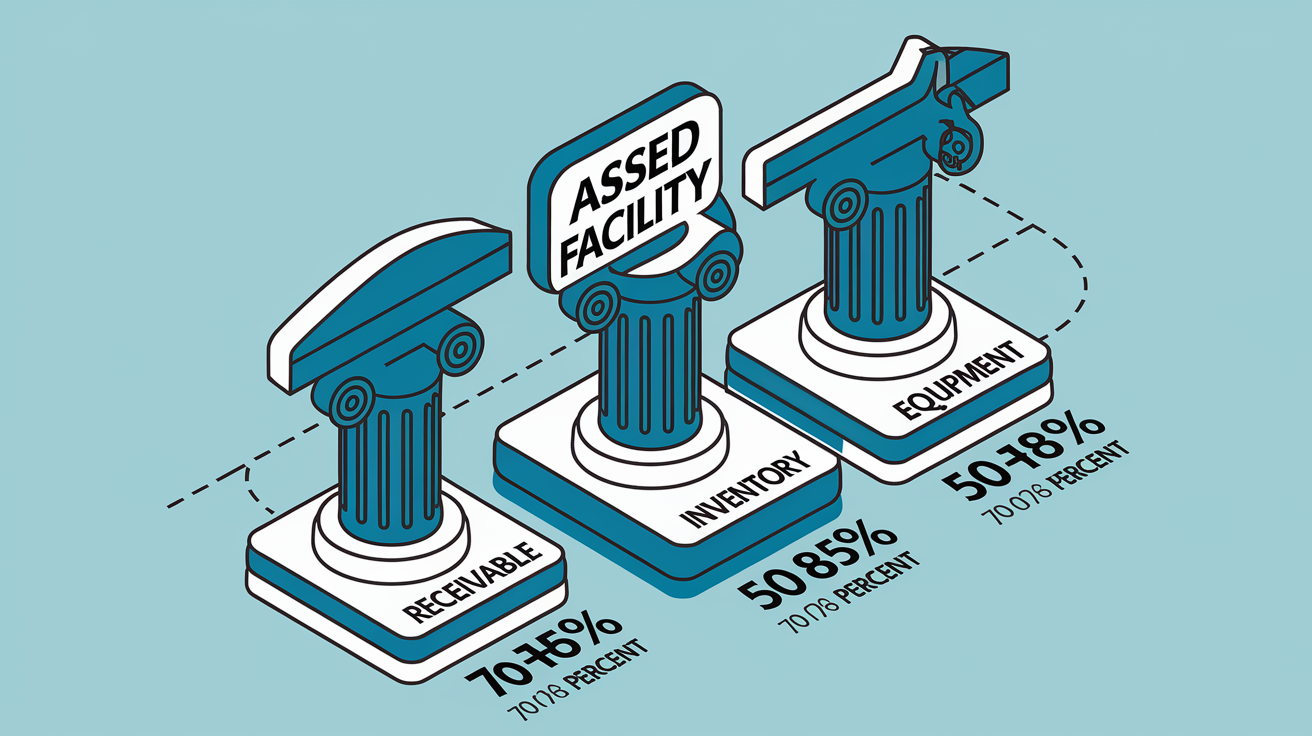
Asset-based lending uses your business assets as collateral for a revolving credit line or term loan. Accounts receivable, inventory, equipment, or real estate. The lender advances a percentage of the asset’s verified value, called the loan-to-value ratio. Receivables typically draw 70% to 85%, inventory 50% to 80%, and equipment 70% to 100% depending on age and marketability. Total facility size can range from $25,000 to several million dollars, making ABL one of the few poor-credit options that scales into six and seven figures.
Interest rates on asset-based facilities run lower than MCAs, typically 7% to 25% APR, because the lender holds a security interest in tangible collateral. Approval timelines stretch longer, usually one to six weeks, because the lender conducts field exams, appraisals, and receivables audits. Expect ongoing monitoring fees, periodic collateral reporting, and covenant requirements around advance rates and borrowing-base calculations.
| Collateral Type | Typical LTV | Time to Funding |
|---|---|---|
| Accounts Receivable | 70%–85% | 1–4 weeks |
| Inventory | 50%–80% | 2–6 weeks |
| Equipment / Machinery | 70%–100% of appraised value | 1–3 weeks |
Microloans, CDFIs, and Community Lender Working Capital Options

Microloans are small-dollar term loans, usually $500 to $50,000, issued by nonprofit community development financial institutions (CDFIs), credit unions, and SBA microloan intermediaries. The national average SBA microloan sits around $13,000, with a legal cap of $50,000. Interest rates typically run 7% to 13% APR, far lower than MCAs or most online lenders, and terms extend up to six years. Approval takes two to eight weeks because CDFIs conduct traditional underwriting, review tax returns, and often require a business plan.
CDFIs exist to serve underbanked communities and startups that banks ignore. They’ll work with poor personal credit if the business shows consistent revenue, a realistic repayment plan, and a compelling mission or community impact. Many offer free technical assistance, financial coaching, and connections to grant programs alongside the loan. Documentation requirements mirror SBA standards: personal and business tax returns, bank statements, financial projections, and proof of collateral or personal guarantee.
Microloan and CDFI snapshot:
Eligibility: Flexible credit standards. Most CDFIs accept scores below 600 if cash flow and business plan are solid.
Documentation: Full financial package. Tax returns, bank statements, P&L, balance sheet, and personal financial statement.
Pros: Lower rates, longer terms, mission-driven underwriting, technical assistance, potential credit-building if lender reports to bureaus.
Cons: Smaller loan amounts, slower approval (two to eight weeks), full documentation required, may need collateral or co-signer.
Timeline: Expect four to eight weeks from application to funding. Some CDFIs move faster with streamlined programs for existing clients or repeat borrowers.
Crowdfunding & P2P Capital Routes for Poor‑Credit Businesses

Crowdfunding bypasses credit scores entirely by tapping customers, community supporters, or investors directly. Reward-based platforms like Kickstarter and Indiegogo let businesses pre-sell products or offer perks in exchange for upfront cash. Campaigns typically run 15 to 60 days, and platform fees range from 5% to 10% of funds raised plus payment-processing fees of 2% to 5%. Success depends on pitch quality, social reach, and product appeal, not FICO.
Equity crowdfunding opens the door to small-scale investors under Regulation Crowdfunding or Regulation A+. Businesses can raise $25,000 to $5 million by selling equity stakes online. Campaigns take four to twelve weeks to prepare and close, and legal, accounting, and platform costs often run $5,000 to $25,000. Equity crowdfunding dilutes ownership, but it avoids monthly payments and personal guarantees.
Peer-to-peer (P2P) business lending platforms like LendingClub and Funding Circle connect borrowers with individual or institutional investors. Loan amounts range from $1,000 to $500,000, with APRs typically between 6% and 36%. Approval in three to 21 days is common, but most P2P platforms still check personal credit and require minimum scores around 600 to 650, higher than MCAs or factoring.
When crowdfunding and P2P work:
Crowdfunding fits consumer-facing products, community-driven businesses, or concepts with viral appeal. B2B service companies rarely succeed on reward platforms.
Raise potential: Reward campaigns often raise $1,000 to $200,000. Equity rounds for small businesses typically $25,000 to $500,000.
Timelines: Reward campaigns 15–60 days plus two to three weeks for platform payout. Equity rounds four to twelve weeks start to finish.
Risks: Campaign failure means zero funding and wasted prep time. Equity dilution is permanent. P2P platforms often require decent personal credit despite being “alternative.”
Short‑Term Lines of Credit & Online Working Capital Loans

Short-term online loans and revolving credit lines from fintech lenders fund in 24 hours to seven days and require minimal paperwork, usually just bank statements and proof of revenue. Loan sizes range from $5,000 to $250,000. Lines of credit can reach $500,000 for established businesses. APRs vary widely, from 8% to over 100%, depending on credit score, monthly revenue, time in business, and repayment term. Businesses with poor credit typically land in the 25% to 80% APR range.
Revolving lines charge interest only on the amount drawn, making them cheaper for intermittent needs like covering payroll gaps or buying inventory ahead of a busy season. Term loans deliver a lump sum and require fixed daily, weekly, or monthly payments until the balance is repaid. Some lenders use factor-rate pricing instead of APRs, especially on short terms under 12 months, which can make true cost harder to compare.
| Product | Typical Cost | Time to Fund | Repayment Structure |
|---|---|---|---|
| Short-term online loan | 8%–100% APR or 1.10–1.40 factor | 24 hours–7 days | Fixed daily, weekly, or monthly payments |
| Revolving line of credit (fintech) | 12%–80% APR | 1–7 days after approval | Interest-only on drawn balance; renews as repaid |
| Traditional bank line (for comparison) | 5%–12% APR | 2–8 weeks | Monthly interest-only or principal + interest |
| Equipment financing | 6%–30% APR | 1–10 business days | Monthly, equipment serves as collateral |
Trade Credit, Supplier Financing & Non‑Borrowing Working Capital Options

Trade credit is the simplest working capital tool that costs nothing: negotiate longer payment terms with suppliers. Instead of paying invoices in 15 days, ask for net 30, net 60, or even net 90. That buys time to turn inventory into cash before the supplier bill comes due. Many suppliers offer early-payment discounts, 2% off for paying within 10 days, for example, but when cash is tight, stretching terms preserves liquidity better than borrowing at 40% APR.
Consignment inventory shifts inventory cost to the supplier until you sell the product. The supplier owns the goods on your shelf, and you pay only when a customer buys. It’s common in retail, especially for new or seasonal products. The trade-off is lower margin. Suppliers price consignment higher to offset their carrying cost, but zero upfront cash outlay.
Customer deposits and progress billing flip the cash cycle forward. If you’re doing project work, contract manufacturing, or custom orders, ask for 25% to 50% upfront. That deposit funds materials and labor before you invoice the balance. Service businesses can offer prepaid packages or retainer agreements that collect cash before work starts. None of these strategies require a credit check, interest payment, or personal guarantee. Just negotiation and contract terms that match your cash-flow timing.
Required Documents for Fast Approval on Short‑Term Working Capital

Every lender asks for proof of revenue and cash flow. The faster you want funding, the cleaner your documentation needs to be. Online lenders and MCA providers can approve and fund in 24 to 72 hours if you submit complete bank statements, merchant processing reports, and basic business information upfront. Microloans and asset-based facilities take longer because they require tax returns, financial statements, and collateral appraisals.
Most short-term working capital lenders request:
Three to twelve months of business bank statements (most commonly three to six months for online lenders, twelve months for CDFIs and ABL).
Two to three months of merchant card processing statements if applying for an MCA or revenue-based product.
Outstanding invoices and accounts receivable aging schedule for invoice factoring or receivables-based lines.
One to two years of business tax returns (required for microloans, larger term loans, and asset-based facilities, often waived for small MCAs and factoring).
Personal tax returns for guarantors (one to two years, especially for loans over $50,000).
Profit-and-loss statement and balance sheet (year-to-date and trailing twelve months, can be internally prepared for smaller deals).
Business formation documents (articles of incorporation, operating agreement, or DBA registration).
Photo ID and proof of ownership (driver’s license and documentation showing ownership percentage for all principals with 20%+ equity).
Cost & Risk Comparison of Short‑Term Working Capital Alternatives
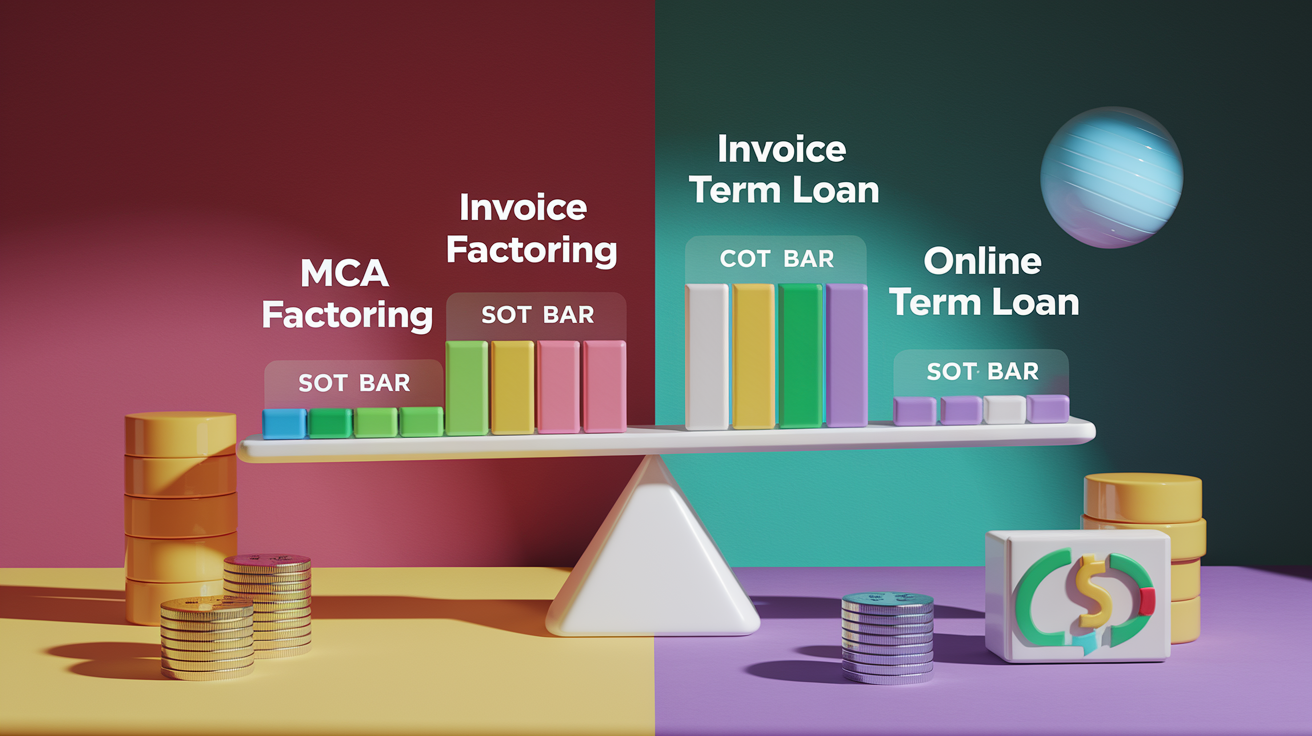
Pricing models vary so widely across products that comparing headline rates misleads. A 1.15 factor rate on a six-month MCA is not the same as a 15% APR term loan, even though both sound like “15% cost.” The MCA’s fixed payback means the effective APR can hit 40% to 80% depending on repayment speed. Invoice factoring at 2% per month looks cheap until you realize slow-paying customers stretch the effective annual cost to 24% or higher.
Asset-based lending and equipment financing typically offer the lowest rates for poor-credit borrowers, 8% to 25% APR, because collateral reduces lender risk. Microloans from CDFIs run 7% to 13% but take weeks to close. Online term loans and lines of credit from fintechs range from 12% to over 80% APR depending on credit, revenue, and term. MCAs sit at the top of the cost curve, with effective APRs often between 40% and 300%.
Hidden fees pile on fast. Origination fees of 1% to 5% come off the top of the advance. Wire fees, ACH fees, verification fees, and document fees can add hundreds to thousands of dollars. Prepayment penalties lock you into the full interest cost even if you repay early, common in some term loans and uncommon in true lines of credit. Always ask for a full fee schedule and a sample payoff calculation before signing.
| Product | Typical Cost | Common Risks |
|---|---|---|
| Merchant Cash Advance | 40%–300%+ APR equivalent | Daily debits strain cash flow; stacking multiple advances can trigger default; personal guarantee standard |
| Invoice Factoring | 0.5%–5% per 30 days (6%–60% annualized) | Recourse factoring means you buy back bad invoices; customer notification can hurt relationships; fees compound on slow payers |
| Asset-Based Lending | 7%–25% APR + monitoring fees | Collateral audits and reporting; blanket liens limit future borrowing; covenants can restrict operations |
| Online Term Loan / Line | 12%–100% APR | High rates for poor credit; daily/weekly payments; prepayment penalties on some products; personal guarantees common |
How to Choose the Right Short‑Term Working Capital Path
Match the funding product to your cash-flow pattern and timeline. If you need $15,000 in 48 hours to cover payroll and you process $50,000 a month in card sales, an MCA will fund fast but cost you 1.2 to 1.4 times the advance. If you can wait two weeks and you have $80,000 in outstanding invoices from creditworthy customers, factoring will cost far less. If you own $200,000 in paid-off equipment and can wait three weeks, an asset-based term loan will deliver the lowest rate.
Step-by-step funding decision framework:
Quantify the exact cash need and deadline. Write down the dollar amount, what it’s for (payroll, inventory, equipment, rent), and the absolute latest date you need funds in the bank.
Assess your revenue and repayment capacity. Pull the last three months of bank statements and calculate average daily or weekly revenue. Model whether you can handle daily debits (MCA), weekly payments (online loan), or monthly payments (microloan, ABL).
Identify available collateral. List outstanding invoices, inventory value, equipment, real estate, or other assets that could secure a loan and lower cost.
Compare speed versus cost. If the need is urgent and you lack collateral, accept that speed will cost 40% to 100%+ APR. If you have two to four weeks, pursue lower-cost options like factoring, ABL, or microloans.
Gather required documents. Assemble bank statements, merchant statements, invoices, tax returns, and business formation docs before applying. Incomplete applications delay funding by days or weeks.
Request term sheets from two to four providers. Compare total payback amount, APR or factor rate, fees, repayment schedule, personal guarantee requirements, and prepayment terms before choosing. Negotiate where possible on holdback, advance rate, or fee waivers.
Final Words
Pick the option that fits how fast you need cash and how your money comes in.
We covered fast paths like MCA, invoice factoring, online short-term loans and lines of credit, plus lower-cost choices like microloans, asset-based lending, crowdfunding and supplier terms.
We walked through timelines, repayment styles (daily, weekly, monthly), costs, and the docs lenders typically want, including bank and merchant statements, invoices, tax returns.
Faster usually costs more; longer terms need more paperwork.
If you’re weighing short term working capital alternatives for businesses with poor credit, match payback rhythm to cash flow and check total payback, not just rate.
You’ve got options.
FAQ
Q: How to get working capital for small business with bad credit?
A: Getting working capital for a small business with bad credit means using revenue- or asset-based options like MCAs, invoice factoring, fintech short-term loans, microloans, or supplier terms; bring 3–12 months of bank or merchant statements.
Q: Can I get a small business loan with a 500 credit score? What credit score is needed for a working capital loan?
A: Getting a small business loan with a 500 credit score is sometimes possible; credit needs vary—traditional lenders often want 600 to 700+, while alternative lenders may approve with 500 or lower if revenue and time in business are solid.
Q: Which financial service offers credit opportunities that can be short-term?
A: Short-term credit options include merchant cash advances, online short-term loans, fintech lines of credit, invoice factoring, peer-to-peer loans, and microloans; choose based on speed, all-in cost, repayment frequency, and revenue fit.