

Think APR is just a number lenders throw at you?
That’s a dangerous mistake.
APR is the yearly cost of borrowing (the percent that bundles the interest rate and some lender fees).
It’s the price tag you’ll pay each year, and it can jack up your monthly bills and total cost.
This post shows how APR affects payments, what fees are included or left out, and how to compare offers so you don’t get surprised.
Core Concepts Behind Annual Percentage Rate Explained

APR is the yearly cost of borrowing money, expressed as a percentage. It bundles the interest rate with certain lender fees and finance charges.
Why does understanding APR matter? Because it standardizes borrowing costs across different products. You can compare a mortgage, personal loan, or credit card on the same annual basis. Without APR, you’d see a low advertised interest rate that hides origination fees or points. The true cost stays buried. APR converts all those pieces into one number. Monthly rate gets calculated roughly as APR divided by 12. So 20% APR works out to about 1.6667% monthly. You can estimate what you’ll pay over time and decide which offer actually costs less.
Lenders must disclose APR under Truth in Lending rules. It protects borrowers from deceptive advertising. A finance company can’t bury costs in fine print when the APR has to appear on the disclosure form. That transparency lets you budget, compare, and choose the option that fits your cash flow without surprise fees showing up later.
Five quick facts about understanding APR:
- APR combines the interest rate with specific lender fees into a single annualized percentage.
- It gives you an apples to apples way to compare loans, credit cards, and mortgages from different lenders.
- APR is always expressed as a yearly rate, even though interest usually accrues monthly or daily.
- Federal regulations require lenders to show APR on disclosures before you sign.
- Monthly cost estimates come from dividing the APR by 12 to get the periodic rate applied each billing cycle.
APR vs Interest Rate and Their Cost Differences
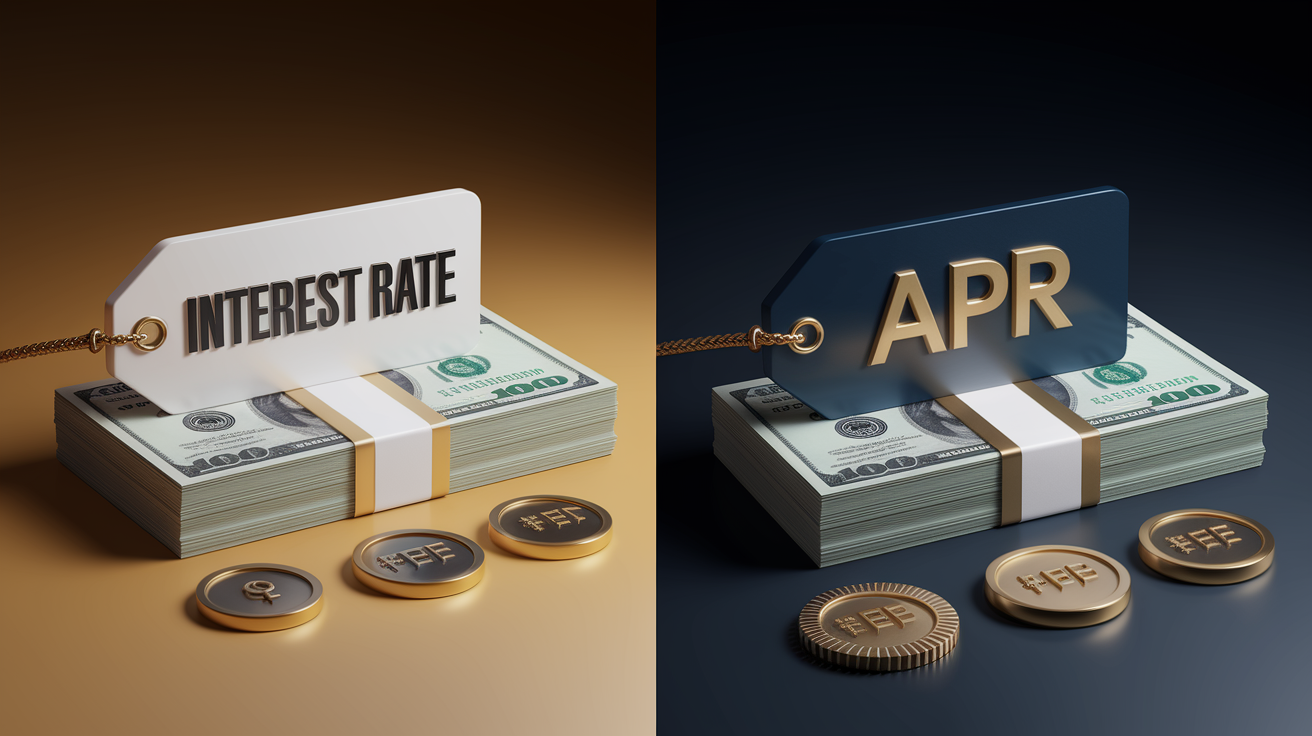
The interest rate is the charge applied to your principal balance (the amount you borrowed). APR includes that interest rate plus lender fees like origination charges, points, and processing costs.
That difference matters. A lender might advertise a 5% interest rate but charge a 3% origination fee upfront, raising the APR above 5%. On a mortgage, a 4.00% interest rate might correspond to a 4.25% APR once fees are folded in. That adds roughly $29 more to your monthly payment and over $10,000 in total interest over 30 years. The APR definition explains the full cost. The interest rate alone doesn’t.
Credit card APR often excludes annual fees, late fees, and penalty charges, even though those costs hit your wallet. That’s why you need to read the fee schedule alongside the APR disclosure. For loans (personal, auto, and mortgage), the APR usually includes origination fees, discount points, and some closing costs. But not every charge. Prepayment penalties, for example, aren’t typically baked into APR calculations. So a low APR can still pair with costly exit fees.
Common APR misconceptions:
- Thinking APR and interest rate are the same. APR includes fees, interest rate does not.
- Assuming a low advertised APR means low total cost without checking fees, terms, or whether the rate is fixed or promotional.
- Believing APR fully captures every cost. Some fees fall outside the calculation.
- Expecting APR to stay constant when it’s variable and tied to an index like the prime rate.
Calculating APR and Converting APR to Monthly Costs
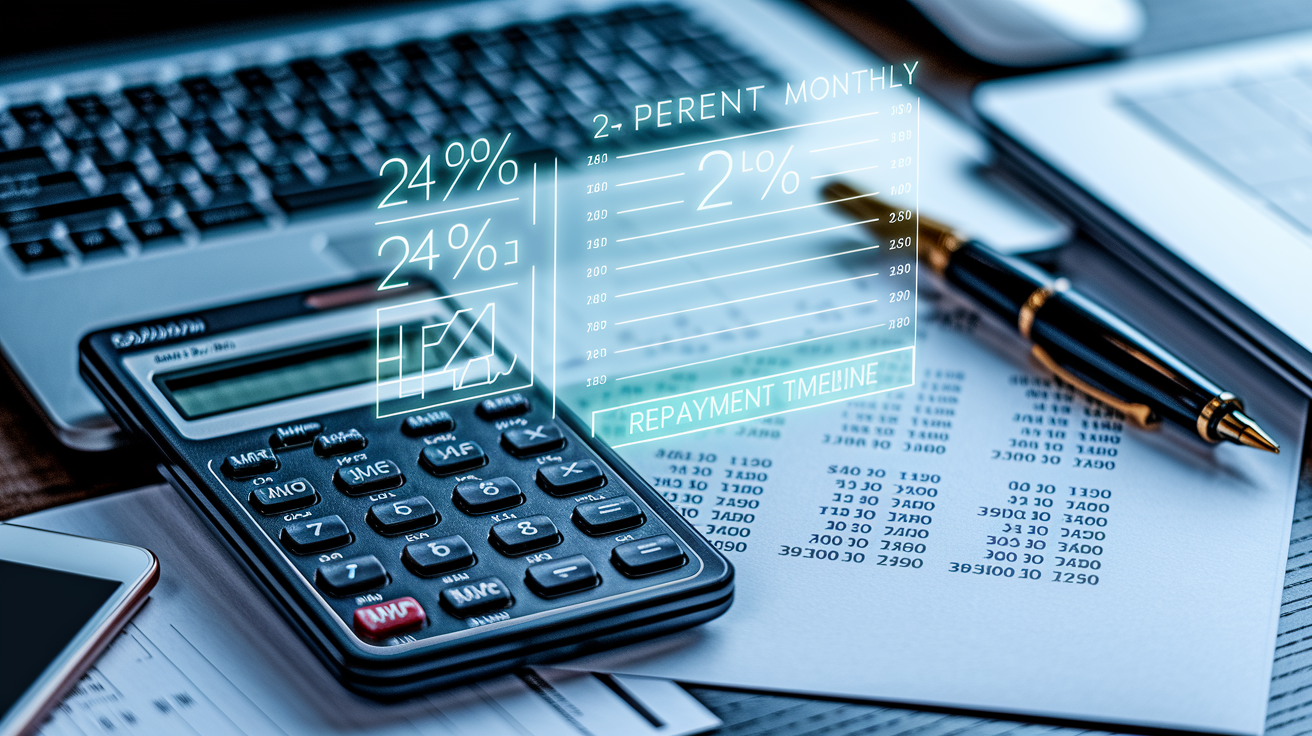
APR calculations convert the interest rate and lender fees into a yearly percentage so you see the annualized cost of borrowing. Lenders use formulas that account for the loan amount, term length, repayment schedule, and financed fees to produce the APR you see on disclosures. For quick estimates, you can divide the APR by 12 to get the monthly rate. 24% APR becomes 2% monthly interest applied to any carried balance.
That monthly conversion helps you estimate real costs. A $1,000 credit card balance at 24% APR generates roughly $20 in interest each month if you don’t pay it down. On an installment loan, the calculation is more involved because principal decreases over time. A $10,000 personal loan at 6% APR over 5 years yields a monthly payment of approximately $192.83, total paid around $11,569.80, and total interest near $1,569.80. When an origination fee gets added (say 3%, or $300), that fee is annualized across the 5 year term, pushing the APR higher than 6% even though the nominal interest rate stays at 6%.
Conceptual APR calculation steps:
- Add all financed fees (origination, points, broker charges) to the interest you’ll pay over the loan term.
- Divide that total cost by the number of years in the term to get an average annual cost in dollars.
- Divide the annual cost by the loan principal to express it as a decimal percentage.
- Convert the decimal to a percentage and adjust for compounding method if applicable.
- The result is the APR, always shown as an annualized rate for comparison purposes.
Credit cards show another layer. A 19.99% APR converts to a simple monthly rate of 1.666%, but compounding means the effective annual rate climbs to roughly 21.9% when interest charges stack month after month. That’s why carrying balances gets expensive fast. APR understates the real compound effect if you only pay minimums and let interest accumulate.
Fixed, Variable, Introductory, and Penalty APR Types
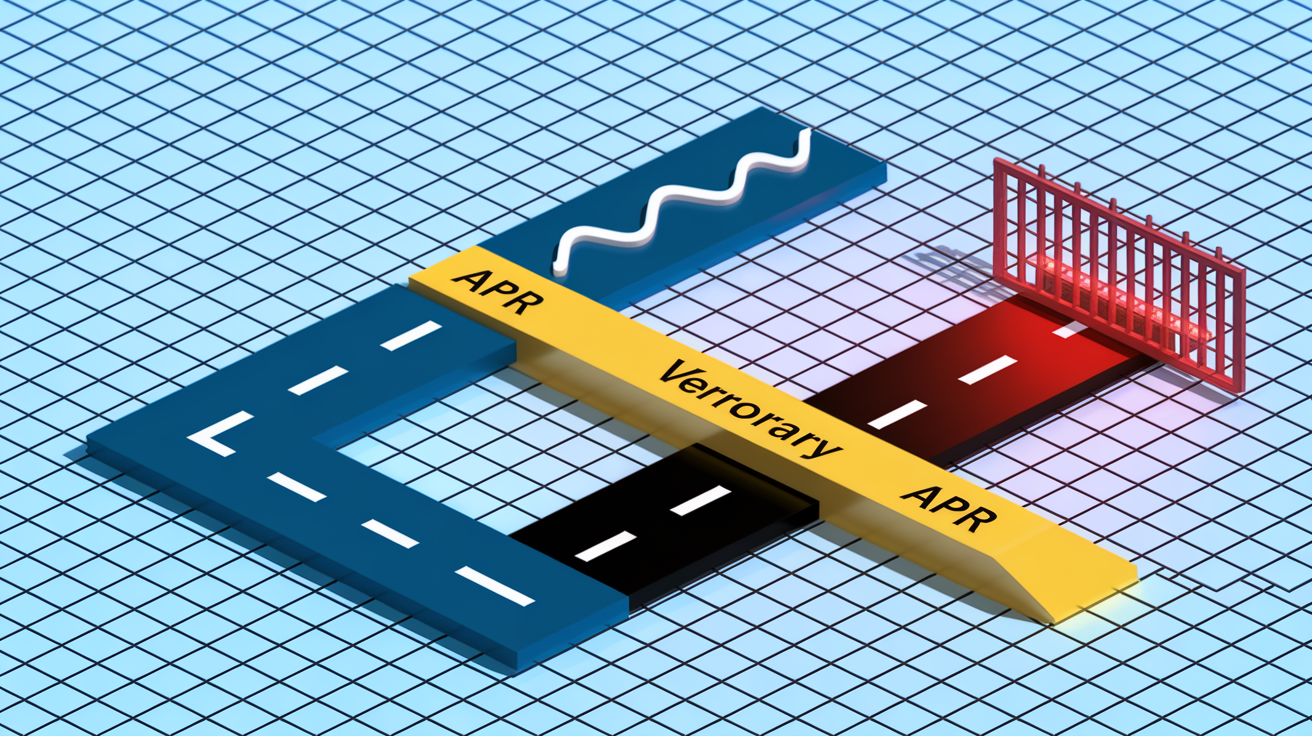
APR comes in several forms. Understanding which type you’re signing up for affects budgeting, cost predictability, and the risk of sudden rate changes.
Fixed APR Meaning
A fixed APR stays the same for the entire term of the loan or the life of the credit card account, barring major defaults or contractual changes. Predictable payments make budgeting easier. You know your monthly cost won’t jump because of market shifts. Fixed rates are common on personal loans, auto loans, and many mortgages.
Variable APR Meaning
Variable APR changes based on an index, typically the prime rate, plus a margin set by the lender. If the prime rate rises, your APR and monthly payment rise. If it falls, costs drop. Credit cards and some adjustable rate mortgages use variable APRs. The lender discloses the index and margin (“prime plus 3.00%”) so you can track future changes. But variability introduces risk.
Introductory APR Offers
Promotional APR offers run for a limited time, often 0% for 6 to 21 months on purchases or balance transfers. After the introductory period ends, the APR reverts to the ongoing rate, which may be 15% to 25% or higher. These offers work well for large purchases you can pay off before the promo expires. But carrying a balance after the period ends can get expensive quickly.
Penalty APR Explained
Penalty APR is a higher rate triggered by late payments, returned checks, or other violations of your card agreement. The penalty can jump your APR by 5 to 10 percentage points or more, sometimes into the high 20% range. It may stay in effect for months or until you restore good payment history. Avoiding late payments is critical to avoid penalty APR hits.
| Type | Key Feature | Typical Use Case |
|---|---|---|
| Fixed APR | Rate remains constant for the term | Personal loans, auto loans, stable-budget mortgages |
| Variable APR | Rate changes with an index (e.g., prime rate) | Credit cards, adjustable rate mortgages, lines of credit |
| Introductory APR | Promotional low or 0% rate for a set period | Balance transfers, large purchases to be paid off quickly |
| Penalty APR | Higher rate triggered by late payment or default | Enforced on credit cards when terms are violated |
APR in Credit Cards vs Loans: What’s Included and What’s Not
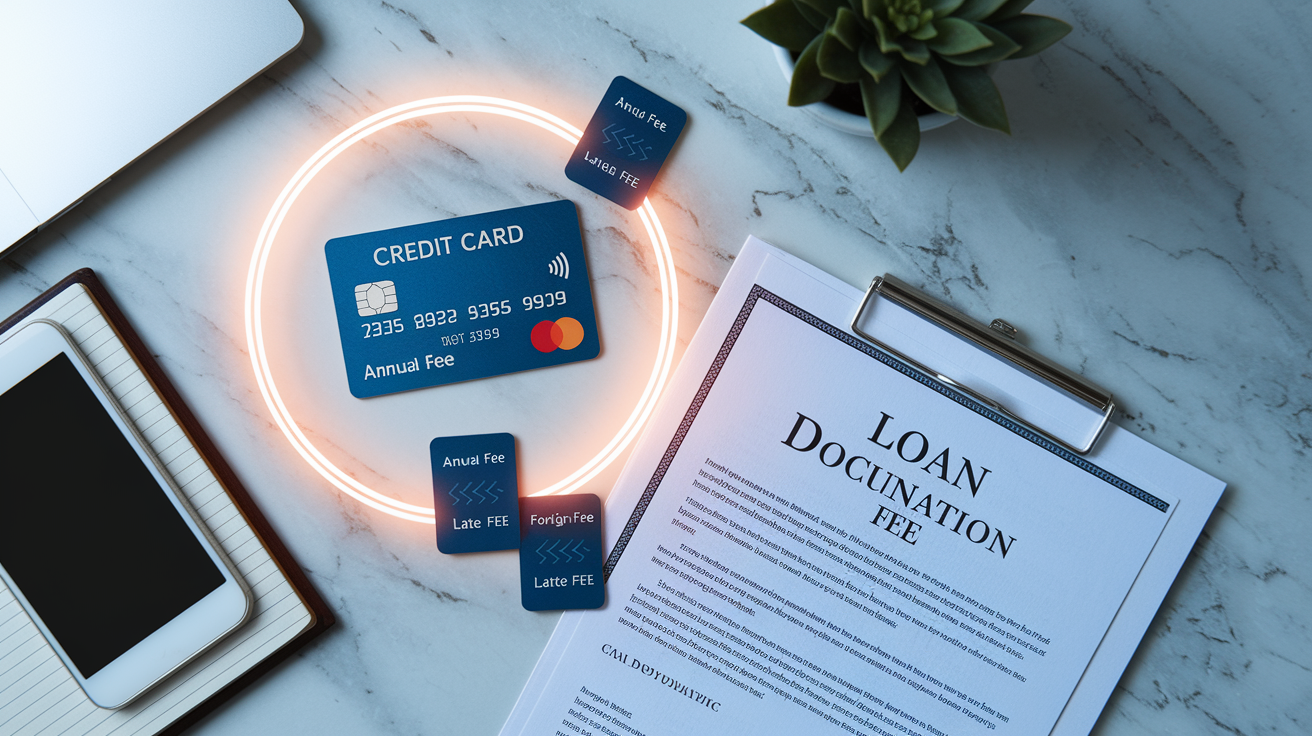
Credit card APR typically covers the interest charged on purchases, cash advances, and balance transfers. But it usually excludes annual fees, late fees, over-limit fees, and foreign transaction fees. Penalty APRs are listed separately, not rolled into the purchase APR you see advertised. That means the APR definition alone won’t tell you every cost. You need the full fee schedule to understand what you’ll pay if you miss a payment or use certain card features.
Personal loans, auto loans, and mortgages include more fees in the APR calculation. Origination fees, discount points, and some closing costs are annualized and folded into the APR. You get a clearer picture of total borrowing cost. A mortgage might show a 4.00% interest rate but a 4.25% APR once points and lender fees are factored in. That translates to higher monthly payments and thousands more in total interest over the life of the loan.
Credit cards also offer grace periods, typically 21 to 25 days. During that window, you can pay the full statement balance and owe zero interest, even if the APR is 20% or higher. That feature makes APR less relevant for cardholders who pay in full every cycle. On loans, interest starts accruing immediately. The APR always affects your cost from day one.
What’s included and excluded by product type:
- Credit cards: APR covers interest on carried balances. Excludes annual fees, late fees, and most penalty charges unless stated as penalty APR.
- Personal loans: APR includes interest and origination fees. Excludes prepayment penalties and non-financed third party costs.
- Mortgages: APR includes interest, points, and many lender fees. Excludes appraisal fees, title insurance, and some escrow costs.
- Auto loans: APR includes interest and financing fees. Excludes dealer add-ons like extended warranties or gap insurance.
How APR Affects Monthly Payments, Long Term Cost, and Debt Reduction
Higher APR increases monthly payments on installment loans and raises interest charges on revolving credit card balances. A small APR difference can compound into large cost gaps over time. Mortgage borrowers who compare 4.00% interest to a 4.25% APR end up paying more than $10,000 extra over 30 years, even though the monthly difference is only about $29. That relationship between APR and total interest paid means shopping for the lowest APR saves real money when you’re borrowing for years.
Credit cards magnify the effect. A 19.99% APR translates to roughly 1.666% monthly interest. So a $1,000 carried balance generates $16 to $20 in new interest charges every month. If you only make minimum payments, most of each payment covers interest, not principal. That slows debt reduction and extends the payoff timeline. Higher APR makes the minimum payment trap worse. More interest accrues, principal drops slowly, and total cost balloons.
Debt reduction strategies that prioritize APR:
- Debt avalanche: pay off the highest APR debt first to minimize total interest, even if that balance is larger than others.
- Refinancing: replace high APR loans or cards with lower APR products to cut monthly interest charges immediately.
- Balance transfer: move high APR credit card debt to a card with a 0% introductory APR, then pay it off before the promo ends.
- Extra payments: apply extra cash to principal on the highest APR debt to reduce the balance faster and cut total interest.
Comparing APR Offers and Avoiding High Cost Terms
APR comparison shopping requires looking beyond the advertised rate. You need to understand fees, term length, fixed versus variable status, and what happens after promotional periods. Truth in Lending disclosures give you the APR and a breakdown of costs. But you still need to check whether fees were financed into the loan amount. Whether prepayment penalties apply. And what index and margin control variable APRs. A low advertised APR can turn expensive if it reverts to a higher rate after six months or if the lender charges high origination fees upfront.
Key comparison factors when evaluating APR offers:
- Advertised APR: the headline rate shown in marketing, often the lowest tier available to top credit borrowers.
- Fees included in APR: origination fees, points, broker charges. Make sure you know which costs were annualized into the APR.
- Fixed or variable: fixed APR stays constant, variable APR changes with an index. Ask for the index plus margin formula.
- Promotional vs ongoing APR: introductory 0% APR periods end. The post promo APR is what you’ll pay for most of the term.
- Term length: shorter terms usually mean higher monthly payments but lower total interest. Longer terms spread payments but raise total cost.
- Prepayment penalties: some lenders charge fees if you pay off early. That isn’t captured in the APR but affects real cost if you plan to refinance or pay extra.
For example, a credit card may offer 0% APR for 15 months on balance transfers, then revert to 18.99% APR. If you carry a balance past month 15, the ongoing APR kicks in and you pay interest on the remaining principal. Comparing that offer to a card with a constant 12.99% APR depends on whether you can pay off the balance during the promo period. 0% wins if you do. The lower steady rate may win if you don’t.
Ways to Reduce APR and Borrowing Costs
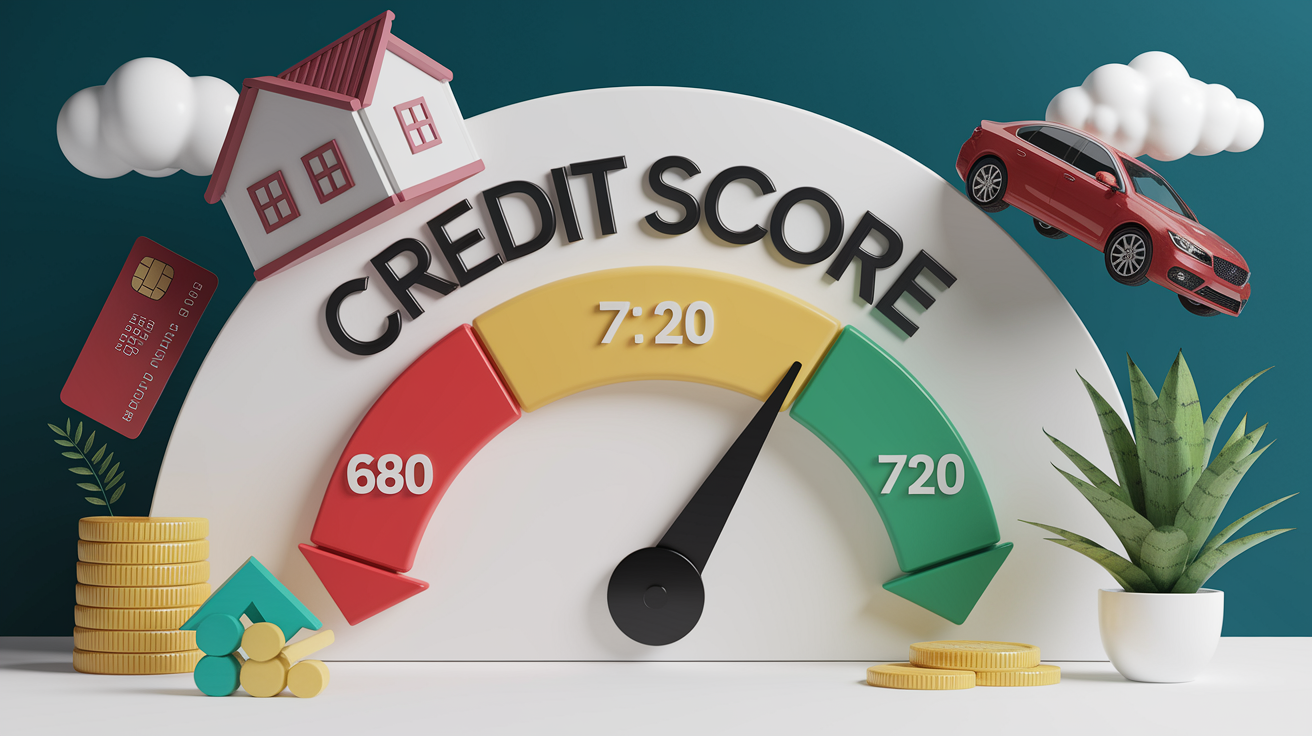
Improving your credit score is the single most effective way to lower APR on major loans. Lenders tier rates by creditworthiness. Moving from a 7% APR to a 4% APR on a $200,000 mortgage can save tens of thousands in total interest over 30 years. Even a small score increase (say from 680 to 720) can unlock better rate tiers and reduce monthly payments noticeably.
Refinancing to lower APR works when market rates drop or your credit improves after you took the original loan. Mortgage and auto loan refinancing is common. Credit card balance transfers to 0% promotional APR can eliminate interest for a set period if you pay down the principal before the promo ends. Negotiating APR directly with lenders is also possible, especially for credit cards. Calling and asking for a rate reduction after a year of on time payments sometimes works, cutting your monthly interest charges without changing cards.
Practical APR lowering actions:
- Pay down existing debt to improve your credit utilization ratio. That can boost your score and qualify you for lower APRs on new credit.
- Avoid cash advances on credit cards. They typically carry higher APRs than purchases and start accruing interest immediately with no grace period.
- Pay credit card balances in full every billing cycle to sidestep APR entirely during the grace period.
- Shop multiple lenders and compare APR disclosures to find the lowest true cost, not just the lowest advertised interest rate.
- Consider shorter loan terms if your monthly budget allows. 15 year mortgages usually carry lower APRs than 30 year mortgages and save massive amounts in total interest.
Final Words
Use the APR number to see the true yearly cost of borrowing, interest plus lender fees. That’s the quick definition you’ll use when comparing offers.
You learned how APR differs from the interest rate, how to convert APR to a monthly figure, the main APR types, what cards include or leave out, and how APR changes monthly payments and total interest.
This understanding APR puts you in control. Compare offers, ask questions, and lower costs through better credit or refinancing. You’ve got clear steps and a plan. Go pick the option that fits your cash flow.
FAQ
Q: How does APR work for dummies?
A: The APR works by showing the yearly cost of borrowing, including interest and required lender fees, so you can compare loans; convert to monthly roughly APR/12, and higher APR raises monthly cost.
Q: Is 24% APR good or bad?
A: A 24% APR is high for most long-term loans and means expensive borrowing; it’s common on subprime cards or short-term funding, so compare offers, term, and fees before you decide.
Q: How much is 26.99 APR on $3000?
A: 26.99% APR on $3,000 equals about $810 in interest over a year if the balance isn’t paid down; monthly rate ≈ 2.249% so first-month interest ≈ $67.50.
Q: What is a good APR rate?
A: A good APR rate depends on the product: mortgages—low single digits; personal loans—under about 10–12%; credit cards—under about 15%; always compare term, fees, and your credit profile.