


Want bigger credit lines without risking your personal credit?
Most small-business owners borrow on their own name and get capped fast.
Separate personal and business finances, and lenders start treating your company like its own borrower.
This post walks you through the exact steps to build business credit so the business, not you, gets the limits.
You’ll see how to form the right entity, get an EIN, open a business bank account, add vendor tradelines, use cards the smart way, and monitor the three main business bureaus.
No fluff, just the actions that lead to larger credit lines you can actually qualify for.
Understanding the Need to Build Business Credit for Larger Credit Lines

Business credit decides how much you can borrow, what you’ll pay for it, and whether you can access bigger credit lines without dragging your personal credit into every deal. It’s a separate scoring system run by three major bureaus: Dun & Bradstreet (PAYDEX 0 to 100), Experian Business (Intelliscore Plus 0 to 100), and Equifax (Commercial Credit Risk scores). Strong business credit unlocks bigger limits, better terms, and vendor payment flexibility that keeps cash flow steady without touching personal accounts.
Without a real business credit profile, lenders see all the risk sitting on your personal guarantee. They cap limits fast. They want proof the business itself can handle debt, repay on schedule, and grow without the owner’s personal finances backing every working capital request.
Building business credit takes a clear set of steps: form a legal entity, get an EIN, open a business bank account, register for a D-U-N-S number, work with vendors and creditors that report to bureaus, use credit responsibly, and monitor your reports. Lenders watch five key factors:
Payment history. On time or early payments drive scores harder than anything else.
Credit utilization. Keep balances under 30 percent of available limits.
Length of credit history. Older tradelines signal stability.
Number and diversity of reporting accounts. Multiple suppliers, cards, and lines show active credit use.
Public records. Liens, judgments, or bankruptcies tank scores fast.
When all five stay strong, you’ll qualify for the bigger credit lines that fund inventory buys, equipment, payroll coverage, and growth without maxing out personal cards or pledging home equity.
Causes Behind Weak or Insufficient Business Credit Profiles
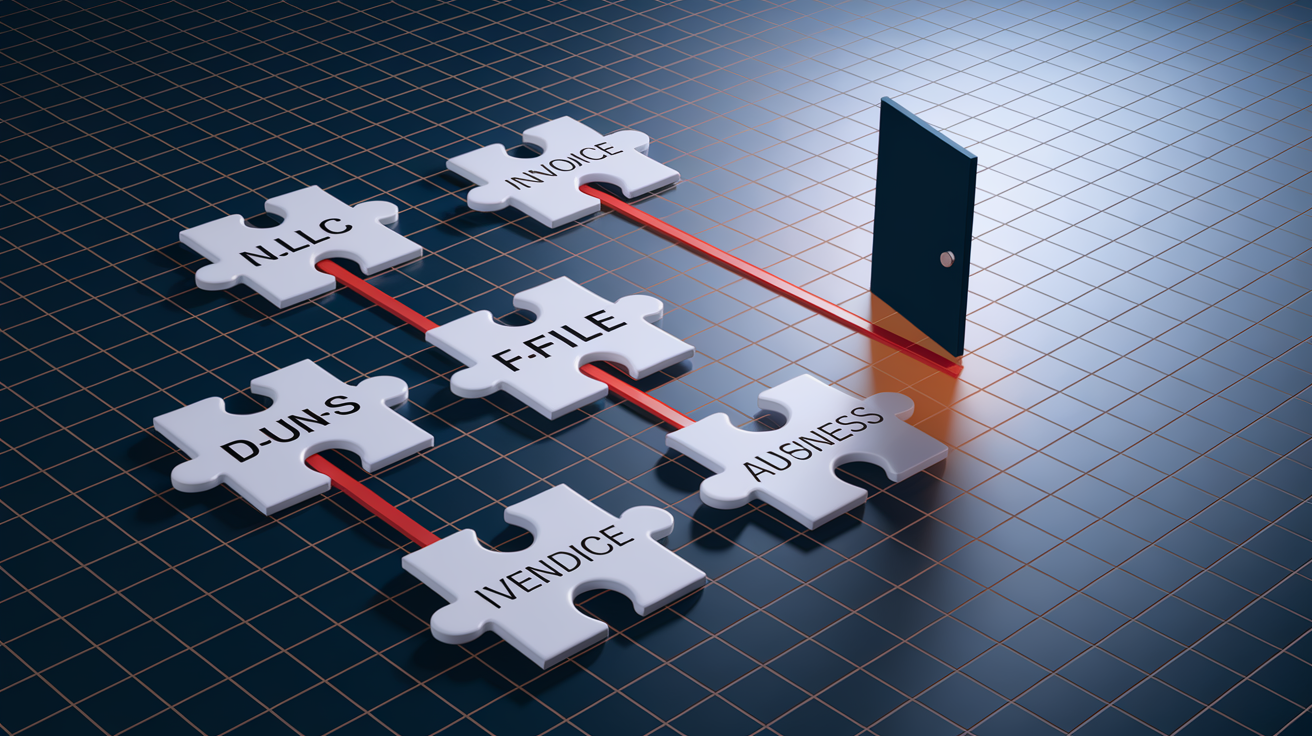
Most businesses that can’t access larger credit lines share a few structural gaps. Operating as a sole proprietor means there’s no separable credit identity, so lenders pull personal credit by default. Missing an EIN prevents linking accounts to the business tax ID. No D-U-N-S number means Dun & Bradstreet can’t even create a file. And if business name, address, or phone vary across documents, bureaus fragment records or ignore tradelines.
Another common cause is zero reporting accounts. A business that pays every invoice by check or ACH, without ever touching a vendor net 30 account or a business credit card that reports to bureaus, has no data for bureaus to score. Late payments, high utilization above 30 percent, or a thin credit history with one or two tradelines also limit approval for larger lines.
| Cause | Impact on Credit | Typical Fix |
|---|---|---|
| No legal entity (sole proprietor) | No separable business credit; lenders rely on personal credit | Form LLC or corporation; obtain EIN |
| No reporting tradelines | Zero payment history on file; bureaus cannot generate scores | Open vendor net 30 accounts and business credit cards that report |
| Inconsistent business information | Split files; incomplete profiles; missing accounts | Use exact business name, address, phone, and EIN everywhere |
Forming a Proper Business Structure to Establish Foundational Credit

Lenders treat LLCs and corporations differently from sole proprietorships because those entities create a legal wall between personal and business finances. When you form an LLC (limited liability company) or incorporate as an S corp or C corp, you build a separable credit identity that can earn its own credit lines, scores, and borrowing history without every loan landing on your personal credit report.
First step is filing articles of organization or incorporation with your state. Once approved, apply for an Employer Identification Number (EIN) through the IRS. It’s free, takes minutes online, and acts as the business tax ID that links all credit accounts, bank accounts, and vendor relationships. After you have the EIN, register the business with your local county or city, get any required licenses, and lock in a consistent business name, physical address, and dedicated business phone number. Use those exact details on every application, tax form, invoice, and credit account going forward.
Sole proprietors can sometimes access credit, but most lenders will ask for a personal guarantee until the business builds enough revenue and tradeline history to stand alone. Forming an entity and getting an EIN removes that dependency faster. It protects your personal assets if the business ever faces a lawsuit or default.
Lenders verify these six components when evaluating entity based credit applications:
Legal entity type (LLC, S corp, or C corp on file with the state)
EIN issued by the IRS and matching all account records
Registered business address (not a P.O. box in most cases)
Consistent business phone number listed in directories and on the website
State business registration or business license proving legal operation
Professional business presence. Website, email domain, online directory listings (Google Business, Yelp, industry databases)
Building Initial Business Credit Through Banking and Verification Steps

Opening a business bank account is mandatory for credit applications, revenue verification, and lender underwriting. Banks use the account’s cash flow statements, profit and loss reports, and balance sheets to confirm the business generates enough income to service debt. Without a separate business account, lenders can’t see clean financials. Every credit request defaults back to personal credit or a personal guarantee.
Most banks will open a business checking or savings account within a few days once you provide the EIN, formation documents, and identification. Some creditors set minimum balance thresholds. One well known issuer requires at least $25,000 in a U.S. business bank account before you can apply for its business credit card. Even if you’re not targeting that specific product, maintaining steady deposits and avoiding overdrafts builds a banking relationship that supports future Business Lines of Credit and term loan applications.
Lenders typically request four core documents when underwriting credit:
Business bank statements (last 3 to 6 months showing deposit and withdrawal activity)
Profit and loss statement (P&L) summarizing revenue and expenses
Balance sheet listing assets, liabilities, and equity
Business tax returns (often last 1 to 2 years for larger credit lines)
Keep those records current and organized. The cleaner your financials, the faster underwriting moves, and the higher the approved limits.
Creating Early Tradelines Using Vendor Credit and Net 30 Accounts

Vendor trade credit is the fastest route to your first business credit tradelines. Suppliers that offer net 30, net 60, or net 90 payment terms let you order inventory or supplies today and pay the invoice 30, 60, or 90 days later. When those vendors report payment history to Dun & Bradstreet, Experian, or Equifax, each on time payment adds a positive data point to your business credit file.
Start with vendors known to report: Uline (shipping and packaging supplies), Quill (office products), and Grainger (industrial equipment and maintenance supplies) are common examples. Many fuel card companies and specialized trade suppliers also report. Apply for net 30 accounts, place small initial orders, and pay every invoice on or before the due date. Dun & Bradstreet’s PAYDEX score rewards early payments. Paying a few days ahead of the due date can push your score above 80 faster than paying exactly on the due date.
If a supplier doesn’t report automatically, you can list them as a trade reference when applying for a D-U-N-S number or when filling out credit applications. Over time, accumulating multiple vendor tradelines with different payment cycles (net 30, net 60) and keeping them all current builds the aged credit history that supports requests for larger credit lines down the road.
| Vendor Type | Reports to Bureaus? | Typical Terms |
|---|---|---|
| Office supplies (Quill, Staples Business) | Yes (Dun & Bradstreet, Experian) | Net 30 |
| Shipping/packaging (Uline) | Yes (Dun & Bradstreet) | Net 30 |
| Industrial supplies (Grainger) | Yes (Dun & Bradstreet, Experian) | Net 30, Net 60 |
Using Business Credit Cards and Small Credit Lines to Strengthen the Credit Profile
Business credit cards that report to business credit bureaus create revolving tradelines that update monthly. Pay the statement balance in full and on time every month to avoid interest and build strong payment history. Lenders watch your credit utilization closely. If you have a $10,000 limit, aim to carry a balance of $3,000 or less (30 percent) when the statement cuts. High utilization signals cash flow strain and can drop your score even if you never miss a payment.
Some business credit cards require a personal guarantee and will check your personal credit (usually a score of 670 or higher). Others approve based primarily on business financials, time in business, and revenue verification, especially if the business already has an established credit profile and a strong EIN linked history. Secured business credit cards, backed by a cash deposit, offer another entry point for newer businesses without deep credit files.
Small business lines of credit work the same way: you draw only what you need, repay it, and the available credit refreshes. Responsible use (drawing conservatively, repaying on time, keeping utilization low) adds another active tradeline that lenders review when you request limit increases or apply for larger facilities. These smaller revolving products also help stabilize cash flow, covering short term gaps without needing to tap vendor credit or personal funds. For businesses managing seasonal revenue swings or uneven receivables, Working Capital Financing options like cards and lines keep operations smooth while credit scores climb.
Five factors drive how business credit cards and lines of credit affect your scores:
On time payment history. Late payments damage scores across all bureaus.
Credit utilization percentage. Keep it below 30 percent of each limit.
Age of account. Older revolving accounts improve average credit history length.
Credit limit size. Higher limits (used responsibly) support lower utilization ratios.
Reporting frequency. Monthly reporting to Dun & Bradstreet, Experian, and Equifax ensures steady profile updates.
Working With Business Credit Bureaus to Build and Maintain a Strong Profile
Dun & Bradstreet, Experian Business, and Equifax Business Credit each maintain separate files and scoring models. Dun & Bradstreet uses the PAYDEX score (0 to 100 scale; 80 or higher is considered good). Experian’s Intelliscore Plus ranges from 0 to 100, with scores above 76 rated excellent. Equifax uses a Credit Risk score where results above 90 indicate low risk. Each bureau pulls data from different creditors and vendors, so a strong profile requires active reporting to all three.
Start by applying for a D-U-N-S number through Dun & Bradstreet’s online portal. It’s free and required before D&B can generate a credit file. Once you have the D-U-N-S number, ensure your business name, address, phone, and EIN match exactly across all accounts, vendor relationships, and credit applications. Inconsistent information can cause bureaus to fragment your records or miss tradelines entirely. Update your D-U-N-S profile whenever you move, change phone numbers, or rebrand.
Monitor your business credit reports every few months. Most bureaus offer paid monitoring services that alert you to new tradelines, inquiries, score changes, and potential fraud. If you spot an error (an account that isn’t yours, a late payment you know you made on time, or incorrect business details) dispute it immediately with supporting documentation (payment receipts, bank statements, correspondence). Bureaus typically investigate within 30 days and correct verified mistakes.
Four bureau maintenance tasks keep your profile clean and current:
Register for a D-U-N-S number and keep the profile updated with accurate business information.
Add trade references to your D-U-N-S file when vendors don’t report automatically.
Monitor reports quarterly from Dun & Bradstreet, Experian Business, and Equifax Business Credit.
Dispute inaccuracies promptly with proof, ensuring your scores reflect real payment behavior.
Strengthening Payment History and Credit Utilization for Higher Limits

Payment history is the single most powerful factor in every business credit scoring model. Paying invoices, card statements, and loan installments on or before the due date signals reliability to lenders and bureaus. Dun & Bradstreet’s PAYDEX score rewards early payments. Settling an invoice a few days ahead of the net 30 due date can lift your PAYDEX faster than paying exactly on day 30. Set up automatic bill pay through your business bank account or accounting software to eliminate the risk of missing due dates because of travel, staffing changes, or busy schedules.
Credit utilization measures how much of your available credit you’re using at any moment. Lenders prefer to see utilization below 30 percent on revolving accounts like business credit cards and lines of credit. If you carry higher balances temporarily, pay them down before the statement closing date so the lower balance gets reported to bureaus. Aged tradelines (vendor accounts and credit cards you’ve held for a year or more) carry more weight than brand new accounts, so keep your oldest accounts active and in good standing even after you open newer, larger facilities.
Five best practices for payment and utilization management:
Automate payments to avoid late fees and score damage from missed due dates.
Pay early when possible to maximize PAYDEX scoring and demonstrate strong cash flow.
Keep utilization below 30 percent on all revolving credit accounts.
Pay down balances before statement close to ensure low reported utilization.
Maintain active, aged tradelines by making small purchases on older vendor accounts and credit cards every few months.
Requesting Credit Limit Increases and Scaling Into Larger Lines

Once you’ve built three to six months of perfect payment history on business credit cards, vendor accounts, and small lines of credit, you’re positioned to request limit increases or apply for larger credit facilities. Lenders evaluate time in business, verified revenue (bank statements, tax returns, P&L), cash flow stability, debt service coverage ratio (DSCR), existing business credit scores, and current utilization. They want proof you can handle more credit without stretching cash flow.
Prepare updated financials before requesting an increase: recent bank statements showing steady deposits, a current profit and loss statement, and a balance sheet if the lender asks. If you’ve grown revenue or added new contracts since your original application, document that growth. Negotiating better terms (lower rates, longer repayment windows, higher limits) requires building strong relationships with your current lenders and vendors. When they see you’ve used credit responsibly, paid early, kept utilization low, and grown the business, they’re more willing to extend larger lines at better pricing.
| Requirement | Why It Matters | Typical Lender Expectation |
|---|---|---|
| Payment history on existing accounts | Proves reliability and lowers lender risk | 3 to 6 months of on time or early payments |
| Revenue verification | Confirms ability to repay larger balances | Bank statements, tax returns, or P&L showing steady or growing income |
| Low credit utilization | Signals you’re not cash strapped and can manage more credit | Utilization below 30% across all revolving accounts |
Limit increases often happen automatically if you maintain strong payment behavior and rising deposits. For bigger jumps (doubling a line of credit or moving from a $10,000 card to a $50,000 facility) expect a formal credit review, updated financials, and possibly a hard inquiry on your business credit reports.
Preventing Future Credit Problems and Maintaining Long Term Credit Strength

Credit problems usually start with late payments, high utilization, or too many hard inquiries in a short window. Missing even one payment by a few days can drop your PAYDEX or Intelliscore and signal risk to lenders reviewing your file. Maxing out credit lines (running utilization above 70 or 80 percent) tells lenders you’re cash strapped, even if you eventually pay it down. Applying for multiple credit accounts within weeks can trigger inquiry alerts and raise questions about sudden cash flow pressure.
Monitor your business credit reports every few months using paid bureau services or free score offerings from some creditors. Catching errors early (incorrect late payments, accounts that aren’t yours, wrong business addresses) lets you dispute them before they damage your ability to access larger lines. Maintaining diverse tradelines across vendor accounts, business credit cards, and term loans or lines of credit keeps your profile balanced and prevents over reliance on a single credit type.
Four recurring maintenance actions protect long term credit strength:
Review reports quarterly from Dun & Bradstreet, Experian Business, and Equifax to spot errors or fraud.
Keep vendor relationships active by placing small orders every few months on net 30 accounts.
Maintain low utilization year round to support quick approvals when you need emergency working capital.
Update business information immediately when you change addresses, phone numbers, or legal names to prevent split files.
When to Seek Professional Funding Guidance to Access Larger Credit Lines
Some businesses hit a ceiling when preparing financial documents for underwriting, navigating multiple lender requirements, or comparing the real cost of different credit options. Funding advisors help align products (lines of credit, term loans, equipment financing) with your actual cash flow patterns, revenue cycles, and credit strengths. They know which lenders prioritize business credit scores versus personal guarantees, which underwriters accept alternative documentation for newer businesses, and how to structure requests to maximize approval amounts without triggering excess inquiries.
Professional guidance is especially useful when you’re ready to pursue larger Business Lines of Credit that require formal cash flow analysis, DSCR calculations, and multi year projections. Advisors streamline the application process, gather the right documentation upfront, and present your business in the strongest possible light to lenders who specialize in your industry or revenue model.
Three situations where external expertise accelerates approval:
You need a credit line above $100,000 and want to compare rates, terms, and repayment structures across multiple lenders fast.
Your business credit file is thin or mixed with some strong tradelines and a few late payments, and you need help positioning the application.
You’re expanding into new markets or equipment purchases and need to understand which credit products fit daily, weekly, or seasonal cash flow without over leveraging the business.
Final Words
Start by setting up your entity, getting an EIN, and opening a business bank account, because those build a separable profile lenders can evaluate.
Create tradelines with reporting vendors and small cards, pay early, keep utilization under 30%, and watch your D&B, Experian, and Equifax files.
Show steady revenue and a few months of perfect payments before asking for higher limits.
Learn how to build business credit to access larger credit lines, and you’ll be ready to negotiate bigger borrowing when cash flow allows.
FAQ
Q: How to get a $100,000 business line of credit?
A: Getting a $100,000 business line of credit starts with a formal entity, EIN, business bank account, steady revenue, and reporting tradelines; prepare 3–6 months of bank statements and clear payment history for lenders.
Q: How rare is an 830 credit score?
A: An 830 credit score is very rare, placing you among the top few percent of borrowers; it signals excellent payment history, low balances, and long-standing accounts.
Q: What is the monthly payment on a $50,000 business loan?
A: The monthly payment on a $50,000 business loan depends on term and APR; for example, at 8% APR over 60 months you’d pay about $1,015 per month.
Q: How do I build my LLC credit score?
A: Building your LLC credit score means forming the LLC, getting an EIN, opening a business bank account, using vendor net-30 accounts and business cards, paying on time, and monitoring bureau files.