
Why drain your cash coming in and going out to buy a new machine when you can fold the payment into accounts payable?
AP equipment financing gets you the gear now while the lender pays the vendor up front.
You then repay on the same 30-, 60-, or 90-day cycle you already use, or spread payments over 12–84 months if that fits better.
That keeps payroll and inventory money where it belongs and lets the equipment earn its keep before you pay.
This post explains how AP financing works, what it costs, and when it’s the smarter fit.
What AP Equipment Financing Is and How It Works
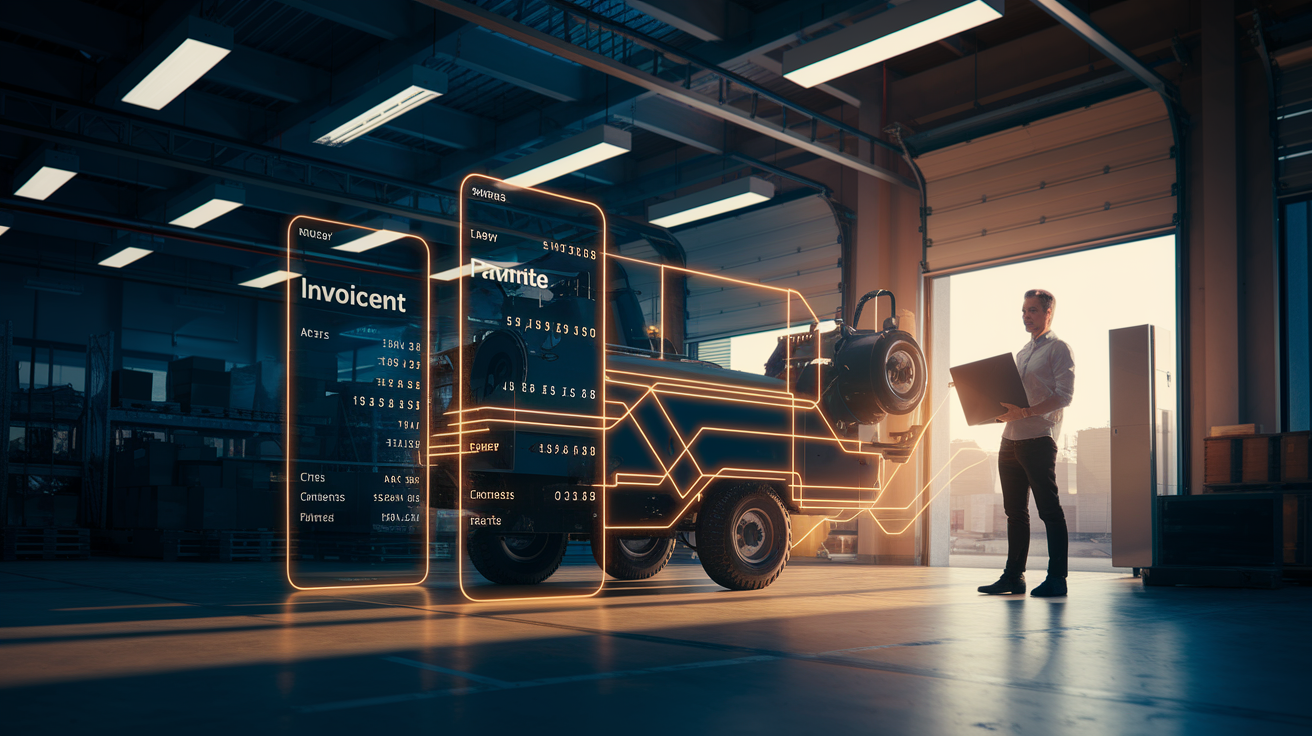
AP equipment financing lets you buy or lease machinery, vehicles, and other capital assets while fitting payments into your existing accounts-payable routine. You’re not cutting a giant check or draining your credit line. Instead, you match repayment to the net-payment terms you already use with vendors, usually 30, 60, or 90 days. The lender pays the vendor up front. You get the equipment immediately. The financing company collects over time, typically monthly, on terms that run anywhere from 12 to 84 months depending on what you’re buying and how your credit looks.
Three parties connect here: the equipment vendor or dealer, the financing company, and your business. The vendor gets paid in full when the sale closes. You put the equipment to work right away. The financing company gets repaid over time, and because the machinery itself is collateral, you usually don’t face the blanket-lien requirements that come with traditional bank loans. If you stop paying, they can reclaim the specific asset. That structure speeds up approvals and lightens the documentation load compared to unsecured working-capital products.
The cash-flow benefit is simple. You preserve working capital for payroll, inventory, and daily operations while the equipment starts generating revenue now. You pay over time as the asset earns its keep. Seasonal businesses, companies scaling fast, or operators who want to keep bank lines open for short-term needs find this particularly useful.
Who Uses AP-Based Equipment Financing
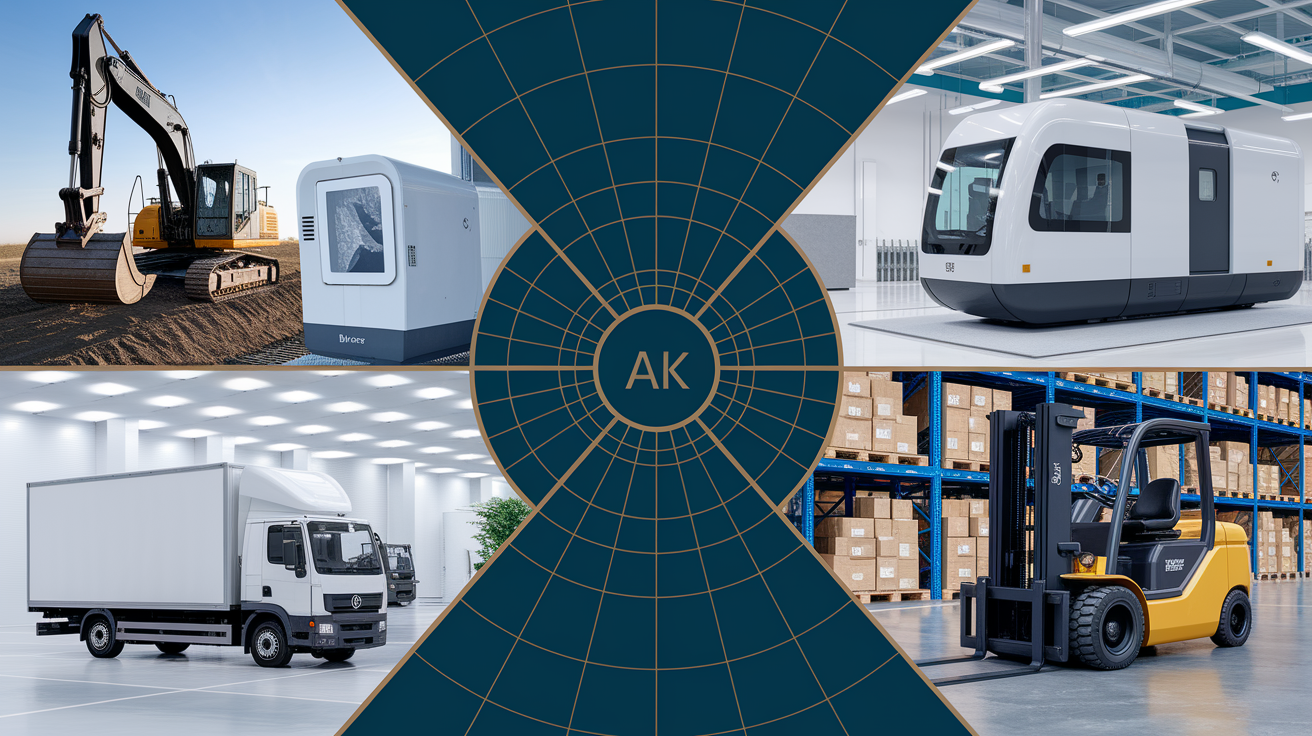
Business owners, finance managers, and procurement teams across industries tap AP equipment financing. Construction companies buy excavators and loaders. Medical practices acquire imaging equipment and surgical tools. Manufacturers finance CNC machines and assembly lines. Logistics operators lease truck fleets and forklifts.
Small enterprises avoid large capital outlays that would tie up months of operating cash. Mid-sized companies standardize vendor payments and centralize equipment procurement under one accounts-payable cycle. National dealerships and manufacturers offer AP-integrated financing directly to customers, embedding the payment option into the sales process.
Finance directors in multi-location operations like AP financing because it consolidates equipment payments into existing ERP and accounting platforms (NetSuite, QuickBooks, SAP) without creating separate loan accounts or custom amortization schedules outside the AP module. That cuts down reconciliation work and keeps capital-expenditure tracking in one place.
Businesses with cyclical revenue (landscaping, agriculture, event rental) use extended net terms to align equipment payments with high-season cash flow. If your busiest months run May through September, a 60-day net term pushes the first payment into the period when revenue is strongest.
Product Types: Loans, Leases, and Managed Portfolio Programs

AP equipment financing comes in three main structures: term loans, capital leases, and operating leases. Each has different ownership, tax, and balance-sheet implications.
Term loans finance the full purchase price. You own the equipment from day one. The asset appears on your balance sheet as property, and the loan shows as debt. You depreciate the equipment and deduct interest expense. Terms run 12 to 84 months, with fixed monthly payments. At the end of the term, you own the asset outright. This works best when you plan to keep the equipment for its full useful life and want to maximize depreciation deductions.
Capital leases function like installment purchases. You use the equipment throughout the lease term, and ownership transfers to you at the end, either automatically or through a nominal buyout, often $1 or 10% of the original cost. For accounting purposes, capital leases get treated similarly to loans: the asset and corresponding liability appear on the balance sheet, and you recognize depreciation and interest. Monthly payments are typically fixed. Capital leases suit businesses that want eventual ownership but prefer the structure and vendor relationships that come with lease programs.
Operating leases keep the equipment off your balance sheet. You use it for a set term (commonly 24, 36, or 48 months), then return it, renew, or purchase it at fair market value. Payments are usually deductible as operating expenses rather than split between interest and principal. At term end, the residual value (the predicted worth of the equipment) determines your buyout price. Residuals typically range from 10% to 40% of the original cost, depending on the asset type and lease length. Operating leases work well for technology that becomes obsolete quickly, or when you want to upgrade equipment every few years without the hassle of resale.
Managed portfolio programs bundle multiple equipment purchases under a single master agreement. Instead of separate contracts for each forklift, printer, or server, you consolidate financing into one account. The lender manages the receivables, tracks payments, and provides consolidated statements. This reduces administrative overhead and often unlocks volume pricing or improved terms as your portfolio grows. Companies financing fleets or rolling out equipment across multiple locations use managed portfolios to standardize terms and simplify AP reconciliation.
Typical Financial Terms and Pricing
Understanding the numbers helps you compare offers and model cash flow before you commit.
| Term | Typical Range | Notes |
|---|---|---|
| Financing amount | $5,000 – $5,000,000+ | Small-ticket deals often $5k–$150k; mid-ticket $150k–$1M; large-ticket $1M+ |
| Loan/lease term | 12 – 84 months | Most common: 24, 36, 48, 60 months |
| APR / lease rate | 4% – 25% | Lower end for strong credit, new equipment, shorter terms; higher for thin credit, used assets, longer terms |
| Origination fee | 0.5% – 4% | Often rolled into the financed amount |
| Down payment | 0% – 20% | Zero down common for creditworthy borrowers; higher down reduces monthly payment and may improve rate |
| Loan-to-value (LTV) | 80% – 100% | 100% financing available for new equipment; used assets often capped at 80–90% |
| Residual (operating lease) | 10% – 40% | Higher residual = lower monthly payment but higher buyout at term end |
APR versus factor rate: Most AP equipment financing uses simple interest and quotes an annual percentage rate. A 7.5% APR on a $100,000 loan over 48 months produces a monthly payment around $2,420, and you’ll pay roughly $16,160 in total interest. Some lease programs quote a “money factor” instead. Multiply the factor by 2,400 to approximate the APR. For example, a money factor of 0.00313 translates to roughly 7.5% APR.
Origination fees cover underwriting, documentation, and setup. A 2% fee on a $200,000 deal adds $4,000, which is usually rolled into the financed balance rather than paid up front. That increases the principal and the total interest cost, so confirm whether the quoted rate includes the fee or treats it separately.
Down payments reduce risk for the lender and often unlock better pricing. If you put 10% down on a $150,000 excavator, you finance $135,000 instead of the full amount. That lowers the monthly payment and may shave a percentage point off the rate, especially if your credit score sits in the mid-600s.
Residual values matter most on operating leases. A $200,000 piece of machinery with a 25% residual over 36 months means you’re financing $150,000 of the cost. Monthly payments will be lower than a full-purchase loan, but at term end you’ll owe $50,000 if you want to keep it. If you plan to return the equipment and upgrade, a higher residual works in your favor. If you plan to own it, factor the buyout into your total cost.
Qualification Requirements and Benchmarks
Lenders evaluate time in business, revenue, credit, and the equipment’s collateral value. Here’s what you need to clear the bar.
Time in business: Most programs require at least one year of operating history, preferably two or three. Startups can sometimes qualify if the owner has strong personal credit and industry experience, or if the equipment is new and easy to resell.
Minimum annual revenue: Expect thresholds between $50,000 and $250,000, depending on the lender and the size of the deal. A $500,000 financing request typically requires revenue well above $1 million to demonstrate repayment capacity. Smaller deals (under $50,000) may accept lower revenue if cash flow is steady.
Credit scores: Personal credit still matters, especially for businesses under $5 million in revenue. A FICO score of 600 is often the floor, but pricing improves significantly at 680 and again at 720. Business credit from Dun & Bradstreet, Experian Business, or Equifax Business can supplement or sometimes replace personal scores for established companies. If your Paydex score sits above 70 and you’ve been in business five years, some lenders will approve without pulling personal credit.
Documentation package: Prepare the following before you apply:
- Equipment quote or invoice from the vendor, including make, model, year, and serial number if available
- Most recent two years of business tax returns, or profit-and-loss and balance-sheet statements if you’re in your second year
- Three to six months of business bank statements
- Accounts-payable aging report, especially if you’re requesting a managed portfolio program
- Proof of insurance naming the lender as loss payee or additional insured
- Business formation documents (articles of incorporation, operating agreement, or DBA certificate)
- Personal financial statement if you’re guaranteeing the loan
The cleaner and more complete your documentation, the faster the approval. Missing or inconsistent financials can stretch a two-day decision into two weeks.
Application and Approval Timeline

Speed is one of AP equipment financing’s biggest advantages over traditional bank loans. Here’s the typical flow.
Pre-qualification (same day to 48 hours): Submit a one-page application with basic revenue, time-in-business, and equipment details. The lender pulls credit and gives you an indicative approval amount, rate range, and structure. No binding commitment yet, just a signal that you’re in the right ballpark.
Full application and documentation (1–5 business days): Upload tax returns, bank statements, equipment quote, and insurance. The lender verifies revenue, reviews cash flow, and confirms the equipment’s collateral value. If the vendor is already in the lender’s system, this step moves faster because pricing and payment terms are pre-negotiated.
Credit committee and final approval (1–3 business days): Larger deals and newer businesses go to a credit committee. Smaller transactions with strong credit may auto-approve. You’ll receive a formal commitment letter outlining the rate, term, payment amount, fees, down payment if any, and required insurance.
Documentation and funding (1–5 business days): Sign the lease or loan agreement, provide proof of insurance, and wire any down payment. The lender pays the vendor directly or wires funds to your account if you’ve already purchased the equipment. For integrated AP programs, the lender sets up the payment schedule in your ERP system and provides account details for automated ACH drafts.
All in, expect two to fourteen business days from application to funding. Deals under $100,000 with strong credit and complete documentation can close in 72 hours. Larger, more complex transactions (especially those requiring vendor onboarding or custom payment terms) may take two weeks.
How AP Program Mechanics and Vendor Relationships Work
AP equipment financing works best when the vendor, lender, and your accounting system connect smoothly. Here’s how that integration typically happens.
Vendor onboarding: The lender establishes a relationship with the equipment dealer or manufacturer. They agree on net-payment terms (commonly 30, 60, or 90 days) so the vendor knows exactly when they’ll receive full payment after a sale closes. The lender may also pre-approve pricing, confirm delivery logistics, and set up direct-pay instructions. Once onboarded, future transactions with that vendor move faster because the payment workflow is already in place.
Direct-pay versus controlled-pay options: In a direct-pay arrangement, the lender wires funds directly to the vendor as soon as the deal closes. You never touch the money; it flows vendor-to-vendor. This structure is common for new equipment purchases and eliminates the risk of funds being diverted. In a controlled-pay setup, the lender deposits the approved amount into your account, and you issue payment to the vendor. This option gives you flexibility if you’re buying from multiple suppliers or negotiating your own discounts, but it requires tighter documentation and sometimes a personal guarantee.
ERP and AP integration: If you run NetSuite, SAP, QuickBooks, or another accounting platform, the lender can set up the financing as a standard vendor account. Monthly payments appear on your AP aging report just like any other invoice. The lender provides a unique vendor ID, payment terms (net 30, for example), and ACH or wire instructions. Your accounting team schedules the payment in the normal batch run, and the system auto-drafts or reminds you when it’s due. That keeps equipment financing inside your existing workflow instead of forcing separate loan-payment tracking.
Net-payment terms and cash-flow alignment: Some AP programs let you choose 30-, 60-, or 120-day net terms for the first payment. If you buy a $200,000 piece of equipment on May 1 with 60-day net terms, your first payment doesn’t hit until July 1. That breathing room lets the equipment start generating revenue before you begin paying for it. Seasonal businesses use this feature to push payments into their high-cash-flow months. A landscaping company buying mowers in March with 90-day terms doesn’t make the first payment until June, right when spring contracts are paying out.
Comparison with Traditional Bank Loans and Capital Expenditure Alternatives

AP equipment financing sits between bank term loans and operating leases. Here’s how they stack up.
| Feature | AP Equipment Financing | Traditional Bank Loan | Operating Lease |
|---|---|---|---|
| Approval speed | 2–14 business days | 3–8 weeks | 2–10 business days |
| Collateral | Equipment-secured | Often blanket lien on all assets | Equipment remains lender’s property |
| Down payment | 0%–20% | 10%–25% | 0%–10% (first/last payment) |
| APR range | 4%–25% | 3%–12% | Equivalent 5%–20% (rate + residual) |
| Ownership at term end | Yes (loan or capital lease) | Yes | Buyout at FMV or return |
| Balance-sheet treatment | Asset + liability (loan/capital); off-balance-sheet (operating) | Asset + liability | Off-balance-sheet (if operating) |
| Documentation | Moderate (2 years tax, 3–6 months bank statements) | Heavy (full financials, projections, covenants) | Light to moderate |
Bank loans offer the lowest rates but come with stricter underwriting, longer timelines, and often a blanket lien that restricts future borrowing. If you have audited financials, strong EBITDA, and time to wait, a bank term loan may save you a percentage point or two in interest. But if you need equipment this month and don’t want to tie up your entire balance sheet, AP financing closes faster and keeps your line of credit available for working capital.
Operating leases keep equipment off the balance sheet and let you upgrade every few years, but total cost over multiple lease cycles can exceed outright purchase. If you’re leasing a $100,000 machine with a 30% residual over three years, you’ll pay roughly $70,000 in lease payments. If you renew at term end, you start the cycle again on a new $100,000 unit, paying another $70,000. After six years, you’ve spent $140,000 and own nothing. A term loan or capital lease on the same equipment might cost $115,000 all-in over five years, and you own the asset.
AP equipment financing splits the difference. Faster than a bank, often cheaper over the long run than serial operating leases, and flexible enough to match payment schedules to your cash flow. If your priority is speed, simplicity, and preserving working capital without giving up ownership, AP financing usually wins.
Equipment Types Commonly Financed
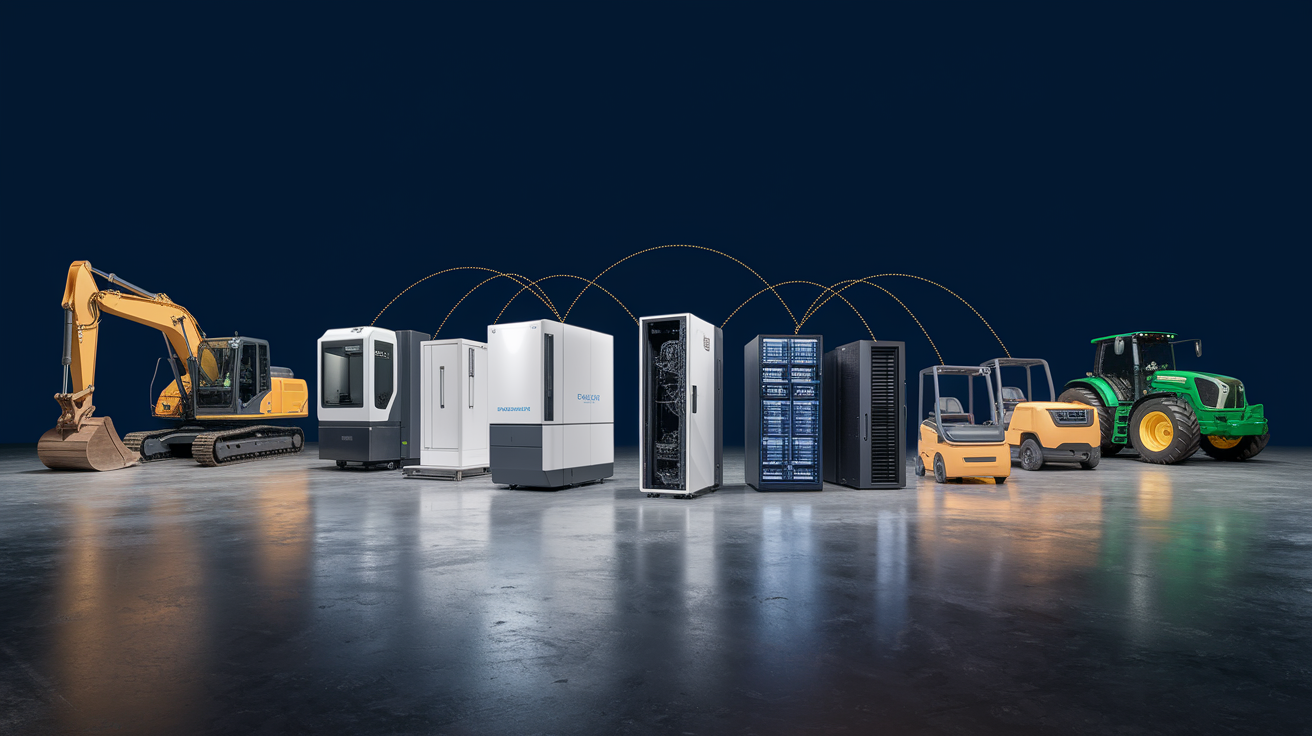
AP programs cover nearly any tangible business asset with resale value. Here’s what you’ll see most often.
Construction equipment: Excavators, bulldozers, loaders, compactors, cranes, boom lifts, scaffolding, concrete mixers. Terms typically run 36 to 60 months because heavy equipment holds value and lasts a decade or more with maintenance.
Commercial vehicles and fleets: Box trucks, tractor-trailers, delivery vans, service vehicles, passenger shuttles. Fleet financing often uses managed portfolio structures so you can add trucks as you grow without reopening the loan each time.
Manufacturing machinery: CNC mills, lathes, injection-molding machines, laser cutters, assembly-line conveyors, industrial robots. High-value items ($500,000 and up) may carry slightly lower rates because they’re essential to production and harder for a business to hide or neglect.
Medical and dental equipment: MRI machines, CT scanners, X-ray units, ultrasound systems, surgical lasers, dental chairs, sterilization equipment. Medical equipment financing is a specialized subset with lenders familiar with regulatory requirements and facility certifications.
IT and data-center hardware: Servers, storage arrays, networking gear, point-of-sale systems, security systems. Technology depreciates quickly, so terms are usually shorter (24 to 36 months), and operating leases are popular for businesses that want to refresh hardware every cycle.
Material handling and warehouse equipment: Forklifts, pallet jacks, conveyor systems, racking, automated picking systems. Often bundled into managed portfolios for distribution centers and third-party logistics providers.
Printing and packaging machinery: Commercial printers, binding equipment, die-cutting machines, shrink-wrap systems. Print shops and packaging companies use AP financing to keep up with order volume without large capital outlays.
Agriculture equipment: Tractors, combines, planters, irrigation systems. Ag financing sometimes includes seasonal payment structures that align with harvest cycles.
Fees, Penalties, and Risk Factors
Understand the cost beyond the monthly payment so you can model total outlay and avoid surprises.
Origination fees are one-time charges, typically 0.5% to 4% of the financed amount. A $100,000 loan with a 2% fee adds $2,000. Most lenders roll the fee into the principal, so you pay interest on it over the life of the loan. That increases the effective APR slightly. Always confirm whether the quoted rate is pre-fee or post-fee.
Late-payment penalties vary by lender. Common structures include a flat fee ($50 to $150 per occurrence) or a percentage of the overdue payment, often 5% to 10%. Some agreements also assess per-diem interest at a higher default rate if you’re more than 30 days late. Missing payments can trigger cross-default clauses in other credit agreements, so prioritize equipment payments to protect your entire capital stack.
Early-termination or prepayment penalties: Some leases and loans include a prepayment fee if you pay off the balance before the scheduled maturity. This can be a flat percentage (2% to 5% of the remaining principal) or a yield-maintenance calculation that compensates the lender for lost interest. If you anticipate paying off the equipment early from a sale or refinance, negotiate a no-prepayment-penalty clause up front or choose a lender that doesn’t charge one.
Maintenance and insurance obligations: You’re responsible for keeping the equipment in good working order and insured for the full replacement value. The lender will be named as loss payee on the insurance policy. If you let coverage lapse, the lender can force-place insurance at your expense, often at two to three times the cost of your own policy. Failure to maintain the equipment (letting a truck’s engine seize or a CNC machine rust) can trigger a default and immediate repayment demand.
Vendor acceptance fees: Some AP programs charge the equipment vendor a small fee (0.5% to 2% of the sale price) to participate in the financing network. Occasionally that fee is passed to you as a “document fee” or “program fee.” Clarify who pays it before you sign.
End-of-term risks on operating leases: If you return equipment at the end of an operating lease, the lender will inspect it. Excessive wear, missing parts, or damage beyond “normal use” can result in refurbishment charges. Budget a few thousand dollars for potential end-of-lease fees if you’re leasing high-use assets like forklifts or delivery trucks.
Sample Calculations and Numeric Examples
Walk through two common scenarios to see how the math plays out.
Example A: $150,000 term loan, 48 months at 7.5% APR
- Principal: $150,000
- Term: 48 months
- APR: 7.5%
- Monthly payment: approximately $3,630
- Total of payments: $174,240
- Total interest paid: $24,240
This structure gives you immediate ownership. You depreciate the $150,000 asset over its IRS-allowed life (often five to seven years for equipment) and deduct the $24,240 in interest as it’s paid. At the end of 48 months, you own the asset outright. If you sell it for $50,000 at that point, your net cost was $124,240.
Example B: $200,000 operating lease, 36 months at 8.0% money factor, 25% residual
- Equipment cost: $200,000
- Residual value: $50,000 (25%)
- Amount financed (depreciation): $150,000
- Term: 36 months
- Approximate monthly payment: $4,580
- Total lease payments: $164,880
- Buyout at term end: $50,000
If you return the equipment, your total cost is $164,880 for 36 months of use. If you buy it out, your all-in cost is $214,880 (slightly more than the original $200,000 price, but spread over three years). The lease payments are fully deductible as operating expenses, and the equipment stays off your balance sheet until you exercise the purchase option.
Comparing the two: The term loan costs $174,240 for ownership over four years. The operating lease costs $164,880 for three years of use, or $214,880 if you buy. If you plan to keep the equipment long-term, the loan is cheaper. If you want to upgrade every three years, the lease offers flexibility and potential tax benefits.
Tools and Checklists for Decision-Making
Use these resources to model costs and organize your application.
Payment calculator inputs: To estimate monthly cost before you apply, gather:
- Total equipment price or financed amount
- Down payment (if any)
- Term in months
- APR or money factor
- Residual percentage (for leases)
Plug those into a standard loan or lease calculator. Many lenders provide online tools on their sites. For a rough approximation, use this formula for a simple-interest term loan:
Monthly Payment ≈ [Principal × (APR ÷ 12)] ÷ [1 − (1 + APR ÷ 12)^(−Term)]
For example, $100,000 at 6% APR over 36 months yields roughly $3,042 per month.
Document checklist: Before you contact a lender, assemble:
- [ ] Equipment quote or invoice (make, model, serial, price)
- [ ] Most recent two years of business tax returns (1120, 1120-S, or 1065)
- [ ] Year-to-date profit-and-loss statement
- [ ] Three to six months of business bank statements
- [ ] Current balance sheet
- [ ] Accounts-payable aging report (if requesting managed portfolio)
- [ ] Proof of business insurance (general liability, property, auto as applicable)
- [ ] Business formation documents (articles, operating agreement, EIN letter)
- [ ] Personal financial statement (if you’re signing a personal guarantee)
- [ ] List of other outstanding debts (loans, leases, lines of credit)
Having these ready shortens approval time from weeks to days.
Comparison worksheet: List each financing option side by side:
- Lender name
- Structure (loan, capital lease, operating lease)
- Financed amount
- Down payment
- APR or money factor
- Term
- Monthly payment
- Total of payments
- Fees (origination, doc, late, prepayment)
- Residual or buyout
- Insurance requirements
- Personal guarantee (yes/no)
Sort by total cost, then by monthly payment, then by timeline. The lowest monthly payment may carry the highest total cost if the term is longer or the residual buyout is steep.
Frequently Asked Questions
How does equipment financing affect my taxes?
If you take a term loan or capital lease, you own the asset and depreciate it. You also deduct interest expense each year. Total deductions are spread over the asset’s depreciable life, usually five to seven years under MACRS. Section 179 may let you deduct up to $1,160,000 of the equipment cost in year one if you qualify, which can create a large immediate tax benefit.
Operating leases let you deduct the full monthly payment as an operating expense. You don’t depreciate because you don’t own the asset. Over the lease term, total deductions equal the sum of payments. If you buy out the equipment at term end, you start depreciating the buyout amount.
Consult your CPA. Tax treatment depends on your entity type, income, and whether you’re subject to AMT or other limitations.
Who owns the equipment during the lease?
On a capital lease, you have all the benefits and risks of ownership even though legal title may stay with the lender until the final payment or buyout. On an operating lease, the lender retains ownership. You’re essentially renting the equipment. At term end, you return it, renew the lease, or purchase it at fair market value.
Can I pay off equipment financing early?
Most agreements allow early payoff, but some charge a prepayment penalty, typically 2% to 5% of the remaining balance. Always ask before signing. If you anticipate refinancing or selling the business, negotiate a no-penalty clause.
What happens if the equipment breaks down?
You’re responsible for maintenance and repairs unless you purchase a separate service contract. The financing agreement doesn’t include warranty coverage. If the equipment becomes inoperable, you still owe the monthly payments. Budget for preventive maintenance and consider extended warranties on high-value or complex machinery.
How is this different from a business line of credit?
A line of credit is revolving and unsecured (or secured by receivables and inventory). You draw what you need, repay, and draw again. Equipment financing is a closed-end installment obligation secured by the specific asset. It doesn’t revolve. Once you pay it off, the account closes unless you have a master agreement for additional purchases. Lines of credit are better for short-term working capital; equipment financing is better for long-term capital assets.
Do I need a personal guarantee?
It depends on your business’s credit strength and time in operation. Companies with strong revenue, established credit, and several years of history may qualify without a personal guarantee. Newer businesses and smaller deals usually require the owner to guarantee repayment. The guarantee makes you personally liable if the business defaults.
What credit score do I need?
Most lenders want a personal FICO of at least 600, with better pricing at 680 and above. Business credit can supplement or replace personal scores if your company has a Paydex score above 70 and a clean payment history. Thin credit files or scores below 600 may still get approved, but expect higher rates and larger down payments.
Glossary of Key Terms
Capital lease: A lease treated as a purchase for accounting purposes. The asset and liability appear on your balance sheet. Ownership typically transfers at term end.
Operating lease: A lease that keeps the equipment off your balance sheet. You return the asset at term end or buy it at fair market value. Payments are deductible as operating expenses.
Residual value: The estimated worth of the equipment at the end of the lease term, expressed as a dollar amount or percentage of the original cost. Higher residuals mean lower monthly payments but a larger buyout if you want to keep the equipment.
Fair market value (FMV): The price a willing buyer would pay a willing seller for the equipment in its current condition. FMV buyouts are common on operating leases.
Money factor: A lease-rate format used instead of APR. Multiply the money factor by 2,400 to approximate the annual percentage rate. For example, a money factor of 0.00250 equals roughly 6.0% APR.
Net payment terms: The number of days between invoice date and payment due date. “Net 30” means payment is due 30 days after the invoice. AP equipment financing often uses net 30, 60, or 90 terms to align with your cash-flow cycle.
Loan-to-value (LTV): The ratio of the financed amount to the equipment’s appraised or invoice value. An 80% LTV on a $100,000 asset means you finance $80,000 and provide $20,000 down or as equity.
Section 179 deduction: A tax provision that lets businesses deduct the full cost of qualifying equipment in the year it’s placed in service, up to an annual limit (currently $1,160,000 for 2024, subject to phase-out above $2,890,000 in total purchases). Consult your CPA for eligibility and limitations.
MACRS (Modified Accelerated Cost Recovery System): The IRS depreciation method for most business equipment. Assets are assigned a recovery period (commonly five or seven years) and depreciated using declining-balance or straight-line schedules.
Personal guarantee: A legal promise by an individual (usually the business owner) to repay the debt if the business defaults. The guarantor’s personal assets (home, savings, investments) can be pursued by the lender.
Cross-default clause: A contract provision stating that default on one loan triggers default on others. If you miss payments on equipment financing, your line of credit or other loans may become immediately due.
Blanket lien: A security interest that covers all assets of the business, not just the financed equipment. Traditional bank loans often require blanket liens; equipment financing typically does not.
ERP integration: Connecting the financing payment schedule to your enterprise resource planning system (NetSuite, SAP, QuickBooks) so that equipment payments appear in your accounts-payable module and can be processed in your normal vendor-payment workflow.
Final Words
You have the checklist: what ap equipment financing covers, how fast funding can arrive, repayment options, and the real cost you’ll pay. That’s the core you need to decide.
Follow the steps: gather the right docs, match repayment frequency to when money comes in, and compare offers by total payback, not just the headline rate.
If you need equipment now, ap equipment financing can bridge the gap. Map the numbers, pick the option that fits your cash flow, and move forward with confidence.
FAQ
Q: Does AP offer financing?
A: AP can offer financing through supplier credit, vendor programs, or third-party payables financing, but availability depends on the specific AP provider, your business size, revenue, and credit history.
Q: What is AP financing?
A: AP financing is accounts payable financing (payables financing) where a lender or program pays your suppliers early so you keep cash longer; it’s short-term working capital tied to supplier invoices.
Q: What is AP equipment?
A: AP equipment is equipment bought on supplier credit and recorded in accounts payable, often under vendor-financed purchase or deferred payment terms until you repay the supplier or lender.
Q: How hard is it to get equipment financing?
A: Getting equipment financing is usually moderate: it’s easier for low-cost or commonly used gear, steady cash flow, and good credit, and harder with little revenue, poor credit, or very specialized machinery.