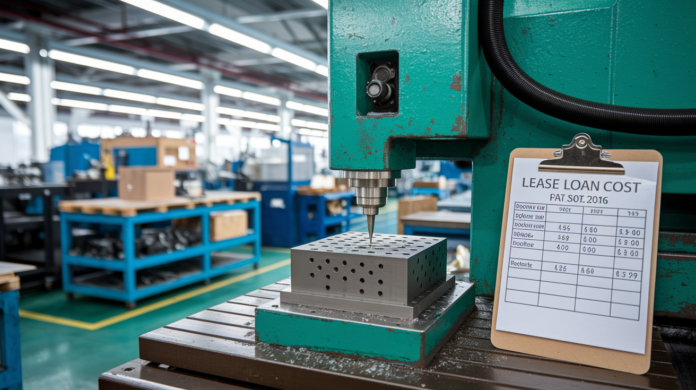

Think buying your factory machines always makes more sense than leasing?
For many manufacturers that’s not true.
Choosing between an equipment lease (renting the machine for a set term) and an equipment loan (borrowing to buy it) comes down to three things: how long the machine will stay useful, how tight your cash is, and how fast you need to upgrade.
Loans build equity and often cost less over the long run when machines last.
Leases protect cash flow and make upgrades easier when technology moves fast.
This guide walks the tradeoffs so you can pick what fits.
Key Differences Between Equipment Leasing and Equipment Loans for Manufacturing Machinery
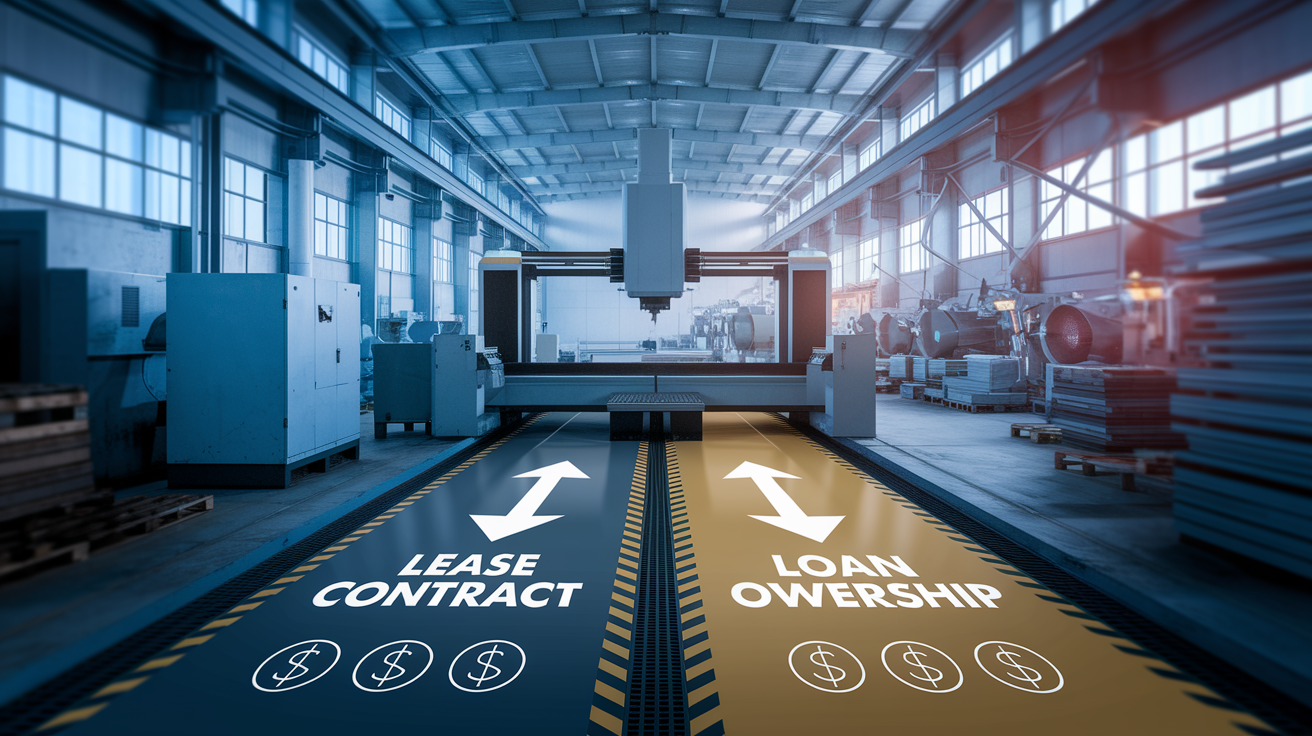
Equipment leasing lets you use machinery for a set period with regular payments. The lessor keeps ownership. An equipment loan gives you the funds to buy the machinery outright, and once you’ve paid off the loan, it’s yours. The big dividers? Ownership, upfront costs, and how repayment works. Leases usually need little to no down payment. Loans typically ask for 10–20% down and create a debt secured by the equipment.
Manufacturing companies think harder about this choice than most other industries. Machinery is a major capital move. Production depends on uptime and performance. And equipment lifecycles vary widely. A CNC mill might run strong for fifteen years, while robotic welders may need replacing in seven because they’re obsolete. Cash-flow timing, tax impact, and flexibility to upgrade all shift based on whether you lease or borrow to buy.
| Option | Ownership | Upfront Costs | Ideal Use Case |
|---|---|---|---|
| Leasing | Lessor retains ownership during term | Low or zero down payment | Frequent upgrades, tight cash flow, technology risk |
| Equipment Loan | Borrower owns equipment at loan payoff | Down payment typically 10–20% | Long productive life, strong cash flow, desire for resale value |
Cost Structure Breakdown for Manufacturing Equipment Leasing vs Loans
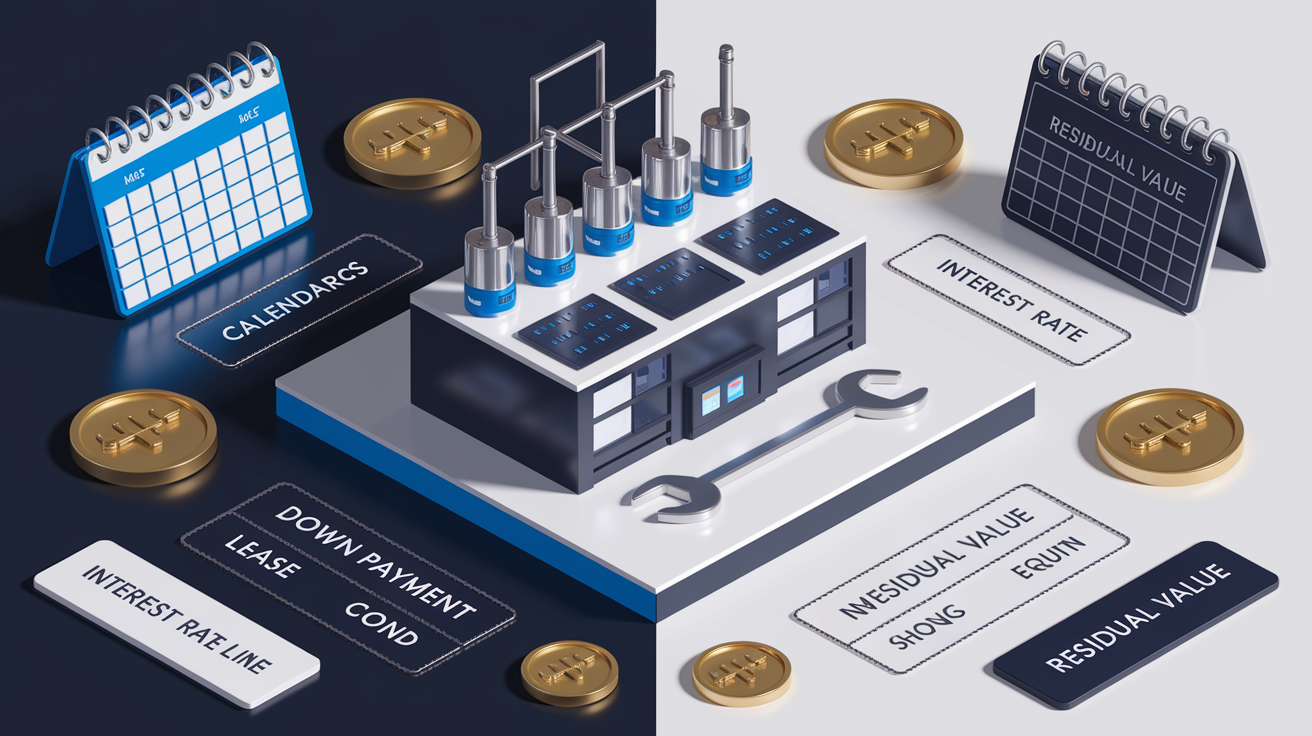
Monthly lease payments are often lower than loan payments for the same equipment because you’re paying for use, not purchase. A lease spreads cost predictably, which makes budgeting easier for production managers who need stable operating expenses. Loans require larger upfront cash and higher monthly payments that cover principal and interest. But the total cost paid over the term is usually less than leasing long-term. You’re not paying a premium for flexibility and lessor profit margin.
Manufacturers with tight cash prefer leasing to preserve working capital for inventory, payroll, and raw materials. Loan financing locks in a purchase price and builds equity in the asset, but you need stronger balance-sheet capacity up front. If cash flow is lumpy or seasonal, fixed lease payments can pinch less than large loan installments during slow months.
Key cost pieces to compare:
- Upfront payment. Leases may only require first and last month. Loans typically ask for 10–20% down plus closing or origination fees.
- Monthly cost. Lease payments include use fee and implicit interest. Loan payments cover principal and interest on the purchase amount.
- Maintenance inclusion. Some leases bundle service agreements. Loan buyers pay all maintenance separately.
- Residual value. At lease end you owe nothing but own nothing. At loan payoff you own an asset that may still carry resale or trade-in value.
Tax Treatment and Depreciation Differences
Loans allow you to depreciate the machinery over its useful life, spreading the tax benefit across multiple years. Section 179 lets manufacturers deduct up to $2.5 million of qualifying equipment costs in the year placed in service. Bonus depreciation can allow 100% first-year write-off for certain property acquired and placed in service after January 19, 2025. Leases classified as “true leases” let you deduct the full lease payment as an operating expense each month. That delivers immediate tax relief without waiting for depreciation schedules.
For manufacturers replacing equipment every few years, immediate expense deductions via leasing can smooth taxable income and reduce quarterly estimated taxes. If you’re buying a $500,000 injection molding machine and taking 100% bonus depreciation, that entire deduction hits in year one. Powerful if you have the income to offset. Wasted if profit is low that year. Depreciation under MACRS or straight-line spreads the benefit, matching deductions to the years the equipment actually generates revenue.
Manufacturing companies running multiple facilities or investing heavily in automation often layer strategies. Lease short-lifecycle robotics to expense payments immediately. Finance long-lifecycle presses or mills to capture Section 179 or bonus depreciation in high-profit years. Tax timing becomes part of capital planning, not an afterthought.
Ownership, Control, and End‑of‑Term Outcomes
Owning equipment gives you the right to modify, sell, trade, or run it into the ground without asking a lessor’s permission. A paid-off hydraulic press sitting on your factory floor is an asset you can liquidate if you pivot production lines or need emergency cash. Loans deliver that ownership once the note is satisfied, so every payment builds equity and the residual value is yours.
Leases end with a decision. Return the equipment, renew the lease, extend the term, or exercise a purchase option if the contract includes one. Fair-market-value leases let you buy the machinery at its current worth, which can be a bargain if resale values held up or a poor deal if technology moved on. If you simply return it, you’ve paid for years of use but walk away with no asset and no further obligation.
Manufacturers timing equipment lifecycles around maintenance intervals or production contracts often prefer lease terms that align with expected use. A packaging line leased for five years and returned just as major overhauls would be due avoids both the repair cost and the disposal hassle.
Balance‑Sheet and Financial Reporting Impact
Equipment loans create a liability and a corresponding asset on your balance sheet. Total debt and total assets both increase. Lenders and investors watch leverage ratios, and a new loan can tighten debt covenants or reduce borrowing capacity for working-capital lines. The equipment itself appears as property, plant, and equipment, depreciating over time and affecting book value.
Under current accounting standards, most equipment leases also land on the balance sheet as a right-of-use asset and a lease liability. Leasing no longer keeps obligations completely off-book. The operational impact is similar to a loan (higher reported liabilities), but the legal and tax treatment still differs. Manufacturers managing bank covenants or preparing for acquisition need to model how either option shifts debt-service-coverage and debt-to-equity calculations before committing.
Operational Flexibility and Upgrade Advantages
Leasing builds upgrade paths directly into the contract. At term end, you can return outdated machinery and lease the next generation without selling, scrapping, or mothballing old equipment. For manufacturers in sectors where automation, control software, or precision standards evolve quickly, scheduled replacements keep production competitive without large one-time capital outlays.
Loans require you to sell or trade in machinery to fund upgrades. That means negotiating resale prices, finding buyers, and timing the transaction so production doesn’t halt. If the equipment holds value and you have strong resale channels, ownership works. If technology moved on and your five-axis mill is now outdated, you’re stuck with a depreciating asset and no buyer.
Upgrade scenarios that favor leasing:
- Robotic assembly arms where software and sensor improvements arrive every three to five years.
- CNC controllers and IoT-enabled machining centers that gain new features via firmware, making older models obsolete faster.
- Packaging or labeling equipment tied to shifting regulatory standards or customer specs that change frequently.
Industry‑Specific Scenarios and Use Cases
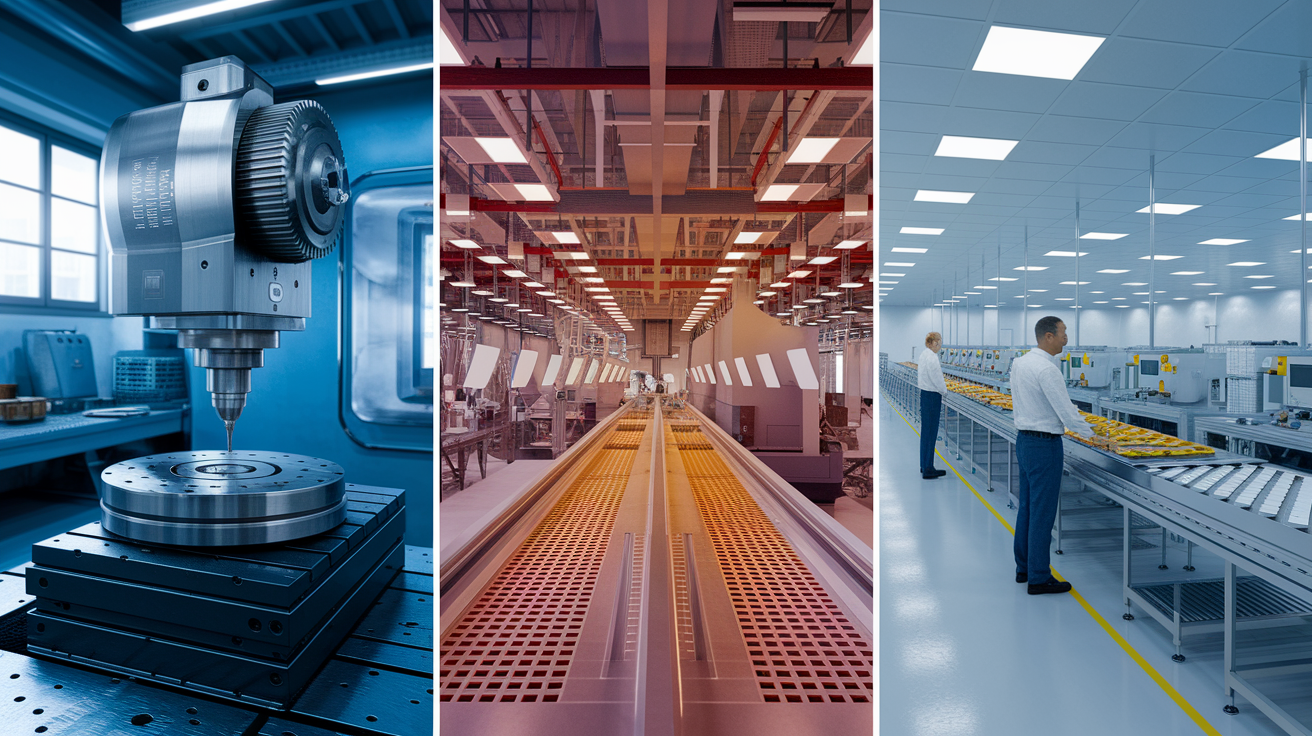
CNC machining shops often finance multi-axis mills and lathes because the equipment runs productively for ten to fifteen years, holds strong resale value, and justifies the upfront cost through high-margin part production. Ownership allows custom tooling integration and machine modifications that lessors wouldn’t permit. Monthly loan payments are higher than lease rates, but machinists capture the residual and avoid buyout negotiations when it’s time to sell or trade.
Plastics manufacturers running injection molding machines face a different calculation. Molds and machines can last decades, but customer contracts and part specifications change, pushing frequent retooling or equipment swaps. Leasing molds and ancillary automation preserves cash for resin inventory and allows faster pivots when a major contract ends or a new polymer process arrives. The core molding presses themselves (high-tonnage, long-lived workhorses) are often financed and owned.
Packaging and food processing operations prioritize uptime, sanitation standards, and the ability to meet evolving safety regulations. Leasing conveyors, fillers, and automated inspection systems with bundled maintenance agreements reduces downtime risk and keeps compliance costs predictable. Equipment loans make sense for core infrastructure like industrial ovens, freezers, or large-scale mixers that will run unchanged for a decade or more and whose resale markets remain active.
Final Words
Match cash flow needs with upgrade timing. This post compared core differences, cost structure, tax and depreciation, ownership outcomes, balance-sheet effects, operational flexibility, and real industry scenarios.
Leasing often fits when you need low upfront cost and easier upgrades, though monthly costs and residuals still matter. Loans work when you want ownership, depreciation write-offs, and predictable payoff schedules.
Run the numbers against your production cycle and cash coming in and going out. For manufacturing machinery, equipment leasing vs equipment loan for manufacturing machinery comes down to timing, taxes, and keeping production running, so pick the fit.
FAQ
Q: What is the 90% rule in leasing?
A: The 90% rule in leasing is that if lease payments’ present value reaches 90% or more of the equipment’s fair market value, the lease is treated like a financed purchase for tax/accounting purposes.
Q: What is the difference between lease and loan for equipment?
A: The difference between a lease and a loan for equipment is that a loan gives you ownership after payoff and often needs a down payment, while a lease lets you use equipment for fixed payments without owning it.
Q: What are the disadvantages of leasing equipment?
A: The disadvantages of leasing equipment are generally higher total cost over time, no ownership equity, end-of-term fees or restrictions, and possible penalties for early termination or excess use.
Q: Are equipment leases tax deductible?
A: Equipment leases are often tax deductible, but it depends on lease type: operating leases usually let you deduct payments, while finance/capital leases typically produce depreciation plus interest deductions.