

Think the SBA 7(a) can fund any big project? Not quite.
The program tops out at $5 million, and that number covers everything—real estate, equipment, working capital, and acquisitions.
But $5 million is a ceiling, not a promise.
Most borrowers get less because lenders size loans to the cash coming in and going out, collateral, credit, and the equity you bring.
This post explains the $5 million cap, which 7(a) variants have lower limits, and what actually matters when you try to qualify for a bigger loan.
Understanding the Maximum SBA 7(a) Loan Amount and Current $5 Million Cap
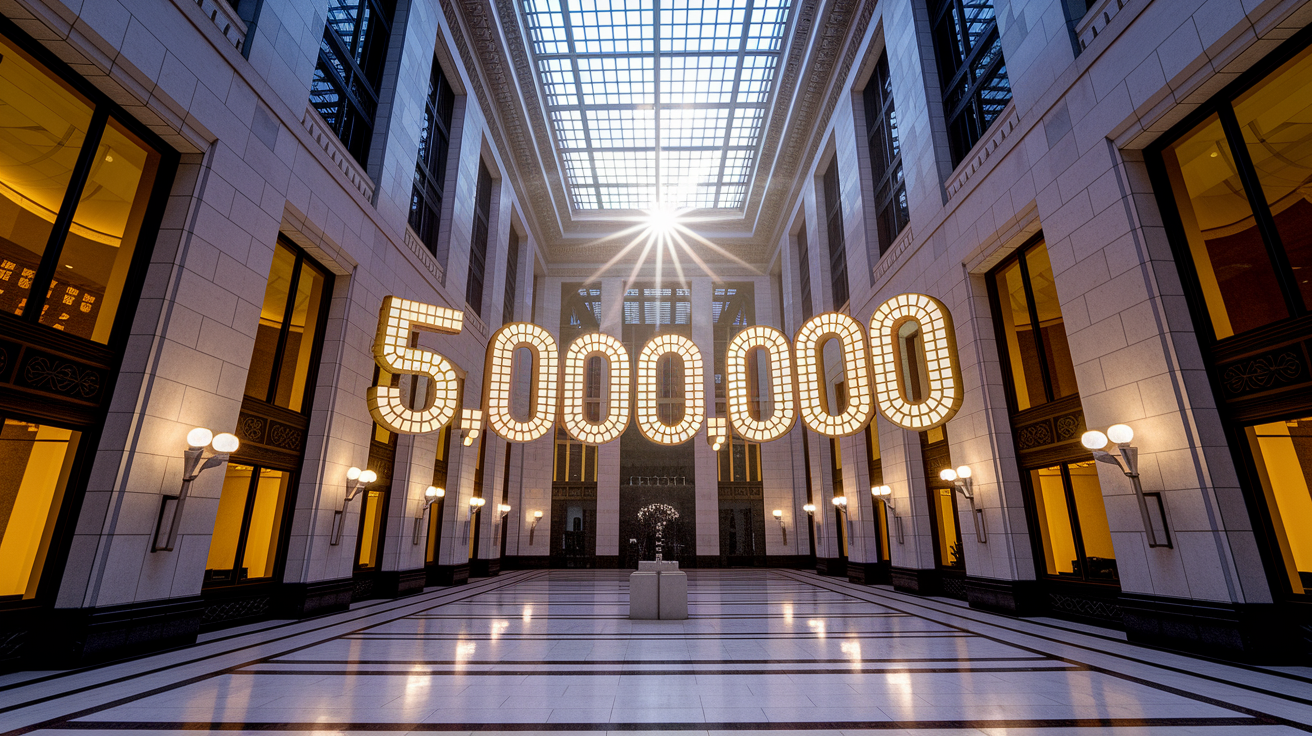
The maximum SBA 7(a) loan amount sits at $5 million. That’s the cap the Small Business Administration set for its flagship loan program, and it covers the entire project cost. Working capital, equipment, real estate, business acquisitions—everything falls under that number. When you borrow the max, the SBA guarantees up to $3.75 million to the lender, and the lender takes on the rest of the risk and funding.
That $5 million ceiling applies to the standard 7(a) loan. But not every 7(a) variant hits the same limit. The Small 7(a) loan and SBA Express both cap at $350,000, which gets you faster approvals but lower borrowing power. Export Express, built for businesses expanding internationally, tops out at $500,000. The Export Working Capital Program shares the standard $5 million cap.
| Program Type | Maximum Amount |
|---|---|
| Standard SBA 7(a) | $5,000,000 |
| Export Working Capital Program | $5,000,000 |
| Export Express | $500,000 |
| Small 7(a) Loan | $350,000 |
| SBA Express | $350,000 |
Just because the program allows $5 million doesn’t mean you’ll get it. Lenders determine your actual approved amount based on cash flow, debt service coverage ratio (how much cash you’ve got versus loan payments), collateral, personal credit, and the equity you’re putting in. A business with steady revenue and strong financials might get close to the cap. Most borrowers land below it because the lender’s underwriting controls how much repayment your business can realistically handle.
How SBA 7(a) Loan Amounts Are Determined Beyond the Maximum Limit
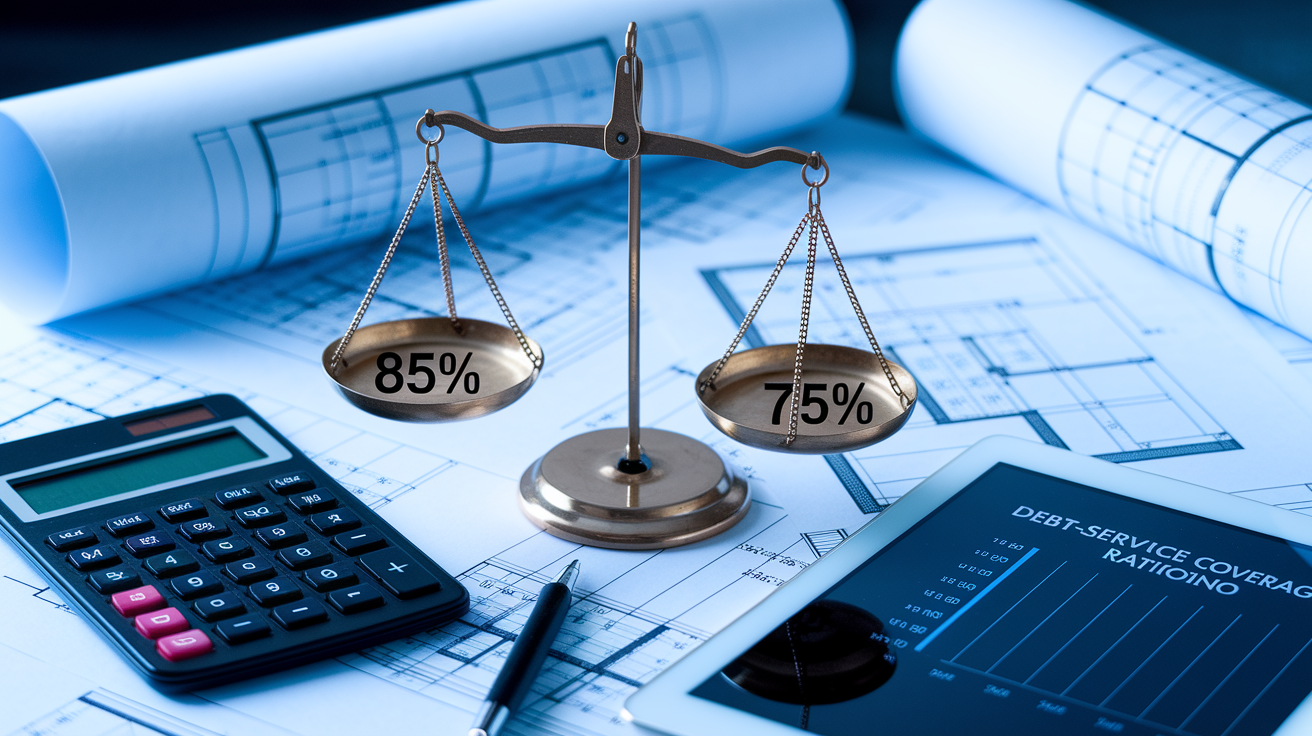
The SBA guarantee shapes how much lenders will approve. On loans up to $150,000, the SBA guarantees 85% of the amount. If you default, the SBA covers most of the loss. For loans above $150,000, the guarantee drops to 75%. On a $5 million loan, the SBA’s maximum exposure is $3.75 million. The lender shoulders the remaining $1.25 million in risk. That structure gives lenders confidence to approve larger amounts, but it doesn’t force them to hit the cap.
Lenders size the loan based on debt service coverage ratio, cash flow, collateral value, and borrower equity. DSCR measures whether your business generates enough cash to cover the loan payment plus a cushion. Typically requires at least 1.25x coverage. If projected cash flow supports only $2 million in total debt payments, the lender won’t approve $5 million, even with the SBA guarantee. Collateral adds security but doesn’t override cash flow limits. Borrower equity (your personal or business funds put into the deal) shows you’ve got skin in the game and can improve approval odds, especially at higher loan amounts.
Most businesses don’t qualify for the full $5 million. Their revenue, profitability, or equity contribution doesn’t support it. A manufacturing company with $8 million in annual revenue and strong margins might reach $3 or $4 million. A service business with $3 million in revenue and thin cash flow might top out around $1 million. Lenders also weigh personal credit, management experience, and industry risk. All of which can push the approved amount below the cap. The $5 million maximum is the ceiling, not the target.
SBA 7(a) Eligibility Requirements That Influence Maximum Loan Approval
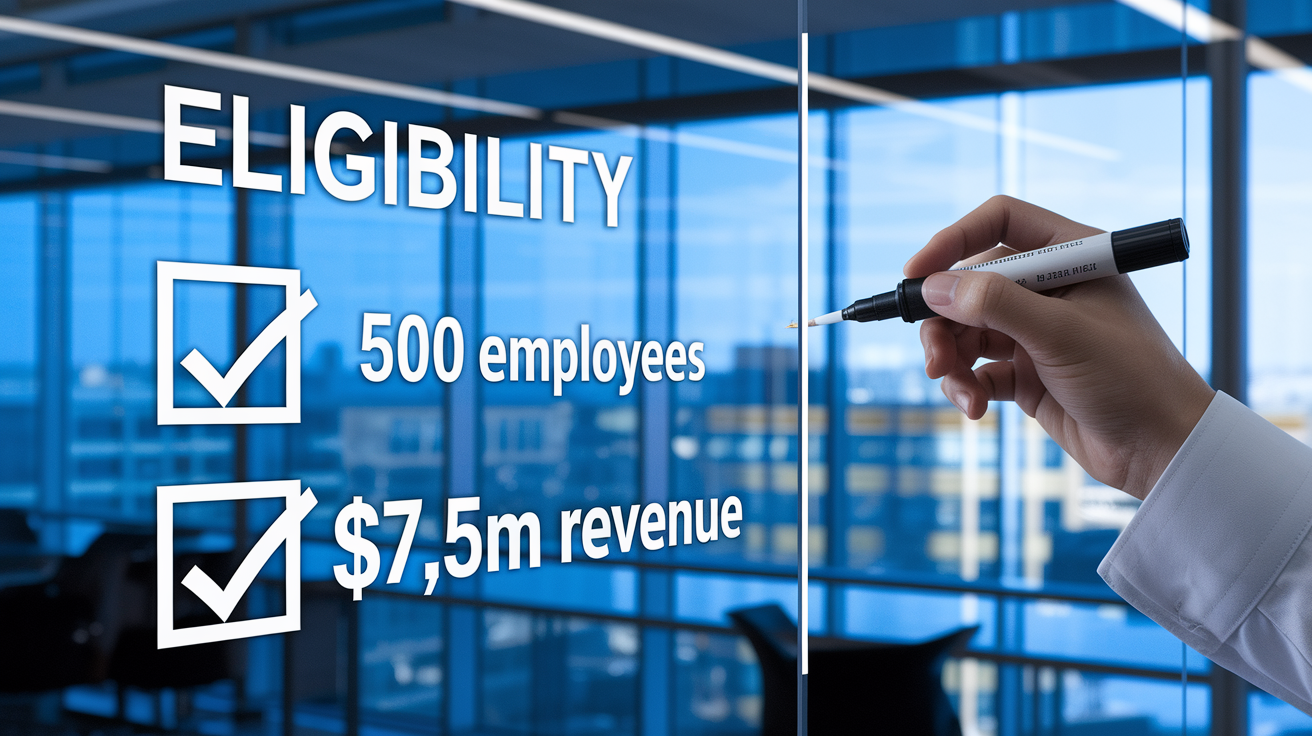
The SBA sets specific size and operational standards that determine whether you’re eligible for any 7(a) loan. Your business must be a for-profit entity, physically based in the United States, and operating within U.S. territories. The program restricts eligibility to businesses with fewer than 500 employees and less than $7.5 million in average annual revenue over the previous three years. If you fall outside those thresholds, you won’t qualify, regardless of how much funding you need.
Meeting those baseline standards doesn’t guarantee approval for the maximum amount. Lenders layer on additional owner and credit requirements that directly affect how much they’ll approve.
Personal credit score matters. Most lenders require a minimum score of 680, and scores below 700 often reduce the loan amount or require stronger compensating factors like collateral or higher equity injection.
Personal guarantee is required. Owners with 20% or more equity must personally guarantee the loan, and lenders evaluate personal assets, liabilities, and financial stability when sizing the request.
Equity injection is mandatory. You must contribute at least 10% to 30% of the total project cost. A $5 million loan requires a minimum down payment around $500,000. Higher risk deals push that percentage up.
Financial history gets scrutinized. The business must provide bank statements, tax returns, and financial statements showing stable or growing revenue. Startups or businesses with erratic cash flow typically receive smaller approvals.
Management experience counts. Lenders prefer borrowers with industry experience and a track record of managing similar operations. First time business buyers or operators in unfamiliar industries face tighter sizing.
Acceptable industries are limited. Businesses involved in gambling, lending, real estate speculation, or passive investment are prohibited from the program and receive zero approval, regardless of financials.
If you fail any of these requirements, the lender either denies the application or reduces the approved amount well below the $5 million cap. Weak credit, thin equity, or an ineligible use of funds can cut a $5 million request down to $2 million or kill the deal entirely. Eligibility gets you in the door. Underwriting controls how much you walk out with.
Allowable Loan Uses Under the SBA 7(a) Maximum Amount

The SBA 7(a) program allows the $5 million to cover a wide range of business needs, as long as the funds support operations, growth, or acquisition. You can use the maximum amount to acquire an existing business, purchase real estate like land or buildings tied to operations, buy equipment or machinery, fund working capital to cover payroll or inventory, or refinance existing debt if the terms improve cash flow or the debt was used for eligible business purposes.
Those uses all fall within the program’s rules and give borrowers flexibility to structure deals around real operational needs. The loan can cover a single purpose or a mix. Say, $3 million for a business acquisition and $2 million for working capital and equipment upgrades. The SBA evaluates the use of proceeds during approval, and lenders verify that funds go toward documented, business related expenses.
Business acquisition covers buying an existing company, including goodwill, inventory, and fixed assets.
Real estate acquisition means purchasing land, buildings, or facilities that house operations. Not for speculation or rental income unrelated to the business.
Equipment and machinery includes buying or upgrading tools, vehicles, production equipment, or technology necessary for operations.
Working capital pays for payroll, inventory, operational expenses, marketing, or covering cash flow gaps.
Debt refinancing involves restructuring existing business debt if it lowers payments, improves terms, or frees up cash flow for growth.
Construction or renovation covers building new facilities or improving existing locations tied directly to business operations.
Franchise fees and startup costs include covering franchise purchases or initial expenses for new for-profit ventures.
Prohibited uses disqualify the loan or force partial denials. You can’t use SBA 7(a) funds for speculative real estate investment, businesses primarily engaged in lending or passive income, gambling operations, or paying off owners or shareholders outside normal compensation. If part of your request includes ineligible uses, the lender either denies the full amount or approves only the portion tied to allowed purposes. Keep the use of proceeds tied to operations, and you stay within program rules.
SBA 7(a) Loan Terms, Rates, and Down Payment Requirements at Higher Loan Amounts

When borrowing amounts close to the $5 million maximum, lenders typically require a down payment between 10% and 30% of the total project cost. If you request $5 million, you’ll need to contribute at least $500,000 in cash or equity, sometimes more if the deal carries higher risk or you lack extensive business experience. The equity injection comes from personal savings, business retained earnings, or seller financing in acquisition deals. Lenders view larger down payments as a sign you’re committed to the success of the business. In competitive or uncertain markets, they may push the requirement closer to 20% or 25%.
Repayment terms depend on how you use the funds. Working capital loans and equipment purchases typically carry terms up to 10 years. Real estate loans, which include land, buildings, or major construction, extend up to 25 years. Longer terms lower the monthly payment and improve debt service coverage, making it easier to qualify for higher amounts. If you’re borrowing $5 million for a mix of purposes (say, $3 million for real estate and $2 million for working capital), the lender may split the loan into two notes with different terms, or blend the repayment schedule based on the weighted use of proceeds.
Interest rates on SBA 7(a) loans come in both fixed and variable options. Fixed rates lock in a predictable payment over the life of the loan, which works well for long term real estate financing. Variable rates start lower but adjust periodically based on the prime rate, adding risk if rates climb. All SBA 7(a) loans are fully amortizing. You pay down principal and interest each month with no balloon payment at the end. Lenders also charge a guarantee fee to cover the SBA’s backing, and on a $5 million loan, that fee runs around 3.5% to 3.75% of the guaranteed portion. The fee is often rolled into the loan balance, so you don’t pay it upfront, but it adds to the total cost.
Timeline and Documentation Requirements for Large SBA 7(a) Loan Requests

Approval timelines for SBA 7(a) loans depend on the lender’s processing designation and how complete your documentation is. Standard processing, where the SBA reviews and approves the loan application directly, typically takes 7 to 10 business days after the lender submits the package. If you’re working with a lender in the Certified Lenders Program, which gives the lender authority to approve loans without full SBA review, the timeline drops to about 3 business days. Speed matters when you’re buying a business or closing on real estate, so choosing a Preferred or Certified Lender can tighten the window between application and funding.
Documentation requirements for higher loan amounts are detailed and leave little room for gaps. Lenders and the SBA need a clear picture of your business, your financials, and how you’ll use and repay the funds. Missing or incomplete documents slow the process and can reduce the approved amount if the lender can’t verify cash flow or collateral.
Bank statements cover personal and business accounts for the last 3 to 6 months, showing cash flow, balances, and transaction patterns.
Tax returns include personal and business returns for the previous 3 years, proving income, profitability, and filing compliance.
Financial statements consist of balance sheets, profit and loss statements, and cash flow statements, ideally prepared or reviewed by an accountant.
Business plan outlines your operations, market, competition, and how the loan fits your growth or acquisition strategy.
Cash flow projections provide month by month projections for at least 12 months showing how revenue covers expenses and debt service after the loan closes.
Complete, organized documentation improves your chances of securing the maximum amount. Lenders use the documents to calculate debt service coverage, verify collateral, and assess your ability to manage a large loan. If your financials show strong, consistent cash flow and your projections are realistic, the lender is more likely to approve an amount near the $5 million cap. Incomplete or inconsistent records raise red flags and often result in lower approved amounts or requests for additional equity injection.
How Alternative SBA Loan Programs Compare to the 7(a) Maximum Loan Limit
The SBA 7(a) program isn’t the only option for business funding. Depending on your needs, other SBA programs may fit better or offer higher total financing. The SBA Microloan program caps at $25,000 and targets very small businesses or startups needing modest amounts for working capital, inventory, or equipment. It’s faster and requires less documentation than a 7(a) loan, but it can’t be used for real estate or refinancing, and the low cap makes it impractical for larger projects.
The SBA 504 loan works differently. It’s structured as a three part deal: at least 50% from a conventional bank, up to 40% from a Certified Development Company backed by the SBA, and about 10% from the borrower as a down payment. The CDC portion caps at $5 million in most cases, or $5.5 million for manufacturers or businesses implementing energy efficiency improvements. Because the bank portion isn’t capped, total project financing under the 504 program can reach $20 million or more, well above the 7(a) maximum. The 504 loan is designed for long term fixed assets like real estate or heavy equipment, and it carries a fixed, below market interest rate on the CDC portion for up to 25 years.
| Program | Maximum Amount | Typical Use |
|---|---|---|
| SBA 7(a) | $5,000,000 | Working capital, acquisitions, equipment, real estate |
| SBA 504 | $5,000,000 CDC portion (up to $5,500,000 for manufacturers or energy projects); total project financing can exceed $20,000,000 | Real estate, fixed assets, long term equipment |
| SBA Microloan | $25,000 | Small equipment, inventory, working capital for startups |
| SBA Express | $350,000 | Fast approvals for working capital or small equipment buys |
| Export Express | $500,000 | International trade, export development |
If you’re buying a business or need flexible funding for multiple purposes, the SBA 7(a) loan is the best fit because it covers acquisitions, working capital, and equipment under one program. If you’re purchasing commercial real estate or making a large fixed asset investment and you can structure a deal with a bank partner, the SBA 504 may deliver more total capital at a lower long term rate. For smaller, faster needs under $350,000, SBA Express speeds up approval but sacrifices borrowing capacity. Choose based on use, timeline, and whether you need the flexibility of the 7(a) program or the fixed rate, long term structure of the 504.
Final Words
You now know the SBA 7(a) tops out at $5 million, while Express, Small 7(a), Export Express and microloans have much lower caps. That $5 million is the statutory ceiling; lenders still size loans by business math.
In real life lenders look at cash coming in and going out, DSCR (ability to cover payments), collateral, and the equity or down payment you bring. Complete docs and clear projections speed approval.
Share monthly revenue, expenses, and timing, and your lender will say whether the maximum sba 7a loan amount is realistic or if a smaller, better-fit loan is smarter. You’ve got options.
FAQ
Q: What is the maximum SBA 7a loan amount?
A: The maximum SBA 7(a) loan amount is $5 million. The SBA’s statutory cap is $5M, and the agency’s guarantee covers up to $3.75M of that loan.
Q: Can I get a business loan for $1,000,000?
A: You can get a $1,000,000 business loan; SBA 7(a) supports that size. Lenders will size the loan based on cash flow, collateral, and underwriting, so documentation matters.
Q: What is the 20% rule for SBA?
A: The 20% rule for SBA generally means a roughly 20% owner equity injection is common, especially for business acquisitions. Actual required down payment often ranges 10–30% and depends on lender and deal.
Q: Can I get an SBA loan for 100k?
A: You can get an SBA loan for $100,000. That amount fits within 7(a) and SBA Express limits; loans up to $150,000 often carry an 85% SBA guarantee, which helps lender approval.