

Think SBA 7(a) loans are the cheapest path to business cash? Not always.
As of mid-2025, SBA 7(a) loan rates typically range from about 11.75% to 15.00%, usually set as Prime (around 8.50%) plus a lender spread.
This post gives the straight facts: current percentages, why your final rate moves (loan size, term, credit, collateral), and when fixed versus variable pricing makes sense.
You’ll finish knowing what to expect for monthly payments and what steps actually lower your rate.
Current SBA 7(a) Loan Rates Overview
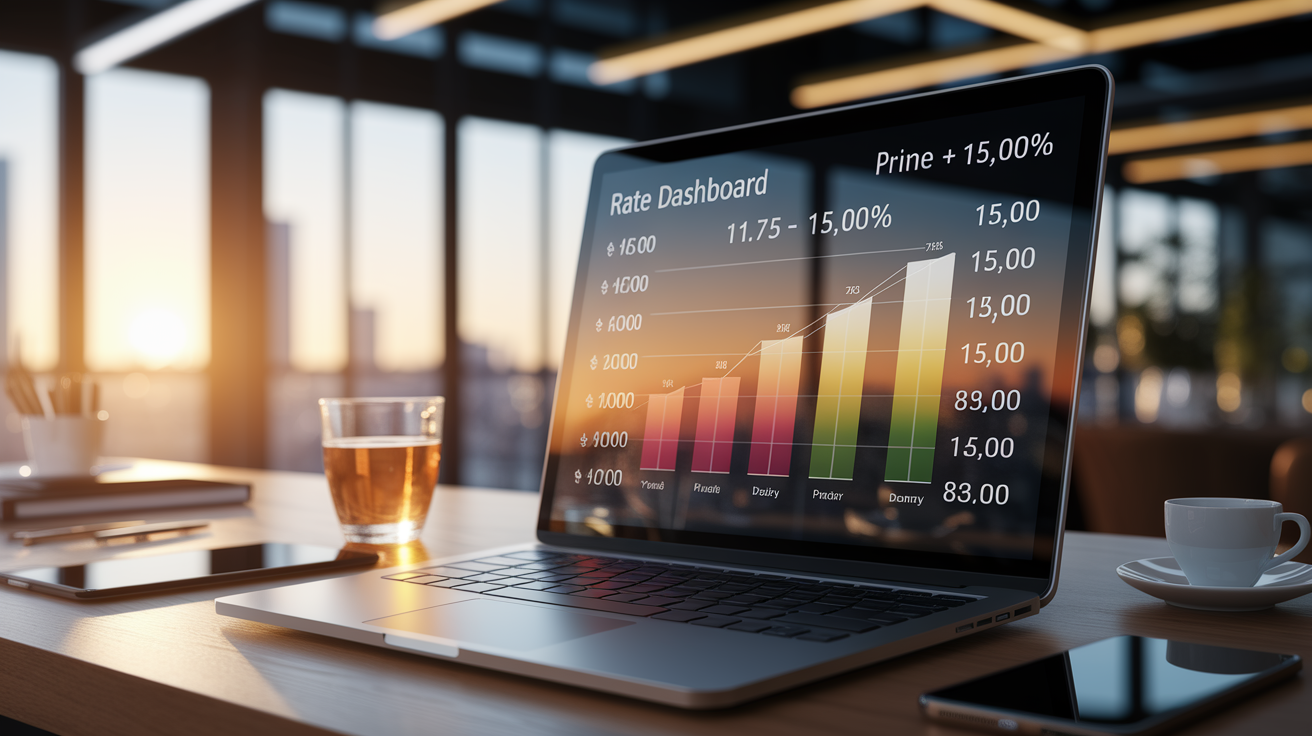
As of mid-2025, you’re looking at SBA 7(a) rates between 11.75% and 15.00% for most borrowers. Variable rates are the norm. They’re built from the Prime Rate (sitting at 8.50% right now) plus whatever spread your lender tacks on, usually 2.25% to 6.50%. Fixed rates exist, but they’ll cost you an extra 0.25 to 1.50 percentage points compared to variable. Smaller loans under $50,000 tend to hit that 15.00% ceiling, while bigger loans over $250,000 can dip as low as 11.25%.
What you actually pay depends on loan size and how long you’re paying it back. Shorter terms (seven years or less) get lower spreads than loans stretched over 10 or 25 years. Your credit score, business financials, and collateral all move the needle too.
Here’s what you need to know up front:
The SBA sets caps, but your lender decides where you land within those caps based on your application. Smaller loans cost more because they’re expensive to process per dollar. Longer terms mean higher spreads since lenders take on more risk. Most 7(a) loans are variable, so when Prime moves, your rate moves.
How SBA 7(a) Loan Rates Are Structured

SBA 7(a) rates follow a simple formula: base rate plus lender spread. The base is almost always Prime, which banks use as their lending benchmark. The spread is what the lender adds to cover risk, servicing costs, and profit. The SBA doesn’t set your rate directly. It sets maximum spreads that lenders can’t go above.
Those caps shift depending on loan size and term. Loans under $50,000 let lenders charge up to Prime + 6.50%. Loans over $250,000 are capped at Prime + 3.25%. This keeps smaller borrowers in the game even though small loans cost more to service. The SBA updates these caps now and then, but lenders usually stay well under them when competing for strong borrowers.
| Loan Amount | Term Length | Max Allowed Spread (Prime +) |
|---|---|---|
| ≤ $50,000 | ≤ 7 years | 6.50% |
| $50,001–$250,000 | ≤ 7 years | 4.50% |
| > $250,000 | ≤ 7 years | 3.25% |
| Any amount | > 7 years | Add ~0.25–0.75% to shorter-term cap |
Factors That Influence Your Final 7(a) Loan Rate
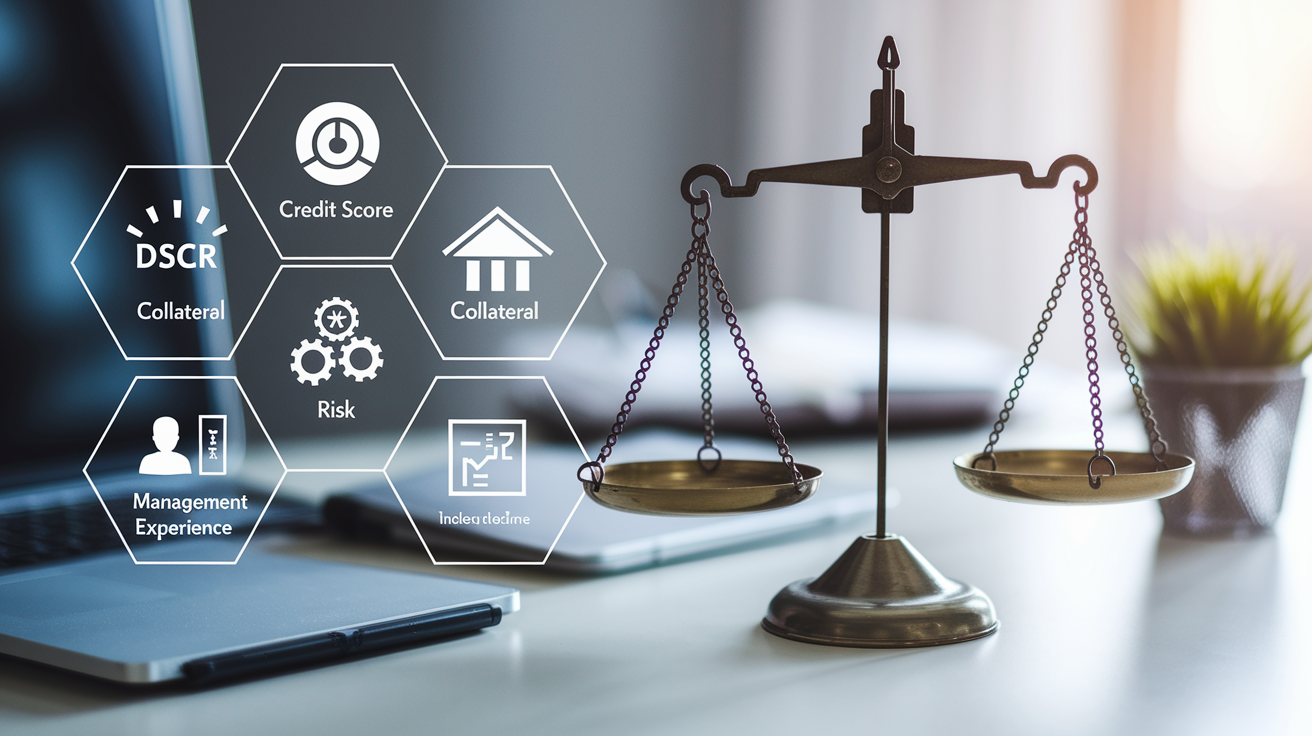
Lenders look at your entire financial picture when deciding where to set the spread. A strong application can land you several percentage points below the max. Weaker credit or thin financials push you toward the top.
What moves your rate:
Personal and business credit scores. Anything above 680 generally opens the door to lower spreads.
Time in business and revenue stability. Lenders like consistent cash flow and at least two years of operating history.
Debt service coverage ratio (DSCR). This measures your ability to cover loan payments from operating income. A DSCR of 1.25 or higher is what lenders prefer.
Collateral quality. Strong collateral like real estate or equipment lowers lender risk, which can lower your spread.
Industry risk. Some sectors (construction, restaurants) carry higher perceived risk, which means higher spreads.
Your management experience matters too. So does how clearly your business plan shows you can pay the loan back. Borrowing for a proven expansion beats borrowing for a brand-new concept. The gap between a top-tier spread and bottom-tier can be three full percentage points, so these factors directly affect what you’re paying every month.
SBA 7(a) Variable vs. Fixed Rates

Variable rates dominate the 7(a) space. About 80% of all 7(a) loans use variable pricing tied to Prime. Your rate changes whenever your lender updates its Prime-based pricing, which usually happens monthly or quarterly. Prime rises, your payment goes up. Prime falls, your payment drops. Variable rates offer lower starting costs and flexibility, but they bring interest rate risk over long terms.
Fixed-rate 7(a) loans lock your rate for the full term. You’re protected from Prime increases. Lenders usually charge an extra 0.25 to 1.50 percentage points for fixed pricing because they’re absorbing the risk that rates might climb. Fixed rates make sense when you need payment certainty for budgeting or when you think Prime will jump significantly during your loan term. They’re more common on longer terms (10 years or more) where rate swings matter most.
Typical Rate Ranges by Loan Size and Term Length
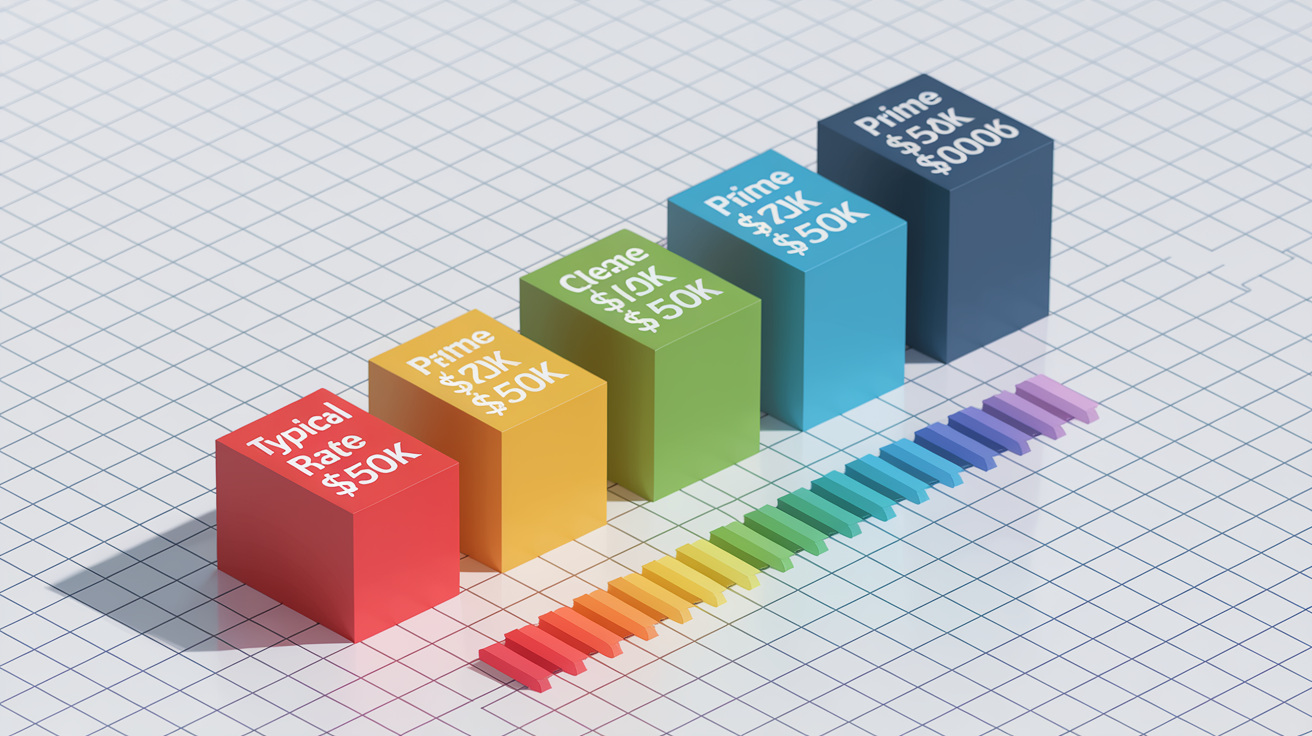
Your loan size and repayment term determine which SBA cap applies and what lenders typically offer within that cap. Larger loans with shorter terms almost always get the best pricing. They’re cheaper to service and carry less interest rate risk for the lender.
| Loan Size | Term Length | Typical Rate Range (Prime = 8.50%) |
|---|---|---|
| $25,000–$50,000 | 5–7 years | 13.00%–15.00% |
| $50,001–$150,000 | 7–10 years | 12.00%–13.50% |
| $150,001–$250,000 | 10 years | 11.75%–13.00% |
| $250,001–$1,000,000 | 10 years | 11.25%–12.50% |
| > $1,000,000 | 25 years (real estate) | 11.25%–12.00% |
These ranges assume solid credit (680+), two or more years in business, and acceptable collateral. Weaker credit or higher-risk industries can push you toward the top of each range or beyond. Working capital loans under $100,000 often land near the higher end because lenders see less collateral backing the loan.
How Rising or Falling Prime Rate Affects SBA 7(a) Rates
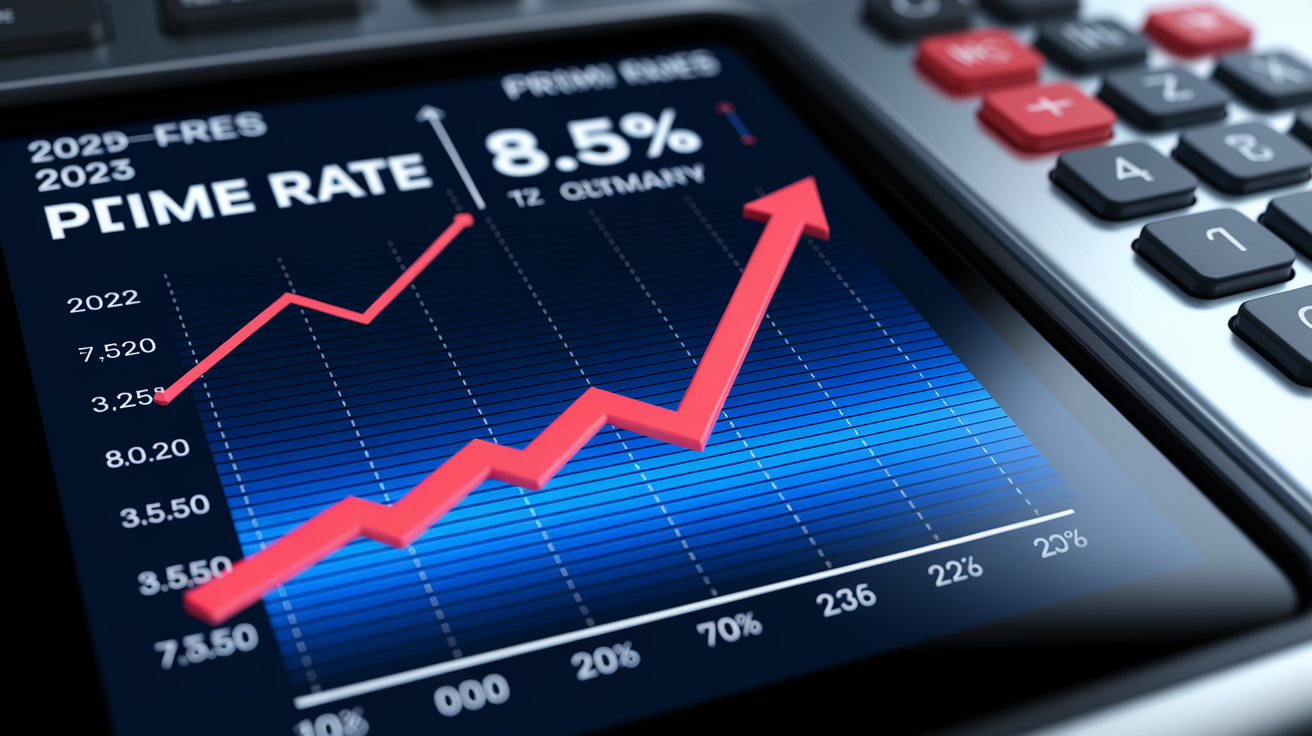
Prime is the heartbeat of SBA 7(a) variable-rate loans. When the Federal Reserve raises or lowers the federal funds rate, banks adjust Prime within days. If you’ve got a variable-rate 7(a) loan, your interest rate moves in lockstep, usually within the same month or the following billing cycle.
Between early 2022 and mid-2023, Prime climbed from around 3.25% to 8.50%. That’s a jump of more than five percentage points. Borrowers with variable-rate loans watched their monthly payments rise sharply. A $250,000 loan at Prime + 3.00% went from roughly 6.25% (monthly payment around $1,520 for a 10-year term) to 11.50% (monthly payment around $2,740). That’s an increase of over $1,200 per month.
Prime has held relatively steady since mid-2023. The Fed cut rates slightly in late 2025. If Prime drops another percentage point, a borrower paying 11.50% would see their rate fall to 10.50%, reducing the monthly payment by roughly $130 on that same $250,000 loan. Variable rates work both ways. Rises hurt, drops help. Watching Fed policy and Prime trends helps you anticipate payment changes and decide whether to go fixed or variable.
Comparing SBA 7(a) Rates to Other Business Loan Options
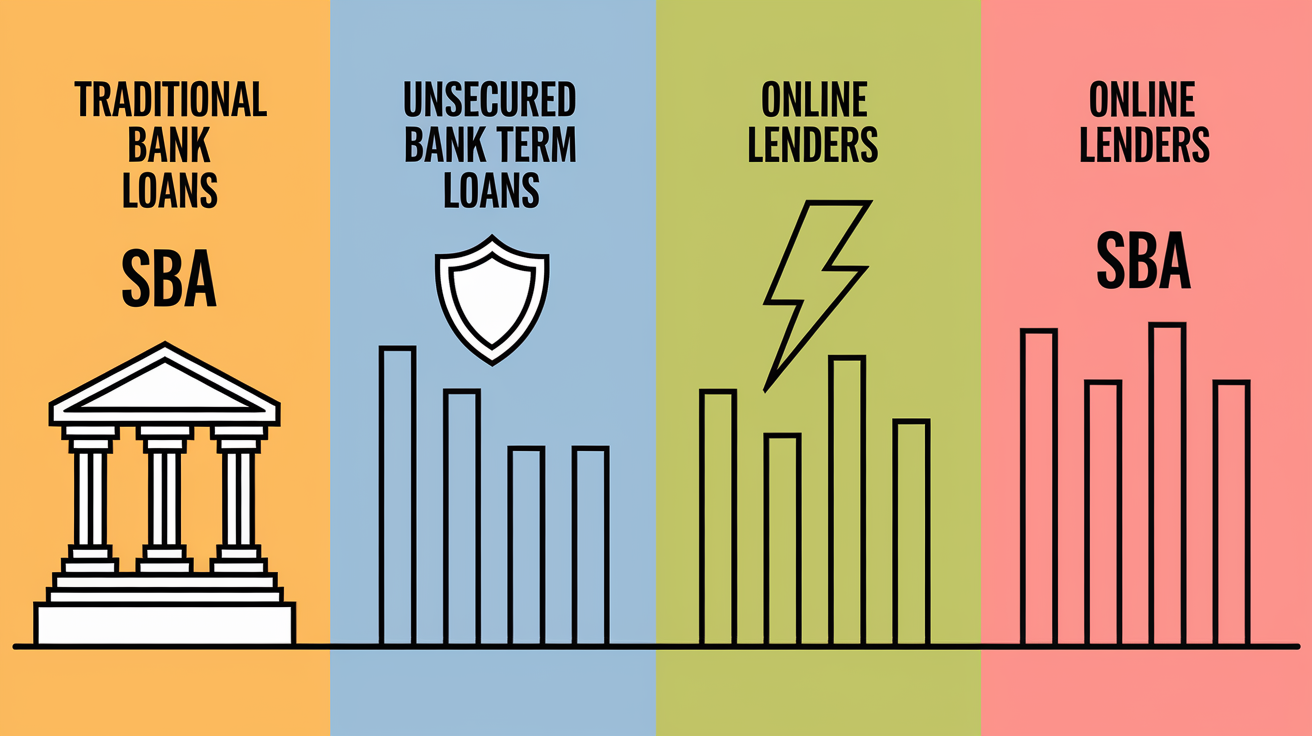
SBA 7(a) rates sit in the middle of the business lending market. They’re lower than most unsecured products but not always the absolute cheapest option. The SBA guarantee reduces lender risk, which translates to lower rates than you’d typically get from an unsecured bank loan or online lender. For borrowers who don’t qualify for conventional bank financing, the 7(a) program often delivers the best rate available.
Here’s the comparison:
Traditional bank loans (secured, strong credit): 7.00% to 10.00%. These can beat SBA rates if you qualify, but approval is harder and collateral requirements are stricter.
Unsecured bank term loans: 10.00% to 16.00%. Usually higher than SBA because there’s no guarantee cushion for the lender.
Online lenders (short-term loans, revenue-based): 15.00% to 40.00%+. Much faster but significantly more expensive. Factor rates often translate to APRs well above SBA levels.
SBA 504 loans (real estate/equipment): 5.00% to 7.00%. Lower rates than 7(a) but limited to specific asset purchases and require at least 10% down.
If you can wait several weeks for approval and meet SBA eligibility, the 7(a) rate will almost always beat unsecured or online options by several percentage points. If your credit and collateral are strong enough for a traditional bank loan, compare both. Sometimes the bank wins on rate, but the SBA wins on flexibility and lower down payment.
How to Qualify for the Lowest Possible SBA 7(a) Rate
Lenders have room to move within the SBA caps. The borrowers who get the best rates are the ones who reduce perceived risk. You can’t control Prime, but you can control how your application looks. Stronger financials and a tighter credit profile push your spread toward the bottom of the allowable range.
Here’s how to position yourself for the lowest rate:
Clean up your credit. Pull personal and business credit reports, dispute errors, and pay down revolving balances below 30% utilization. Aim for a personal score of 700 or higher.
Strengthen your debt service coverage ratio. Show that operating income comfortably exceeds debt payments. Lenders look for DSCR of 1.25 or better, meaning you earn $1.25 for every $1.00 of debt service.
Offer strong collateral. Real estate, equipment, and inventory all reduce lender risk. More collateral coverage often translates to a lower spread.
Choose a shorter loan term if cash flow allows. Loans under seven years carry lower spreads than 10 or 25-year terms. If you can handle higher monthly payments, the rate savings add up.
Work with an SBA Preferred Lender. These lenders have delegated authority from the SBA and often offer slightly better pricing because their internal approval process is faster and more efficient.
Preparation matters. Borrowers who show up with clean financials, a clear use of funds, and realistic projections consistently receive offers at the lower end of the rate range. If your first quote feels high, ask what you can improve (credit, collateral, or term length) and reapply after strengthening those areas.
Final Words
We laid out current rates, then showed how SBA 7(a) pricing ties to Prime plus a lender spread. We covered what changes your rate, loan size, term, credit, collateral, and the tradeoffs between fixed and variable.
You also got tables comparing typical ranges, the Prime-rate effect, and how 7(a) stacks up against other options. Finally, we gave five concrete steps to lower your spread and improve approval odds.
Use the checklist, prepare your docs, and you’ll be ready to find sba 7a loan rates that match your cash needs.
FAQ
Q: What do you need to get a $500,000 business loan?
A: To get a $500,000 business loan you typically need solid cash coming in and going out, several years in business, good personal and business credit, tax returns, financial statements, collateral or a personal guarantee, and a clear use plan.
Q: Is an SBA 7A loan a good idea?
A: An SBA 7(a) loan can be a good idea when you need lower rates and longer terms, can handle paperwork and collateral, and want predictable payments. But approval is slower and criteria are stricter.
Q: Do all SBA loans require 10% down?
A: Not all SBA loans require 10% down. SBA 504 commonly needs about a 10% borrower injection. 7(a) has no fixed down payment, but lenders may require equity depending on use, credit, and collateral.
Q: What is the monthly payment on a $70,000 loan?
A: The monthly payment on a $70,000 loan depends on the interest rate and term. For example, at 7% APR over 5 years, the payment is about $1,385 per month.