

What if your crew is ready for a pour but the owner won’t pay for 60 days?
A construction line of credit can plug that gap fast, giving cash to buy or rent equipment and to run payroll until invoices clear.
It’s a revolving fund. You borrow up to a limit, repay when paid, and only pay interest on what you use.
This intro will show when a line fits, the common types, and the real costs and tradeoffs so you pick the right solution for your cash flow.
How Construction Lines of Credit Bridge Equipment and Payroll Gaps

A construction line of credit is a revolving financing tool that lets you borrow up to a set limit, repay it, then draw again whenever you need to. You’re not getting a lump sum like you would with a traditional loan. Instead, you tap funds only when you actually need them, whether that’s for equipment purchases, covering payroll, or getting a project off the ground. And you only pay interest on what you’ve drawn.
This structure works perfectly for construction cash flow. Revenue doesn’t show up in neat, predictable chunks. It arrives in waves tied to billing milestones, retainage schedules, and client payment terms that can stretch 30, 60, sometimes 90 days past when you’ve already paid your own expenses.
Subcontractors and general contractors face the same recurring problem: you’re paying for labor, materials, and equipment today, but client payments don’t land for weeks or months. Retainage makes it worse. Often 5% to 10% gets held back until project completion, which means you’re short on operating cash even when projects are profitable. When you’ve got a crew of 15 and payroll hits every two weeks, or you need to drop a deposit on a concrete pump before next week’s pour, waiting 60 days for a draw just doesn’t work. A construction LOC fills that gap. You can access liquidity immediately and repay as receivables come in.
Most construction lines carry interest-only payment structures with no prepayment penalties. You can borrow for two weeks, repay when the owner’s check clears, and avoid paying interest for the full billing cycle. Some construction lenders offer up to $350,000 in capacity with approval timelines as short as 24 hours, which makes them practical when you’re dealing with urgent needs like equipment breakdowns or unexpected labor spikes.
Contractors use lines of credit for equipment and payroll in a few common ways:
- Bridging equipment deposits and purchases until long-term financing or lease arrangements get finalized
- Covering equipment rentals, repairs, and fleet maintenance during peak seasons when cash is tight
- Funding mobilization costs like moving crews, setting up site trailers, and staging materials before the first progress payment
- Smoothing biweekly or weekly payroll when project invoices are net-30 or net-60 and retainage delays final payment
- Avoiding layoffs or crew disruption during slow-pay periods by keeping wages, benefits, and subcontractor payments uninterrupted
Types of Lines of Credit Available to Construction Contractors

Not all lines of credit work the same way. Choosing the right structure depends on your collateral position, credit profile, and how quickly you need access. Contractors typically run into three main types: secured lines backed by assets, unsecured lines that rely on creditworthiness alone, and construction-specific revolving facilities designed around project cycles and contractor cash flow patterns. Each one has distinct tradeoffs in approval speed, credit limits, interest rates, and lender requirements.
Figuring out which type fits your business starts with evaluating what you can offer as collateral, how much capital you need, and whether you’re willing to trade speed for cost. A secured LOC might offer the lowest rate, but you’re pledging equipment, real estate, or receivables. An unsecured facility can be faster and simpler but comes with higher costs and lower limits. Construction-specific LOCs split the difference by tailoring terms to contractor workflows, often with faster underwriting and no ongoing maintenance fees.
Secured Lines of Credit
Secured LOCs require you to pledge business assets as collateral, which reduces lender risk and typically unlocks higher credit limits and lower interest rates. Common collateral types include heavy equipment (excavators, loaders, trucks), accounts receivable, real estate, or a combination of assets under a blanket lien. Banks and credit unions tend to favor secured structures, especially for credit lines above $100,000, because they have a clear path to recovery if repayment falls apart.
The upside? Access to substantial capital, often $250,000 to $2,000,000 or more for mid-market contractors, at rates closer to prime plus a modest spread. The downside is that lenders place liens on your assets. Missed payments can trigger collateral seizure. If your excavator or job-site truck is securing the line, defaulting means losing critical equipment. Before signing, review what happens if you want to sell collateral, refinance, or need to upgrade gear while the lien’s in place.
Unsecured Lines of Credit
Unsecured LOCs require no collateral but lean heavily on your credit score, time in business, and revenue history. Because the lender has no asset to reclaim, approval standards are stricter and pricing is higher, often 12% to 30% APR depending on your profile. Credit limits tend to run smaller, typically $25,000 to $150,000, which suits payroll bridges or short-term material purchases more than large equipment buys.
The main advantage is speed and simplicity. Without appraisals, UCC filings, or collateral schedules, approval can happen in 24 hours to a few business days with alternative lenders and online platforms. You’re also not putting critical assets at risk, which matters if your equipment’s already leveraged or you want to keep it free for future financing. Unsecured lines work best when you need quick access for short-duration needs and can repay quickly to minimize high interest costs.
Construction-Specific Revolving LOCs
Construction-specific LOCs are designed by lenders who understand contractor cash flow cycles, retainage, and billing delays. These facilities often offer up to $350,000 in capacity with approvals in as little as 24 hours, using underwriting models that factor in backlog, bonding capacity, and project schedules rather than just tax returns and credit scores. Many construction platforms charge no fees to keep the line open when you’re not using it, so you only pay interest when you draw funds.
These products typically sit between secured and unsecured in terms of cost and requirements. Some require minimal collateral or accept receivables and equipment without blanket liens, preserving bonding capacity and keeping other assets free. Because they’re tailored to contractors, draw mechanics and repayment schedules align with progress billing. Draw against invoice submittal, repay when the owner pays. This fit makes construction-specific LOCs practical for both equipment needs and payroll smoothing without forcing you into rigid amortization or high unsecured rates.
Qualification Criteria and Underwriting Factors for Contractor LOCs

Lenders evaluate construction LOCs through the lens of cash flow stability, repayment capacity, and business maturity. Time in business is a threshold issue. Contractors with fewer than two years of operating history are generally classified as high-risk, which narrows lender options and often requires collateral or a strong personal guarantee. Revenue matters too. Most banks expect annual revenue of at least $200,000 to $500,000 to justify credit limits above $100,000, while alternative lenders may accept $100,000+ in revenue but charge higher rates to offset perceived risk.
Beyond top-line revenue, lenders scrutinize financial ratios that signal whether your business can service debt without strain. Profitability is measured through return on assets (ROA), which compares net income to total assets. Leverage gets assessed via debt-to-equity ratios, comparing total liabilities plus fixed payments to shareholder equity. And debt service coverage (DSCR) shows whether operating income can comfortably cover principal and interest. Lenders typically look for a DSCR above 1.1 to 1.25, meaning you generate at least 10% to 25% more cash than required to meet debt obligations.
Guarantees and documentation round out the approval process. Most lenders require either a personal guarantee, where you assume personal liability on default, or a corporate guarantee if your business structure and credit profile are strong enough. Expect to submit two to three years of business and personal tax returns, six to twelve months of bank statements, current profit-and-loss and balance-sheet reports, accounts-receivable aging, signed contracts or backlog schedules, equipment lists with values, certificates of insurance, business licenses, and a schedule of all outstanding debt. The more complete and organized your documentation, the faster underwriting moves and the better terms you’ll negotiate.
| Ratio | Formula | What Lenders Look For |
|---|---|---|
| Return on Assets (ROA) | Net Income ÷ Average Total Assets | Positive ROA, ideally above 5%, showing profitable asset use |
| Debt-to-Equity | (Total Liabilities + Fixed Payments) ÷ Shareholder Equity | Ratio below 2:1 or 3:1, indicating manageable leverage |
| Debt Service Coverage Ratio (DSCR) | EBITDA ÷ (Interest + Principal Payments) | DSCR above 1.1–1.25, showing cash flow exceeds debt obligations |
| Current Ratio | Current Assets ÷ Current Liabilities | Ratio above 1.0, ideally 1.2–1.5, indicating liquidity to meet short-term obligations |
Using a Line of Credit for Equipment Purchases, Rentals, and Repairs
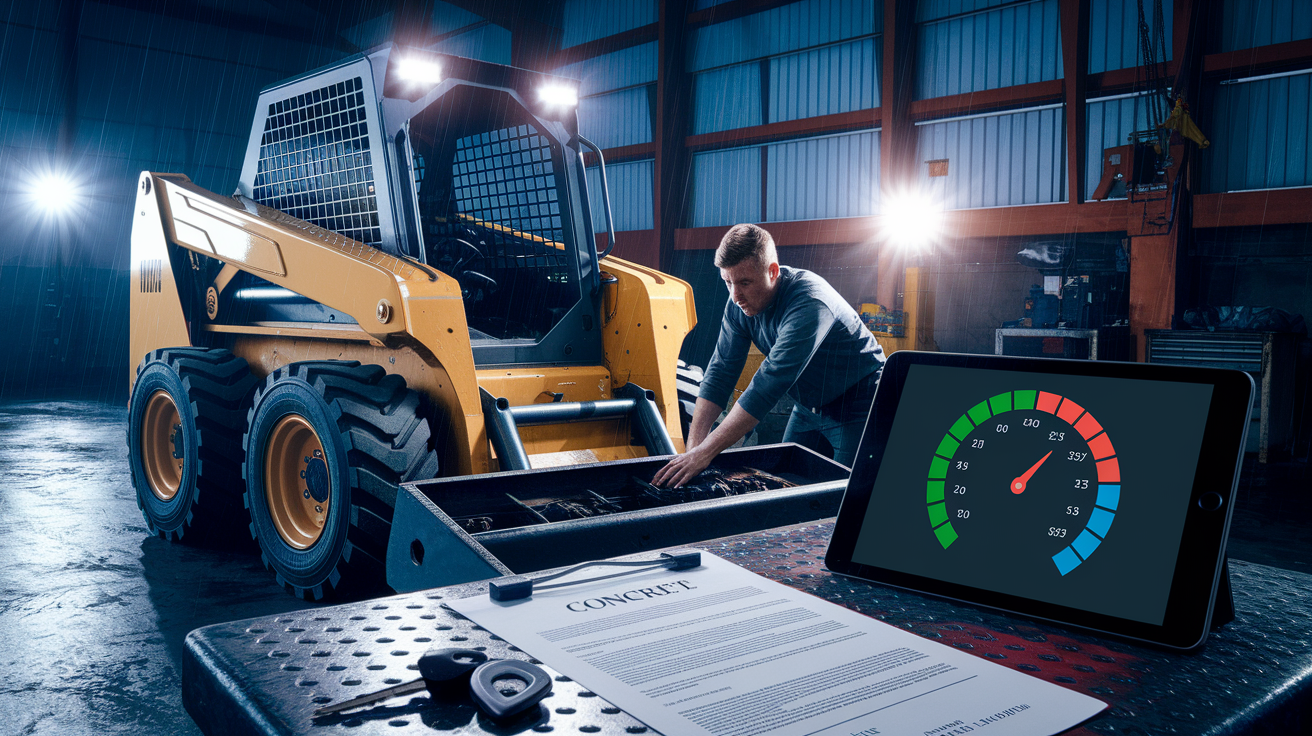
Lines of credit can cover immediate equipment needs when timing doesn’t align with traditional equipment financing or when you need short-term access to gear for a single project. You might use an LOC to fund a down payment on an excavator while waiting for an equipment loan to close, cover rental deposits for a crane needed next week, or pay for urgent repairs on a skid steer that broke mid-job. The revolving structure means you draw only what you need, repay when the project milestone pays out, and preserve the line for the next equipment need.
Equipment loans and leases, by contrast, are designed for long-term capital purchases with amortizing payments over 36 to 84 months and interest rates often lower than LOC rates, sometimes 4% to 12% APR for well-qualified borrowers. If you’re buying a $150,000 excavator you’ll use for five years, an equipment loan at 6% APR will cost you roughly $2,899 per month with total interest around $25,940 over the term. An LOC at 10% APR used for the same purpose would cost more unless you repay quickly, because the rate’s higher and interest accrues daily on the outstanding balance.
Here’s how to decide when to use an LOC versus equipment financing, and how to combine both:
- Use an LOC for short-term equipment needs: deposits, rentals under 90 days, or bridge financing until a long-term equipment loan closes
- Choose an equipment loan or lease for purchases you’ll use beyond one year, to lock in lower rates and amortize principal over the useful life of the asset
- Understand collateral implications: equipment loans place a lien on the specific piece of equipment. Secured LOCs may place a blanket lien on all business assets, limiting future financing flexibility
- Combine strategies: draw on an LOC to close an equipment purchase fast, then refinance into a term loan within 30 to 60 days to lower your cost and free up LOC capacity for operating needs
Using a Line of Credit to Cover Payroll and Labor Costs

Payroll hits on a fixed schedule, biweekly or weekly, but client payments rarely match that rhythm. When you’re carrying $120,000 in biweekly payroll and invoices take 60 days to collect, you need a minimum of $240,000 in liquidity just to bridge two pay cycles. Without that cushion, you’re choosing between delaying payroll, laying off crew, or pulling cash from other jobs. All of which disrupt operations, damage morale, and risk project delays.
A construction LOC smooths that gap by letting you draw against future receivables to meet payroll today, then repay when the owner’s check clears. Because you pay interest only on the days the money’s outstanding, the cost can be manageable even at higher rates. If you draw $240,000 at 8% APR for 60 days, the interest comes to roughly $3,150, calculated as (0.08 ÷ 365) × 60 × $240,000. That’s a small price to keep experienced labor on the job and avoid the larger costs of rehiring, retraining, or missing critical milestones.
Retainage compounds the problem. When 10% of every invoice gets withheld until final completion, your available cash lags even further behind actual project progress. An LOC helps you pay crews and subcontractors in full while waiting for retainage release, so you can start the next job without depleting reserves or scrambling for emergency funding. Maintaining access to a payroll-focused LOC with at least three to six months of payroll coverage gives you the flexibility to take on new work, manage slow-pay clients, and weather seasonal slowdowns without workforce disruption.
Interest Rates, Credit Limits, Fees, and Risk Factors for Contractor LOCs

Pricing and risk vary widely across LOC structures and lenders. Secured lines backed by equipment or real estate typically carry interest rates between 6% and 12% APR, reflecting lower lender risk. Unsecured lines range from 12% to 30% APR because there’s no collateral to recover if you default. Credit limits follow a similar pattern: secured LOCs commonly offer $100,000 to $2,000,000 or more for established contractors, while unsecured facilities cap out around $25,000 to $250,000 depending on revenue and credit strength.
Beyond interest, expect a variety of fees that add to total cost. Origination fees run 1% to 3% of the approved credit limit, so a $100,000 line might carry a $1,000 to $3,000 upfront charge. Annual commitment or renewal fees range from zero (common with construction-specific platforms) to $1,500 for bank facilities. Draw fees or wire fees can add $0 to $100 each time you pull funds. Lenders often charge $200 to $1,500 for UCC filing, appraisals, or legal documentation. These costs stack up, so always calculate total cost, not just the advertised APR, when comparing offers.
Major operational risks include:
- Blanket liens on all business assets, which restrict your ability to finance equipment separately or sell collateral without lender consent
- Sudden credit-limit reductions triggered by missed payments, covenant breaches, or lender re-evaluation, often cutting your available capacity down to your current drawn balance
- Covenant requirements such as maintaining minimum liquidity ratios, submitting monthly financial reports, or limiting additional debt without lender approval
- Collateral seizure on default, where lenders can claim equipment, receivables, or real estate pledged under the LOC agreement
- Variable interest rates tied to prime or LIBOR, which can increase your cost if rates rise during the draw period
Understanding these risks before you sign lets you negotiate protective terms, maintain covenant compliance, and avoid over-reliance on a single credit facility that could freeze unexpectedly.
Application Steps and Documentation Needed for Contractor Lines of Credit
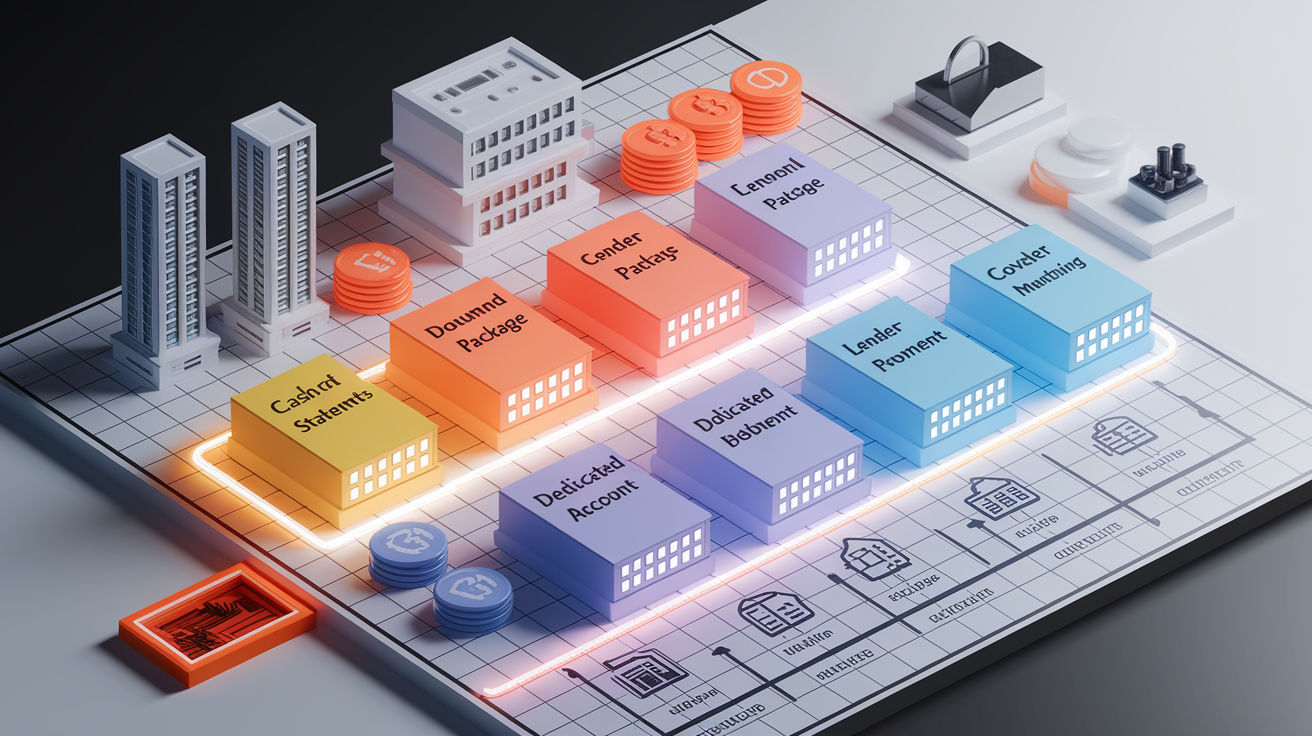
Applying for a construction LOC starts with quantifying exactly how much capital you need, for how long, and for what purpose. Run a 30-, 60-, and 90-day cash flow projection that accounts for upcoming payroll, equipment purchases or rentals, material outlays, and expected client payments. The clearer your use case (“I need $150,000 to bridge payroll and equipment rentals while waiting for three progress payments totaling $220,000 due in 45 to 60 days”), the easier it is for lenders to assess repayment capacity and approve your request.
Assembling complete, organized documentation before you start shopping dramatically speeds approval. Lenders will ask for two to three years of business and personal tax returns, six to twelve months of recent bank statements, current profit-and-loss and balance-sheet reports, accounts-receivable aging schedules, signed contracts or project backlog summaries, detailed equipment lists with current values, certificates of insurance, business licenses, and a schedule of all outstanding debt including loans, leases, and trade credit. Missing even one item can delay underwriting by days or weeks, so treat document prep as the first step, not an afterthought.
Follow these steps to apply and secure a contractor LOC:
-
Quantify your need by projecting cash shortfalls across payroll, equipment, and operating expenses, and determine the credit limit required to cover peak exposure.
-
Assemble all required financial documents (tax returns, bank statements, financial statements, backlog, equipment schedules, insurance, and debt schedules) into a single organized package.
-
Choose the right product type based on your collateral position (secured vs unsecured), speed requirements (bank vs alternative lender), and whether you need general working capital or construction-specific terms.
-
Shop at least three to five lenders to compare total cost (APR plus all fees), collateral requirements, draw mechanics, covenant restrictions, and funding timelines. Request formal term sheets in writing.
-
Negotiate terms to limit personal guarantees if possible, cap origination and annual fees, set interest spreads tied to prime for variable-rate lines, and establish covenant thresholds you can realistically meet.
-
Implement usage controls by opening a dedicated disbursement account, requiring internal approval for draws above a set threshold, reconciling all draws against project invoices, and reserving cash to cover interest payments.
-
Monitor covenants and maintain lender communication by submitting monthly profit-and-loss reports, updating backlog schedules, and proactively discussing any financial changes before breaches occur. Plan to refinance into a term loan if equipment purchases become long-term or LOC costs exceed value.
Alternatives to Lines of Credit for Equipment and Payroll Funding
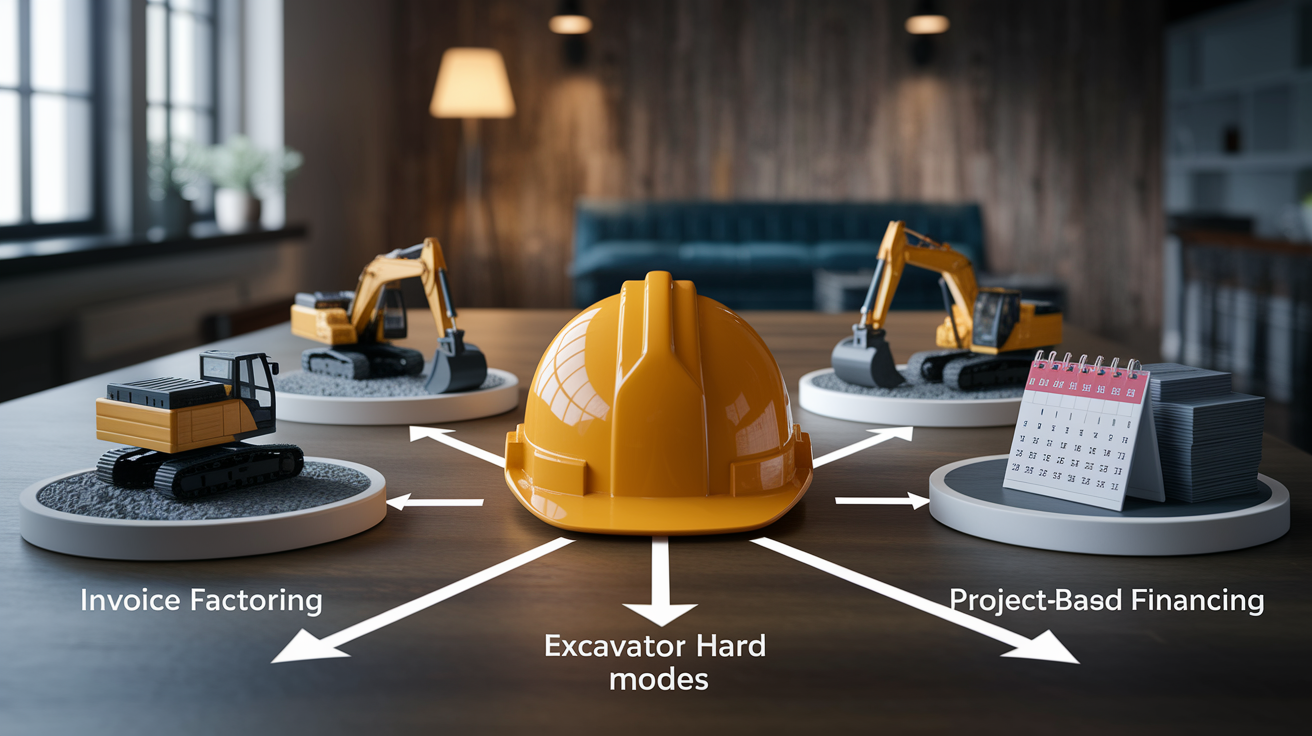
Lines of credit aren’t the only option for covering equipment and payroll gaps. In some cases alternatives offer better fit or lower cost. Invoice factoring converts outstanding receivables into immediate cash, advancing 70% to 95% of the invoice value and collecting payment directly from your client. Factoring is fast, often funded within 24 to 48 hours, but costs 1% to 5% of the invoice value per month, which can add up quickly on long receivable cycles. It works best when you need cash faster than an LOC can provide and you’re comfortable with the factor contacting your clients.
Equipment loans and leases are purpose-built for long-term equipment ownership or use. Loans finance 80% to 100% of equipment cost over 36 to 84 months with fixed monthly payments and interest rates typically between 4% and 12% APR. Leases let you use equipment without owning it, often with lower upfront costs and the option to buy, return, or upgrade at term end. Both options amortize principal and lock in predictable payments, making them cheaper than revolving LOCs for assets you’ll keep beyond a year. Supplier terms and vendor financing can delay cash outlays by 30 to 90 days on materials and smaller equipment, effectively acting as zero-cost short-term credit if you pay within terms.
| Alternative | Typical Use | Cost Range | Speed of Funding |
|---|---|---|---|
| Invoice Factoring | Convert A/R to cash; cover payroll and operating shortfalls | 1%–5% per invoice per month | 24–48 hours |
| Equipment Loan/Lease | Purchase or lease heavy equipment for long-term use | 4%–12% APR over 36–84 months | 3–14 days |
| Supplier Terms | Delay material and small-equipment payments by 30–90 days | 0% if paid within terms | Immediate (credit extended at purchase) |
| Project-Based Financing | Fund single-project material or equipment needs tied to specific job | Varies by lender and project risk | 1–2 weeks |
Best Practices for Managing a Construction Line of Credit

Payment history accounts for more than 35% of your credit score, so making on-time payments on your LOC directly improves your ability to secure future financing and negotiate better terms. Paying balances in full when receivables arrive not only minimizes interest expense but also resets your available capacity for the next need. Late or missed payments, by contrast, can trigger immediate credit-limit reductions (often cutting your available line down to your current drawn balance) and damage relationships with lenders who might otherwise extend additional credit or renew terms favorably.
Use your LOC only for needs with a clear, documented path to repayment. Drawing funds to cover payroll when you know a $200,000 progress payment hits in 30 days is smart cash management. Drawing to fund work subject to risky Pay-if-Paid contract clauses, where your payment depends entirely on the owner paying the general contractor, introduces default risk you can’t control. Sequence your capital from least flexible to most flexible: exhaust supplier terms and trade credit first, tap internal cash reserves second, and use the LOC last as your operating cushion for unexpected expenses or true emergencies.
Follow these usage and management rules to protect your credit and keep costs down:
- Prioritize supplier terms and trade credit before drawing on your LOC, preserving revolving capacity for urgent or high-value needs
- Maintain three to six months of payroll liquidity through a combination of cash reserves, receivables, and LOC access to avoid forced draws during slow periods
- Avoid drawing funds for projects with uncertain payment terms, especially Pay-if-Paid or speculative work without signed contracts
- Forecast weekly and monthly cash flow using project schedules, invoice timing, and retainage release dates to anticipate draw needs before shortfalls occur
- Track every draw against a specific invoice, payroll run, or equipment purchase to ensure you’re borrowing only what’s necessary and can reconcile repayment timing
- Prepare for renewal 60 to 90 days in advance by assembling updated financials, demonstrating on-time payment history, and negotiating improved terms or higher limits based on business growth
Real-World Funding Scenarios for Contractor Equipment and Payroll
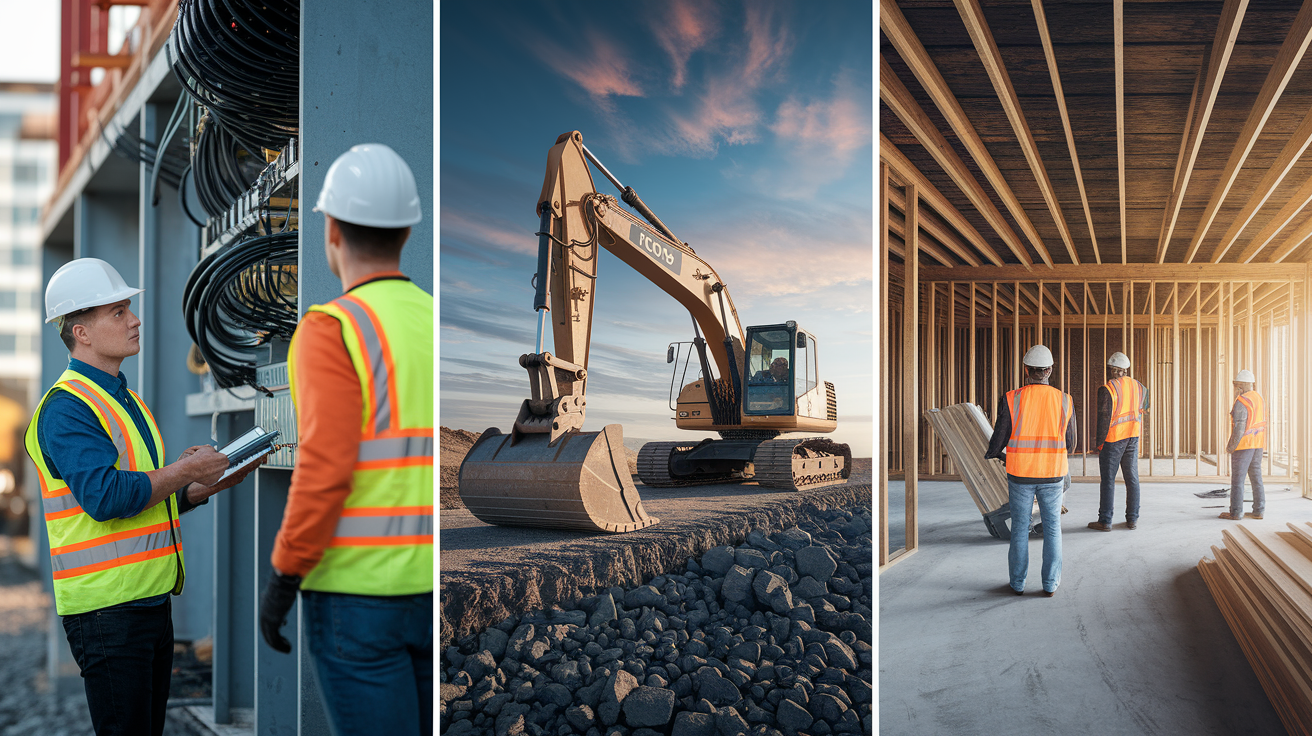
A mid-sized electrical contractor carries a $120,000 biweekly payroll and invoices clients on net-60 terms with 10% retainage. To avoid payroll disruption, the company needs a 60-day liquidity cushion of roughly $240,000. They secure a $300,000 LOC secured by equipment and accounts receivable at 8% APR. When a slow-pay client delays two invoices by 60 days, the contractor draws $240,000 to cover four payroll cycles. Interest for 60 days calculates to approximately $3,150 ((0.08 ÷ 365) × 60 × $240,000), a manageable cost that keeps the crew working and the project on schedule. Once the client pays, the contractor repays the full draw and resets the line for future needs.
A small excavation subcontractor needs a $150,000 used excavator for a six-month highway project. Rather than tying up all operating cash, they apply for an equipment loan at 6% APR amortized over 60 months. Monthly payments come to roughly $2,899, with total interest over the term around $25,940. The predictable payment structure fits the company’s monthly cash flow from ongoing projects, and the excavator remains productive long after the initial job wraps. Financing the purchase with an LOC at 10% APR would have cost significantly more unless repaid within a few months, making the term loan the better long-term fit.
A commercial framing contractor wins a $500,000 tenant-improvement project requiring $75,000 in immediate material purchases and subcontractor deposits before the first progress payment in 30 days. The contractor draws $75,000 from an unsecured LOC at 14% APR. Interest for 30 days equals approximately $770 ((0.14 ÷ 365) × 30 × $75,000). When the owner’s first draw arrives, the contractor repays the balance in full, avoiding extended interest charges and preserving the line for the next mobilization. This short-duration, high-rate draw costs less than delaying the project or losing the job to a competitor who could start faster.
Final Words
We moved straight to how construction LOCs give revolving access for gear, rentals, repairs, mobilization, and payroll, and why billing cycles and retainage create gaps. We broke down secured vs unsecured options, qualification checks, costs and risks, and real-world examples for payroll and equipment.
If you need fast cash to cover a crew payday or buy a machine, lines of credit for construction contractors: funding equipment and payroll can bridge those gaps, just mind the fees, repayment rhythm, and collateral. Used right, they keep projects moving and people paid.
FAQ
Q: What is a construction line of credit and how does it help with equipment and payroll?
A: A construction line of credit is revolving access to cash you draw as needed. It covers equipment deposits, rentals, repairs, mobilization, and short-term payroll gaps between slow or delayed payments.
Q: How do construction lines of credit bridge timing gaps from billing cycles and retainage?
A: Construction lines of credit bridge timing gaps by giving cash while you wait on 30–90 day invoices or retainage, so you can keep crews paid and projects moving without pausing work.
Q: How do revolving draws and interest-only payments on an LOC work?
A: Revolving draws let you borrow, repay, and borrow again up to your limit. Many LOCs let you pay interest only while outstanding, lowering monthly cash needs until you cut principal down.
Q: What common equipment and fleet needs can a construction LOC cover?
A: A construction LOC can cover equipment deposits, short-term rentals, emergency repairs, mobilization costs, and down payments for fleet purchases to keep jobs on schedule.
Q: What types of lines of credit are available for contractors?
A: Contractors can choose secured LOCs (backed by equipment, A/R, or real estate), unsecured LOCs (no collateral, smaller limits), or construction-specific revolving LOCs with faster, contractor-focused underwriting.
Q: What do lenders typically require to qualify a contractor for an LOC?
A: Lenders typically require time in business, steady revenue, tax returns, bank statements, financial ratios (DSCR, current ratio), and personal or corporate guarantees for larger limits.
Q: What documents and timelines should I expect when applying for an LOC?
A: Expect to provide 2–3 years tax returns, 6–12 months bank statements, P&L, backlog, equipment list, licenses, and insurance. Online lenders can approve in 24 hours; banks take 1–3 weeks.
Q: What interest rates, fees, and limits should contractors expect on LOCs?
A: LOC rates often range from about 6–12% APR secured to 12–30% unsecured. Fees may include 1–3% origination, renewal fees, draw fees, and UCC or appraisal costs; limits run $25k–$5M+.
Q: When should I use an LOC versus an equipment loan or lease?
A: Use an LOC for short-term needs, deposits, repairs, or flexible draws. Use equipment loans or leases for long-term purchases with set amortization and lower monthly principal obligations.
Q: Can a line of credit cover payroll, and what might that cost?
A: A line of credit can cover payroll; for example, a 60-day $240k draw at 8% APR costs roughly $3,150 in interest, letting you avoid layoffs while waiting on receipts.
Q: What are good alternatives to an LOC for equipment and payroll funding?
A: Alternatives include invoice factoring (70–95% advance), equipment loans or leases (36–84 months), supplier terms, purchase order financing, SBA CAPLines, and project-based financing for single-job needs.
Q: How should I manage an LOC to avoid problems and prepare for renewal?
A: Manage an LOC by using it only for needs with clear payback, keeping 3–6 months payroll reserves, keeping payment history clean, forecasting draws, and preparing updated financials before renewal.