


What if the small fees on your statements are quietly the biggest leak in your cash flow?
This guide lists every common fee, shows when it hits, how it’s calculated, and what it costs in real dollars so you can budget instead of guessing.
You’ll see exact examples for monthly, per-transaction, and annual charges, plus clear moves that cut or avoid the cost.
No jargon, just numbers you can use to compare and decide.
All Fees and Amounts (Quick Overview)
This is your complete master list. Every fee, what it costs, and when it applies. No fluff, just the numbers you need to budget and compare.
| Fee Name | Amount | When It Applies | Variables/Notes |
|---|---|---|---|
| Account Maintenance | $5–$15/month | Monthly billing cycle | Waived with $1,500–$5,000 balance or direct deposit |
| Overdraft / NSF | $30–$35 per item | When account balance goes negative | Per transaction; some banks cap at 3–5 per day |
| Out-of-Network ATM | $2–$5 per withdrawal | Each time you use another bank’s ATM | Your bank’s fee plus the ATM owner’s fee |
| Domestic Wire Transfer | $20–$35 | Each outgoing wire | Incoming wires may also carry $10–$15 fee |
| International Wire | $30–$75 | Each outgoing international wire | Recipient bank may deduct additional fees |
| Foreign Transaction | 1%–3% of purchase | Every purchase in foreign currency | Applied by card issuer; varies by card |
| Credit Card Late Payment | $25–$40 | First late payment often $25; subsequent $40 | Federal caps apply; some issuers charge less |
| Credit Card Annual Fee | $0–$550+ | Billed once per year on card anniversary | Premium travel cards $450–$550; many cards $0 |
| Cash Advance Fee | 3%–5% of advance + APR | Immediately when you take cash | APR 15%–30%; interest starts accruing same day |
| Investment Advisory (Human) | 0.75%–1.5% of assets/year | Quarterly billing; deducted from account | 1% is typical; minimums may apply |
| Robo-Advisor | 0.25%–0.50% of assets/year | Quarterly billing; auto-deducted | Often no account minimum |
| Mutual Fund Expense Ratio | 0.05%–1.5% of assets/year | Deducted daily from fund NAV | Index funds 0.03%–0.20%; active funds 0.5%–1.5% |
How Each Fee Is Calculated

Most fees fall into two camps: fixed or variable. Fixed fees don’t change. $35 for an overdraft, $25 for a wire transfer. Done. Variable fees scale with the dollar amount you’re moving or the size of your account. An advisory fee of 1% on $100,000 costs you $1,000 a year. On $500,000 it’s $5,000.
Percentage fees show up everywhere in finance. Your credit card foreign transaction fee is 3% of every purchase you make abroad. An expense ratio of 0.50% means the fund company pulls half a percent of your balance each year to cover management costs.
Time-based fees charge by the hour. Common in legal work. A $300 hourly rate times 4 hours equals $1,200. Usage fees trigger per action: every out-of-network ATM withdrawal, every wire transfer, every paper statement.
Tiered fees drop as balances climb. You might pay 1% on the first $250,000, then 0.75% on the next $250,000, and 0.50% above $500,000. That structure rewards bigger accounts with lower effective rates.
Thresholds and caps matter. Some banks waive the $10 monthly maintenance fee if your balance stays above $1,500 all month. Credit card late fees are federally capped, so you won’t see charges above $40 for a subsequent late payment. Overdraft policies often cap daily fees at three to five items, even if you overdraw ten times in one day. Understanding these limits helps you predict worst-case costs and plan to stay below trigger points.
Real World Fee Examples

Here’s how fees stack up in real scenarios. See what costs hit together and estimate your own total.
Everyday checking with occasional overdrafts
$10/month maintenance (you didn’t meet the minimum balance), two overdrafts at $35 each, and one out-of-network ATM at $5. Monthly cost: $10 + $70 + $5 = $85.
Freelancer wiring payment to a vendor overseas
$45 international wire fee from your bank, plus the recipient’s bank deducts $15 on arrival. Your cost: $45. Vendor receives the wire minus $15.
Investor holding $200,000 with a human advisor at 1%
Annual advisory fee: $200,000 × 0.01 = $2,000, billed quarterly as $500 per quarter, auto-deducted from your account.
Credit card user carrying a balance with foreign purchases
$95 annual fee, $35 late payment fee one month, 3% foreign transaction fee on $2,000 in purchases abroad ($60), plus 20% APR interest on your carried balance. Fees before interest: $95 + $35 + $60 = $190 in that year.
Mutual fund investor in an actively managed fund
$50,000 invested, 1.2% expense ratio. Annual cost deducted from the fund’s return: $50,000 × 0.012 = $600 per year, taken in daily slices you never see as a separate line item.
Robo advisor account with $100,000
0.25% annual fee: $100,000 × 0.0025 = $250/year, billed quarterly at about $62.50 per quarter, deducted automatically.
These examples show that fees can arrive monthly, per transaction, quarterly, or annually. And they add up fast when multiple fees hit the same account or the same month.
Fee Schedules and Timing

Fees land on predictable schedules. Knowing the calendar helps you avoid surprise debits and plan cash flow around billing dates.
| Fee | Timing | Frequency |
|---|---|---|
| Account Maintenance | Same day each month (often statement close date) | Monthly |
| Overdraft / NSF | Same day the overdraft occurs | Per transaction |
| Wire Transfer | Deducted when wire is sent | Per transfer |
| Foreign Transaction | Posted with the purchase; converted to USD | Per transaction |
| Credit Card Annual Fee | Card anniversary date | Once per year |
| Advisory Fee (AUM) | End of quarter; deducted from account | Quarterly |
| Mutual Fund Expense Ratio | Daily accrual; reflected in NAV | Continuous (annual rate) |
One-time fees like wire transfers or cash advances hit immediately when you trigger the action. Recurring fees follow a schedule: monthly for account maintenance, quarterly for most advisory billing, annually for credit card memberships.
Some fees, like mutual fund expense ratios, are continuous. The fund company deducts a tiny slice every single day, so the published percentage is an annualized rate. If you’re budgeting, mark the recurring dates on your calendar and keep a cushion in your account around those days to avoid stacking an overdraft fee on top of a scheduled charge.
Hidden, Conditional, and Optional Fees

Not every fee shows up in the headline pricing or the first page of the contract. Conditional fees only appear when you take a specific action or miss a deadline. Early account closure fees, typically $25, kick in if you close within 90 to 180 days of opening. Inactivity fees of $5 to $25 per month apply if you don’t log in or make a transaction for six to twelve months. Paper statement fees, often $2 to $5 each, hit when you opt out of electronic delivery.
Optional service fees are tied to add-ons you can accept or skip. Expedited shipping on a replacement debit card might cost $15 instead of free standard delivery. Premium customer support lines, same-day wire processing, or certified check services all carry optional fees that don’t apply unless you choose them. Check the fee schedule before saying yes.
Situational fees depend on circumstances beyond normal use. Credit card foreign transaction fees only apply when you shop in another currency. Balance transfer fees, usually 3% to 5%, only matter if you move debt from one card to another. Mutual fund short-term redemption fees, commonly 1% to 2%, trigger if you sell shares within 30 to 90 days of purchase. Read the full disclosure to spot these conditional and situational charges, because they won’t appear in your account until the triggering event happens.
Strategies to Reduce or Avoid Fees
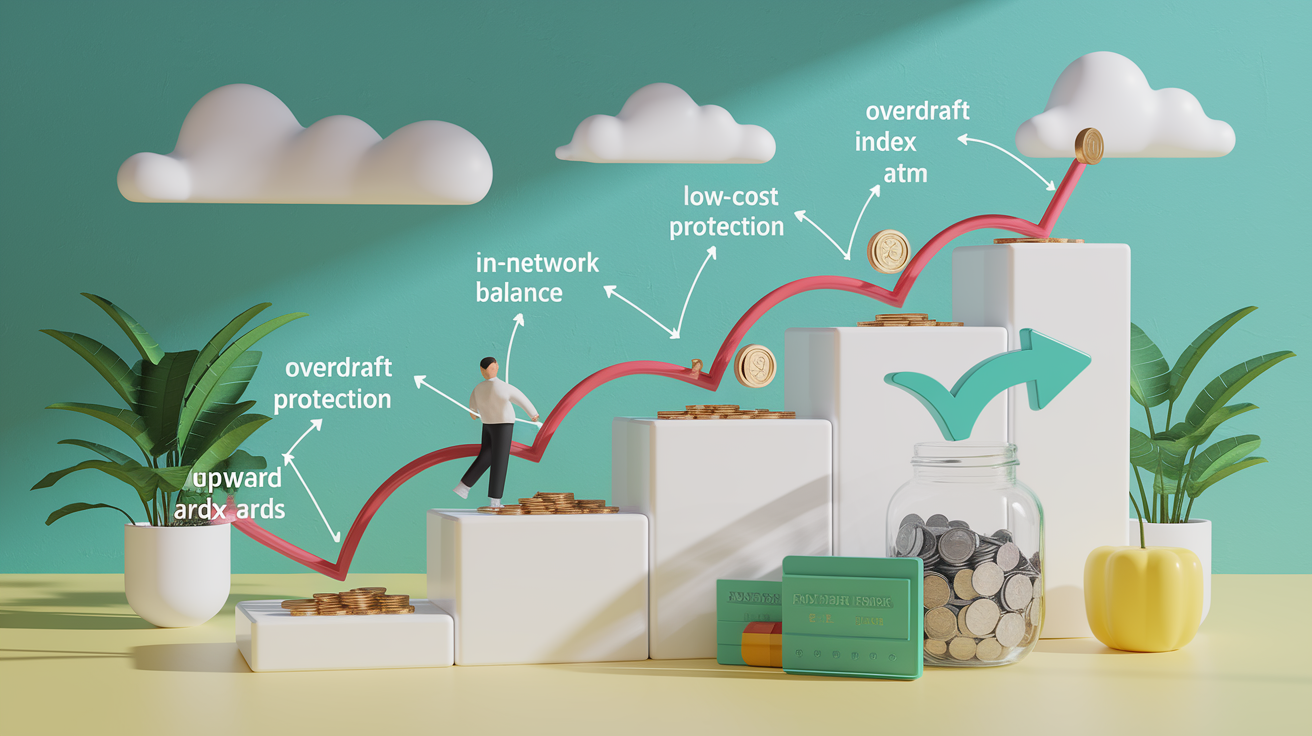
You can cut or eliminate most fees with a few straightforward moves.
Meet minimum balance requirements to waive monthly maintenance fees, often $1,500 to $5,000, or set up a recurring direct deposit.
Use only in-network ATMs. If your bank reimburses out-of-network fees, confirm the monthly cap and stay under it.
Link a savings account to checking for free overdraft protection, so overdrafts pull from savings instead of triggering $35 fees.
Choose credit cards with no annual fee unless the rewards and perks exceed the cost. Compare the math each year.
Select no foreign transaction fee cards for international purchases. Many travel cards charge zero.
Opt for low cost index funds or ETFs with expense ratios of 0.03% to 0.20% instead of actively managed funds at 0.5% to 1.5%.
Use robo advisors (0.25% to 0.50%) instead of human advisors (0.75% to 1.5%) if you don’t need personalized planning.
Consolidate accounts to meet combined balance minimums and reduce the number of monthly fees you face.
The biggest savings come from switching to no-fee providers and lowering investment costs. On a $100,000 portfolio, dropping your expense ratio from 1.0% to 0.10% saves $900 a year. That’s $27,000 over 30 years before compounding. Meeting a single $5,000 minimum balance can eliminate $120 to $180 in annual bank fees. Stack two or three of these strategies and the total reduction can fund an extra month of expenses every year.
Frequently Asked Questions About Fees

What’s the difference between a fee and a commission?
A fee is typically a fixed or percentage charge for a service or access. A commission is usually a percentage of a sale or result, often tied to performance.
Can I negotiate fees?
Yes, especially advisory fees, brokerage fees, and bank fees if you have a large balance or a long relationship. Ask directly and offer to consolidate accounts.
Are all fees disclosed upfront?
Most are, but situational and conditional fees may be buried in the fine print. Always request the full fee schedule before signing or opening an account.
How do I know if a fee is worth it?
Compare the fee to the benefit. If an annual card fee is $95 but rewards are worth $300, it’s a win. If an advisor charges 1.5% and adds no value over a 0.25% robo advisor, it’s not.
Do fees compound over time?
Investment fees reduce your balance each year, so you earn returns on a smaller amount. Over decades, even 0.5% in extra fees can cost tens of thousands in lost compounding.
What triggers an overdraft fee versus an NSF fee?
Overdraft means the bank covers the transaction and charges you. NSF (non sufficient funds) means the bank declines the transaction and still charges you. Same cost, different outcome.
Can I get a fee waived after it’s charged?
Sometimes, especially if it’s your first overdraft or late payment. Call customer service, explain the situation, and ask politely for a one-time courtesy waiver.
Are mutual fund expense ratios charged separately?
No, they’re deducted daily from the fund’s net asset value, so you never see a separate line item. Your account balance simply grows slower than it would without the fee.
Final Words
Open the master fee list, follow the calculation rules, and run the scenario examples to see how charges play out in real life.
Check the fee schedules so you know when charges hit, watch for conditional and optional fees, and use the reduction strategies to trim costs.
If something’s unclear, the FAQs are there for quick answers. With clear numbers you can avoid surprises, lower fees, and keep cash flowing.
FAQ
Q: What do you mean by fees?
A: The term fees means charges a business or customer pays for services or products, like setup fees, monthly subscriptions, transaction fees, or penalties; they can be one-time or recurring and vary by service.
Q: What is fees swallowing?
A: Fees swallowing refers to charges that eat into your money, reducing net proceeds—like processor or intermediary fees deducted from each sale, unexpectedly lowering cash available for payroll, inventory, or other needs.
Q: Is it fee’s or fees? Do we say fee or fees?
A: Use “fees” to mean multiple charges. “Fee’s” is the possessive form (the fee’s amount) or a contraction for “fee is,” which is rare. For counts, say “fee” singular or “fees” plural.