
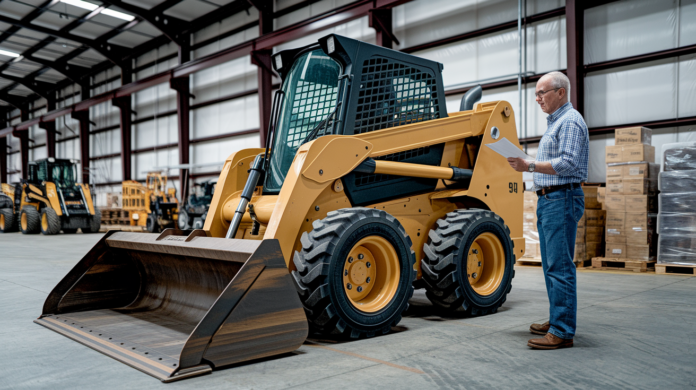

What if a “standard” equipment loan sinks your slow season?
Flexible payment equipment financing times repayments to your busy months so you can buy machines before peak runs without draining cash meant for payroll, materials, or maintenance.
In this post we’ll explain seasonal payments, step plans, deferred starts, and the lease-vs-loan tradeoffs so you can see true cost, repayment rhythm, and what lenders typically need.
Read on to learn options that match equipment buys to seasonal revenue instead of forcing the same payment year-round.
Core Financing Solutions That Support Seasonal Manufacturing Operations

Equipment financing gives seasonal manufacturers a way to get the machinery, tools, and production assets they need without burning through cash reserves meant for payroll, materials, and keeping the lights on during slow months. Seasonal manufacturers face a timing problem. Food processors ramp up before harvest. Agricultural equipment makers peak in spring and fall. Cash doesn’t flow evenly, which makes lump-sum purchases risky or flat-out impossible. Industries like agriculture, landscaping equipment fabrication, construction equipment production, and transportation vehicle assembly all need financing tools that work with their revenue patterns instead of forcing the same monthly payment year-round.
You’ve got a few main financing categories to work with: traditional equipment loans with structured amortization, equipment leasing programs that cut upfront costs, collateral-based financing that cares more about the equipment itself than your credit score, startup options for businesses without much history, and multi-unit fleet financing when you’re expanding capacity across several machines. Each one has advantages depending on whether you care most about ownership, flexibility, tax benefits, or speed.
A lot of lenders can pre-approve you in under 24 hours and fund the deal in days, not weeks. That speed matters when you’re a seasonal manufacturer who needs to buy or upgrade equipment ahead of peak production windows. Placing orders in winter for spring startup or securing machinery in late summer for fall harvests. Quick approvals let you lock in vendor pricing, hit production schedules, and start generating revenue on time instead of waiting around for cash to pile up internally.
Financing categories available to seasonal manufacturers:
- Traditional equipment loans with fixed monthly payments and ownership at the end
- Equipment leasing programs with lower monthly costs and the option to return or buy out at lease end
- Fair Market Value (FMV) leases that let you return, upgrade, or purchase at residual value
- Collateral-based financing that looks at equipment value over credit history
- Startup equipment financing for businesses without established cash flow
- Multi-equipment fleet financing to bundle several machines under one agreement
Seasonal Manufacturing Equipment Financing Structures That Improve Cash Flow

Seasonal payment schedules let you pay more when revenue’s strong and less when operations slow down, matching debt service to actual cash coming in. Step payment plans start low during ramp-up months and increase as production scales and receivables arrive. Deferred payment structures push the first payment out 60, 90, or even 120 days, giving you time to install equipment, train operators, complete production runs, and collect from customers before any money flows out. All three preserve working capital during the off-season, when you’re still dealing with rent, insurance, skeleton payroll, and maintenance costs but little to no revenue.
Use seasonal payments when your cash cycle’s predictable and tied to a few high-revenue months. Like a plant that makes landscaping equipment and ships 70% of annual volume between March and June. Use step payments when you’re scaling production gradually, adding shifts or product lines over several months. Use deferred payments when you’re installing equipment mid-cycle and need time to generate the first batch of revenue. A food processor financing a new packaging line in December that won’t run full production until February harvest.
| Payment Structure | Description | Seasonal Use Case |
|---|---|---|
| Seasonal Payments | Higher payments during peak months, lower or skipped payments off-season | Agricultural equipment manufacturer with spring/summer revenue spike |
| Step Payments | Payments start low and increase incrementally as revenue scales | Startup fabrication plant ramping capacity over 6–12 months |
| Deferred Payments | First payment delayed 60–120 days after equipment delivery | Food processor installing new line mid-winter before harvest season |
| Seasonal with Balloon | Smaller regular payments with one large payment at peak cash month | Holiday product manufacturer collecting bulk revenue in Q4 |
| Interest-Only Off-Season | Pay interest only during slow months, principal + interest during peak | Construction equipment producer with summer project season |
Equipment Loan and Lease Options for Seasonal Manufacturing Plants

Capital equipment loans give you a path to ownership with fixed monthly payments spread over 24 to 84 months, depending on equipment life and cost. You own the asset from day one, can claim depreciation or Section 179 deductions, and build equity in machinery that can be refinanced or sold later. Equipment leases lower the monthly cash outlay and let you upgrade faster. At lease end, you can return the equipment, purchase it at fair market value, or trade up to newer models. For seasonal manufacturers who need the latest technology but want to preserve cash, leasing gives you flexibility without the full cost of ownership.
You should lease when equipment’s likely to become obsolete quickly, when cash flow’s too tight to support loan-level payments year-round, or when you’re planning to expand capacity every few years and prefer trading in older machines over managing resale. Buy with a loan when the equipment has a long useful life, when ownership reduces long-term costs, or when you want control over the asset and full depreciation benefits. Leasing often makes sense for high-tech machinery, short-run production tools, or supplemental capacity. Loans work better for foundational equipment that’ll run for a decade or more.
Over the long term, loans cost less in total dollars paid because you’re not covering a lessor’s residual risk or upgrade fees. Leases cost more in total but offer lower monthly payments, easier upgrades, and minimal upfront capital. For a seasonal business, the right choice depends on how predictable revenue is, how fast the equipment depreciates, and whether you want to own the asset or preserve flexibility to pivot as market demand shifts.
Lease and loan structures commonly used by seasonal manufacturers:
- FMV Lease – Return equipment at lease end or buy at fair market value. Lowest monthly payment. Good for short-term needs or frequent upgrades.
- $1 Buyout Lease – Lease payments structured like a loan. Guaranteed ownership at end for $1. Higher monthly cost than FMV but still preserves some cash flow flexibility.
- Fixed-Rate Equipment Loan – Traditional installment loan with level payments. Ownership from day one. Full depreciation and tax benefits. Best for long-life assets.
- Upgrade Lease – Trade in leased equipment at mid-term or end for newer models. Keeps production technology current without refinancing debt.
Qualification Requirements for Seasonal Manufacturer Equipment Financing
Lenders look at equipment value, business revenue potential, and your ability to generate cash during peak months rather than relying only on personal or business credit scores. If the equipment itself serves as strong collateral, like a CNC machine, industrial press, or commercial packaging line, the lender may approve financing even when credit history’s thin or imperfect. This collateral-first approach works well for seasonal manufacturers who have inconsistent month-to-month revenue but reliable annual totals and a clear plan for when cash will arrive.
Typical documentation includes recent bank statements (usually three to six months) showing seasonal deposit patterns, equipment specifications and cost quotes from the vendor, a simple forecast or narrative explaining when revenue peaks and how repayment will be sourced, and basic business and personal identification. Lenders use this to confirm you can handle payments during slow months or that a seasonal payment plan can be structured to match cash inflows. Pre-approvals often happen in under 24 hours once the file’s complete, letting manufacturers move quickly on vendor quotes or auctions.
Steps to prepare an approval-ready financing file:
- Equipment Details – Provide make, model, year, cost, vendor quote, and intended use. Include photos or spec sheets for used or specialized machinery.
- Seasonal Revenue Forecast – Outline when cash comes in and when it slows down. Explain peak months and off-season expenses. This helps lenders design the right payment schedule.
- Bank Statements – Submit 3–6 months of business bank statements showing deposit patterns, average balances, and any seasonal spikes. Consistency matters more than month-to-month volume.
- Business Summary – Briefly explain what you manufacture, who you sell to, how long you’ve been operating, and what the new equipment will do for capacity or efficiency.
- Collateral Information – If financing used equipment or adding to an existing fleet, list current assets and their condition. Strong collateral can offset weaker credit or shorter operating history.
Application Process and Fast Funding Timeline for Seasonal Equipment Needs

Pre-qualification typically takes a few hours to one business day. You submit basic revenue information, equipment details, and a simple statement of need. The lender reviews collateral value, seasonal cash flow, and repayment capacity, then issues a pre-approval with estimated terms and maximum funding amount. From there, you provide formal documentation (bank statements, equipment quotes, identification, and any supplemental financial records) and the lender completes underwriting. Approval decisions often arrive within 24 hours of receiving a complete file, and funding can close within 48 to 72 hours if equipment’s ready for delivery and vendor paperwork’s in order.
Lenders accelerate decisions for pre-season purchasing by treating equipment acquisition as time-sensitive. If you need a new production line installed by February to meet March orders, the lender structures the approval timeline to hit that window. Some lenders offer 24/7 quote access and operate Monday through Saturday for document review and follow-up, so you don’t lose vendor pricing or production deadlines while waiting on financing. This speed lets you commit to purchases confidently, knowing funds will arrive before equipment ships or installation begins.
Real Equipment Financing Use Cases for Seasonal Manufacturing Operations

A landscaping equipment fabricator in the Midwest finances three new welding machines and a hydraulic press in late winter to ramp up production of zero-turn mower frames before the spring selling season. The company uses a seasonal payment plan: lower monthly payments in November through February, higher payments from March through October when dealer orders peak. The equipment lets the shop double output during the busy months, and the flexible payment schedule keeps cash flow steady during the winter slowdown when only maintenance and prototype work happens.
A regional food processing plant finances a $180,000 flash-freezing line in September to prepare for the fall harvest. The lender structures a 90-day deferred payment plan, so the first payment doesn’t hit until December, after the plant’s processed and sold its peak-season inventory. The deferred structure gives the business time to generate revenue from the new equipment before any cash goes out, and the manufacturer uses the extra capacity to take on contracts from two additional farms, increasing annual volume by 40%.
A construction equipment manufacturer finances a $60,000 CNC plasma cutter to expand its fabrication capacity for custom steel components used in seasonal earthmoving projects. The lender offers a $1 buyout lease with step payments, lower in the first six months while the shop trains operators and builds the order backlog, then higher payments once production stabilizes and invoices start clearing. The step payment structure matches the cash ramp-up, and the manufacturer gains ownership of the cutter at lease end for a nominal fee.
Three common seasonal manufacturing financing scenarios:
- Landscaping Equipment Fabrication – Welding and forming equipment financed in late winter with seasonal payments to match spring/summer dealer orders
- Agricultural Processing – Flash-freezing, drying, or packaging lines financed with deferred payments timed to harvest season cash inflows
- Construction Equipment Production – CNC machines, hydraulic presses, or paint booths financed with step payments that increase as contract volume grows
Long-Term ROI and Growth Advantages of Seasonal Equipment Financing

Financing equipment instead of paying cash preserves working capital for payroll, raw materials, and operating expenses during the months when revenue’s slow or zero. A seasonal manufacturer that spends $100,000 in cash on a machine in January has $100,000 less to cover February payroll or March material purchases. The same manufacturer financing that equipment at $2,000 per month keeps the full $100,000 in the operating account, smoothing cash flow and reducing the risk of expensive short-term borrowing or delayed supplier payments.
Equipment financing also enables faster capacity expansion, which directly impacts competitiveness and revenue potential. A manufacturer that can double output by adding one machine during the off-season is ready to take on larger contracts or new customers the moment peak season starts. Competitors who wait to save cash may miss contract bidding windows or lose customers to faster-moving shops. Over multiple seasons, the ability to invest in equipment ahead of demand creates a compounding advantage. More capacity leads to more revenue, which funds further expansion, which captures additional market share. Financing turns equipment acquisition into a growth tool instead of a cash-management problem.
Tools to Compare Seasonal Manufacturing Equipment Financing Options

Match financing term length to the expected useful life of the equipment, align payment schedules with the months when cash flow’s strongest, and work with lenders who have experience structuring deals for businesses with uneven revenue cycles. A five-year loan on a machine with a ten-year life makes sense. A seven-year loan on a tech-dependent tool that may be obsolete in four years does not. A seasonal payment plan that puts 70% of the annual cost into four peak months works only if those months reliably generate enough cash to cover the higher payments without squeezing other expenses.
Key decision variables when comparing seasonal equipment financing:
- Term Length – Longer terms lower monthly payments but increase total interest. Match term to equipment life and revenue predictability.
- Residual Value (Leases) – Higher residual lowers monthly lease cost but increases end-of-term buyout price. Matters most if you plan to own the equipment.
- Tax Incentives – Section 179 and bonus depreciation can reduce taxable income if equipment’s placed in service before year-end. Coordinate purchase timing with tax planning.
- Payment Schedule – Fixed, seasonal, step, or deferred. Choose the structure that matches your cash inflow pattern and minimizes strain during slow months.
- Lender Specialization – Work with lenders who understand seasonal businesses and offer flexible underwriting. Skip one-size-fits-all financing that ignores your revenue cycle.
| Financing Option | Best For | Cash Flow Impact |
|---|---|---|
| Fixed-Rate Equipment Loan | Manufacturers with stable year-round revenue or strong off-season reserves | Predictable monthly payments; preserves ownership and tax benefits; higher total cash outlay than leasing |
| Seasonal Payment Lease | Businesses with pronounced peak/off-season cycles and limited cash reserves | Lower payments during slow months; higher payments when revenue is strong; smooths cash flow volatility |
| Deferred Payment Plan | New equipment installed mid-cycle that won’t generate revenue immediately | No payments for 60–120 days; allows time to ramp production and collect receivables before debt service begins |
Practical Strategies for Seasonal Manufacturers to Increase Approval Odds

Emphasize the equipment’s collateral value and your business’s seasonal revenue pattern when applying. Lenders who understand that 60% of your annual revenue arrives in three months can structure repayment around that reality instead of denying the application because monthly averages look inconsistent. Provide a simple narrative or spreadsheet showing when cash comes in, when it goes out, and how the proposed payment schedule fits. This transparency demonstrates financial awareness and reduces lender risk.
Combining a line of credit with an equipment loan can strengthen your position. Use the equipment loan to acquire the machinery and the line of credit to smooth operating expenses during off-season months. This dual approach shows lenders you have a plan for managing cash flow gaps, not just equipment acquisition. If you have older equipment debt, consider refinancing it alongside the new purchase to consolidate payments and potentially lower the overall monthly obligation, freeing up cash for operations.
Tactics to improve approval odds for seasonal manufacturers:
- Use Equipment as Collateral – Highlight the equipment’s resale value, condition, and market demand. Strong collateral offsets weaker credit or shorter operating history.
- Present Seasonal Revenue Forecasts – Show lenders when revenue peaks and how payments align with cash inflows. Demonstrate that you understand your cash cycle.
- Refinance Existing Equipment Debt – Consolidate older loans into the new financing to reduce total monthly payments and simplify cash management.
- Combine Line of Credit with Equipment Loan – Use the LOC to cover off-season expenses while equipment loan payments match peak-season cash. Shows lenders you have a complete financing strategy, not just a single-product request.
Final Words
Get the equipment you need before peak season by picking the financing and payment plan that matches your revenue swings. Fast funding, pre-approvals, and payment schedules that ease off-season slowdowns let you buy when it matters.
This post walked through core options, loans, leases, collateral-based deals, when to use step or deferred payments, how to qualify quickly, and tools to compare offers.
If you’re weighing equipment financing for seasonal manufacturing businesses, start with a clear need and a timeline. You can lock in gear and keep cash flowing.
FAQ
Q: What credit score is needed for equipment financing?
A: The credit score needed for equipment financing varies by lender; many accept 600+, stronger 650–700 scores help, but equipment value, steady revenue, and collateral often matter more than score alone.
Q: How hard is it to get equipment financing or a $1,000,000 business loan?
A: Getting equipment financing is often straightforward for small-to-mid amounts, but securing a $1,000,000 business loan is harder and typically requires stronger revenue, solid collateral, and full financial documentation.
Q: Can I get a loan with just my EIN number?
A: You generally can’t get a loan with just an EIN; lenders usually require owner ID, bank statements, and revenue. Some startup-friendly lenders will consider EIN plus a personal guarantee or added collateral.