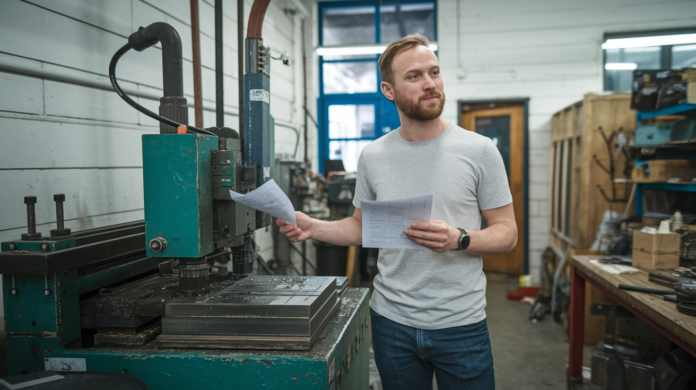

Do you think startups must drain their bank accounts to buy specialized production machines?
They don’t.
You can tap equipment loans, leases, vendor financing, or startup-focused lenders who lean on personal credit, not years of revenue.
There are also venture debt, revenue-based deals, and vendor rent-to-own options.
This post walks you through the fastest routes, the real repayment shapes (daily, monthly, or a percent of sales), the true all-in cost, and which choice fits your cash flow so you can scale without getting squeezed.
Immediate Financing Paths for Specialized Production Machinery
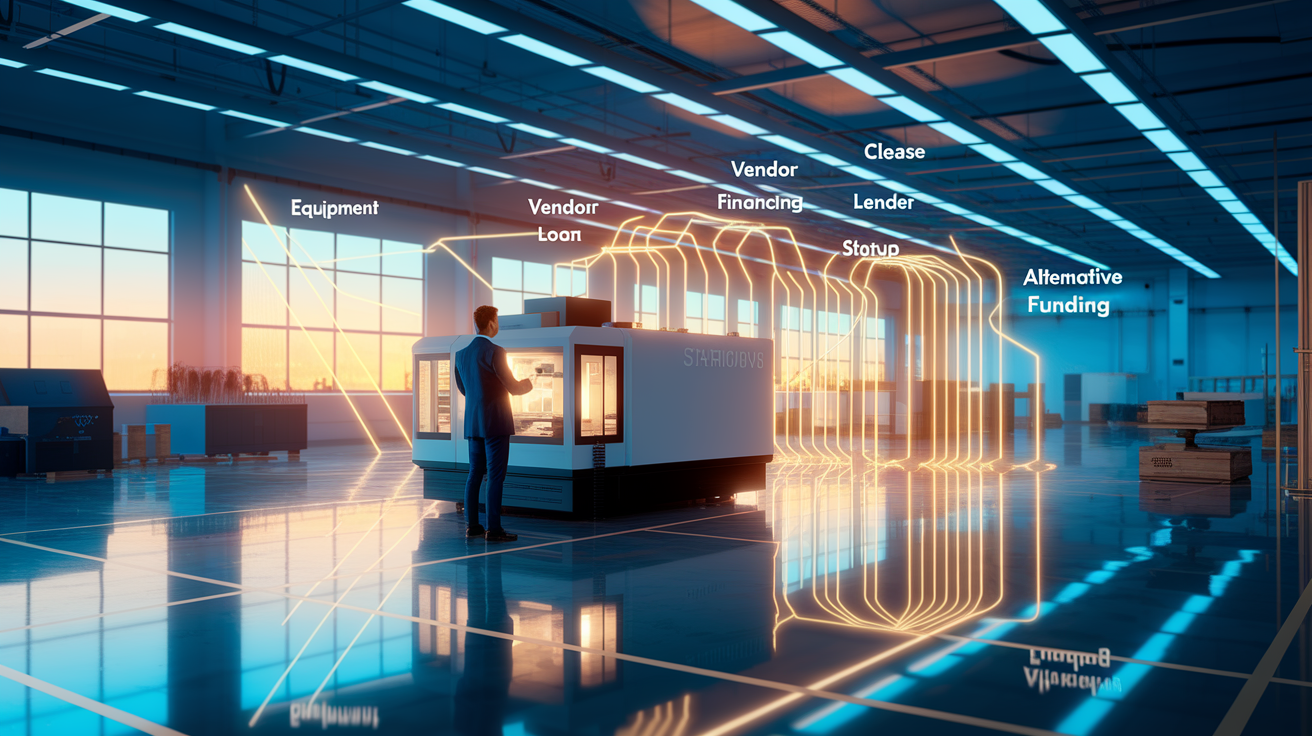
Startups can finance specialized production machinery through equipment loans, leases, vendor financing, and startup-focused lenders who care more about your personal credit than your company’s track record. These routes keep working capital intact by spreading machinery costs over time instead of wiping out cash reserves with one big purchase. The equipment itself usually serves as collateral, which lowers lender risk and makes approval easier even when you’re early-stage.
Equipment loans let you own the machine right away while you repay over 3 to 7 years. Leases keep monthly payments lower and make upgrades simpler when technology shifts. Vendor financing comes bundled with the machinery purchase, often with flexible terms tied to the manufacturer. Startup-friendly lenders look at your personal credit and business plan instead of demanding years of revenue history, opening doors when traditional banks turn you down.
Manufacturing systems, CNC mills and lathes, industrial presses, injection molding machines, laser cutters, 3D metal printers, and heavy fabrication equipment all qualify. Vehicles like box trucks for delivery, septic pumpers, tow trucks, and forestry equipment also fall under equipment finance structures. Computers, software-controlled tooling, packaging lines, and material handling systems round out the categories lenders commonly support.
Top financing paths include:
Equipment loans secured by the machine, giving you immediate ownership and fixed payment schedules.
Equipment leases that reduce upfront cost and preserve cash for operations and payroll.
Vendor financing offered directly by manufacturers or distributors, often with promotional rates.
Startup-focused lenders that evaluate personal credit scores when business credit history is thin.
Alternative models such as equipment as a service, revenue-based finance, and venture debt for high-growth companies.
Core Equipment Financing Structures for Startup Machinery Purchases
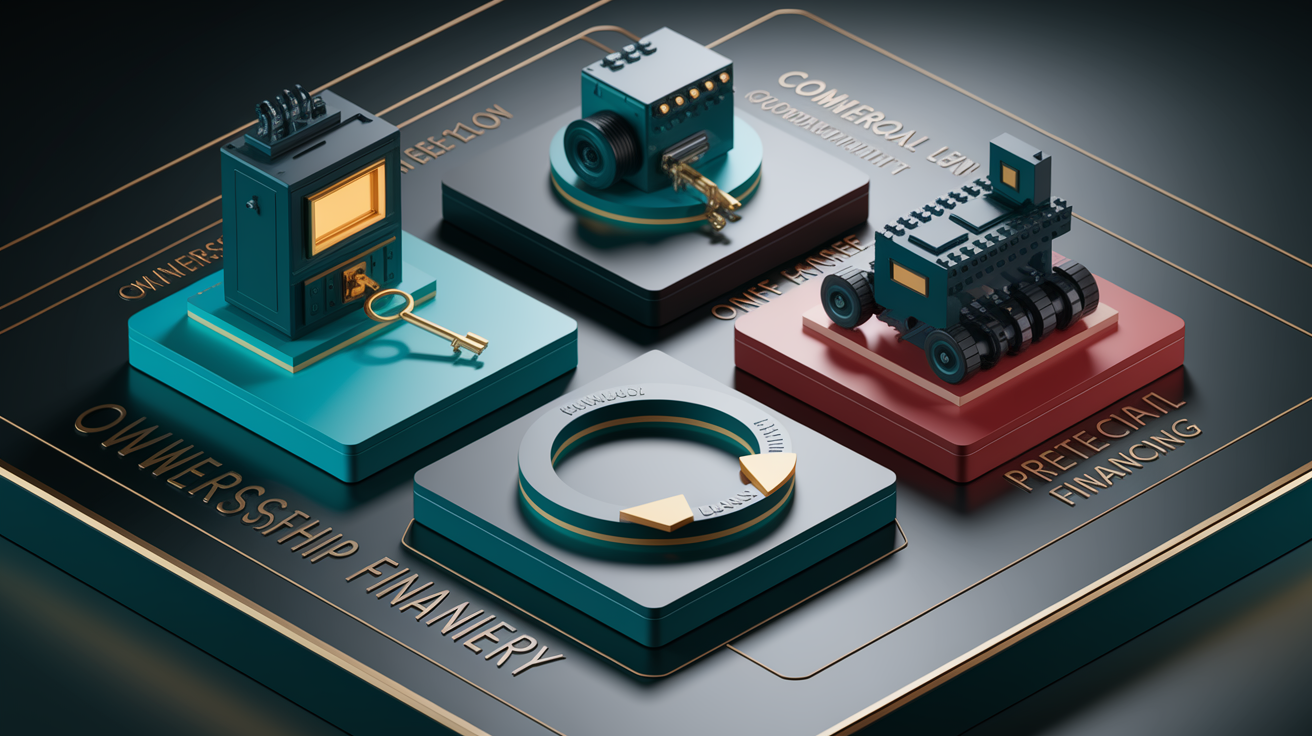
Equipment loans are secured by the machinery you purchase. The equipment acts as the lender’s collateral and you own it from day one. Rates tend to be lower than unsecured debt because the lender can repossess the asset if payments stop. Terms typically range from 3 to 7 years, with fixed or variable interest rates depending on your credit profile and the lender’s product. Monthly payments include both principal and interest. Once the loan is repaid, you own the machine outright with no residual payment or purchase option required.
Equipment leasing lets you use the machinery without buying it, which keeps monthly payments lower and preserves cash for other startup expenses. An operating lease treats the equipment as a rental, keeps it off your balance sheet, and often includes a return or upgrade option at term end. A capital lease (also called a finance lease) behaves more like a loan, with ownership transferring at the end of the term and the asset appearing on your balance sheet. Lease payments are predictable. At the end of the term you can return the equipment, renew the lease, or purchase it for a predetermined residual value.
Commercial equipment loans are designed for large-ticket manufacturing purchases like multi-axis CNC systems, automated production lines, or industrial robotics. These loans handle machinery priced from $250,000 to over $1,000,000, with longer terms (sometimes 7 to 10 years) and structured payments that align with the equipment’s productive life. Lenders offering commercial equipment loans often require detailed equipment quotes, vendor invoices, and a clear business plan showing how the machinery generates revenue or cost savings. Some programs allow staged funding tied to equipment installation milestones.
When you’re deciding between leasing and buying, it hinges on how fast the machinery becomes obsolete and how much liquidity you need. If you plan to upgrade every 2 to 3 years or operate in a sector where equipment specs change rapidly, leasing makes sense because you can return the old machine and lease new technology. If the machinery has a 10 to 15 year useful life and you can afford the down payment and monthly loan cost, buying locks in ownership and long-term tax benefits. Startups with tight cash flow often lease first, then buy once revenue stabilizes.
| Structure | Ownership | Best Use Case |
|---|---|---|
| Equipment Loan | Immediate ownership; equipment serves as collateral | Long productive life, stable technology, tax depreciation priority |
| Equipment Lease | Use only; return or purchase at term end | Rapid obsolescence, tight cash flow, upgrade flexibility needed |
| Commercial Equipment Loan | Ownership via large-ticket financing | Production lines, heavy machinery, multi-year ROI projects |
Leasing and Ownership Trade-Offs for Specialized Machinery
Leasing specialized machinery costs less per month than buying with a loan, because lease payments cover only the equipment’s depreciation during the lease term plus a finance charge, not the full purchase price. A $200,000 CNC system might require $4,500 per month on a 5-year loan but only $3,200 per month on a 3-year lease, preserving $1,300 monthly for payroll, materials, or marketing. That difference can keep a startup solvent during the first two years when revenue is unpredictable.
Tax implications favor ownership for long-term asset value and leasing for near-term cash flow. When you buy machinery with a loan, you own the asset and can claim depreciation deductions under MACRS or accelerated bonus depreciation rules like Section 179. Depreciation spreads the machine’s cost across its useful life, lowering taxable income each year. Leasing treats monthly payments as operating expenses that are fully deductible in the year paid, simplifying accounting and front-loading tax savings. Balance sheet impact matters too. Owned equipment appears as an asset and the loan as a liability. Operating leases may stay off the balance sheet entirely, improving financial ratios lenders and investors review.
Startups favor leasing when they expect rapid growth, plan to scale production quickly, or operate in industries where machinery models change every few years (like electronics assembly or additive manufacturing). Buying makes sense when the machinery is a workhorse with a 10-year life, when you need to show equity buildup on your balance sheet to attract bank credit later, or when tax depreciation offsets high early-year profits. If repayment fits daily or weekly sales and you can handle maintenance, ownership wins. If cash flow is lumpy or you’re testing a production model, lease until revenue proves the investment.
Key variables to assess:
Upgrade cycles. If you’ll replace the machine in 3 years or less, lease. If you’ll run it for 8 years, buy.
Cash flow predictability. Stable monthly revenue supports loan payments. Seasonal or contract-based revenue fits lease flexibility.
Residual value. Equipment that holds value (trucks, CNC) makes buying attractive. Rapidly obsolete tech (3D printers with new materials yearly) favors leasing.
Tax deductions. Depreciation and Section 179 reduce taxes when you own. Lease payments reduce taxable income immediately but offer no long-term asset.
Alternative Financing Routes for High-Cost Production Machinery
Venture debt, revenue-based financing, and crowdfunding each offer nontraditional paths for startups that can’t qualify for standard equipment loans or prefer to preserve equity. Venture debt provides term loans or credit lines backed by your investor funding, allowing you to borrow 20 to 40% of your recent equity raise to buy machinery without giving up more equity. Revenue-based financing ties repayment to monthly sales. You pay a fixed percentage of revenue until you hit an agreed total, so payments flex with cash flow. Crowdfunding platforms like Republic or StartEngine let you raise capital from small investors in exchange for revenue shares, equity, or perks. The funds can cover equipment purchases when debt isn’t available or when you want to build a customer community at launch.
Vendor financing and rent-to-own structures come directly from equipment manufacturers or distributors, who have strong incentive to close the sale and often offer flexible terms standard banks won’t match. Vendor programs may waive down payments, stretch terms to 7 or 10 years, or offer deferred-payment periods so you can start production and generate revenue before payments begin. Rent-to-own lets you make monthly payments that build toward ownership, with the option to purchase the equipment outright at any point. Useful when your credit is thin but the vendor trusts the machine’s value. Manufacturer finance arms (like Caterpillar Financial or Haas Finance) understand their own equipment’s resale value and approve deals faster because they know the collateral.
Used machinery financing advantages include lower purchase prices (often 40 to 60% of new), faster approval because collateral value is well established, and access to proven equipment with known performance records. Lenders finance used CNC mills, presses, injection molders, and packaging lines routinely, often requiring shorter terms (3 to 5 years) but accepting equipment age up to 10 to 15 years if it’s well maintained. Approval factors for used machinery focus on the machine’s condition, the seller’s documentation (maintenance logs, inspection reports), and the lender’s ability to resell the equipment if you default. Expect slightly higher rates than new equipment loans, but still far better terms than unsecured credit.
Funding Under $50,000
Startups needing smaller-ticket machinery (under $50,000) can access programs that emphasize the owner’s personal credit score instead of business operating history. One partner lender offers a Premium Consumer Lending Program that funds up to $50,000 based on the founder’s personal creditworthiness, even if the company has zero revenue or track record. These programs treat the equipment purchase as a consumer loan secured by the asset, bypassing traditional business underwriting that demands 2 to 3 years of financials. Approval can happen in 24 to 48 hours, and you can use the funds to buy from any vendor or marketplace. Used machinery marketplaces often list CNC mills, lathes, welders, and fabrication tools all under $50,000, making this route practical for job shops, prototyping startups, or contract manufacturers launching with one or two core machines. Personal credit programs require a FICO score typically above 650, proof of income or business plan, and the equipment quote or invoice.
Startup Qualification Requirements for Machinery Financing
Credit requirements split between personal credit scores and business credit profiles, with lenders weighing both when you’re a startup. Most equipment lenders accept personal FICO scores of 600 or higher, though scores above 680 unlock better rates and terms. Business credit comes from Dun & Bradstreet, Experian Business, or Equifax Business, and reflects your company’s payment history, credit utilization, and public records. If your startup is under 12 months old, lenders lean heavily on your personal score and your co-founder or guarantor credit if you add one. Strong personal credit can offset zero business history. Weak personal credit (below 580) limits you to vendor financing, rent-to-own, or programs that require 30 to 50% down and higher rates.
Documents lenders require include 12 to 24 months of business bank statements if you have operating history, recent personal and business tax returns, a profit and loss statement, balance sheet, and a business plan that explains the equipment’s role and revenue impact. Equipment quotes from vendors must show make, model, year, condition, and price, with itemized specs if the machinery is complex. Some lenders ask for an ROI memo showing monthly revenue or cost savings the equipment will produce, along with a simple cash flow forecast that proves repayment capacity. If you’re buying used equipment, include inspection reports, maintenance logs, and photos. Startups without 12 months of financials should prepare a detailed one-year projection, founder resumes highlighting industry experience, and any contracts or letters of intent from customers who will use the machinery’s output.
Interest rate drivers include your credit scores, the equipment’s collateral value and liquidity, loan term length, and down payment size. Rates on equipment loans range from 5% APR for top-tier credit and new machinery to 15 to 25% for startups with thin credit and used equipment. Shorter terms (3 years) carry lower rates than longer terms (7 years) because lender risk shrinks. Higher down payments (20 to 30%) reduce the lender’s exposure and often knock 2 to 4 percentage points off the rate. Collateral considerations focus on how easily the lender can repossess and resell the equipment if you default. Popular brands like Haas CNC or Trumpf lasers hold value and command better rates, while custom or niche machinery may require more down or accept higher rates.
Negotiation tactics for terms, down payments, and repayment schedule start before you sign the application. Request term sheets from at least three lenders and compare the effective interest cost (total repayment divided by amount financed, expressed as an annualized rate) alongside monthly payment and fees. Push for longer terms if cash flow is tight, but model the total interest cost to see if shorter terms with higher payments save money over the life of the deal. Negotiate down payment reductions by offering a co-signer, additional collateral (like a founder’s vehicle or real estate), or a blanket lien on other business assets. Ask lenders to waive origination fees, documentation fees, or prepayment penalties if your credit is strong. On repayment schedule, request payment timing that matches your revenue cycle. Monthly if sales are steady, quarterly if you serve seasonal customers, or deferred 60 to 90 days if you need time to install and ramp production.
Application Steps for Financing Specialized Machinery
Preparation starts with assembling your financial history and equipment quotes at least 30 days before you need the machinery delivered. Pull 12 to 24 months of business bank statements, your most recent tax returns, and current P&L and balance sheet from your accounting software. If you don’t have 12 months of operating history, prepare a detailed 12-month cash flow forecast and a one-page business plan that explains what you make, who buys it, and how the new equipment increases capacity or lowers unit cost. Gather three quotes for the same machine from different vendors to show lenders you’ve researched pricing. If you’re buying used, get a single quote with photos, serial numbers, and condition notes. Write a short ROI memo showing monthly revenue or savings the equipment will generate, and calculate a simple payback period (equipment cost divided by monthly incremental profit).
Submitting applications means filling out each lender’s form completely and uploading the documents they request in the format they specify (PDF, not scans of printouts). Most lenders ask for owner name, SSN, business EIN, time in business, annual revenue, credit authorization, and a description of the equipment including make, model, year, and seller. Answer every question on the application even if it seems redundant. Blank fields slow underwriting and trigger requests for clarification. Respond to lender requests same-day when they ask for additional statements, explanations of deposits, or updated quotes, because fast response signals reliability and keeps your application moving. Comparing offers means reviewing not just the interest rate but the total amount you’ll repay, the monthly payment, any balloon or residual at term end, origination and documentation fees, prepayment penalties, and the lender’s requirements for insurance, maintenance reserves, or periodic financial reporting.
Finalizing agreements and understanding terms before equipment deployment requires reading the entire contract, not just the payment schedule. Check the equipment description against your quote to ensure make, model, and specs match exactly. Verify the interest rate, term length, payment due dates, late-payment fees, and what happens if you want to pay off early. Understand your obligations for insurance (lender typically requires full-coverage insurance naming them as loss payee), maintenance (some leases require scheduled service documented with receipts), and use restrictions (equipment must stay at the business location and cannot be subleased without permission). Confirm whether the lender files a UCC-1 lien on the equipment and whether that lien attaches to other business assets. Once you sign, the lender funds the seller directly or wires funds to your business account with instructions to pay the vendor within 48 hours. After equipment delivery, keep invoices, delivery receipts, and installation records in case the lender audits or you need to claim tax deductions.
Application steps from lender research to contract signing:
Research at least 3 to 5 equipment lenders (banks, specialty finance companies, vendor finance arms) and confirm they serve startups and your machinery category.
Gather all financial documents, equipment quotes, and business-plan materials before starting any applications.
Submit applications online or via broker, ensuring every field is complete and every requested document is uploaded.
Respond to underwriter questions and requests within 24 hours, providing clarifications, updated statements, or additional collateral if needed.
Review and compare term sheets side by side, calculating total repayment cost and verifying monthly payment fits your cash flow.
Negotiate rate, down payment, term length, fees, and prepayment terms before you sign, then execute the contract and coordinate funding and equipment delivery.
Total Cost, ROI, and Cash-Flow Analysis for Machinery Investments
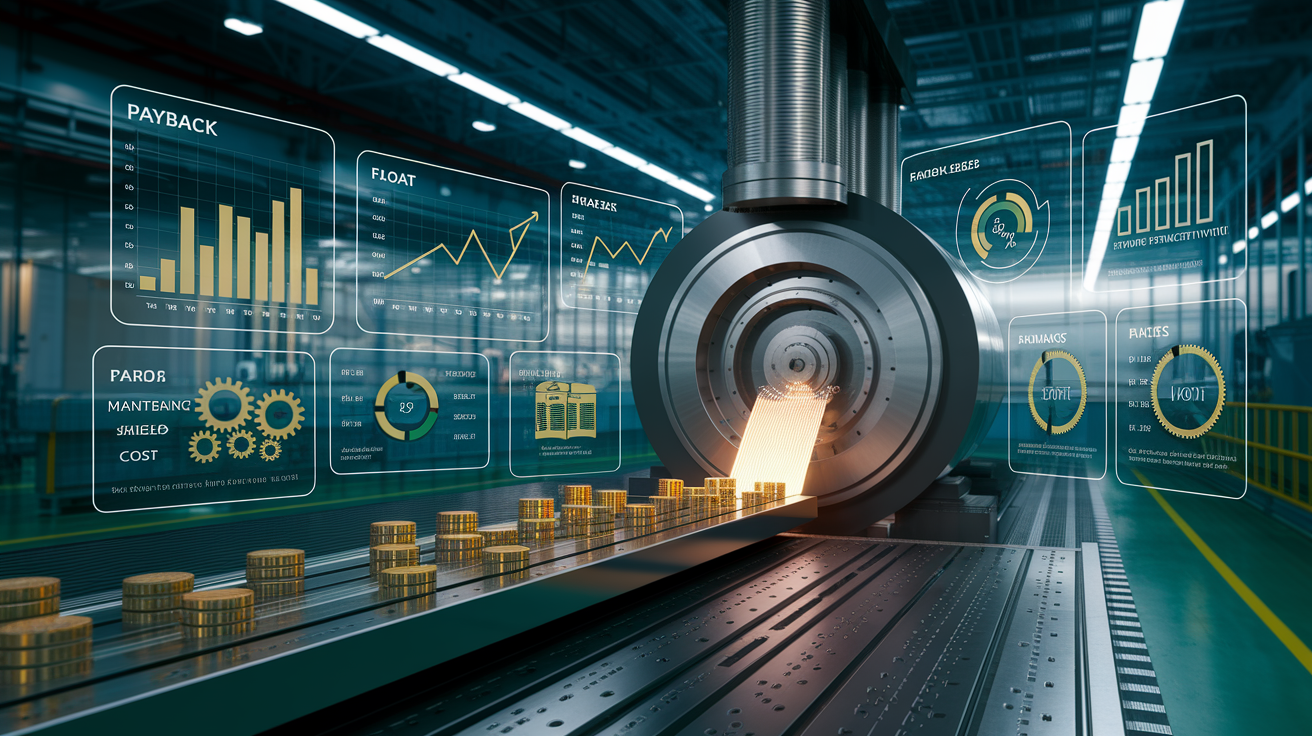
Total cost of ownership for production machinery includes the purchase price or total lease payments, interest or finance charges, down payment, origination and documentation fees, equipment insurance, maintenance and repair costs, and tax impacts from depreciation or lease expense deductions. For a $200,000 CNC mill financed over 5 years at 8% APR, you’ll repay approximately $243,000 total (purchase price plus $43,000 interest), pay $500 to $1,000 annually for insurance, and budget $5,000 to $10,000 per year for preventive maintenance and tooling. If you lease the same machine for 3 years at $3,500 per month, total payments reach $126,000, with maintenance often included in full-service leases, but you don’t own the asset at term end unless you pay a residual (commonly 10 to 15% of original price). Tax effects reduce net cost. Depreciation or Section 179 deductions can shelter $40,000 to $200,000 of taxable income in year one, lowering your effective equipment cost by your marginal tax rate (21% federal for C-corps, plus state taxes).
ROI metrics for machinery investments focus on payback period and incremental productivity or margin gains. Payback period equals the equipment’s all-in cost divided by monthly incremental profit it generates. A $100,000 waterjet cutter that lets you take contracts worth $8,000 per month in new margin pays back in 12.5 months ($100,000 ÷ $8,000). Productivity gains show up as higher throughput (parts per hour), lower scrap rates, reduced labor cost per unit, or new product capabilities that command premium pricing. Model the before-and-after unit economics. If manual machining costs you $50 per part in labor and the CNC drops that to $15 per part, calculate how many parts you need to produce monthly to cover the equipment payment, then confirm your sales pipeline supports that volume.
Financing term impacts differ for small, medium, and large-ticket machines. A $50,000 small-ticket machine (benchtop CNC, welding station, industrial printer) fits a 3 to 5 year loan at $1,000 to $1,600 per month or a 24 to 36 month lease at $1,400 to $2,000 per month. You can often self-fund the down payment or use a business credit card for the deposit. A $250,000 mid-ticket system (5-axis CNC, press brake, automated packaging line) typically requires a 5 to 7 year loan with $3,500 to $5,000 monthly payments and a 10 to 20% down payment, or a 36 to 48 month lease with lower monthly cost but higher total spend if you don’t buy out the residual. A $1,000,000+ large-ticket production line (robotic assembly, metal additive system, multi-stage paint line) demands a 7 to 10 year commercial equipment loan or structured vendor finance with staged funding tied to installation milestones, plus 20 to 30% equity or down payment and detailed cash flow covenants.
Example decision tests for startups: if monthly equipment payment exceeds 10% of your current gross revenue, the machinery is too expensive unless you have signed contracts that will double revenue within 90 days of installation. If payback period stretches past 24 months, the ROI is marginal unless the equipment opens a new market or prevents loss of a major customer. If lease vs loan monthly-payment difference is under $500 but buying gives you $30,000 in year-one depreciation deductions, buying wins if you’re profitable. If the machine becomes obsolete in 3 years and lease payments are $2,000 less per month than loan payments, leasing wins even though you don’t own the asset.
| Machine Cost Tier | Typical Financing Term | Key Considerations |
|---|---|---|
| $50,000 or less | 3–5 year loan or 24–36 month lease | Low down payment, personal credit may qualify, fast approval, compare total cost vs cash purchase savings |
| $100,000–$500,000 | 5–7 year loan or 36–60 month lease | 10–20% down, vendor financing available, negotiate maintenance inclusion, model tax depreciation impact |
| $500,000+ | 7–10 year commercial loan or structured vendor finance | 20–30% equity or down, staged funding, performance covenants, ROI justification required, consider SBA 504 or bank partnership |
Strategic Partnerships and Non-Debt Access to Production Machinery
Manufacturing incubators and accelerators provide access to production machinery without requiring large capital investment, making them ideal for startups testing product-market fit or ramping pilot production before committing to equipment purchases. Programs like MassChallenge, Greentown Labs, and regional manufacturing innovation centers offer shared CNC mills, 3D printers, laser cutters, injection molding machines, and assembly workstations in common workshop spaces. Membership fees range from $500 to $3,000 per month and include equipment access, technical support, and often mentorship from experienced manufacturers.
Joint ventures and shared-ownership arrangements let two or more startups pool capital to buy high-cost machinery and split usage time according to production schedules or revenue-sharing agreements. This model works well when both companies need the same type of equipment but can’t justify full-time ownership individually. Contracts should specify maintenance responsibilities, scheduling priority, cost allocation for repairs, and buyout terms if one party wants to exit. Shared-ownership reduces financing burden and spreads risk but requires strong communication and aligned production timelines to avoid conflicts.
Industry accelerators with hardware focus, such as HAX, Bolt, and Highway1, offer equipment stipends or direct access to prototyping and production machinery as part of their program structure. Participants receive seed funding (often $50,000 to $250,000), workspace with shared equipment, and supply-chain partnerships that may include vendor financing or discounted machinery purchases. These programs trade equity for access and funding, but the capital preservation and manufacturing expertise can outweigh dilution costs for founders who need both money and machine time to launch.
Access models for production machinery without large capital investment:
Shared prototyping labs and makerspaces with CNC, welding, and fabrication tools available for hourly or monthly membership fees.
Joint ventures where two startups co-purchase equipment, split costs and usage, and formalize agreements for maintenance and eventual buyout.
Manufacturing incubators that provide dedicated production space, machinery access, and technical support in exchange for monthly dues or small equity stakes.
Accelerator hardware programs offering equipment stipends, shared machine shops, and vendor partnerships as part of seed-stage investment packages.
Final Words
Buy, lease, or tap vendor finance—those are the immediate routes we covered, plus startup-friendly lenders and alternative models.
We ran loan vs lease tradeoffs, qualification needs, application steps, cost and ROI checks, and non-debt partnership options to lower upfront cash.
Do the simple math, gather quotes and docs, and compare offers—this is how startups can finance specialized production machinery without blowing working capital. You’ll get the gear you need and keep operations steady.
FAQ
Q: What is the 50 100 500 rule for startups?
A: The 50 100 500 rule for startups is a rough milestone heuristic founders use to validate progress: aim for about $50K, then $100K, then $500K in revenue or funding, though its meaning varies by context.
Q: How are start-ups financed and what are some different ways a startup can generate funding?
A: Start-ups are financed through founders’ savings, friends and family, angel investors, venture capital, bank loans, equipment loans or leases, revenue-based finance, grants, crowdfunding, vendor financing, and strategic partnerships.
Q: What are the best financing options for startups?
A: The best financing options for startups depend on need: choose loans or equipment leases to avoid giving up equity, angels/VC for fast growth, and venture debt or revenue-based finance once you have steady revenue.