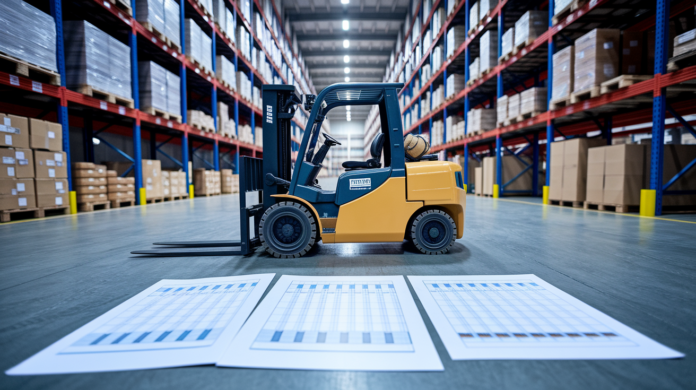

Think you can buy a new excavator with zero down?
Usually not.
Lenders typically want 10% to 20% down on new industrial machinery and 30% to 50% on used or specialty gear.
Terms often run 36 to 60 months, but you can see 72 to 84 months, TRAC leases with balloons, or rare 100% deals with higher monthly payments.
This post breaks down what lenders expect, how repayment works, what it costs in total, and the financial docs that matter.
Read on so you can match the right financing to your cash flow and avoid surprises.
Standard Down Payment Expectations for Industrial Equipment Loans
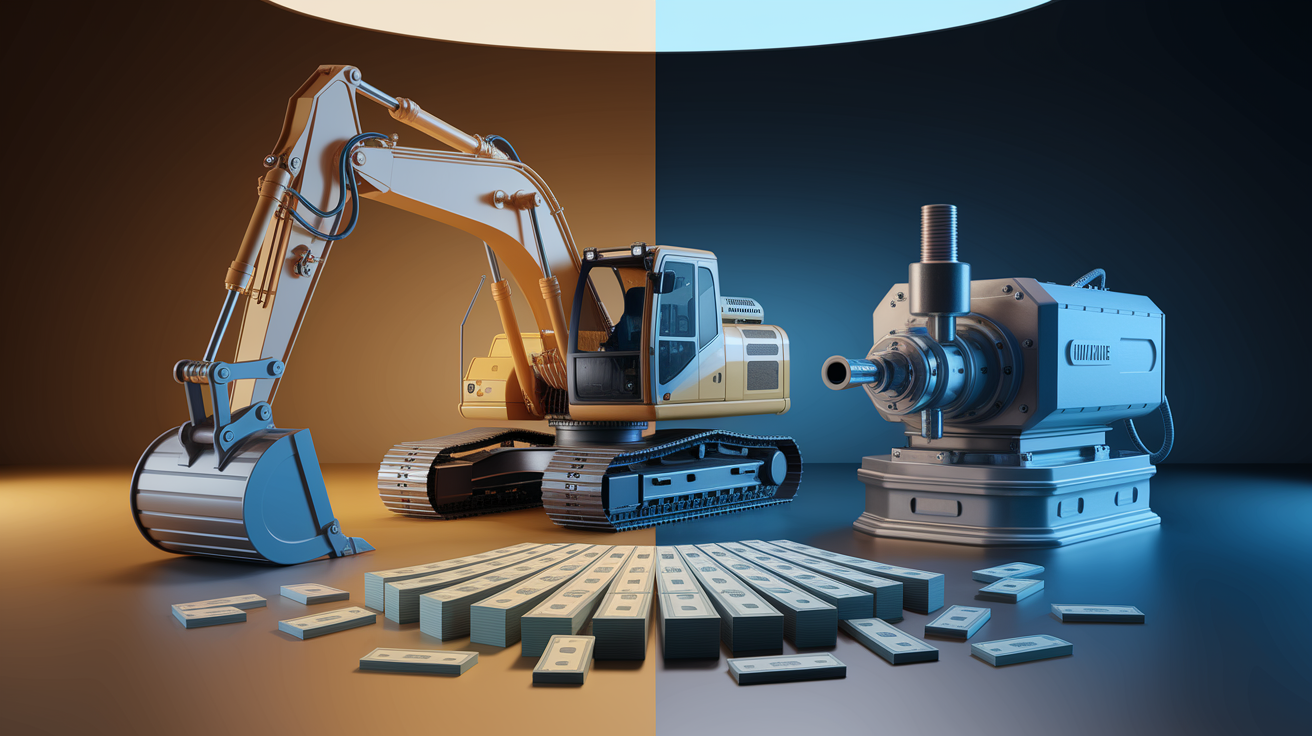
Most industrial equipment lenders want 10% to 20% down. That’s where you start if you’ve got steady cash flow, decent credit, and equipment that actually holds value. Financing a brand new excavator or CNC machine that’s still under warranty? You’re looking at 20% down. The lender covers the rest and sets up payments based on how long the equipment will last and whether you can handle the monthly hit.
Down payment requirements jump when the equipment gets riskier. Used machinery, specialty stuff with a narrow resale market, or assets that lose value unpredictably? Expect 30% to 50% down. Lenders see those as harder to unload if you stop paying, so they make you put more skin in the game upfront. You can still finance used equipment. You just share more of the risk from the start.
Zero down exists. But it’s rare. You’ll find it when your financials are strong, your credit’s clean, and the lender believes the equipment will start making money fast enough to justify 100% financing. The trade off is higher monthly payments, tighter underwriting, and usually a longer term or personal guarantee. Zero down keeps your working capital intact, but you pay for that in total cost. If monthly cash flow is already tight or the equipment won’t produce revenue right away, zero down can choke you harder than a small upfront payment would.
| Equipment Type | Typical Down Payment % | Common Borrower Conditions |
|---|---|---|
| New general purpose equipment (excavators, loaders, manufacturing machinery) | 20% | Credit score 600+, 2+ years in business, steady revenue |
| Used or older equipment with established resale markets | 30%–50% | Credit score 650+ preferred, strong financials, asset condition verified |
| Specialty or narrow market equipment (advanced tech, niche industrial machinery) | 30%–50% | Strong cash flow, personal guarantee often required, lender case by case review |
| Zero down financing (any equipment category) | 0% | Credit score 650+, pristine financials, clear ROI, possible personal guarantee, higher monthly payments |
Typical Loan Terms and Repayment Structures for Industrial Equipment Financing
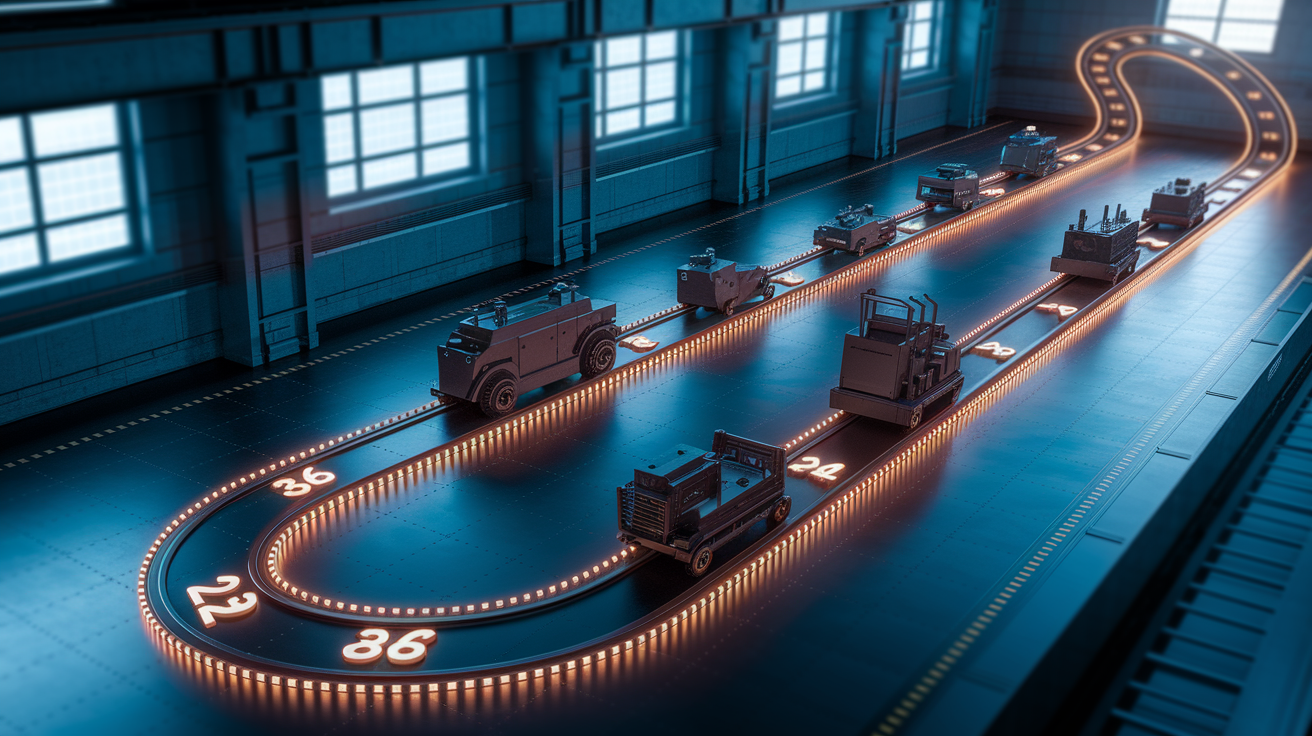
Industrial equipment loans usually run 3 to 5 years. The term length connects directly to how long the equipment’s expected to stay productive. If you’re financing a machine projected to last four years, expect a 48 month term. Lenders don’t want you paying for equipment after it’s obsolete or worn out, and they don’t want collateral that’s lost most of its value before the loan’s paid off. Matching the term to the asset’s life keeps repayment realistic and collateral coverage solid.
Zero down financing and longer terms can push repayment past the standard 60 month mark. Sometimes you’re looking at 72 or 84 months. That drops the monthly payment, but it also means you’re paying interest longer and potentially servicing debt on equipment that’s already losing efficiency. Extended terms work when the equipment holds value or generates steady revenue for its entire life. They backfire if the asset loses value faster than you pay down the loan. You want to match the term to both the machine’s lifespan and your cash flow pattern, not just the payment you can afford on paper.
TRAC leases offer a different repayment structure. They’re common in transportation and heavy construction. They let you reduce monthly payments by deferring 10% to 20% of the total cost to a balloon payment at the end of the lease term. That balloon comes due in a lump sum. You either pay it to keep the equipment or return the asset to the lender. It’s useful if you expect revenue to ramp up over time or if you plan to upgrade or liquidate the equipment before the balloon hits.
Standard amortized loan: Fixed monthly payments over 36 to 60 months, ownership transfers immediately, no balloon, common for general purpose construction and manufacturing equipment.
TRAC lease with balloon: Lower monthly payments, 10% to 20% balloon at end of term, used often for trucks, trailers, and mobile equipment with predictable resale markets.
Zero down high payment structure: 100% financed, higher monthly payments to offset lender risk, terms often 60 to 72 months, requires strong credit and clear equipment ROI.
Extended terms aligned to asset life: 72 to 84 months possible for high value, long life assets (large earthmoving equipment, heavy manufacturing machinery), used to manage payment size without sacrificing collateral coverage.
Seasonal payment schedules: Variable payment timing for businesses with seasonal revenue (agriculture, landscaping), payments structured around peak cash flow periods, less common but available with relationship lenders.
Interest Rates and Credit Requirements for Industrial Equipment Loan Terms
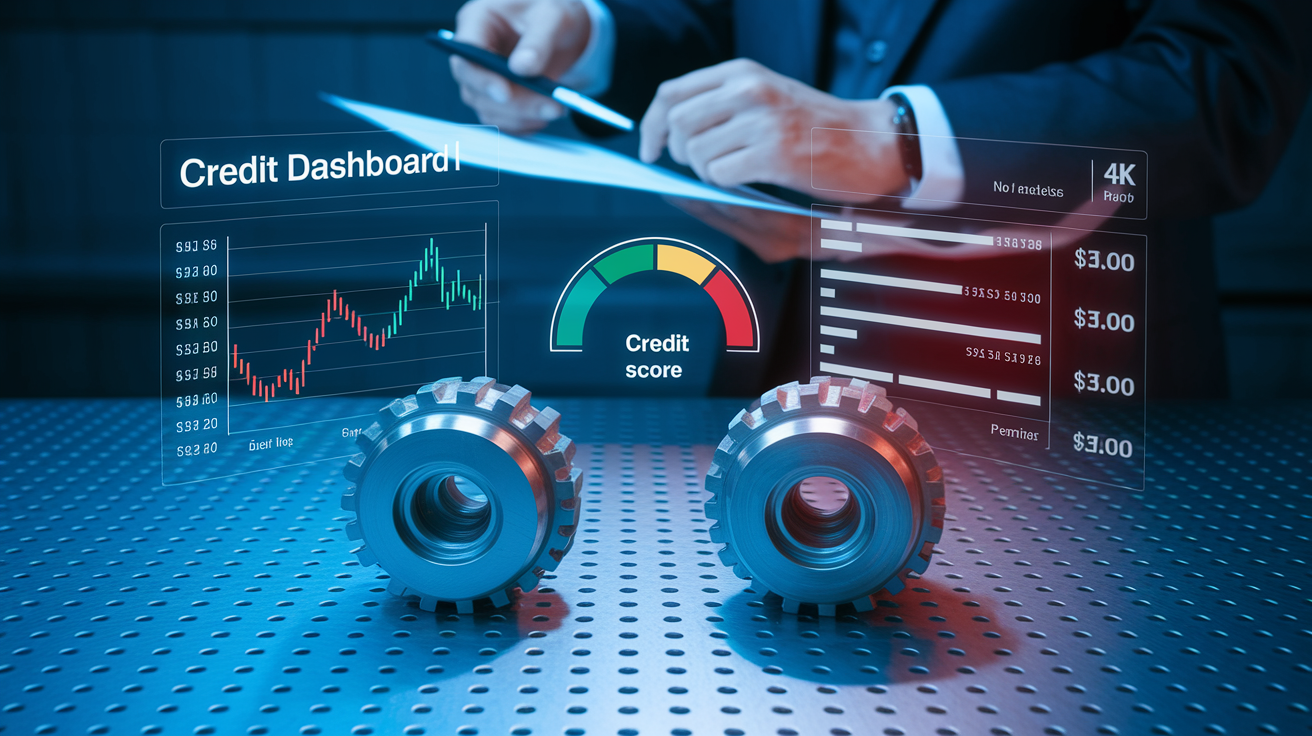
Interest rates depend on creditworthiness, cash flow history, and how strong the equipment is as collateral. Lenders typically want a business credit score above 600 to approve financing. But borrowers with scores above 650 get better rates, longer terms, and more flexible down payment options. If your credit sits in the mid 600s or higher, you’re more likely to qualify for zero down or near zero down structures without a personal guarantee.
Lenders also look at installment debt history and cash flow patterns. They want at least a two year track record of making installment payments on time. And they prefer that your existing installment debt equals at least 50% of the loan amount you’re requesting. That history shows you can handle structured repayment. If you’re asking for $200,000 in equipment financing but have never carried more than $50,000 in installment debt, expect the lender to either require a larger down payment or tighten the terms to reduce their exposure.
Used equipment financing almost always carries higher interest rates than new equipment loans. The collateral loses value faster, the resale market is less predictable, and the lender’s ability to recover principal in a default drops. That risk premium shows up in the rate. It often shows up in the required down payment and term length too. If you’re financing used machinery, budget for a rate that’s 1 to 3 percentage points higher than what you’d see on new equipment. And expect stricter documentation requirements around the asset’s condition, age, and market value.
Collateral, LTV Ratios, and Equipment Valuation in Industrial Equipment Loans
Lenders determine how much they’ll finance by calculating a loan to value ratio based on the equipment’s appraised or market value, not just the purchase price you’re paying. For new equipment, they’ll typically advance up to 80% of the lower of cost or current market value. That leaves you covering the remaining 20% as your down payment. If you’re buying a $100,000 piece of machinery and the lender’s appraisal confirms that value, they’ll finance $80,000 and you’ll bring $20,000 upfront.
Used equipment valuation gets messier. Lenders will advance either 70% of the equipment’s orderly liquidation value or 50% of its net book value, depending on which method they use. Orderly liquidation value assumes a sale under reasonable market conditions, not a fire sale. Net book value is the depreciated accounting value on your balance sheet. If the lender uses orderly liquidation and the equipment appraises at $60,000, they’ll finance $42,000 and you’ll need $18,000 down at minimum. If they use net book value and the asset shows $50,000 on your books, they’ll finance $25,000 and you’ll need to cover the rest. That’s why used equipment often requires 30% to 50% down, even when the asset’s in good shape.
Bill of sale or purchase order verification: The lender requests documentation showing the equipment’s purchase price and confirms the seller’s credibility and the transaction’s legitimacy.
Market research and comparable sales analysis: For used equipment, the lender researches recent sales of similar assets by condition, age, and usage to establish expected market value and resale potential.
Appraisal or valuation review: The lender may order a third party appraisal or rely on internal valuation models to confirm the equipment’s current market value and estimate its value at loan maturity.
UCC lien filing: Once the loan is approved, the lender files a Uniform Commercial Code lien on the equipment, securing their collateral interest for the full term of the loan or lease.
| Equipment Status | LTV Basis | Typical Advance % |
|---|---|---|
| New equipment | Lower of cost or current market value | 80% |
| Used equipment (orderly liquidation method) | Orderly liquidation value (market based sale estimate) | 70% |
| Used equipment (net book value method) | Depreciated accounting value on balance sheet | 50% |
Documentation Requirements That Influence Equipment Loan Terms and Approval Odds
Lenders underwrite equipment loans by reviewing your ability to service the monthly payment without straining operations. That means they need a clear picture of your cash flow, debt load, and long term viability. Most lenders require the last three years of business financial statements and balance sheets, the last three years of business tax returns, and the last two years of personal financial statements from any guarantors. If your loan request is over $500,000, expect the documentation requirements to expand and the underwriting timeline to stretch from a few hours to a few weeks.
The lender’s primary focus is your debt service coverage ratio. That’s the ratio of operating cash flow to total debt obligations. They want to see that you can comfortably cover the new equipment payment on top of your existing commitments, with enough margin left over to handle revenue dips or unexpected expenses. Strong financials can reduce the down payment requirement or unlock longer terms with no prepayment penalties. Weak financials push the lender toward higher down payments, shorter terms, and personal guarantees to offset the risk.
If your documentation is incomplete or your financials show inconsistent revenue or thin margins, the lender will either decline the application or tighten the terms to protect their position. That might mean requiring 30% down instead of 20%, shortening the term from 60 months to 36, or adding a co-borrower or additional collateral. The smoother and more transparent your financial picture, the more negotiating room you’ll have on down payment, interest rate, and repayment structure.
Comparing Loan vs Lease Terms When Financing Industrial Equipment
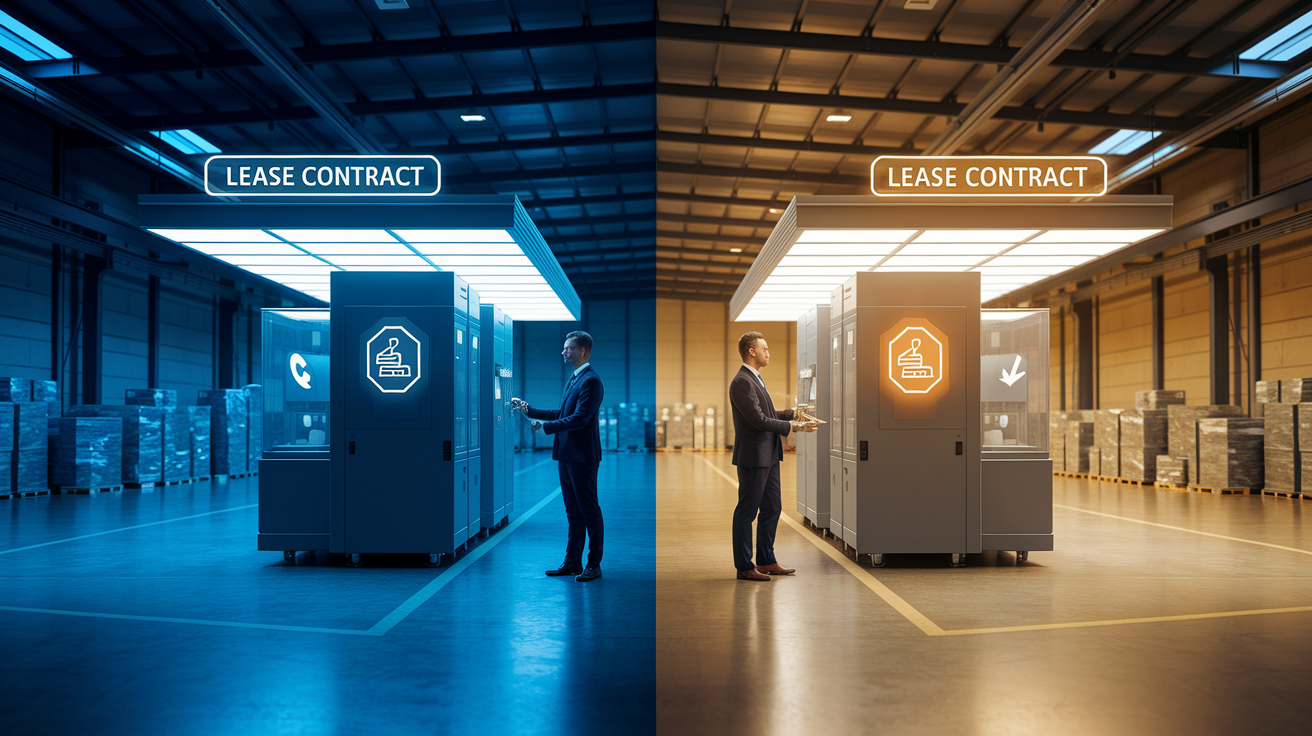
A loan transfers ownership to you immediately and adds the equipment to your balance sheet as an asset. You’re responsible for maintenance, insurance, and depreciation, and you can depreciate the asset for tax purposes from day one. Loan terms typically run 36 to 60 months with fixed monthly payments and no balloon. Once the loan is paid off, the equipment is yours free and clear. Loans work best for equipment you plan to keep long term and assets that hold value well beyond the loan term.
Leases function like rentals. You make monthly payments, but the lender retains ownership until you exercise a purchase option at the end of the lease. Lease payments are often lower than loan payments because you’re not financing the full value upfront, and some lease structures let you defer part of the cost to a balloon payment or return the equipment at lease end. The trade off is that you don’t own the asset during the lease term, and the total cost over time is usually higher than buying outright or financing with a loan.
Lease structures vary depending on your goals and the equipment type. A fair market value lease lets you return the equipment or buy it at its appraised value when the lease ends. A $1 buyout lease builds the full purchase price into the monthly payments, so you own the equipment for a nominal fee at the end. TRAC leases are common for trucks, trailers, and mobile equipment. They include a 10% to 20% balloon payment at lease end, which lowers the monthly payment but requires you to either pay the balloon or return the asset. Vendor financing programs sometimes offer lease to own options with flexible terms and faster approvals, especially for manufacturer branded equipment.
Fair market value lease: Lower monthly payments, return or purchase at appraised value at lease end, good for equipment you may want to upgrade or replace in 3 to 5 years.
$1 buyout lease: Ownership guaranteed at lease end, monthly payments similar to loan payments, functions like a loan but may offer different tax treatment.
TRAC lease: 10% to 20% balloon deferred to end of term, lower monthly payments, commonly used for transportation and logistics equipment.
Vendor financing programs: Manufacturer backed leases or loans, often faster approvals, may include equipment warranties or upgrade paths, sometimes higher rates but more flexible terms.
The Cost Factors Beyond Down Payment: Fees, Insurance, and Prepayment Clauses
Most industrial equipment loans include origination or processing fees, typically 1% to 3% of the loan amount. Some lenders roll those fees into the financing, which increases the total amount you’re repaying. Others require fees upfront as part of the closing costs. Either way, you need to account for them when calculating the true cost of the loan. A $100,000 loan with a 2% origination fee costs you $2,000 up front or adds $2,000 to your principal balance, depending on the lender’s structure.
Lenders require proof of comprehensive insurance on financed equipment for the full term of the loan or lease. That includes collision, theft, and liability coverage, and the lender is named as the loss payee. If you don’t already carry that level of coverage, the additional premium can add several hundred to several thousand dollars per year, depending on the equipment type and your operating environment. Lenders may also file a UCC lien on the equipment, which is standard collateral protection but sometimes comes with a small filing fee that you’ll pay at closing.
Origination and processing fees: Typically 1% to 3% of loan amount, may be rolled into financing or paid upfront, ask for an itemized cost breakdown before signing.
Insurance requirements: Comprehensive coverage mandatory for the full loan term, lender named as loss payee, factor annual premiums into total cost of ownership.
Prepayment penalties and balloon payments: Some loans or leases penalize early payoff, TRAC leases and certain long term structures include balloon payments at maturity, request full amortization schedule and end of term cost disclosure before committing.
Strategies to Reduce Down Payments and Improve Industrial Equipment Loan Terms
Trading in old equipment can reduce the cash you need to bring to the table. Lenders often credit the trade in value toward your down payment, which lowers the financed amount and makes approval easier. If you’re upgrading from a five year old excavator worth $40,000 to a new $150,000 model, that $40,000 trade in can cover your entire down payment and leave you financing $110,000 instead of $120,000. The key is getting a realistic appraisal on the trade in and making sure the lender agrees with the valuation before you commit to the deal.
Improving your credit score before you apply is one of the most effective ways to unlock better terms and lower down payment requirements. Paying down revolving balances, cleaning up outdated negative marks, and building installment debt history all help. If you’re sitting at 620 and can push to 660 over six months, you’ll likely qualify for zero down options or at least drop from a 30% down requirement to 20%. That difference can mean $20,000 less cash out of pocket on a $100,000 purchase.
Providing strong, organized documentation speeds up approval and gives you more negotiating leverage. Lenders reward borrowers who show up with clean financials, clear business plans, and proof of equipment ROI. If you can demonstrate that the equipment will generate $5,000 in monthly revenue and your current debt service coverage ratio is 1.5 or higher, the lender is more likely to reduce the down payment or extend the term. Preapproval is another tool. It locks in your borrowing capacity and lets you negotiate better pricing at auctions or with dealers, since you’re shopping as a cash buyer with financing already secured.
Negotiate with the lender directly: Ask for lower down payment options, longer terms, or rate reductions based on your relationship history, cash flow strength, or willingness to cross sell other banking products.
Improve credit before applying: Focus on paying down revolving debt, disputing errors, and building installment payment history to cross the 650 threshold, which often unlocks better terms.
Leverage trade ins to reduce cash outlay: Get a pre appraisal on your current equipment and negotiate trade in credit toward the down payment, make sure the lender accepts the valuation before finalizing the purchase.
Provide detailed documentation and a clear business case: Submit complete financials, equipment specifications, and revenue projections to strengthen your approval odds and reduce perceived lender risk.
Align equipment choice with lender preferences: Choose equipment types the lender is familiar with and that hold strong resale value, new general purpose machinery almost always qualifies for better terms than specialty or niche equipment.
We covered what lenders usually expect for down payments: 10–20% is common, higher for riskier equipment, and zero‑down options carry higher monthly costs.
You also saw typical loan lengths (36–84 months), repayment styles like TRAC or balloon payments, and how credit, documentation, and fees change your deal.
When it’s time to decide, compare offers against your cash coming in and going out. Use the phrase typical down payment and terms for industrial equipment loans to get focused quotes, then pick the structure that keeps work moving and payments manageable.
FAQ
Q: What is a good down payment for equipment?
A: A good down payment for equipment is typically 10–20% of the purchase price. Many lenders treat 20% as standard; used or higher‑risk gear can need 30–50%, while zero‑down raises cost and scrutiny.
Q: Do you have to put 20% down on a commercial loan?
A: You don’t always have to put 20% down on a commercial loan. Lenders often ask 10–20%, but requirements vary with equipment type, credit strength, and whether you choose higher‑cost zero‑down options.
Q: What are typical terms for equipment financing?
A: Typical equipment financing terms run 36–60 months (3–5 years) and usually match asset life. For example, a 4‑year machine often gets a 48‑month loan. Some leases add end‑term balloons or seasonal schedules.
Q: How hard is it to get a $1,000,000 business loan?
A: Getting a $1,000,000 business loan is challenging but doable with strong cash flow, 2+ years in business, solid credit (often 650+ preferred), collateral or guarantees, and complete financials, and approval can take weeks to months.