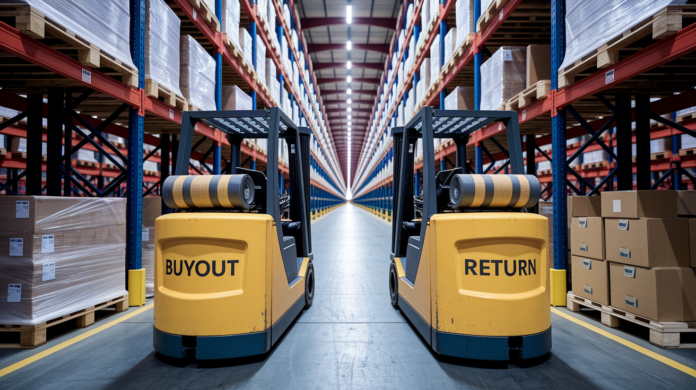

Which is smarter? Pay a bit more each month and end up owning the machine, or keep payments lower now and return it later?
Lease-to-own treats the machine like a financed purchase. You build equity, claim depreciation and interest deductions, and face residual risk at term end.
Operating leases are rental style. You get lower monthly cost, easier upgrades, and the lessor usually keeps residual-value risk.
This post compares ownership, monthly cash impact, tax treatment, and end-of-term outcomes so you can pick the option that fits your cash flow and timeline.
Core Comparison Overview for Lease-to-Own vs Operating Lease Machinery Structures
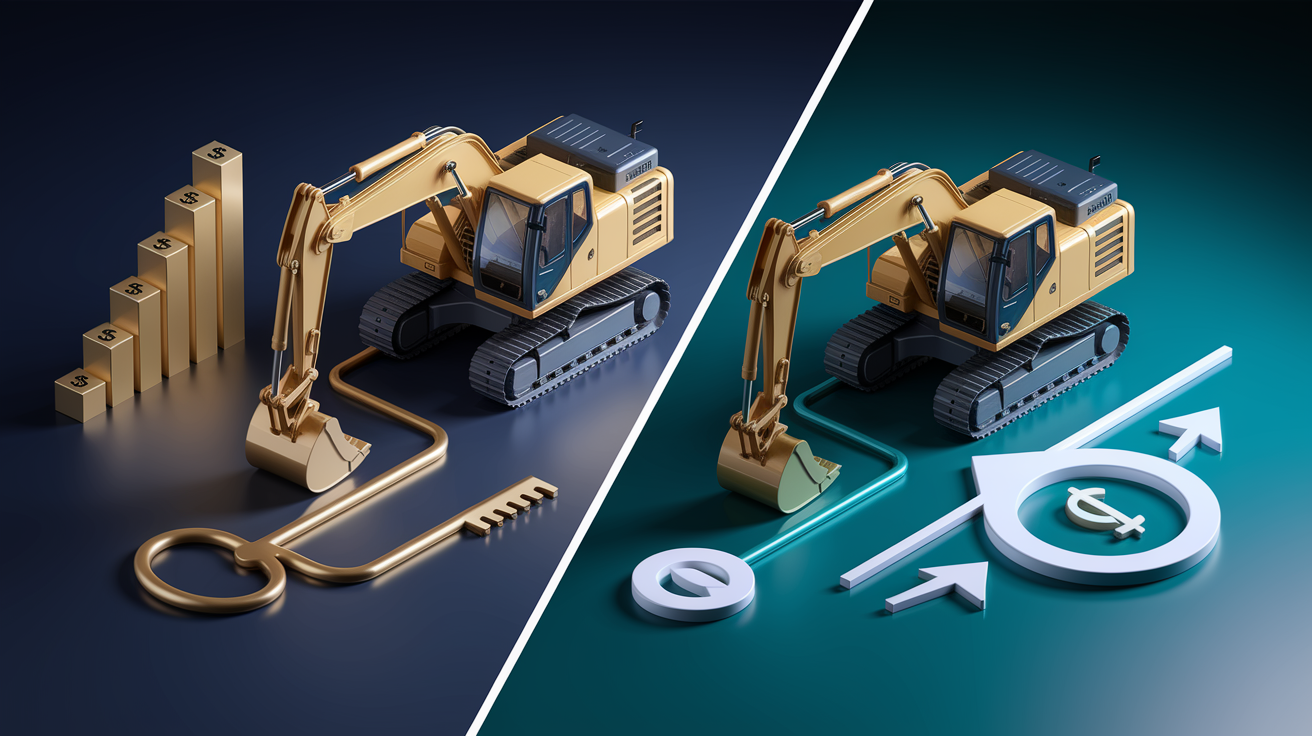
Lease-to-own structures (sometimes called capital or finance leases) treat machinery like a financed purchase. You get the asset on day one, build equity as you pay, and typically own the machine outright at term end for a nominal amount, often just $1. These arrangements check one or more ownership boxes: transfer of title, bargain purchase option, lease term covering at least 75% of the asset’s useful life, or present value of payments hitting 90% or more of fair market value. Lease-to-own works when you need long-term control and want to claim depreciation and interest deductions.
Operating leases function like rentals. The lessor keeps ownership, you pay monthly to use the asset, and when the term wraps you return the machine unless you negotiate a fair-market-value buyout. These don’t meet the ownership tests, so there’s no equity and no residual-value risk on your end. Operating leases fit short-term needs, situations where equipment goes obsolete fast, or when you want the flexibility to upgrade without sitting on depreciating assets.
Under current accounting rules (ASC 842, IFRS 16, and ASPE 3065), both lease types now land on the balance sheet as a right-of-use asset and a matching lease liability. The old off-balance-sheet advantage for operating leases? Gone. The real differences now show up in monthly payments, total cost, tax treatment, and what happens when the term ends. A numeric example on a $100,000 machine over 36 months shows lease-to-own at roughly $3,042 per month (total paid around $109,512) versus operating lease at about $2,800 per month (total paid around $100,800 with return). That gap reflects residual value and ownership transfer built into the lease-to-own payment.
Key distinctions between lease-to-own and operating leases for machinery:
- Ownership: Lease-to-own transfers or offers a bargain buyout. Operating lease ends with return or fair-market-value purchase.
- Payments: Lease-to-own payments run higher because they build equity and cover the full asset cost. Operating payments reflect usage without ownership.
- Tax treatment: Lease-to-own allows depreciation and interest deductions separately. Operating leases often permit full payment deduction as operating expense.
- Maintenance: Lease-to-own usually places responsibility on the lessee. Operating leases may bundle maintenance or shift it to the lessor, depending on contract.
- Flexibility: Operating leases offer easier equipment upgrades. Lease-to-own commits you to one asset long term.
- End-of-term outcome: Lease-to-own leaves you owning the machine. Operating lease leaves you negotiating a buyout or walking away.
Ownership, Control, and Residual Value Responsibilities in Machinery Leasing
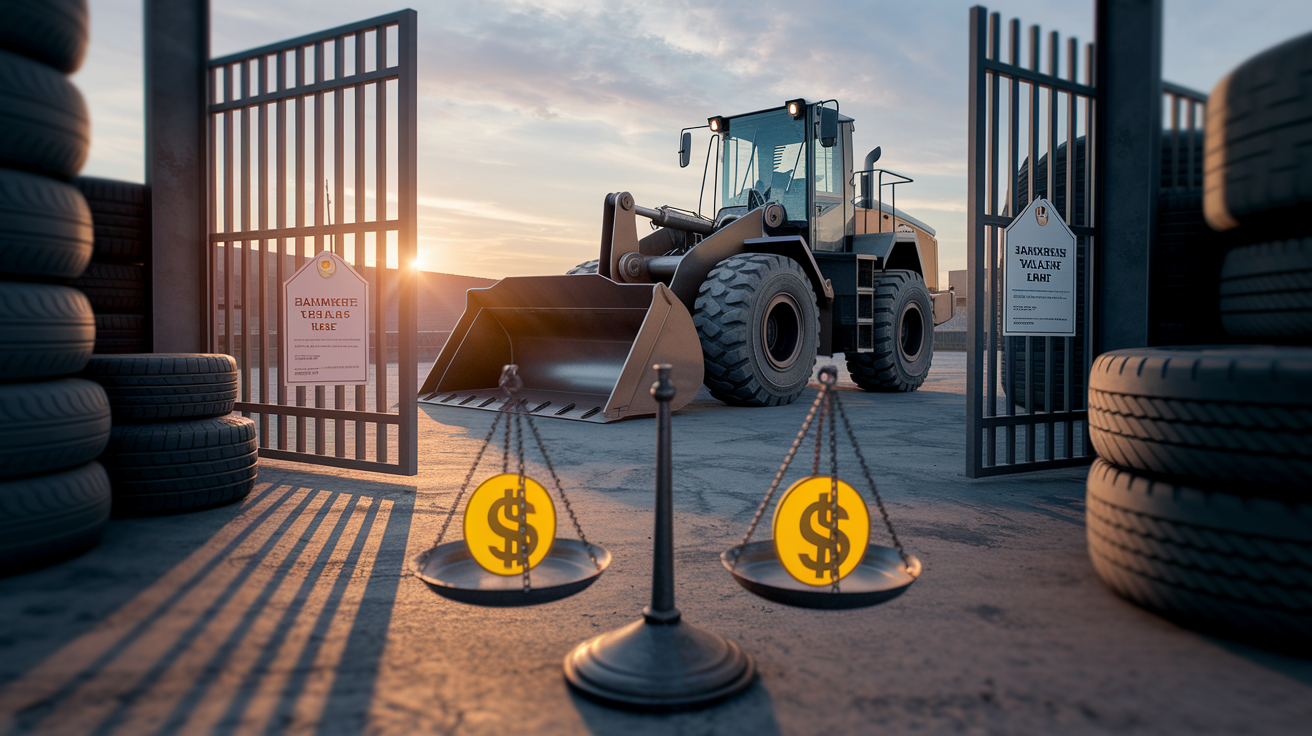
Residual value is the estimated worth of the machinery at lease end, and who bears that risk shapes the entire deal. In a lease-to-own arrangement, you effectively assume residual-value risk because the contract’s structured so the machine transfers at term end, either automatically or via a $1 buyout. If the asset depreciates faster than expected, you still own it. If it holds value well, you capture the upside. That risk-reward trade is part of building equity.
Operating leases flip that exposure. The lessor holds the residual-value risk and prices the monthly payment to recover cost minus the expected future value of the returned machine. If the machine loses value faster than predicted, the lessor absorbs the shortfall. If it retains value, the lessor benefits. You simply return the asset and walk away, avoiding any depreciation surprise.
Buyout options further define the ownership path. Lease-to-own contracts typically include a fixed, nominal buyout (often $1 or a small percentage of original cost) making ownership transfer automatic and predictable. Operating leases that offer a purchase option usually set it at fair market value, determined by appraisal or market benchmarks at term end. That FMV buyout introduces uncertainty: you may face a higher cost than anticipated if the asset retains more value than expected, or a lower cost if depreciation was steep. For businesses that plan to own the machinery long term, the fixed buyout in lease-to-own eliminates guesswork and locks the asset’s future value at known cost.
| Lease Type | Ownership at End | Residual Risk | Buyout Option |
|---|---|---|---|
| Lease-to-Own (Finance) | Transfers or bargain purchase | Borne by lessee | Fixed (e.g., $1) or nominal |
| Operating Lease | Return to lessor | Borne by lessor | Fair market value (if offered) |
Accounting Treatment Under ASC 842, IFRS 16, and ASPE 3065 for Machinery Leases
Before the recent standards overhaul, operating leases stayed off the balance sheet entirely, letting businesses keep debt ratios clean and EBITDA unburdened. That changed when ASC 842 (US), IFRS 16 (international), and ASPE 3065 (Canada) required nearly all leases to appear as right-of-use assets and lease liabilities. Both lease-to-own and operating leases now create a balance-sheet entry at inception, calculated as the present value of future lease payments discounted at the lease’s implicit interest rate or your incremental borrowing rate.
The real accounting difference shows up in how those assets and liabilities get measured period to period. Finance leases (lease-to-own) split the expense into two components: amortization of the right-of-use asset and interest expense on the lease liability, calculated using the effective interest method. That produces a front-loaded expense pattern. Higher total cost in the early years as the interest component is largest, then gradually declining. Operating leases, by contrast, recognize a single straight-line lease expense each period, keeping the income-statement impact steady and predictable over the lease term.
That distinction matters for financial ratios and debt covenants. Finance leases increase both depreciation (or amortization) and interest expense, which can raise reported debt and lower interest-coverage ratios. Operating leases show one line of lease expense, often classified as operating cost rather than financing, which can preserve EBITDA and keep leverage metrics cleaner even though the liability still appears on the books. If you’re negotiating bank covenants or preparing for investor scrutiny, you need to model both approaches under current standards to see which expense pattern fits your reporting goals.
How ASC 842 Changes Machinery Lease Reporting
ASC 842 eliminated the balance-sheet shortcut that made operating leases attractive purely for clean financials. Now both lease types hit total liabilities and total assets, so choosing between them has shifted from “on-book versus off-book” to “what do the payments cost, what’s the tax impact, and do we want to own the asset?” Practically, that means lease classification should be driven by cash flow, maintenance strategy, and long-term equipment needs, not just accounting appearance. The standard does offer practical exemptions. Leases under 12 months or low-value assets (below about $5,000 when new, depending on jurisdiction) can stay off the books, but commercial machinery rarely fits those thresholds. Businesses leasing excavators, CNC machines, or forklifts will see those leases capitalized, so the decision framework now prioritizes total cost, tax deductibility, and ownership objectives over balance-sheet cosmetics.
Tax Implications, Section 179, and Depreciation for Machinery Lease Choices
Tax treatment splits sharply between the two lease types and can swing the total cost calculation by thousands of dollars over the term. Lease-to-own arrangements let you claim depreciation deductions on the machinery (under MACRS or similar schedules) plus interest expense deductions on the lease liability, because the IRS treats the transaction like a financed purchase. That double benefit can accelerate tax savings in the early years, especially if your business qualifies for Section 179 expensing (up to $1,160,000 for 2023, subject to phase-out thresholds) or bonus depreciation (100% first-year write-off, though scheduled to phase down). Operating leases typically allow the full monthly payment to be deducted as an operating expense, which can simplify recordkeeping but may result in slower total deductions if the lease term stretches longer than the applicable depreciation schedule.
The tax outcome depends heavily on how the IRS classifies the lease, which mirrors the accounting tests but isn’t always identical. A lease that transfers ownership, includes a bargain purchase, or meets the 90% present-value or 75% useful-life thresholds will generally be treated as a conditional sale for tax purposes, granting depreciation and interest treatment. One that doesn’t meet those tests stays a true lease, with payments deducted as rent. You should model the after-tax cash flows for each option, factoring in current marginal tax rates, expected profitability, and any expiring tax incentives like bonus depreciation.
Five tax variables that influence the lease choice for commercial machinery:
- Depreciation availability: Lease-to-own unlocks MACRS or accelerated depreciation schedules. Operating leases don’t allow you to claim depreciation unless ownership transfers.
- Interest deductibility: Lease-to-own agreements split payments into principal and interest, and the interest portion is deductible. Operating leases deduct the full payment, which can be simpler but may not front-load deductions as aggressively.
- Payment deductibility: Operating lease payments are usually fully deductible as business expenses in the year paid, subject to IRS lease-versus-purchase tests.
- Section 179 eligibility: Machinery acquired via lease-to-own may qualify for immediate expensing under Section 179 if you’re considered the owner for tax purposes. Operating leases don’t qualify.
- Bonus depreciation scenarios: If bonus depreciation is still available (100% in 2023, scheduled to phase out), lease-to-own can deliver first-year write-offs equal to the full equipment cost, significantly accelerating tax savings versus operating lease deductions spread evenly over the term.
Monthly Payment Differences and Total Cost-of-Ownership Modeling for Machinery Leases

Monthly payments reflect the economic structure of each lease type and the residual value assumption baked into the contract. Lease-to-own payments are calculated to amortize the full purchase price of the machinery over the term, plus interest, minus any nominal residual (often $1). Operating lease payments reflect the depreciation the lessor expects during the lease term (the difference between the asset’s starting value and its expected fair market value at return) plus the lessor’s profit margin and cost of funds. That typically produces a lower monthly outlay for operating leases, but without any equity buildup.
In the $100,000 machinery example over 36 months, the lease-to-own structure at roughly 6% annual interest yields monthly payments around $3,042, totaling approximately $109,512 paid over three years. You end up owning the machine, so the total cost reflects the purchase price plus financing cost. The operating lease on the same machine, priced at approximately 2.8% to 3.0% of asset value per month (a common market structure for fair-market-value leases), results in monthly payments around $2,800 and total payments near $100,800. That lower total reflects the lessor’s assumption that the machine will retain residual value at term end, reducing the amount you need to “pay down” during the lease.
| Scenario | Monthly Payment | Total Paid (36 mo) | Ownership End-of-Term |
|---|---|---|---|
| Lease-to-Own (Finance) | ≈ $3,042 | ≈ $109,512 | Yes (transfer or $1 buyout) |
| Operating Lease (Return) | ≈ $2,800 | ≈ $100,800 | No (return or FMV buyout) |
To model total cost of ownership properly, project each scenario over the machinery’s expected useful life, typically 3, 5, or 7 years for commercial equipment. For lease-to-own, add any upfront costs, total lease payments, and end-of-term buyout (if not $1), then subtract tax savings from depreciation and interest deductions. For operating leases, add total lease payments over the same horizon (or multiple lease cycles if upgrading), add any FMV buyout if you choose to purchase, subtract tax savings from lease-payment deductions, and factor in the cost of not owning the asset (lost residual value or need to re-lease). Compare the after-tax present value of both paths to see which delivers lower net cost for the business outcome you need.
Maintenance, Warranty, and Risk Allocation Under Each Machinery Lease Type
Maintenance responsibility and the risk of unexpected repair costs shift depending on which lease structure you choose and what the contract says. Finance leases (lease-to-own) generally treat you as the economic owner, so maintenance, repairs, insurance, and compliance costs fall to you unless the agreement explicitly carves out certain responsibilities. That makes sense. If you’re building equity and will own the machine, you’re also taking on the operational risk. Operating leases can go either way: some contracts bundle maintenance and service into the monthly payment (a “full-service lease”), especially for fleets of standardized equipment like forklifts or delivery trucks, while others leave maintenance to you and simply require proof of service records at return.
Warranties add another layer. New machinery often comes with a manufacturer’s warranty covering defects and certain failures for the first year or two. Under lease-to-own, you’re usually the party entitled to warranty claims because you’re the effective owner. Under operating leases, the lessor may retain the warranty benefit but pass through coverage to you via the lease terms, or the lessor may handle warranty claims directly and provide a replacement unit during repairs. Always confirm who holds warranty rights and who pays for post-warranty service.
Obsolescence risk (particularly relevant for machinery in rapidly evolving industries like construction tech or automated manufacturing) typically lands on the party holding residual value. In lease-to-own, that’s you: if the equipment becomes outdated before the end of its physical life, you’re stuck with a less-competitive asset. In operating leases, the lessor absorbs that risk, which is why operating leases for high-tech machinery often carry higher effective costs. The lessor prices in the chance that returned equipment won’t lease again at favorable rates.
Typical maintenance and risk allocations by lease type:
- Routine maintenance and servicing: Lease-to-own usually requires you to maintain. Operating lease may bundle service or require you to follow a service schedule and document compliance.
- Major repairs and component replacement: Lease-to-own places cost on you. Operating lease may shift to lessor if included in contract or if failure results from normal wear under specified use limits.
- Insurance requirements: Both lease types typically mandate commercial property and liability insurance naming the lessor as loss payee or additional insured. You pay premiums.
- Wear-and-tear and return condition: Operating leases define acceptable wear standards (often “normal wear and tear”). Excessive damage can trigger end-of-lease charges, sometimes substantial for heavy machinery.
End-of-Term Options, Buyout Paths, and Flexibility with Machinery Leasing
What happens when the lease term ends defines the strategic value of each structure. Lease-to-own contracts are built to transfer ownership, either automatically via title transfer clauses or through a nominal buyout price like $1 or 10% of original cost. You don’t negotiate at term end. The machine simply becomes yours, and you can continue using it, sell it, trade it, or write it down as a fully owned asset. That certainty makes long-term planning easier and locks in the total acquisition cost up front.
Operating leases end with a choice: return the equipment, negotiate a fair-market-value purchase, or (if the contract allows) extend the lease at a reduced rate. Returning the machine is the cleanest exit. No residual-value exposure, no disposal headaches, and immediate access to newer models if you want to upgrade. FMV buyouts let you keep the equipment if it’s still useful, but the price will reflect current market conditions and the lessor’s appraisal. If the machinery held value better than expected, the buyout might be higher than anticipated. If depreciation was steep or the asset became less desirable, you may get a favorable price.
Flexibility tilts toward operating leases. Businesses that need to stay current with technology, scale capacity up and down seasonally, or avoid long-term capital commitments benefit from the ability to walk away or upgrade every few years. Lease-to-own offers less flexibility but more control. Once you own the asset, you can modify it, run it harder, or hold it longer without worrying about return conditions or residual-value penalties.
Common Buyout Triggers
Three buyout structures show up in commercial machinery leases. Fair market value (FMV) buyouts are standard in operating leases and set the purchase price based on independent appraisal or industry pricing guides at term end. “The backhoe’s worth $45,000 today, so that’s your buyout price.” Fixed-price buyouts lock the purchase amount into the lease from day one, often structured as 10% or 15% of original cost, giving you predictability but sometimes at a premium if the asset depreciates faster than that fixed amount. Bargain purchase options, common in lease-to-own, set the buyout at a price so low (typically $1 to $100) that exercising the option is automatic and economically obvious. These bargain options trigger finance-lease classification under accounting and tax rules because they signal that ownership transfer was always the intent.
Pros and Cons Breakdown for Machinery Lease-to-Own vs Operating Lease
Choosing between lease-to-own and operating lease structures comes down to balancing ownership, cost, flexibility, and financial-statement impact. Each approach serves different business goals, and understanding the tradeoffs lets you match the lease structure to your machinery’s role and your company’s cash-flow priorities.
Lease-to-own (finance lease) pros:
- Builds equity in the machinery from day one, delivering ownership and residual value at term end.
- Unlocks depreciation and interest tax deductions, which can accelerate tax savings and reduce effective financing cost.
- Provides full control over the asset. No return conditions, no mileage limits, no restrictions on modifications or heavy use.
- Often results in lower total cost over the machinery’s full useful life compared to repeated short-term operating leases.
- Allows access to Section 179 expensing and bonus depreciation (if applicable), delivering significant first-year tax benefits for profitable businesses.
Lease-to-own (finance lease) cons:
- Higher monthly payments because you’re financing the full purchase price plus interest, not just usage.
- Front-loaded expense pattern under ASC 842 (interest plus amortization) produces higher reported costs in early years, which can squeeze EBITDA and profit margins on financial statements.
- You assume residual-value risk and obsolescence exposure. If the machinery becomes outdated or loses value faster than expected, you still own it.
- Requires you to handle and pay for all maintenance, repairs, insurance, and compliance costs throughout the term.
- Less flexibility to upgrade or exit early without refinancing, selling the asset, or negotiating a costly termination.
Operating lease pros:
- Lower monthly payments, improving cash flow and leaving more working capital available for payroll, inventory, or growth.
- Flexibility to return the equipment at term end and upgrade to newer, more efficient models without selling or disposing of old assets.
- Lessor retains residual-value risk, so you’re not exposed to depreciation surprises or obsolescence in fast-changing equipment categories.
- Simpler tax treatment with full lease payments often deductible as operating expenses, reducing recordkeeping complexity.
- Can include bundled maintenance or service agreements, shifting repair cost and downtime risk to the lessor (if negotiated).
Operating lease cons:
- No equity buildup. Every dollar paid is pure expense with no ownership or residual value at term end unless you negotiate a buyout.
- Potentially higher long-term total cost if the machinery is needed for many years, as repeated lease cycles compound.
- Limited or no access to depreciation deductions, Section 179, or bonus depreciation, which can result in slower tax savings compared to lease-to-own.
- Return conditions and acceptable-wear standards can trigger unexpected charges for damage, excessive use, or modifications that reduce the asset’s residual value.
- Less control over the asset. Contract terms may restrict hours of operation, geographic use, or customization, and early termination usually carries steep penalties.
Decision Criteria and Checklist for Choosing the Right Machinery Lease Structure
The right lease structure depends on how long you’ll use the machinery, how it fits into your operations, what your balance sheet and tax situation look like, and whether you value ownership or flexibility more. Start by modeling the financial outcomes of both options using real quotes and your company’s marginal tax rate, then layer in the strategic and operational factors that matter for the specific equipment.
Eight decision checkpoints for commercial machinery lease selection:
- Expected useful life versus lease term: If the machinery’s useful life is 10 years and you’re signing a 5-year lease, lease-to-own makes sense if you plan to keep it the full decade. Operating lease fits if you’ll upgrade at year 5.
- Present value of payments versus fair market value: Run the 90% test. If the PV of lease payments equals or exceeds 90% of the equipment’s FMV, the contract will likely classify as a finance lease under accounting rules, so treat it as lease-to-own and claim the ownership benefits.
- Lease term as a percentage of useful life: If the term covers 75% or more of the asset’s useful life, finance-lease classification is probable, and you should model ownership, depreciation, and residual-value outcomes.
- Balance-sheet and debt-covenant impact: Both lease types now create liabilities under ASC 842, but finance leases can raise debt ratios and interest expense more aggressively. Review your covenants and lender requirements before committing.
- Tax strategy and current-year deduction priorities: If you need maximum first-year deductions (via Section 179 or bonus depreciation), choose lease-to-own. If you prefer steady, predictable expense deductions, operating leases may simplify your tax filings.
- Maintenance capacity and technical expertise: If your team can handle service, repairs, and downtime management, lease-to-own gives you control. If not, negotiate an operating lease with bundled maintenance to shift that burden.
- Obsolescence risk and technology change: For rapidly evolving equipment (like telematics-equipped construction machinery or automated systems), operating leases let you upgrade every few years without selling outdated assets. For stable, long-lived machinery (like excavators or industrial generators), lease-to-own captures residual value.
- Cash-flow priorities and upfront budget: Operating leases typically offer lower monthly payments, preserving working capital. Lease-to-own requires higher payments but builds an asset you’ll own, so compare the net present value of both cash-flow streams over the equipment’s expected life in your business.
Final Words
In the action, you saw the core mechanics: lease-to-own builds equity and often ends with a fixed or $1 buyout, while an operating lease returns the machine and leaves residual risk with the lessor. You also saw how accounting, taxes, monthly payments, maintenance, and end-of-term choices change the true cost.
Use the decision checklist and sample numbers to model your 3-, 5-, and 7-year totals. Comparing lease-to-own vs operating lease for commercial machinery will make the financial tradeoffs clear, and you’ll pick the best fit.
FAQ
Q: What is the 90% rule in leasing?
A: The 90% rule in leasing means if the present value of lease payments is 90% or more of the asset’s fair market value, the lease is treated as a finance/lease-to-own for accounting purposes.
Q: What are the 4 types of leases and the two types of equipment leases?
A: The four lease types are operating, finance (capital), sale-leaseback, and direct financing; equipment leases typically split into finance (lease-to-own) or operating (true lease) based on ownership and residual risk.
Q: Is a commercial lease an operating lease?
A: A commercial lease is not automatically an operating lease; it can be either operating or finance. Classification depends on ownership transfer, term length, and present-value tests under accounting rules.