


Comparing merchant cash advance (MCA) offers one at a time is a waste of time and money.
Dynamic merchant cash advance quotes change that.
A live quote engine pulls prices from multiple lenders and shows factor rates (a flat multiplier), holdback percentage, repayment days, and converted APR in under two minutes.
That means you can compare true cost and the daily cash impact side-by-side, pick the offer that fits your cash coming in and going out, and avoid a deal that squeezes you.
Real-Time Access to Dynamic MCA Quotes and Instant Funding Estimates

A dynamic merchant cash advance quote engine pulls live pricing from multiple lenders and spits out a personalized estimate in under two minutes. You’re not calling brokers or filling out separate forms for each provider. You answer one set of questions and get side-by-side offers with exact factor rates, holdback percentages, repayment timelines, and converted APRs.
The engine needs six core inputs to generate an accurate quote: your monthly credit and debit card revenue, time in business, average daily sales, credit score (business or personal), industry or NAICS code, and the amount you want to borrow. Some platforms also ask for your preferred repayment setup (daily ACH or weekly) and will pull real-time bank or point-of-sale data through integrations like Plaid or QuickBooks to verify revenue and refine pricing on the spot.
Once you submit, you’ll see:
- Estimated factor rate (usually 1.1 to 1.5)
- Holdback percentage (the slice of daily card sales the lender takes, typically 5% to 20%)
- Total repayment amount (advance × factor rate)
- Estimated repayment period in business days (based on your actual sales pattern)
- Converted APR (so you can compare MCA cost to traditional loans)
- Funding speed (platform-embedded MCAs can fund in 1–2 business days, independent lenders in 1–3 days, bank-affiliated offers in 5–7 days)
Transparency separates a dynamic quote from a sales pitch. You see total payback up front, the daily or weekly dollar amount coming out of your account, and any origination, underwriting, broker, or admin fees before you commit. Multi-lender comparison means you’re not stuck with the first offer. You sort by cost, speed, or flexibility and pick the one that fits your cash flow without squeezing you dry.
Core Components of a Dynamic Merchant Cash Advance Quoting Process

Merchant cash advances don’t follow the same underwriting rules as term loans. There’s no appraisal, no business plan deck, and usually no collateral pledge. Lenders care about one thing: consistent card revenue.
Most providers want at least three to twelve months in business and monthly credit or debit card sales between $5,000 and $15,000. Platform-embedded MCAs (offered directly by Shopify, Stripe, Square, or PayPal) can approve merchants with as little as three months of transaction history because they already see every sale. Independent MCA providers and bank-affiliated lenders typically want six to twelve months and prefer monthly card volume above $10,000. Credit scores matter less than in traditional lending, but most providers set a floor around 500 to 600. Below that, approval depends heavily on sales consistency.
Dynamic quote tools speed up underwriting by connecting directly to your bank account or point-of-sale system. When you link via Plaid or upload three months of bank statements, the engine calculates average daily deposits, flags any NSF incidents, and models repayment capacity in real time. Industry also plays a role. Restaurants, retail stores, salons, barbershops, and e-commerce businesses get the best rates because their revenue is frequent and predictable. B2B companies, SaaS platforms, and invoice-driven businesses are lower-fit because their cash flow is lumpy, which makes daily or weekly ACH debits harder to support.
Transparent MCA Pricing: Factor Rates, Holdback %, and Total Payback Calculations

MCAs don’t use interest rates or APRs in their contracts. They use factor rates, a simple multiplier applied to the advance amount to determine total payback. A factor rate of 1.35 means you’ll repay $1.35 for every dollar you receive. So a $50,000 advance at 1.35 costs $67,500 total. The $17,500 difference is the lender’s fee, and it’s fixed the day you sign.
Holdback percentage is the slice of your daily card sales the lender pulls automatically via ACH. Most agreements set holdbacks between 5% and 20%. If your business processes $2,000 in card sales today and your holdback is 15%, the lender debits $300 from your account tomorrow morning. On a slow day with $1,000 in sales, they take $150. The payment flexes with revenue. That’s the core benefit and the core risk of the structure.
Repayment speed determines your effective APR. A $50,000 advance at 1.35 repaid over 180 business days works out to roughly 52.6% APR. The same deal paid off in 90 days jumps to around 105.2% APR. Factor rate alone doesn’t tell the cost story. You need to know how many days you’ll be paying and convert that into annual terms to compare it against a business line of credit or SBA loan.
| Advance Amount | Factor Rate | Total Payback | Estimated APR (180 days) |
|---|---|---|---|
| $25,000 | 1.25 | $31,250 | ~42.4% |
| $50,000 | 1.35 | $67,500 | ~52.6% |
| $100,000 | 1.45 | $145,000 | ~63.5% |
On top of the factor rate, most lenders charge separate fees. Origination fees run 1% to 5% of the advance, so $3,000 to $5,000 on a $100,000 deal. Underwriting fees are typically flat, $250 to $500. Broker commissions, when brokers are involved, range from 1% to 10% and are often embedded in the factor rate or charged separately. Administrative and processing fees add another $100 to $300. A transparent dynamic quote tool breaks out every line item so you see the real all-in cost before you sign.
Comparing Dynamic Merchant Cash Advance Offers Across Providers

A marketplace quote tool pulls offers from multiple lenders at once and presents them in a sortable comparison table. You’re not looking at one lender’s pitch. You’re evaluating five or six at once, each with different pricing, speed, and repayment structures.
Platform-embedded MCAs from Shopify Capital, Stripe Capital, Square Capital, and PayPal Working Capital are the fastest. They auto-offer based on transaction history you’ve already shared with the platform, and funding typically lands in your account within one to two business days. There’s no separate application, no credit check, and no additional documentation. Independent MCA providers (companies that specialize in revenue-based advances) fund in one to three business days after you submit bank statements and sign the agreement. Bank-affiliated lenders take five to seven business days because they run more traditional underwriting and compliance checks.
Dynamic comparison tools let you filter and sort by:
- Total cost (payback amount or APR-equivalent)
- Funding speed (same-day, next-day, or multi-day)
- Holdback percentage (lower holdback = slower payoff but less daily cash drain)
- Repayment type (percentage of sales vs. fixed ACH debit)
- Advance size range (some lenders cap at $100K, others go to $500K)
The table also flags lender-specific features like reconciliation clauses (provisions that let you reduce payments during slow months) and whether the contract includes a confession of judgment, UCC-1 lien, or personal guarantee. Those details matter as much as the rate, because they determine what happens if sales drop or you can’t pay.
Once you see the offers laid out, you pick based on fit. If you need money today and your card volume is strong, a platform-embedded offer at 1.30 with a 12% holdback might work. If you need a larger advance and can wait three days, an independent lender at 1.28 with a 10% holdback saves you thousands in total cost and lowers the daily cash impact.
Industry-Specific Dynamic MCA Quote Adjustments

Not all businesses get the same pricing, even with identical revenue. Lenders adjust factor rates and holdback percentages based on how predictable your sales are and how often customers pay by card.
Restaurants, coffee shops, salons, barbershops, retail stores, and e-commerce sellers get the lowest factor rates (often 1.15 to 1.30) because their revenue shows up every single day in small, frequent transactions. A café processing $1,500 in card sales six days a week is easy to underwrite. The lender knows exactly how much cash is flowing through the account and can model repayment down to the day.
Businesses with irregular revenue patterns pay more. Contractors and construction companies might land big deposits once or twice a month, then go weeks with nothing. That inconsistency pushes factor rates up to 1.35 or higher and triggers higher holdback percentages to compress the repayment window. B2B service companies and SaaS platforms (where customers pay by invoice or subscription rather than card) are often declined entirely or offered fixed-ACH structures that look more like loans than true MCAs.
Industry-specific variables that change your quote:
- Revenue frequency (daily card sales get better pricing than monthly invoice deposits)
- Seasonality (businesses with predictable slow seasons like ski resorts or beach towns may face higher rates or advance caps)
- Average transaction size (lots of small transactions signal stability, a few large ones signal risk)
- Customer concentration (if 50% of revenue comes from one or two clients, lenders see dependency risk and price accordingly)
Dynamic quote engines pull industry data automatically when you enter your NAICS code or business type. A barbershop in the same zip code with the same monthly revenue as a landscaping company will see a lower factor rate and faster approval because the cash flow pattern fits the MCA model better.
Sample MCA Quote Scenarios for Dynamic Pricing Models
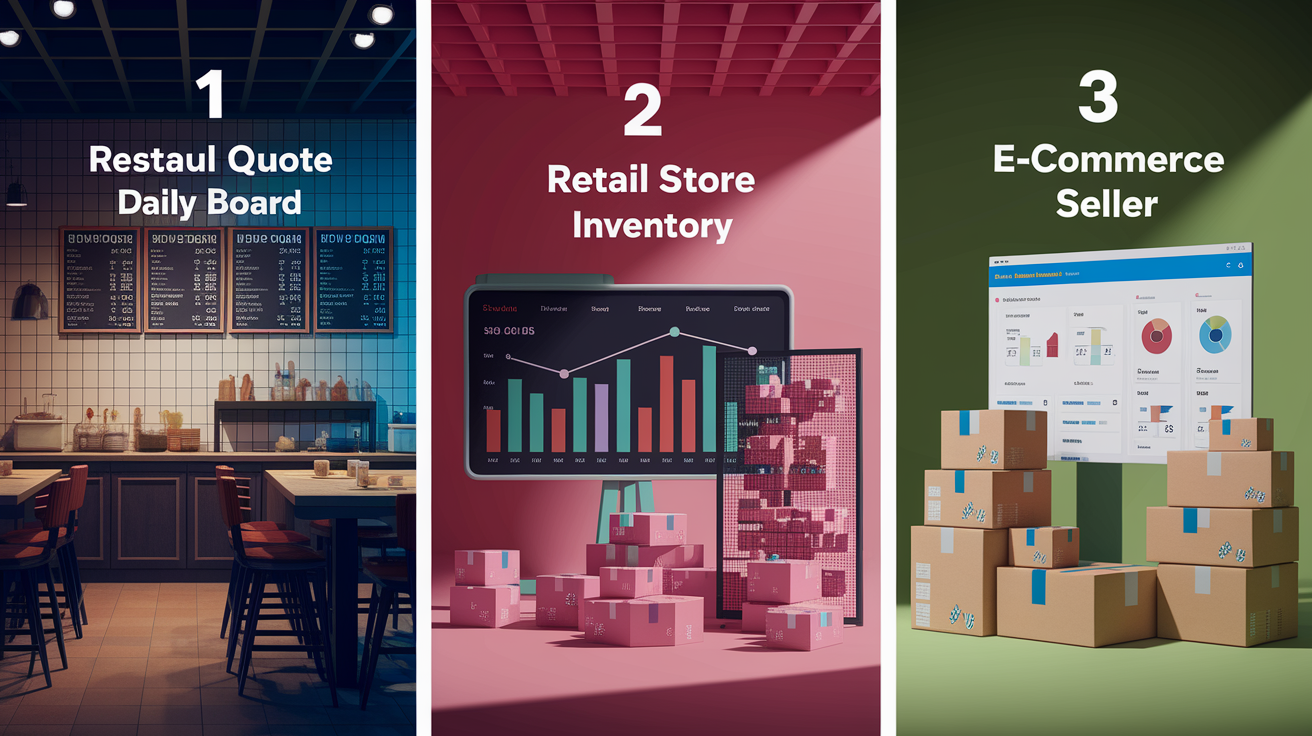
Here’s what actual dynamic quotes look like when you plug in real numbers.
Scenario 1: Restaurant needing kitchen equipment
Monthly card revenue: $30,000. Time in business: 18 months. Credit score: 580. Desired advance: $30,000.
Dynamic quote result: Factor rate 1.22, total payback $36,600, holdback 12% of daily sales. Average daily card sales: $1,000. Daily remittance: $120. Estimated repayment: 8 months (roughly 240 business days). Converted APR: approximately 48%. Funding speed: 2 business days. Net cost after using the advance to generate $8,400 in additional profit: breakeven or small win, depending on kitchen efficiency gains.
Scenario 2: Retail store buying seasonal inventory
Monthly card revenue: $50,000. Time in business: 4 years. Credit score: 640. Desired advance: $75,000.
Dynamic quote result: Factor rate 1.28, total payback $96,000, holdback 10%. Average daily sales: $1,667. Daily remittance: $167. Estimated repayment: 11–12 months. Converted APR: approximately 41%. Funding speed: 3 business days. Gross margin on inventory: 65%. Total revenue generated: $210,000. Net profit after MCA cost: $115,500. Strong use case because ROI far exceeds cost.
Scenario 3: E-commerce seller stacking advances (danger zone)
Monthly card revenue starts at $25,000. First advance: $40,000 at 1.38, 15% holdback. Sales drop to $18,000/month after ad spend doesn’t convert. Merchant takes second advance of $25,000 at 1.45 to cover gap. Combined daily remittances reach 48% of daily sales. Cash flow failure within 90 days. This is the stacking death spiral, when you borrow to pay the first MCA and dig the hole deeper.
Sample scenarios like these show the range of outcomes. When revenue supports the repayment and the use of funds drives measurable profit, MCAs work. When sales drop or you stack multiple advances, the cost compounds fast and cash flow collapses.
Negotiating MCA Rates and Improving Dynamic Quote Outcomes

Factor rates aren’t as fixed as they appear. If you receive a quote at 1.40 and your revenue history is strong, you can push back and ask for 1.32 or 1.35. Lenders price for risk, and anything you can show that lowers perceived risk (longer time in business, higher credit score, consistent month-over-month growth) gives you some room to push.
One of the most useful negotiation moves comes after you’ve already taken an advance. Many MCA providers will accept a lump-sum payoff at 70% to 85% of the remaining balance. If you owe $40,000 and can scrape together $30,000 from another source (a business line of credit, a term loan, or retained earnings) the lender may settle and release the UCC lien. This works best when you negotiate in writing and get the settlement terms documented before you wire the money.
Reconciliation clauses, included in some MCA agreements, let you request temporary holdback reductions during slow months. If your contract has one and your sales drop 25%, you can invoke the clause and ask the lender to lower your daily debit from $300 to $200 for 30 days. Not all lenders honor these clauses without a fight, but having it in the contract gives you a legal basis to negotiate relief instead of defaulting.
Improving future quotes starts with improving the underlying business metrics lenders score. Consistent revenue month-over-month, fewer NSF incidents in your bank account, and a rising credit score all push your factor rate down. If your current rate is 1.45 and you want 1.30 next time, spend six months cleaning up your financials, paying bills on time, and building a three-month revenue trend that shows growth. When the quote engine pulls fresh data, the algorithm will price you better automatically.
Dynamic Pricing Tech: Automated MCA Quote Engines and APIs

Behind every instant quote is a stack of APIs pulling real-time data from banks, payment processors, and lender risk engines. When you connect your business checking account through Plaid, the quote tool downloads 90 to 180 days of transaction history, calculates daily deposit averages, flags returned payments, and models cash flow variability. That data feeds into a machine-learning model that predicts how long it’ll take you to repay a given advance at a given holdback percentage.
Lender APIs return pricing rules in real time. Each lender has a risk matrix (minimum revenue, minimum time in business, maximum factor rate by credit tier, and maximum advance as a multiple of monthly sales). The quote engine queries five or six lenders simultaneously, receives their pricing parameters, applies your specific inputs, and returns a ranked table of offers. The entire process runs in under 60 seconds.
Security and compliance are non-negotiable for enterprise-grade quote platforms. Any tool handling bank data and lender integrations should carry SOC 1, SOC 2, and ISO 27001 certifications. These audits verify that data is encrypted in transit and at rest, access is role-restricted, and transaction logs are immutable for regulatory review.
How Real-Time Data Improves Quote Accuracy
Static quote calculators ask for estimated monthly revenue and return a generic range. Dynamic engines pull actual sales data and model repayment day by day. If your revenue varies ($18,000 one month, $32,000 the next) the engine simulates what happens to your cash position under different holdback percentages and flags scenarios where you’d run out of operating cash before the advance is paid off.
Sales variance modeling also catches seasonal risk. A beach-town ice cream shop might generate $60,000 in July and $8,000 in January. A quote tool that only looks at average monthly revenue would suggest a $50,000 advance with a 15% holdback. A dynamic engine that models monthly cash flow would flag that the January payments would drain the account and either recommend a lower advance, a lower holdback, or a seasonal reconciliation clause.
Lender-facing risk matrices adjust in real time based on portfolio performance. If a lender sees higher-than-expected defaults in the restaurant category, their API might raise the minimum credit score or lower the maximum advance for new restaurant applicants. The quote engine reflects those changes immediately, so the pricing you see today is the pricing you’ll actually get, not a teaser rate that disappears during underwriting.
Merchant Readiness and Prequalification for Dynamic MCA Quotes

Before you request quotes, make sure you have the documentation and data lenders will ask for. Missing pieces slow down funding and sometimes disqualify you from the best offers.
- Government-issued ID (driver’s license or passport for the business owner)
- Three months of business bank statements (PDF downloads from your bank, showing daily deposits and withdrawals)
- Three months of payment processor statements (Stripe, Square, PayPal, or merchant services statements showing card volume)
- Business formation documents (articles of incorporation, DBA filing, or LLC operating agreement)
- Employer Identification Number (EIN) or Social Security Number if you’re a sole proprietor
- Voided business check for ACH setup
Most dynamic quote platforms offer soft-pull prequalification, which means they check eligibility without running a hard inquiry on your credit report. Soft pulls let you see if you qualify and what rate range to expect without dinging your score. Hard inquiries happen later, during final underwriting, and usually only with the lender you choose.
Prequalification typically takes two to five minutes. You enter basic info (business name, revenue, time in business) and link your bank account. The platform verifies your deposit history, confirms you meet minimum thresholds, and returns a conditional quote. If the numbers work, you move to full application. If they don’t, you know immediately and avoid wasting time on documentation you don’t need yet.
Readiness also means understanding your own cash flow well enough to answer the question: “Can I handle a daily debit of X dollars for the next six to twelve months?” Run a simple test. Take your average daily sales, multiply by the estimated holdback percentage, and subtract that amount from your typical daily operating cash. If what’s left covers payroll, rent, suppliers, and a small buffer, you’re ready. If it doesn’t, the advance is too big or the holdback is too high, and you need to adjust the quote parameters before you apply.
Alternatives to Dynamic MCA Quotes (When MCA Pricing Is Too High)
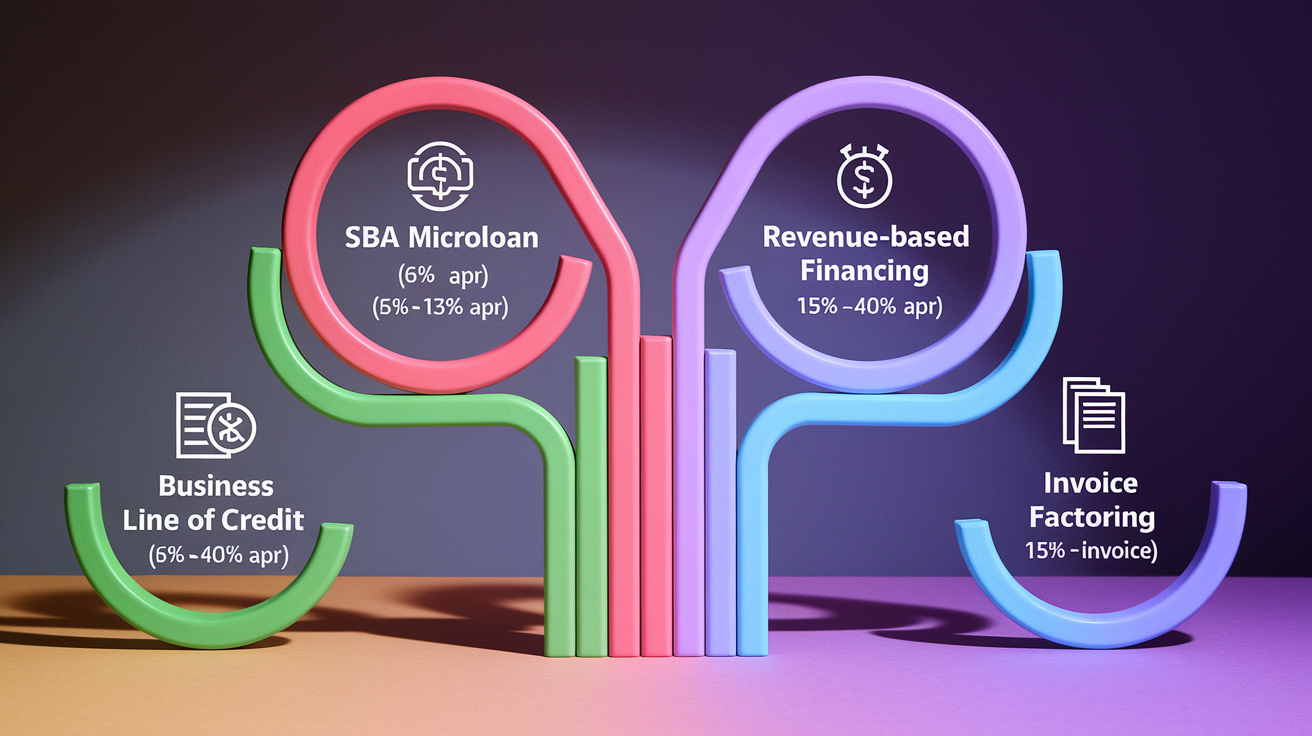
If the dynamic quote comes back with a factor rate above 1.40 or a converted APR above 80%, stop and compare it to other funding structures. MCAs solve speed problems, but they’re rarely the lowest-cost option, and sometimes the speed isn’t worth the price.
SBA microloans offer the best rates (typically 6% to 13% APR) but they take four to twelve weeks to close and require strong credit (usually 680 or higher), collateral, and a business plan. If you can wait and your credit is solid, an SBA loan saves you tens of thousands of dollars compared to an MCA.
Revenue-based financing (RBF) sits between MCAs and traditional loans. You receive a lump sum and repay a percentage of monthly revenue until you’ve paid back a fixed multiple (usually 1.3 to 1.5 times the original amount). Payments flex with revenue like an MCA, but they’re monthly instead of daily, and most RBF providers don’t take personal guarantees. Effective cost typically runs 15% to 40% APR, depending on the multiple and repayment speed.
| Product Type | Typical APR / Cost | Best Use Case |
|---|---|---|
| SBA Microloan | 6%–13% APR | Long-term growth, strong credit, can wait 4–12 weeks |
| Revenue-Based Financing | 15%–40% effective APR | Recurring revenue businesses, no personal guarantee, monthly payments |
| Business Line of Credit | 8%–60% APR | Ongoing working capital, draw only what you need, revolving access |
| Invoice Factoring | 1%–5% per invoice | B2B companies with 30–90 day payment terms, need cash now |
Business lines of credit give you revolving access to capital and let you draw only what you need, when you need it. Rates range from 8% to 60% APR depending on your credit and the lender. If you qualify, a line of credit is almost always cheaper than an MCA for ongoing working capital needs.
Invoice factoring works for B2B businesses that bill customers on net-30 or net-60 terms. You sell unpaid invoices to a factoring company at a discount (typically 1% to 5% per invoice) and get cash within 24 to 48 hours. The factor collects payment from your customer when the invoice is due. Factoring doesn’t work for retail or restaurants, but for contractors, wholesalers, and service companies with long receivable cycles, it’s a better fit than an MCA.
Some dynamic quote platforms automatically surface alternatives when your MCA pricing crosses a threshold. If the tool calculates an APR above 60% and your credit score is above 600, it might suggest applying for an RBF product or a line of credit instead. That kind of fit-first logic is what separates a useful quote engine from a sales funnel.
Frequently Asked Questions About Dynamic MCA Quotes
How accurate are dynamic MCA quotes?
They’re as accurate as the data you provide. If you link live bank statements and your revenue is stable, the quote will be within 5% to 10% of the final offer. If you estimate monthly sales and your actuals vary, expect bigger swings during underwriting.
Do dynamic quote requests affect my credit score?
Soft-pull prequalification does not affect your score. Hard inquiries happen only when you accept an offer and move to final underwriting, and even then only some lenders pull credit. Platform-embedded MCAs from Shopify, Stripe, and Square typically skip credit checks entirely.
How fast can I get funded after receiving a dynamic quote?
Platform-embedded offers fund in one to two business days. Independent MCA providers fund in one to three business days after you sign. Bank-affiliated lenders take five to seven business days.
What factors determine my MCA pricing?
Monthly card revenue, time in business, credit score, industry, sales consistency, and the size of the advance relative to your monthly volume. Lenders also look at NSF history and whether you already have other MCAs or liens in place.
How long is a dynamic quote valid?
Most quotes expire in 7 to 14 days because lender pricing and your revenue can both change. If you wait longer than two weeks, expect to re-submit updated bank statements and get a fresh quote.
Can I negotiate the factor rate in a dynamic quote?
Yes, especially if you have strong financials or competing offers. Lenders price for risk, and anything that lowers their perceived risk (higher credit score, longer operating history, lower debt-to-revenue ratio) gives you room to negotiate down.
Are MCA fees tax-deductible?
The total repayment amount minus the original advance is generally deductible as a business expense in the year you pay it, but classification varies by accountant. MCAs are not reported to business credit bureaus, but UCC-1 filings are public and can block other financing until you file a UCC-3 termination after payoff. Always consult a tax professional for your specific situation.
Final Words
In the action, you saw how real-time engines pull your sales, time in biz, and credit to generate immediate MCA estimates, and what those outputs mean for payback and APR.
You also learned how underwriting, industry tweaks, and tech integrations shape pricing, plus sample scenarios and negotiation moves to lower cost.
If you want quick clarity, run dynamic merchant cash advance quotes with your last 3 months of statements — you’ll get side-by-side costs and a clearer path to funding that fits your cash flow.
FAQ
Q: What’s the best merchant cash advance company?
A: The best merchant cash advance company depends on your needs. Compare factor rate, holdback percentage, funding speed, transparency, and lender reviews. Use a multi-offer quote tool to find the lowest total payback for your sales pattern.
Q: How much is a cash advance fee for $1000?
A: A cash advance fee for $1,000 typically means repaying $1,100–$1,500 (factor rate 1.1–1.5). Expect origination fees around $10–$50. Convert to an APR-equivalent to compare true cost.
Q: What are the terms for merchant cash advances?
A: The terms for merchant cash advances use a daily or weekly holdback of card sales, factor rates usually 1.1–1.5, typical payback 90–365 days, plus origination and admin fees.
Q: Is merchant cash advance a good idea?
A: A merchant cash advance is a good idea when you need very fast cash and have steady daily card sales to cover remittance. It’s expensive, so consider cheaper alternatives if revenue is uneven or APR looks high.