


Want to lose two weeks on your SBA 7(a) loan because of missing paperwork?
Or would you rather hand a lender a clean packet that gets reviewed fast?
This checklist walks service-based businesses through every required document and step.
You’ll find personal and business tax returns, SBA forms, recent financials, client contracts, accounts receivable aging, proof of recurring revenue, and the order to submit them.
Follow it and you’ll cut back-and-forth, address client-concentration risks up front, and avoid the last-minute surprises that stall funding.
Complete SBA 7(a) Loan Application Checklist for Service-Based Businesses
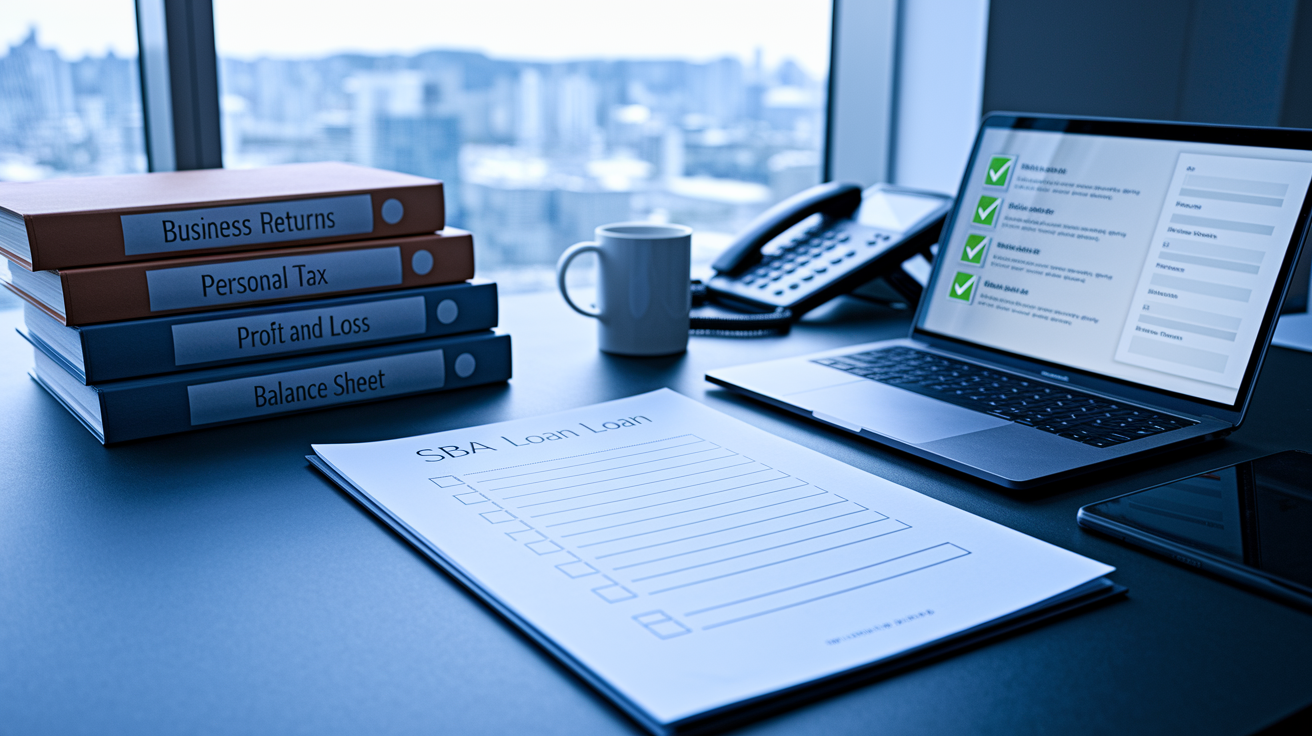
If you’re planning to apply for an SBA 7(a) loan, get everything ready before you contact a lender. These loans run from $50,000 up to $5,000,000, with terms stretching to 10 years for working capital or equipment and 25 years for commercial real estate. Any owner holding 20% or more of the business has to provide personal financial documents and sign a personal guaranty. Lenders want three years of business tax returns, interim financials dated within 60 days of application, and proof of recurring revenue for service businesses. Most set a minimum credit score around 640, and the SBA defines small business as under 500 employees or less than $7.5 million in average annual receipts for most non-manufacturing industries.
Service businesses need extra documentation. Lenders want proof of recurring revenue, signed client contracts, and evidence that you’re not dependent on one or two large clients. If your top three clients account for more than 25 to 30 percent of annual revenue, you’ll need to explain how the business survives if one walks. Lenders also look for professional licenses, certificates of insurance, accounts receivable aging reports, and staffing or contractor agreements when labor is billable.
The checklist below covers both standard SBA requirements and service-specific items. Assemble these documents in labeled folders before you apply, and you’ll cut approval time by weeks.
- Last 3 years of business tax returns (signed)
- Last 3 years of personal tax returns for all owners with 20% or greater ownership
- Year-to-date profit and loss statement (monthly detail)
- Year-to-date balance sheet
- Last 2 to 3 years of annual profit and loss statements and balance sheets
- 6 to 12 months of business bank statements
- Business debt schedule listing creditor name, original loan amount, current balance, interest rate, and monthly payment
- SBA Form 1919 (Borrower Information Form)
- SBA Form 413 (Personal Financial Statement) for each owner with 20% or greater stake
- IRS Form 4506-T (tax transcript authorization), signed
- Articles of incorporation or organization, operating agreement, and business licenses
- Signed lease or mortgage documents for current and new locations
- 3-year financial projections with monthly detail for year one and quarterly or annual detail for years two and three
- Business plan or executive summary explaining use of proceeds and revenue model
- Purchase agreements, equipment quotes, or contractor invoices for planned expenditures
- Proof of owner equity injection (bank statements, wire receipts)
- Signed client contracts, retainer agreements, statements of work, or master service agreements (3 or more recommended)
- Accounts receivable aging report (30/60/90-day breakdown)
- Client concentration report showing percentage of revenue from top five clients
- Professional licenses, certifications, and proof of business insurance
- Employee roster and key-person or contractor agreements if labor is billable
- Collateral documentation (equipment titles, invoices, serial numbers, real estate appraisals if applicable)
SBA 7(a) Eligibility Requirements for Service-Based Businesses

To qualify for an SBA 7(a) loan, your business must be for-profit, meet SBA size standards, demonstrate need for financing, and show ability to repay. For most service industries, size standards cap eligibility at fewer than 500 employees or less than $7.5 million in average annual receipts over the past three years, though some NAICS codes allow higher thresholds. The SBA allows flexibility on credit scores, but lenders usually require a personal score of at least 640 for all owners with 20% or greater ownership. Businesses delinquent on federal loans, federal taxes, or federally backed student loans are disqualified.
Service businesses face extra scrutiny around revenue stability and client concentration. Lenders prefer to see recurring revenue contracts or retainer agreements covering at least six to twelve months of committed revenue. If the top one to three clients represent more than 25 to 30 percent of annual revenue, lenders want a written mitigation plan explaining how the business would replace that income if one client left.
- Operate for profit and meet SBA size standards for your NAICS code (typically under 500 employees or under $7.5 million annual receipts for most service industries)
- Demonstrate a clear business need and sound use of loan proceeds that will strengthen cash flow or support growth
- Show lack of access to reasonable alternative financing on comparable terms
- Maintain good character and a strong credit history (personal credit score around 640 or higher)
- Provide evidence of ability to repay, including recurring revenue contracts, client invoices, and aged receivables for service businesses
- Hold no delinquencies on federal loans, federal taxes, or federally backed student debt
- Contribute owner equity where required by lender (often 10 to 30 percent for acquisitions or business purchases)
Essential Business Documents for an SBA 7(a) Loan Application
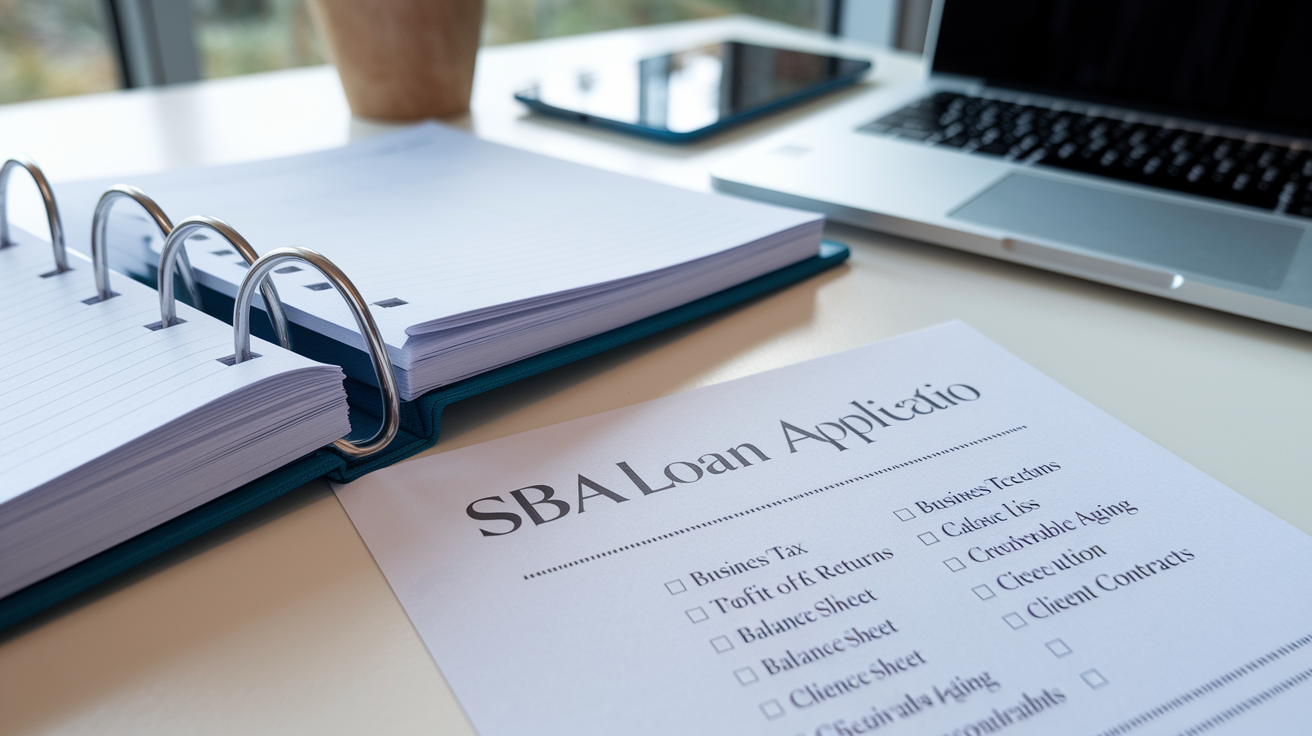
Lenders review your business financial documents to confirm revenue, expense patterns, and whether cash flow can support monthly loan payments. The SBA and lenders require the last three years of filed business tax returns, including all schedules, and interim financial statements dated within 60 days of application. If your most recent fiscal year tax return is on extension, provide financial statements for that year plus proof of the extension. Lenders also expect a detailed business debt schedule listing every current business debt with creditor name, original loan amount, current balance, interest rate, and monthly payment.
Service businesses should provide six to twelve months of business bank statements and aged accounts receivable and accounts payable reports. Lenders analyze AR aging to see how quickly clients pay and whether receivables are concentrated in a small number of accounts. AP aging shows whether the business pays vendors on time or is carrying delinquent balances that could signal cash flow stress.
| Document | What Lenders Review | Time Frame |
|---|---|---|
| Business tax returns | Revenue, expenses, net income, consistency over time | Last 3 years (signed) |
| Profit and loss statement | Current revenue trends, expense control, seasonality | Year-to-date monthly; last 2 to 3 years annual |
| Balance sheet | Assets, liabilities, equity, working capital position | Year-to-date; last 2 to 3 years annual |
| Business bank statements | Cash flow, deposit patterns, NSF or overdraft history | 6 to 12 months |
| Accounts receivable and payable aging | Payment cycles, client concentration, vendor payment discipline | 30/60/90-day breakdown, current report |
| Business debt schedule | Existing obligations, payment burden, debt-to-income ratio | Current list with creditor, balance, rate, monthly payment |
Personal Documents Owners Must Include for SBA 7(a) Approval
Any owner with 20 percent or greater ownership must provide personal financial documents and serve as a personal guarantor on the loan. Lenders use personal tax returns and credit reports to assess individual repayment capacity and character. The SBA requires Form 1919, which collects borrower information, and Form 413, a detailed personal financial statement listing assets, liabilities, and net worth. Most lenders also request IRS Form 4506-T, which lets the lender pull tax transcripts directly from the IRS to verify filed returns.
Owners must disclose any judgments, liens, bankruptcies, or other legal matters on personal background statements. Lenders expect personal credit scores around 640 or higher, and any derogatory items should be explained in writing with supporting documentation showing resolution or payment plans.
- Last 3 years of personal tax returns (signed) for each owner with 20% or greater ownership
- SBA Form 1919 (Borrower Information Form) completed and signed by each owner
- SBA Form 413 (Personal Financial Statement) detailing personal assets, liabilities, and net worth
- Personal credit report authorization and release forms
- IRS Form 4506-T signed by each owner to authorize tax transcript retrieval
- Personal background statements disclosing any legal issues, judgments, liens, or bankruptcies
SBA Forms Required for the 7(a) Loan Application
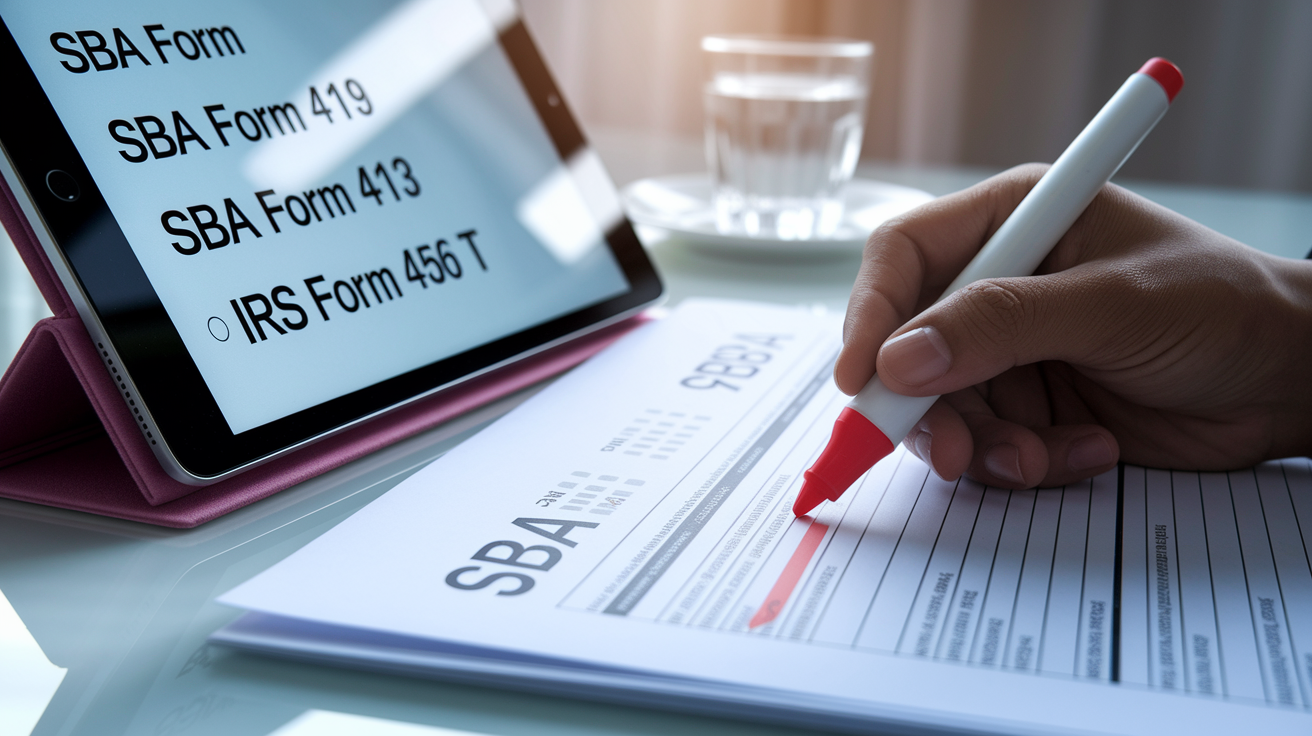
SBA-approved lenders provide most SBA forms and often pre-fill sections using information from your initial intake. Form 1919 collects basic borrower information, business structure, ownership percentages, and affiliates. Form 413 is a comprehensive personal financial statement that lists real estate, bank accounts, retirement accounts, vehicles, stocks, and all personal debts. Lenders use Form 413 to calculate personal debt-to-income ratios and verify that owners have sufficient liquidity to weather short-term cash flow disruptions.
| Form | Purpose | Who Must Complete |
|---|---|---|
| SBA Form 1919 | Collects borrower identifying information, business structure, ownership details, and affiliates | All owners with 20% or greater ownership |
| SBA Form 413 | Personal financial statement listing assets, liabilities, income, and net worth | All owners with 20% or greater ownership |
| IRS Form 4506-T | Authorizes lender to request tax transcripts from IRS to verify filed returns | All owners with 20% or greater ownership |
| Personal background statement | Discloses legal history, judgments, liens, bankruptcies, and criminal record | All owners with 20% or greater ownership |
| Credit report authorization | Allows lender to pull personal and business credit reports | All owners with 20% or greater ownership |
Service-Based Business Documents That Strengthen an SBA 7(a) Application

Service businesses operate without physical inventory, so lenders focus on recurring revenue, client contracts, and staffing capacity. Strong applications include signed client contracts, retainer agreements, statements of work, or master service agreements covering at least six to twelve months of committed revenue. Lenders want to see contract terms, renewal rates, and cancellation clauses to assess revenue stability. If the business generates recurring monthly revenue from subscriptions or retainers, provide a breakdown of MRR (monthly recurring revenue) and historical churn rates.
Accounts receivable aging reports and invoice history for the past twelve to twenty-four months demonstrate payment cycles and client reliability. Lenders also expect proof of professional licenses, certifications, and business insurance, especially for regulated service industries like medical practices, legal firms, accounting firms, and licensed contractors. If staff or contractors are billable to clients, provide employee rosters, key-person agreements, subcontractor contracts, and evidence of billing rates, utilization, and billable-hours trends.
- Signed client contracts, retainer agreements, statements of work, or master service agreements (3 or more recommended)
- Monthly recurring revenue breakdown showing committed revenue for next 6 to 12 months
- Accounts receivable aging report (30/60/90-day) and invoice history for past 12 to 24 months
- Client concentration report identifying percentage of revenue from top five clients
- Professional licenses, certifications, and regulatory compliance documentation
- Certificates of business insurance, professional liability insurance, and workers’ compensation coverage
- Employee roster, key-person agreements, and subcontractor or independent contractor agreements
- Billing rate schedules, utilization reports, and billable-hours trends if labor is billed to clients
- Proof of service agreements with cancellation terms and historical renewal rates
- Examples of major client engagements with contract length and expected future revenue
Recurring Revenue and Client Concentration Documentation
Lenders treat recurring revenue as the most reliable income stream for service businesses. If at least 40 to 60 percent of revenue comes from retainers, subscriptions, or long-term contracts, document that figure clearly and provide copies of the contracts. If the top one to three clients account for more than 25 to 30 percent of annual revenue, lenders view the business as high-risk and will request a written mitigation plan explaining how the business would replace that income through marketing, sales pipelines, or diversification strategies. Providing a client concentration report with the percentage of revenue from each of the top five clients up front reduces delays.
Preparing Financial Projections and Business Plans for an SBA 7(a) Loan

Lenders require three-year financial projections with monthly detail for year one and quarterly or annual detail for years two and three. Projections must include revenue, cost of goods sold or cost of services, operating expenses, debt service, and net income. Include a separate assumptions page explaining revenue growth rates, pricing changes, staffing additions, client acquisition targets, and how the loan proceeds will drive revenue or reduce expenses. Service businesses should tie projections to billable hours, utilization rates, contract renewals, and client acquisition pipelines.
Your business plan should be one to three pages and cover the executive summary, market and customer description, revenue model, competitive positioning, and use of loan proceeds. Lenders look for realistic growth assumptions and clear explanations of how the loan will generate cash flow to support repayment. If you’re buying equipment, hiring staff, or expanding into a new location, show the expected revenue increase and the timeline to break even.
Don’t submit overly optimistic projections that double revenue in year one without explaining the client acquisition strategy or staffing capacity to deliver the work. Lenders compare your projections to industry benchmarks and historical performance, and they’ll ask for revisions if the numbers don’t match past revenue trends or market conditions.
- Revenue projections by month for year one, by quarter or year for years two and three, tied to client contracts, billable hours, or utilization rates
- Operating expense projections including payroll, rent, insurance, marketing, technology, and subcontractor costs
- Assumptions page explaining growth rates, pricing changes, staffing plans, and client acquisition targets
- Break-even analysis showing the revenue level required to cover fixed costs plus loan payments
- Use-of-proceeds explanation detailing how loan funds will be allocated and how they’ll generate incremental revenue or reduce operating costs
SBA 7(a) Application Timeline and Step-by-Step Workflow
The SBA 7(a) application process typically takes 30 to 60 days from complete application submission to conditional approval, plus an additional one to four weeks to close. Preferred Lender Program (PLP) lenders can approve loans internally without waiting for SBA guaranty review, which shortens the timeline significantly. Incomplete applications or missing documents can extend the process by two to six weeks.
- Pre-qualification and loan sizing (1 to 3 business days). Discuss revenue, loan amount, use of proceeds, and gather basic financial snapshots to confirm eligibility.
- Document gathering (3 to 14 days). Assemble the full checklist of 20 to 30 items including tax returns, financials, contracts, and personal documents.
- Submit to SBA-approved lender and lender intake review (1 to 7 days). Lender reviews completeness and requests any missing items.
- Lender underwriting and due diligence (2 to 6 weeks). Lender analyzes cash flow, credit, collateral, projections, and may order appraisals or environmental reports.
- SBA guaranty review if applicable (1 to 2 weeks). Lender submits package to SBA for guaranty approval unless lender is a PLP and approves internally.
- Final conditions cleared and loan approval issued (1 to 4 weeks). Lender sends conditional approval letter and requests final documents like updated insurance certificates or lease amendments.
- Closing, funding, and post-close reporting (1 to 4 weeks). Sign loan documents, complete lien filings, wire funds, and confirm compliance with any post-close covenants.
Common Mistakes That Delay SBA 7(a) Loan Approval
Incomplete or outdated documentation is the most common reason SBA 7(a) applications stall. Lenders expect interim financial statements dated within 60 days of application, and submitting statements older than that will trigger a request for updated financials. Missing personal tax returns for owners with 20 percent or greater ownership or failing to complete SBA Form 413 will stop the process immediately.
Service businesses often fail to provide proof of recurring revenue or client contracts, which forces lenders to treat all revenue as one-time project income and reduces approval odds. Client concentration over 25 to 30 percent without a written mitigation plan raises red flags. Weak or unrealistic financial projections with no supporting assumptions or monthly detail for year one signal that the borrower hasn’t thought through how the loan will be repaid.
- Submitting business or personal tax returns for fewer than 3 years or missing schedules
- Providing interim financial statements older than 60 days
- Failing to document recurring revenue, client contracts, or retainer agreements for service businesses
- Client concentration above 25 to 30 percent without a written mitigation plan
- Unclear or undocumented use of proceeds with no purchase agreements or contractor quotes
- Incomplete SBA forms or missing personal financial statements for owners with 20% or greater ownership
- Poor personal or business credit with no written explanations for derogatory items
- Undisclosed liens, judgments, or legal matters discovered during lender due diligence
- Weak or unrealistic 3-year projections with no assumptions or monthly detail for year one
- Mixing personal and business finances or incomplete bookkeeping that prevents clean financial statements
Document Preparation Tips to Speed Up SBA 7(a) Approval

Lenders prefer to receive a complete package of 20 to 30 documents on first submission. Incomplete packages commonly add two to six weeks to the approval timeline because the lender must request missing items, wait for the borrower to respond, and restart underwriting review. Assemble all documents in labeled PDF files organized by category, and create an index page listing all items with document names and dates.
Provide signed copies of the last three years of business and personal tax returns, and include IRS Form 4506-T to let the lender pull tax transcripts for verification. Deliver year-to-date profit and loss and balance sheet statements with monthly detail, and make sure the interim statements are dated within 60 days of application. For service businesses, include copies of client contracts, recent invoices, proof of payment for the past six to twelve months, and an accounts receivable aging report. For collateral, supply serial numbers, purchase invoices, titles, and photos where applicable, and make sure all owner affidavits and personal forms are signed and dated.
- Assemble 20 to 30 documents before contacting a lender and organize them in labeled PDF files by category
- Provide 3 years of signed business and personal tax returns and submit IRS Form 4506-T to authorize tax transcript verification
- Deliver year-to-date profit and loss and balance sheet statements dated within 60 days of application with monthly detail
- Include a business debt schedule listing creditor, original loan amount, current balance, interest rate, and monthly payment for every debt
- For service businesses, provide full client contracts, recent invoices, proof of payment history, and accounts receivable aging
- Supply collateral documentation with serial numbers, purchase invoices, titles, photos, and any existing appraisals
- Make sure all SBA forms, personal financial statements, and owner affidavits are signed, dated, and complete
Case Examples: How Service Businesses Successfully Completed SBA 7(a) Applications
A consulting firm requested a $300,000 SBA 7(a) loan to add staff and expand into adjacent markets. The business provided three years of business tax returns showing consistent revenue growth, six months of business bank statements, and year-to-date profit and loss statements with monthly detail. The firm had $120,000 per year in recurring retainer revenue covering 40 percent of total revenue, and the top client represented 18 percent of annual revenue, which fell below lender concentration thresholds. The lender issued conditional approval in 45 days and funded the loan 12 days later.
A commercial cleaning business applied for a $150,000 SBA 7(a) loan to purchase equipment and hire additional staff to service new contracts. The business provided two years of business tax returns, client contracts covering $75,000 per year in confirmed recurring revenue, and a detailed labor cost schedule showing billing rates and utilization. The lender completed underwriting in 30 days and closed the loan in 10 days after final insurance certificates and equipment invoices were submitted.
| Business Type | Key Documents Provided | Timeline to Approval |
|---|---|---|
| Consulting firm ($300,000 loan) | 3 years business tax returns, 6 months bank statements, YTD monthly P&L, client contracts showing $120,000/year recurring revenue, top client 18% of revenue, 3-year projections with monthly Y1 detail | Conditional approval in 45 days; funded 12 days later |
| Commercial cleaning business ($150,000 loan) | 2 years business tax returns, client contracts covering $75,000/year recurring revenue, detailed labor cost schedule with billing rates and utilization, equipment invoices, insurance certificates | Underwriting completed in 30 days; closed in 10 days |
Final Words
Gathering documents and lining up projections, that’s where approvals start. Get the big pieces in order first. Tax returns, interim financials, SBA forms and signed client contracts.
This post walked you through the step-by-step checklist, eligibility thresholds, service-specific docs, realistic projections, timeline and common mistakes to avoid.
Use the sba 7a loan application checklist for service-based businesses as your packing list. Keep files labeled, meet the 60-day rule on interim statements, and you’ll move faster toward funding. You can get this done.
FAQ
Q: What are the common reasons 7A loans are denied?
A: The common reasons 7A loans are denied are poor credit, weak cash coming in and going out, incomplete or outdated documents, insufficient collateral, short time in business, high client concentration, unpaid federal loans, or unrealistic projections.
Q: What is the 20% rule for SBA?
A: The 20% rule for SBA means owners with 20% or more ownership must personally guarantee the loan and provide personal financial documents like SBA Form 1919, Form 413, three years of tax returns, and a credit report.
Q: What documents are required for an SBA 7A loan?
A: The documents required for an SBA 7A loan include SBA Form 1919 and Form 413; three years business and personal tax returns; recent P&L and balance sheet (≤60 days); bank statements, AR/AP aging, contracts, licenses, and 4506-T.
Q: What disqualifies you from an SBA loan?
A: What disqualifies you from an SBA loan are being a non-profit or ineligible business type, unresolved federal loan defaults, recent bankruptcy, fraud or criminal issues, active delinquencies, or inability to show ability to repay.