


Skipping spotless financials is the fastest way to kill an SBA 7(a) loan, and lots of owners don’t realize that until underwriting starts.
Lenders want a full financial history: three years of business tax returns, three years of personal returns for 20%+ owners, signed balance sheets and P&Ls, recent interim statements, and IRS tax transcripts.
Mismatches between your P&L and what you filed with the IRS will slow or stop your deal.
This post shows exactly what to gather, the timelines for interim statements, and how to handle missing transcripts or seller returns so you don’t get blindsided at closing.
Core SBA 7(a) Financial Statements and Tax Return Requirements

Every SBA 7(a) application needs a full financial history of the business, the owners, and anyone who’s guaranteeing the loan. Lenders use this to check size limits, run credit analysis, and confirm you’re reporting everything correctly to the IRS. You’ll submit three years of business tax returns, three years of personal returns for anyone who owns 20% or more, and complete financial statements covering both history and current performance. Buying an existing business? You’ll also need the seller’s three years of returns and financials.
Interim statements can’t be stale. They need to be dated within 60 to 90 days of when you apply. So if you’re submitting in March 2025, your interim financials should be from January 2025 or later. Startups that haven’t filed returns yet get a pass on the transcript piece, but they need to provide month by month cash flow projections for year one, plus written assumptions that explain how those numbers were built.
Your balance sheet should show Assets = Liabilities + Owner’s Equity. Your P&L shows Net Profit = Gross Profit minus Operating Expenses. Both need signatures. The SBA pulls IRS tax transcripts to confirm that what you filed matches what you’re handing over. For loans above $500,000, lenders must get those transcripts using Form 4506-C or Form 8821 before any money moves.
Complete SBA 7(a) Financial Statement and Tax Return Checklist:
- Business federal tax returns for the past three years
- Personal federal tax returns for the past three years for all guarantors and 20%+ owners
- Business profit and loss statements for the past three years
- Business balance sheets for the past three years
- Interim financial statements dated within 60 to 90 days of application
- SBA Form 413 (Personal Financial Statement) for guarantors and 20%+ owners
- Business debt schedule listing all current loans with creditor names, balances, rates, payments, and maturity dates
- One year business financial projections with written assumptions
- Month by month projections for the first 12 months for new businesses
- IRS tax transcript verification using Form 4506-C or Form 8821 submitted by the lender
Preparing and Reconciling Historical SBA 7a Financial Statements
Your historical financials need to line up with your tax returns. Lenders will cross check revenue, cost of goods sold, and what you paid yourself between your P&L and your Form 1120 or Schedule C. Big differences that aren’t explained cause underwriting delays and sometimes denials. If your tax return shows $500,000 in gross receipts but your P&L shows $600,000, you better explain the timing gap or fix the mismatch before closing.
The balance sheet breaks down current assets like cash, receivables, and inventory, plus fixed assets like equipment, vehicles, and land. Liabilities include accounts payable, short term notes, taxes owed, and long term loans. Owner’s equity covers invested capital and retained earnings. Everything gets signed and dated by the business owner or someone authorized to sign.
Key Financial Elements Lenders Evaluate:
- Consistency between tax returns and financial statements for revenue, expenses, and owner draws
- Properly categorized assets, liabilities, and equity on the balance sheet
- Complete reconciliation of beginning and ending equity across years
- Accurate reporting of cost of goods sold versus operating expenses
- Signed and dated statements that match the same accounting method used on tax returns
SBA 7a Interim Statement Preparation, Timelines, and Supporting Documentation

Interim statements show what’s happened since your last tax year ended. Most lenders want them dated within 60 days, though some accept 90. If your last tax return ended December 31, 2024, and you’re applying in March 2025, submit a P&L and balance sheet for January and February 2025. These confirm you’re still profitable and that cash hasn’t dropped off a cliff since year end.
You’ll also provide supporting schedules that tie your interim balance sheet to your bank account, receivables, and payables. Lenders want proof that the cash number on your balance sheet matches recent bank statements and that receivables are aging the way they should. If you list $50,000 in receivables, include an aging report showing which invoices are current, 30 days out, 60 days, or past 90.
| Document Type | Required Timeframe |
|---|---|
| Interim Balance Sheet | Within 60–90 days of application |
| Interim Profit & Loss Statement | Within 60–90 days of application |
| Bank Reconciliation to Balance Sheet | Same period as interim statements |
| Accounts Receivable Aging Report | Within 30 days of application |
SBA 7a Personal Financial Statement and Individual Tax Return Requirements

The SBA wants a full personal financial picture from anyone who owns 20% or more and from anyone guaranteeing the loan. You’ll fill out SBA Form 413, which lists personal assets like real estate, retirement accounts, vehicles, and savings, plus personal liabilities like mortgages, auto loans, credit card debt, and student loans. Net worth is total assets minus total liabilities. Sign it, date it, and make sure it lines up with your personal tax returns.
You’ll also hand over three years of personal federal tax returns. If you own 30% of the business and co-signed the loan, the lender needs your Form 1040 and all schedules. That includes Schedule E if you own rental property or Schedule C if you run another sole proprietorship. Your personal income backs up your guarantee and gives the lender a read on your overall financial stability. SBA Form 1919 is usually required for all SBA 7(a) applicants, including the main business contact and guarantors.
If your most recent personal return is on extension, provide updated personal financials and proof of the extension. The lender won’t wait unless the deadline is a few days out. Most of the time, they’ll move forward using your prior year’s return and interim docs.
Required Personal Disclosures and Documents:
- SBA Form 413 (Personal Financial Statement) signed and dated within 90 days
- Three years of personal federal tax returns (Form 1040 and all schedules)
- SBA Form 1919 (Borrower Information Form) for all 20%+ owners and guarantors
- Documentation of personal assets, such as property deeds, vehicle titles, and investment account statements
- List of personal liabilities, including mortgage statements, auto loans, and revolving credit balances
- Proof of tax extension if the most recent year isn’t filed yet
SBA 7a Tax Transcript Verification and IRS Form Requirements

The SBA requires lenders to verify you actually filed the tax returns you’re claiming. Lenders can’t just take your word for it or accept copies. They must get official IRS transcripts using either IRS Form 4506-C through the Income Verification Express Service or IRS Form 8821, which lets the lender receive transcript copies. You or your accountant can’t file Form 8821 on the lender’s behalf. The lender submits the form directly and must request a transcript that includes any amendments or changes.
For loans using the NAICS size standard, lenders verify three years of business returns. For loans using the alternative size standard, two years. If your business has only been around for one year, the lender verifies that single year. The transcript request needs to be submitted and reconciled before the first disbursement. If the IRS doesn’t respond within 10 business days, the lender resubmits with “Second Request” noted in the top right corner.
If the IRS returns a “Record Not Found” result for one of the required years, the lender must document reasonable verification. If you can show proof of a refund check or tax payment receipt for the missing year, and the lender verified the first and third years successfully, the lender may reasonably conclude the return was filed and move forward. All supporting documentation stays in the loan file.
Handling Transcript Errors and Missing Returns
When the IRS transcript shows different numbers than the tax return you provided, the lender has to explain and resolve it before closing. For non-delegated loans, the explanation goes to the SBA. If a required year is completely missing and there’s no refund or payment proof, the loan can’t move forward until a transcript is obtained or an acceptable substitute is documented.
Steps to Resolve Transcript Discrepancies:
- Compare line by line revenue, deductions, and net income between the IRS transcript and the submitted tax return
- Document any amendments, corrections, or timing differences that explain mismatches
- Provide proof of payment or refund if the IRS has no record of a required return
- Resubmit Form 4506-C or 8821 if the IRS doesn’t respond within 10 business days
SBA 7a Required Tax Return Variations by Entity Type
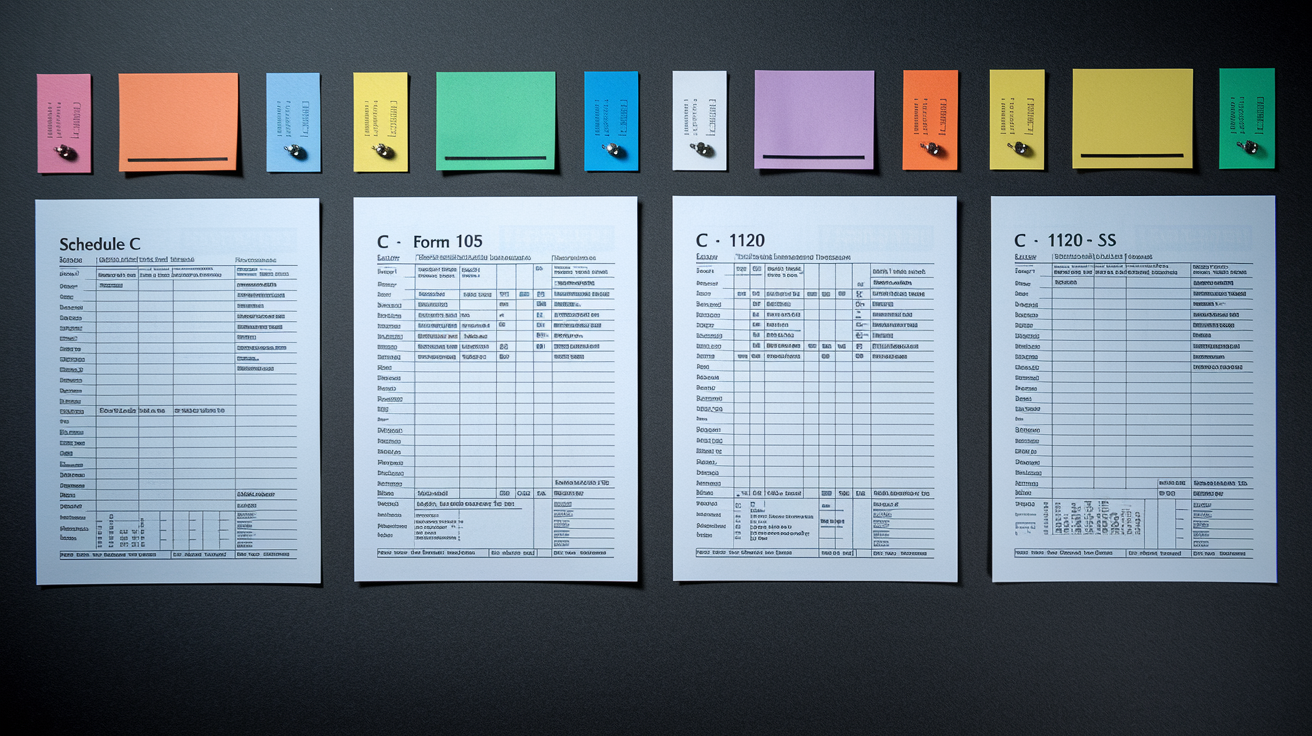
The tax returns required for SBA 7(a) loans depend on how your business is legally structured. Sole proprietors provide Schedule C from their personal Form 1040 for the past three years. Single-member LLCs taxed as sole proprietorships use Schedule C too. Partnerships provide Form 1065 for the business and all Schedule K-1s showing each partner’s share of income and losses.
C corporations submit Form 1120 with all schedules and attachments. S corporations provide Form 1120-S and Schedule K-1 for all shareholders. Multi-member LLCs taxed as partnerships use Form 1065. If you’re buying a business, the seller’s tax returns for the past three years must also be submitted to verify historical performance. In some segment acquisitions, sales tax payment records may substitute for full transcripts if business level returns don’t exist.
| Entity Type | Required Tax Returns |
|---|---|
| Sole Proprietor / Single-Member LLC | Form 1040 with Schedule C for 3 years |
| Partnership / Multi-Member LLC | Form 1065 and all Schedule K-1s for 3 years |
| C Corporation | Form 1120 and all schedules for 3 years |
| S Corporation | Form 1120-S and all Schedule K-1s for 3 years |
| Business Acquisition (Change of Ownership) | Seller’s business tax returns for 3 years |
SBA 7a Business Debt Schedules and Supporting Financial Schedules
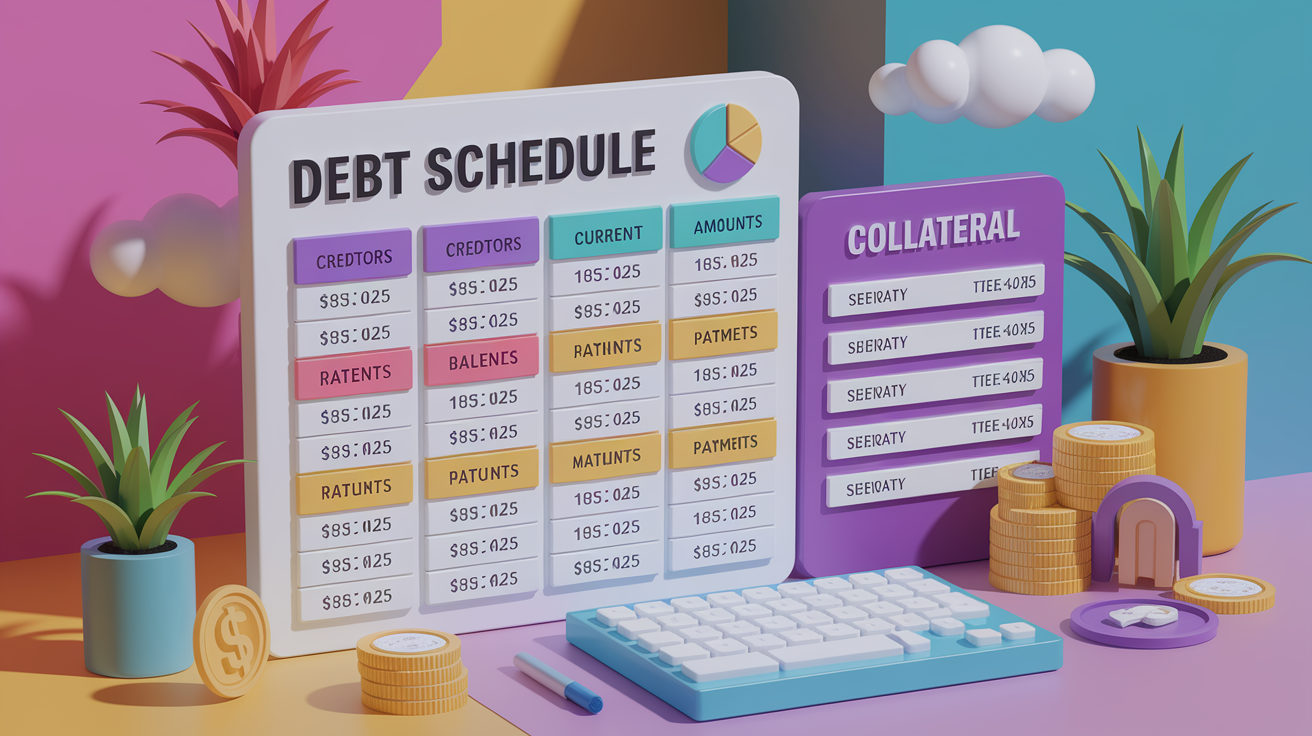
Your debt schedule lists every liability the business currently owes. That includes bank loans, equipment financing, lines of credit, vehicle loans, and any outstanding merchant cash advances. The schedule needs the creditor’s name, the original loan amount, the current principal balance, the interest rate or factor rate, the monthly or periodic payment, and the final maturity date. This helps the lender calculate your total monthly debt service and figure out if you’ve got enough cash flow to handle the new SBA loan payment.
Lenders also want collateral schedules for loans secured by equipment, inventory, or real estate. These list each asset, its purchase date, original cost, accumulated depreciation, and current fair market value. The SBA may order an independent appraisal to verify asset values. If you’re using real estate as collateral, expect a commercial property appraisal.
Required Components of the Business Debt and Collateral Schedule:
- Creditor or lender name for each outstanding liability
- Original loan or financing amount and origination date
- Current principal balance remaining on each debt
- Annual percentage rate, factor rate, or interest rate applied
- Monthly or periodic payment amount and final maturity date for each loan
SBA 7a Pro Forma Financial Projections and Startup Requirements

Pro forma projections show how the loan will support your business over the next 12 to 24 months. You’ll include a one year income and expense forecast, broken out month by month if you’re a startup or newly operating business. The projection should show total monthly revenue, cost of goods sold, operating expenses, and loan payments. Include a written explanation of the assumptions behind each line, like seasonal sales patterns, new customer contracts, or planned marketing spend.
New businesses that haven’t filed tax returns yet need detailed month by month cash flow projections for the first year. These include starting cash, monthly cash coming in from sales, monthly cash going out for expenses and loan payments, and ending cash balance each month. The SBA wants to see you won’t run out of cash in month three or month six when seasonal revenue dips or startup expenses pile up.
Your written narrative should explain how you built each projection line. If you’re projecting $30,000 in monthly revenue by month six, explain the number of customers, average transaction size, or contracts already in place. If you’re projecting a 10% revenue increase after the loan, tie that to specific uses of the loan proceeds, like adding staff, expanding inventory, or opening a second location.
Required Projection Assumptions
Your projection assumptions turn a spreadsheet into a credible plan. Lenders read the narrative to verify your projections are grounded in real contracts, market data, or historical performance, not wishful thinking.
- Monthly sales forecast by product line, customer type, or service category
- Explanation of any seasonal revenue swings and how cash flow remains positive
- Breakdown of how loan proceeds will be deployed and when they’ll generate incremental revenue
- Operating expense assumptions, including payroll, rent, utilities, insurance, and marketing
- Loan payment amount and repayment schedule integrated into monthly cash flow
SBA 7a Inaccurate or Incomplete Tax Returns and Financial Statements: Consequences for Borrowers
Submitting inaccurate or outdated financial statements can tank your loan. It can also trigger additional collateral requirements, loan amount cuts, or higher interest rates. Lenders compare what you submit to IRS transcripts line by line. If the numbers don’t match and you can’t explain why, the underwriter will assume it’s either sloppy record keeping or intentional misrepresentation. Either way, the loan stops.
For delegated lenders processing loans without SBA pre-approval, failing to get or reconcile tax transcripts before closing puts the entire SBA guaranty at risk. If your loan defaults within 18 months and the lender didn’t properly verify tax returns, the SBA can deny the guaranty claim entirely. That shifts full loss exposure to the lender, who will then come after you personally under the guarantee. Accuracy protects both the lender’s guaranty and your ability to get financing in the future.
Common Red Flags Lenders Look For:
- Revenue reported on financial statements significantly higher or lower than tax returns without explanation
- Missing years of tax returns or returns filed late without extensions documented
- Personal or business tax liens, levies, or IRS payment plans not disclosed on application forms
- Inconsistent owner compensation between K-1, W-2, and financial statement draws
Final Words
In the action, this post laid out the exact documents lenders expect: three years of business and personal tax returns, three years of P&L and balance sheets, interim statements within 60-90 days, SBA Form 413, debt schedules, and one-year projections for new businesses.
We also covered who must sign and provide each item, transcript verification steps, and variations by entity type.
If you gather these pieces on the right timeline, underwriting moves faster. Keep your checklist tight: sba 7a required financial statements and tax returns. You’re set to move forward.
FAQ
Q: Do SBA loans require tax returns?
A: SBA loans require tax returns: for 7(a) lenders typically want three years of business returns and three years of personal returns for principals, with IRS transcript verification (Form 4506‑C or Form 8821).
Q: What documents are required for an SBA 7A loan?
A: The documents required for an SBA 7(a) loan are three years of business and, for owners, personal tax returns; three years of P&L and balance sheets; recent interim financials; SBA Form 413; bank statements; debt schedules; and projections for startups.
Q: What are the common reasons 7A loans are denied?
A: Common reasons 7(a) loans are denied include incomplete or inaccurate tax returns and financials, insufficient cash coming in to cover payments, low credit, weak collateral, and unrealistic or unsupported projections.
Q: Do SBA loans require bank statements?
A: SBA loans require bank statements: lenders typically ask for recent months (often 3–6), reconciliations, and bank-to-statement matches to verify cash flow and support interim financials.