


Think a business line of credit automatically improves your business credit score? Not always.
How it reports, how often you use it, and whether you pay on time matter more than just having the line.
A reported line can build positive history fast if you keep balances low and payments current, but high utilization or missed payments can pull scores down quickly.
This post walks through the mechanics, covering reporting, utilization, payment history, and account age, and gives clear steps to use a line without surprising your score.
Core Ways a Business Line of Credit Influences Small Business Credit Scores
When you open a business line of credit, you’re creating a formal tradeline that shows up on reports from Dun & Bradstreet, Experian Business, and Equifax Business. The lender sends updates to one or more of these bureaus, and each time they do, balance, payment status, or credit limit, your business credit profile shifts. Not every lender reports to business bureaus. Before you assume the line will help or hurt your score, confirm whether and how often they share data.
Business credit scoring models watch three things. They track how reliably you pay, how much of your available credit you’re using, and how long your accounts have been open. Each one responds to the way you handle a line of credit, and the bureaus update your scores as fresh data arrives. Changes can happen fast, sometimes within 30 to 90 days.
Key score drivers tied to a line of credit:
- On‑time payment activity, which builds positive history when reported monthly.
- Utilization levels, calculated by dividing outstanding balance by credit limit.
- Account age, measured from the date the line was opened and reported.
- Reporting cadence, usually monthly but sometimes spotty among fintech or alternative lenders.
- Lender participation, because accounts that are never reported contribute nothing to your business credit history.
Your line’s activity translates into score movement because the bureaus refresh scores as new data flows in. A single missed payment can drop a Dun & Bradstreet PAYDEX score, while steady on‑time performance on a low‑utilization revolving line can drive scores up within a few reporting cycles. The frequency and accuracy of reporting determine how visible that movement is to other lenders checking your commercial credit when you apply for more financing.
Understanding Revolving Credit Behavior and Its Credit Score Effects

Revolving credit lets you draw funds up to a limit, repay, and draw again without applying for a new account each time. Installment credit gives you a fixed amount upfront and requires scheduled payments over a set period until the balance hits zero. Open credit, like some vendor net‑30 arrangements, requires payment in full by a specific date and often doesn’t have a preset limit. The structure you choose matters for scoring because installment accounts report a predictable, declining balance. Revolving accounts show balance changes every reporting cycle.
Scoring models watch revolving accounts more closely because the balance can swing between zero and the full limit from month to month. Rapid increases in balance signal risk to scoring algorithms. Steady or falling utilization suggests controlled borrowing. Because the balance on a line of credit can change weekly or even daily, the snapshot reported to bureaus at the end of the reporting cycle determines what gets scored.
| Credit Type | How It Reports | Impact on Scores |
|---|---|---|
| Revolving (line of credit, business credit card) | Balance, limit, payment status updated monthly or at lender discretion | Utilization ratio and payment timeliness both affect score |
| Installment (term loan, equipment loan) | Fixed declining balance and scheduled payment amounts | Primarily payment timeliness; ratio of remaining balance to original loan less influential |
| Open (vendor net-30, some charge cards) | Full-balance due date; often no preset limit; some vendors do not report | On-time payment builds history; no utilization ratio applies if limit is not reported |
How Business Credit Bureaus Report Line of Credit Activity
Dun & Bradstreet, Experian Business, and Equifax Business compile and maintain business credit files, but none automatically receive data on every business account. A lender has to choose to report, establish a data‑sharing relationship with one or more bureaus, and transmit updates regularly. Some fintech and alternative lenders skip reporting entirely. Using those products won’t build or damage your business credit history even if you use the line responsibly.
Most lenders who do report send data on a monthly cycle. That cycle captures four primary categories: the credit limit approved, the current outstanding balance, the payment status, and any delinquency markers. When the account is current, the bureau records an on‑time notation. If a payment is missed, the lender reports delinquency at 30 days late, again at 60 days, and again at 90 or more days, with each successive level damaging scores more severely.
Items reported:
- Credit limit, which sets the denominator for utilization calculations.
- Current balance, which sets the numerator and updates monthly.
- Payment timeliness, flagged as current, 30 days late, 60 days late, or 90+ days late.
- Delinquency stages, which escalate with every 30‑day increment and remain visible for extended periods.
Traditional banks and credit unions often have established reporting relationships with all three commercial bureaus. Many online and fintech lenders report only to one bureau or none at all. Some participate in industry exchanges like the Small Business Financial Exchange but may not feed Dun & Bradstreet or Equifax directly. Before accepting a line offer, ask the lender which bureaus receive data and how often it’s transmitted. If the answer is “we don’t report,” the line won’t help you build business credit.
Credit Utilization on a Business Line of Credit and Score Calculations

Utilization is the ratio of your outstanding balance to your approved credit limit. The formula is straightforward: divide the current balance by the credit limit and multiply by 100 to get a percentage. A $5,000 balance on a $20,000 line produces 25 percent utilization. An $18,000 balance on the same $20,000 line jumps to 90 percent utilization. Higher percentages tell scoring models you’re leaning heavily on available credit, which raises lender concern about repayment capacity.
Commercial credit bureaus track utilization thresholds similarly to consumer credit models. Keeping balances below 30 percent of the limit is widely considered the upper bound for maintaining strong scores. Reducing utilization to 10 to 20 percent often delivers better results. When utilization exceeds 75 to 90 percent, scores can decline quickly, even if every payment arrives on time. The bureaus interpret high utilization as a warning sign that the business may be financially stretched.
To calculate utilization:
- Identify the credit limit approved by the lender.
- Look up the current balance reported on your most recent statement or bank portal.
- Divide the current balance by the credit limit.
- Multiply the result by 100 to convert to a percentage.
If you hold a $50,000 line and carry a $5,000 balance, your utilization is 10 percent, well inside the safe zone. If the same line climbs to $40,000 drawn, utilization rises to 80 percent, and scoring models begin applying negative weighting. Lowering the balance back to $15,000 drops utilization to 30 percent, typically recovering most or all of the score penalty once the lender reports the updated balance.
Payment History on a Line of Credit and Its Weight in Business Credit Scores

Payment history accounts for the largest share of weighting in most business credit scores. Dun & Bradstreet’s PAYDEX score, which runs on a 1 to 100 scale, measures payment speed and flags any account paid slower than terms. Experian Intelliscore and Equifax Business Risk Score models also prioritize on‑time performance, though the exact weighting formulas vary. Missing a payment deadline by even a few days can lower scores, and formal late notations recorded at 30, 60, or 90 days past due create lasting damage.
When a payment becomes 30 days late, most lenders report the delinquency to the business bureaus they work with. That notation remains visible on the report and can reduce scores immediately. If the account remains unpaid, the lender reports another delinquency flag at 60 days and a third at 90 days. Each tier of lateness amplifies the score decline. Accounts that reach 90 days past due often trigger collections activity, adding public‑record‑level negative marks that persist for years.
Automated payment arrangements offer the most effective protection against missed deadlines. Set up automatic withdrawals from a business checking account to cover at least the minimum payment due each cycle. Monitor cash balances to prevent overdrafts that cause automated payments to fail. Review payment confirmations monthly to catch any processing errors before they escalate. Even if utilization is high, a perfect record of on‑time payments preserves business credit scores better than any other single action.
Business vs Personal Credit Impact When Using a Business Line of Credit
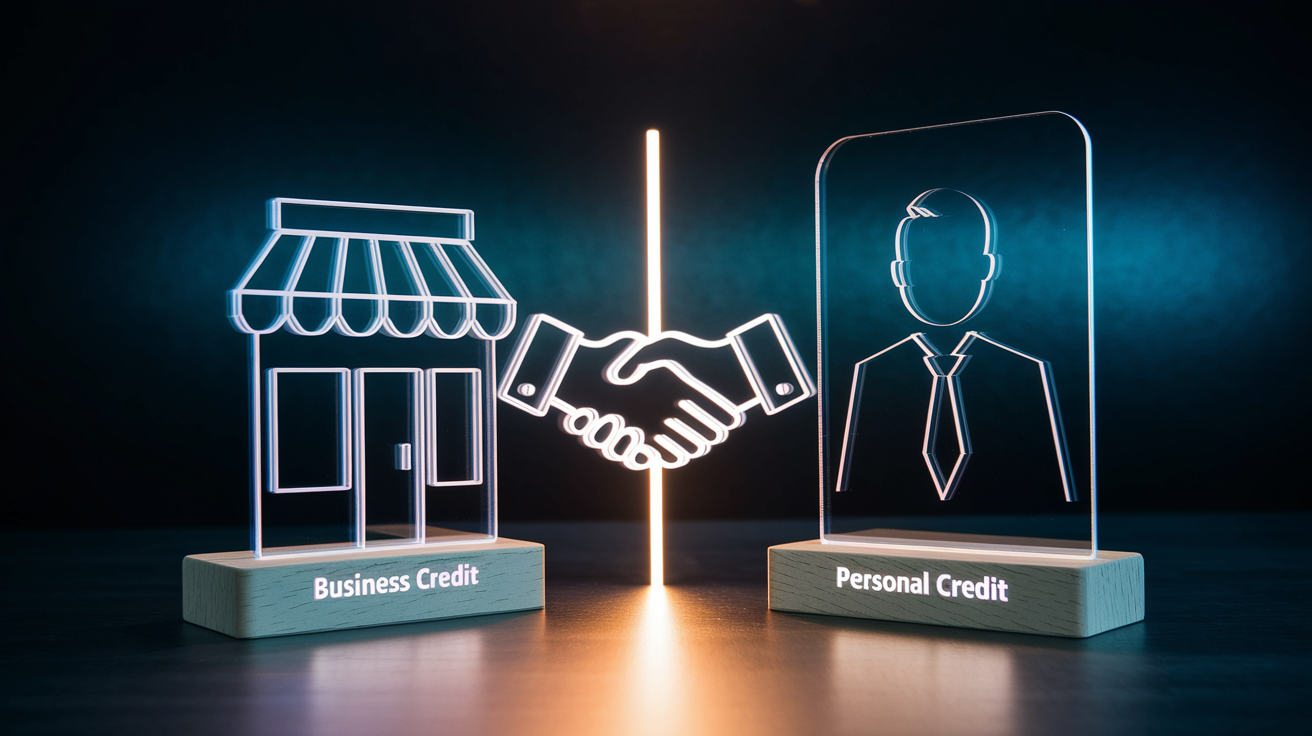
Business‑only lines of credit, opened in the name of the company without a personal guarantee, typically don’t affect personal credit reports at all. Those accounts appear only on commercial credit files. Personally guaranteed lines, by contrast, can appear on both business and personal credit reports. If a personally guaranteed account falls delinquent or defaults, the lender may report the negative activity to consumer bureaus (Experian, Equifax, and TransUnion) in addition to business bureaus.
When a lender evaluates a business line application, it may check personal credit, business credit, or both. A hard inquiry on personal credit remains visible on personal credit reports for up to two years and can temporarily lower personal credit scores by a few points. A soft inquiry, often used for prequalification, doesn’t affect personal credit. Business credit inquiries usually appear only on business credit reports, unless the application required a personal credit check.
| Situation | Impact on Business Credit | Impact on Personal Credit |
|---|---|---|
| Business line with no personal guarantee, lender reports to Dun & Bradstreet only | Line balance, payment status, and utilization appear on business report; score changes reflect account activity | No impact; account does not appear on personal report |
| Business line with personal guarantee, lender checks personal credit and reports defaults to consumer bureaus | Account appears on business credit report; missed payments lower business scores | Hard inquiry at application; missed payments or defaults can lower personal credit score |
| Prequalification using soft pull, no personal guarantee | No impact until account opens and lender begins reporting | No impact; soft inquiry does not affect personal score |
Positive and Negative Score Scenarios From Real Business Line of Credit Use
A service business secures a $25,000 line of credit from a bank that reports monthly to all three commercial bureaus. The owner draws $2,500 to cover a seasonal payroll gap, bringing utilization to 10 percent. All payments arrive on time for 12 consecutive months. By month six, the Dun & Bradstreet PAYDEX score has climbed from 72 to 78, and the Experian Intelliscore has improved from 58 to 64. After 12 months of clean payment history and low utilization, the business qualifies for a second, larger line at a lower interest rate.
A retail business opens a $50,000 line and immediately draws $47,500 to buy inventory for the holiday season, creating 95 percent utilization. One payment is missed by 35 days due to slow sales. The lender reports the balance and the 30‑day late mark. Within two reporting cycles, the PAYDEX score drops from 80 to 62, and the Experian Intelliscore falls from 70 to 52. When the owner applies for additional financing to cover the shortfall, lenders flag the high utilization and late payment. All three applications are declined.
A construction contractor maintains a $15,000 line for three years, using it sparingly for material deposits and repaying balances within 30 to 60 days. Utilization averages 20 percent, and no payments are ever late. The lender reports to Dun & Bradstreet and Experian Business. After 36 months of steady activity, the account age and clean payment history contribute to a PAYDEX score of 85 and an Intelliscore of 78. When the contractor applies for equipment financing, the long‑tenured, well‑managed line of credit strengthens the application and helps secure approval at a competitive rate.
A startup opens a $10,000 line with no personal guarantee, but the lender doesn’t report to any business credit bureau. The owner makes every payment on time and keeps utilization below 30 percent for 18 months. When the owner checks business credit reports, the line doesn’t appear on any of them. Because the lender never transmitted data, the careful management generated no business credit benefit. The startup applies for a second line with a reporting lender to begin building a visible payment history.
Best Practices for Using a Business Line of Credit to Protect and Build Credit
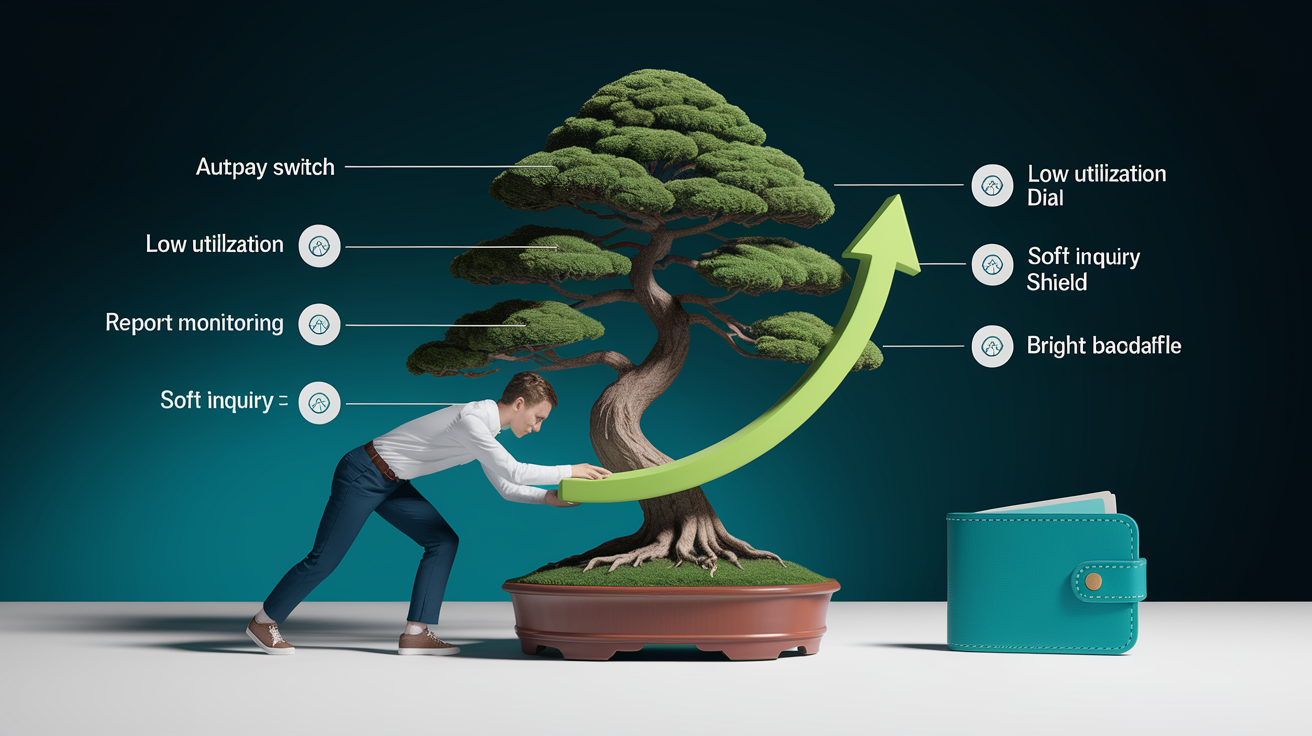
Before accepting any line offer, confirm which business credit bureaus will receive account data and how often the lender reports. If a lender doesn’t report at all, the line won’t help you build business credit. Choose lenders that report monthly to Dun & Bradstreet, Experian Business, or Equifax Business if credit‑building is a priority. Ask the lender directly or check their website for bureau‑reporting disclosures.
Use the line periodically and in small amounts to establish a pattern of activity without driving utilization too high. A line that sits at zero balance for months may not generate enough data to improve scores. Draw a small portion, such as 5 to 15 percent of the limit, and repay it within the same billing cycle or the next. This activity shows lenders you can manage credit responsibly without becoming overextended.
Things to do:
- Maintain utilization below 30 percent at all times; aim for 10 to 20 percent for stronger score gains.
- Set up automated payments to cover at least the minimum due every cycle, eliminating the risk of accidental late marks.
- Keep accounts open for at least 12 months before closing them, because account age contributes to scoring models.
- Monitor business credit reports monthly or quarterly to catch errors, confirm lender reporting, and track score changes.
- Limit hard inquiries by using soft‑pull prequalification tools offered by many online lenders and marketplaces before submitting formal applications.
- Ask lenders about reporting schedules during the application process, and request written confirmation of which bureaus receive data.
- Separate personal and business finances by using dedicated business bank accounts and business credit products without personal guarantees whenever possible.
- If a line charges maintenance or draw fees, calculate whether the cost justifies keeping the account open when not in active use.
Monitoring Business Credit Reports and Handling Disputes Related to Lines of Credit
Errors on business credit reports can occur when lenders misreport balances, post payments to the wrong account, or transmit outdated delinquency information. A lender might report a $10,000 balance when the line has been paid down to $2,000, inflating utilization and lowering scores. Late‑payment flags can appear even when payments arrived on time if the lender’s system logged the payment incorrectly. Monitoring reports monthly lets you catch these mistakes before they cause lasting damage.
Dun & Bradstreet, Experian Business, and Equifax Business each offer report‑access products, some free and others subscription‑based. Pull a report from each bureau at least quarterly. Compare the credit limits, balances, and payment statuses shown for your line of credit against your own records (bank statements, payment confirmations, and lender account portals). If you spot a discrepancy, act immediately.
The dispute process requires documentation and direct communication with the bureau reporting the error. Follow these steps:
- Gather proof of the correct information, such as a bank statement showing a lower balance or a payment confirmation showing an on‑time transaction.
- Contact the business credit bureau online or by mail, submitting a formal dispute that identifies the account, describes the error, and attaches supporting documents.
- The bureau will investigate, typically within 30 to 45 days, and contact the lender to verify the disputed data.
- If the lender confirms the error, the bureau updates your report and recalculates your score; request a fresh copy of the corrected report.
- If the bureau sides with the lender and the error persists, escalate by contacting the lender directly, providing the same documentation, and requesting that the lender submit a correction to the bureau.
Checking reports regularly also reveals when a lender that promised to report has failed to do so. If your line of credit doesn’t appear on your business credit file after two or three billing cycles, contact the lender to confirm reporting status. Some lenders report only after an account has been open for a minimum period, such as 90 days, or after a certain number of transactions. Others simply don’t report despite initial representations. Knowing this early lets you decide whether to keep the account or replace it with a product from a lender that actively builds your business credit.
Final Words
You saw how a line of credit shows up on business reports, the role of utilization, and why payment timing and reporting cadence move scores. We ran through bureaus, revolving behavior, reporting quirks, and clear best practices.
Keep utilization low, automate payments, and check reports regularly, this is how a business line of credit affects small business credit scores in real terms.
Do this, and your line of credit can be a tool that protects and builds your credit over time.
FAQ
Q: Does applying for a business line of credit affect credit score?
A: Applying for a business line of credit can affect credit scores. A hard pull for a personal guarantee can hit your personal FICO; reported business lines appear on business reports and affect scores via utilization and payments.
Q: What is the biggest killer of credit scores?
A: The biggest killer of credit scores is missed or late payments. Payment history carries the most weight, and 30‑day delinquencies start showing on reports and cause the fastest score drops.
Q: How rare is an 830 FICO score?
A: An 830 FICO score is very rare. It sits near the top of the scale; only a small share of people reach 800+, signaling long, spotless payment history and very low credit use.