


Want an SBA 7(a) loan?
Most applications fail for a simple reason: messy paperwork and weak numbers, not picky lenders.
If you tidy up your personal credit, business financials, and cash flow ahead of time, you’ll increase approval odds and get better terms.
This piece walks you through the concrete steps, what documents to pull, how to raise your DSCR (cash available to cover debt), credit fixes that actually move the needle, and realistic timelines.
You’ll be able to apply with confidence and face fewer surprises.
Core Strategies to Increase SBA 7(a) Loan Approval Odds

The gap between applying for an SBA 7(a) loan and getting approved usually comes down to a few numbers and organized paperwork. Lenders aren’t guessing. They’re running your profile against hard thresholds for credit, cash flow, and risk. Sure, the SBA backs up to 75% of the loan, but the bank still underwrites that remaining 25% and carries real exposure. Your personal credit score matters. So does your business’s ability to cover debt payments. And how cleanly you present your financial story? That weighs heavily on whether you hear yes or no.
Run a prequalification self-assessment before you send anything to a lender. Pull your personal credit report and check your FICO score. You want 660 minimum, though 700+ makes things much easier. Calculate your business’s Debt Service Coverage Ratio: DSCR = Operating Cash Flow ÷ Annual Debt Service. The SBA requires at least 1.10 for loans under $350,000, but most lenders want 1.15 to 1.25. Check credit utilization across all revolving accounts and aim for under 30%. Grab your last two years of business tax returns and confirm they show profitability. If any of those metrics fall short, you’ve just identified what needs fixing before you apply.
Common denial reasons? Incomplete documentation. Low or inconsistent cash flow. Personal or business credit problems. Unstable revenue patterns. Missing or wrong tax returns. Most of these can be corrected in 30 days to a year, depending on how bad things are. Preapproval soft pulls from online facilitators typically return an answer in around 10 minutes, so you can test where you stand without a hard credit inquiry. If you don’t get approved for the amount you need, use the feedback to target specific fixes. Credit error disputes clear in 30 to 45 days. DSCR improvements take 3 to 9 months. Documentation cleanup runs 1 to 3 months.
Top 5 Factors Lenders Evaluate for SBA 7(a) Approval:
- Personal credit score and business credit (SBSS) score
- Debt Service Coverage Ratio and historical cash flow
- Business profitability over the most recent full fiscal year
- Completeness and accuracy of tax returns, financials, and application documents
- Time in business, industry risk profile (NAICS code), and owner equity injection
Strengthening Personal & Business Credit to Qualify for an SBA 7(a) Loan

Your personal credit score sits at the front of the underwriting file. Lenders weigh owner FICO heavily because it tells them how you manage obligations when things get tight. Target a personal score of 700 or higher for the smoothest path to approval. Scores in the 680 to 699 range can still qualify, but you’ll see tighter terms and more scrutiny. Below 680? Approval odds drop fast unless other parts of your profile are exceptionally strong. The credit scoring scale runs from 300 to 850. Most SBA facilitators consider 630 to 689 “Fair,” 690 to 719 “Good,” and 720+ “Excellent.”
Business credit counts too, especially your Small Business Scoring Service (SBSS) score, which ranges from 0 to 300. Many lenders require an SBSS score of at least 165 to 170 to qualify. Business scores often mirror owner personal credit in the early years, since business tradelines are usually thin. If your business credit is weak or doesn’t exist, start building it now. Get a DUNS number. Open a business bank account under your EIN. Establish revolving credit accounts (business credit cards, net 30 vendor accounts) that report to commercial bureaus like Dun & Bradstreet, Equifax Business, and Experian Business.
Credit improvements don’t happen overnight, but the timeline’s predictable. Disputing errors on your personal or business credit reports typically resolves in 30 to 45 days. Building three to six months of consistent on-time payments produces visible score increases. Paying down revolving balances to reduce utilization below 30% can lift scores within one to three billing cycles. Don’t open multiple new credit accounts within six months of applying. Hard inquiries and new account age both temporarily drag scores down. If your credit history is thin, consider a secured credit card or a small installment loan to diversify your tradeline mix and add positive payment history.
6-Step Credit Improvement Sequence Before Applying:
- Pull personal credit reports from all three bureaus and your business SBSS report. Review for errors, outdated accounts, and inaccuracies. Dispute anything incorrect within 30 days.
- Pay down revolving balances to reduce utilization to 30% or lower. Prioritize high utilization cards first for the fastest score lift.
- Make every payment on time for at least three to six months before applying. Set automatic payments to eliminate missed due dates.
- Keep older credit accounts open even if unused. Account age contributes to score strength and closing old tradelines can hurt your profile.
- Avoid new credit applications and hard inquiries during the six months before your SBA loan application unless absolutely necessary.
- Add new tradelines strategically if credit is thin. Secured cards, business credit accounts with vendors, or small installment loans all build positive history when paid on time.
Preparing Financial Statements Lenders Want for SBA 7(a) Approval

Lenders base their approval decision on your historical financial performance, not hopeful projections. They want to see at least one full year of profitable business tax returns, plus current year interim financial statements that confirm cash flow remains strong. The core documents (profit and loss statement, balance sheet, and cash flow statement) must reconcile cleanly to your tax filings and bank statements. Lenders use year-end financials heavily because they represent audited or filed totals, not estimates. If your books are disorganized or incomplete, expect delays, additional questions, or outright denial. Clean, accurate financials signal that you run a stable operation and understand your numbers.
Projections matter, but they supplement historical data. They don’t replace it. A lender will review your pro forma forecasts to understand your growth plan and repayment strategy, but the underwriting decision hinges on what you’ve already delivered. Showing a loss or inconsistent revenue in your tax returns? Projections alone won’t overcome that red flag. Bookkeeping cleanup typically takes one to four weeks if you’re working with an accountant or using software like QuickBooks or Xero. Reconcile all accounts, categorize expenses correctly, and make sure your P&L matches your bank deposits and withdrawals.
| Required Document | Purpose | Typical Timeline to Prepare |
|---|---|---|
| Profit & Loss Statement (P&L) | Shows revenue, expenses, and net income; lenders verify ability to cover debt service | 1–2 weeks if books are current; 3–4 weeks if reconciliation needed |
| Balance Sheet | Lists assets, liabilities, and equity; confirms business solvency and collateral availability | 1–2 weeks if accounts reconcile; longer if inventory or A/R discrepancies exist |
| Cash-Flow Statement | Tracks actual cash movement; used to calculate DSCR and verify liquidity | 1–3 weeks; requires accurate P&L and balance sheet as inputs |
Use accounting software to generate these statements automatically once your books are reconciled. Lenders appreciate software generated reports because they include standard formatting, date ranges, and account classifications. Still using spreadsheets? Consider migrating to QuickBooks or Xero before applying. It improves accuracy, speeds up lender requests for additional detail, and demonstrates professionalism. Export your financials as PDFs and review them line by line before submission to catch errors or unexplained anomalies that could trigger underwriting questions.
Improving Cash Flow & DSCR to Strengthen an SBA 7(a) Loan File

Debt Service Coverage Ratio is the single most important metric lenders use to evaluate repayment capacity. The formula’s straightforward: DSCR = Operating Cash Flow ÷ Annual Debt Service. Operating cash flow typically comes from your EBITDA (Earnings Before Interest, Taxes, Depreciation, and Amortization) or Net Operating Income, adjusted for non-cash expenses. Annual debt service is the total of all your loan and lease payments over the next 12 months. The SBA requires a minimum DSCR of 1.10 for loans under $350,000, meaning your cash flow must cover debt payments by at least 10%. Most lenders prefer 1.15 to 1.25 to provide a buffer for revenue fluctuations or unexpected expenses.
If your DSCR sits below 1.10, you won’t qualify until you either increase cash flow or reduce debt service. Immediate actions that improve DSCR include cutting controllable expenses (subscriptions, utilities, non-essential labor), raising prices where the market allows, improving collections to accelerate receivables, and renegotiating vendor payment terms to preserve cash. Larger structural changes (launching a new product line, expanding to a second location, or restructuring existing debt) typically take three to nine months to produce measurable DSCR improvement. Lenders give the most weight to cash flow trends over the most recent 12 months, so a short-term spike won’t carry much credibility unless it’s backed by contract revenue or long-term customer commitments.
Stable, predictable cash flow matters more than occasional high revenue months. Seasonal businesses need to demonstrate that off-season cash reserves or credit lines can cover debt payments during slow months. If your revenue fluctuates, lenders may average your monthly cash flow over a full year and apply that average to the DSCR calculation. Building 12 months of consistent positive cash flow before applying significantly strengthens your file, especially if prior years showed volatility or losses.
5 Strategies to Improve DSCR Before Applying:
- Reduce monthly operating expenses by auditing subscriptions, renegotiating leases, or consolidating vendors. Even a $500 per month reduction improves DSCR immediately.
- Increase revenue through pricing adjustments, upselling existing customers, or launching targeted marketing campaigns. Plan for 3 to 6 months to see measurable impact.
- Pay down or refinance high interest debt to lower your total annual debt service, which directly raises your DSCR ratio.
- Accelerate receivables by tightening payment terms, offering early pay discounts, or implementing automated invoicing and follow-up.
- Delay discretionary capital expenditures until after loan approval to preserve operating cash and show stronger interim financials.
Organizing Tax Returns & Required Documentation for SBA 7(a) Underwriting

Incomplete or inaccurate documentation ranks among the top reasons SBA 7(a) applications get denied or delayed. Lenders typically require at least two years of business tax returns when available, though newer businesses may submit one year plus interim statements. Personal tax returns for all owners with 20% or greater equity also go into the file, since lenders evaluate both business and personal financial health. The SBA uses standardized forms (Form 1919 (Borrower Information Form) and Form 413 (Personal Financial Statement)) to collect ownership details, asset schedules, and liability lists. Gather formation documents (Articles of Incorporation or LLC Operating Agreement), your EIN confirmation, business licenses, and leases to confirm legal structure and operational legitimacy.
Bank statements typically cover the most recent three to six months and must reconcile to your P&L and balance sheet. Lenders flag discrepancies between reported revenue and actual deposits, or between stated expenses and withdrawals. If you commingle personal and business funds, clean that up before applying. Open a dedicated business account and run all transactions through it for at least 90 days. Prepare a detailed list of all existing business debts with balances, interest rates, monthly payments, and maturity dates. Lenders use this list to calculate your current debt service and assess whether additional debt is sustainable.
Compiling a complete documentation package typically takes one to three months if your records are current, longer if tax returns need amendment or financial statements require reconstruction. Start early, and use a checklist to track what’s submitted and what’s still missing. Responding quickly to lender requests for additional documents or clarifications speeds up underwriting and signals that you’re organized and serious.
7 Key Documents to Organize Before Applying:
- Business tax returns for the last two years (or one year if less than two years in operation), including all schedules and depreciation tables.
- Personal tax returns for the last two years for all owners with 20% or greater equity stake.
- SBA Form 1919 (Borrower Information Form) and Form 413 (Personal Financial Statement) completed in full with accurate asset and liability details.
- Interim profit and loss statement and balance sheet for the current year through the most recent month end.
- Business bank statements for the last three to six months, showing deposits, withdrawals, and ending balances.
- Business formation documents: Articles of Incorporation, LLC Operating Agreement, partnership agreements, business licenses, and EIN confirmation letter.
- Detailed debt schedule listing all current loans, credit lines, leases, and payment obligations with creditor names, balances, rates, and monthly payments.
Strengthening Your Business Plan to Meet SBA 7(a) Standards

A strong business plan does more than describe what your company does. It explains exactly how the loan proceeds will be used, how that use will generate additional cash flow or reduce costs, and how you’ll repay the debt on schedule. Lenders want to see a clear use of funds breakdown, realistic financial projections tied to the capital infusion, market analysis that supports your growth assumptions, and a repayment strategy grounded in historical performance. Weak or missing business plans are a common denial reason because they signal either poor planning or an inability to articulate the business model clearly.
Management experience carries significant weight in lender evaluation. If you or your management team have deep industry experience, document it. Include resumes, certifications, and a summary of relevant operational history. If the team is light on experience, explain how you’ll mitigate that risk through advisors, consultants, or strategic hires. Lenders review the “character” and “capacity” elements of the 5 C’s of credit, and management strength directly influences both. Financial projections should tie directly to the loan use. If you’re buying equipment, show how the equipment increases production capacity or reduces labor costs, then model the revenue or margin improvement over 12 to 36 months.
Preparing a lender ready business plan typically takes two to six weeks, depending on complexity and whether you need to conduct market research, compile competitor analysis, or build detailed financial models. Use realistic assumptions. Lenders compare your projections to industry benchmarks and will question overly optimistic growth rates or margin expansion. Include a break-even analysis that shows the revenue threshold required to cover all fixed and variable costs plus debt service. If the break-even point sits above your current revenue, explain the specific actions you’ll take to close that gap and provide a timeline.
Reducing Existing Debt & Increasing Owner Injection for SBA 7(a) Approval

Lenders evaluate loan size against your average annual revenue using a general rule: request 25% to 50% of your average annual revenue over the last three years. If you request more than 50%, expect additional scrutiny and a higher likelihood of partial approval or denial. To estimate a safe loan size, calculate your three year average revenue, subtract existing debt balances, then target 25% to 50% of that net figure. If your current debt load is already high, paying down balances before applying materially improves your qualification odds and increases the amount lenders are willing to approve.
Reducing high interest revolving balances (especially business credit cards) improves your DSCR quickly because it lowers monthly debt service without requiring long-term repayment plans. Even modest reductions, like paying off $5,000 on a card with a $500 monthly minimum, free up $500 in monthly cash flow and improve your DSCR immediately. Meaningful debt reduction timelines vary widely. Paying off small balances can happen in days to weeks if you have cash reserves, while restructuring term loans or negotiating settlements may take three to 24 months depending on the debt size and creditor flexibility.
Owner equity contributions signal commitment and reduce lender risk. If you can inject personal capital as a down payment or working capital reserve, it strengthens your file and may unlock better terms or higher approval amounts. Lenders view owner injection as “skin in the game.” It demonstrates confidence in the business and provides a cushion if cash flow tightens. Plan to raise those funds over three to 12 months through savings, liquidating non-critical assets, or borrowing against personal collateral like home equity if it makes financial sense.
4 Actions to Lower Debt and Increase Capital Before Applying:
- Pay down high interest revolving debt first to reduce monthly debt service and improve DSCR. Prioritize cards with balances above 50% utilization.
- Consolidate multiple small loans or credit lines into a single term loan with a lower blended rate and longer amortization, reducing your total monthly payment.
- Refinance existing business debt if current rates are high or terms are short. Extending the term lowers monthly payments and frees up cash flow.
- Increase owner equity contribution by saving cash reserves, liquidating underutilized assets, or securing personal capital sources over a 3 to 12 month timeline before applying.
Meeting SBA 7(a) Collateral, Guarantee, and Risk Requirements
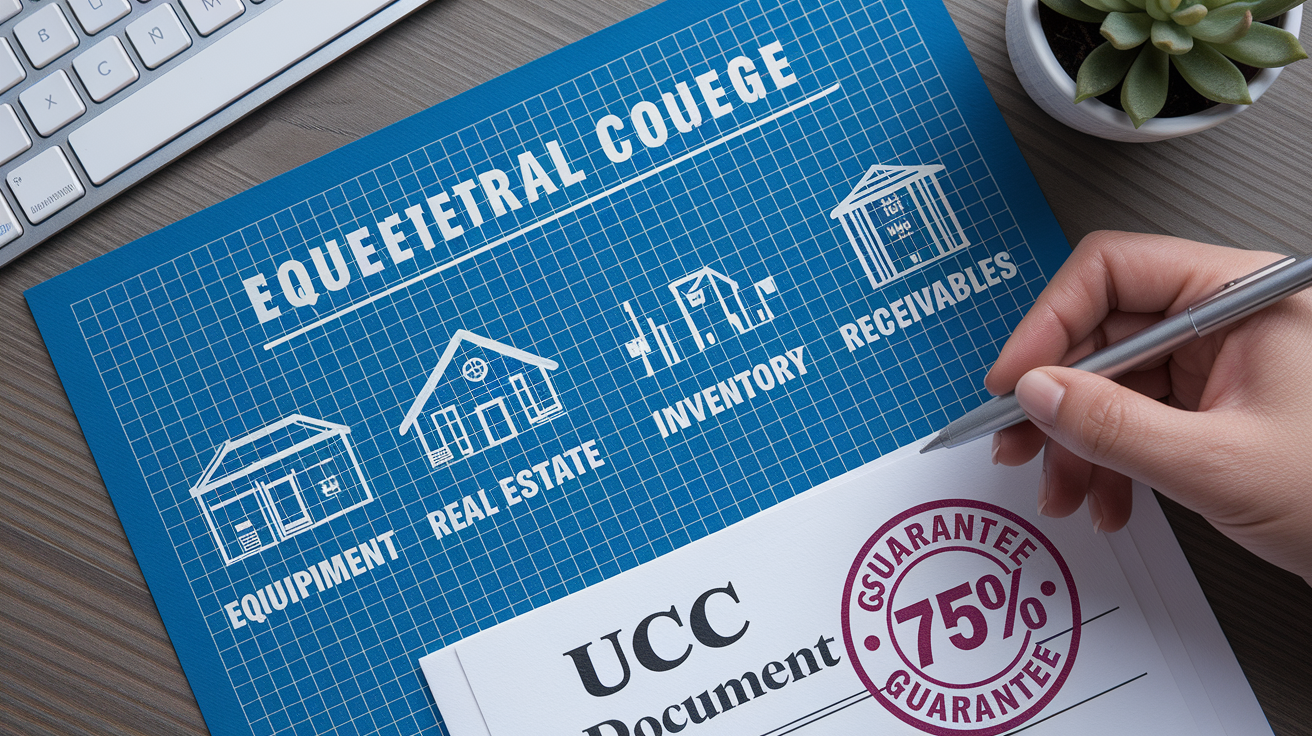
Many SBA lenders require collateral for loans above $25,000, though some facilitators offer unsecured SBA 7(a) loans up to $50,000 for well qualified borrowers. For loans between $50,001 and $500,000, expect a blanket lien on business assets (equipment, inventory, receivables, and intellectual property). The SBA guarantees up to 75% of the loan, but the lender still files a security interest to protect the 25% exposure and the guaranteed portion if default occurs. Collateral doesn’t need to cover 100% of the loan value, but lenders do require accurate collateral schedules, current appraisals for equipment or real estate, and clean title searches to confirm no prior liens conflict with their position.
Personal guarantees are standard for SBA 7(a) loans. Any owner with 20% or greater equity must personally guarantee the debt, which means personal assets (home equity, savings, investment accounts) are at risk if the business defaults. The guarantee obligation is unlimited unless the loan documents specify otherwise, so read the terms carefully. If you’re uncomfortable with personal liability, your options narrow significantly. Most SBA lenders won’t waive the guarantee, though some alternative financing structures (revenue-based financing, asset-based lending) don’t require personal guarantees.
Collateral schedules must list every asset with a description, purchase date, original cost, and current estimated value. Equipment appraisals from third-party specialists carry more weight than owner estimates. If you’re pledging real estate, lenders order a commercial appraisal and title search before closing. UCC filings (Uniform Commercial Code) must be filed correctly with the Secretary of State to perfect the lender’s security interest. Errors in filing (wrong debtor name, missing collateral descriptions) can delay closing or jeopardize the lender’s lien priority.
4 Collateral and Guarantee Considerations to Prepare For:
- Assemble a complete collateral schedule listing all business assets with purchase dates, costs, and current values. Obtain third-party appraisals for equipment worth $10,000 or more.
- Confirm no prior liens exist on assets you plan to pledge. Order a UCC search from your Secretary of State to identify existing creditors.
- Understand personal guarantee obligations and confirm all owners with 20% or greater equity are prepared to sign. Discuss with legal counsel if you have concerns about unlimited liability.
- For real estate collateral, obtain a preliminary title report and ensure the property appraisal will support the loan amount. Budget 30 to 60 days for appraisal and title work.
Choosing the Right SBA Lender & Building a Strong Banking Relationship

Not all SBA approved lenders operate the same way. Banks in the SBA Preferred Lender Program (PLP) have delegated authority to approve loans without waiting for SBA review, which can cut processing time from 60 to 90 days down to 30 to 45 days for a complete file. PLP lenders also tend to have more experienced SBA underwriters who understand nuances in documentation and can guide you through fixes if your application has minor issues. Non-PLP lenders must submit every loan to the SBA for approval, adding weeks to the timeline and reducing flexibility.
Soft pull prequalification tools offered by online facilitators return an initial approval estimate in about 10 minutes without impacting your credit score. Use these tools to test your profile strength and identify which lenders are most likely to approve your target loan amount. Lenders vary in how they weight personal versus business credit. Some rely heavily on SBSS scores, others focus almost entirely on personal FICO. If your personal credit is strong but your business credit is thin, target lenders who emphasize personal scores. If the reverse is true, look for lenders with flexible personal credit policies.
Building a banking relationship before you apply improves communication clarity and speeds up underwriting. If you already have a business checking account, line of credit, or merchant services with a bank, that lender has visibility into your cash flow and payment history. They’re more likely to approve a loan quickly because they’ve already conducted due diligence on your business operations. If you don’t have an existing relationship, consider opening accounts and using banking services for three to six months before applying. It won’t guarantee approval, but it removes the “unknown borrower” risk.
3 Lender Selection Strategies:
- Prioritize PLP designated lenders if speed matters. They can approve loans in-house and typically close complete files 15 to 30 days faster than non-PLP banks.
- Use soft pull prequalification to compare multiple lenders without hard credit inquiries. Apply only to lenders whose pre-approval amounts match your target.
- Build a banking relationship by opening business accounts, using credit products, and maintaining positive balances for 3 to 6 months before applying. It improves lender confidence and streamlines underwriting.
Strengthening Management, Industry Experience & Operational Stability

Lenders evaluate “character” as one of the 5 C’s of credit, which translates to owner background, industry experience, and operational track record. A business owner with 10 years of relevant industry experience presents far less risk than a first-time entrepreneur in an unfamiliar market. If you or your management team have deep expertise, highlight it in your business plan and loan application. Include resumes, certifications, industry awards, and examples of past success managing similar operations. If experience is limited, mitigate perceived risk by adding advisors, consultants, or experienced hires to the team and documenting their roles clearly.
Operational stability shows up in consistent revenue trends across 12 months or longer. Lenders trust cash flow that arrives predictably, whether from recurring contracts, subscription models, or steady walk-in traffic. If your revenue fluctuates month to month, explain the seasonality and show how you manage cash reserves or credit lines to cover debt payments during slow periods. A business that swings from $50,000 in revenue one month to $10,000 the next raises questions about sustainability unless there’s a clear pattern and plan.
Transparency matters more than perfection. If you’ve had credit issues, legal disputes, or prior business failures, disclose them upfront and explain what you learned and how you’ve corrected the underlying problems. Lenders will find undisclosed issues during due diligence, and hiding problems triggers immediate distrust. Addressing issues honestly in your application shows character and gives the lender context to evaluate risk fairly.
3 Actions to Strengthen Management and Operational Credibility:
- Document owner and management industry experience in detail. Include years in the field, relevant certifications, past operational roles, and specific expertise that reduces business risk.
- Show consistent revenue trends over the most recent 12 months. If revenue fluctuates, explain seasonality and demonstrate cash reserve or credit strategies that ensure uninterrupted debt service.
- Disclose past credit issues, legal matters, or business failures transparently and explain corrective actions taken. Hiding problems discovered during underwriting destroys lender trust and guarantees denial.
What to Do After an SBA 7(a) Loan Denial & When to Reapply
If your SBA 7(a) application is denied, the first step is to request a written explanation of the denial reasons from the lender. Federal regulations require lenders to provide specific reasons, and those details tell you exactly what to fix before reapplying. Common denial causes include DSCR below the lender’s threshold, insufficient historical profitability, low personal or business credit scores, incomplete documentation, high existing debt service, or undisclosed issues discovered during due diligence. Each reason has a fix, and most fixes follow predictable timelines.
Typical reapplication waiting periods run 90 days, though some lenders allow earlier resubmission if you’ve made material improvements to your credit, cash flow, or documentation. Use that 90 day window strategically. If credit is the issue, focus on paying down revolving balances, disputing errors, and building three months of on-time payment history. All achievable in 90 days. If DSCR is the problem, reduce expenses, accelerate collections, or pay off small debts to lower monthly debt service. If documentation was incomplete, gather missing tax returns, reconcile financial statements, and organize your files so resubmission is clean.
Longer-term improvements (moving from Fair to Good credit, building 12 months of strong cash flow, or adding a full year of profitable tax returns) take three to 12 months. If the denial reason requires structural changes to your business, like diversifying revenue sources or improving operational margins, expect six to 18 months before reapplying. Don’t rush reapplication if the underlying issues aren’t resolved. A second denial creates a pattern that makes future approval even harder.
4 Steps to Take After an SBA 7(a) Denial:
- Request a written denial explanation from the lender within 7 days. Review it carefully to identify specific deficiencies (credit score, DSCR, documentation, debt load).
- Address fixable issues immediately. Dispute credit errors, pay down high utilization accounts, gather missing documents, and reconcile financial statements. Many of these actions complete in 30 to 90 days.
- Reorganize and reduce existing debts by consolidating high interest balances, refinancing short-term loans, or negotiating payment plans to lower monthly debt service before reapplying.
- Track improvement timelines and reapply only after measurable progress. Credit score increases take 3 to 6 months, DSCR improvements require 3 to 9 months, and consistent profitability needs 6 to 12 months of clean financials.
Final Words
Start acting on the basics now: tighten personal credit, raise DSCR, clean up tax returns and bank statements, and choose a lender who understands your industry.
- Fix credit errors and lower utilization
- Reconcile books and gather tax returns
- Raise DSCR by cutting costs or growing sales
- Reduce high-interest debt and add owner injection
- Prequalify with a PLP lender (soft pull ~10 minutes)
These moves will directly boost how to improve your chances of qualifying for an sba 7a loan. Do the work steadily, and you’ll be in a much stronger spot when you apply.
FAQ
Q: How hard is it to get an SBA 7A loan?
A: Getting an SBA 7(a) loan is moderately challenging; lenders heavily weigh personal credit (aim 660–700+), DSCR, stable revenue, and complete documentation. A soft prequal pull usually takes about 10 minutes.
Q: What is the 20% rule for SBA?
A: The 20% rule for SBA commonly means lenders expect roughly 10–20% owner injection on many deals; exact required equity depends on loan size, purpose, and the lender’s policies.
Q: What are the common reasons 7A loans are denied?
A: Common reasons 7(a) loan denials include incomplete documentation, low DSCR, poor personal credit, unstable or inconsistent revenue, messy or missing tax returns, and undisclosed debts or unresolved legal issues.
Q: What disqualifies you from getting an SBA loan?
A: Factors that disqualify you from an SBA loan include very poor credit, inability to show repayment ability (low DSCR), incomplete or fraudulent documents, active bankruptcy or unresolved federal tax liens, and ineligible business types.