


You don’t need perfect credit to get cash fast.
Invoice factoring looks at who owes you, not your credit score.
Contractors who bill businesses or government can sell unpaid invoices for immediate funds, but factors still require specific documents, clear invoices for completed work, and creditworthy customers.
This post shows the exact eligibility rules, the paperwork to gather, how your customers’ credit affects approval, and the common red flags that slow a deal.
Core Eligibility Requirements Contractors Must Meet to Qualify for Invoice Factoring
Invoice factoring lets contractors sell unpaid invoices for immediate cash instead of waiting weeks or months to get paid. Most factors care more about who owes you than your credit score, which makes it accessible even if you’re newer or rebuilding after a rough season.
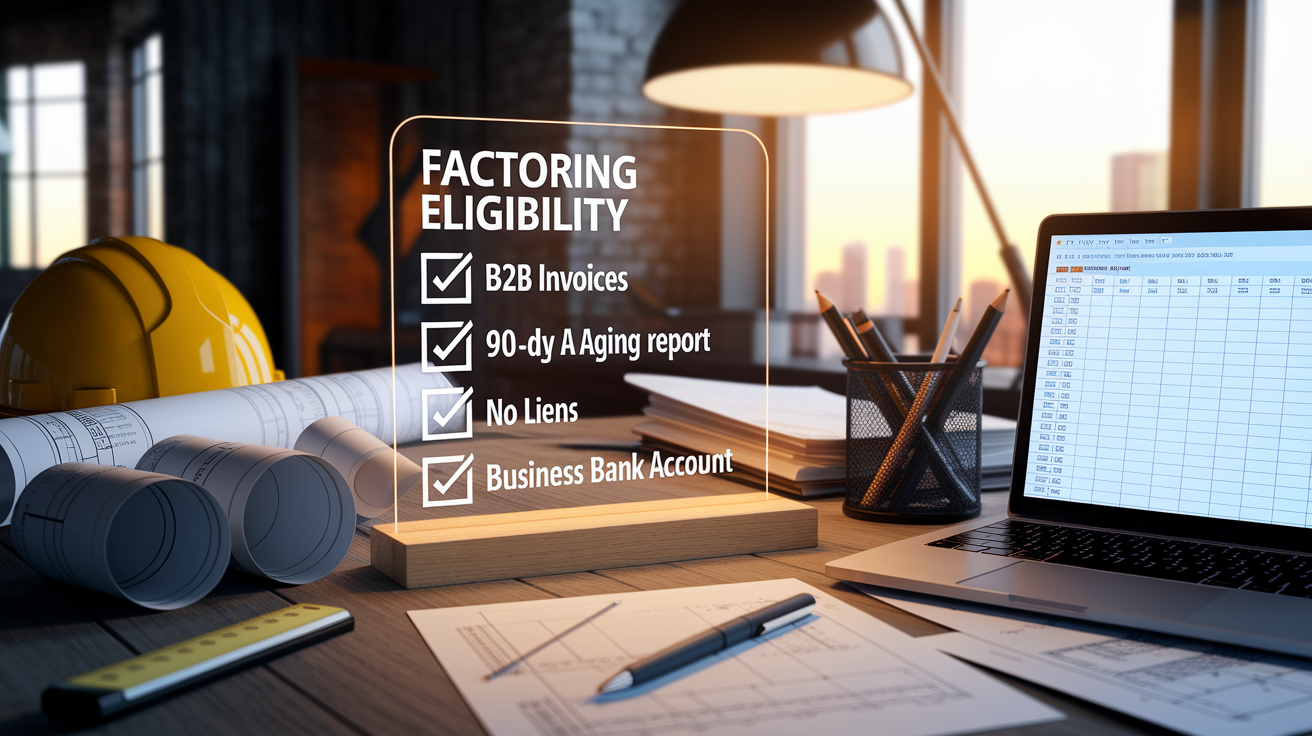
You’ve got to operate business to business with invoices for completed work. That means no homeowner jobs or retail customers. Your invoices need payment terms of at least 30 days, and you’ll hand over an accounts receivable aging report, usually covering 90 days, showing who owes what and when it’s due. Factors will check you’re a legal entity (incorporated, LLC, or DBA) and that you have a business bank account for receiving wires or ACH.
Your customers’ creditworthiness is what drives approval. If your invoices are owed by general contractors, municipalities, or established companies with solid payment records, you’re in better shape. Factors review whether those customers pay on time, have disputes, or carry financial risk. They’re buying the right to collect your invoices, so they need to trust the money will actually show up.
Here’s what contractors must meet:
- B2B invoices only. Work billed to businesses or government, not consumers.
- Completed work. Invoices for services or materials already delivered, not future jobs or estimates.
- Accounts receivable aging report. A 90 day schedule with outstanding invoices, amounts, and due dates.
- No unresolved liens. Existing liens on receivables need to be cleared, subordinated, or arranged for first position access by the factor.
- Business bank account. Required for getting advances and remitting collected payments.
- Creditworthy customers. The companies or agencies that owe you need acceptable commercial credit and payment histories.
Documentation Contractors Need to Provide for Invoice Factoring Approval

Factors ask for documents to verify your business, your invoices, and your customers. They want confirmation you’re legit with real receivables and customers who can pay. Missing or incomplete paperwork is the fastest way to stall or kill approval.
You’ll show proof of your business structure and financial standing. That’s personal ID for owners, a completed factoring application with revenue and invoicing volumes, and your Articles of Incorporation, Articles of Organization, or DBA filing. You’ll also give your tax ID or EIN, recent business bank statements, and sometimes industry documents like general liability insurance or workers’ comp certificates if you’re a staffing contractor or sub.
Here’s what factors usually want:
- Personal identification. Driver’s license or passport for all owners.
- Completed factoring application. Business details, monthly sales, customer lists, industry type.
- Articles of Incorporation or DBA filing. Proof of legal entity status.
- Accounts receivable aging report. A 90 day schedule with unpaid invoices, customers, amounts, due dates.
- Sample invoices with supporting documents. Timesheets, proof of delivery (PODs), signed work orders, materials receipts.
- Tax ID number (EIN). Used to verify tax standing and check for liens.
- Business bank statements. Recent statements showing cash flow and account activity.
- Signed contracts or purchase orders. When available, contracts with customers strengthen verification.
The faster you hand over clean, organized documentation, the faster underwriters can verify your invoices and advance funds. Factors often fund within 24 hours of verification, but that clock doesn’t start until your packet is complete. Submitting everything in one organized batch instead of piecemeal over email shortens timelines and shows you’re prepared.
How Customer Creditworthiness Influences Contractor Factoring Approval

Factors underwrite your customers, not you. That’s the big difference between factoring and a traditional loan. When you apply, the factor pulls commercial credit reports and payment histories on the businesses or government agencies that owe you. If your customers have clean records, pay on time, and show financial stability, your approval odds go up.
Large, repeat customers strengthen your application even more. If you do regular work for a handful of established general contractors or municipal agencies, that concentration can actually help, as long as those customers are creditworthy. Factors like predictable payment patterns and established relationships. They’re less comfortable with one time clients they can’t verify or customers with spotty payment histories.
Red flags on the customer side can shrink your eligible invoices or block approval. Factors decline invoices owed by customers with poor commercial credit, active disputes over the work, or any sign of insolvency or bankruptcy. They’ll also look hard at payment terms that are too short (invoices due in less than 30 days may not qualify) and concentration risk if one customer represents too much of your receivables without a proven track record.
Common customer side red flags:
- Slow payment history. Customers who routinely pay 60, 90, or 120 days late create collection risk.
- Open disputes. Any invoice with a dispute, chargeback, or unapproved change order is usually ineligible.
- Bankruptcy or insolvency. Customers in Chapter 7, liquidation, or receivership won’t qualify.
- High concentration. One customer accounting for most of your AR without strong credit raises risk.
- Very short payment terms. Invoices due in less than 30 days may not meet minimum factoring thresholds.
Invoice Level Requirements Contractors Must Meet to Qualify
Your invoices need to meet specific quality and format standards to be factored. First, they’ve got to represent completed work. You can’t factor estimates, bids, or progress billing for jobs still in progress unless the portion billed is verified as delivered and accepted. That means your invoice should be tied to signed timesheets, proof of delivery for materials, completed phases on a contract, or other documentation proving the work is done and the customer owes the amount listed.
Payment terms matter too. Factors prefer invoices with 30 to 90 day terms. Anything shorter may not give the factor enough time to collect. Anything longer increases risk and may mean higher fees or lower advance rates. Your accounts receivable aging report is the core document here. It should list every unpaid invoice, the customer name, invoice date, amount, and due date, covering the last 90 days. Clean, up to date aging reports with clear remit to instructions and invoice numbers make verification faster.
| Requirement | Why It Matters |
|---|---|
| Invoices for completed work | Factors won’t advance on unbilled or speculative future revenue. Delivery must be verified. |
| Payment terms 30 to 90 days | Shorter terms don’t justify factoring fees. Longer terms increase collection risk and costs. |
| Clear remit to instructions | Factors need customers to pay them directly. Invoice must show lockbox or factor address. |
| Supporting documentation (PODs, timesheets) | Proves work was delivered and accepted. Reduces dispute risk during collection. |
| No retainage or disputed amounts | Retainage and disputed line items are usually ineligible. Factor only advances on undisputed balances. |
Improving invoice quality means keeping documentation tight. Attach proof of delivery or signed work orders to every invoice you submit for factoring. Make sure your remit to address matches the factor’s lockbox or payment instructions, so customers know where to send payment. If you use progress billing, document each phase clearly and get sign off before invoicing. The cleaner your invoices, the faster verification happens and the fewer questions underwriters raise.
How Personal Credit, Background, and Liens Affect Contractor Approval

Factors don’t mainly underwrite your business credit, but they review the personal character and financial history of business owners. That usually means a soft or hard pull of personal credit and a criminal background check. Convictions for fraud, embezzlement, or financial crimes make approval extremely difficult, because factors need confidence you’ll handle collections and customer relationships honestly.
Liens are a bigger deal. If there’s an existing lien on your accounts receivable (whether from a tax authority, another lender, or a judgment creditor), the factor needs to know upfront. Most of the time, the factor will require the lien to be satisfied, subordinated, or arranged so they hold first position on the receivables they’re buying. A federal or state tax lien doesn’t automatically disqualify you, but you’ll need to be current on any payment plan and may need to provide a subordination agreement from the tax authority allowing the factor to collect first.
Active bankruptcy usually blocks approval. If your business is in an open Chapter 7 liquidation or you personally filed for bankruptcy protection, most factors won’t advance funds. Limited exceptions exist for Chapter 11 reorganizations in the U.S. or Notices of Intention (NOI) filings in Canada, where debtor in possession financing might allow factoring as part of a restructuring plan, but those situations require specialized factors and legal clearance. If you’ve completed a bankruptcy discharge and have been operating clean for a reasonable period, some factors will consider your application, especially if your customers are strong.
Typical Factoring Terms Contractors Should Expect When Qualifying

When you qualify for invoice factoring, the factor advances a percentage of your invoice’s face value upfront, usually between 75% and 90%. That advance hits your business bank account, often within 24 hours after the factor verifies the invoice and customer. The remaining balance, called the reserve, is held until your customer pays the invoice in full. Once payment comes in, the factor deducts their fee and remits the reserve back to you.
Funding speed is one of factoring’s main perks. Once your application is approved and your invoices are verified (meaning the factor confirms the work is complete, the customer acknowledges the debt, and there are no disputes), advances can be wired or ACH’d the same day or next business day. That timeline assumes you’ve provided all required documentation and the customer responds to verification calls or emails promptly.
Fees and costs vary by factor, industry, invoice size, customer credit, and your total monthly volume, but here are the common pieces:
- Discount rate or factoring fee. A percentage of the invoice value, charged per invoice or per period (often 1% to 5% depending on terms and risk).
- Advance rate. The percentage you receive upfront (75% to 90% is typical. Stronger customers may unlock higher rates).
- Reserve release timeline. How long after customer payment the factor releases your reserve (usually 1 to 3 business days).
- Recourse vs. non recourse. Recourse means you buy back unpaid invoices if the customer doesn’t pay. Non recourse transfers that risk to the factor but costs more.
- Notification and verification fees. Some factors charge for customer notification letters or verification calls.
- Minimum volume or contract terms. Some agreements require minimum monthly invoice volume or a contract period (spot factoring has no minimums but may carry higher fees).
Understanding these terms upfront lets you calculate the true cost of turning a $10,000 invoice into $8,500 cash today versus waiting 60 days for the full amount. If your job requires paying subcontractors this week or buying materials before the supplier’s net 30 window closes, that cost can be worth it. If the invoice can wait and cash flow is stable, factoring may not fit.
Common Reasons Contractor Factoring Applications Are Denied

Most denials come down to missing documentation, weak customer credit, or undisclosed financial issues that surface during underwriting. Factors move fast when everything checks out, but incomplete applications or red flags in verification will stall or kill approval.
Unresolved liens are a frequent blocker. If the factor runs your tax ID and finds a federal tax lien, a state tax warrant, or a UCC filing from another lender claiming your receivables, they’ll either require you to clear it or prove they can take first position. Without that clarity, they won’t advance funds because they can’t be sure they’ll actually collect the invoice.
Seven common denial reasons:
- No unpaid invoices or insufficient receivables. If you don’t have enough eligible invoices to meet the factor’s minimums, there’s nothing to finance.
- Customers with poor credit or payment disputes. Invoices owed by customers with bad credit, active disputes, or bankruptcy won’t qualify.
- No business bank account. Factors require a business checking account for ACH or wire transfers. Personal accounts usually aren’t accepted.
- Undisclosed or unresolved liens on accounts receivable. Tax liens, judgments, or competing lenders found during tax ID or UCC searches.
- Incomplete or inaccurate application and supporting documents. Missing AR aging reports, unsigned contracts, or invoices without proof of delivery.
- Active bankruptcy filing. Open Chapter 7, receivership, or personal bankruptcy without DIP financing approval.
- Consumer based or retail revenue. Businesses that invoice individuals or retail customers instead of commercial or government entities.
Step by Step Application and Underwriting Process for Contractors

Applying for invoice factoring starts with an intake form and a conversation about your invoicing volumes, customers, and cash flow needs. Most factors will ask for a completed application covering your business structure, monthly revenue, industry, and a list of your top customers.
Here’s the typical process from application to funding:
- Submit application and initial documents. Provide the factoring application, personal ID, tax ID, business formation documents, and a preliminary customer list.
- Provide AR aging report and invoice schedule. Submit a detailed schedule of unpaid invoices covering the last 90 days, listing customer names, invoice numbers, amounts, dates, and due dates.
- Factor verifies invoices and customers. The factor contacts your customers to confirm the invoices are valid, undisputed, and will be paid to the factor’s lockbox or remit to address.
- Underwriting reviews financials and background. The factor pulls commercial credit on your customers, reviews your bank statements and P&L, checks for liens via tax ID search, and runs personal background checks on owners.
- Approval and contract signing. If approved, you’ll sign a factoring agreement outlining advance rates, fees, recourse terms, notification procedures, and contract length.
- First advance funded. Once the agreement is signed and invoices are verified, the factor wires or ACH’s the advance (75% to 90% of invoice value) to your business bank account, often within 24 hours.
| Stage | What the Factor Reviews | Typical Duration |
|---|---|---|
| Application & Document Submission | Business structure, AR aging, customer list, tax ID, bank statements, contracts/POs | Same day to 1 business day |
| Invoice & Customer Verification | Confirmation calls to customers, proof of delivery, remit to setup, dispute checks | 1 to 3 business days |
| Underwriting & Approval Decision | Customer credit reports, lien searches, owner background checks, financial review | 1 to 2 business days |
Total time from application to first funding can be as short as a few days if your documentation is complete and your customers respond to verification quickly. Delays usually happen when invoices are disputed, customers don’t confirm the debt, or required documents are missing. The smoother your preparation, the faster you get cash.
Tips Contractors Can Use to Improve Their Chances of Factoring Approval

The strongest applications come from contractors who prepare clean financial records, maintain diverse customer relationships, and provide complete documentation upfront. Start by organizing your accounts receivable aging report so it’s current, accurate, and easy to read. List every unpaid invoice with the customer name, invoice number, date, amount, and due date. If your aging report is outdated or incomplete, underwriters will ask for updates, which slows approval.
Diversify your customer base when possible. A contractor invoicing five to fifty creditworthy customers is usually more attractive than one invoicing a single large client, even if that client is strong. Concentration risk makes factors nervous unless the dominant customer has proven payment history with you. If you do rely on one or two major clients, be ready to document their credit strength and your payment history together.
Six practical steps to improve approval odds:
- Prepare a clean, current AR aging report. Update it within a week of applying and include all required columns (customer, invoice number, date, amount, due date).
- Maintain a business bank account and up to date financials. Have recent bank statements, a current profit & loss statement, and a balance sheet ready.
- Focus on creditworthy customers. Prioritize factoring invoices owed by established general contractors, municipalities, or repeat commercial clients with strong payment records.
- Resolve disputes and liens before applying. Settle any disputed invoices, clear or subordinate existing liens, and get current on tax payment plans.
- Add clear remit to instructions on invoices. Include the factor’s lockbox or payment address and account details so customers know where to send payment.
- Supply signed contracts, purchase orders, and proof of delivery. Attach timesheets, PODs, signed work orders, or phase completion certificates to every invoice you submit.
Factoring Options for Specialized Contractor Situations
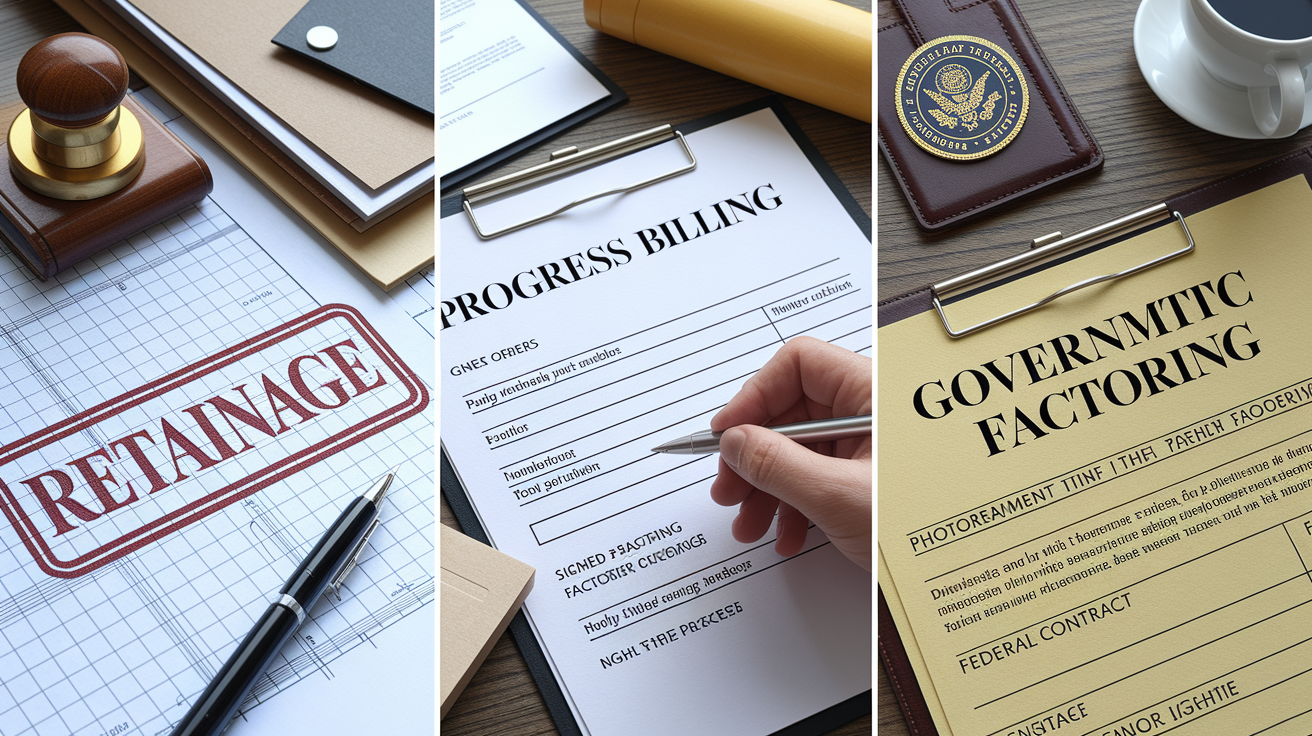
Retainage is one of the trickiest parts of construction factoring. Most factors won’t advance on retainage holdbacks because that portion of the invoice isn’t due until final completion, lien waivers are filed, and punch list work is finished. If your invoice is for $10,000 with a 10% retainage holdback, the factor will usually only advance on the $9,000 net invoice amount. Some specialized construction factors offer retainage financing as a separate product, but it’s not standard in most factoring agreements and usually requires additional documentation and higher fees.
Progress billing works if each billed phase is clearly documented and accepted by the customer. You’ll need signed phase completion certificates, approved change orders, and proof that the billed amount is undisputed and due. Factors are more cautious with progress billing because the final payment often depends on work not yet done, so expect closer scrutiny and possibly lower advance rates until the job is fully complete.
Government contractor factoring is available if you invoice federal, state, or municipal agencies, but you’ll need to show the contract award, proof of registration (such as a DUNS number or vendor ID), and evidence the agency has strong creditworthiness. Government invoices can carry longer payment terms (sometimes 60 to 90 days or more), but agencies rarely dispute invoices, which makes them attractive to factors once verification is complete. Some factors specialize in government receivables and understand the procurement and payment cycles involved.
Spot factoring lets you factor individual invoices on a one off basis without committing to ongoing volume or a contract term. It’s useful for contractors who only need cash occasionally or want to factor a single large invoice to cover a specific expense like paying subcontractors or buying materials for the next phase. Spot factoring usually carries higher fees than contract factoring because the factor doesn’t benefit from volume or repeat business, but it offers maximum flexibility.
How to Choose a Reliable Factoring Company as a Contractor
Not all factors are the same. Requirements, fees, and service quality vary widely. Some specialize in construction and understand retainage, lien waivers, and subcontractor relationships. Others focus on transportation, staffing, or general commercial receivables and may not be familiar with contractor specific challenges. Start by looking for a factor with experience in your industry and ask how they handle common contractor situations like progress billing, disputed change orders, and customer notification.
Transparency matters. A reliable factor will explain advance rates, discount fees, recourse terms, and contract length in plain language before you sign. If a factor is vague on total cost or buries fees in fine print, that’s a warning sign. Ask for a full fee breakdown covering the discount rate, any monthly minimums, notification fees, wire fees, and early termination costs if you want to leave the agreement. Compare that total cost to waiting for payment or using other financing options like a line of credit or short term loan.
When evaluating factoring companies, contractors should assess:
- Fee structure and total cost. Get a complete breakdown of discount rates, advance percentages, and any additional charges. Compare cost to waiting for customer payment.
- Industry experience and construction knowledge. Choose a factor familiar with retainage, progress billing, lien waivers, and subcontractor payment cycles.
- Contract terms and flexibility. Understand minimum volume requirements, contract length, recourse vs. non recourse terms, and early exit penalties.
- Communication and customer notification process. Clarify how and when the factor will contact your customers and whether notification will be professional and low key.
- Onboarding speed and ongoing support. Ask about typical approval timelines, document requirements, and whether you’ll have a dedicated account contact for questions.
Final Words
In the action, we laid out what contractors must meet: business structure, invoice rules, customer credit, and the documents factors expect.
You saw common denial reasons, typical terms like advance rates and fees, the step-by-step application, tips to improve approval odds, and special cases such as retainage or government invoices.
If you’re wondering how to qualify for invoice factoring as a contractor, gather a 90-day AR aging, signed contracts, bank statements, and clear up liens or disputes. Get those ready and underwriting will move faster. You’ve got a clear path forward.
FAQ
Q: What is the average cost of invoice factoring?
A: The average cost of invoice factoring is typically a discount fee around 1%–4% of the invoice per 30-day cycle; advance rates often run 75–90%, with the remainder held as reserve until customers pay.
Q: Do you need good credit for invoice factoring? What credit score is needed for RTS factoring?
A: You don’t usually need strong personal credit for invoice factoring; factors focus on your customers’ creditworthiness. RTS factoring doesn’t publish a fixed score—approval depends on customer credit, revenue, time in business, and invoice size.
Q: How to get approved by factoring companies?
A: You get approved by factoring companies by being a B2B legal entity and providing completed invoices, a 90-day A/R aging report, business bank statements, contracts/POs, and customers with reliable payment history.