


Think SBA 7(a) approval is just luck and long waits?
It’s not. What slows you down is a messy file.
Lenders want the SBA forms (Form 1919 and Form 413), three years of business and personal tax returns, year-end profit-and-loss and balance sheets, recent interim statements, two years of projections, formation and lease documents, and a signed 4506-C to pull IRS transcripts.
This checklist walks you through each required paper and common mistakes that cause delays, so you can submit a clean file and get funded faster.
Complete SBA 7(a) Document Requirements Overview

An SBA 7(a) loan needs two layers of documentation: standard SBA forms and whatever your lender wants on top of that. The SBA sets baseline requirements for everyone, but banks often pile on extra requests. Stricter timelines, more collateral proof, deeper cash flow analysis. You’re building one package that satisfies both, which means pulling together personal records, business financials, tax returns, legal formation docs, debt schedules, and proof of what you’re using the money for.
Lenders dig through your file to confirm you meet SBA size standards, verify you can actually pay the loan back, and assess what collateral you’re bringing. Owners with 20% or more of the business have to provide personal financials and guarantee the loan personally. That adds another stack to your checklist. Here’s what most SBA 7(a) applications require:
- SBA Form 1919 (Borrower Information Form) listing all owners, officers, directors, managing members, and guarantors.
- SBA Form 413 (Personal Financial Statement) for each 20%+ owner.
- Personal tax returns for the last 3 years for all 20%+ owners.
- Business tax returns for the last 3 years.
- Three years of year end business financial statements (profit and loss and balance sheet).
- Interim business financial statements dated within 60 to 120 days of the application date.
- Two year financial projections with supporting revenue and expense assumptions.
- Complete business debt schedule listing all creditors, original amounts, current balances, interest rates, and monthly payments.
- Business formation documents (articles of incorporation or organization, operating agreement or bylaws, business licenses, and proof of good standing).
- Copy of current business lease or landlord letter. Proof of owned real estate if used as collateral.
- Purchase agreement, franchise agreement, or FF&E quotes if applicable to use of proceeds.
- SBA approved photo identification (driver’s license, passport) for all 20%+ owners.
- Signed IRS Form 4506-C authorizing tax transcript retrieval and verification.
Most lenders want a 3 year lookback for tax returns and financial statements. They’ll require interim statements within 60 to 120 days of submission. The 20% ownership line determines who has to complete personal guarantor documentation. Individual banks might toss in appraisals, environmental questionnaires, or industry specific compliance records. Organize the file into clearly labeled sections and reconcile tax transcripts before you submit. That reduces delays and speeds underwriting.
SBA 7(a) Personal Documentation Essentials for 20%+ Owners

Anyone who owns 20% or more has to submit personal financial records and guarantee the loan personally. The SBA treats these owners as inseparable from the company’s ability to repay, so personal income, debt, credit, and liquidity all factor into underwriting. Lenders pull credit reports early and expect explanations for late payments, collections, judgments, or bankruptcies.
You’ll start with SBA Form 1919. That captures business structure, ownership percentages, and identifying details for every principal. If additional background review is needed, the lender might also request SBA Form 912. That’s a statement of personal history covering criminal record, prior government loan defaults, and citizenship status. Personal tax returns for the last 3 years are required for each guarantor. Lenders will request signed credit authorization forms to pull individual credit reports during underwriting.
Required Forms for Personal Guarantors
SBA Form 1919 serves as the baseline identification document for the business and lists all officers, directors, and owners with 20% or greater stakes. SBA Form 413 is the SBA’s version of a personal financial statement. It details personal assets, liabilities, real estate holdings, investment accounts, and contingent liabilities. SBA Form 912 may be required if the lender needs additional background information or if prior loan history requires clarification.
Lenders evaluate personal credit not to disqualify borrowers with fair scores but to understand debt load, repayment history, and available liquidity. A credit score around 640 is typically the floor. Some lenders extend flexibility for scores in the fair to good range when personal income and assets are strong. Complete personal documentation allows lenders to confirm debt service coverage ratio (DSCR) calculations, especially when personal income supports business repayment in early years or during seasonal slowdowns. Missing signatures, outdated financial statements, or inconsistent asset values are common reasons for delays. Review every form before submission.
Business Financial Statements Needed for an SBA 7(a) Loan

Lenders require three full years of business financial statements to evaluate revenue trends, profit margins, and operational stability. You’ll submit year end profit and loss statements and balance sheets for each of the last three completed fiscal years, plus interim financials covering the most recent period if your last tax return is more than a few months old. Interim statements must be dated within 60 to 120 days of your application, depending on lender policy. They should include both a profit and loss statement and a balance sheet.
Projections are required for the next two years. They must include monthly or quarterly revenue and expense estimates, along with a narrative explaining the assumptions behind the numbers. Lenders compare projections to historical performance and test whether revenue growth is realistic, whether margins hold under increased debt service, and whether the business can maintain the required DSCR. The SBA requires a minimum projected DSCR of 1.15x within the first two years. Most lenders target 1.25x or higher.
Lenders cross check financial statements against tax returns and bank deposits to verify consistency. Key areas under review:
- DSCR alignment with projected debt payments and operating cash flow
- Revenue verification against reported tax income and bank activity
- Debt load across all business entities and personal guarantor obligations
- Variance between projections and historical trends, especially post revenue spikes or margin compression
- Tax consistency, ensuring reported revenue on the P&L matches Schedule C, 1120, or 1065 income
- Margin stability, watching for sudden cost increases or revenue declines without clear explanation
Close with one accurate narrative that ties your projections to operations. If you’re expanding into a new location, show lease quotes and market research. If you’re buying equipment, tie revenue growth directly to capacity increases. Lenders approve loans when the story matches the numbers.
SBA 7(a) Tax Return Requirements for Borrowers

The SBA requires three years of filed federal tax returns for the business and three years of personal returns for every owner with 20% or greater ownership. Lenders use these returns to verify reported income, reconcile financials, confirm tax compliance, and ensure no federal tax liens or delinquencies exist. You’ll provide signed copies of complete returns, including all schedules. Lenders will request IRS Form 4506-C to retrieve official transcripts before closing or first disbursement.
If your most recent tax return is on extension, you’ll provide proof of the extension filing along with interim financial statements covering the extended period. Lenders won’t close until they can verify income for the full three year lookback period. File extensions only when necessary and prepare detailed interim statements to fill the gap.
Transcript retrieval and reconciliation follow a clear process:
- Sign IRS Form 4506-C for both business and personal returns, authorizing the lender to request official transcripts directly from the IRS.
- Provide proof of extension if the most recent return isn’t yet filed, along with interim statements covering that fiscal year.
- Reconcile submitted tax returns with IRS transcripts to confirm no amendments, underreporting, or discrepancies.
- Explain any significant variance between reported income on the return and income shown on financial statements, especially if cash basis accounting or timing differences exist.
Common mismatches that slow approval include unreported side income, missing schedules, discrepancies between K-1 income and personal return filings, and inconsistencies between gross receipts on the business return and revenue reported on the P&L. Reconcile these before submission and include a brief narrative if legitimate timing or accounting differences exist.
Legal, Structural, and Compliance Documents for SBA 7(a) Loans

The SBA requires full documentation of your business entity structure, legal formation, and regulatory compliance. You’ll submit articles of incorporation or articles of organization, depending on whether you operate as a corporation, LLC, partnership, or sole proprietorship. Corporations must provide bylaws and a corporate resolution authorizing the loan application. LLCs must provide the operating agreement. Partnerships must provide the partnership agreement. All entities must provide proof of good standing from the state of incorporation, typically a certificate or letter issued within the last 90 days.
Business licenses and permits are required for any regulated industry or activity. If your business requires professional licensing (contractors, real estate brokers, healthcare providers), health department permits, or alcohol sales licenses, include copies of all active permits and proof of renewal. Lenders also request certificates of insurance showing general liability, property, and workers’ compensation coverage, along with named lender endorsements once the loan is approved.
Major contracts and agreements become part of the file when they impact cash flow or define key revenue relationships. Examples include customer contracts, vendor agreements, management service agreements, and franchise agreements. Leases for your current location are always required. If you’re moving or expanding, lenders need either a signed lease, a draft lease, or a letter of intent from the landlord. If you own the real estate and plan to use it as collateral, provide the deed and any existing mortgage statements. Environmental questionnaires or Phase I assessments may be required for commercial real estate purchases or when the property has prior industrial use.
SBA 7(a) Collateral Documentation Requirements
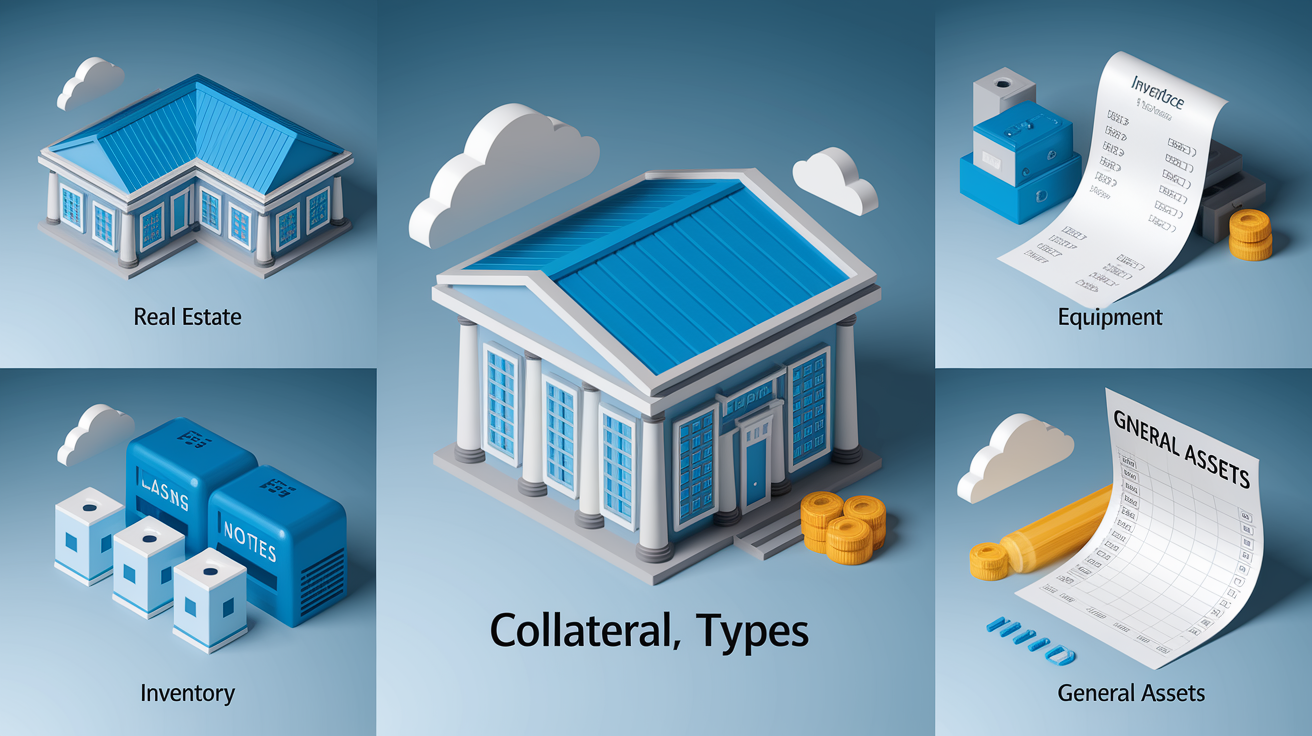
The SBA requires lenders to secure loans with all available collateral, though lack of full collateral won’t automatically disqualify an otherwise strong application. Collateral types include real estate (commercial property or the owner’s primary residence), equipment, inventory, and general business assets. Lenders evaluate collateral to establish loan to value ratios, assess liquidation recovery, and determine whether additional personal guarantees or equity injections are necessary.
Commercial real estate used as collateral requires an appraisal ordered by the lender and performed by a licensed appraiser. The appraisal establishes current market value and confirms the property can support the requested loan amount within SBA loan to value limits. Equipment purchases require purchase agreements, invoices, or detailed quotes showing make, model, cost, and intended use. Inventory and general business assets are often appraised or valued using financial statement book values. Lenders may discount these for liquidation purposes.
| Collateral Type | Required Documentation | Typical Lender Review |
|---|---|---|
| Real Estate | Deed, mortgage statement, appraisal, title search, hazard insurance | Market value vs. loan amount; lien priority; loan to value ratio |
| Equipment | Purchase agreement, invoice, or FF&E quote; serial numbers; photos | Liquidation value; useful life; industry specific resale market |
| Inventory | Inventory schedule from balance sheet; turnover analysis | Liquidation discount applied; turnover speed; obsolescence risk |
| Business Assets | Balance sheet listing; UCC search; accounts receivable aging | General collateral lien; recovery estimate; AR quality |
Lenders will file UCC-1 financing statements to establish a security interest in business assets and conduct UCC searches to identify existing liens. When collateral falls short of the loan amount, lenders rely more heavily on personal guarantees, cash flow strength, and owner equity injection. Prepare collateral documentation early and confirm appraisals are ordered promptly to avoid closing delays.
Organizational and Management Information for SBA 7(a) File Preparation

Lenders evaluate the strength and experience of your management team as part of underwriting. You’ll provide resumes for all principals, including owners, officers, and key employees who directly influence revenue or operations. Resumes should highlight relevant industry experience, operational responsibilities, and prior business ownership or leadership roles. Lenders look for a track record that matches the business type and loan purpose, especially in industries requiring specialized knowledge or licensing.
A complete business plan is required. It must include operational history, market analysis, competitive positioning, use of loan proceeds, and two year financial projections. The plan should explain how the loan will improve cash flow, increase capacity, or expand revenue. It must tie directly to the projected financials submitted with the application. Lenders use the business plan to assess management’s understanding of the market, realistic revenue assumptions, and ability to execute the growth or stabilization strategy.
Business Plan Components Review
Your business plan must include a market analysis section that identifies target customers, competitive landscape, and demand trends in your geography or industry. Financial projections must show month by month or quarter by quarter revenue and expenses for at least the first year, with annual projections for year two. An operations summary should describe staffing, production capacity, service delivery, and any planned operational changes tied to the loan. Lenders will compare the plan to your financial statements and tax returns to ensure consistency and realistic assumptions. Avoid generic templates and write the plan based on your actual operations and market conditions.
SBA 7(a) Debt Schedule, Use of Proceeds, and Cash Flow Documentation

A complete debt schedule is required for underwriting and must list every current business debt. That includes term loans, lines of credit, equipment financing, merchant cash advances, credit cards, and any subordinated or seller financed debt. For each obligation, include the creditor name, original loan amount, current balance, interest rate, monthly payment, and maturity date. Lenders use the debt schedule to calculate total debt service, verify DSCR, and confirm no hidden obligations exist that could impair repayment.
Use of proceeds documentation must match the stated loan purpose and tie directly to purchase agreements, invoices, quotes, or project budgets. If you’re buying a business, provide the signed purchase agreement with price allocation and assumed liabilities. If you’re purchasing equipment, provide supplier quotes with itemized costs. If you’re funding working capital, provide a detailed budget showing how funds will be deployed and how they’ll generate the revenue growth reflected in your projections.
Key components of a complete debt schedule and how lenders use it:
- Creditor name, original loan amount, and current balance for every business debt.
- Interest rate and monthly payment for each obligation, used to calculate total monthly debt service.
- Maturity dates to identify upcoming refinances or balloon payments that may affect cash flow.
- Subordination agreements or standby agreements for seller financing or HELOC funded equity, confirming those debts won’t compete with SBA repayment.
- Accounts receivable aging and accounts payable schedules, if requested, to assess working capital quality and verify cash conversion cycles.
Lenders cross check the debt schedule against credit reports, financial statements, and bank statements to ensure completeness. Missing debts discovered during underwriting delay approval and damage credibility. Include every obligation and provide supporting loan agreements or account statements when balances are significant.
SBA 7(a) Startup and Special Case Documentation

Startups face stricter documentation requirements because they lack historical financials and tax returns to prove repayment ability. Lenders typically require proof of outside income for at least one owner. That means personal W-2 income, 1099 income, or rental income sufficient to cover living expenses and support business repayment during the startup phase. You’ll provide detailed two year projections with conservative revenue assumptions, strong management resumes showing relevant industry experience, and proof of equity injection showing personal capital commitment.
Veteran owned and minority owned businesses may qualify for specialized SBA programs with streamlined approval or reduced fees. To access these programs, you’ll provide proof of qualifying status, such as DD-214 discharge paperwork for veterans or certification documents for minority business enterprise (MBE) designation. Disaster relief loans, such as Economic Injury Disaster Loans (EIDL), follow different eligibility and documentation rules and are administered directly by the SBA rather than through participating lenders.
Common additional documents for special cases:
- Proof of outside income, such as personal tax returns showing W-2 wages, 1099 income, or rental income for startup borrowers
- Veteran discharge paperwork (DD-214) or VA certification for veteran owned business programs
- MBE or WBE certification documents for minority or women owned business programs
- EIDL or prior disaster loan documentation, including loan authorization and use of proceeds records, if refinancing or supplementing prior disaster relief funding
Lenders may also require industry specific documentation, such as franchise disclosure documents for franchise businesses, medical licenses and malpractice insurance for healthcare providers, contractor licenses and bonding for construction businesses, or liquor licenses and health permits for restaurants and bars.
Best Practices for Organizing SBA 7(a) Loan Documents
Lenders prefer a single, well organized document package delivered digitally with clear file names and logical grouping. Create separate folders for personal documentation (one per guarantor) and business documentation (one per entity). Label every file with the document type, date, and amount where applicable. For example, name files “2024BusinessTaxReturn1120S.pdf” or “SmithPersonalFinancialStatement2025-01-15.pdf” to make review faster and reduce back and forth requests.
Scan all documents at high resolution and save as searchable PDFs. Retain original signed copies of licenses, formation documents, and closing paperwork. Provide certified copies when requested. Reconcile IRS transcripts with submitted tax returns before the lender orders them. Prepare a brief explanation for any variance between reported income on returns and income shown on financial statements. Update interim statements monthly and include them in your package if more than 60 days have passed since your last statement date.
Practical steps to organize and submit your SBA 7(a) loan documents:
- Create a master checklist PDF listing every required document, grouped by personal vs. business. Check off each item as you prepare it.
- Label digital files clearly with document type, entity name or individual name, date, and amount. Avoid generic names like “financials.pdf.”
- Reconcile IRS tax transcripts with submitted returns before lender review to catch discrepancies early and prepare explanations for timing or accounting differences.
- Maintain updated interim financial statements and refresh them monthly if your application process stretches beyond 60 days.
- Include a one page summary of key financials showing revenue, net income, total debt, and DSCR to give underwriters a quick reference point.
- Provide digital copies for fast submission, but retain originals of business licenses, articles of incorporation, and signed purchase agreements for closing.
Lenders vary in electronic submission preferences. Some use secure portals where you upload documents directly. Others request email delivery or shared cloud folders. Ask your lender contact about preferred format and delivery method early in the process. Confirm receipt of your full package to avoid submission errors or missing files.
Final Words
Start by pulling the big items: SBA Form 1919 and 413, three years of personal and business tax returns, recent interim financials, debt schedules, formation documents, leases, and collateral files.
Add personal docs for anyone with 20%+ ownership, clear business financials and projections, appraisals if needed, and use-of-proceeds paperwork.
Lenders want 3 years of returns and interim statements dated within 60–120 days; banks vary and may ask for extra items.
Use this sba 7a loan documentation checklist to organize a single labeled digital package and you’ll speed underwriting and avoid surprises.
FAQ
Q: What documents are required for an SBA 7A loan?
A: The documents required for an SBA 7(a) loan and processing are SBA Form 1919 and Form 413, three years of personal and business tax returns, recent interim financials, debt schedules, formation documents, leases, collateral files, IDs, and authorizations.
Q: What is the 20% rule for SBA?
A: The 20% rule for SBA means owners with 20% or more ownership must provide personal financial statements, three years of personal tax returns, and typically sign as personal guarantors on the loan.
Q: What disqualifies you from an SBA loan?
A: Factors that typically disqualify applicants include inability to repay, recent bankruptcy, unresolved tax liens, certain criminal convictions, ineligible business activities, or incomplete, inconsistent, or falsified documentation.