

Think SBA 7(a) loans are cheap and simple? Not always.
Here’s a plain look at what you’ll actually pay: how interest rates work, the SBA guarantee fee, common third-party charges, and how loan use and term change the total cost.
We’ll break down variable rates tied to prime and typical lender spreads, show the guarantee-fee tiers with real-dollar examples, and explain what lenders usually roll into the loan.
By the end you’ll know when a 7(a) makes sense and how to avoid surprise costs.
Clear Breakdown of SBA 7(a) Loan Interest Rates and Upfront Fees
SBA 7(a) loans work on a variable rate tied to prime, and lenders tack on a spread that usually lands between 2.25% and 2.75% depending on what you’re doing with the money. Working capital deals typically get prime + 2.75%. Real estate purchases often settle around prime + 2.25%. You’ll sometimes hear about fixed-rate 7(a) loans, but they’re uncommon. Most lenders stick with variable rates and adjust them every quarter when prime moves.
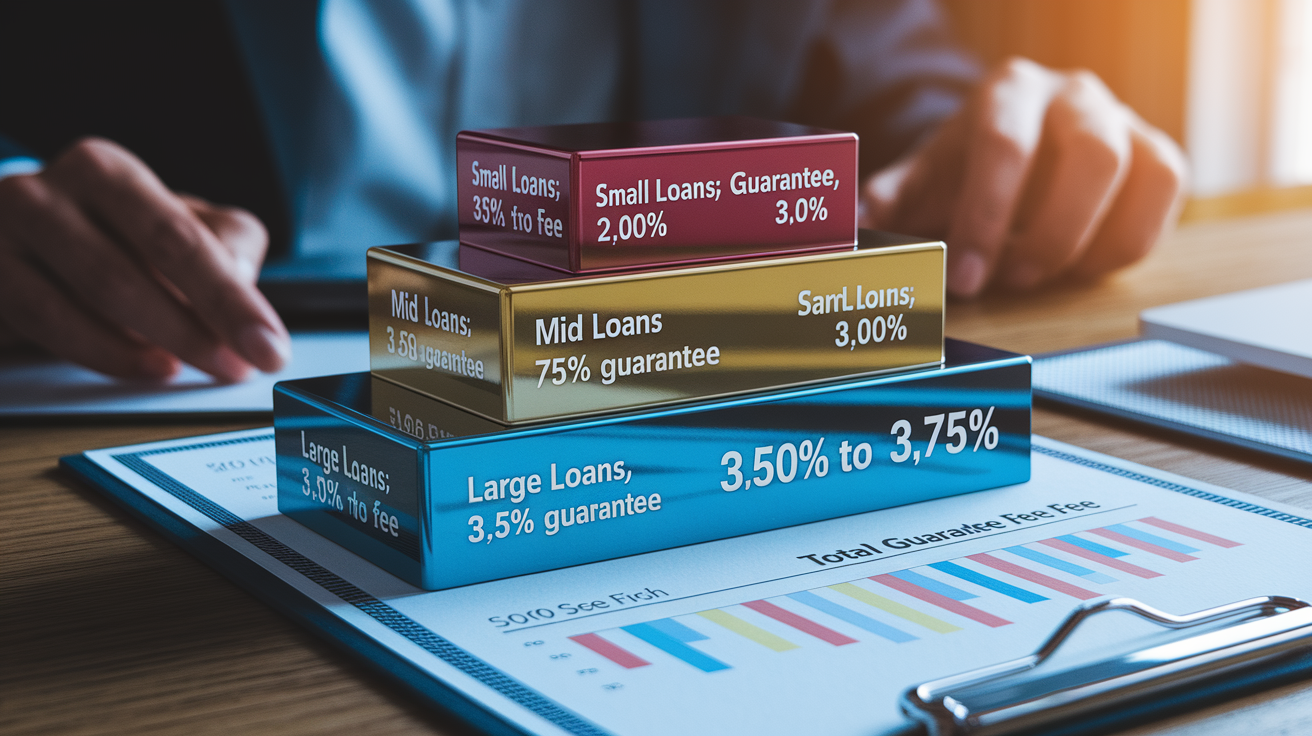
The SBA guarantee fee sits on top of your interest rate and changes based on how much you’re borrowing and how long you’re borrowing it. For loans over one year, the fee starts at 2.00% on guaranteed portions up to $127,500, jumps to 3.00% for guaranteed amounts between roughly $112,500 and $525,000, then hits 3.50% for larger guarantees up to $750,000. Once the guaranteed chunk crosses $1,000,000, the SBA charges 3.50% on the first million and 3.75% on anything above that. Here’s how it looks in practice: say you get a $2,000,000 7(a) loan with a 75% guarantee. The SBA backs $1,500,000. The guarantee fee on the first $1,000,000 guaranteed runs $35,000 (that’s 3.5%), and the fee on the remaining $500,000 guaranteed comes to $18,750 (3.75%). Total upfront guarantee fee? $53,750. Most lenders just roll that fee into the loan so you’re not writing a check at closing.
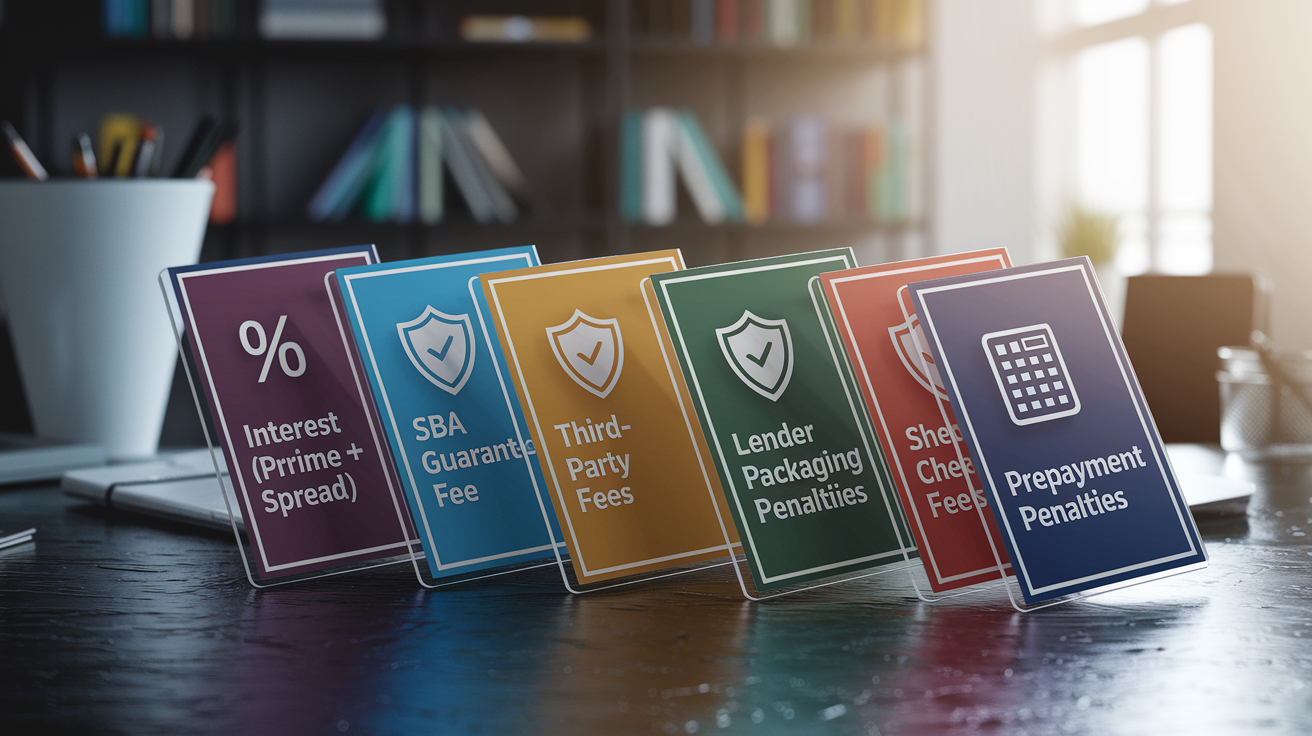
When you’re figuring out what this thing’s actually going to cost, count these five pieces:
- The interest rate (prime plus whatever spread the lender adds, reset quarterly for variable 7(a) structures)
- The SBA guarantee fee (calculated on the guaranteed portion, usually financed in)
- Third party fees (appraisal, title work, environmental reports, UCC searches, legal review)
- Lender packaging or processing fees (typically $2,000 to $4,000 where allowed)
- Prepayment penalties (if you pay off a real estate backed 7(a) loan early in the first three years)
How SBA 7(a) Rate Mechanics Work Over Time

Prime rate is the lender’s starting point. It moves when the Federal Reserve adjusts short term rates based on inflation, employment data, and how much credit’s getting used. SBA 7(a) lenders reset your interest rate quarterly, on the first of January, April, July, and October. Your monthly payment can shift every three months. If the Fed hikes rates twice in a quarter, your next reset picks that up.
Lenders stay within SBA published maximums, but they also look at your credit score, how long you’ve been in business, cash flow, and what collateral you’ve got when they price the spread. Market conditions matter too. When money’s tight, spreads widen. When lenders want volume, spreads can tighten a bit. You can’t control prime, but your financial profile can move the spread a quarter point or more either way.
| Rate Type | Description | Reset Timing |
|---|---|---|
| Variable 7(a) | Prime + spread, most common structure for 7(a) loans | Quarterly (Jan 1, Apr 1, Jul 1, Oct 1) |
| Fixed 7(a) | Locked spread over full term, rare for 7(a) programs | No resets after closing |
| 504 CDC Portion | Long term fixed rate (20–25 years), not variable | No resets after closing |
Why SBA 7(a) Upfront Fee Structures Exist
The SBA doesn’t lend money directly. It guarantees a chunk of the loan if you default, which lowers the lender’s risk and opens up funding to businesses that wouldn’t make it through conventional underwriting. The guarantee fee covers the cost of that backstop. When a borrower defaults, the SBA reimburses the lender for the guaranteed portion, and the upfront fee funds that reserve pool. Without it, the program would need taxpayer dollars to cover losses.
Third party fees exist because lenders need real data to approve and close the loan. An appraisal confirms what the collateral’s worth, a UCC search checks for existing liens, environmental reports flag hazards on commercial property, and legal review makes sure the title’s clean and the documentation’s correct. Packaging fees (where they’re allowed) cover the lender’s internal cost of putting together the SBA application and coordinating with the agency. The SBA won’t let lenders charge separate origination fees on guaranteed loans, so any processing charges have to tie back to actual third party pass throughs or documented packaging work. All fees show up on SBA Form 159 and get signed by everyone at disbursement, which keeps things transparent and limits surprise add ons.
Here’s why each category gets charged:
- Guarantee fee – funds the SBA’s default reimbursement reserve and makes it economically viable for lenders to participate at lower credit thresholds.
- Appraisal and valuation – confirms the asset’s market value so the lender knows recovery potential if collateral gets liquidated.
- Legal and title fees – verify ownership, clear liens, and make sure security agreements are enforceable.
- UCC and environmental searches – identify hidden liabilities that could subordinate the lender’s claim or introduce cleanup obligations.
Why the Guarantee Fee Tiers Are Structured This Way
The tiered fee structure reflects rising default risk as loan size climbs. Smaller loans under $150,000 carry an 85% SBA guarantee and a 2.00% fee because the absolute dollar exposure is limited, even if the borrower fails. As loan amounts go up, the SBA drops its guarantee percentage to 75% and raises the fee to 3.00%, then 3.50%, then 3.75% for portions above $1,000,000. Larger guaranteed amounts mean larger potential payouts, so the SBA prices the incremental risk into higher fee tiers. This tiered model also keeps the program self sustaining. Fee revenue offsets historical loss rates without needing direct congressional appropriations. Lenders participate because the guarantee reduces their capital reserve requirements and makes it profitable to lend to businesses with limited collateral or shorter operating histories.
How Loan Amount and Terms Influence Borrowing Dynamics

A 10 year working capital loan at prime + 2.75% will cost far less in total interest than a 25 year real estate loan at prime + 2.25%, even though the real estate spread is lower. Longer amortizations spread payments across more months, which drops the monthly hit to cash flow but racks up more total dollars paid to interest over the life of the loan. A $500,000 working capital advance paid over 10 years at 8.5% might cost roughly $240,000 in interest. The same principal stretched over 25 years at 8.0%? You could pile up more than $600,000 in interest.
Loan use dictates term length, and term length drives both the total interest paid and the size of upfront fees. The SBA caps working capital loans at 10 years, equipment financing at the useful life of the asset (often 10 to 15 years), and real estate loans at 25 years. The guarantee fee gets calculated on the guaranteed portion, so a $2,000,000 real estate loan with a 75% guarantee triggers a $53,750 fee, while a $200,000 working capital loan with a 75% guarantee (guaranteed portion = $150,000) might cost $4,500 in guarantee fees. The fee percentage stays in the same tier, but the dollar impact scales directly with loan size.
| Loan Use | Typical Term | Borrowing Impact | Fee Consideration |
|---|---|---|---|
| Working Capital | 10 years max | Lower total interest, higher monthly payments | Smaller guaranteed portion, lower dollar fee |
| Equipment | 10–15 years | Mid range interest, payments tied to asset life | Fee scales with loan size, often mid tier |
| Real Estate | 25 years | Highest total interest, lowest monthly payment | Larger loan = higher guarantee fee in dollars |
| Refinance | Varies by original use | May reset rate, extends term if new debt added | Full guarantee fee applies to new guaranteed portion |
Comparing SBA 7(a) Costs to SBA 504 and Other Financing Options
SBA 504 loans split the capital stack into three pieces: 50% from a conventional bank, 40% from a Certified Development Company backed by the SBA, and 10% equity from you. The CDC portion carries a long term fixed rate, usually 20 to 25 years, which makes payments predictable and protects you from rate spikes. The bank’s 50% piece often includes a fixed element for at least five years, amortized over 25 years. The CDC charges roughly 2.75% on its 40% slice instead of an SBA guarantee fee, and there’s no SBA guarantee fee at all on a 504 loan. That makes 504s cheaper upfront if you’re buying real estate or long life equipment and you can meet the 10% equity requirement.
SBA microloans top out at $50,000, come through nonprofit intermediaries, and carry no SBA guarantee fee. Interest rates on microloans run higher (often 8% to 13%) because the loans are smaller and riskier, but you dodge the multi thousand dollar guarantee fee and the packaging costs tied to larger 7(a) deals. Conventional bank loans skip the SBA entirely, so there’s no guarantee fee and no SBA paperwork, but rates and collateral demands depend entirely on your credit and the bank’s appetite. If your credit’s strong and you can pledge sufficient assets, a conventional loan may price below prime + 2.25%. But most business owners turn to the SBA specifically because conventional underwriting says no.
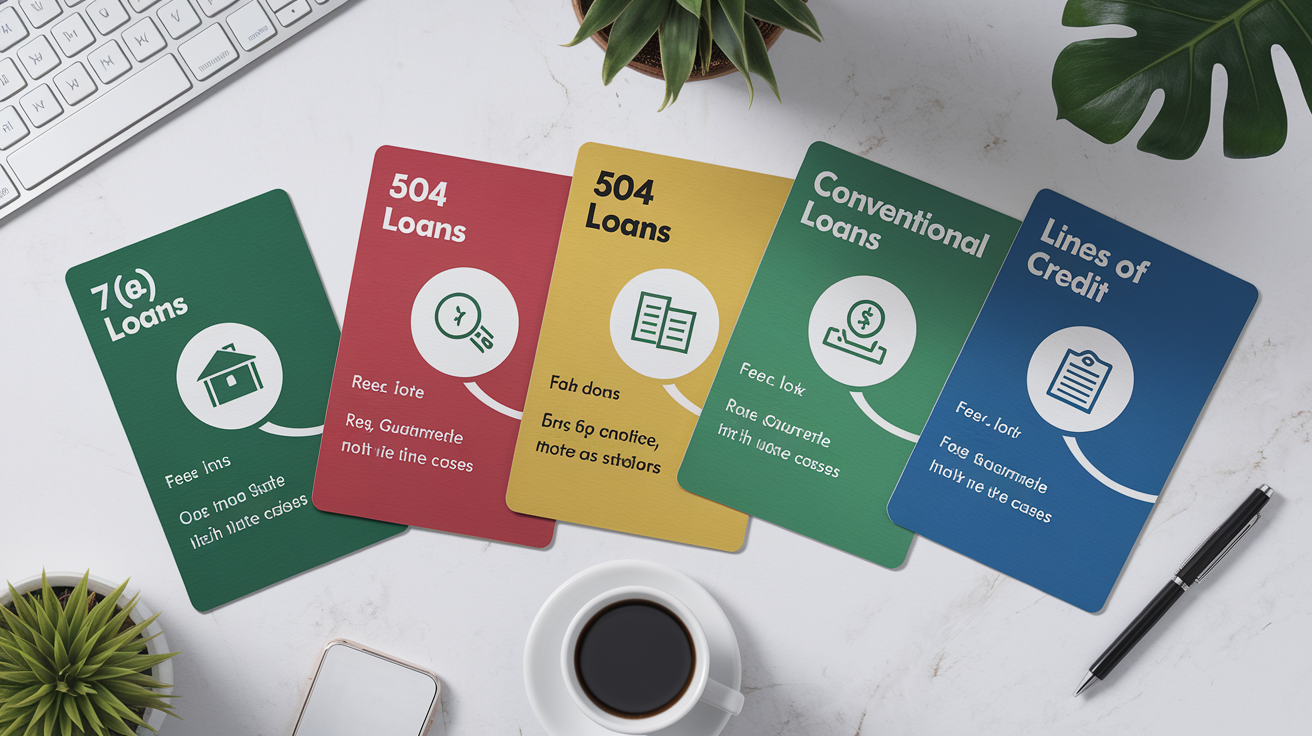
- 7(a) loans: Variable rates (prime + 2.25% to 2.75%), quarterly resets, guarantee fees from 2.00% to 3.75%, best for working capital and situations where you need flexibility on use.
- 504 loans: Long term fixed rates on the CDC portion, 2.75% CDC fee, no SBA guarantee fee, limited to real estate and equipment, requires 10% equity down.
- Microloans: No guarantee fee, higher interest rates (8%–13%), capped at $50,000, faster approval through nonprofit lenders.
- Conventional loans: No SBA fees, rates set by bank (may be lower if credit’s strong), stricter collateral and credit requirements, less forgiving underwriting.
- Lines of credit and cash flow based funding: Faster access, higher cost (factor rates or APRs often in the teens or twenties), short repayment windows, no SBA guarantee structure.
Total Cost Estimation: Monthly Payments, Rate Changes, and Fee Roll Ins

To estimate what you’ll actually pay, start with the loan amount, add the financed guarantee fee, and model monthly payments at the current prime rate plus your spread. Then layer in how quarterly rate adjustments will move your payment up or down. A $500,000 7(a) working capital loan at prime (assume 8.5%) + 2.75% = 11.25% annual rate, amortized over 10 years, runs roughly $6,950 per month before the guarantee fee gets financed. The 75% guarantee on $500,000 is $375,000, which sits in the 3.00% fee tier, so the upfront guarantee fee is $11,250. Finance that fee into the loan, and your new principal is $511,250. Monthly payment climbs to about $7,100. If prime drops by half a point in six months, your next quarterly reset brings the payment down to roughly $6,900. If prime rises by half a point, you’re looking at $7,300.
Prepayment penalties add another cost layer if you pay off a real estate 7(a) loan early. The penalty schedule is 5% of the outstanding balance in year one, 3% in year two, and 1% in year three. After that, you can prepay without penalty. Working capital 7(a) loans carry no prepayment penalty, so if revenue jumps and you want to clear the debt, you can. SBA 504 loans involve two prepayment schedules: the bank portion often runs 5%, 4%, 3%, 2%, 1% over the first five years, and the CDC portion carries a 10 year penalty that starts near the interest rate and declines by 10% annually.
Sample SBA 7(a) Cost Calculation
Here’s a worked example for a $750,000 7(a) real estate loan with a 25 year term:
- Loan amount: $750,000
- SBA guarantee: 75% × $750,000 = $562,500 guaranteed portion
- Guarantee fee: 3.50% × $562,500 = $19,687.50
- Total financed amount: $750,000 + $19,687.50 = $769,687.50
- Interest rate: Prime (8.5%) + 2.25% = 10.75%
- Monthly payment (25 years, 10.75%): approximately $6,800
- If prime rises to 9.0% after one quarter: new rate = 11.25%, new monthly payment ≈ $7,050
- If prime falls to 8.0% after one quarter: new rate = 10.25%, new monthly payment ≈ $6,550
| Scenario | Prime Rate | Total Rate | Monthly Payment (approx.) |
|---|---|---|---|
| At closing | 8.5% | 10.75% | $6,800 |
| After rate increase | 9.0% | 11.25% | $7,050 |
| After rate decrease | 8.0% | 10.25% | $6,550 |
Strategies to Reduce SBA 7(a) Interest Rates and Upfront Fees
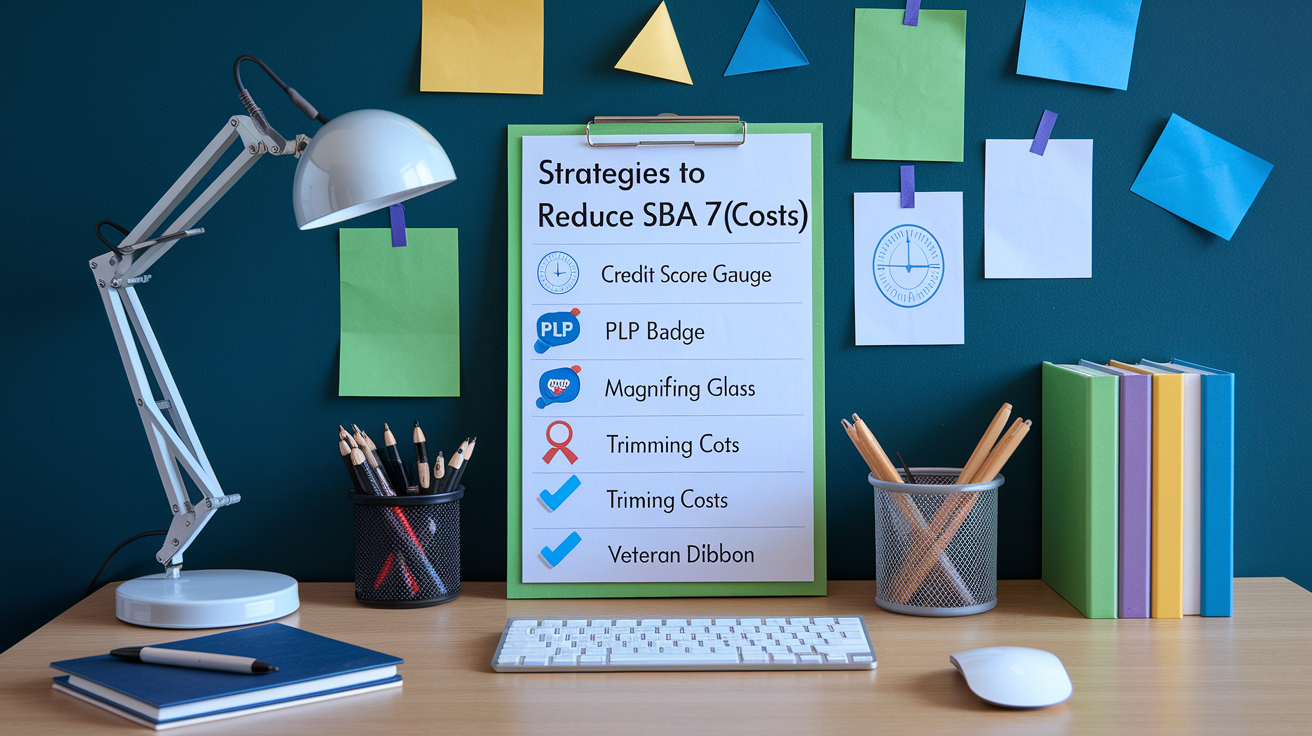
Lenders price spreads based on risk, so the cleaner your financials and the stronger your credit, the lower your spread. A borrower with a 720 FICO, three years of profit, and real estate collateral may land prime + 2.25% on a real estate deal. A two year old business with a 650 score and limited assets might see prime + 2.75% or higher. Paying down personal debt, clearing tax liens, and tightening up your business bank statements before you apply can move the spread a quarter point, which saves thousands over a long amortization.
Preferred Lender Program (PLP) lenders have delegated SBA authority and can approve loans faster with fewer back and forth steps, which often translates to lower packaging fees and faster closings. Shopping multiple PLP lenders lets you compare spreads, packaging fees, and third party cost estimates. Some lenders waive packaging fees entirely and only pass through actual third party expenses. Veterans may qualify for fee reductions in certain SBA programs, so ask your lender if any apply to your loan size and use.
- Improve personal and business credit scores before applying to tighten the spread and improve approval odds.
- Choose a Preferred Lender Program (PLP) lender to speed underwriting and potentially reduce packaging costs.
- Request quotes from at least three SBA lenders to compare spreads, packaging fees, and third party cost estimates.
- Reduce third party costs by getting your own appraisal or environmental report if the lender allows outside providers.
- Ask if any fee waivers apply to veterans, businesses in underserved markets, or specific SBA initiatives.
- Avoid add on services like credit insurance or optional loan protection products that inflate upfront costs without reducing the core rate or guarantee fee.
Final Words
We walked through how prime plus a spread sets most 7(a) interest rates, the SBA guarantee‑fee tiers, and the $2M example that shows real upfront costs you’ll face.
You saw how quarterly resets, loan purpose, and term change what you actually pay, and how guarantee fees and third‑party costs can be rolled into the loan.
Use the checklists and strategies here to lower charges and rate risk; sba 7a loan interest rates and upfront fees explained gives you clear numbers to decide with confidence.
FAQ
Q: How much is an SBA 7A loan interest rate right now?
A: The current SBA 7(a) interest rate is tied to the prime rate and quoted as prime plus a spread; typical spreads are prime + 2.75% for working capital and prime + 2.25% for real estate.
Q: What is the 20% rule for SBA?
A: The 20% rule for SBA commonly means lenders expect about a 20% borrower equity injection; the actual required injection depends on loan purpose, time in business, and lender underwriting.
Q: What is an upfront fee in a loan?
A: An upfront fee is a one-time closing cost, such as the SBA guarantee fee, appraisal, title, legal, environmental, UCC, or lender processing fees—these are usually disclosed on SBA Form 159 and can be financed.
Q: How are SBA loan interest rates calculated?
A: SBA loan interest rates are calculated as a base rate (usually prime) plus a lender spread, set within SBA maximums; 7(a) rates typically adjust quarterly with market changes and are rarely fixed.