

Most business owners think good credit alone gets them an SBA 7(a) loan.
But SBA 7(a) loan requirements are wider: citizenship and ownership rules, time in business, personal guarantees, collateral rules, equity injection, and a lender’s judgment that you can’t get credit elsewhere.
If you want to avoid surprises, you need to know the credit ranges lenders prefer, what documents they’ll pull, how collateral is valued, and how much down payment they expect.
Read on for a clear checklist and the real numbers so you can decide: apply now, fix a few things, or choose a different funding route.
Core SBA 7(a) Eligibility Requirements

SBA 7(a) loans are built for small businesses that can’t secure reasonable credit through conventional channels. The program caps at $5,000,000. The SBA guarantees up to 85% on loans of $150,000 or less, and 75% on loans between $150,001 and $5,000,000. That guarantee isn’t approval on autopilot. It’s backup for the lender if things go sideways, which lets them approve businesses they’d otherwise pass on.
Your business needs to be for profit, operate mainly in the U.S. or U.S. territories, and meet SBA size standards for your industry. Size standards shift by NAICS code, but there are two financial guardrails that apply across the board: tangible net worth (including affiliates) can’t exceed $15,000,000, and average net income (after federal taxes, including affiliates) must stay under $5,000,000 for the two full fiscal years before you apply.
Starting March 1, 2026, ownership rules got stricter. Business owners must be U.S. citizens or U.S. nationals with principal residence in the U.S., its territories, or possessions. If an entity owns your business, that entity must be organized in the U.S. or its territories. Permanent residents and work-authorized non-citizens no longer qualify under the updated SBA citizenship guidance.
Lenders check the Credit Alert Verification Reporting System (CAIVRS) during underwriting. If you or the business has an unresolved federal loan default, you’ll need to clear it before approval. That includes defaulted student loans, FHA loans, or prior SBA loans.
You also need to show you can’t get credit on reasonable terms without the SBA guarantee. If a conventional bank will lend you the same amount at comparable rates and terms, the SBA isn’t the right fit. This isn’t a checkbox you fill out. It’s part of the lender’s evaluation.
Credit Score and Credit History Expectations

The SBA doesn’t publish a hard minimum credit score, but most lenders want personal credit scores in the mid 600s or higher. Scores below 620 make approval unlikely. Between 640 and 680, you’re in the conversation, especially if your cash flow is solid and collateral is available. Above 740 may help you land lower rates within the SBA’s caps.
Lenders pull credit on every owner with 20% or more ownership. They’re looking at payment history, collections, charge-offs, bankruptcies, and recent credit inquiries. Late payments in the last 12 months hurt. Unresolved collections or charge-offs are red flags. Recent bankruptcies (especially within the last two years) can disqualify you unless you’ve got a clear explanation and proof the issue is resolved.
Business credit matters too, but it’s secondary to personal credit for most 7(a) loans. If your business has a Dun & Bradstreet file or reports to the business credit bureaus, lenders will review it. Clean payment history with vendors and prior creditors helps. Delinquencies or liens show up and slow things down.
As of January 16, 2026, the SBA ended the requirement for lenders to use FICO Small Business Scoring Service (SBSS) on Small Loans, effective March 1, 2026. Lenders can still use scoring tools, but the specific SBSS mandate is gone. The focus stays on personal credit and repayment ability.
If your score is below 640, consider improving it before you apply. Pay down credit card balances, resolve small collections, and let recent late payments age off. A six month wait with clean payment behavior can make a measurable difference.
Time in Business and Management Experience

Most lenders prefer at least two years of operating history. That gives them tax returns, financials, and a track record to evaluate. Startups can qualify, but you’ll need stronger documentation: detailed projections, relevant industry experience, and often more collateral or a larger equity injection.
As of December 22, 2025, almost 17% of 7(a) loan dollars went to startups. So it’s not impossible, just harder. If you’re a startup, expect to show month by month cash flow projections for at least 12 months, and preferably 24 months. The lender wants to see you’ve thought through revenue, cost of goods sold, payroll, rent, and debt service, with realistic assumptions.
Management experience matters as much as time in business. If you’ve run a similar business before or worked in the industry for years, that helps. Lenders review owner resumes and key management backgrounds. If you’re opening a restaurant and you’ve been a restaurant manager for a decade, that counts. If you’re opening a restaurant and your background is in software sales, you’ll need a stronger co-owner or management team.
For acquisitions, the seller’s history can bridge the gap. If the business has been operating profitably for five years and you’re stepping in with relevant experience, the lender may weigh the existing track record more than your personal startup risk.
Personal Guarantees and Ownership Thresholds

Every owner with 20% or more ownership must sign a personal guarantee. That means if the business defaults, the SBA and lender can pursue your personal assets to recover the debt. The guarantee doesn’t cap at the SBA guaranteed portion. It extends to the full loan balance.
Spouses of owners aren’t automatically required to guarantee unless they also own 20% or more. But if you’re pledging jointly owned real estate as collateral, the spouse may need to sign documents related to that collateral.
If your business has multiple owners and some own less than 20%, those minority owners aren’t required to personally guarantee. But if affiliation rules tie them to another entity that pushes combined ownership over the threshold, the guarantee requirement can still apply.
SBA affiliation rules matter here. If you own 50% of one business and 30% of another, and those businesses are affiliated (common ownership, management, or shared operations), both entities count toward size standards and ownership disclosure. Lenders and the SBA will evaluate whether the combined structure still qualifies as a small business.
Personal guarantees are unlimited, meaning there’s no dollar cap. If the loan is $500,000 and the business folds owing $400,000, the guarantor is liable for $400,000, even though the SBA may have guaranteed 75% of the original loan to the lender.
You can’t avoid the guarantee by restructuring ownership right before the loan. Lenders and the SBA look at beneficial ownership and control, not just what’s on paper the day you apply.
Collateral Rules and Valuation Standards
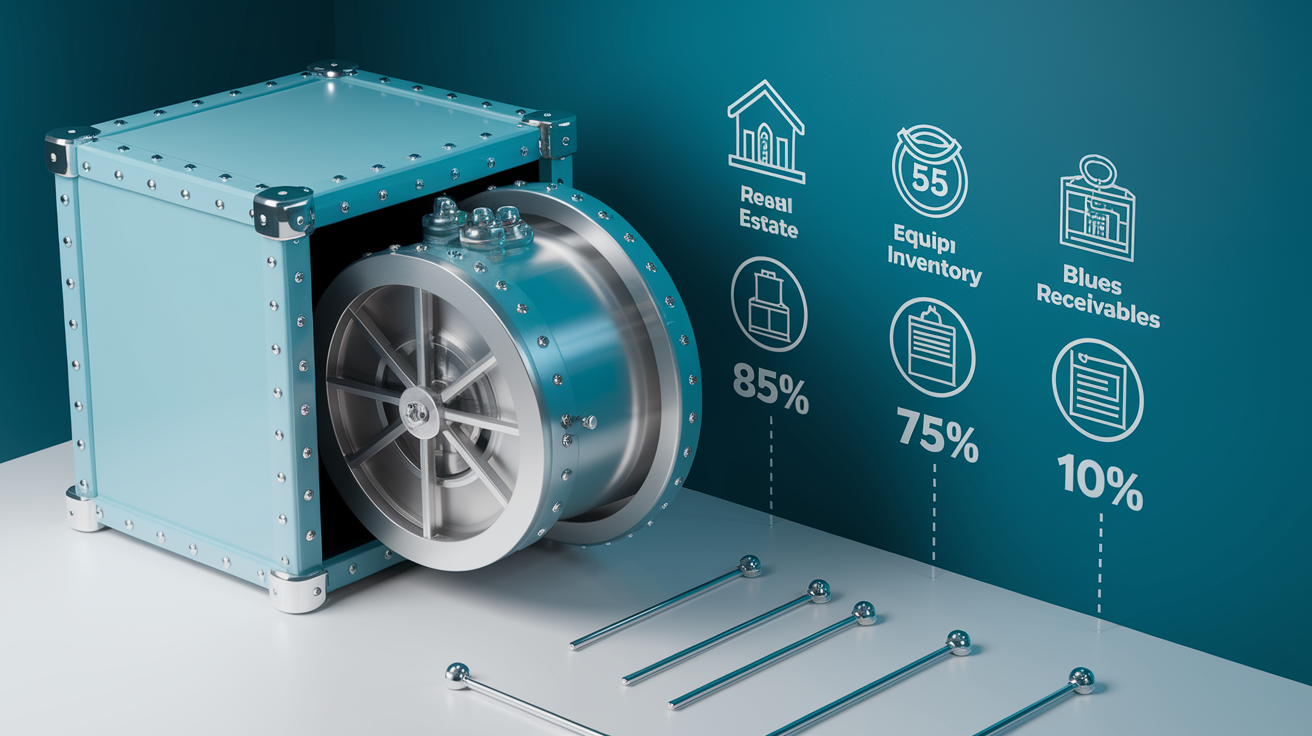
Lenders must take all available collateral for most 7(a) loans. Collateral doesn’t determine approval. It’s taken to the extent it exists, and loans can still be approved with collateral shortfalls if cash flow supports repayment.
For loans under $25,000, no collateral is typically required, though a personal guarantee still applies.
For loans from $25,000 to $350,000, lenders take available collateral, but the loan can’t be declined solely because collateral is insufficient.
For loans over $350,000, lenders must take collateral to the extent available. If business assets don’t fully secure the loan and an owner has at least 25% equity in personal real estate, the lender may require a lien on that home equity.
Collateral is valued using SBA discount rules:
| Asset Type | Valuation Percentage |
|---|---|
| Improved real estate | Up to 85% of appraised market value |
| Unimproved real estate | Up to 50% of appraised market value |
| New equipment/machinery | Up to 75% of purchase price, minus prior liens |
| Used equipment | Up to 50% of net book value, or 80% with orderly liquidation appraisal, minus prior liens |
| Furniture and fixtures | No more than 10% of net book value |
| Inventory and accounts receivable | Up to 10% of current book value for collateral calculations |
| Vehicles valued ≤ $20,000 | Lenders not required to take a lien |
If you’re buying a building for $800,000 and it appraises at $850,000, the lender will use 85% of $850,000 ($722,500) as the collateral value. If your loan is $750,000, you’re short $27,500 in collateral. The lender may still approve if your cash flow is strong, or they may require additional collateral or a larger down payment.
Collateral appraisals are required for real estate purchases over $500,000. Environmental site assessments (Phase I ESA) are required when lenders deem environmental risk may exist, typically for properties with prior industrial use or contamination concerns.
You can’t pledge collateral you don’t own. Leased equipment, assets under prior liens (unless subordinated), and assets titled in someone else’s name won’t count.
Equity Injection and Down Payment Requirements

Most 7(a) loans require at least 10% equity injection for business acquisitions and many startup transactions. The equity injection is cash or assets you contribute, money that doesn’t come from the loan itself.
Acceptable sources include cash you’ve saved and invested (not borrowed on credit cards or unsecured personal loans that rely on business cash flow), personal loans you can service without the business, independently appraised assets you’re contributing, standby debt with no principal or interest due during the SBA loan term, and grants with no clawback provisions during the loan term.
Sweat equity doesn’t count. The SBA and lenders want cash in the deal or hard assets with verified value.
For 504 loans, the equity requirement is typically 10% for established businesses and standard use properties, and 15% for new businesses or special purpose properties.
If you’re refinancing existing debt, there’s no new equity injection required in most cases, but the refinance must improve cash flow or terms, and you can’t cash out equity beyond what’s allowed under SBA rules.
A larger equity injection can offset weaker credit or limited operating history. If you’re a startup with a 680 credit score and you’re putting 20% down, that signals commitment and reduces lender risk. If you’re putting in the minimum 10%, the lender will scrutinize projections and experience more closely.
The equity injection must be documented. Lenders want to see bank statements showing the funds, proof of asset ownership and value, or gift letters if a family member is contributing (gifts are allowed but must be disclosed and documented).
Permitted Uses of 7(a) Loan Proceeds
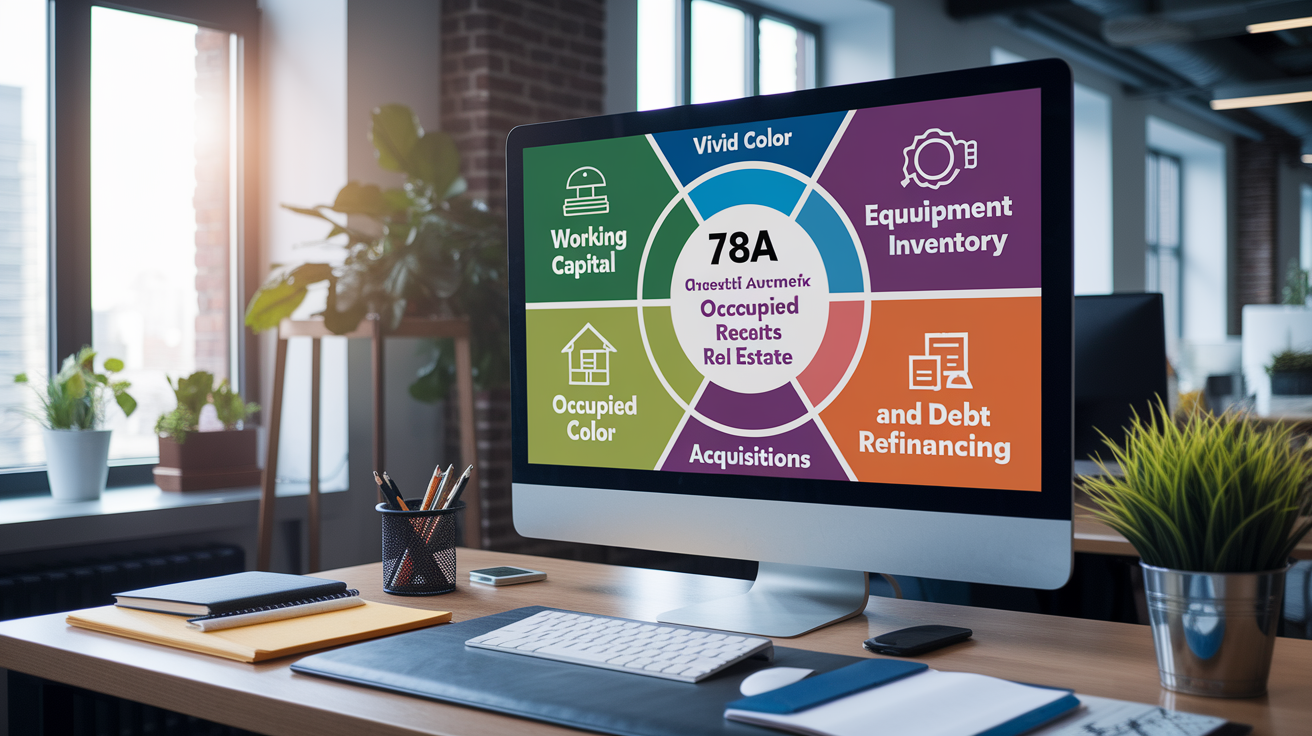
You can use 7(a) loan proceeds for working capital, equipment purchases, inventory, owner-occupied commercial real estate, business acquisitions, franchise purchases, debt refinancing (in qualifying cases), leasehold improvements, construction or tenant improvements, hiring and training costs, furniture and fixtures, and technology or software purchases tied to operations.
Working capital covers payroll, rent, utilities, marketing, insurance, and other operating expenses. It’s one of the most common uses, especially for businesses with seasonal revenue or long receivable cycles.
Real estate must be owner occupied. At least 51% of the building’s usable square footage must be occupied by the business taking the loan. If you’re buying a building and leasing out half, it won’t qualify for 7(a) (but may qualify for a 504 loan). Real estate loans can stretch up to 25 years, which lowers monthly payments and improves cash flow.
Debt refinancing is allowed if it meets SBA requirements. You can refinance existing business debt if the new loan improves cash flow, reduces interest expense, or extends terms in a way that stabilizes the business. You can’t refinance debt owed to a principal of the business or an affiliate. You can’t refinance merchant cash advances (MCAs). The SBA explicitly prohibits that as of current policy.
Acquisitions include buying an existing business or buying out a partner. The lender will require financials from the seller (typically three years of tax returns and financial statements), a purchase agreement, and an independent business valuation if required by SBA or lender policy.
Franchise purchases are common and well supported under 7(a). If the franchise is listed in the SBA Franchise Directory, the approval process is faster. If it’s not listed, the lender will need to review the franchise agreement for compliance with SBA rules. Restrictions on lender rights, transfer provisions, and early termination clauses can disqualify a franchise.
You can use proceeds for construction, but the project timeline and budget must be detailed, and the lender will likely disburse funds in stages (draws) tied to completion milestones. Construction cost overruns are your responsibility unless you’ve built contingency into the loan amount.
Prohibited and Restricted Uses
You can’t use 7(a) proceeds for passive real estate investment, speculative activities, lending or investment businesses, illegal activities, pyramid or multi-level marketing schemes, lobbying or political activities, businesses primarily engaged in legal gambling if more than 33% of annual gross revenue comes from gambling, life insurance companies, government-owned entities, most non-profits (for-profit subsidiaries of non-profits may be eligible), or businesses involved in the production, distribution, or sale of pornography.
Marijuana businesses are federally illegal and ineligible, even in states where cannabis is legal.
Speculative ventures (like oil wildcatting) are prohibited.
If you’re on probation, parole, currently incarcerated, facing pending criminal charges, or listed on the federal sex offender registry, you’re disallowed from SBA loan programs. Convictions for fraud, financial misconduct, or crimes involving dishonesty heavily reduce your chances, and in many cases disqualify you outright.
If any owner with 50% or more ownership is delinquent more than 60 days on child support obligations, the business is likely ineligible.
If you’ve previously defaulted on a federal loan and haven’t resolved it, you won’t qualify until the default is cured or settled.
The SBA also won’t back loans for applicants who can get credit elsewhere on reasonable terms. If a bank will lend you $500,000 at 7% with no guarantee, the SBA won’t step in to guarantee a similar deal. The program exists to fill gaps, not to compete with conventional credit.
Required Documents and Typical Timeframes
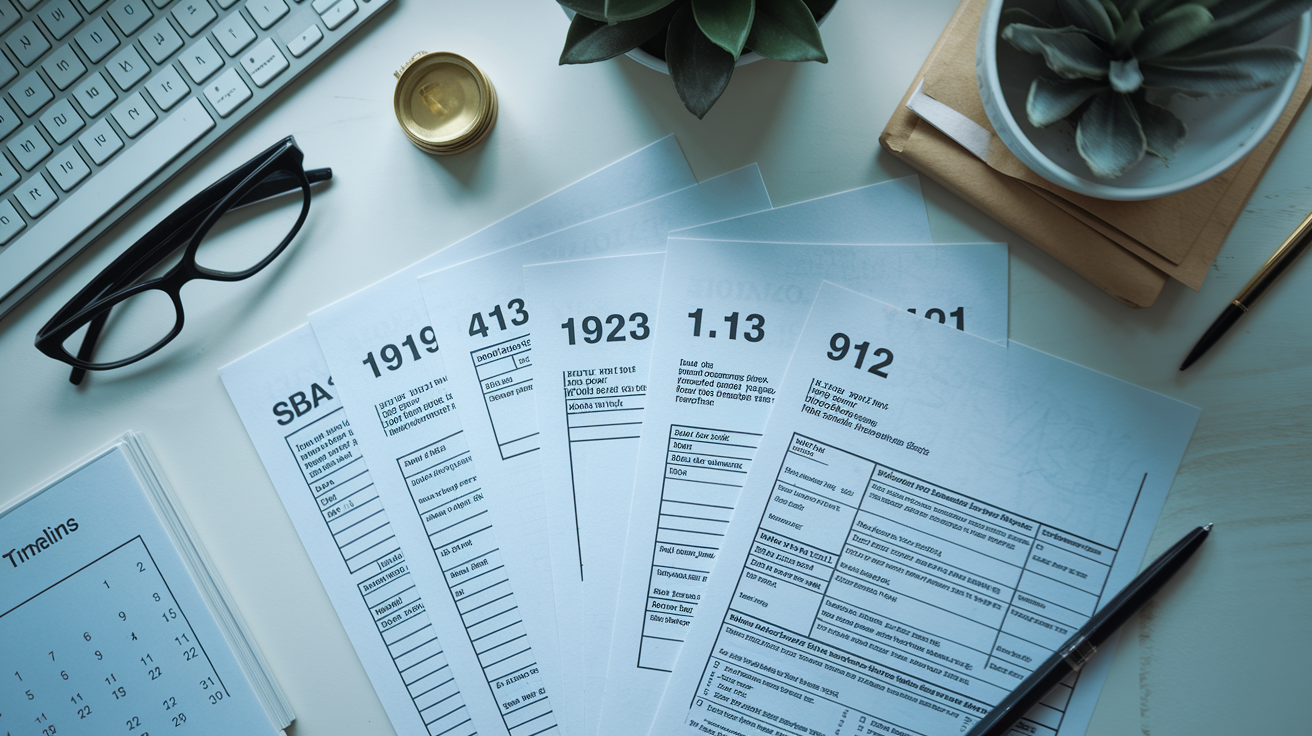
Lenders ask for the same core documents across most 7(a) applications. Missing or incomplete documents are the most common cause of delays.
Required SBA forms:
SBA Form 1919 (Borrower Information Form), required for all 7(a) loans.
SBA Form 413 (Personal Financial Statement), required for all owners with 20% or more ownership and guarantors. Must be signed and dated within 120 days of submission.
SBA Form 912 (Statement of Personal History), required for some loan types and applicants.
Business financials:
Federal business tax returns for the past 2 to 3 years (exact requirement depends on loan program and lender; most lenders ask for three years).
Year end profit and loss statements and balance sheets for the past three years (some 504 applications require only two years).
Current interim profit and loss statement, dated within 120 days of application submission.
Current interim balance sheet.
Debt schedule listing every business debt: origination date, original loan amount, monthly payment, interest rate, current balance, maturity date, and collateral securing each debt.
Accounts receivable and accounts payable aging reports, if relevant to the business model (especially for businesses with significant AR or AP).
Business bank statements for the past 6 to 12 months.
Personal documents for each owner with 20% or more ownership:
Personal federal tax returns for the past three years (requirement varies slightly by program).
Documentation of personal assets and liabilities.
Explanations for major credit issues, if requested by the lender.
For tax return transcripts: Lenders must obtain tax transcripts directly from the IRS and reconcile them with submitted returns before first disbursement, except for SBA Express and Export Express loans.
Purpose specific documents:
For business acquisitions: Signed purchase agreement or letter of intent. Seller’s business tax returns and financial statements for the past three years. Independent business valuation (required by most lenders, especially for loans over $350,000).
For real estate purchases or construction: Purchase agreement or lease with option to purchase. Independent appraisal (required for properties valued over $500,000). Construction plans, cost breakdown, and contractor bids (for build outs or new construction). Environmental site assessment (Phase I ESA), when required by lender or SBA policy.
For refinancing: Original debt instruments and loan agreements. Payment history for the debt being refinanced. Proof that the refinance meets SBA refinancing requirements (improved terms, cash flow benefit, or business stabilization).
Legal and organizational documents: Articles of Incorporation or Organization. Operating Agreement, Partnership Agreement, or Bylaws. Current business licenses and permits. Lease agreements (if renting) or property deeds (if purchasing). Franchise agreement and Franchise Disclosure Document (if applicable). Management agreements or consulting agreements. Business insurance policies (general liability, property, workers’ comp as applicable). Resumes for all owners and key management personnel.
Business plan and projections: Written business plan, especially for startups, acquisitions, or expansions. Month by month cash flow projections for at least 12 months (startups should provide 24 month projections). Assumptions and explanations supporting revenue and expense projections.
Timeframes depend on lender type and loan complexity. Using an SBA Preferred Lender can cut approval time significantly. Some Preferred Lenders can approve and fund loans under $150,000 in as little as 7 business days. Standard lenders may take several weeks to a few months, especially for larger loans, acquisitions, or real estate transactions.
Personal Financial Statements (Form 413) must be current, signed and dated within 120 days of submission. If your financials are older than that, you’ll need to update and re-sign.
Interim financial statements (P&L and balance sheet) must also be dated within 120 days of application submission. If you’re applying in March 2026 and your interim P&L is dated November 2025, it’s stale. You’ll need to prepare a fresh statement through February or March 2026.
Loan Amount Tiers and Size-Specific Rules
The SBA structures certain requirements and processes differently depending on loan size.
Loans under $25,000: Generally no collateral is required. Personal guarantee still required for owners with 20% or more ownership. Simplified documentation in some cases. Faster processing, especially with Preferred Lenders.
Loans from $25,000 to $350,000: Lenders take available collateral, but loans can’t be declined solely due to insufficient collateral. Full documentation required: tax returns, financials, personal financial statements, debt schedule. As of June 1, 2025, the small loan threshold reverted to $350,000 (previously it had temporarily increased to $500,000).
Loans from $350,001 to $5,000,000: Lenders must take all available collateral. If business collateral is insufficient and an owner has at least 25% equity in personal real estate, lender may require a lien on that home equity. Full financial documentation, business plan, and detailed projections required. Independent appraisals required for real estate over $500,000. Environmental assessments required when applicable. Business valuations often required for acquisitions.
Loan size affects SBA guarantee percentage:
Up to $150,000: SBA guarantees up to 85% of the loan.
$150,001 to $5,000,000: SBA guarantees up to 75% of the loan.
SBA Express loans cap at $500,000 and carry a 50% guarantee. The SBA’s decision window for Express loans is 24 to 48 hours, but funding still depends on lender processing and disbursement timelines. It’s not same day money.
Larger loans also face closer scrutiny on debt service coverage ratio (DSCR). Lenders typically want to see DSCR of at least 1.15 to 1.25, meaning your projected cash flow should cover debt service by 15% to 25% or more. If your monthly debt payment is $10,000, lenders want to see at least $11,500 to $12,500 in monthly net operating income available to service that debt.
Interest Rates, Terms, and Pricing Guardrails
The SBA sets maximum interest rate caps, and lenders price within those caps based on your credit, collateral, loan size, and risk.
As of Q1 2026, the SBA optional peg rate was 4.50%. Starting March 1, 2026, lenders may use alternative base rates: the prime rate, the Secured Overnight Financing Rate (SOFR), the 5 year U.S. Treasury rate, or the 10 year U.S. Treasury rate.
Maximum spreads over base rate (illustrative ranges for loans priced off prime, as of January 2026):
| Loan Amount | Maximum Spread Over Prime | Approximate Max Rate (Prime ~6.75% in Jan 2026) |
|---|---|---|
| Up to $50,000 | Prime + 6.50% | ~13.25% |
| $50,001 to $250,000 | Prime + 6.00% | ~12.75% |
| $250,001 to $350,000 | Prime + 4.50% | ~11.25% |
| Over $350,000 | Prime + 3.00% | ~9.75% |
Those are caps. Most borrowers with strong credit, solid cash flow, and good collateral will price well below the maximum.
Fixed rate loans tend to price higher than variable rate loans because the lender is locking in the rate for the full term. Variable rate loans adjust periodically (quarterly, annually) and typically start lower.
Repayment terms:
Most 7(a) loans (working capital, equipment, inventory, acquisitions): maximum 10 years.
Real estate and certain long term assets: up to 25 years.
Longer terms lower your monthly payment but increase total interest paid over the life of the loan. A $500,000 loan at 8% for 10 years costs roughly $6,060 per month. The same loan at 8% for 25 years costs roughly $3,860 per month, but you’ll pay significantly more interest over 25 years.
SBA 504 loans, which finance real estate and equipment through a different structure (lender provides 50%, SBA backed CDC debenture provides 40%, borrower provides 10%), typically offer lower fixed rates tied to U.S. Treasury rates. If you’re buying real estate and qualify for both 7(a) and 504, compare the terms. 504 may be cheaper, but 7(a) offers more flexibility on use of proceeds.
Guarantee fees are charged by the SBA and passed to the borrower. The fee varies by loan size and guarantee percentage. Lenders may also charge packaging fees, but they can’t charge you twice for the same service, and they must inform you that you’re not required to purchase unwanted or duplicative services.
Common Disqualifiers and Owner Restrictions
Beyond the formal eligibility rules, certain conditions almost always disqualify applicants.
Federal loan defaults: If you’ve defaulted on any U.S. government loan (student loans, FHA, VA, prior SBA loans) and haven’t resolved or rehabilitated the debt, you won’t qualify. Resolution usually means full repayment, settlement, or an approved rehabilitation plan with documented compliance.
Criminal background and legal restrictions: Currently on probation or parole: disqualified. Currently incarcerated or facing pending criminal charges: disqualified. Listed on the federal sex offender registry: disqualified. Prior convictions for fraud, embezzlement, or financial crimes: heavily scrutinized and often disqualifying, especially if recent or unresolved.
Child support delinquency: If an owner with 50% or more ownership is more than 60 days delinquent on child support, the business is likely ineligible until the delinquency is cured.
Poor or unmanageable credit: Scores below around 620, multiple recent late payments, unresolved collections, recent charge-offs, or bankruptcies within the past 1 to 2 years significantly reduce approval odds. Lenders may approve if other factors are exceptionally strong, but it’s rare.
Can get credit elsewhere: If a conventional lender will provide the same amount on comparable terms without an SBA guarantee, you won’t qualify. The SBA requires lenders to document that the borrower can’t obtain credit elsewhere on reasonable terms.
Passive or prohibited business types: Real estate investment trusts, lending institutions, pyramid sales, illegal activities, speculative ventures, and businesses deriving more than one third of revenue from legal gambling are all ineligible.
Affiliation issues: If your combined affiliated entities push you over the size standard or net worth/net income limits, you won’t qualify. The SBA looks at common ownership, management, and shared operations to determine affiliation.
Insufficient cash flow to service debt: Even with good credit and collateral, if your projected cash flow can’t cover existing debt plus the new SBA loan payment with a cushion (typically DSCR of at least 1.15), lenders will decline.
How to Apply: Pre-Application Checklist and Practical Steps
Start by checking your personal credit scores for all owners with 20% or more ownership. If scores are below 640, plan to improve them before applying. Pay down balances, resolve small collections, and avoid new credit inquiries.
Gather your business financials: federal tax returns for the past 2 to 3 years, year end P&Ls and balance sheets for the past three years, and current interim financials (P&L and balance sheet) dated within the last 120 days.
Pull 6 to 12 months of business bank statements. Lenders want to see consistent deposits, stable expenses, and no frequent overdrafts or NSF fees.
Prepare a complete debt schedule. List every business loan, line of credit, equipment lease, and outstanding liability with the details: lender name, origination date, original amount, current balance, monthly payment, interest rate, maturity date, and collateral.
If you’re a startup or buying a business, write a detailed business plan. Include an executive summary, market analysis, competitive landscape, management bios, detailed revenue and expense projections, and a month by month cash flow forecast for at least 12 months (24 months is better).
Compile personal financial statements for each owner with 20% or more ownership. Use SBA Form 413 or the lender’s equivalent. List all assets (cash, retirement accounts, real estate, vehicles, investments) and all liabilities (mortgages, car loans, credit cards, personal loans). Sign and date the form within 120 days of submission.
Collect personal tax returns for the past three years for each principal owner.
If you’re buying real estate, get a signed purchase agreement and order an appraisal if the property is valued over $500,000. If the property has any industrial history or environmental concerns, expect to provide a Phase I Environmental Site Assessment.
If you’re acquiring a business, get the seller’s tax returns and financials for the past three years, a signed purchase agreement or letter of intent, and an independent business valuation if the transaction is over $350,000.
Confirm your business meets SBA size standards for your NAICS code. Check the SBA size standards table by searching your industry code.
Verify that your ownership structure and citizenship meet the updated March 1, 2026 guidance: owners must be U.S. citizens or nationals residing in the U.S. or its territories, and any owning entities must be organized in the U.S. or its territories.
Resolve any federal debt, child support delinquencies over 60 days, or unresolved legal issues before you apply.
Find an SBA approved lender. Preferred Lenders can approve loans in house and move faster. If speed matters, prioritize Preferred Lenders, especially for loans under $150,000.
Submit your application and documentation package. Most lenders have online portals or will walk you through their process. Expect follow up questions. Underwriters commonly ask for updated statements, explanations of specific deposits or expenses, or additional documentation on collateral.
Stay responsive. Delays are almost always caused by incomplete documentation or slow borrower responses. If the lender asks for something, provide it within 24 to 48 hours.
Once approved, review the loan agreement carefully. Confirm the interest rate, repayment term, monthly payment, total amount financed, fees, collateral requirements, and any covenants (ongoing financial reporting, insurance requirements, restrictions on additional debt).
At closing, you’ll sign the note, security agreements, personal guarantees, and any real estate or UCC filings. Lenders typically disburse funds within a few days of closing, either by wire or check, depending on the purpose (e.g., real estate closings are often wired to the title company; equipment purchases may be paid directly to the vendor).
Overview of Other SBA Loan Programs
The 7(a) is the most flexible SBA program, but it’s not the only one.
SBA 504 loans are designed for real estate and equipment purchases. The structure is different: a conventional lender provides 50% of the project cost, a Certified Development Company (CDC) provides a 40% SBA backed debenture, and the borrower contributes 10% (or 15% for new businesses or special purpose properties). The CDC portion is a fixed rate, long term loan tied to U.S. Treasury rates, often resulting in lower overall cost than a 7(a). Maximum SBA 504 debenture: $5,500,000 for most projects. Terms run up to 10, 20, or 25 years depending on the asset. The 504 is less flexible than the 7(a). Proceeds must be used for fixed assets, not working capital. But it’s a strong option if you’re buying a building or heavy equipment.
SBA Microloans are small loans up to $50,000 (average around $13,000) made by nonprofit intermediary lenders. Terms run up to seven years. Microloans are useful for startups, very small businesses, or borrowers who don’t qualify for a 7(a). Interest rates and fees vary by intermediary. Collateral and personal guarantee requirements are lighter than 7(a) but still apply.
SBA Disaster Loans are made directly by the SBA (not through a lender) to businesses affected by declared disasters. These loans can cover physical damage and economic injury. Rates are typically lower than 7(a), and terms can extend up to 30 years. Eligibility and documentation requirements differ significantly from 7(a).
SBA Export Working Capital Program (EWCP) and International Trade Loan support businesses engaged in exporting. Maximum loan amount is up to $5,000,000. The business must demonstrate that the loan will support export activity or international trade expansion. Documentation includes export orders, letters of credit, and proof of foreign buyers.
CAPlines are revolving lines of credit under the 7(a) umbrella, designed for seasonal working capital, contract financing, or inventory/receivables financing. Maximum is $5,000,000. Lines are structured to revolve, meaning you draw, repay, and draw again as needed, but the line typically has a maturity date and must be paid down or renewed.
Community Advantage was a pilot program designed for underserved markets and mission-based lenders. It expired in September 2023 and is no longer available for new applications.
If your primary need is working capital, acquisition, or equipment, the 7(a) is usually the best fit. If you’re buying real estate or heavy equipment and meet 504 requirements, compare both programs. If you’re a very small startup or need less than $50,000, check Microloans. If you export, look at EWCP. If you’ve been hit by a disaster, apply for SBA Disaster Loans directly.
Step-by-Step Preparation Checklist for Applicants
Check personal credit scores for all owners with 20% or more ownership. Target mid 600s minimum; if below, work on improvement before applying.
Assemble complete business financials: federal tax returns (2 to 3 years), year end P&Ls and balance sheets (3 years), current interim P&L and balance sheet (dated within 120 days), and business debt schedule with full detail on every liability.
Pull 6 to 12 months of business bank statements. Make sure they show consistent revenue, stable expenses, and no frequent overdrafts.
Prepare SBA forms: Form 1919 (for all 7(a) loans), Form 413 (Personal Financial Statement for each owner ≥20% and guarantors, signed and dated within 120 days), and Form 912 (Statement of Personal History) if required.
Write or update your business plan. Include a clear narrative on what the business does, why you need the loan, how proceeds will be used, and realistic financial projections. Startups: provide month by month cash flow projections for 12 to 24 months.
Evaluate and document your available collateral. Get rough valuations on real estate, equipment, inventory, and receivables using SBA collateral valuation rules as a guide.
Confirm your business structure and ownership documentation is current. Articles of Organization or Incorporation, operating agreements, partnership agreements, business licenses, and any franchise agreements should be complete and up to date.
Verify citizenship and residency status for all owners. As of March 1, 2026, owners must be U.S. citizens or U.S. nationals with principal residence in the U.S., its territories, or possessions.
Final Words
You’re in the action: choose one of two options, say there are no hyperlinks or provide the list, and we’ll update the outline right away.
The piece flagged a missing clarification, explained why links matter, and set the exact next step so the draft can move forward without delays.
If this ties to sba 7a loan requirements, send the URLs and we’ll finish the outline, add the content, and give you a clear, usable post that helps readers act with confidence.
FAQ
Q: What are the requirements of an SBA 7A loan?
A: The requirements of an SBA 7(a) loan include ability to repay (cash flow), good personal credit, time in business, collateral where possible, personal guarantee, eligible business type, and a solid use-of-funds plan.
Q: What disqualifies you from getting an SBA loan?
A: What disqualifies you from getting an SBA loan are recent federal loan defaults, unpaid tax liens, felony or fraud convictions, ineligible business types, inability to show repayment, or very poor personal credit.
Q: What credit score do you need for a 7a loan?
A: The credit score you need for a 7(a) loan is typically 640–680 or higher; many lenders prefer 680+, but approvals depend on cash flow, collateral, and business history.
Q: Can I get a $100,000 SBA loan?
A: You can get a $100,000 SBA loan; 7(a) loans go up to 5 million. Approval depends on credit score, cash flow, time in business, collateral, and documentation.