

If you’re waiting 60 or 90 days to get paid, you’re lending your customers free capital, and it’s wrecking your cash flow.
Invoice financing turns unpaid invoices into cash within 24-72 hours, so you can cover payroll or stock up on supplies.
A business line of credit is a reusable reserve tank you draw from for payroll, inventory, or unexpected repairs.
Which suits your B2B business?
If the shortfall comes from slow-paying clients, invoice financing usually fits.
If you need flexible access for variable expenses, a line of credit is the smarter move.
Invoice Financing vs Business Line of Credit: The Short Answer

For most B2B companies, the better choice depends on whether your cash problem is tied to specific unpaid invoices or to recurring, variable expenses. Invoice financing works when slow-paying clients create predictable timing gaps. You’ve done the work, sent the invoice, and need cash before Net-30, Net-60, or Net-90 payment arrives. A business line of credit fits when you need flexible access to capital for payroll, inventory buys, or unexpected costs that aren’t directly linked to one customer’s payment schedule.
Typical invoice financing fees run 1% to 5% per 30 days, which can annualize to roughly 12% to 60% depending on how long your customers take to pay. Approval usually happens in 3 to 7 business days, and you receive 80% to 95% of the invoice face value within 24 to 72 hours after submission. A business line of credit carries interest rates of about 7% to 25% APR. Banks at the lower end, online lenders higher. Initial approval takes 1 to 4 weeks, and draws are available same day to five business days once the line is active.
Here’s the practical breakdown by situation:
Fast-growth B2B firms with creditworthy clients and slow payment cycles get the most from invoice financing. It converts receivables to cash immediately and scales with sales volume.
Established businesses with strong credit and predictable revenue should go with a business line of credit. Lower cost, flexible reuse, and no third-party customer contact.
Companies needing emergency or non-AR-tied capital need a line of credit. It covers payroll gaps, equipment repairs, or inventory pre-buys not linked to specific invoices.
Startups or companies with weak business credit but solid customers can get approved for invoice financing based on client creditworthiness, not your FICO score.
If you’re stuck waiting on invoices from reliable buyers, invoice financing closes that gap fast. If you need a safety net for variable expenses and you qualify, a line of credit gives you room to breathe without selling receivables.
How Invoice Financing Works for B2B Companies

Invoice financing lets you sell unpaid invoices to a lender or factor in exchange for immediate cash. Often called factoring or accounts receivable financing. Instead of waiting 30, 60, or 90 days for your customer to pay, you get most of the invoice value up front, and the lender collects payment directly from your client. It’s not a loan. You’re selling an asset.
The lender advances a percentage of the invoice face value, typically 70% to 95%, within 24 to 72 hours of invoice submission. The remaining balance, called the reserve or holdback, sits with the lender until your customer pays. Once payment clears, the lender releases the reserve minus their service fee. That fee is usually 1% to 5% of the invoice value per 30 days, and it accumulates if your customer pays late. Because the lender is betting on your customer’s creditworthiness, not yours, invoice financing is accessible even if your business has limited operating history or a personal FICO below 680.
For B2B companies with long payment terms, this structure converts slow-moving receivables into working capital you can use today. Payroll, supplier deposits, or new orders. The trade-off is the fee and the shift in who handles collections. Notification factoring means your customer gets contacted by the factor. Non-notification (confidential) factoring keeps your business name on the invoice and preserves the customer relationship, but it’s less common and may cost more.
Here’s the typical workflow:
- Submit the invoice to the factoring company after delivering your product or service.
- Invoice verification. The lender confirms the invoice is legitimate, your customer exists, and payment terms are clear.
- Receive the advance. Usually 80% to 90% of the invoice face value hits your account within 24 to 72 hours.
- Factor collects payment. On the invoice due date, the lender invoices your customer and collects directly (in notification factoring).
- Final settlement. Once your customer pays, the lender releases the reserve minus the factoring fee, and the cycle is complete.
This process repeats invoice by invoice, so the more you sell, the more funding becomes available. It’s a direct match to revenue velocity, which is why staffing firms, manufacturers, and trucking companies use it to manage lumpy payment cycles.
How a Business Line of Credit Works

A business line of credit is a revolving loan that gives you a pre-approved borrowing limit. Commonly $10,000 to $250,000 for small businesses, up to $5 million for SBA-backed programs. You draw cash up to that limit whenever you need it, pay interest only on the amount you’ve borrowed, and your available credit replenishes as you repay principal. Think of it as a financial reserve tank you tap during slow weeks or unexpected expenses, then refill when cash flow improves.
Interest rates typically range from 7% to 25% APR. Banks offering secured lines to established businesses sit at the lower end. Online lenders and unsecured facilities charge more. You’ll also see origination fees (0.5% to 3% one-time), unused line fees (0.25% to 1% annually on the undrawn portion), and sometimes per-draw charges of $25 to $150. Most lines are variable-rate, so your cost can shift with market conditions or periodic lender reviews. Approval hinges on your company’s financials. Personal FICO score (often 620 to 700+ required), business credit profile, time in business (usually 1 to 2+ years), and revenue (often $50,000 to $100,000 minimum). Lenders also review cash-flow statements, profit/loss reports, and may require collateral such as accounts receivable, inventory, or equipment, plus a personal guarantee from the owner.
Once approved, draws can be same-day or take 1 to 5 business days depending on the lender’s system. You repay on a schedule. Sometimes monthly interest-only with periodic principal reductions, sometimes amortizing payments. The key advantage is flexibility: one month you might draw $20,000 for payroll, repay it two weeks later, then pull $15,000 the next month for an inventory buy. You’re not locked into a fixed term loan, and you’re not selling receivables. The relationship is direct with the lender, so your customers never know you’re using credit, preserving confidentiality and control over collections.
Cost Differences: Fees, Rates, and Total Borrowing Expense
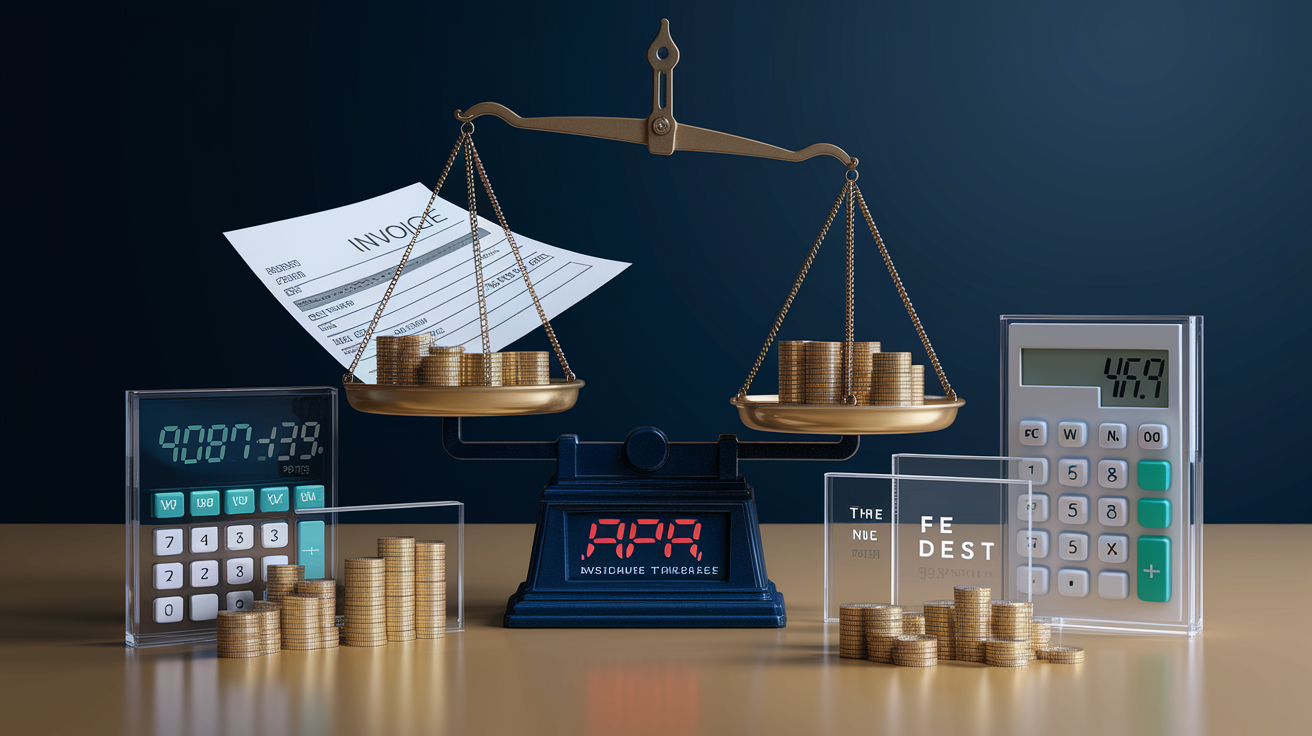
Cost structures for invoice financing and business lines of credit are built on different foundations, so a straight rate comparison can mislead. Invoice financing charges a percentage of each invoice, typically 1% to 5% per 30 days. If your customer pays in 30 days and the fee is 2%, you’re paying $2,000 on a $100,000 invoice. If that customer stretches to 60 days, the fee often doubles to $4,000, annualizing to roughly 24%. A business line of credit charges interest on the outstanding balance, expressed as an APR. At 10% APR, borrowing $100,000 for 30 days costs about $833 in interest. For 90 days, about $2,500. The line’s cost is predictable if you know your repayment timeline. Invoice financing cost climbs with every billing cycle your customer delays.
Additional fees layer on top. Invoice financing can include application fees, due-diligence charges, maintenance fees, and minimum monthly volume requirements. Business lines often carry origination fees (0.5% to 3% of the credit limit), unused line fees (0.25% to 1% annually), and draw fees per transaction. Personal guarantees are standard on most lines. UCC-1 liens on assets are common. Invoice financing may operate recourse (you buy back unpaid invoices) or non-recourse (lender assumes default risk for a higher fee). Recourse deals cost less but leave you exposed if a customer doesn’t pay.
| Cost Component | Invoice Financing | Business Line of Credit |
|---|---|---|
| Primary charge | 1% to 5% of invoice value per 30 days | 7% to 25% APR on drawn balance |
| Advance/draw fees | Often none; sometimes 0% to 3% application or due-diligence fee | Origination 0.5% to 3%; per-draw fees $25 to $150 |
| Unused fees | Minimum monthly volume charges in some contracts | 0.25% to 1% annually on undrawn credit |
| Recourse or guarantee | Recourse factoring = lower fee; non-recourse = higher fee | Personal guarantee and UCC lien standard; secured = lower rate |
| Effective annualized cost example | 2% monthly ≈ 24% annual; 5% monthly ≈ 60% annual if invoices turn every 30 days | 10% APR used 30 days ≈ 0.83% cost for that period; 90 days ≈ 2.5% |
For a $100,000 invoice paid in 30 days with a 2% factoring fee, you net $98,000 and pay $2,000. For a $100,000 line draw at 10% APR repaid in 30 days, you pay $833 interest. The line is cheaper if you qualify. But if your personal FICO is 590 and you’ve been in business six months, you won’t get that 10% line. You can get invoice financing based on your customer’s 720 credit score. The trade is access for cost.
Approval Requirements and Risk Evaluation
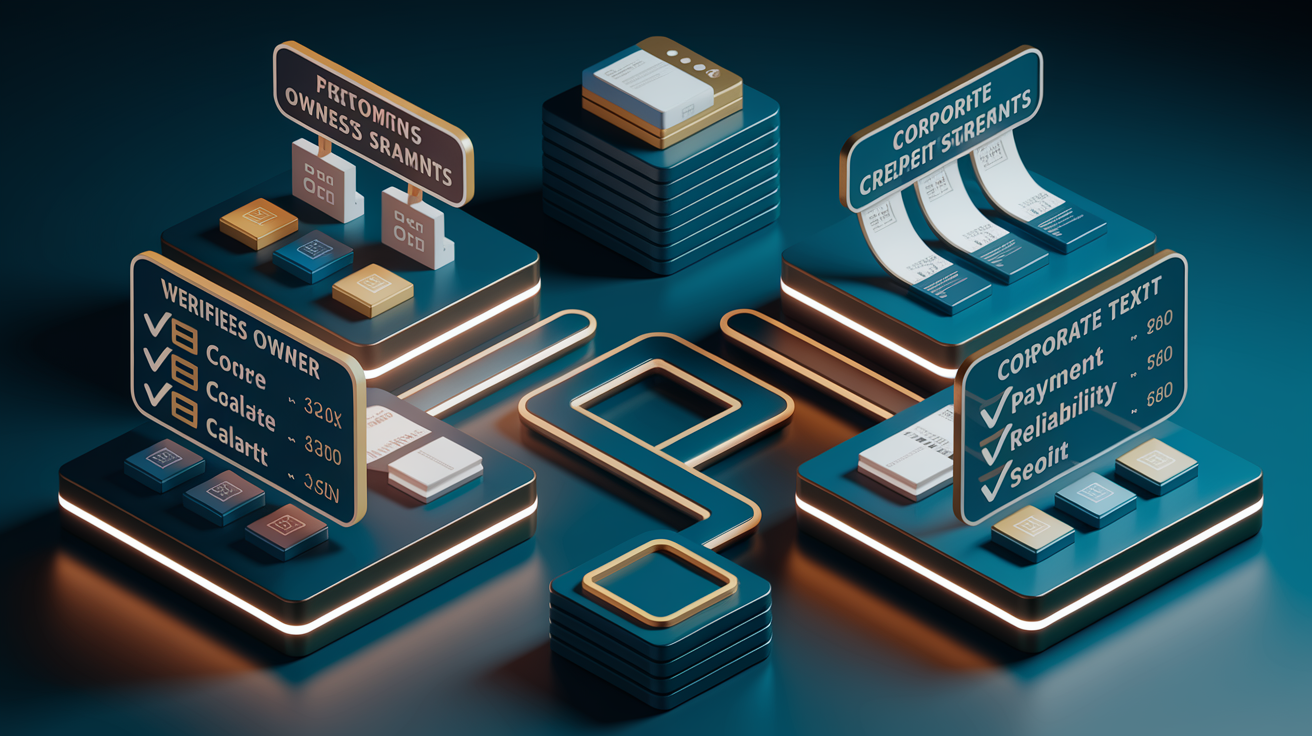
Invoice financing and business lines of credit evaluate risk from opposite angles. A business line of credit underwrites you. The borrowing company and the owner behind it. Lenders want to see personal FICO scores typically above 620, often 680 to 700+ for banks. They review business credit reports, time in business (usually a minimum of one to two years), and revenue thresholds that commonly start at $50,000 to $100,000 annually. They’ll ask for tax returns, profit-and-loss statements, balance sheets, and cash-flow projections. Collateral is frequent. Accounts receivable, inventory, equipment, or real estate. Personal guarantees are nearly universal. The lender is betting you can generate enough cash flow to cover interest and principal, so your track record matters.
Invoice financing flips the focus. The lender is primarily interested in your customers’ ability to pay. They’ll verify that the invoice is real, the customer is creditworthy, and the payment terms are standard (Net-30, Net-60, Net-90). Your company’s financials take a back seat. Startups with only three to six months of invoicing history can qualify if their clients are established corporations or government agencies. Personal credit scores in the 580 to 620 range are often acceptable. The factor is buying the receivable and collecting from your customer, so the customer’s default risk drives the decision. If you invoice Fortune 500 companies, approval is straightforward. If your clients are new or pay slowly, the factor may decline or charge a higher fee.
Risk evaluation also differs in structure. A business line lender tracks covenants. Minimum liquidity ratios, profitability benchmarks, or periodic financial reporting. They can freeze or reduce your line if performance slips. Invoice financing risk is invoice-by-invoice. Each submission is a mini-underwriting event. If a customer’s credit deteriorates, the factor may reject future invoices from that buyer, but invoices from your other clients still qualify. Concentration risk matters: if 80% of your revenue comes from one customer, both lenders and factors will scrutinize that relationship closely. A line lender may cap your limit. A factor may cap the percentage of invoices they’ll buy from that single client.
Funding Speed and Cash Flow Impact

Invoice financing delivers cash within 24 to 72 hours after you submit an approved invoice. Initial setup and underwriting take about 3 to 7 business days, but once the relationship is live, each new invoice can be funded in a day or two. For B2B companies waiting 60 or 90 days for customer payments, that speed converts a future receivable into today’s operating cash. Payroll clears, supplier deposits go out, and you can accept the next order without waiting for last month’s invoice to settle.
A business line of credit takes longer to set up, typically 1 to 4 weeks for initial approval. But once active, draws are fast. Online lenders often fund same-day or within 1 to 2 business days. Traditional banks may take 3 to 5 business days per draw, depending on documentation. The cash flow advantage of a line is flexibility: you draw only what you need, when you need it, and you’re not tied to a specific invoice. If payroll is short by $15,000 this week and you expect a big payment next week, you draw $15,000, then repay it when the cash arrives. The line sits dormant until the next gap.
Practical cash flow advantages by method:
Invoice financing converts specific slow-paying invoices into immediate working capital. Scales automatically with sales growth. Funds available within 24 to 72 hours per invoice.
Business line of credit provides a standby reserve for unpredictable or non-AR-tied expenses. Reusable without re-application. Flexible draw and repayment timing.
Combined approach uses a small line ($50,000) for baseline needs like payroll or rent, and factors large project invoices ($200,000+) to fund materials and labor without exhausting the line.
For companies with lumpy revenue, big invoices every few weeks, invoice financing smooths cash inflows. For companies with steady revenue but occasional spikes in expenses, a line of credit absorbs the variability without locking capital into advance fees.
How Client Payment Cycles Influence the Best Choice

Long B2B payment terms, Net-30, Net-60, or Net-90, create a timing mismatch between when you deliver and when you get paid. If you’re a staffing company invoicing a corporate client on Net-45 terms but paying weekly payroll, that 45-day gap drains cash fast. Invoice financing closes the loop: you submit the invoice, receive 85% of the value within two days, and use that cash to cover the next payroll cycle. The factoring fee accumulates based on how long the client takes to pay, so predictable customers with consistent 30-day payment histories keep costs lower than clients who routinely stretch to 60 or 90 days.
Customer concentration risk also shapes the decision. If 70% of your revenue comes from two large clients, both invoice financing and business lines will scrutinize those relationships. A factor may limit how many invoices from a single customer they’ll advance at once, forcing you to find alternative funding for overflow. A line of credit lender may cap your total credit based on the perceived risk that losing one customer crashes your revenue. Diversified client bases spread the risk and make both options more accessible and less costly.
Invoice-backed funding shifts the timing of cash inflows but doesn’t eliminate the underlying payment cycle. You’re converting future receivables into current cash, which is powerful for growth or working capital crunches. But if your customers consistently pay late and your factoring fees climb month after month, the cost can outpace the benefit. In that case, you’re better off addressing the root problem. Negotiating faster payment terms, offering early-payment discounts, or moving to a business line that gives you breathing room while you restructure client agreements.
Pros and Cons of Each Option for B2B Firms

Invoice Financing
Fast access to cash tied to specific invoices. Funding in 24 to 72 hours.
Approval based on customer creditworthiness, not your business credit or FICO score.
Scales automatically with sales. The more you invoice, the more funding becomes available.
No new debt on your balance sheet. You’re selling an asset, not borrowing.
But.
Fees can be high, especially if customers pay slowly. 1% to 5% per 30 days annualizes to 12% to 60%+.
Requires B2B invoicing. Not suitable for retail or direct-to-consumer sales.
Notification factoring means your customers know a third party is collecting, which can affect perception.
Recourse agreements leave you liable if a customer defaults. Non-recourse costs more and has coverage limits.
Business Line of Credit
Flexible, reusable capital for any business need. Payroll, inventory, equipment, or emergencies.
Interest charged only on amounts drawn. No fees on unused credit (except small unused-line fees).
Preserves customer relationships. No third-party collections or client contact.
Lower cost if you qualify. APRs of 7% to 10% for strong-credit borrowers vs higher factoring fees.
But.
Harder to qualify. Requires strong personal and business credit, 1 to 2+ years in business, and revenue minimums.
Adds debt to your balance sheet. Every draw is a loan liability.
Variable rates and lender reviews mean costs and limits can shift over time.
Personal guarantees and UCC liens put owner assets at risk.
The core trade-off is access versus cost. Invoice financing opens the door to capital when traditional credit isn’t available, but you pay a premium. A business line of credit offers cheaper, more flexible funding, but you need a solid credit profile and operating history to qualify.
Decision Framework: Choosing the Best Fit for Your Scenario

Start by mapping where your cash problem actually lives. Is the gap tied to specific unpaid invoices from creditworthy customers, or is it a broader need for flexible capital to cover variable expenses? If you’re waiting 60 days on a $150,000 invoice from a Fortune 1000 client and you need payroll cash now, invoice financing converts that receivable immediately. If you’re managing seasonal inventory buys, equipment repairs, and uneven payroll with no single invoice driving the crunch, a business line of credit gives you room to maneuver without selling receivables.
Next, evaluate your qualification profile. Do you have a personal FICO above 680, at least two years in business, and consistent revenue over $100,000? If yes, you likely qualify for a competitive business line with rates in the 7% to 15% range, and that’s almost always cheaper than factoring. If your credit is below 620, you’ve been operating less than a year, or your revenue is inconsistent, invoice financing based on customer credit becomes the practical path. The factor underwrites your client, not you, so a 590 FICO won’t block approval if your customers are solid.
Consider four decision factors in order:
Growth stage and operating history. Startups and early-stage companies favor invoice financing because approval is faster and credit requirements lighter. Established businesses with proven cash flow favor lines for lower cost and flexibility.
Revenue consistency and payment cycles. Companies with long receivable cycles (Net-60, Net-90) and large, creditworthy clients benefit from invoice financing. Businesses with steady, shorter-cycle revenue prefer lines.
Customer payment reliability. If clients pay on time and invoices are predictable, factoring fees stay manageable. If clients routinely pay late, fees climb and a line may be more cost-effective.
Borrowing frequency and purpose. Frequent, varied needs (payroll, rent, supplies, marketing) suit a revolving line. Infrequent, invoice-specific gaps suit one-time or occasional factoring.
Run the math on effective cost for your actual use case. A 2% monthly factoring fee annualizes to about 24% if invoices turn every 30 days. A 10% APR line used for 90 days costs roughly 2.5% for that period. Compare those numbers to your cash-flow forecast and choose the option that closes the gap at a cost your margin can absorb.
Real-World Examples: When Each Financing Method Wins

A staffing company places contractors at corporate clients and invoices on Net-45 terms. Every Friday, the company pays $80,000 in contractor wages, but client payments don’t arrive for six weeks. The company submits $200,000 in invoices to a factoring company at 85% advance and a 2% fee per 30 days. Within 48 hours, $170,000 hits the business account. Enough to cover three weeks of payroll. The client pays on day 45, the factor releases the reserve minus $4,000 in fees (2% for 30 days, prorated for the extra 15 days). Total net to the staffing firm: $26,000 reserve minus $4,000 fee = $22,000 final settlement. The 2% fee annualizes high, but the company couldn’t qualify for a $200,000 line with only eight months in business and a 610 owner FICO. Invoice financing kept payroll running and let the company accept new contracts without waiting for old invoices to clear.
A small manufacturing shop with three years of operations and a 695 owner credit score secures a $100,000 business line of credit at 12% APR. In month one, the shop draws $60,000 to pre-purchase raw materials for a large order. Thirty days later, the customer pays, and the shop repays the $60,000 plus $600 in interest ($60,000 × 12% × 30/365). In month two, an equipment breakdown requires a $25,000 repair. The shop draws $25,000, fixes the machine, and repays in 45 days with $370 interest. Total borrowing cost for the quarter: under $1,000, with no impact on customer relationships and full flexibility to draw and repay as cash flow fluctuates. The line preserved working capital without locking the shop into selling receivables at a higher effective rate.
A construction subcontractor invoices general contractors on Net-60 terms. The sub has strong customer relationships but inconsistent revenue. Some months $300,000, others $50,000. The company layers a $75,000 business line (10% APR, personal guarantee, 2-year history, 720 FICO) with selective invoice factoring. During slow months, the line covers payroll and rent. When a $250,000 project invoice is submitted, the sub factors it at 90% advance and 3% per 30 days to fund materials and labor for the next job without exhausting the line. The blended strategy keeps the line available for emergencies and uses factoring only for big invoices tied to large material buys. Over six months, the effective blended cost runs about 15%, lower than factoring every invoice and more flexible than relying solely on a line that might not cover peak working capital needs.
Final Words
In the action, this post cut straight to when invoice financing wins and when a business line of credit makes more sense.
If customers pay late, invoice financing turns receivables into same-day cash (advances 70%–90%, fees often 1%–5% per invoice). If you need a flexible reserve for payroll and growth, a line of credit with 1–7 day draws and variable APR is usually better. We also covered approval triggers, cost tradeoffs, and cash-flow impact.
Use the decision framework to pick confidently, invoice financing vs business line of credit: which suits B2B companies, and keep cash moving.
FAQ
Q: What are the disadvantages of invoice financing?
A: The disadvantages of invoice financing are higher fees than bank loans (often 1% to 5% per invoice period), possible loss of customer control over collections, lower advance rates, and risk of recourse if invoices don’t pay.
Q: What is the difference between invoice factoring and line of credit?
A: The difference between invoice factoring and a line of credit is that factoring sells your unpaid invoices for an advance and fees, while a line of credit is revolving debt you draw, repay with interest, and reuse as needed.
Q: Who uses invoice financing?
A: Businesses that use invoice financing are B2B firms with slow-paying clients, such as manufacturers, wholesalers, staffing agencies, contractors, and fast-growth companies needing cash now to cover payroll, inventory, or expansion between invoices.
Q: How hard is it to get a $1,000,000 business loan?
A: Getting a $1,000,000 business loan is usually challenging. Lenders expect strong revenue (often $1M+ yearly), several years in business, solid credit, collateral, and detailed financials, and approval can take weeks to months.