

Think all SBA loans are the same? Think again.
SBA 7(a) is the flexible option. Use it for working capital, buying a business, equipment, or real estate when you need versatility and a faster close.
SBA 504 is for big, fixed assets. Think owner-occupied property, heavy equipment, or construction, with a lower down payment and steady fixed rates.
Which fits you? If you need speed and flexibility, 7(a) usually wins. If you’re buying property you’ll hold for years and want predictable payments, 504 is the smarter match.
Core Comparison Overview of SBA 7(a) and SBA 504 Loan Differences
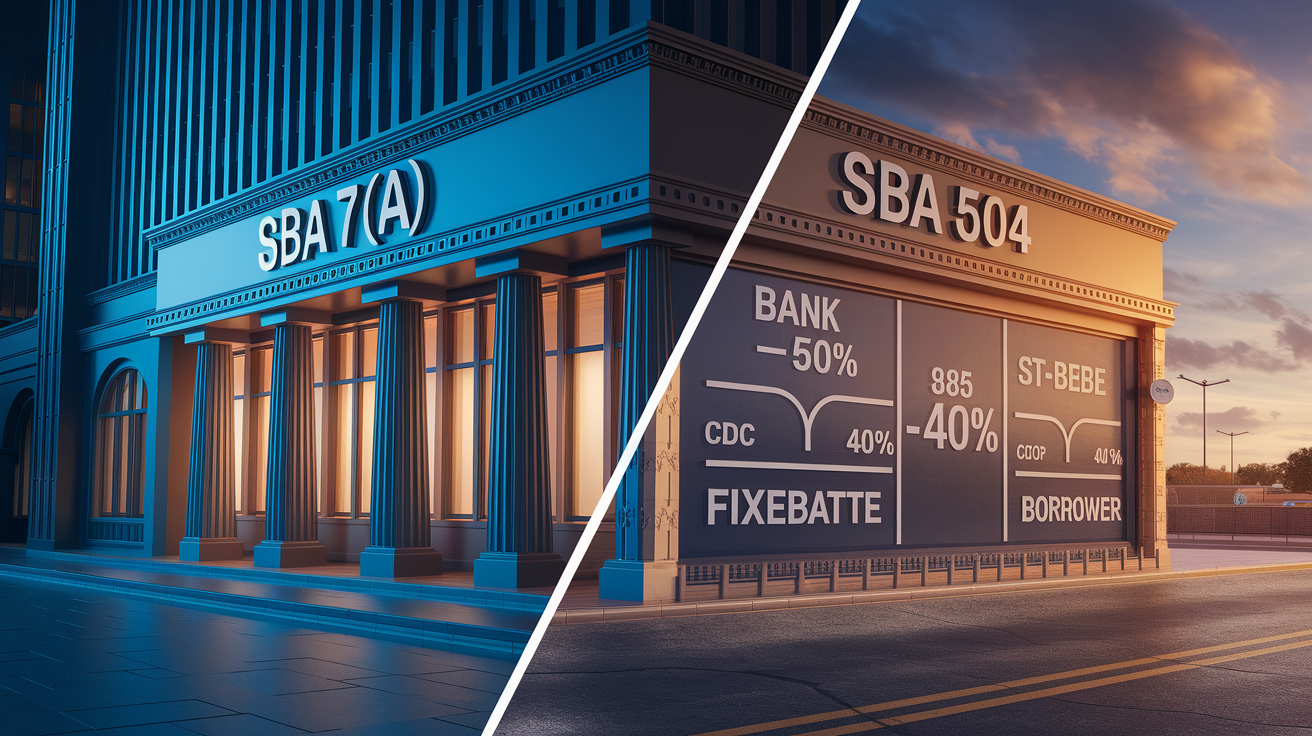
SBA 7(a) loans are built for flexible financing. Working capital, buying a business, refinancing debt, equipment, real estate without use restrictions. SBA 504 loans focus on fixed assets: owner-occupied commercial real estate, heavy machinery, construction, major facility work. Lower down payments, long-term fixed rates.
The central split is purpose and repayment structure. A 7(a) loan comes through one SBA-approved bank. You can use it for inventory, debt consolidation, whatever fits your needs. A 504 loan brings three parties together: your bank covers roughly 50%, a Certified Development Company (CDC) provides about 40%, and you put down the remaining 10%. Perfect for buying property or equipment that’ll anchor your operations for years.
Here’s what separates them:
7(a) is general-purpose financing. 504 is fixed assets only.
7(a) maxes at $5M. 504 typically runs from $125k to $20M.
7(a) offers fixed or variable rates tied to prime. 504 gives you fixed rates pegged to U.S. Treasury bonds.
504 down payment is usually 10%. 7(a) varies but needs heavier collateral coverage, around 90% of the principal.
7(a) fees can stack higher and you can’t finance them into the loan. 504 fees are often lower and more predictable.
7(a) closes faster, 30 to 60 days. 504 takes 60 to 90 days because of multi-party coordination.
| Feature | SBA 7(a) | SBA 504 |
|---|---|---|
| Loan Uses | Working capital, acquisitions, debt refinance, equipment, real estate | Owner-occupied real estate, heavy equipment, construction/renovation only |
| Loan Amounts | Up to $5,000,000 | $125,000 to $20,000,000 |
| Interest Type | Variable (prime + spread) or fixed | Fixed, tied to U.S. Treasury rates |
| Down Payment | Varies by lender; higher collateral required | Typically 10% |
| Collateral | ~90% of principal, often includes business and personal assets | Financed property/equipment serves as collateral |
| Fees | SBA guarantee fee + lender fees; cannot finance fees | Lower flat fees, CDC processing and servicing fees |
| Repayment Terms | Up to 25 years (real estate), 10 years (working capital/equipment) | Up to 25 years |
| Structure | Single loan through one lender | Three-party: ~50% bank, ~40% CDC, ~10% borrower |
SBA 7(a) Loan Features and Their Role in Business Financing

The SBA 7(a) program is where most business owners start when they need financing that covers multiple needs at once. Working capital, inventory, refinancing existing debt, buying another company, equipment, commercial real estate purchases and renovations. That range is why most bank applications start here.
Loan amounts go up to $5,000,000. Repayment terms stretch as long as 25 years for real estate or 10 years for working capital and equipment. Interest rates can be fixed or variable. Variable rates are usually tied to prime plus a lender spread, so your monthly payment can shift when the market moves. The lender decides which rate structure to offer based on your credit, cash flow, and collateral.
Collateral is a sticking point. If you borrow more than $50,000, lenders will require it, and they generally want coverage equal to about 90% of the loan principal. Business assets, personal real estate, equipment. Anyone owning 20% or more of the business will likely need to sign a personal guarantee. One other cost detail worth knowing: SBA guarantee fees can’t be rolled into the loan, so you’ll need to cover those upfront or negotiate with the lender on how to handle the cash outlay.
Here’s what eligibility and structure look like:
Business net worth must be $15,000,000 or less, and average net income must be $5,000,000 or less.
You’ll apply through an SBA-approved lender. Banks handle underwriting, and the SBA provides the guarantee that makes the loan possible.
Collateral expectations are strict. Loans above $50k almost always require it, and lenders may place liens on existing business assets if the financed purchase alone isn’t enough.
The application is simpler and faster than 504 because you’re working with one lender instead of coordinating across multiple parties.
SBA 504 Loan Structure and Fixed-Asset Purpose
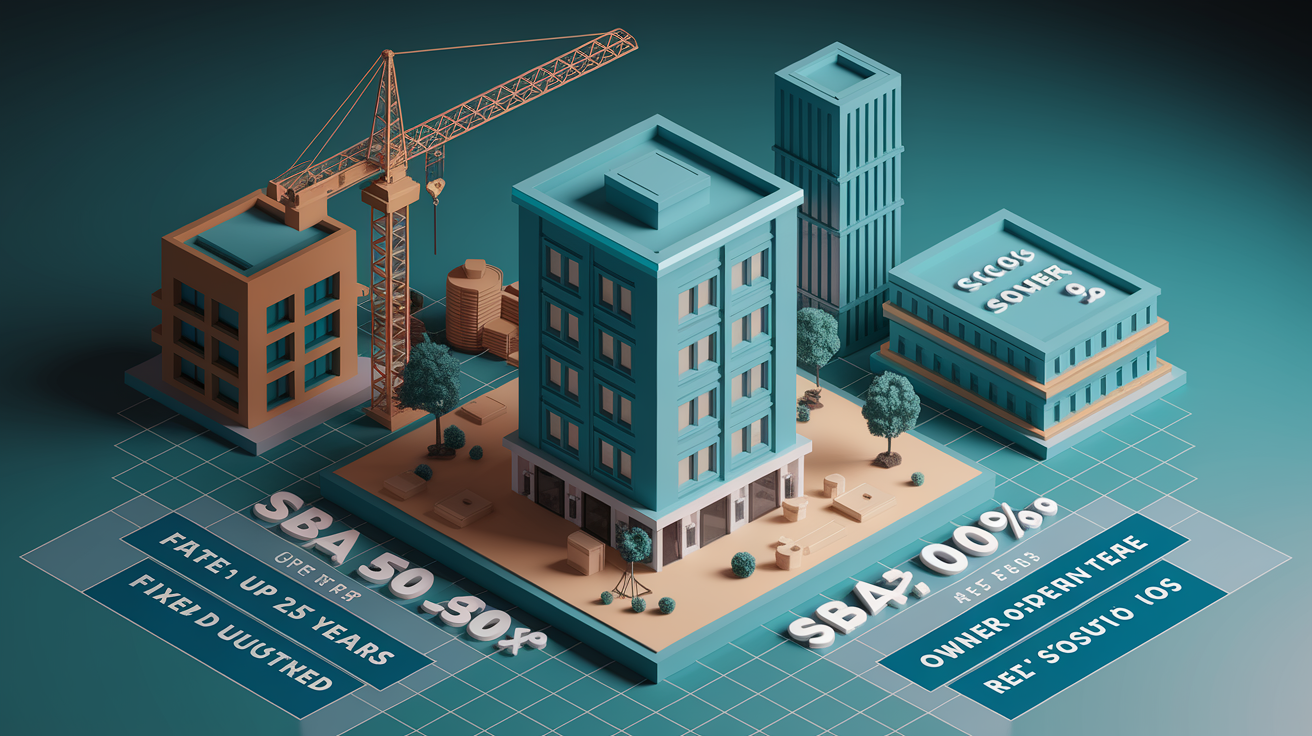
SBA 504 loans exist for one reason: to finance fixed assets that grow your business and create jobs. You can use 504 funds to buy owner-occupied commercial real estate, purchase land for business operations, construct or renovate facilities, or acquire heavy machinery and large equipment. You can’t use 504 money for working capital, inventory, or buying an outside business. Those uses belong to the 7(a) program.
The loan structure is three-way. A conventional bank or lender covers roughly 50% of the project cost, a Certified Development Company (CDC) provides up to 40% backed by the SBA, and you contribute the remaining 10% as a down payment. That 10% equity requirement is lower than what most conventional commercial real estate loans demand, which makes 504 financing appealing when you’re ready to buy property but want to preserve cash for operations and growth. The CDC portion carries a fixed interest rate tied to U.S. Treasury bond rates, locking in predictable payments for up to 25 years.
Loan amounts typically range from $125,000 to $20,000,000, depending on the project size and the CDC’s capacity. Eligibility hinges on economic development metrics: for every $90,000 the CDC lends, your project must create or retain at least one job. That threshold rises to $100,000 in certain empowerment zones and $140,000 for small manufacturers, meaning fewer jobs are required per dollar in those cases. If job creation isn’t feasible, you can qualify by meeting public policy goals. Things like advancing minority or women-owned business growth or reducing energy use.
Here are the structural and eligibility details that shape how 504 financing works:
Owner-occupancy requirement: if you’re financing new construction, at least 60% of the building must be owner-occupied when completed, and you can’t lease more than 20% of the space long-term.
Collateral: the financed real estate or equipment typically serves as collateral, so you’re less likely to need additional liens on personal property compared to a 7(a) loan.
Personal guarantees: anyone who owns 20% or more of the business must sign.
Fees: you’ll pay an upfront SBA guarantee fee, annual servicing fees, CDC processing costs, and bank fees. More line items than a 7(a), but the total cost is often lower.
Timeline: expect 60 to 90 days from application to closing because the process involves the bank, the CDC, and SBA coordination.
Interpretive Analysis: What the SBA 7(a) vs SBA 504 Differences Mean in Practice
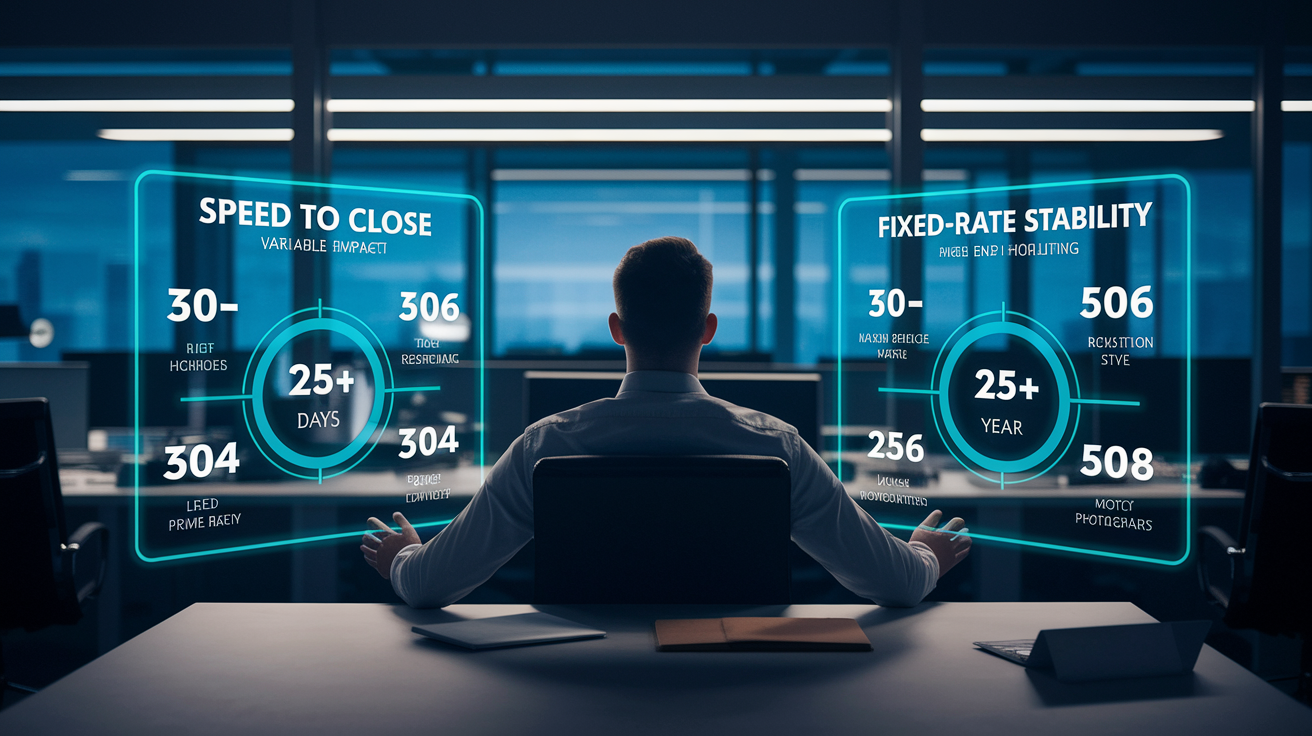
The structural differences between these two programs directly affect how fast you can close, how stable your payments will be, and how much cash you need at the outset. A 7(a) loan moves faster because one lender underwrites the entire deal, approves it, and funds it. Usually within 30 to 60 days. A 504 loan takes longer because the bank and the CDC both have to approve their portions, document job creation or public policy impact, and coordinate with the SBA. If speed matters, say you’re buying a business and the seller wants to close in 45 days, 7(a) is the practical choice.
Interest rate structure shapes long-term cost and risk. The 504’s fixed rate means your payment stays the same for 25 years, which helps with budgeting and protects you if rates climb. The 7(a)’s variable rate might start lower, but if the prime rate rises, so does your monthly payment. For a real estate purchase you plan to hold long-term, that variability can squeeze cash flow during rate hikes. For shorter-term needs like working capital or equipment with a 10-year payoff, variable rates are often workable and can save money if rates stay flat or drop.
Here’s how the practical differences play out depending on your business model and financing need:
If you need flexible funds fast and your use case includes working capital, refinancing, or acquiring another company, the 7(a)’s single lender structure and broad eligibility make it the better fit.
If you’re financing a building or major equipment and want the lowest down payment and fixed long-term rates, the 504’s three-party structure and 10% equity requirement deliver better terms despite the longer timeline.
Collateral constraints favor 504. Because the financed asset itself serves as collateral, you’re less likely to pledge personal real estate or unrelated business property compared to a 7(a) loan that seeks 90% coverage.
Businesses in industries with thin margins or seasonal cash flow benefit from the 504’s fixed payments. Unpredictable revenue can’t handle variable rate swings as easily.
Application Process Differences Between SBA 7(a) and 504 Loans
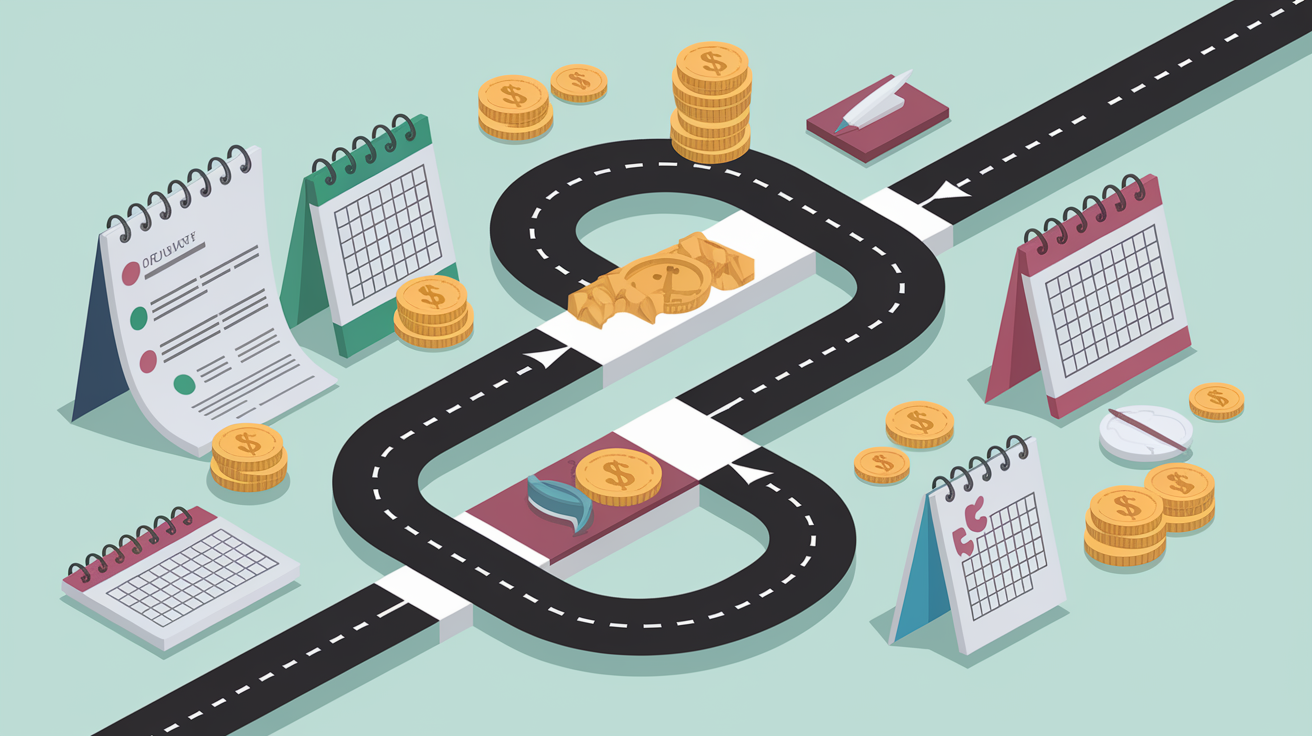
SBA 7(a) Process
You apply for a 7(a) loan directly through an SBA-approved lender, typically a bank or credit union. The lender underwrites the loan, evaluates your financials, assesses collateral, and decides whether to approve. Once approved, the lender submits the loan to the SBA for a guarantee, which covers a portion of the principal and reduces the lender’s risk. Closing happens once the SBA issues the guarantee and all documents are signed. The whole process usually takes 30 to 60 days.
One cost rule to know upfront: federal law prohibits lenders from financing SBA guarantee fees into the loan proceeds, so you’ll need to pay those fees out of pocket or negotiate a separate arrangement with the lender to cover them temporarily.
Here’s what the 7(a) application requires:
Personal and business tax returns for the past three years.
Detailed financial statements. Profit and loss, balance sheet, cash flow projections.
Ownership breakdown showing anyone with 20% or more equity (they’ll sign personal guarantees).
Collateral documentation for any assets you’re financing or pledging to secure the loan.
SBA 504 Process
The 504 application runs through two entities at once: a conventional lender (the bank covering 50% of the project) and a Certified Development Company (the CDC covering the SBA-backed 40% portion). You submit financials and project details to both. The CDC packages the SBA portion, which includes fixed rate terms and the economic development justification. The bank underwrites its portion using standard commercial lending criteria. Both approvals must happen before the loan can close, and coordination between the two adds time. Expect 60 to 90 days start to finish.
The CDC will ask for documentation proving job creation or public policy impact. If your project is expected to add employees, you’ll provide hiring projections and explain how the $90,000 per job threshold (or adjusted threshold for certain zones) will be met. If you’re relying on a public policy goal instead, you’ll document that qualifying factor.
Here’s what the 504 process involves:
Same financial package as 7(a): tax returns, profit and loss, balance sheet, cash flow projections.
Project narrative explaining the real estate or equipment purchase, its business purpose, and how it supports growth.
Job creation or public policy documentation. Employee counts, hiring timelines, or qualifying public policy criteria.
Owner-occupancy certification if you’re financing new construction (confirming at least 60% owner use and less than 20% long-term leasing).
Down payment proof, usually 10% of the total project cost, ready at closing.
Determining Whether the SBA 7(a) or SBA 504 Is Better for Your Situation
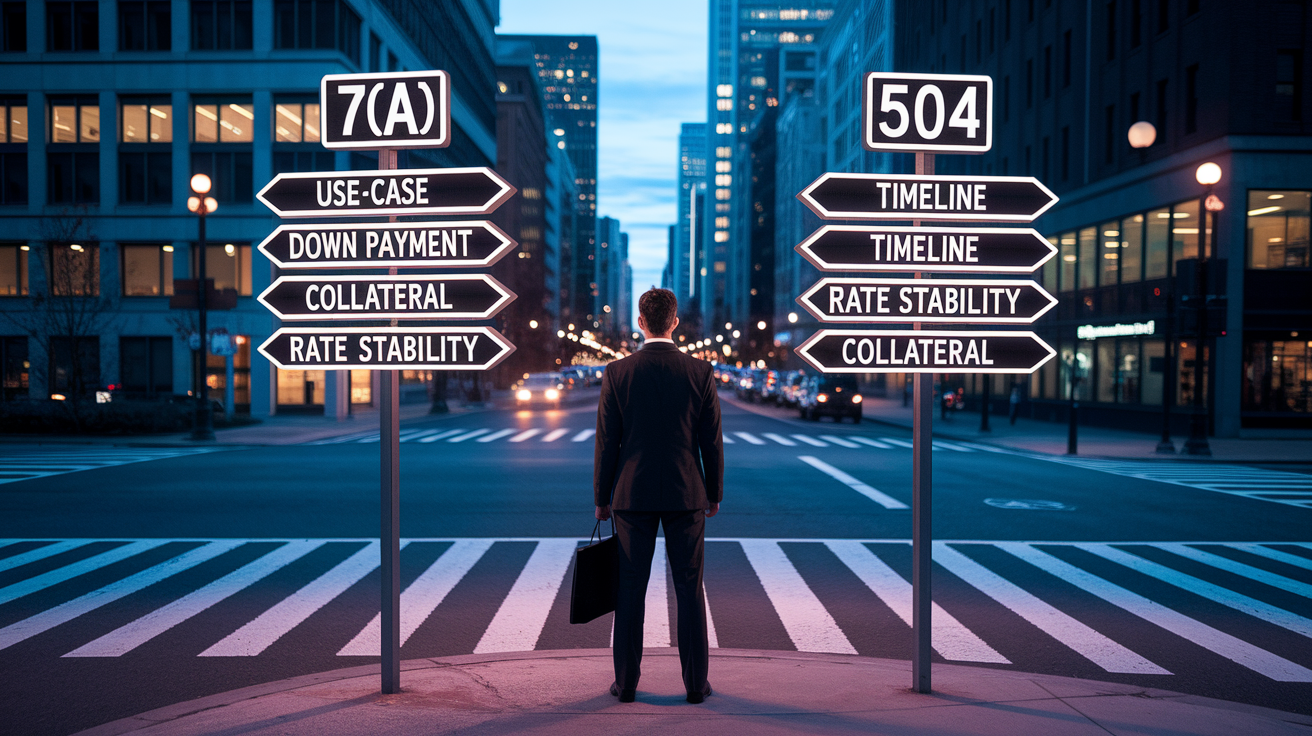
Start by asking what the money is for and when you need it. If the funds are going toward working capital, buying an existing business, or refinancing high-rate debt, the 7(a) program is the right tool because it allows those uses and closes faster. If you’re buying owner-occupied real estate or heavy equipment and you want a low down payment with a fixed long-term rate, the 504 is built for exactly that.
Next, consider your cash position and collateral availability. A 504 loan asks for 10% down and uses the financed property or equipment as collateral, so you’re not tying up unrelated business assets or personal real estate to secure the deal. A 7(a) loan requires closer to 90% collateralization, which often means pledging existing business assets, equipment, or even your home if the financed purchase alone doesn’t cover the principal. If you’re collateral-light or want to keep personal assets separate, 504 is the safer structure.
Timeline and rate stability also drive the decision. A 7(a) loan can close in 30 to 60 days with one lender, making it the go-to when speed matters. A 504 takes 60 to 90 days because of CDC and bank coordination, but in exchange you get a fixed rate for up to 25 years. No surprise rate hikes, no payment swings. If you’re planning to hold the asset long-term and predictability matters more than speed, 504 wins.
Here are six common scenarios that show which loan fits:
Buying an existing business: choose SBA 7(a) because 504 funds can’t be used for business acquisitions. 7(a) covers purchase price, inventory, and transition costs in one loan.
Purchasing owner-occupied commercial real estate: choose SBA 504 for the 10% down payment, fixed rate, and lower fees. The three-party structure is designed for this exact use.
Refinancing high-rate business debt: choose SBA 7(a) because refinancing is a permitted use and the loan can consolidate multiple obligations into one payment with a longer term.
Acquiring heavy manufacturing equipment: choose SBA 504 if the equipment cost is substantial and you want fixed payments over 25 years. The lower down payment and asset-based collateral make the deal easier to structure.
Covering seasonal working capital or inventory purchases: choose SBA 7(a) because 504 can’t be used for working capital. 7(a) gives you flexible funds with terms that match the use (10 years for equipment/inventory).
Expanding into a new location with construction or major renovation: choose SBA 504 if you’ll own and occupy at least 60% of the space. The program’s job creation incentive aligns with expansion, and the fixed rate protects you during a long build-out period.
Final Words
Quick recap: 7(a) is the flexible choice for working capital, acquisitions, and refinancing. 504 is built for owner-occupied real estate and heavy equipment.
In the action we broke down loan uses, sizes, interest, down payments, collateral, timelines, and the application steps. We also gave scenarios to match each loan to real needs.
Keep the difference between sba 7a and sba 504 loans in mind as you plan, and choose the one that fits your cash coming in and going out. You’ve got usable options and a clear path forward.
FAQ
Q: What is the main difference between SBA 7(a) and SBA 504 loans?
A: The main difference between SBA 7(a) and SBA 504 loans is that 7(a) is for flexible needs like working capital, acquisitions, and refinance, while 504 finances long-term fixed assets such as real estate and heavy equipment.
Q: What can I use SBA 7(a) funds for?
A: SBA 7(a) funds can be used for working capital, buying a business, refinancing debt, buying equipment, inventory, and real estate, with maximum loans up to $5 million.
Q: What can I use SBA 504 funds for?
A: SBA 504 funds finance fixed assets only — owner-occupied commercial real estate, renovations, construction, and heavy equipment — using a bank+CDC split and not for working capital or business acquisition.
Q: How do loan amounts and down payments differ between 7(a) and 504?
A: SBA 7(a) loans go up to $5 million; SBA 504 loans typically range about $125,000 to $20 million. 504 usually requires about 10% down; 7(a) down payments vary by deal.
Q: How do interest rates and repayment terms compare?
A: SBA 7(a) offers fixed or variable rates, often prime plus a spread, with terms up to 25 years for real estate and about 10 years for equipment. 504 has fixed rates tied to Treasury, up to 25 years.
Q: What collateral and eligibility rules should I expect?
A: SBA 7(a) often needs collateral above $50k and seeks near-full coverage; SBA 504 relies mainly on the financed property and adds owner-occupancy and job-creation eligibility requirements.
Q: How long does each application take and what documents are needed?
A: SBA 7(a) applications typically take 30–60 days with one lender; SBA 504 usually takes 60–90 days due to CDC and lender review. Both need financials, tax returns, ownership, and collateral details.
Q: Which loan is better for buying a business, real estate, or equipment?
A: Use SBA 7(a) to buy a business, cover working capital, or refinance high-rate debt. Use SBA 504 for owner-occupied real estate or major equipment when you want low down payment and fixed long-term rates.
Q: How does each loan’s structure affect underwriting speed and borrower risk?
A: The 7(a) single-lender structure usually speeds underwriting and offers flexibility but may require more collateral. The 504 bank+CDC split slows closing but lowers down payment and gives fixed-rate stability.
Q: What should I prepare to get a real quote?
A: To get a real quote, gather the last three months of bank statements, two years of tax returns, profit-and-loss, ownership breakdown, state the money’s purpose, and how quickly you need funds.