

Would you walk away from a big order because your bank balance is low?
Purchase order financing gives you the cash to pay suppliers so you can fill that customer order and keep the sale.
It’s a short-term advance that pays the supplier, the supplier ships, the customer pays the financier, and you get the remainder.
This intro will show how PO financing works, how fast funding can arrive, what it really costs, and when it’s a smart move versus other options.
If you want to say yes to growth without risking payroll, read on.
Clear Explanation of Purchase Order Financing for Immediate Business Needs

Purchase order financing gives you upfront cash to pay suppliers when you can’t cover a customer’s order with what you’ve got in the bank. You receive a big order, but you don’t have enough working capital to fill it. Instead of walking away from the sale, you bring in a financier who covers what the supplier needs, and you pay them back once your customer settles up.
There are four players here: your business, the PO financing company, the supplier who makes or ships the goods, and the customer who placed the order. Here’s how it flows. The financier pays your supplier directly. Your supplier ships to your customer. Your customer pays the financier. The financier takes their cut and sends you what’s left.
Businesses lean on PO funding when cash is scarce but the order itself is solid. Think seasonal spikes, fast growth, government contracts, or that first huge order that would blow through your working capital. If the customer’s credit checks out and the supplier’s legit, the financier might cover the full supplier bill.
The typical process looks like this:
- You get a purchase order from your customer.
- You apply with the PO financing company and hand over the purchase order plus a cost breakdown from your supplier.
- The financier approves and pays your supplier (or sets up a letter of credit).
- Your supplier produces and ships the goods.
- Your customer pays the financier, who deducts fees and wires you the rest.
How Purchase Order Financing Works from Start to Finish

Most financiers approve within 24 to 72 hours. Funding can land in days. Some providers move as fast as 24 hours after approval, others need 7 to 14 days depending on how complex the underwriting gets and what the supplier situation looks like. Speed comes down to how fast the lender can verify your customer’s credit, confirm the supplier can deliver, and review the purchase order details.
Lenders verify three things before they release money: Can the supplier deliver on time and at the quoted price? Does the customer have good credit and a clean payment history? Does your company have experience filling orders like this? Some financiers pay suppliers through letters of credit, which guarantee payment once shipping docs are filed. Others wire cash straight to the supplier or advance funds to you so you can pay the supplier yourself. PO financing only works for physical goods. If you sell services, you’re out of luck.
| Stage | Action Taken | Responsible Party |
|---|---|---|
| Order received | Customer issues purchase order to your company | Customer |
| Application | Submit PO, supplier quote, and company financials to financier | Your Company |
| Underwriting | Verify customer credit, supplier capacity, and order feasibility | Financier |
| Funding | Pay supplier via wire, L/C, or cash advance | Financier |
| Fulfillment | Produce and ship goods to end customer | Supplier |
| Collection & Settlement | Collect customer payment, deduct fees, remit balance | Financier |
Cost Structure and Typical Pricing of PO Financing
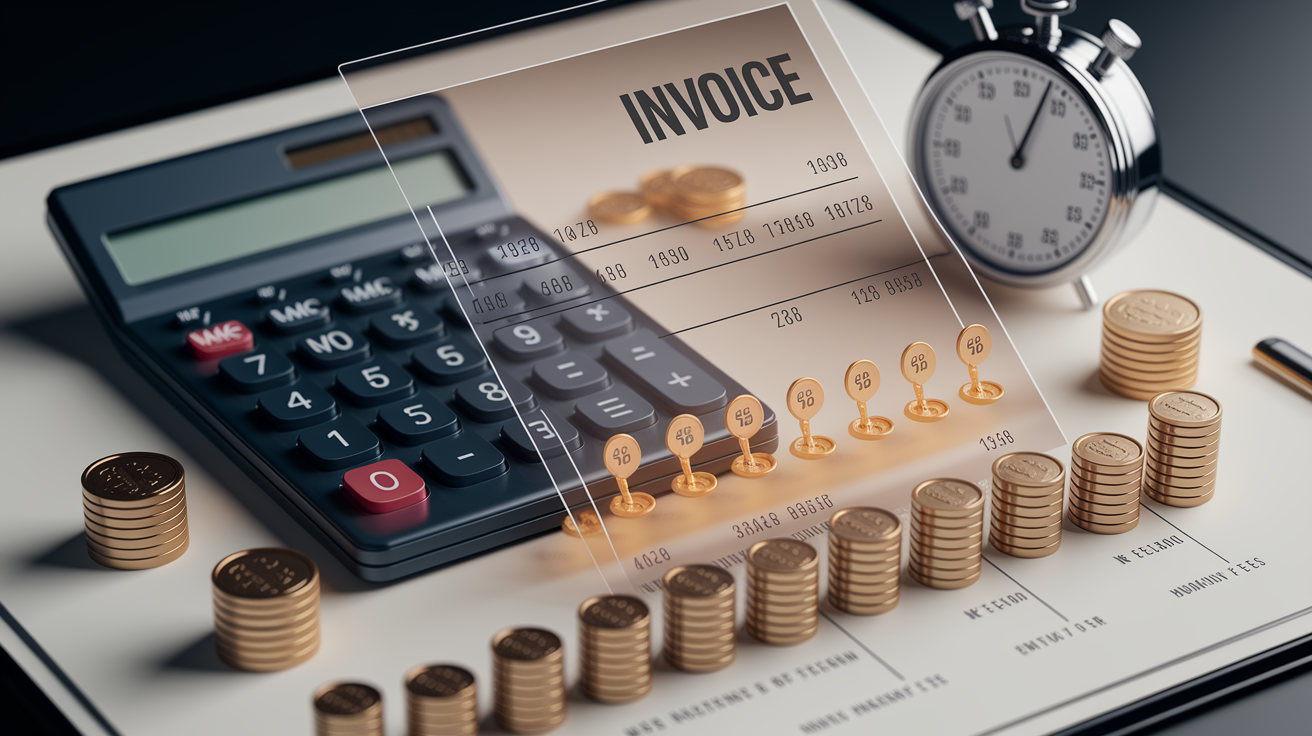
PO financing fees usually run between 1 percent and 6 percent per 30 days, charged against the total supplier cost the financier covers. If your supplier cost is $100,000 and the fee is 2 percent per month, you owe $2,000 if your customer pays in 30 days. Customer takes 60 days? Now you’re looking at 4 percent or $4,000 total. The longer your customer drags their feet, the more you pay.
Some providers use tiered structures. Maybe 3 percent for the first 30 days, then 1 percent for every 10 days after. Or 3 percent upfront and 0.1 percent daily after that. A few lenders calculate fees based on profit instead of supplier costs, taking 3 to 6 percent of your gross margin rather than a flat percentage of the invoice. Convert these monthly fees to annual rates and you’re often looking at 20 percent APR or higher, sometimes pushing past 50 percent depending on how long the financing drags and which fee model you’re dealing with.
Funding limits vary. Smaller providers might cap advances at $25,000. Larger firms can go up to $10 million or $25 million per order. Some lenders only fund a portion of supplier costs, like 90 percent, which means you’ll need to scrape together the rest from somewhere else.
The four most common pricing models:
- Flat monthly percentage: a set rate (say, 3 percent) charged every 30 days the advance is open.
- Tiered percentage: higher rate upfront, lower incremental rate for each additional period.
- Profit share percentage: a fixed percent of the gross margin, not the supplier cost.
- Daily fee accrual: a small daily rate (like 0.1 percent per day) that compounds until your customer pays.
Pros and Cons of Purchase Order Financing for Growing Businesses
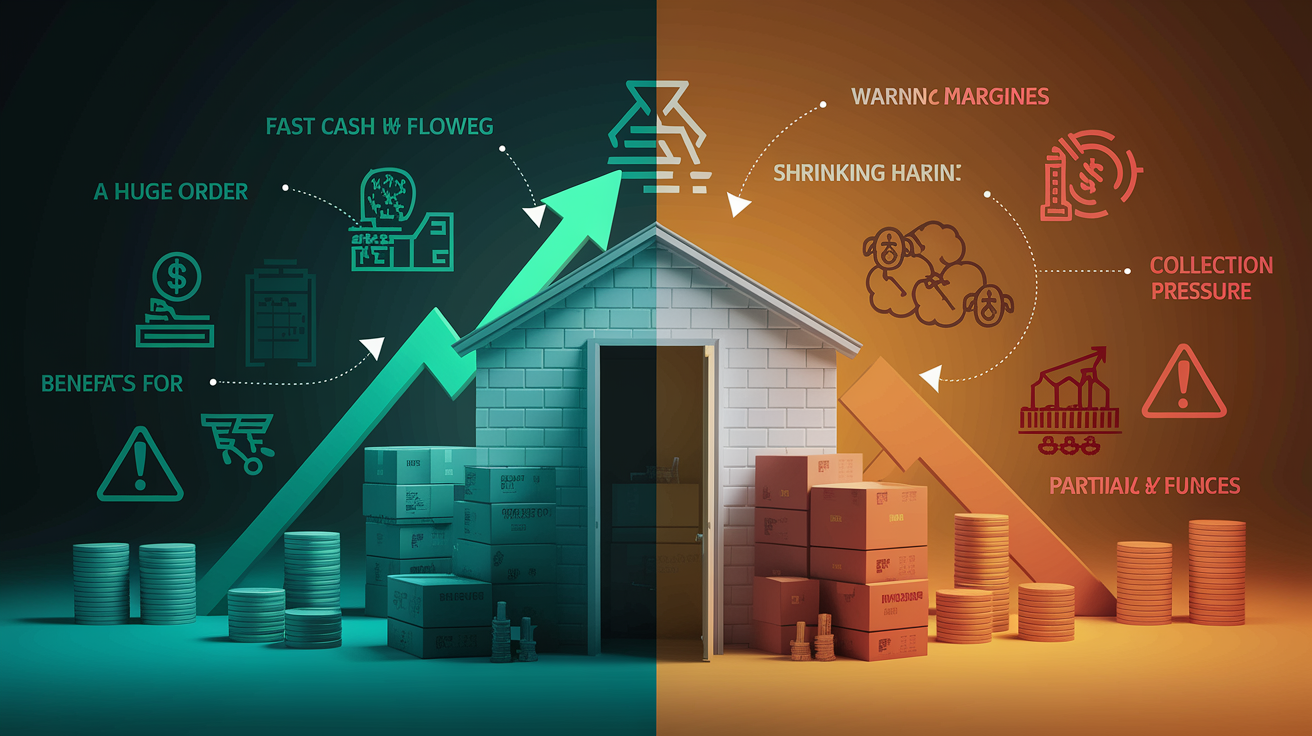
The big upside? Speed. You get cash to suppliers fast without grinding through a long bank loan process or eating up a term loan. You don’t make scheduled monthly payments because repayment happens in one shot when the customer pays the financier. That keeps your monthly cash flow free for payroll, rent, and whatever else keeps the lights on while the order gets filled.
PO financing also lets you say yes to orders you’d otherwise have to pass on because you don’t have the working capital to cover supplier costs upfront. If the customer’s credit is solid and the supplier’s reliable, you can take on revenue you couldn’t touch with your current cash reserves.
Six key pros:
- Fast cash compared to traditional bank loans or credit lines.
- No monthly payments eating into cash flow. Repayment comes straight from the customer when they settle.
- Lets you fill large or seasonal orders without burning through your working capital.
- Works for businesses with thin credit histories or limited collateral, as long as the customer’s credit is strong.
- Scales with order size. Bigger orders can unlock bigger advances.
- Preserves your existing credit lines and term loan capacity for other needs.
Six common cons:
- High cost. Fees of 1 to 6 percent per month can push APRs above 20 percent, sometimes past 50 percent.
- Total cost is a moving target because it depends on how long your customer takes to pay.
- The financier usually takes over receivables collection, which can get messy if they’re aggressive with your customer.
- Approval depends on the customer’s creditworthiness, not just yours. Weak customer credit? You might not qualify.
- Some lenders only fund part of supplier costs, leaving you to cover the shortfall.
- Loss of control. You might not manage supplier payments or customer invoicing directly while the financing is open.
Eligibility and Documentation Requirements for PO Funding

Lenders need you to sell physical goods, not services. If you’re a consultant, software developer, or service provider, PO financing won’t work. Your gross profit margins have to clear the lender’s minimum threshold. Most want enough spread between supplier cost and customer payment to cover fees and still leave you a workable profit.
Suppliers must have a track record. Financiers vet supplier reliability because late shipments or cost overruns tank the whole deal. Some lenders prefer suppliers they’ve worked with before or suppliers with solid reputations in your industry.
Customer creditworthiness carries the most weight. The financier’s extending credit based on the bet that your customer will pay the invoice in full and on time. If your customer is a well-rated business or a government agency, approval odds go up. If the customer’s new, small, or has payment issues, the lender might decline or offer partial funding only.
You’ll typically need:
- The purchase order from the customer.
- A detailed supplier cost estimate or quote.
- Recent financials (P&L, balance sheet) and tax returns.
- A product cost breakdown showing gross margin and fulfillment timeline.
Comparing Purchase Order Financing with Invoice Factoring and Other Alternatives

PO financing and invoice factoring both turn receivables into immediate cash, but the timing’s different. Invoice factoring requires that you’ve already shipped goods or finished services and issued an invoice. You sell that invoice to a factor at a discount, and they collect from the customer. Purchase order financing happens before you invoice because you need cash to produce or buy the goods first.
Invoice factoring works for services or tangible goods. PO financing is limited to physical products. Most factoring agreements are recourse, meaning if your customer doesn’t pay, you might have to buy back the invoice or reimburse the factor. PO financing shifts more risk to the financier because they’re funding production before the invoice exists, but approval’s stricter as a result.
PO Financing vs Invoice Factoring
Invoice factoring kicks in after the job’s done. You’ve shipped the product or finished the service, and you’re waiting on payment. A delivery company that invoices with 90 day terms can sell that invoice to a factor and get cash the same week. Purchase order financing funds production or purchase costs before goods ship and before an invoice exists. Need money to pay the supplier? PO financing. Need money after the work’s done and you’re just waiting to collect? Invoice factoring.
PO Financing vs Lines of Credit
A business line of credit gives you revolving access to capital you can draw, repay, and draw again. Lines are flexible and often cheaper than PO financing, but they take weeks to approve and usually need strong credit, collateral, and operating history. Purchase order financing approves in days and leans on customer credit rather than your own balance sheet, which makes it easier to get for newer or cash strapped businesses. The trade off is speed and access versus cost. Lines of credit carry lower rates, but PO financing moves faster when you don’t have credit capacity or time.
PO Financing vs Net Terms Platforms
Net terms platforms let you extend payment terms to customers while you get paid immediately. These platforms underwrite your customer quietly, provide a payment portal, and can deliver cash for the purchase order or invoice in about one business day. Customers can pay by credit card, ACH, wire, or check, and you get funds upfront minus a fee. The platform handles collections and term extension without forcing you to give up control of the supplier relationship. Net terms platforms work well when you want fast payment and customer flexibility without the higher monthly fees you’d see with traditional PO financing.
Real-World Examples and Typical Use Cases for PO Funding

A seasonal business making high end pet apparel gets a big purchase order in June for Christmas inventory. The customer won’t pay until November after the holiday selling season. The business needs cash now to buy materials and pay labor, but working capital’s tied up in spring production. Purchase order financing fills the gap. The financier pays supplier costs in June, goods ship in September, the customer pays in November, and the financier deducts fees and sends the rest.
A startup wins its first major contract to supply office furniture to a government agency. The contract’s worth half a million, but the company has less than $50,000 in the bank. Traditional lenders won’t approve a loan because there’s no revenue history, but the government agency has strong credit. A PO financier funds the supplier costs, the furniture gets delivered, the agency pays the financier, and the startup gets the profit minus fees without having to turn down a career making order.
A distributor of industrial machinery receives an order from a manufacturer that will double quarterly revenue. The distributor doesn’t have cash to buy the equipment from the overseas supplier, and the manufacturer requires net 60 payment terms. Purchase order financing pays the supplier upfront, the equipment ships, the manufacturer pays within 60 days, and the distributor covers a two month fee instead of missing the order entirely.
Industries that commonly use PO funding:
- Manufacturers and contract producers who build goods to order and don’t have capital to cover materials and labor upfront.
- Wholesale distributors who buy from suppliers and resell to retailers or other businesses with extended payment terms.
- Sellers to government agencies, which often issue large purchase orders but pay on slow invoicing cycles.
- Seasonal product sellers who need to produce inventory months before customer payment arrives.
- Startups and high growth companies that receive orders larger than their current working capital can handle.
How to Choose the Right Purchase Order Financing Provider
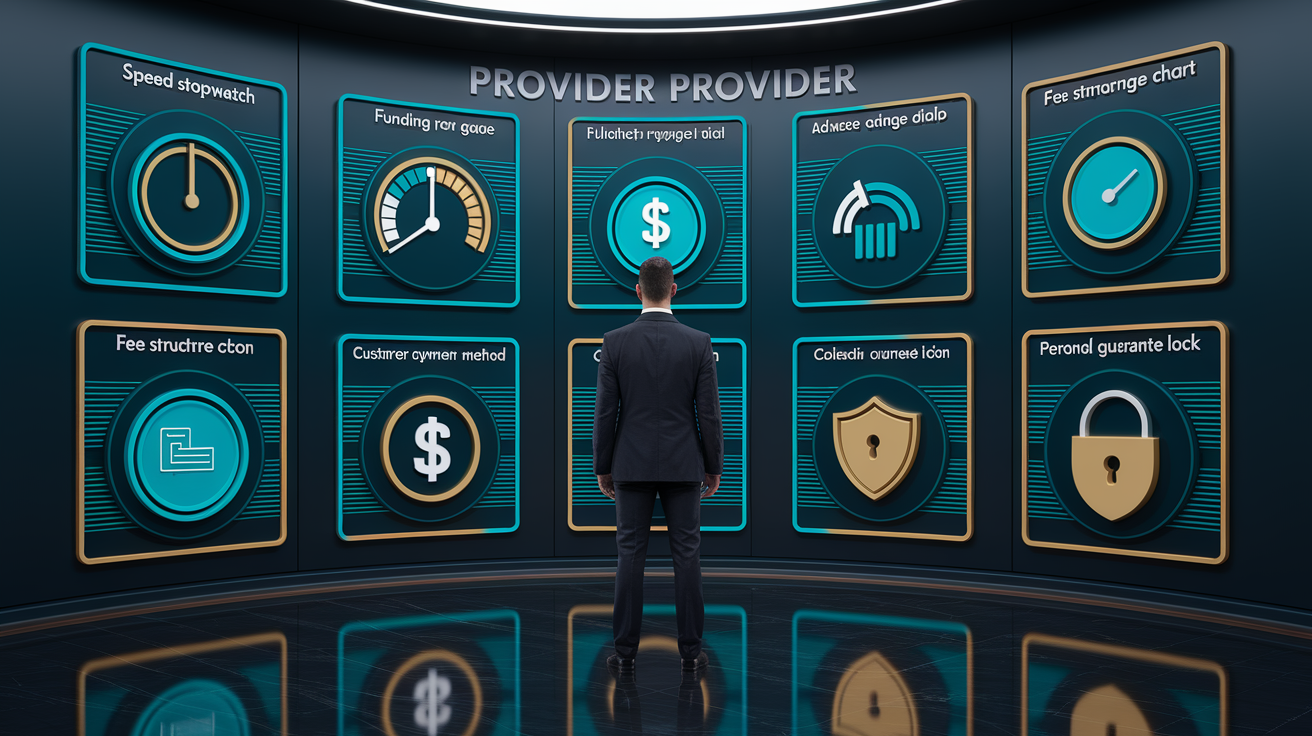
Start by comparing speed and funding range. Some lenders respond within 24 hours and fund the same week. Others take 7 to 14 days. Funding limits run from $25,000 to $25 million, so make sure the provider can handle your order size. If your typical purchase orders are below $50,000, don’t waste time with lenders whose minimums start at $250,000.
Look at the fee structure and advance percentage. A provider that funds 100 percent of supplier costs at 2 percent per month might be cheaper than one that funds 90 percent at 3 percent, especially if you have to cover the 10 percent gap out of pocket. Ask whether fees are charged monthly, daily, or as a profit share, and get a written example based on your expected order size and customer payment timeline.
Understand how the lender manages supplier payments and customer collections. Some providers pay suppliers via letter of credit, which protects both sides but adds documentation steps. Others wire funds directly to your supplier or advance cash to you. Find out whether the lender contacts your customer directly and how they handle collections if the customer delays payment or defaults. Aggressive collection tactics can damage long term customer relationships, so ask about their process upfront.
Six questions to ask prospective providers:
- What’s your minimum and maximum funding size per purchase order?
- What percentage of supplier costs do you typically advance, and are there cases where you fund less than 100 percent?
- Do you pay suppliers directly via wire or letter of credit, or do you advance cash to the borrower?
- Will you contact my customer directly, and what’s your collections process if payment’s late?
- What’s your fee structure (monthly percent, daily accrual, tiered, or profit based), and can you show me a worked example?
- Do you require a personal guarantee, and what happens if my customer fails to pay?
Final Words
When a big order lands and you don’t have the cash, PO financing advances supplier costs so you can fulfill it.
Financier pays suppliers, goods ship, customer pays the financier, and fees are deducted.
We laid out who’s involved, typical timelines, cost examples, and the documents lenders want.
You also got pros and cons and comparisons to factoring, credit lines, and net-terms.
When order timing, customer credit, and fees fit your margins, purchase order financing can turn an order into cash without draining your account.
Run the numbers, pick a provider that matches your needs, and move forward.
FAQ
Q: What is purchase order financing and what does it mean to have my purchase order financed?
A: Purchase order financing is funding a supplier’s cost so you can fill a customer’s order. The financier pays suppliers up front, the customer pays the financier, and you receive the remainder minus fees.
Q: What is an example of a purchase order financing?
A: An example of purchase order financing is a retailer with a $100,000 customer order but no cash. The financier pays supplier invoices, goods ship, the customer pays the financier, who deducts fees and sends you the balance.
Q: How to finance a purchase order?
A: To finance a purchase order, apply to a PO lender and submit the PO, supplier quotes, and customer info. The lender verifies credit, pays suppliers, goods ship, then the customer pays the lender and fees are taken.